This Historic Michigan Factory Is Now The Midwest’s Largest Art Community
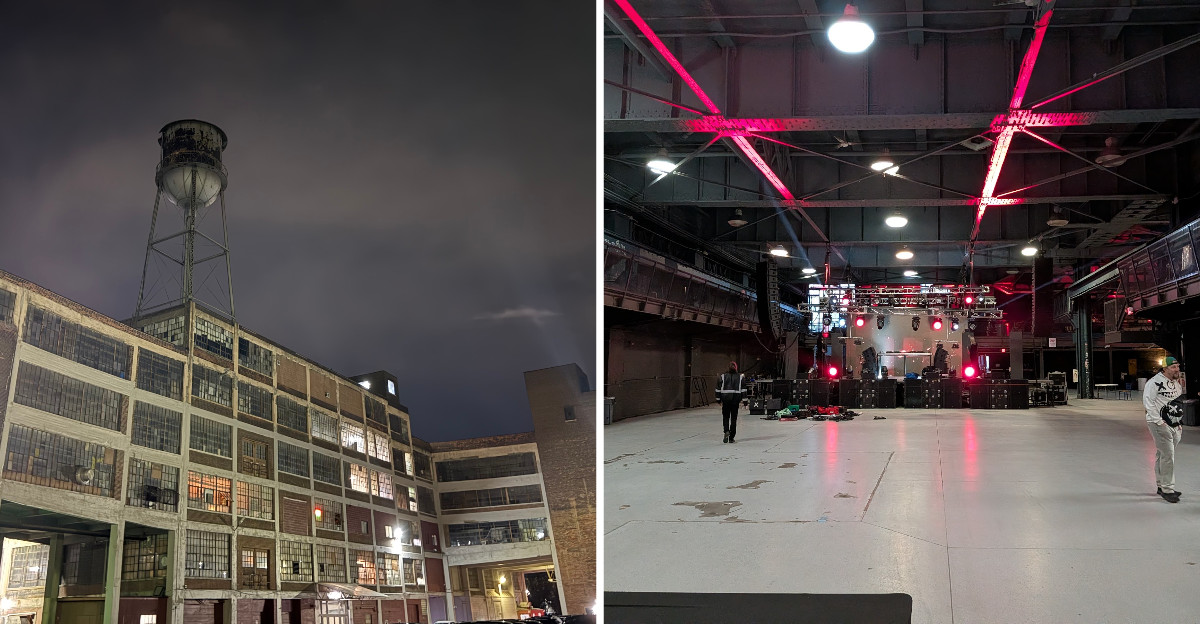
Eminem filmed his Rap God music video inside an old Detroit auto body factory.
Today, that same building is packed with painters, glass blowers, and metal sculptors.
So how big is this place? Try seven buildings and 2.2 million square feet.
More than a million of those square feet are now studio and loft space for creative people.
Okay, but what makes it worth a visit? On the first weekend of every month, an indoor market called the Russell Bazaar opens its doors.
Concerts, festivals, and art shows fill the old factory floors too.
Who knew a place built for car parts could end up making so much art?
A Car Parts Factory Became A Creative Powerhouse
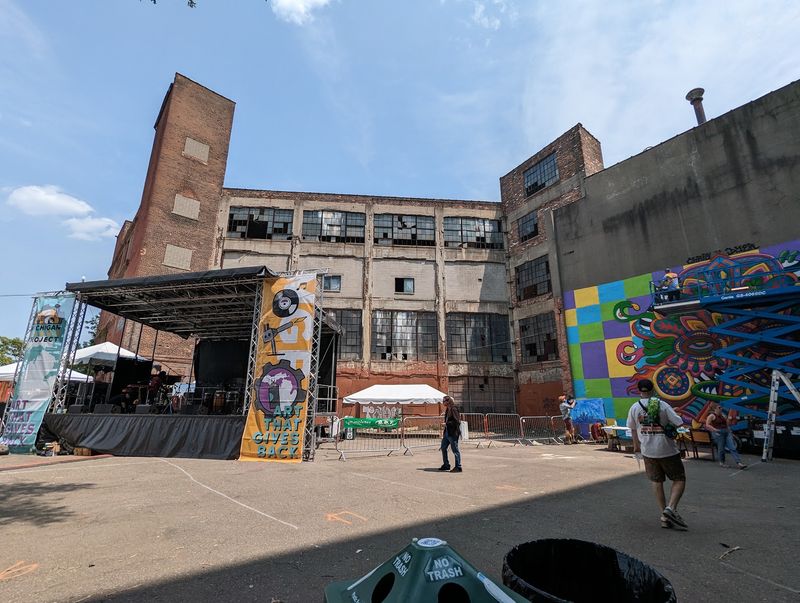
Few buildings get a second act this dramatic. The Russell Industrial Center started life making auto body parts and now hosts one of the busiest creative scenes in the country.
Famed architect Albert Kahn designed the complex in 1915 for John William Murray. His company later became the Murray Body Corporation in 1924, supplying parts to automakers like Ford.
Car work continued at the site until 1955. Then in 1960, Packard Properties bought the complex and gave it the Russell Industrial Center name.
For decades after that, manufacturing and distribution companies rented space inside. Leona Helmsley even owned the property from 1970 to 1991, which is a fun bit of trivia for your next road trip.
A tornado and storm damaged the buildings in 1998, and the complex sat empty. That could have been the end of the story, but it wasn’t.
In 2003, Dennis Kefallinos bought the seven buildings and started turning them into studios and lofts. By 2018, the center had worked through safety code issues with the city.
Now the old factory buzzes with artists and small businesses. It’s a true Michigan comeback story, told in concrete and brick.
You Could Spend All Day Just Counting The Square Footage
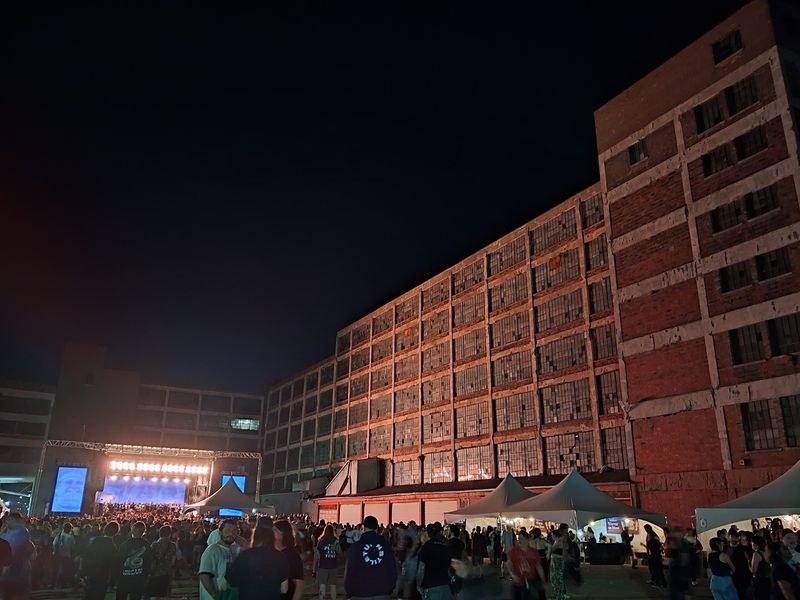
Seven buildings. 2.2 million square feet. Those numbers sound more like a small town than an art center.
More than one million square feet have been adapted for creative studios, lofts, and related businesses. The complex identifies itself as the largest art community in the Midwest, with more than 100 artists maintaining workshops and studios there.
So what does that look like in real life?
Available workspaces range from approximately 600-square-foot studios to workshops covering as much as 40,000 square feet. That gives individual artists and larger creative businesses room for very different activities.
A painter might need a quiet studio with natural light. A furniture maker needs room for tools, materials, and finished pieces. Photographers and designers have their own equipment and layout requirements.
Flexible leasing arrangements make the buildings useful for different types of businesses. The complex also provides on-site parking and around-the-clock security for tenants.
Those enormous corridors and factory floors are fascinating, but they’re active workplaces rather than a public museum.
Albert Kahn Built It To Let The Sunshine In
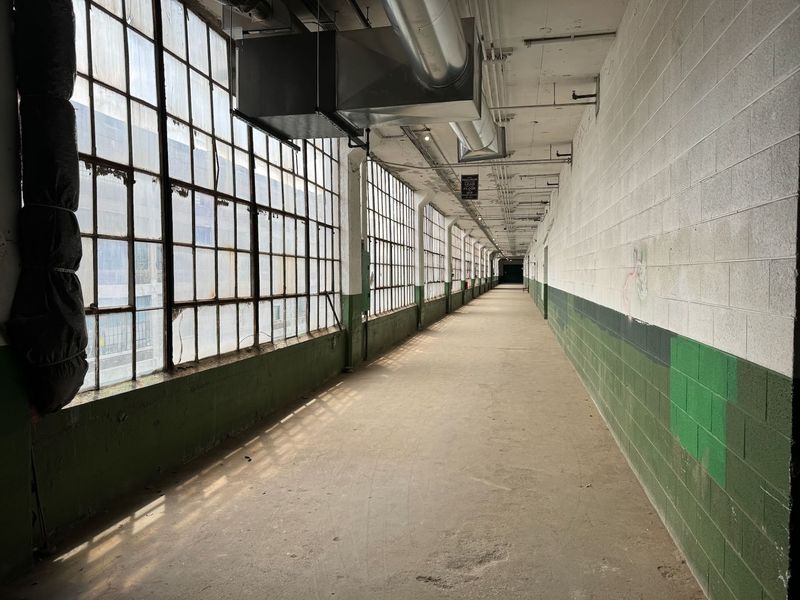
Albert Kahn knew a thing or two about light. His factories were famous for strong concrete frames and walls full of giant windows.
That style shows up throughout this Detroit landmark. One particularly striking building facing Russell Avenue was constructed between 1923 and 1924, with tall steel-framed windows extending across its exterior.
Those windows brought daylight into industrial spaces where workers assembled and finished automotive components.
Today, the same architectural feature makes parts of the complex especially suitable for studios. Large windows provide natural illumination for painting, photography, and other creative work.
The reinforced concrete structure also gives the buildings their distinctive character. Heavy columns, broad floor plates, and open interiors reflect the practical demands of early automobile manufacturing.
From the street, the complex can look pretty serious and plain. It’s classic industrial Detroit, with lots of brick, concrete, and right angles.
Inside, individual workspaces retain different combinations of concrete floors, exposed structural supports, tall ceilings, and original window grids.
For architecture enthusiasts, the building itself is part of the attraction. Few Michigan art communities operate inside such an enormous example of early twentieth-century factory design.
Glass Blowers, Painters, And Musicians Share The Same Hallways
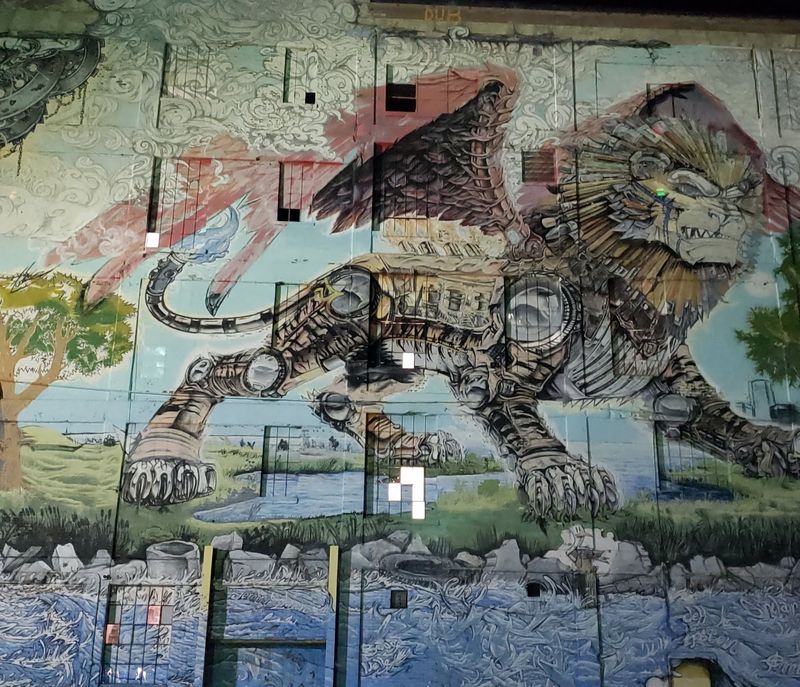
Glassblowers next to graphic designers? Clothing designers down the hall from sculptors? Yep, that’s the kind of creative mix you’ll find here.
The Russell Industrial Center houses painters, printmakers, photographers, ceramic artists, woodworkers, and musicians, along with businesses focused on fashion and design.
One of the most interesting occupants is Michigan Hot Glass, a working glass studio inside Building 1. Its furnaces and specialized equipment support glassblowing, casting, fusing, and torchwork.
Visitors can experience some of those techniques during scheduled workshops. Participants can create glass flowers, decorative tiles, or small sculptural pieces under professional instruction.
Elsewhere in the complex, studios accommodate recording projects, photography sessions, pottery, and textile work.
The center maintains a tenant directory highlighting creative businesses throughout the buildings. Some artists offer classes and appointments, while others operate private workspaces.
That mix is what makes the place so interesting. Traditional handcrafts share the enormous former factory with digital production and contemporary design.
The proximity of so many disciplines also creates opportunities for collaboration.
An Old-School Bazaar Added Shopping To The Factory’s Story
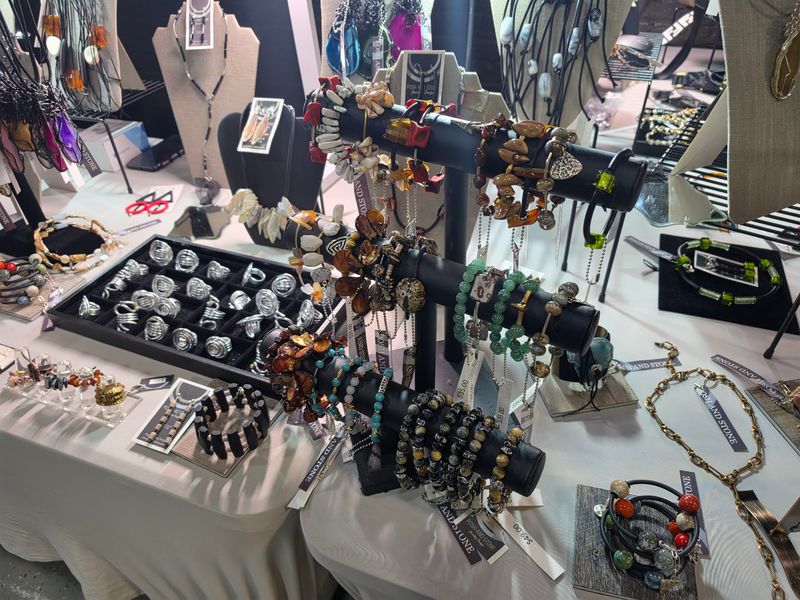
The Russell Bazaar brought an entirely different kind of business into the former factory. Instead of machinery and manufacturing supplies, its stalls offered clothing, handmade goods, and vintage finds.
The marketplace launched in September 2008 as part of the Russell Industrial Center’s transformation into a destination for independent businesses.
Its early merchants included artists, specialty retailers, and entrepreneurs selling everything from clothing to decorative objects.
The market created an opportunity for small businesses to operate alongside established studio tenants.
The People’s Art Festival helped introduce the shopping concept to the wider community, combining creative displays with independent vendors.
The bazaar became an important chapter in the center’s history, demonstrating that a former automobile factory could accommodate both production and retail activity.
Today, the most dependable way to explore the creative side of the complex is through scheduled public programming rather than assuming a market takes place on the first weekend of every month.
Art workshops, exhibitions, and occasional shopping events provide opportunities to experience different parts of the property.
Festivals Turn The Old Factory Floors Into A Giant Party
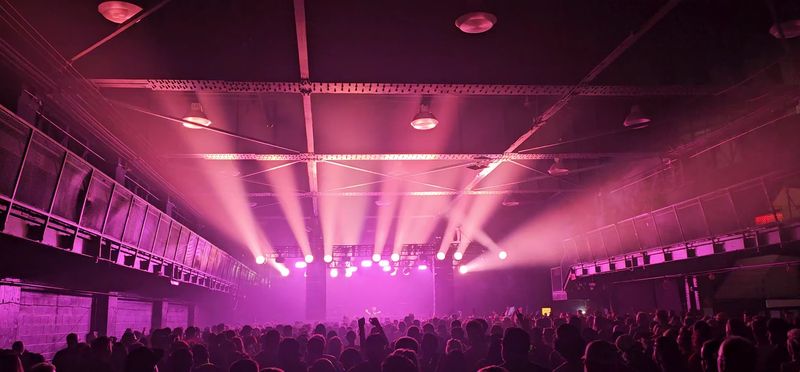
Concerts, art shows, and festivals regularly take over the complex. When the calendar fills up, the old factory feels anything but sleepy.
The People’s Art Festival was one of the center’s earlier signature gatherings, bringing visual artists, performers, and independent merchants together.
More recent events have included the Michigan Glass Project, Tied Down Detroit, and Movement-related music programming.
Tied Down returned in May 2026, bringing two days of live performances to the former manufacturing campus.
The Russell’s event spaces continue to host concerts throughout the year, with several performances scheduled for November and December 2026.
Music and art work particularly well against this backdrop. Tall ceilings, exposed structural elements, and expansive floors give organizers flexibility when designing their events.
The atmosphere depends on what’s happening. A glassmaking demonstration offers a completely different experience from a large evening concert.
Some events are designed for all ages, while others have specific age requirements. Admission arrangements also vary, so it’s worth checking the individual event before planning your visit.
Large gatherings can attract considerable crowds, making early arrival useful for parking and entry.
Need A Spot For A Big Event? The Expo Center Has Room To Spare
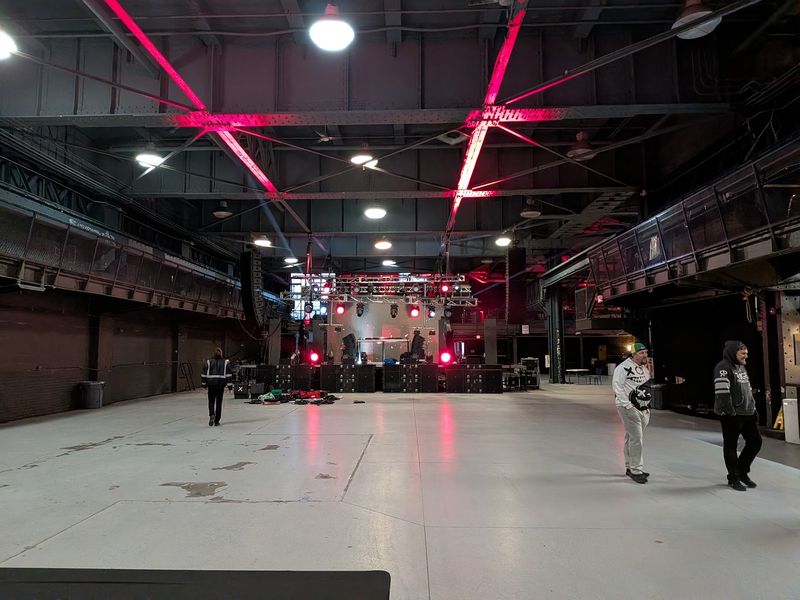
Tradeshow, product launch, or company celebration? The Expo Center at the Russell Industrial Center can accommodate all kinds of gatherings.
This event space is also known as the Baker Building. It offers approximately 36,000 square feet of room, providing considerable flexibility for exhibitions, stages, and large receptions.
The floors are polished white, giving planners a clean, bright base to work with. That’s handy when an event calls for elaborate decorations or distinctive lighting.
Loading heavy equipment is easier thanks to a freight dock, while on-site parking and event security support larger gatherings. There’s an interesting piece of music history here too.
The Expo Center served as a filming backdrop for Eminem’s Rap God music video, released in November 2013.
The production used the industrial setting to create a dramatic visual atmosphere for the Detroit rapper’s performance.
The same venue has accommodated exhibitions, private celebrations, and large public gatherings. It offers a striking contrast between early industrial architecture and contemporary event design.
Getting There Puts You In Detroit’s Lively North End
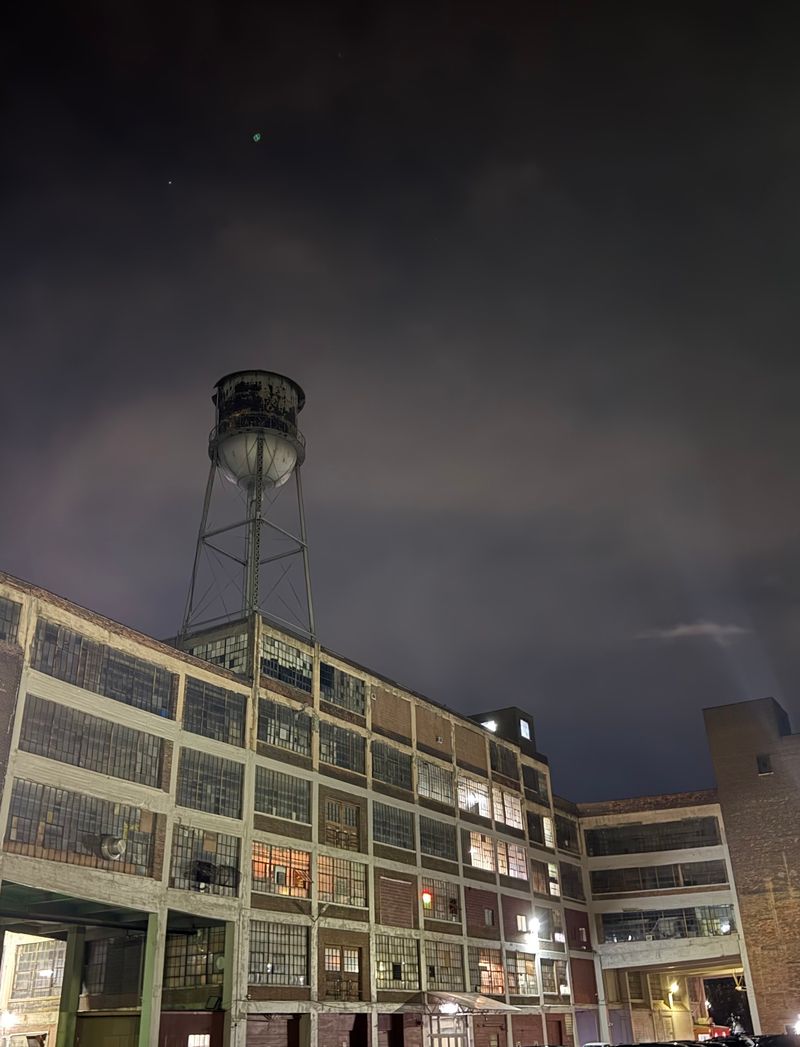
Finding this creative giant is easier than you might expect. The address is 1600 Clay St, Detroit, MI 48211, in the city’s North End neighborhood.
The complex is hard to miss once you’re close. Seven huge factory buildings tend to stand out on any map or skyline.
It sits near the intersection of Interstate 75 and Interstate 94, making the destination accessible from several parts of metropolitan Detroit.
Driving is a practical option, and the center offers on-site parking. Arrangements may vary during major events, so check the instructions for your particular visit.
The complex’s management office operates Monday through Friday from 9 a.m. to 5 p.m. Public events and individual studios maintain their own schedules.
Before you go, look for a specific exhibition, workshop, or concert. The buildings are working spaces for creative professionals, and regular business hours don’t necessarily mean every studio is open to visitors.
If you’re interested in glassmaking, book a designated workshop. For live entertainment, arrive according to the event organizer’s entry instructions.
There’s plenty of architectural character to appreciate along the way, from the long industrial facades to the enormous window grids.