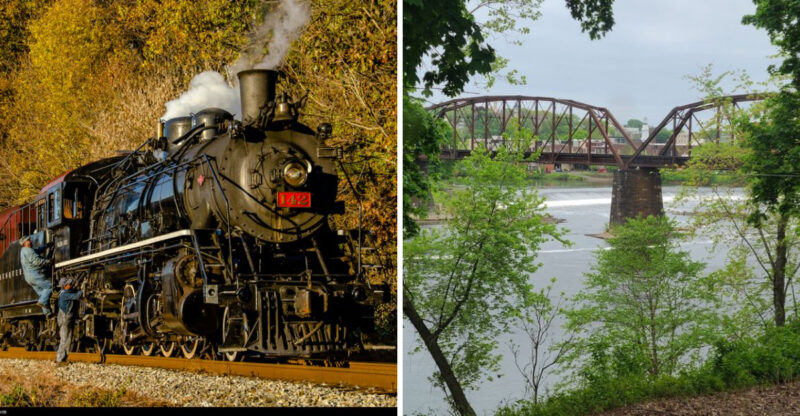
This Historic New Jersey Museum Is Free To Visit And Even Has An Egyptian Mummy
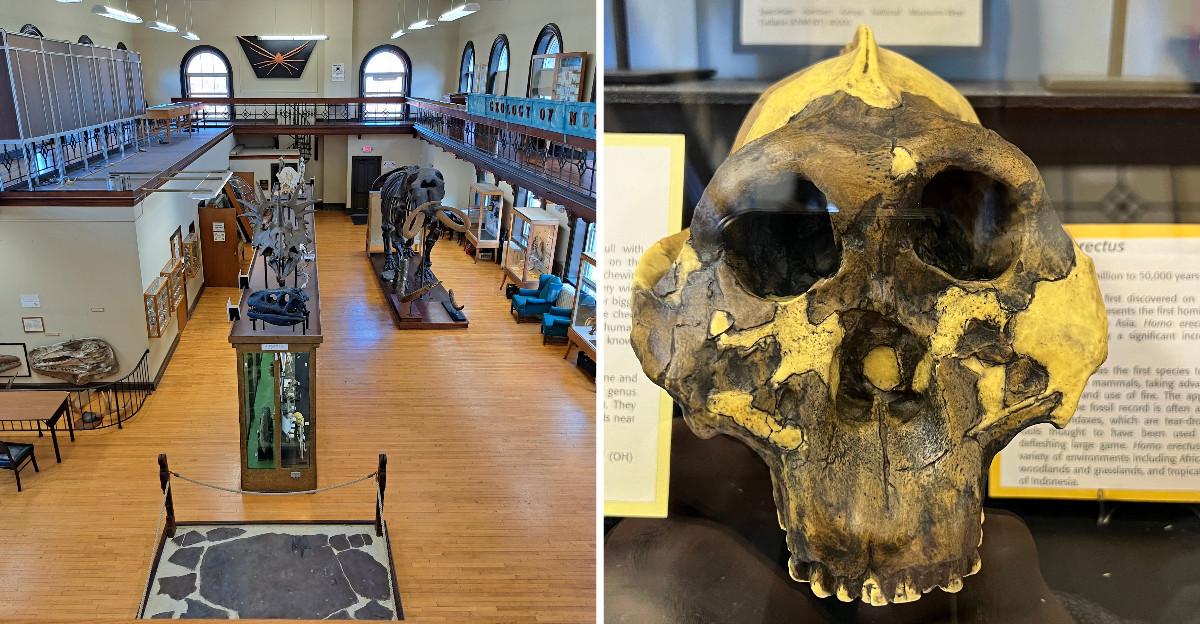
Free admission already gets attention. An Egyptian mummy makes the argument much easier.
New Jersey has a compact historic museum where fossils, minerals, meteorites, and prehistoric remains share space with one very unexpected ancient visitor.
The size may actually work in its favor. Visitors can take their time without committing an entire day or reaching museum exhaustion halfway through.
Kids have plenty to investigate, while adults can still find enough detail to linger.
Honestly, the mummy alone may settle the question of whether the stop is worthwhile.
Everything else feels like a very generous bonus for the price of absolutely nothing.
America’s Oldest Geology Museum
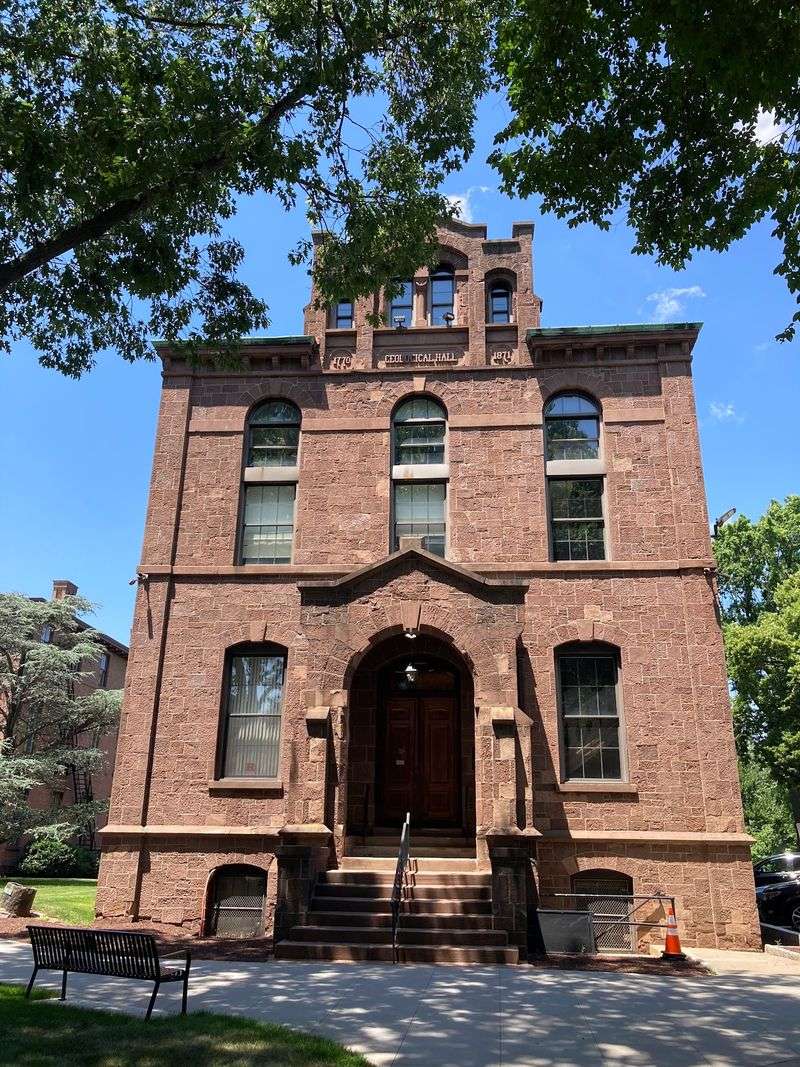
Founded in 1872, the Rutgers Geology Museum holds the title of oldest geology museum in the United States.
The collection actually started even earlier, back in the 1830s. A naturalist named Beck gathered scientific samples for classroom display, and those specimens became the foundation of everything you see today.
Geological Hall itself went up between April 1871 and June 1872. State Geologist George H. Cook pushed the project forward, hoping exhibits would teach students and curious neighbors alike.
Here is a detail I love. The building’s original plans came from Henry Janeway Hardenbergh, a graduate who later designed the Dakota Apartments and the Plaza Hotel in New York City.
Early on, the building housed science lecture rooms and laboratories on its first floor, while an armory for military instruction occupied the basement.
By 1926, Rutgers geology operations occupied all four floors, with the museum and offices on the second and third floors and classrooms and laboratories below.
More than 150 years of teaching, research, and public education give the building an unusually deep academic history. You will find it at 85 Somerset St in New Brunswick.
Meeting Iset-Ha The Egyptian Mummy
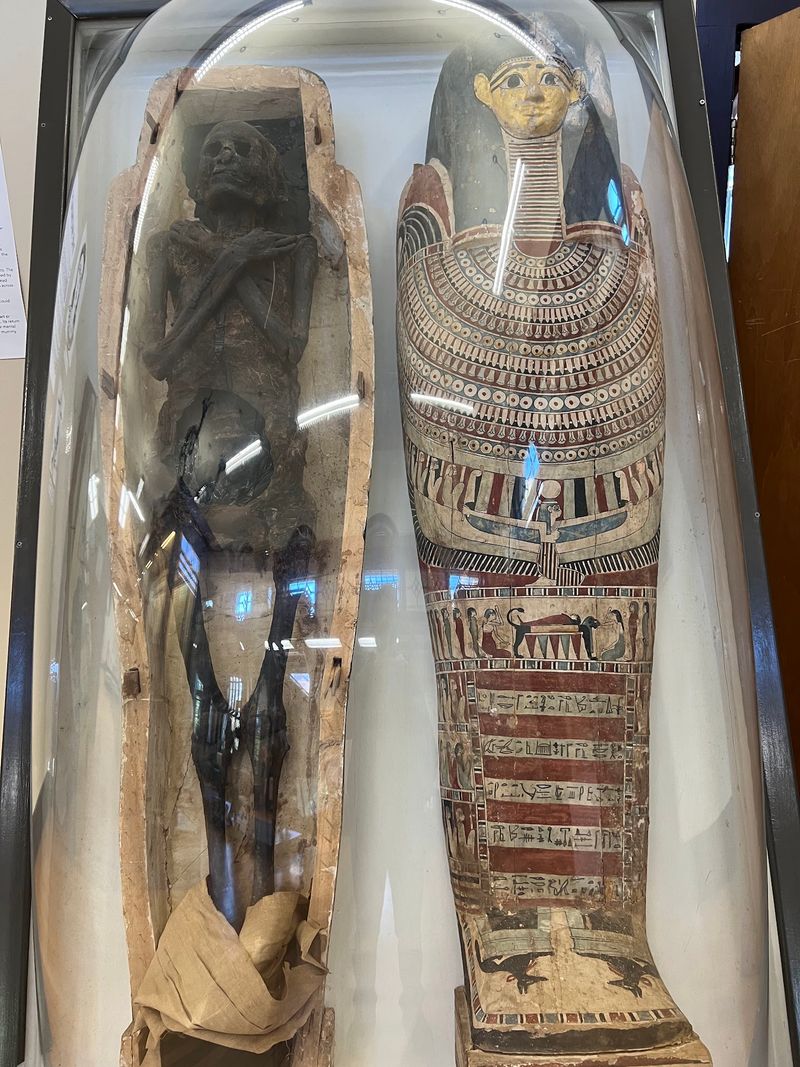
The museum’s Egyptian collection includes the real mummy of Iset-Ha, a woman Rutgers researchers believe was likely a priestess.
She rests alongside her painted sarcophagus and several other Egyptian artifacts. The coffin shows her face rendered in soft colors, her arms crossed in the traditional pose.
Iset-Ha comes from the Ptolemaic period, roughly 320 to 30 B.C.E. Standing a few feet away from someone that ancient rearranges your sense of time.
The mummy is on loan from the New Brunswick Theological Seminary. A missionary brought her to the university about a century ago, which explains how Egypt landed in central New Jersey.
The surrounding Egyptian artifacts give visitors more context for the world in which Iset-Ha lived.
Guided tours cover Egypt and mummies, and groups can add activities such as building a 3D pyramid or creating a cartouche.
The gift shop sells Egyptian-themed toys too, so young visitors can keep the story going at home.
Iset-Ha remains one of the museum’s signature exhibits alongside Manny the Mastodon and its major fossil and mineral collections.
Manny The Mastodon Towers
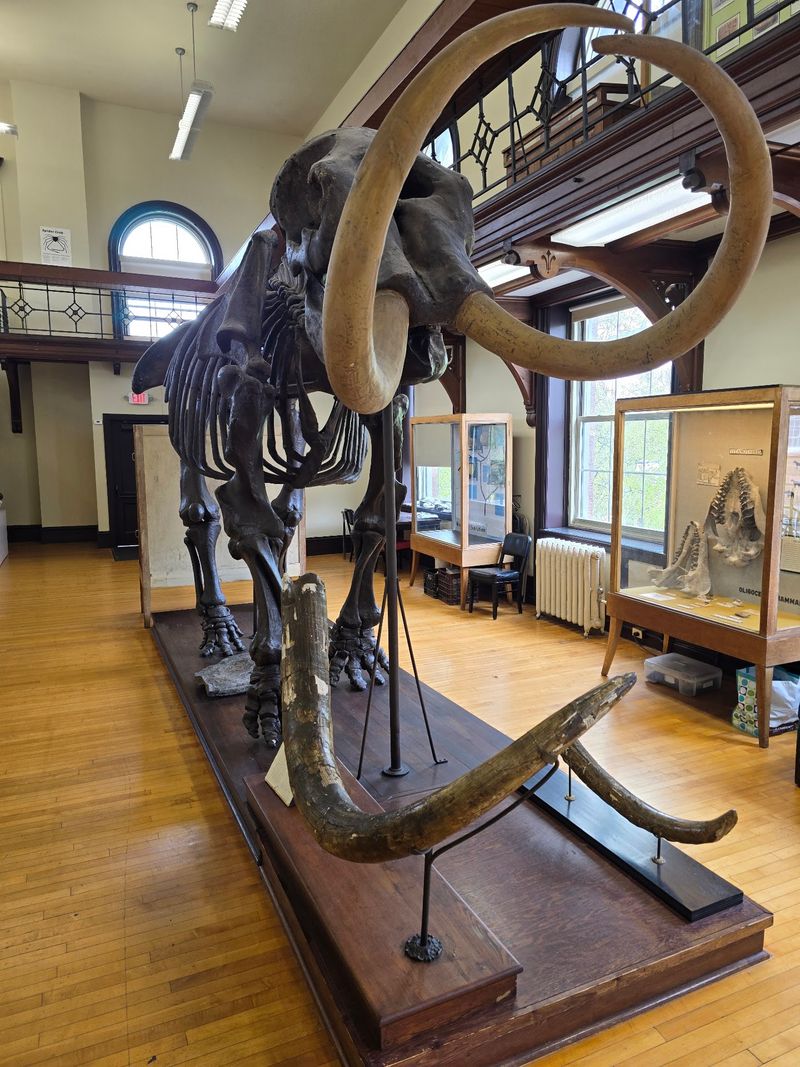
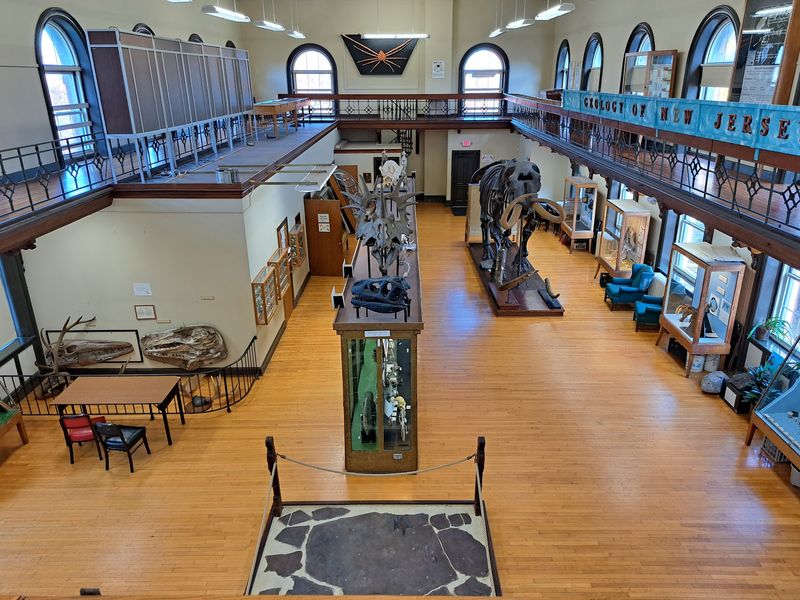
A 12-foot-tall, fully articulated mastodon skeleton now anchors the museum’s central gallery. Staff and current Rutgers educational materials call him Manny.
He is a nearly complete, fully articulated Mammut americanum. The sweeping tusks on the mount are casts because the original tusks deteriorated after being exposed to air.
Rutgers’ latest research into Manny’s history dates the uncovering of his skull and bones in Mannington to 1868. That local connection makes the exhibit feel personal rather than imported from somewhere far away.
After negotiations led by George H. Cook, the State of New Jersey purchased the skeleton for $300 in 1870. Manny went on display in 1896, then got remounted in 1932, and he has held court ever since.
The near-complete specimen is one of the best-known examples of mastodon remains found in New Jersey.
Mastodons were relatives of modern elephants and woolly mammoths. Seeing the ribcage up close gives you a real sense of their bulk.
A children’s book called My Friend Manny now retells the skeleton’s documented history for younger readers.
Bring a camera and stand back a bit. Manny is too big to fit in one close-up frame, which is part of the fun.
Footprints And Sea Monsters
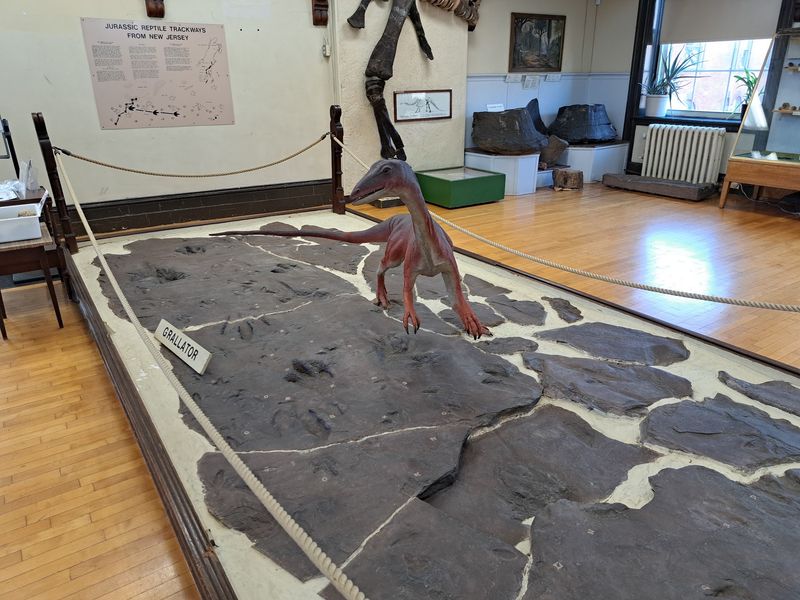
Pressed into slabs of stone are three-toed footprints left by Grallator, a meat-eating dinosaur. Some of those tracks came from Towaco, New Jersey.
Unlike a reconstructed skeleton, the Towaco trackway preserves actual traces left by animals moving across the landscape during the Jurassic.
Models, cast skeleton heads, body replicas, and statues fill in the picture. Together they sketch out what prehistoric life in this region actually looked like.
Then there are the mosasaurs, extinct marine reptiles that ruled the oceans during the Late Cretaceous. Two nearly complete skulls sit on display, and they are genuinely intimidating.
People often assume mosasaurs were dinosaurs. Current research suggests they were closer relatives of snakes and monitor lizards, which surprised me.
Artistic renderings hang nearby, showing these predators cutting through ancient seas. The artwork helps younger visitors picture the animals in motion.
Fossil Fun programs guide participants through different fossil types and how they form, with activities designed for Scout, school, and other K-6 groups.
The gift shop keeps dinosaur toys in stock for anyone who leaves obsessed. My advice is to read the labels slowly, because rushing past these fossils wastes the best part.
Rocks That Glow Vividly
There is a darkened room tucked in the back where rocks glow electric green and orange. Ultraviolet light does the trick, and honestly it feels like magic.
The fluorescent display is called the Anne and Milton Hershhorn Fluorescent Mineral Exhibit, and most of its specimens come from New Jersey.
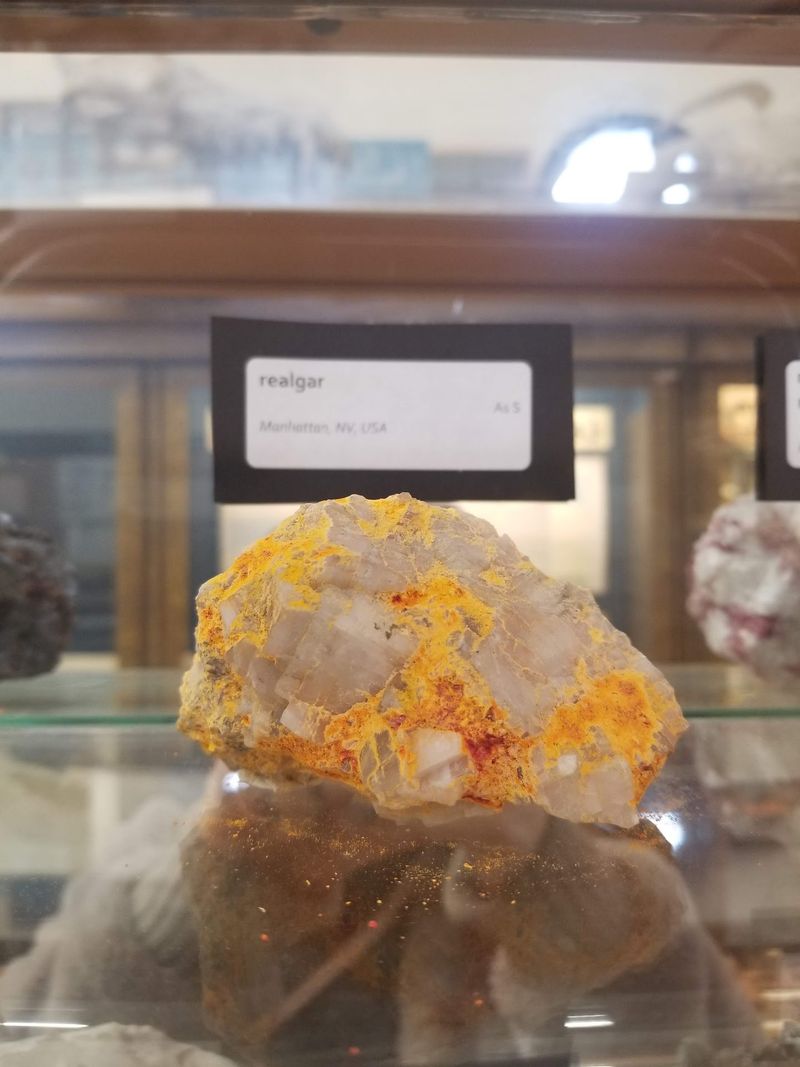
Much of the mineral collection traces back to donations from Cook, Beck, Rowe, and Chester. Their combined efforts built something remarkable over many decades.
Rare New Jersey minerals get special attention here. Many were pulled from 19th and 20th century zinc mines in Franklin and Ogdensburg, up in Sussex County.
The George Rowe collection alone holds roughly 2,400 specimens. Rowe worked as a mine captain for the New Jersey Zinc Company and donated his lifetime of finds.
One case holds Roweite, a rare mineral named in his honor. The museum owns one of very few known specimens anywhere.
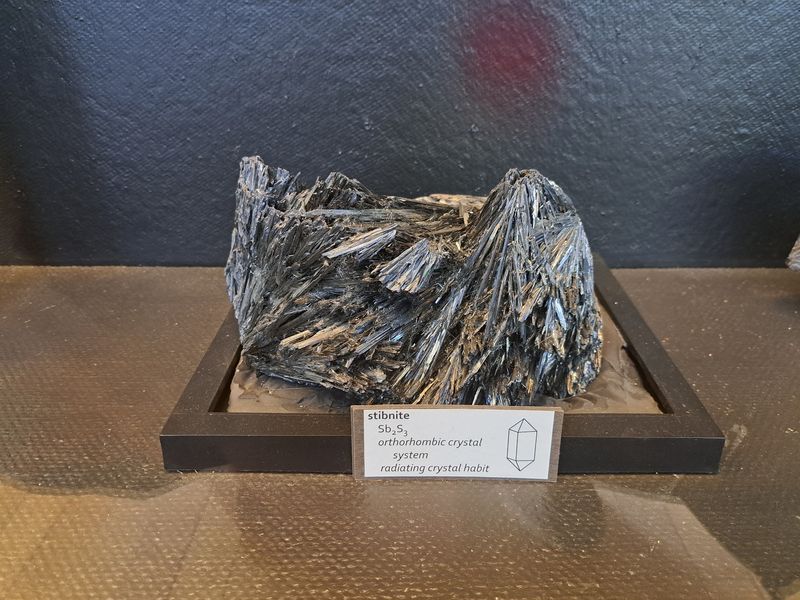
Individual samples are often small, but the sheer variety keeps your eyes moving. Colors, crystal shapes, and textures shift case by case.
These collections still support research and train new scholars, giving the historic specimens an active role beyond the display cases.
Space Rocks And Planets
Pieces of meteorites sit on display as part of a three-part exhibit devoted to meteorites and planetary science.
A three-part meteorite exhibit walks you through how our solar system came together. The panels explain different meteorite types and where each one originated.
One section covers the formation of layered planets, including Earth, connecting meteorite evidence with how planetary interiors developed.
That connection gives a compact New Jersey museum a surprisingly broad view of planetary history.
Visitors can email photos of mystery rocks, minerals, or fossils for help with identification, while in-person specimen identification is offered at the museum’s Annual Open House.
That identification service gives curious visitors a way to continue the science beyond the display cases.
The museum’s Ask a Geologist series was created during the pandemic, and past recordings include a program devoted to meteorites.
Between the physical specimens and the museum’s archived online programs, planetary science gets an unusually approachable presentation here.
Scavenger Hunts And Late Nights
Free scavenger hunts are available from museum staff at the front desk for self-guided visitors.
Late Night at the Museum events use a first-Thursday format when scheduled, with changing themes drawn from geology, anthropology, and paleontology.
Public lectures and special activity days fill out the calendar. The schedule shifts, so checking ahead saves disappointment.
The archived Ask a Geologist series was designed primarily for elementary and middle school students, with specialists introducing a topic and answering participant questions.
Guided tours serve K-12 school groups and scout troops. There is even a Geology Merit Badge program with hands-on components.
Birthday parties are an option too, with themes built around fossils, gems, or ancient Egypt. That is a memorable alternative to the usual party spots.
The Annual Open House includes a gem, mineral, and fossil sale alongside lectures, identification sessions, children’s activities, and museum exhibits.
Programs like these turn a small museum into a real community classroom, and that is worth applauding.
Hours, Parking, Gift Shop
Practical stuff matters, especially with a campus museum. Plan ahead and your visit goes smoothly.
The Rutgers Geology Museum generally welcomes visitors Tuesday through Friday, 10 AM to 4 PM, during the academic year. Select Saturdays run 10 AM to 2 PM.
Sundays and Mondays are typically closed, along with major holidays and university breaks. Calling first is smart, since hours can shift.
Admission is free, while donations are welcomed separately to support museum exhibits and programming.
Driving in, look for metered street parking along George Street, Hamilton Street, Somerset Street, and College Avenue. Nearby garages and non-university lots give you backup options.
Look up photos of the brownstone exterior before you arrive. The Gothic and classical mix is handsome, but easy to walk past on a busy campus street.
Visit length is flexible, but the museum occupies an upper-floor exhibition space with a wraparound gallery. Visitors should also know that Geology Hall currently has no elevator.
Before leaving, browse the gift shop. Tumbled and rough minerals, fossils, stone jewelry, and dinosaur or Egyptian toys line the shelves.
Ancient bones, glowing rocks, and a priestess from Egypt, all free in New Jersey. Go see it.