This Historic Roadhouse In Kingston, Idaho Has Outlasted The Silver Valley’s Mining Boom
A restaurant serving fried Rocky Mountain oysters has been feeding hungry travelers since around 1880.
That’s older than Idaho’s statehood, and the building has outlived the miners who first filled its seats.
The place has worn several names over the years.
One owner even renamed it a resort to sound more respectable. A 1911 fire couldn’t shut it down either, since business kept going during the rebuild.
I love that a spot this old still serves smoked brisket, bread pudding, and huckleberry ice cream.
It sits right beside a river in the Silver Valley, with deer heads and old signs covering the walls. I can’t imagine a better excuse for a Sunday drive.
So how does one roadhouse survive booms, busts, fires, and nearly 150 years of hungry customers?
Idaho’s Oldest Restaurant Sits Right On The River Road
Few restaurants can claim a guest list that started with silver miners. The Snake Pit, in the tiny community of Kingston, is widely known as the oldest restaurant in Idaho.
It sits along the Coeur d’Alene River Road, near the fork where the North Fork meets the South Fork. That spot sits in the heart of the Silver Valley, in the Idaho Panhandle’s Shoshone County.
The building looks every bit its age, in the best way. Weathered wood, antlers, and a vintage sign out front announce that you’ve arrived somewhere with stories.
Kingston itself is unincorporated and rural. That means the roadhouse doubles as a landmark, a meeting point, and a reason to pull off the interstate.
Today, The Snake Pit runs as a full restaurant with smoked meats, hearty breakfasts, and a menu that leans proudly into mountain tradition. It’s the kind of stop that rewards curiosity before you even open the menu.
Drivers heading between Coeur d’Alene and the Silver Valley towns have probably passed it without realizing its age. Once you know, that wooden front looks a lot more impressive.
Nearly a century and a half of service will do that.
Born When The Silver Valley Was Booming
Around 1880, possibly even 1879, the Silver Valley was filling up fast. Fortune hunters poured into the Coeur d’Alene mining district, and they all needed somewhere to eat.
The roadhouse stepped into that role early. Miners, loggers, and travelers found food and company inside, right where the river forks made a natural layover.
That mining era shaped the whole region for roughly a century. Shoshone County became a major producer of silver, lead, and zinc, and small towns popped up across the valley.
Plenty of those towns faded once the big operations slowed. The Snake Pit kept its doors open while the valley shifted toward recreation and tourism.
That’s what makes its survival so striking. The customers changed from muddy miners to families on scenic drives, yet the building stayed put.
Some mining still continues in the Silver Valley today. Still, the roadhouse now feels less like a boomtown necessity and more like a living link to that busy, rough-edged chapter of Idaho history.
Not bad for a place that started as a simple stop for tired workers. Its first customers would hardly recognize the menu now.
So Many Names For One Stubborn Old Building
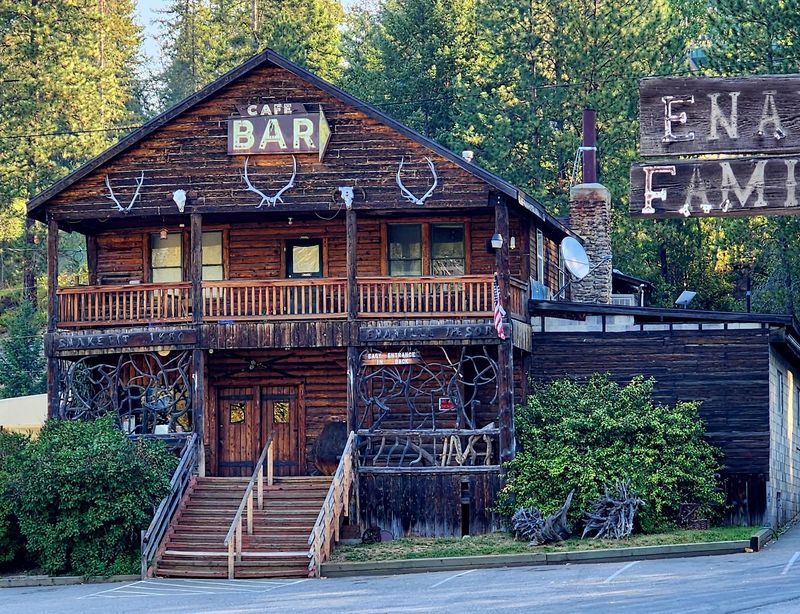
Call it The Snake Pit today, but older locals might use a different name entirely. Over the decades, the roadhouse has been known as The Enaville Resort, Josie’s, and The Clark Hotel.
Each name marks a different era of ownership and local identity. Together they read like a family tree for one very durable building.
The hotel years show how the business adapted. At various points it worked as a hotel, a boomtown gathering spot, and a stop tied to the railroad.
The Enaville name has an especially fun backstory. Josie and Al Bates took over in 1954 and chose that title because it sounded more respectable.
Apparently “The Snake Pit” had a reputation that needed polishing. The nickname stuck anyway, which feels like the most Silver Valley outcome possible.
You can still spot a nod to the past on the menu. The Enaville Burger keeps that old name in circulation, so the history travels right onto your plate.
Honestly, how many restaurants can trace their lineage through four names? Most businesses struggle to keep one sign up for a decade.
A 1911 Fire Barely Slowed Things Down
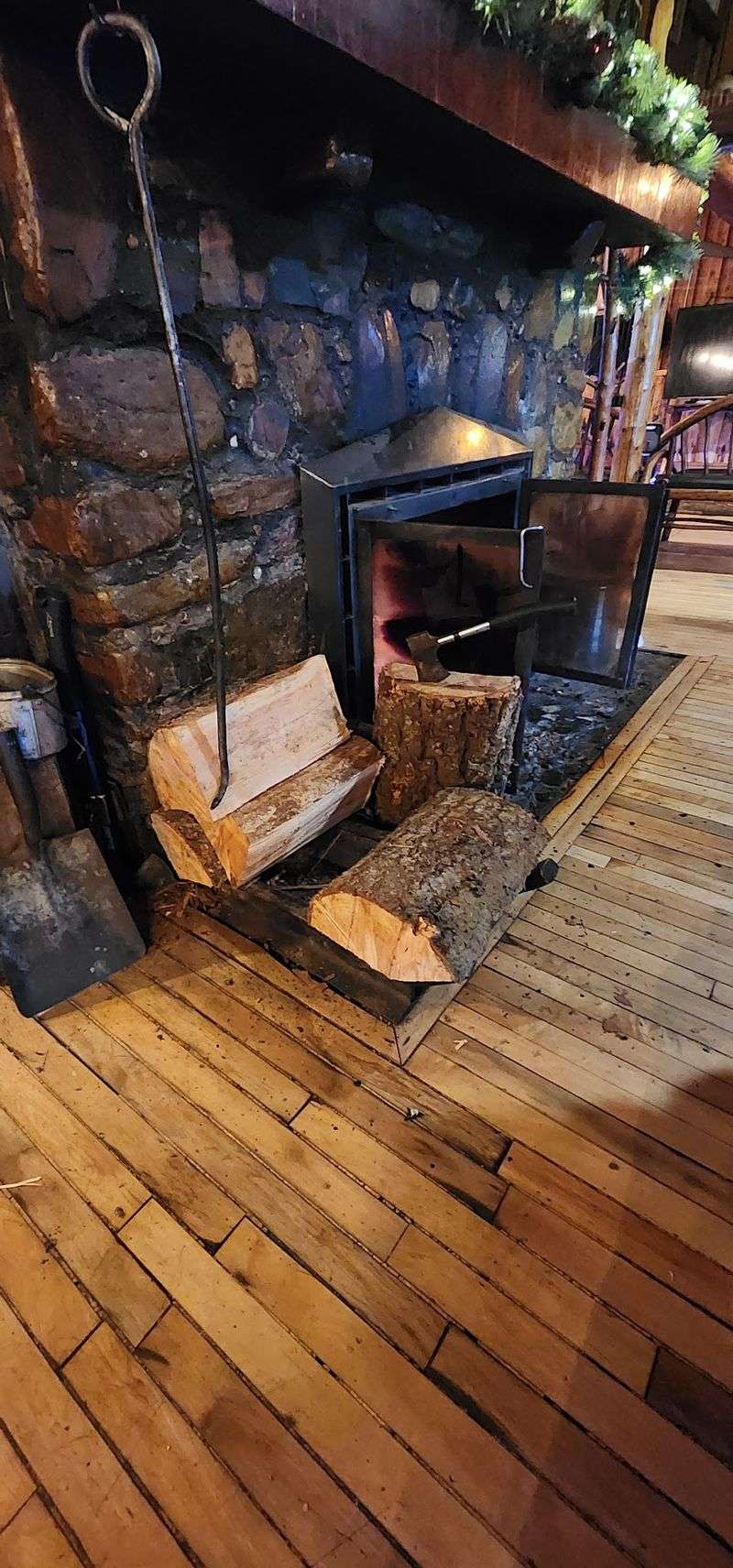
Back in 1911, a fire of suspicious nature struck the roadhouse. Plenty of businesses would have closed for good after that.
Instead, operations continued while the rebuild happened. That detail says a lot about how much the surrounding community depended on the place.
Think about the setting at the time. This was a working valley full of miners, loggers, and railroad crews, and they still needed hot meals.
Shutting the doors simply wasn’t an option. So the roadhouse kept serving through the hammering and sawdust.
That stubborn streak shows up again and again in its story. Names changed, owners changed, and the economy around it changed, yet the business kept going.
It’s easy to romanticize old buildings. Here, though, the resilience comes with a real date attached, which makes it far more satisfying.
The next time you sit near the fireplace, remember that this roadhouse once stayed open through a literal rebuild. Your wait for brisket suddenly feels pretty minor.
Few Idaho restaurants carry that kind of backstory. Fewer still keep serving more than a century after their toughest year.
Railroad Crews Once Made This Their Layover
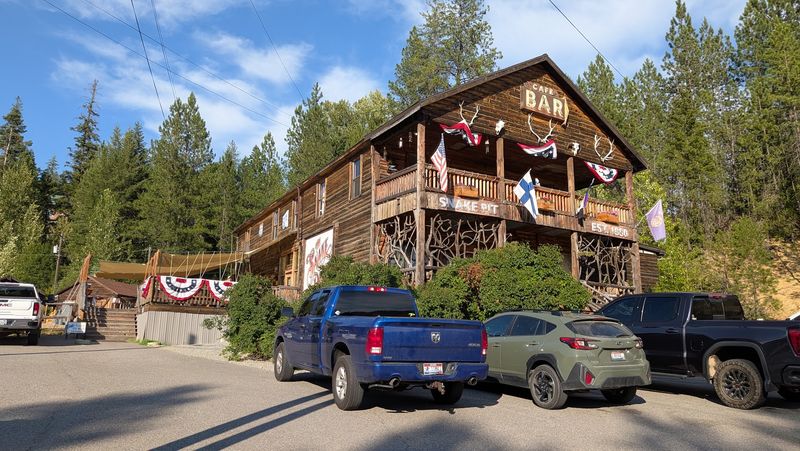
Trains changed everything for the roadhouse in 1908. That year, the Idaho Northern Railroad was built from Enaville to Murray.
Suddenly the spot became a transportation center for railroaders and loggers. A good meal at the fork of the river made perfect sense on a long working day.
Murray was one of the early gold rush towns up the North Fork. Connecting it by rail brought steady traffic right past the roadhouse door.
Loggers used the area as a starting point too. Timber work in these mountains was hard, and a reliable stop for food mattered.
Those rails are part of history now. The location, however, still works the same magic as a natural crossroads.
Today’s travelers arrive by car instead of locomotive. Many are headed upriver for fishing, camping, or a scenic loop through the Panhandle.
It’s a neat bit of continuity. The roadhouse began as a launch point for working crews and now serves as one for weekend adventurers.
Same fork in the river, different reasons to stop. The appetite, clearly, never went out of style.
Every Wall Has Something To Stare At
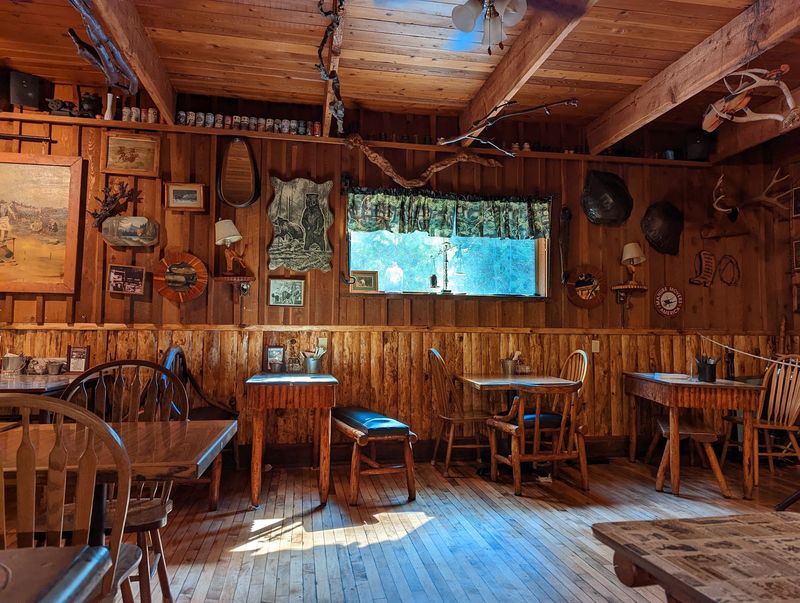
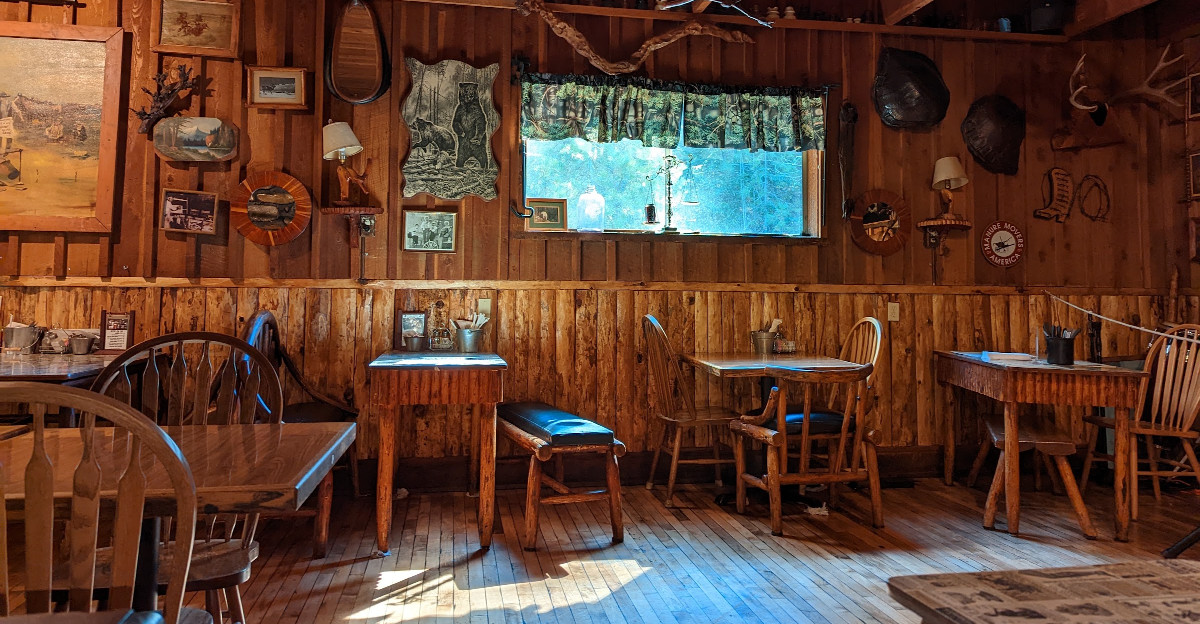
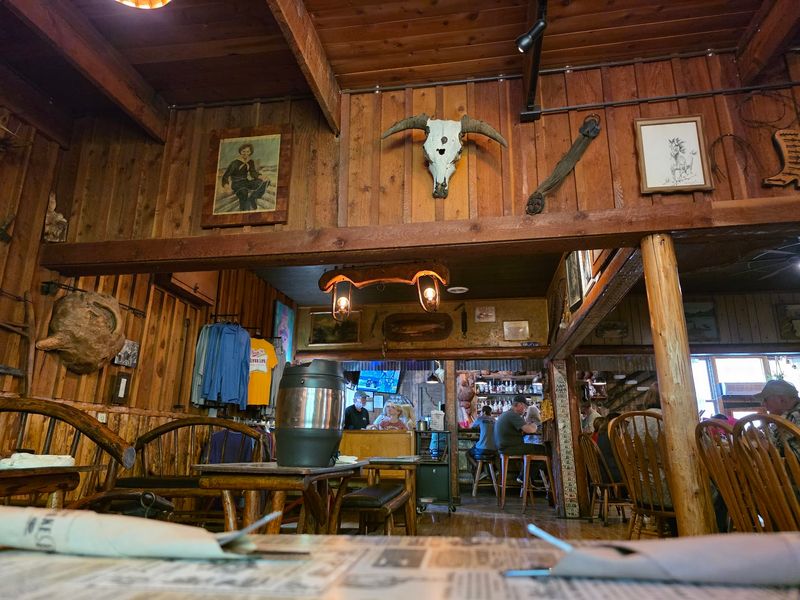
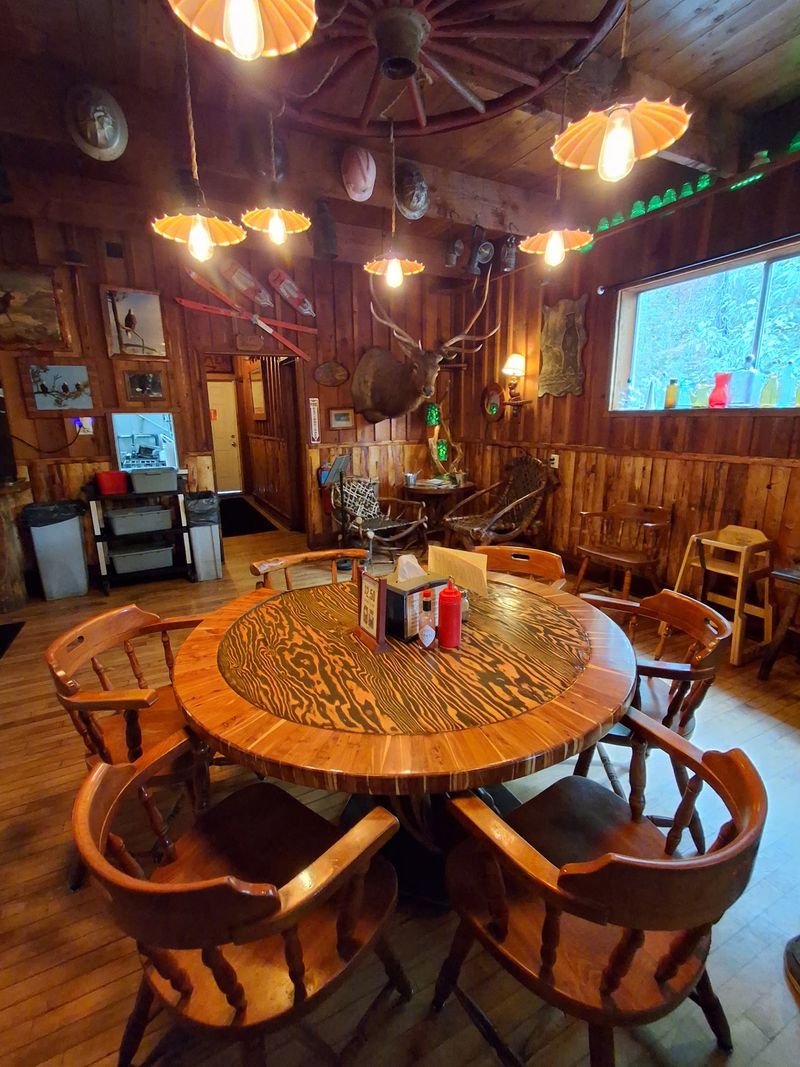
Deer heads, bear mounts, vintage lanterns, and wagon wheel chandeliers. The interior of The Snake Pit looks like a museum curated by a very enthusiastic mountain historian.
Wooden beams frame the dining room. Old signs, bumper stickers, photos, and handmade art fill nearly every open surface.
A big stone fireplace anchors the room. It burns wood, so the space carries a cozy, smoky warmth on cooler days.
The collection tells the story of mining and logging in the Silver Valley. You could easily lose track of your menu while reading the walls.
Recent owners have also given the place a refresh. The interior is now brighter and cleaner, so all that memorabilia is easier to actually see.
That’s a smart balance. The history stays front and center, but the room feels welcoming instead of dusty.
Bring a little patience if you’re with kids. They’ll want to point at every antler and old sign, and honestly, so will you.
Fair warning for the easily distracted. Your food might arrive before you finish studying one corner.
Smoked Meats Are The Real Headliners
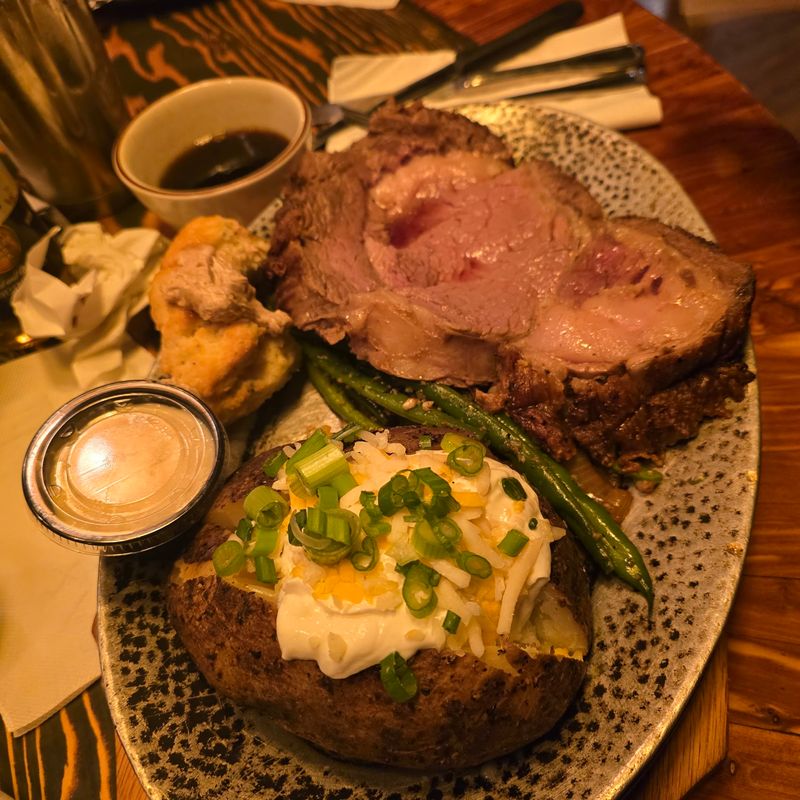
Brisket gets a lot of attention here, and for good reason. The Snake Pit smokes its meats in-house, and that work shows up all over the menu.
The barbecue platter piles brisket, pulled pork, and sausages onto one plate. It comes with barbecue sauce, jalapenos, mustard, and sauerkraut, which covers just about every craving.
Brisket also lands in sandwiches like the Brisket Cheesesteak. Pulled pork shows up on nachos big enough to share.
Then there’s prime rib, a longtime favorite. The River Dip turns it into a sandwich with a creamy mushroom and cheese twist.
Burgers carry local names too. Look for the Enaville Burger with jalapeno jam, the North Fork Burger, and the Snake Pit Burger.
Not in a meat mood? Fish and chips, halibut and chips, a NY strip steak, chicken fried steak, and loaded mac and cheese round things out.
Portions run generous, so plan accordingly. Splitting an appetizer before your main course is a very reasonable strategy.
Either way, nobody leaves this river valley hungry. That’s been true since the mining crews ate here.
Plan Your Trip And Take The Scenic Route
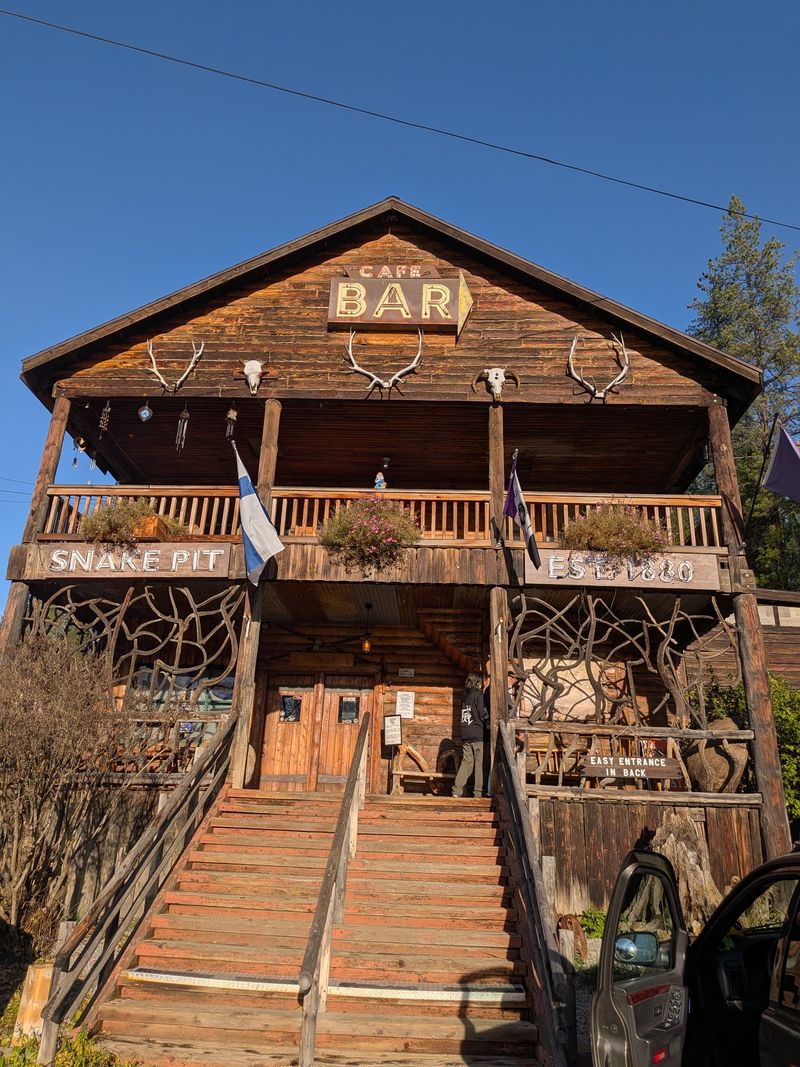
Getting there is half the fun. The Snake Pit sits at 1480 Coeur D’Alene River Rd, Kingston, ID 83839, a short hop off I-90 in the Silver Valley.
The roadhouse opens Thursday through Sunday. Breakfast runs on weekend mornings only, so check before driving to avoid a closed door.
Expect prices typical of a sit-down restaurant. Portions are generous, which makes the bill feel fair for a special outing.
There’s no dedicated kids menu right now. Families can share plates or choose simpler items like burgers and fries.
Coeur d’Alene sits within an easy drive to the west. That makes this an ideal afternoon trip for Panhandle families and weekend explorers alike.
So is it worth the drive? For a taste of Idaho history, smoked brisket, and huckleberry dessert, it’s hard to argue otherwise.
This roadhouse has outlasted the mining boom, a fire, and several name changes. It’s still serving travelers at the same river fork after nearly 150 years.
That kind of staying power deserves a visit. Bring curiosity, and leave room for bread pudding.