This Historic Tennessee Church Is Filled With Painted Ceilings And Brilliant Stained Glass
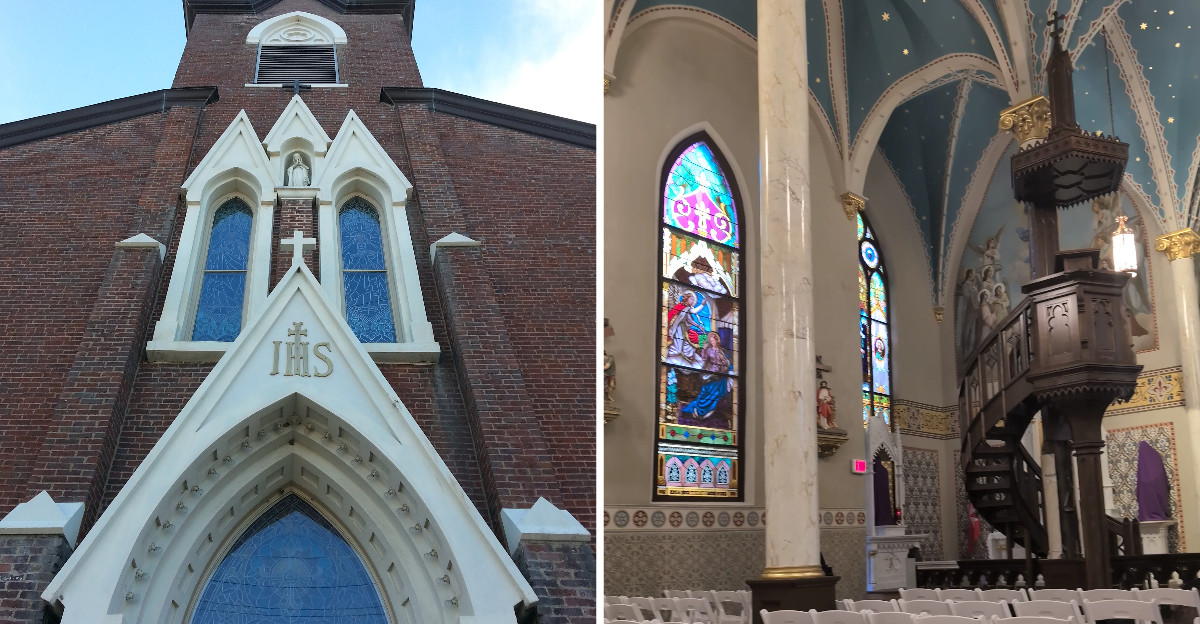
Look up before you do anything else. Inside this Tennessee church, the ceiling competes with the stained glass for every bit of attention.
Painted details spread overhead while colored light shifts across the room below.
The beauty feels even more powerful once you learn how much restoration was required to preserve it.
Damage could have erased large parts of the interior. Instead, careful work brought the craftsmanship back into focus.
The result does not feel frozen in time. It feels cared for.
Visitors can admire the architecture, but the bigger story is one of survival, patience, and a community determined to protect what remained.
Brick Beginnings In Germantown
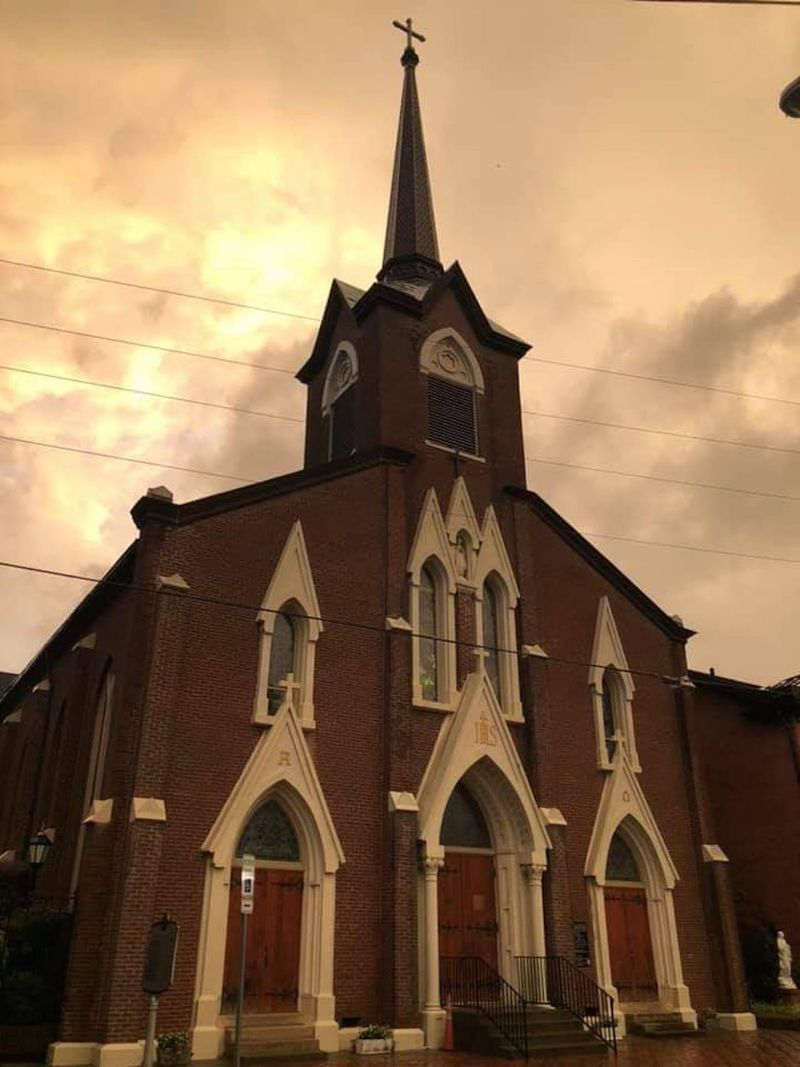
German immigrants built this place because they wanted to pray in their own language. Assumption Church was dedicated on August 14, 1859, making it Nashville’s second oldest Catholic church.
Bricks from Nashville’s original Holy Rosary church were reused in Assumption’s north wall during construction. Those recycled bricks make the building a physical record of Tennessee’s earliest Catholic story.
The neighborhood around it, Germantown, grew up alongside the parish. Families worked, cooked, and worshipped within a few short blocks of each other.
History did not leave the building alone. Union troops took over the structure briefly in 1864, and much of the original interior decoration was left in rough shape.
The congregation rebuilt anyway. Renovations followed, and the beauty slowly returned over decades of patient effort.
Recognition arrived in 1977, when the church joined the National Register of Historic Places. The surrounding Germantown Historic District received its own National Register listing in 1979.
Generations of parishioners have used the church since its dedication in 1859. Immigrants, soldiers, farmers, and now curious travelers like me. You can find it at 1227 7th Ave N in Nashville.
Two Thousand Gilded Stars Above
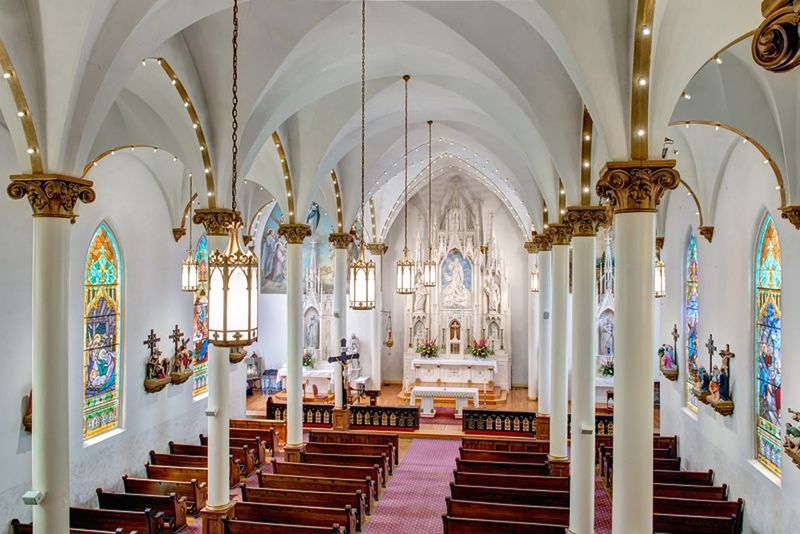
Tilt your head back and the whole room changes. The ceiling glows a deep cerulean blue meant to suggest the open heavens.
Scattered across that blue are more than 2,000 gold-gilded stars. They come in five, six, and eight-pointed shapes, so no two stretches of ceiling look quite the same.
The stars are not random decoration. They reference Psalm 147:4, which says God knows every star by name.
Parishioners helped fund the decorative program by sponsoring individual stars. The completed ceiling turned those contributions into part of the church’s visual design.
The blue star-filled ceiling was introduced as part of the post-tornado decorative redesign rather than recreated from an earlier ceiling scheme. They repaired plaster, then applied a palette of more than twenty distinct paint colors.
Metallic finishes and delicate 23-karat gold leaf accents finish the job. Those details catch light differently depending on where you stand in the nave.
One more element deserves your attention. A Marian crescent moon carries Latin text from Revelation 12:1, describing a woman clothed with the sun.
Windows That Tell Stories
Color arrives before you do. On bright mornings the stained glass throws red, blue, and amber patches across the pews.
Many of the stained-glass windows use figural scenes rather than purely ornamental designs.
Scenes from the life of Christ and figures of spiritual importance fill the panes.
The first major round of new windows went in during an 1880s enlargement. That project signaled an early commitment to serious artistry in this Tennessee parish.
Another wave came at the turn of the 20th century. Those additions deepened the visual storytelling wrapping the sanctuary.
Then March 2020 happened. A tornado tore through Germantown and battered the glass badly.
Craftsmen from Conrad Schmitt Studios handled the rescue. They removed, refurbished, and reinstalled the windows with painstaking care.
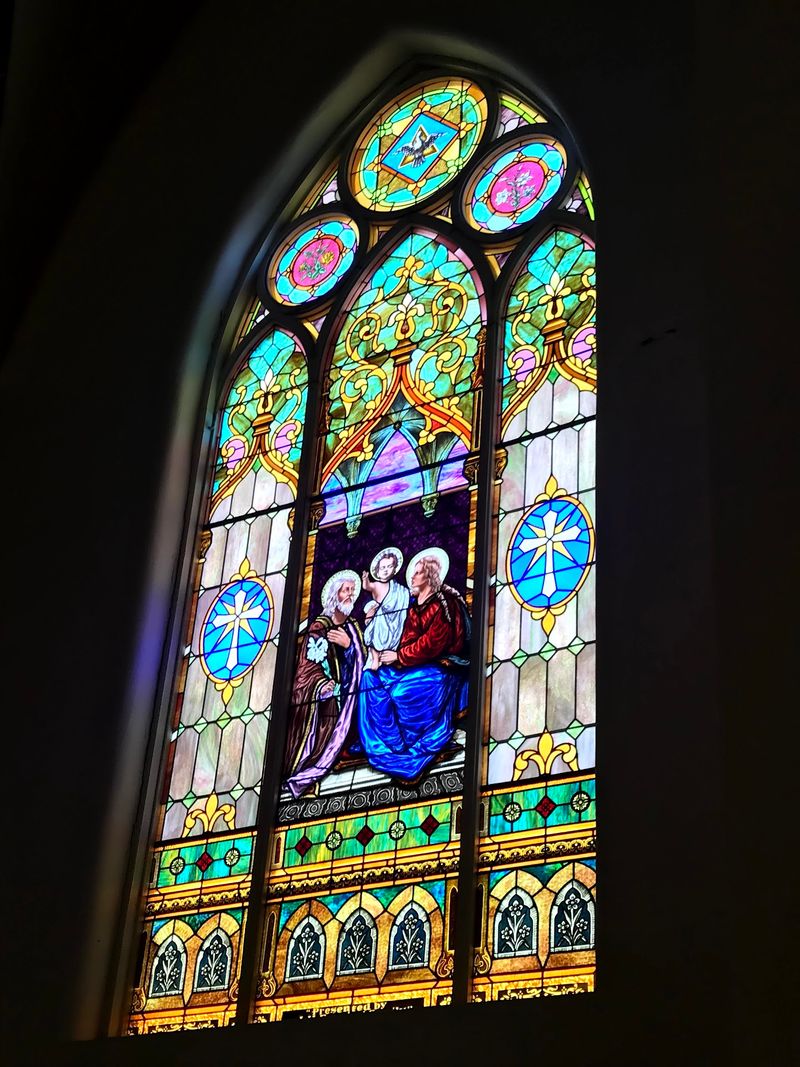
One window on the north wall took the worst of it. Depicting the Holy Family, it had to be recreated from scattered fragments and a single small historical photograph.
Windows line both sides of the nave, allowing their appearance to shift as daylight moves across the church.
Neo-Gothic Lines And Arches
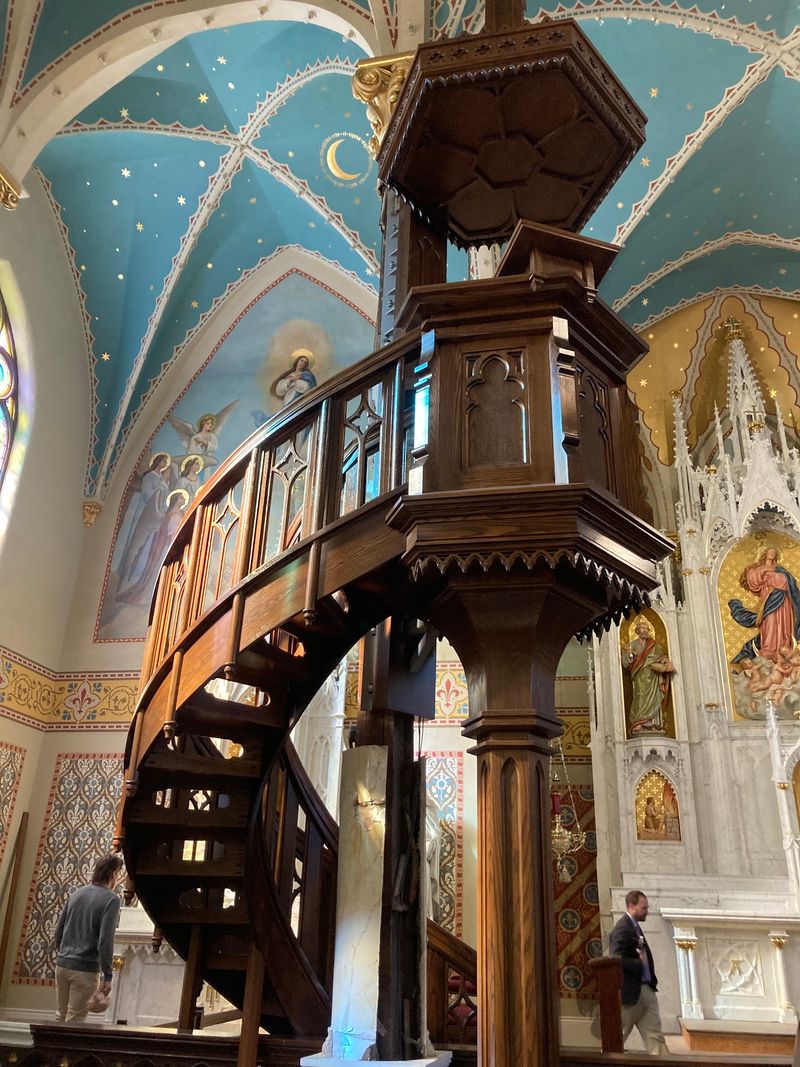
Simple beginnings gave way to soaring ambition. The original structure was a plainer brick building before the 1880s transformation.
That renovation turned it into the Neo-Gothic beauty visitors see today. Pointed arches, fine detailing, and strong vertical lines pull your eyes upward.
Architects chose the style deliberately. Everything in a Neo-Gothic interior encourages you to look toward the heavens.
Columns divide the nave into a sequence of narrow Gothic bays leading toward the sanctuary. Their vertical lines reinforce the upward emphasis created by the pointed arches.
Underneath the beauty sits real engineering. Bricks from Holy Rosary, the diocese’s proto-cathedral, form part of the north wall.
Modern work strengthened the bones too. A steel tie-rod system was installed to support the original roof timbers during the post-tornado restoration.
That mix matters more than it sounds. Old timber and new steel now share the load quietly overhead.
The restoration required extensive plaster work throughout the church before decorative painting could proceed. The renewed surfaces then became the base for both restored motifs and newly designed ornament.
Murals, Stencils, And Symbols
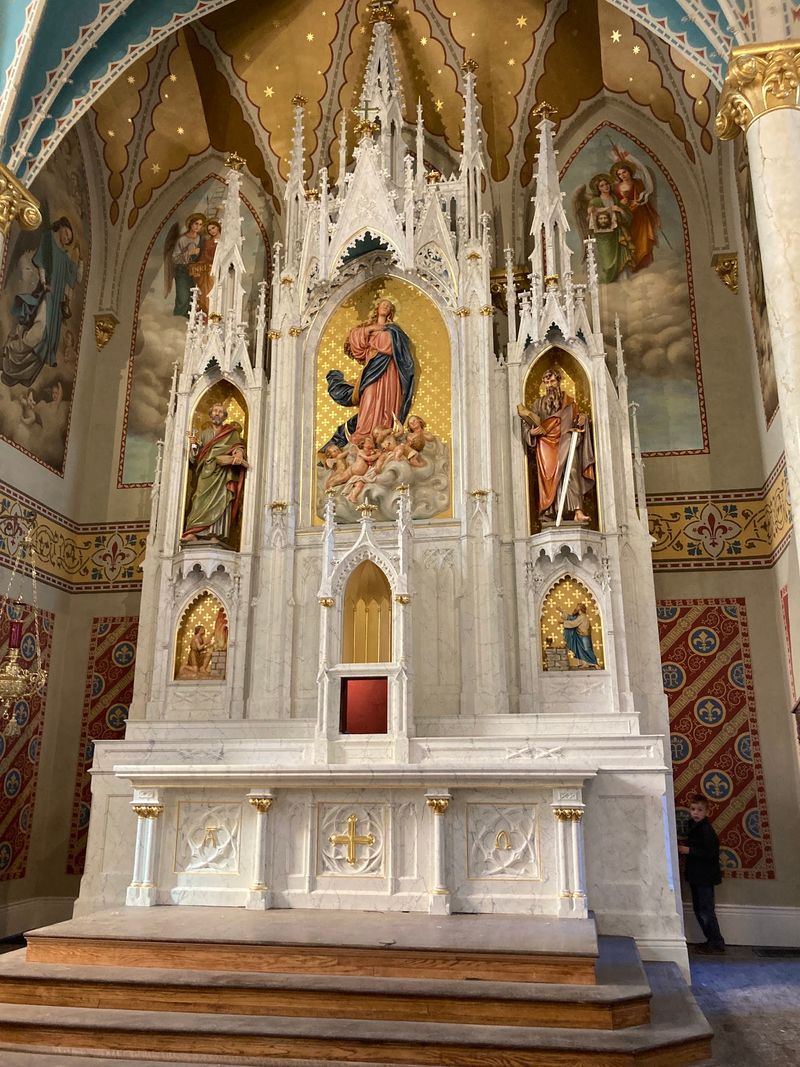
Not every treasure here hangs overhead. Above the side altars, large murals depict the Ascension of Jesus and the Assumption of Our Lady.
Both scenes carry weight in Christian belief. Their scale makes them impossible to walk past without pausing.
The two historic side-altarpiece murals were removed, cleaned, touched up, and reinstalled during the restoration. The colors read clearly from the middle of the nave.
Smaller details reward a closer look. Around the three altars and the newly installed shrines, stenciling patterns run along the walls.
Designers pulled inspiration from late 19th-century German neo-Gothic examples. Historical photographs guided the altar-area pattern, while a separate original stencil was uncovered behind a confessional and replicated along the nave walls.
Together, those sources allowed the decorative program to recover motifs that had disappeared beneath later finishes. The restored patterns were then adapted into the church’s new interior color scheme.
Marian symbols thread through the whole decorative program. Look for the Mystic Rose and the elegant fleur-de-lis repeating across surfaces.
The patterns grow more intricate as you approach the sanctuary. That gradual buildup signals where the most sacred action happens.
Font, Pulpit, And Altars
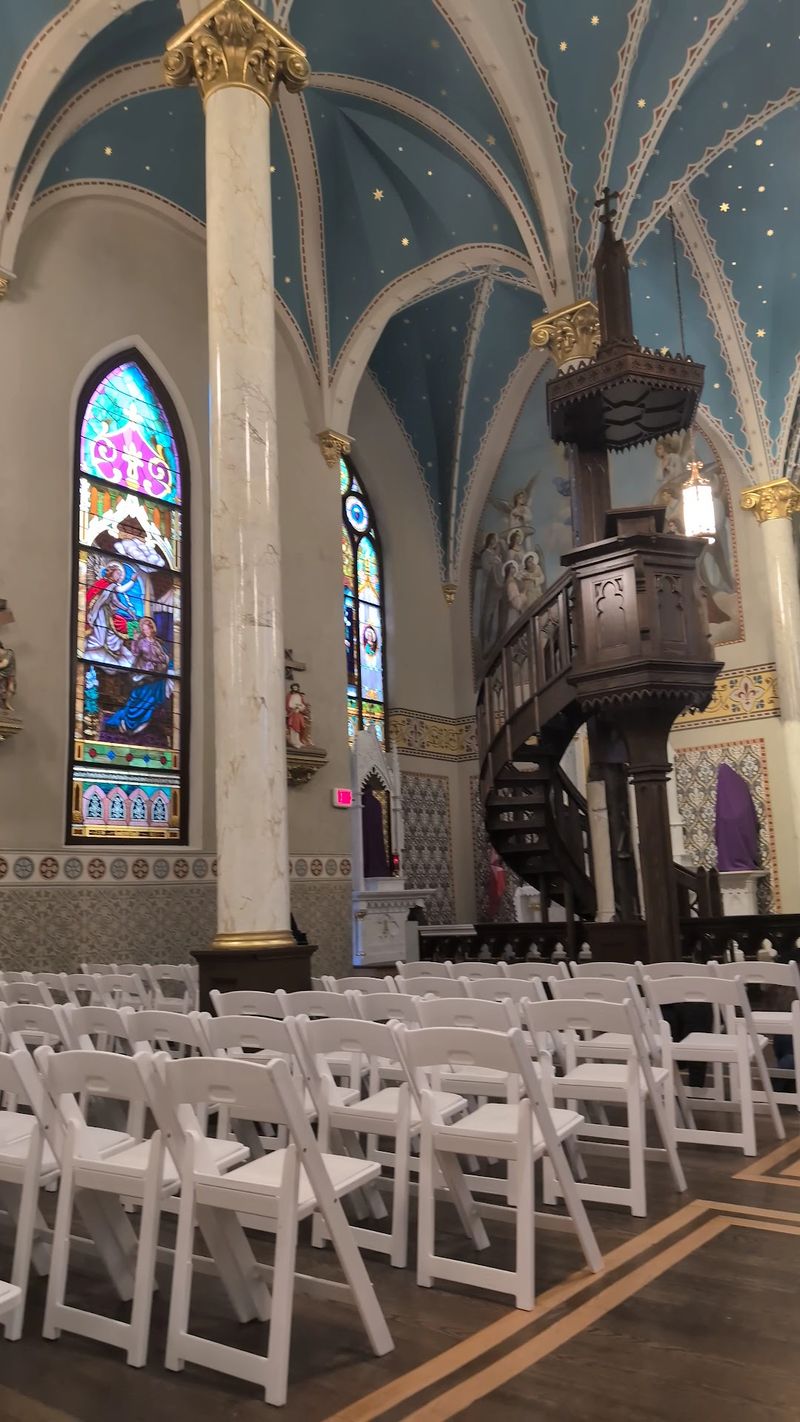
Furniture can carry as much history as walls. Restoration work here reinstated a classical sanctuary arrangement rooted in traditional practice.
The layout itself shapes the mood. Everything points toward the altar without clutter or confusion.
The baptismal font moved back to its original home in the baptistry near the entrance. Workers raised it on a special platform so it stands out.
Above the font sits a new image of the Holy Spirit as a dove. The symbol reminds everyone entering what baptism means.
A new pulpit joined the restoration as well. Designers modeled it partly on the church’s historical pulpit, blending authenticity with practical use.
I appreciated how the new pieces avoid looking like copies. They fit the room while still feeling fresh.
Devotional details stretch back further. New Stations of the Cross arrived around the parish’s 50th anniversary in 1909.
Walking that path around the nave connects you to worshippers from more than a century ago. The stations still guide prayer today.
The restoration addressed liturgical furnishings, altars, decorative finishes, murals, and other interior elements. The completed design combines conserved historic material with newly created pieces.
Latin Chant Meets Malayalam Prayer
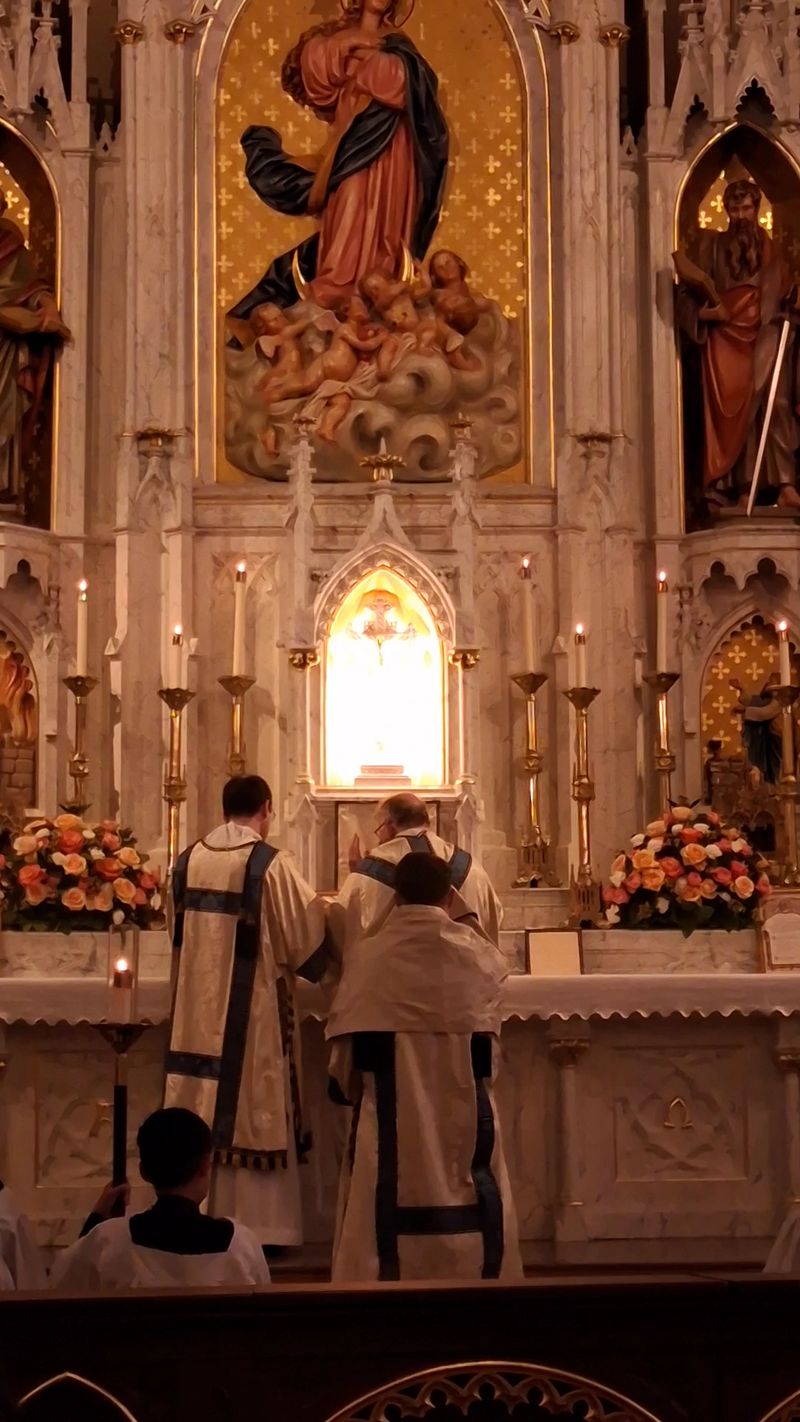
Music and liturgy form another distinctive part of parish life. This parish has long served Nashville’s Traditional Latin Mass Community.
Assumption is designated as a stable location for Mass according to the liturgical books in use before the 1970 reforms.
Gregorian chant, processions, and vespers are established parts of its traditional parish life.
A second Catholic tradition is also part of parish life. Nashville’s Syro-Malabar community is based at Assumption. Its liturgy follows the Indian Syro-Malabar Rite and is celebrated in Malayalam.
Under normal operations, both traditions worship within the same historic parish complex.
Faith formation runs deep on the calendar. Religious education serves all ages, from young children through adults.
Ministries give parishioners plenty of ways to pitch in. Choir members and altar servers handle liturgical roles.
Service work extends beyond the building. Volunteers visit the homebound and support the St. Vincent de Paul Society.
One revived tradition returned to parish life in 2023. Parishioners walked the parish boundary as part of the medieval custom known as Beating of the Bounds.
Surviving The 2020 Tornado
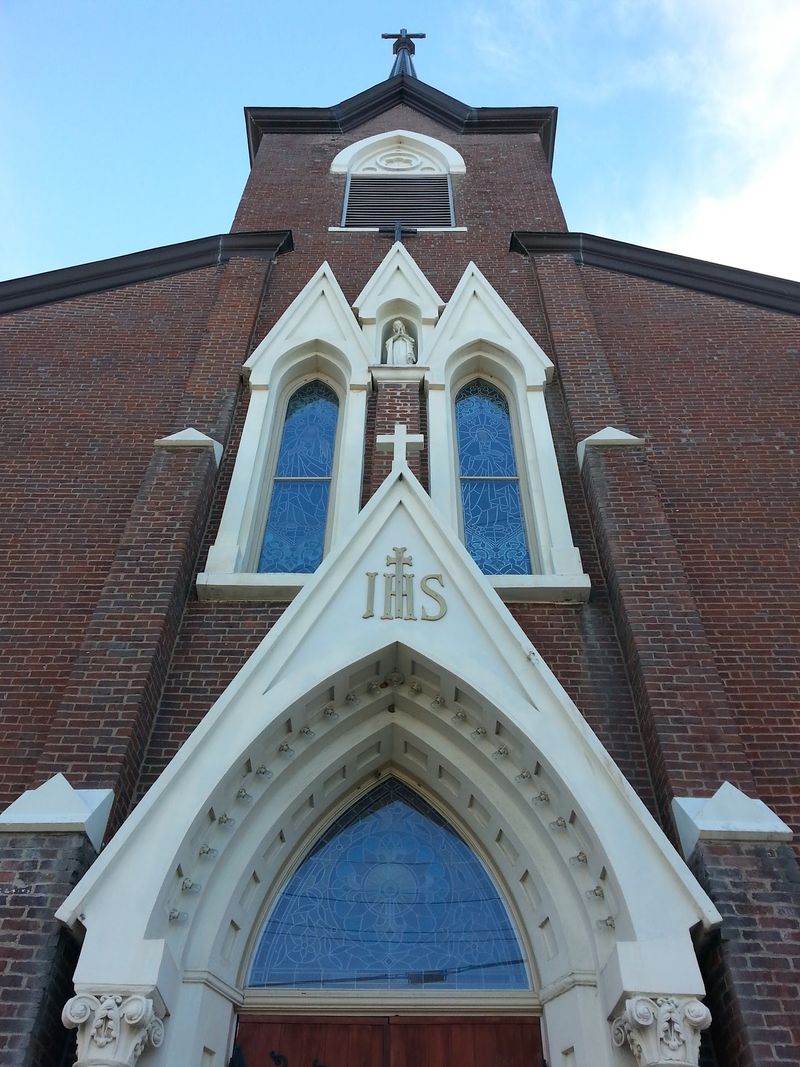
March 2020 brought the hardest chapter. Tornadoes tore across Middle Tennessee and slammed into Germantown.
Damage here was severe. The historic building became unusable almost overnight.
Crews eventually removed nearly everything from the interior. Renovations on that scale require an empty shell to work with.
The response came quickly though. Parishioners and neighbors rallied with support and a shared determination to rebuild.
The Diocese of Nashville made restoration a priority. Leaders recognized the historical and architectural value at stake.
Costs climbed into the millions. Plaster repair, stained-glass refurbishment, and recreated painted ceilings all demanded specialists.
The church reopened for public Mass on March 30, 2025, after five years of restoration. Additional projects continued afterward, and the building is again temporarily closed as of September 2026.
After the tornado, parish worship shifted to temporary spaces including Father Bernard Hall and the Buddeke House. The congregation kept gathering without the building they loved.
Continuing parish life during the closure became another part of the restoration story. A structure can be repaired, but a community choosing to stay together is something else.