This Idaho Canyon Trail Follows A Crystal-Clear Spring River Past A Waterfall To A Cold Swimming Hole
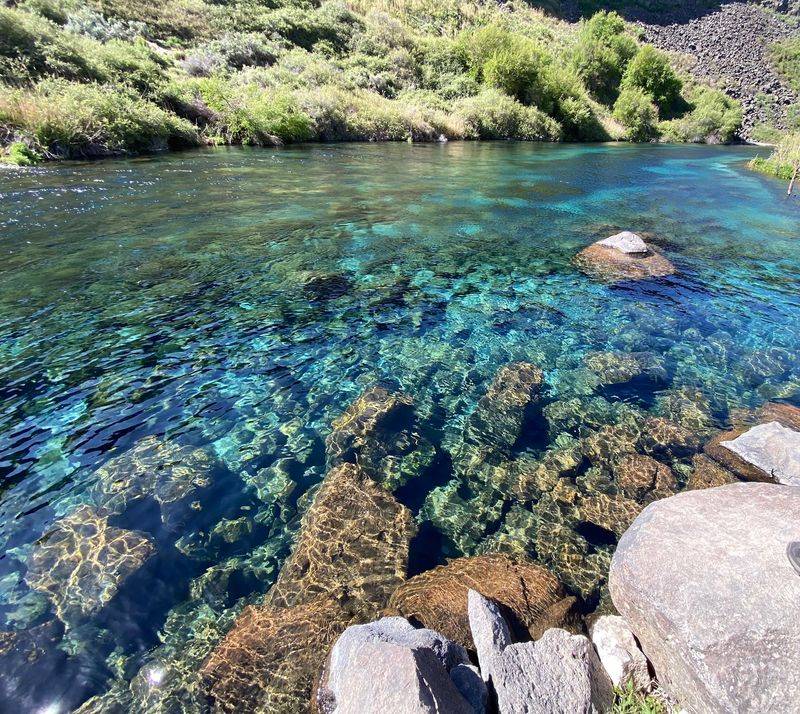
The water bursting from this canyon wall spent roughly 200 years underground before it ever saw daylight. It pours out at about 180,000 gallons per minute, clear enough to show the bottom.
That alone would earn a stop. Then the trail drops into a lush green canyon cut into dry Idaho desert, passes a waterfall streaked blue and emerald, and ends at a deep, cold pool.
I like how the payoff keeps stacking up the farther you walk. The swimming hole stays around 50 to 56 degrees all year, and a giant tree rests fully submerged in it.
I can’t imagine a better reason to plan a hot summer afternoon around a hike. So how cold are you willing to go?
A Desert Canyon Hiding One Of North America’s Biggest Springs
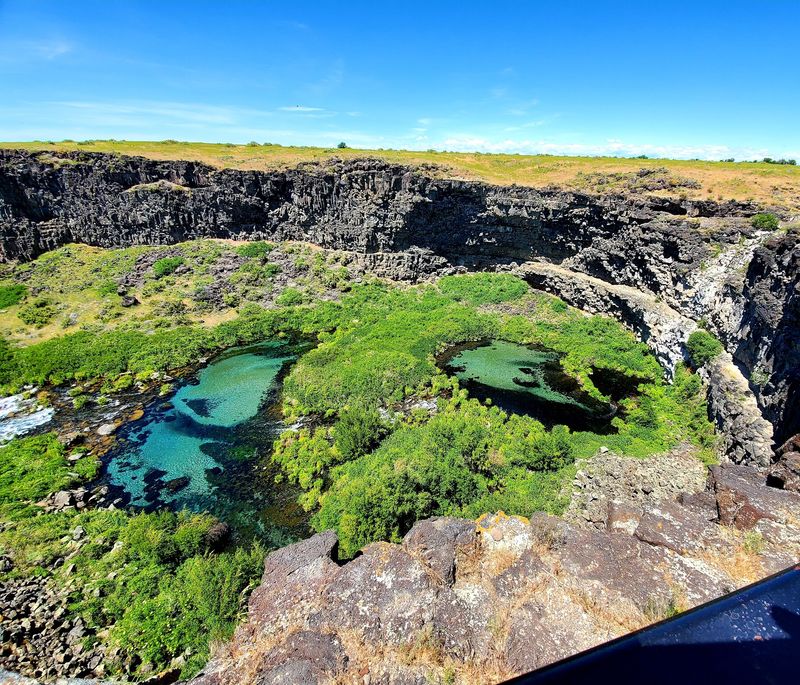
Out on the Snake River Plain near Wendell, the land looks dry and ordinary. Then the ground splits open, and a ribbon of blue water appears far below.
That surprise is Earl M. Hardy Box Canyon Springs Preserve, a unit of Thousand Springs State Park in Idaho’s Magic Valley.
Many folks just call it Box Canyon, which is fair, since the full name takes a breath.
The main spring ranks as the 11th largest freshwater spring in North America. It pushes out about 180,000 gallons every minute, a number that’s hard to picture until you see it moving.
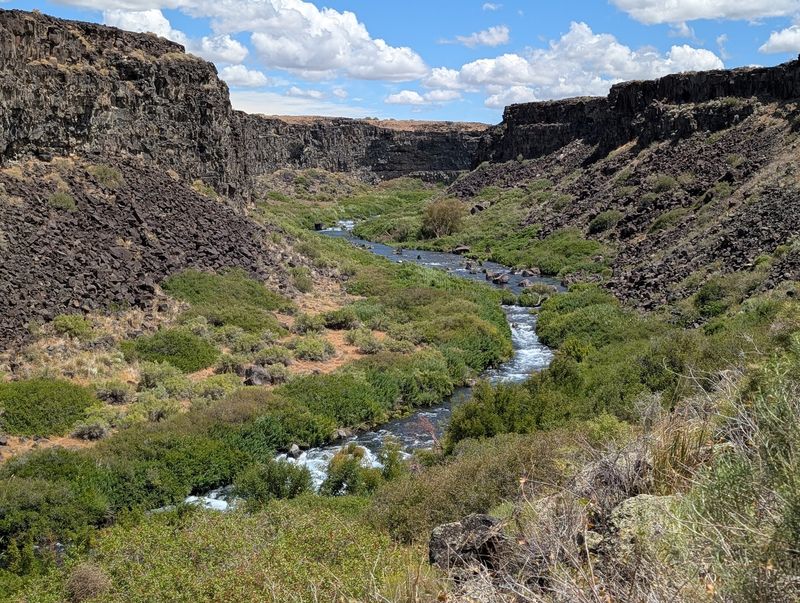
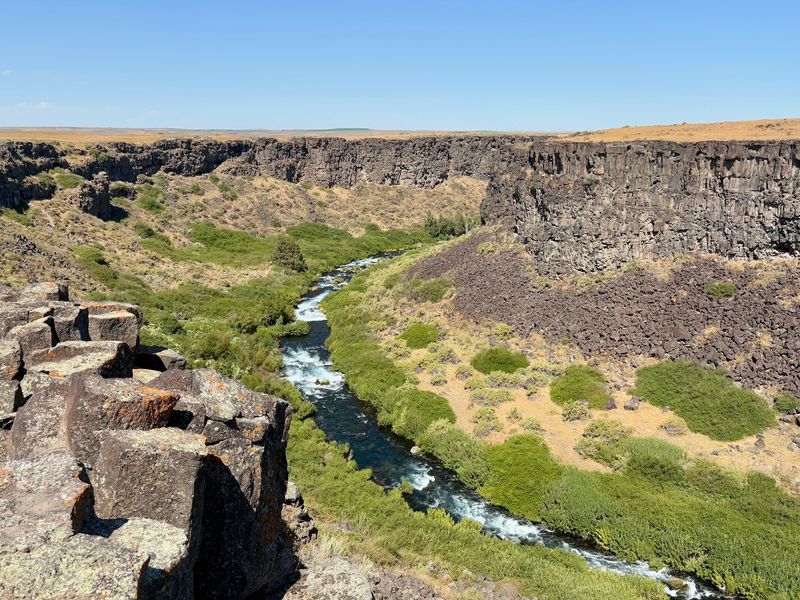
The canyon itself feels like a different climate zone. Towering rock walls hold in green, leafy growth that clashes happily with the sagebrush up top.
Buhl sits about fifteen minutes away, and Wendell is roughly ten miles northeast. Twin Falls residents can treat it as a quick afternoon outing.
What makes the preserve special is how it mixes easy rim views with a real canyon adventure. You can stay up top and peek over the edge.
Or you can head down and meet the water face to face.
The Rancher Whose Name Lives On The Sign
Earl M. Hardy owned this land before it became a public preserve.
He recognized the area was something special, and his name stayed attached to the place.
In 1999, The Nature Conservancy acquired Box Canyon on behalf of the Idaho Department of Parks and Recreation. That move turned a private canyon into a spot anyone with a vehicle pass can enjoy.
It’s a nice bit of Idaho history to carry down the trail. The canyon didn’t just happen to stay this clear and green.
Someone noticed, and others followed through.
Today the preserve sits under the Thousand Springs State Park umbrella. That family of sites spreads along the Hagerman Valley stretch of the Snake River.
The entrance itself is pretty low-key. You’d never guess from the parking area that a canyon full of rushing spring water waits a short walk away.
Fun fact for your next road trip quiz. The water here entered the Snake River Plain aquifer around two centuries ago, long before anyone put up a fence or a sign.
Hardy just happened to own the spot where it finally popped out.
Rim Viewpoints Worth Pausing For
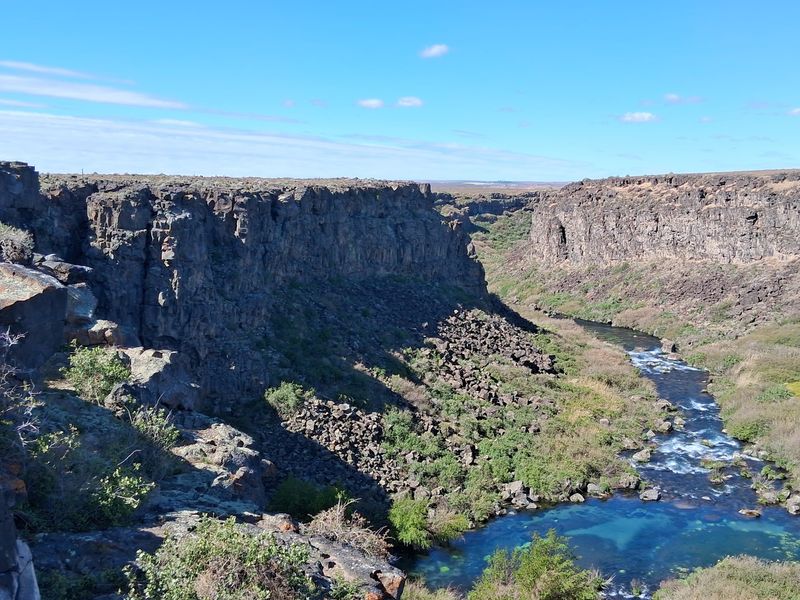
Before your boots ever touch the canyon floor, the rim trail starts showing off. Several viewpoints line the edge, each one framing the blue water from a new angle.
One overlook reveals a part of the springs the lower trail never passes. Skipping it means missing a slice of the show, so make the short detour first.
There’s also a wheelchair-accessible platform that looks down on the spring. That makes the preserve friendlier for anyone who can’t manage a steep scramble.
The canyon walls are colorful lava rock, layered in shades that pop against the water. On sunny days, the spring glows a vivid blue that looks almost edited.
Color shifts with the season and sunlight. Some days lean aquamarine, while other days go deep emerald.
Plenty of people stop right here and call it a win. A walk along the top is easy, with chances to peer over the side every few steps.
Honestly, that’s a solid visit on its own. But the view from above also works like a trailer.
Most people take one look and start hunting for the way down.
Going Down The Unimproved Path Takes Some Grip
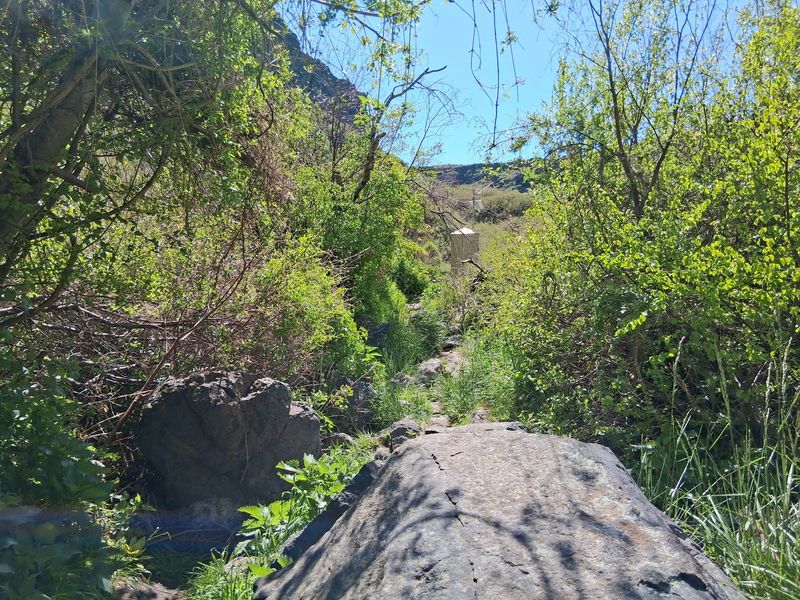
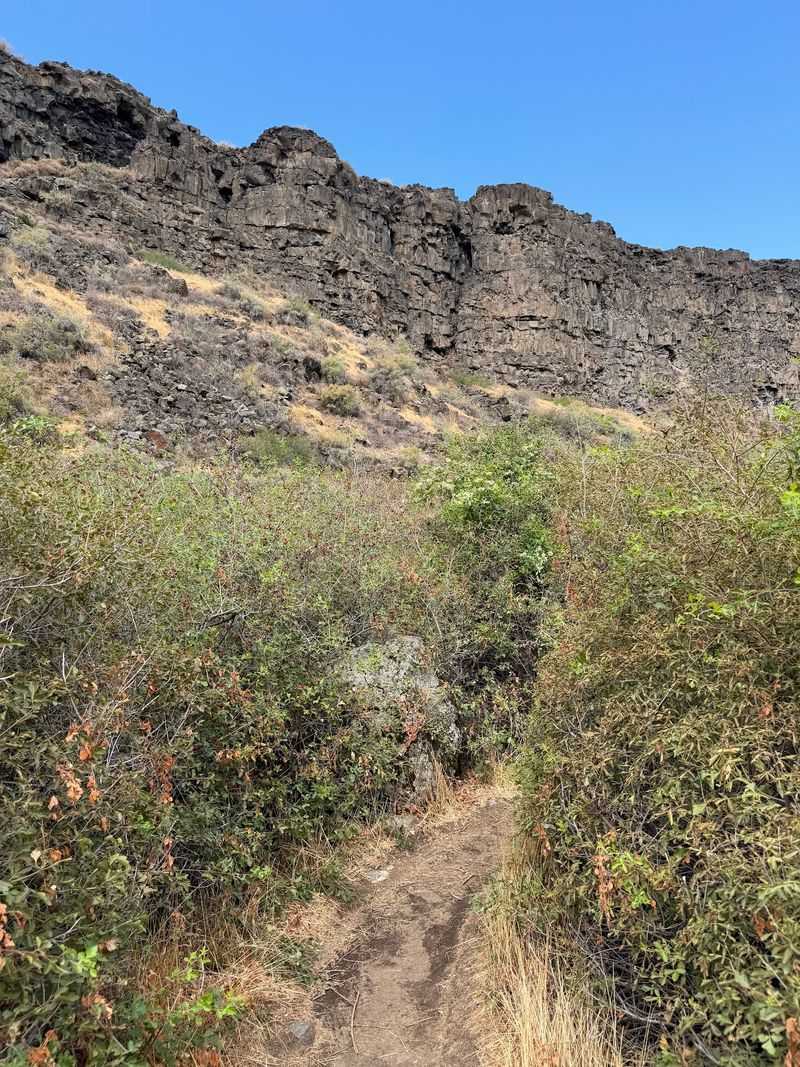
A sign at the top reads unimproved path, and it means it. This is the quick route into the canyon, and it starts with a steep, rocky drop.
The hike descends about 400 feet from rim to base. Some sections have rails and ropes for help, which tells you plenty about the grade.
Parts of the opening descent may call for sitting on a big rock and easing down. Climbing back out of that same stretch is the toughest part of an out-and-back trip.
Good shoes matter here. Grippy hiking footwear, stretchy long pants, and trekking poles all make sense, especially after rain leaves the rocks slick and muddy.
People with knee or ankle trouble should think twice. Older kids and active adults generally handle it fine.
Once you’re down, the trail turns lush and green. It follows the spring’s edge, with narrow spots and some overgrown stretches along the way.
The main route to the pool runs about one mile. It’s moderate overall, just with a lively start.
Think of the first few minutes as the entry fee for everything below.
Water So Clear You Can Count The Rocks
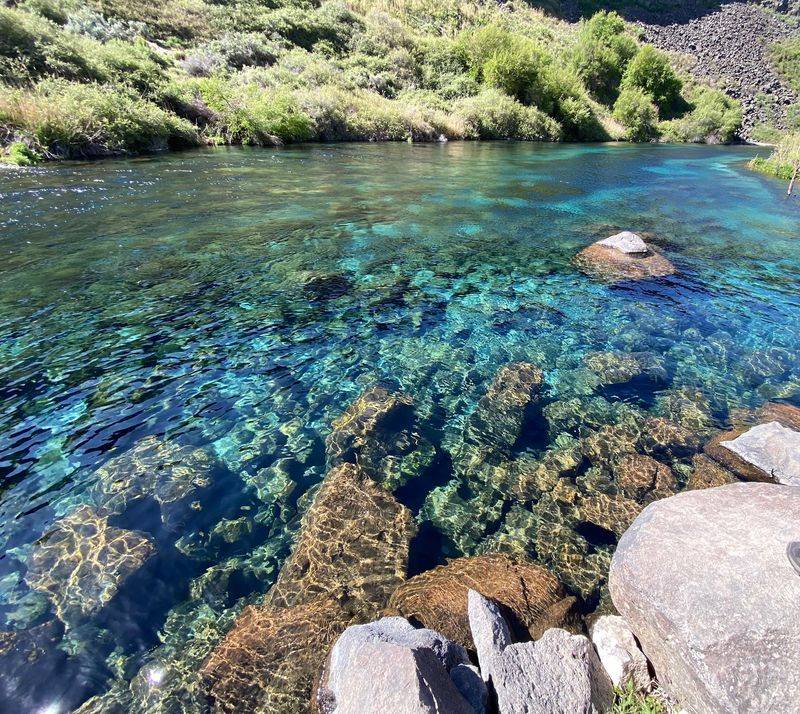
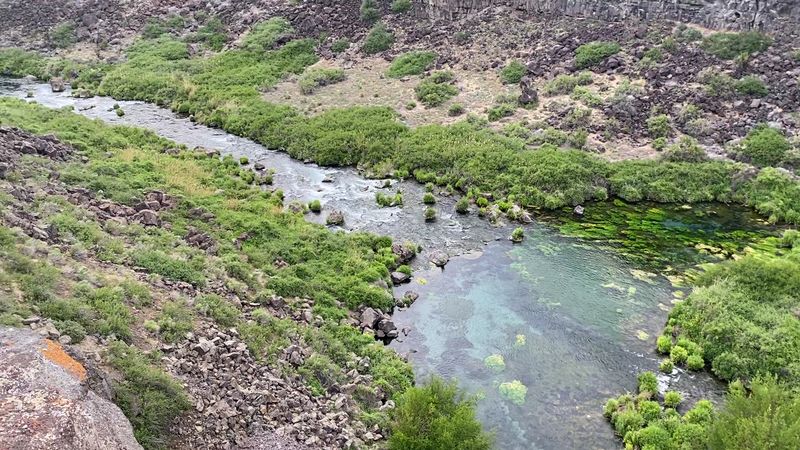
Clear is almost too weak a word for this spring river. You can see straight to the bottom, even in spots that look deep.
That clarity comes from a long journey. The water travels through the Snake River aquifer for roughly 200 years before surfacing at Box Canyon.
Underground, it gets filtered through layers of rock. By the time it spills from the canyon walls, it’s cold, clean, and bright.
Walking beside it feels a little like strolling next to an aquarium. Fish dart through the current, and the color changes as the light moves.
On a bright summer day, the water flashes a strong light blue. In other conditions, it deepens toward green.
The trail sticks close to the edge for much of the route. That means long stretches of water views instead of brief glimpses between trees.
It’s a strange pairing for southern Idaho. Up top, it’s sagebrush and heat.
Down here, you’ve got rushing blue water and plants that look like they belong somewhere far wetter. Your camera roll will fill up fast, so charge your phone first.
A Year-Round Waterfall Streaked In Blue And Emerald
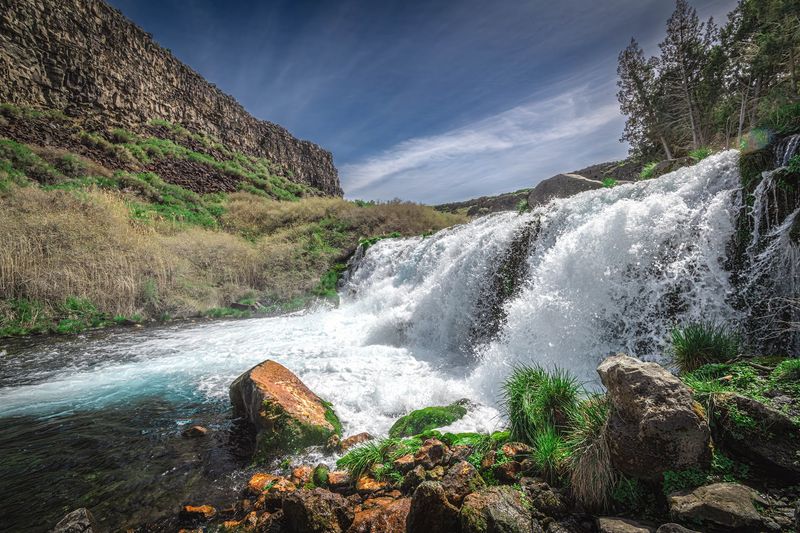
Twenty feet of spring water tumbling into a canyon is a fine reason to slow down. Some sources put the falls closer to 30 feet, and nobody seems ready to argue about it.
Because the spring feeds it, the waterfall runs all year. No waiting for snowmelt, no dry-season letdown.
The falls show colorful streaks of blue and emerald green. Standing right beside the water as it pours over the edge is a highlight for plenty of hikers.
A smaller secondary waterfall sits farther downstream too. So if you follow the river a bit, you get a bonus round.
The main viewing spot can feel tight. Be patient with others trying to grab a photo, and they’ll return the favor.
It’s the kind of view that makes the rocky descent feel completely worth it. Some folks take the unimproved path mainly to reach these falls and never even head upstream.
Give yourself a few minutes here. The sound alone resets a busy brain, and the colors keep changing as clouds drift over the canyon rim.
The Cold Pool With A Sunken Tree
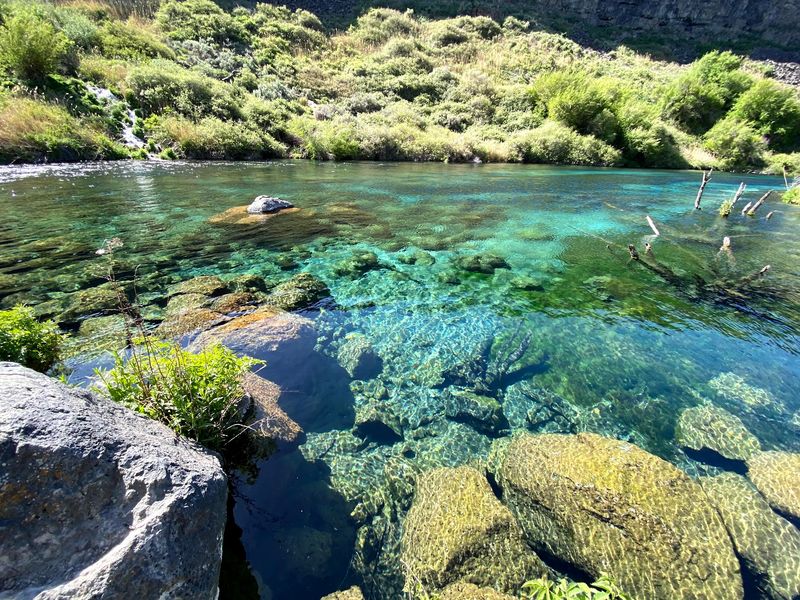
Brace yourself, because this pool doesn’t care what month it is. The spring keeps it between about 50 and 56 degrees all year.
The swimming hole sits roughly a mile in, at a man-made pond area. It’s deep, blue, and ridiculously clear.
One of the coolest sights is an entire tree resting underwater. You can see the whole thing clearly from the shore, like a sculpture somebody forgot to label.
After a hot hike, that first plunge feels amazing. Then it feels very cold.
Then it feels amazing again.
Some people just wade or dip their toes. Others swim, and paddleboards sometimes show up too.
Bring water shoes and a towel. Swim shorts help, unless you enjoy hiking back in soggy hiking clothes.
It also makes a lovely lunch spot. A porta-potty sits nearby, which is a small detail you’ll appreciate more than you expect.
Fair warning about valuables. Rings and small items vanish quickly in clear water that still runs deep.
Leave the nice jewelry in the car and save yourself a treasure hunt.
Eagles Overhead And Nettles Underfoot
Look up every so often. In winter, bald and golden eagles can show up over the canyon.
Rock chucks, fish, and many kinds of birds live here too. Lizards appear sometimes, and so do snakes, including rattlesnakes.
That’s the fun part of the nature lesson. Now for the itchy part.
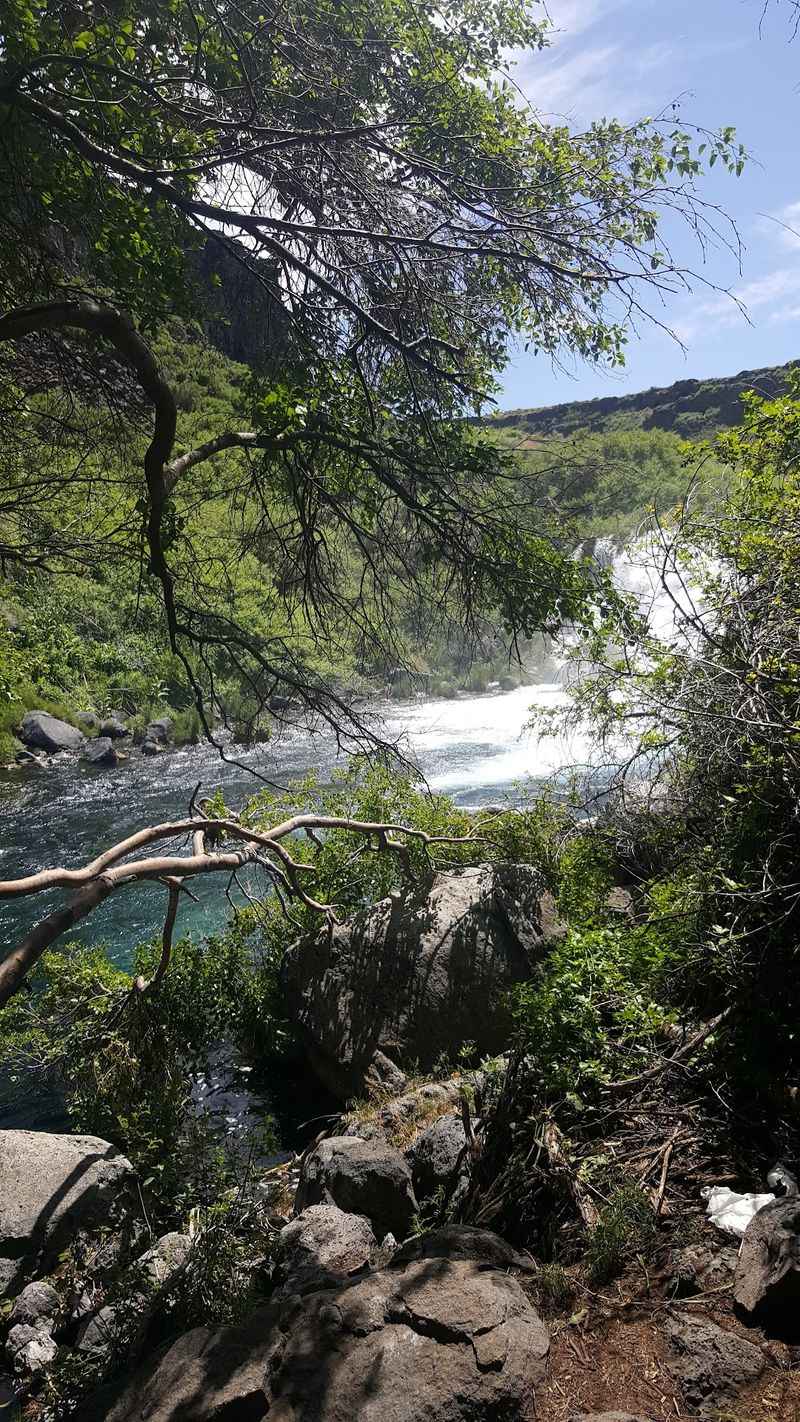
Stinging nettle and poison ivy grow along the creek and parts of the trail. In a few narrow stretches, they crowd the edges.
Long pants help a lot. Staying on the trail helps even more.
Watch where you put your hands while scrambling over rocks. That advice works for plants and reptiles alike.
Dogs are welcome, but they must stay on a leash. That protects wildlife and keeps your pup out of the nettles.
Winter brings its own perks beyond eagles. Mild days can make a February hike surprisingly pleasant, and the spring keeps flowing no matter what.
The canyon is a living habitat first and a hiking spot second. Treat it that way, pack out your trash, and keep the music low so everyone hears the water.
Loop It Or Keep It Short
Two choices shape your day at Box Canyon. Go straight down and back, or make a loop.
The full loop runs somewhere around 2.8 to 4.3 miles, depending on your route. It continues past the swimming pond toward the Snake River, then follows a road up a couple of switchbacks to the parking lot.
That return route skips the steep scramble at the start. Many hikers find it gentler on tired legs.
Families with little ones have another option too. An easier gravel switchback road leads down without the rock climbing.
Plan on one to two hours, more if you linger at the pool. Hot afternoons can wear people out fast.
Shade isn’t guaranteed on the way back, so a hat and sunscreen earn their spot in your pack. Bring at least one water bottle per person.
Summer gets busy, especially on weekends at the swimming hole. Arriving early gives you a calmer trail and cooler air.
Whichever path you pick, the canyon delivers. It’s simply a question of how much climbing you want before lunch.
Know Before You Drive To Wendell
Getting there is refreshingly simple. Earl M.
Hardy Box Canyon Springs Preserve sits on W Point Road, Wendell, ID 83355.
It’s about 9.7 miles southwest of Wendell. From Buhl, you’re looking at roughly fifteen minutes on the road.
Expect a small vehicle fee, just a few dollars, paid at the gate. Bring cash, or use an Idaho State Parks pass if you have one.
That daily fee covers every unit of Thousand Springs State Park. So you can stack a stop at Malad Gorge or other nearby units into the same day.
The preserve generally opens early in the morning and stays open into the evening. Hours can shift, so check before driving.
A vault toilet waits at the trailhead parking area. Down at the pool, there’s a porta-potty for mid-hike relief.
Pack light but smart. Good shoes, water, a towel, sunscreen, and maybe trekking poles cover most needs.
No snack bar exists down in the canyon. If you want a picnic by the water, carry it in and carry the wrappers back out.
Worth Every Step Back Up The Canyon
Some Idaho outings are pretty. This one stacks surprises, which is a different thing entirely.
You get a desert rim, a massive spring, a year-round waterfall, and a frosty pool with a tree sleeping on the bottom. All of it fits into a single morning.
Earl M. Hardy Box Canyon Springs Preserve suits active families, curious day-trippers, and anyone who enjoys a little scramble.
Rim-only visitors still get gorgeous views without the climb.
It’s not a stroller-friendly stroll down below. The rocks, nettles, and steep start ask for some care and sturdy shoes.
Still, the reward feels far larger than the effort. Magic Valley locals can make it an easy weekend plan, and Boise folks can turn it into a road trip.
Pair it with other Thousand Springs units on the same fee. That makes for a full day of Idaho water without driving to the mountains.
Go early in summer. Go again in winter for eagles.
Either way, the spring keeps pouring out that 200-year-old water, waiting for the next person brave enough to jump in.