This Is The Parkway Drive North Carolina Locals Refuse To Stop Taking Every Year
Most roads are just infrastructure. This one in North Carolina is something else entirely.
It runs 469 miles through the Appalachian Highlands without a single stoplight, billboard, or reason to rush, and that design is not accidental.
The people who built it understood that some drives are not about the destination. They are about what happens to you while you are moving through a place that beautiful.
I went in expecting pleasant scenery and a few good photos.
What I got was two days of forgetting I had a schedule, stopping at overlooks I had not planned for, and eating lunch on a guardrail with a view that would have cost serious money at a restaurant.
The Parkway slows you down without asking permission, and by the time you realize it has happened, you are already grateful. This is the drive that earns every word written about it.
The Shenandoah Gateway Stretch
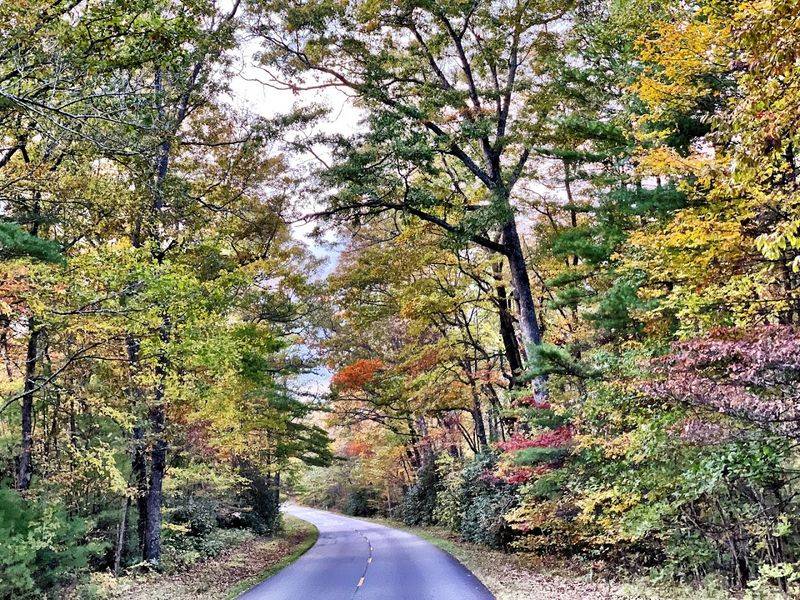
Nobody talks about the opening act of Blue Ridge Parkway, and that is exactly why it hits so hard. The first stretch eases you in like a long exhale, rolling through farmland and forested ridges before the mountains really start flexing.
The road is impeccably maintained, with no commercial trucks allowed and a 45 mph speed limit that forces you to actually look around.
Pull over at Humpback Rocks around Milepost 5.8 for a short but rewarding hike with panoramic payoff.
The visitor center there has a relocated 1890s mountain farm that gives the whole drive a grounded, historical context.
If you want to turn this opening stretch into a fuller experience, the official Parkway itinerary for the Shenandoah Region suggests combining it with a visit to Luray Caverns and a paddle trip with Shenandoah River Outfitters.
Both are accessible within a short detour from the route.
Pack snacks because services are minimal along the Parkway itself. Fuel up in Waynesboro, Virginia before heading south.
This opening section sets the rhythm for everything that follows, and the rhythm is unhurried, beautiful, and completely worth it.
The Stop Everyone Skips But Absolutely Should Not
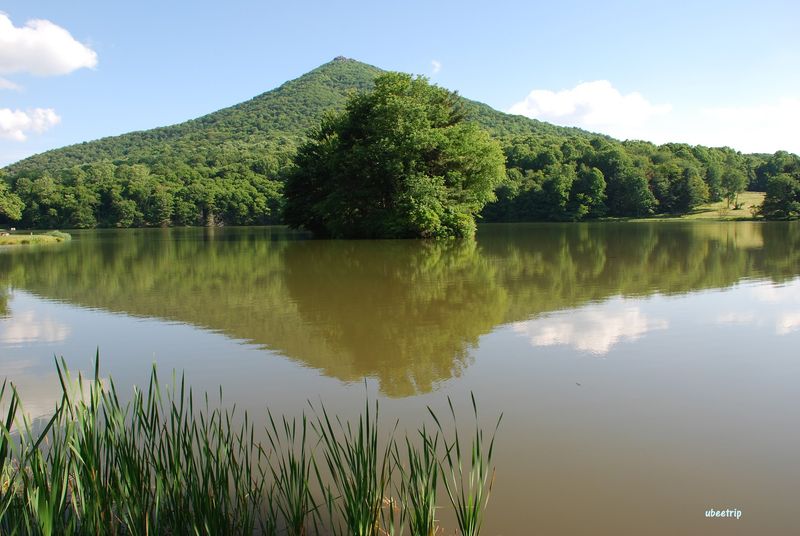
Sharp Top Mountain stares at you from across Abbott Lake like it is daring you to climb it. Most drivers cruise right past Peaks of Otter around Milepost 86, glancing at the lodge and moving on.
That is a mistake that deserves its own apology letter.
Abbott Lake is one of the most photographed spots on the entire Parkway, and for good reason.
The reflection of Sharp Top in the still water on a calm morning is the kind of thing that makes you question why you ever bothered with screensavers.
The hike to the summit is about 1.5 miles one way with serious elevation gain, so wear real shoes.
The Peaks of Otter Lodge sits right on the lake and offers overnight stays, making this a perfect midpoint stop for a two-day drive.
Breakfast at the lodge with a lake view is worth planning around. If you are doing the drive in October, this area turns into a full foliage spectacle that no photo ever fully captures.
The flat loop trail around Abbott Lake is an easy, accessible walk that gives you the full reflection view without any elevation gain, making it a solid option if the summit hike is not on the agenda.
Budget at least three hours here, more if the weather is cooperating and you find yourself sitting on the lakeshore longer than planned. You will not regret the detour.
The Parkway Enters North Carolina
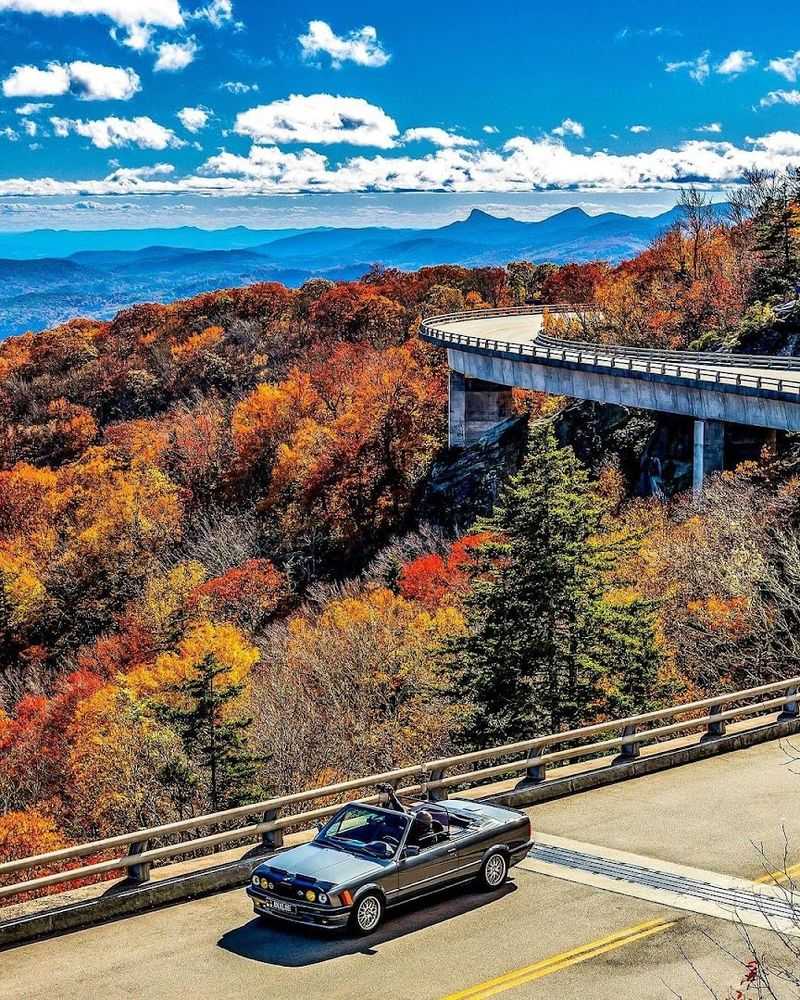
Crossing into North Carolina on the parkway feels like the scenery just turned up the volume.
The mountains get bigger, the curves get sharper, and the overlooks start competing with each other for your attention.
Milepost 216 marks the state line, and the road immediately earns a new level of respect.
The stretch between the state line and Boone, North Carolina is where casual drivers start pulling over more frequently than they planned.
Flat Rock Overlook around Milepost 308 offers a massive granite slab you can walk out onto with unobstructed views in three directions.
It feels like standing on the roof of the Southeast.
One practical tip: gas stations near the parkway get sparse through this section, so top off in Boone before continuing south.
Cell service also gets patchy, which is honestly part of the charm but worth knowing in advance. Download your maps offline before leaving.
The North Carolina portion of the drive covers roughly 252 miles and rewards anyone patient enough to take it at the parkway’s own pace. Stop often.
Linger longer than feels reasonable.
The Crown Jewel With A Mile-High Bridge
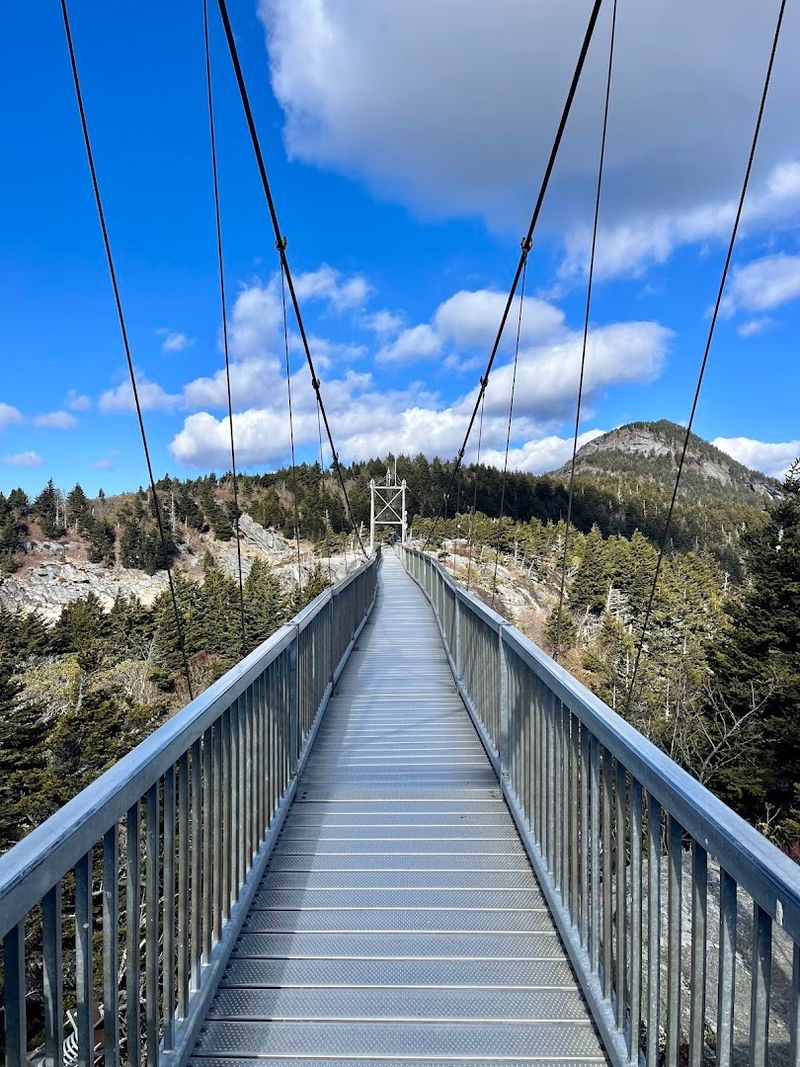
There is a bridge suspended a mile above sea level between two rocky peaks in North Carolina, and somehow people still drive past it.
Grandfather Mountain, located near Linville just off the parkway around Milepost 305, is one of the most dramatic natural attractions in the entire Appalachian chain.
For the fearless traveler, Grandfather Mountain offers extreme hiking on the Grandfather Trail, one of the most technically demanding hikes in the eastern US, with rock scrambles along the exposed ridgeline.
Hiking trails range from easy woodland walks to serious technical scrambles across the exposed ridgeline. The views from the top stretch into multiple states on a clear day.
The attraction is privately operated and charges an entry fee. It is worth every cent.
The visitor center has excellent exhibits on the mountain’s ecology and geology, and the naturalist staff are genuinely enthusiastic.
Grandfather Mountain is also a designated UNESCO Biosphere Reserve, which tells you something about how seriously scientists take its biodiversity.
Plan for a minimum of three hours, though a full day is easy to fill. Arrive early to avoid the parking crunch on weekends.
The Engineering Feat That Saved A Mountain
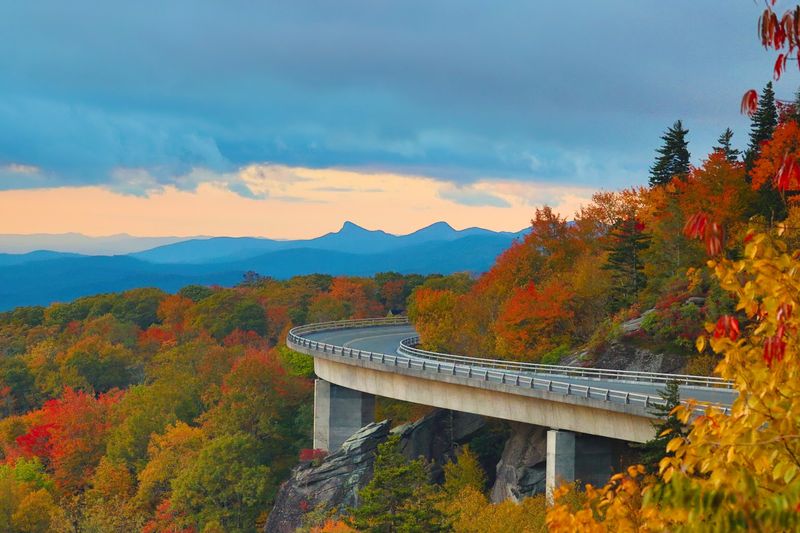
Built to protect Grandfather Mountain rather than bulldoze through it, the Linn Cove Viaduct is one of the most impressive feats of road engineering in American history.
At Milepost 304.4, this S-curved concrete bridge wraps around the rocky flank of the mountain like it was poured by someone who genuinely loved the landscape.
The viaduct stretches 1,243 feet and was the last section of the Blue Ridge Parkway to be completed, the section of Parkway containing it opened in 1987 after decades of engineering problem-solving.
Driving it feels slightly surreal, like the road itself is floating. There is a short trail below the viaduct that gives you the best view of the structure from underneath, and it is absolutely worth the 15-minute walk.
Photographers love this spot at sunrise, when the mist rolls through the valley and the viaduct appears to hover above the clouds.
The trail to the viewpoint starts at the Linn Cove Viaduct parking area and is clearly marked. Even if you are not a bridge person, you will find yourself stopping here longer than expected.
It is the kind of human achievement that actually improves the landscape around it rather than disrupting it.
The Name Is Misleading, The Waterfalls Are Not
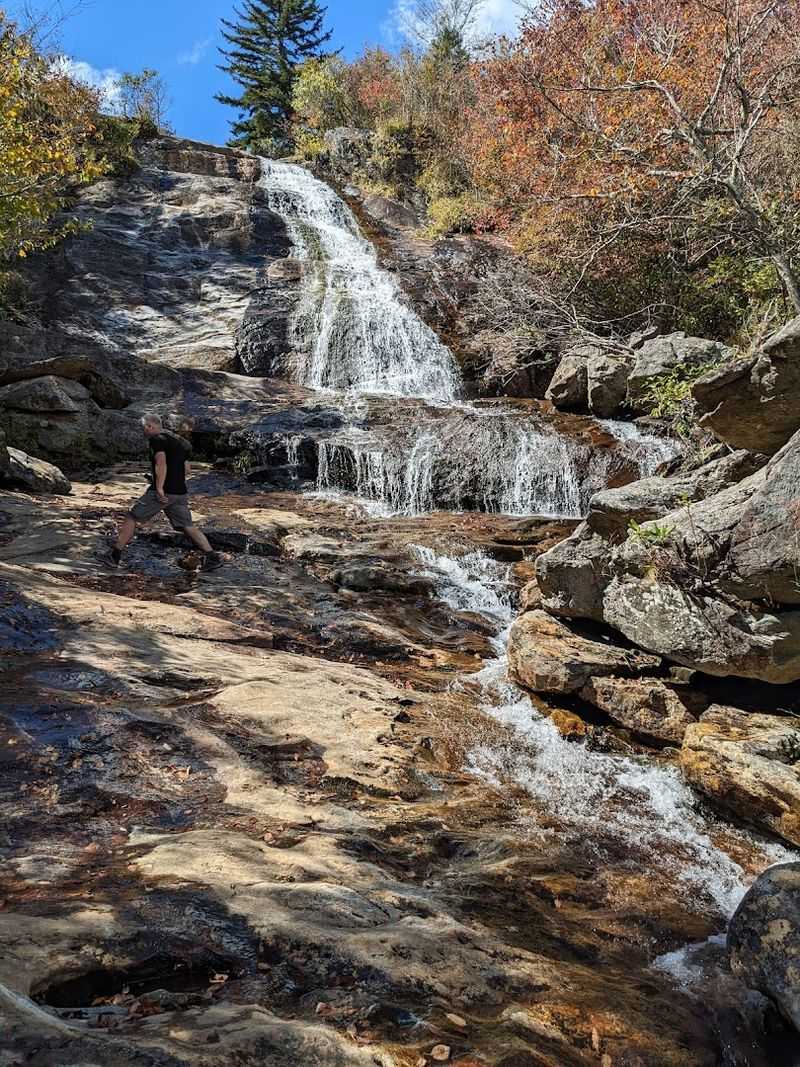
Graveyard Fields sounds ominous. It is actually a wide, flat valley filled with wildflowers, a looping trail, and two waterfalls that make the short hike completely worth the effort.
The name comes from the old tree stumps that once dotted the meadow, not anything darker than that.
Upper Falls drops about 50 feet into a rocky pool and is reached by a 1.5-mile round trip hike on a well-maintained trail.
Second Falls is closer to the trailhead and easier to reach, making it a solid choice for families with younger kids.
For families, the Parkway also offers Kids in Parks TRACK Trails and Junior Ranger programs at various points along the route.
It makes Graveyard Fields an ideal spot to combine a waterfall hike with some structured outdoor learning. Fall colors here peak in mid-October and are genuinely spectacular.
This is one of the most visited spots on the North Carolina section of the parkway, so arrive before 9 AM on weekends to find parking.
Black Balsam Knob
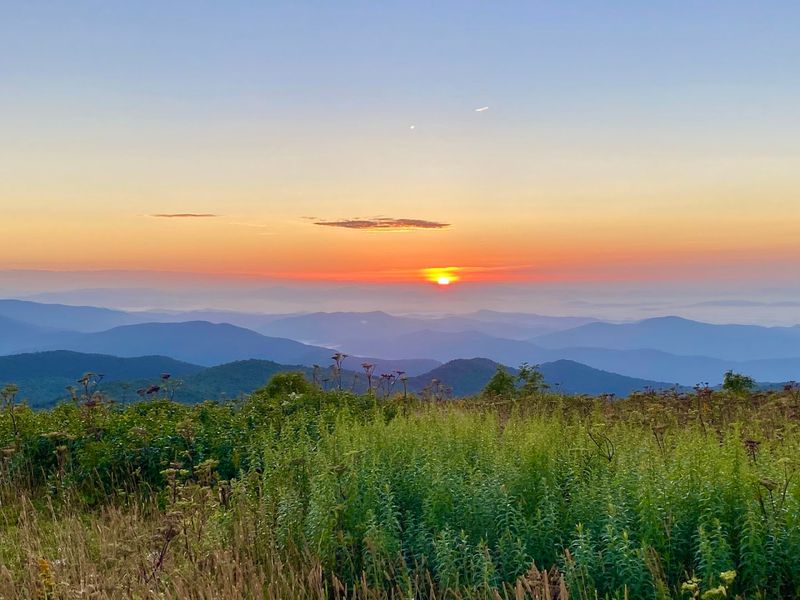
At some point on the Blue Ridge Parkway, the trees just stop.
Black Balsam Knob, accessed from the Art Loeb Trailhead near Milepost 420.2, sits above the tree line at over 6,200 feet and offers 360-degree views that feel almost unfair in how good they are.
The hike to the summit is about 1.4 miles one way with steady elevation gain, mostly over open grassy balds that make you feel like you are walking across the top of the world.
The landscape up here is rare for the eastern US, more reminiscent of Scottish moorland than anything you would expect in North Carolina. Wind can be strong even on warm days, so bring an extra layer.
Sunrise hikes to Black Balsam are a popular choice among serious photographers, and the color shows during golden hour are legitimately breathtaking.
The Parkway is also one of the top stargazing destinations in the eastern US, with two designated Dark Sky Parks along the route.
Black Balsam Knob, with its open summit and minimal light pollution, is one of the best spots on the entire route to stay past sunset and watch the sky do something extraordinary.
Bring an extra layer because wind can be strong even on warm days. No permit is required for day hiking.
Most people sit on the summit and stare quietly at the horizon for a very long time.
The Final Miles To Cherokee
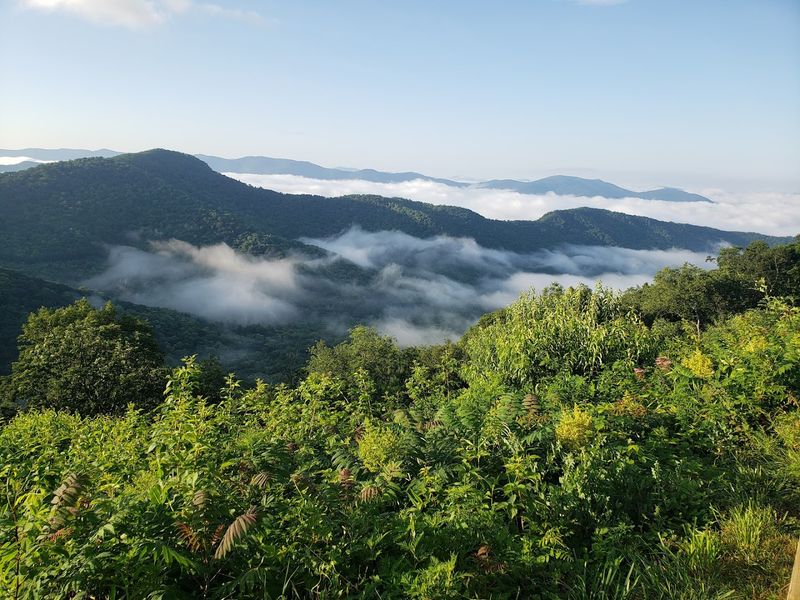
The last stretch of the Blue Ridge Parkway before it ends at Cherokee, North Carolina is the drive saving its best argument for last.
The road winds down through increasingly dramatic terrain, and the Great Smoky Mountains start filling the horizon like a slow, enormous reveal.
The official Great Smokies Region itinerary on the Parkway website builds a full experience around this final stretch.
It incorporates the cultural heritage of the Eastern Band of Cherokee Indians alongside the natural attractions of Great Smoky Mountains National Park.
The Museum of the Cherokee Indian in Cherokee is genuinely moving and well worth a few hours of your time.
Oconaluftee Visitor Center, just inside the national park boundary, is a natural next stop after the Parkway ends, and the mountain farm museum there ties together the agricultural heritage you have seen glimpses of the entire drive.
If you are planning a two-day itinerary, spend night one near Boone and night two in Cherokee or Bryson City.
The full Parkway drive from the Virginia border to Cherokee takes about nine to ten hours of pure driving, but realistically plan two full days minimum to do it right. The road earns every single mile of your time.
The Town Worth A Full Day Off The Parkway
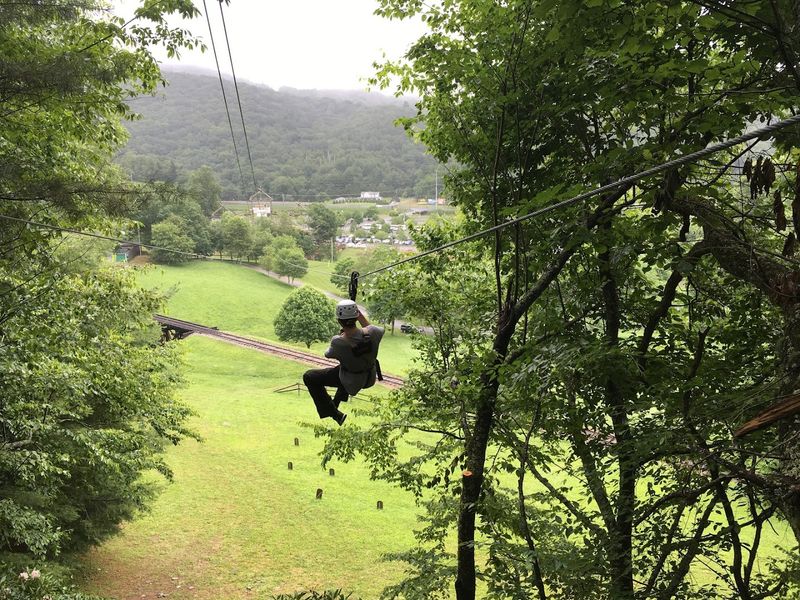
Most people treat Blowing Rock as a quick stop. The official Blowing Rock 1-Day Outdoor Adventure itinerary on the Parkway website makes a strong case for staying longer.
The town sits directly on the Blue Ridge Parkway and is surrounded by undeveloped lands that function essentially as a giant backyard for outdoor exploration.
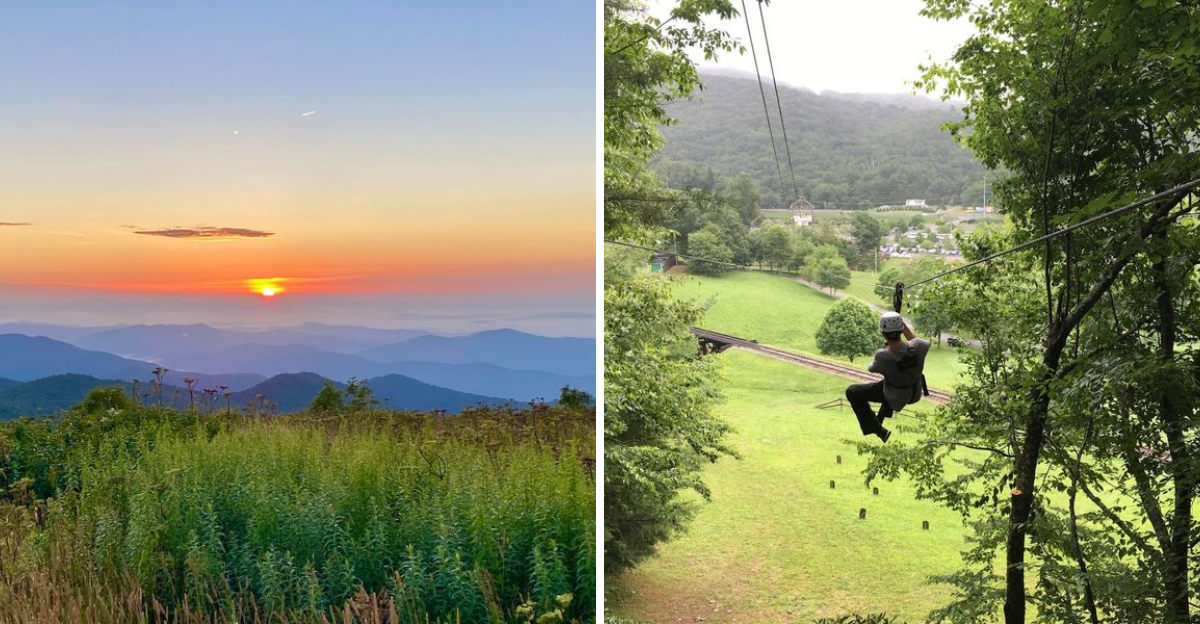
Ziplining at Sky Valley Zip Tours is one of the top recommended activities for active travelers, with canopy runs through the forest that give a completely different perspective on the mountain terrain.
The Blowing Rock where the wind reverses and objects thrown off it blow back up is one of those things that sounds like a tourist gimmick until you are standing there watching it happen.
Moses H. Cone Memorial Park, just a few miles away, adds 25 miles of gentle carriage roads through meadows and forest edges that are ideal for cycling or walking.
The official three-day Blowing Rock itinerary on the Parkway website builds in time for the town’s galleries, local restaurants, and the surrounding High Country.
It is a solid template for anyone who wants a structured plan.