This Kentucky Cathedral Has Gargoyles And One Of The World’s Largest Stained Glass Windows
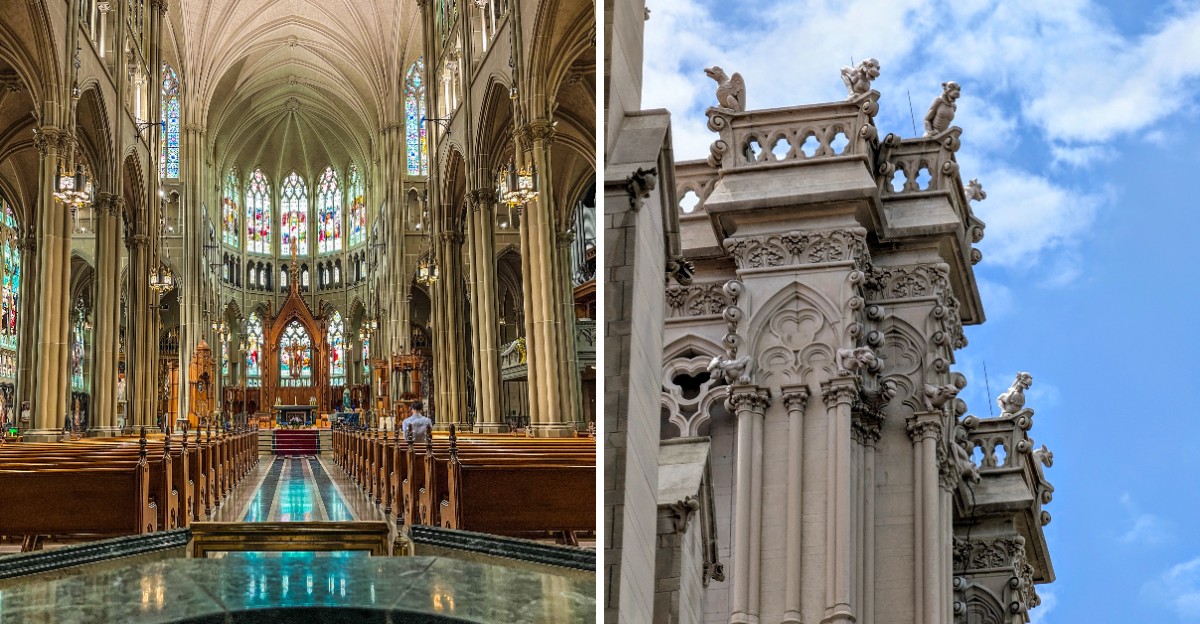
Thirty-two gargoyles and 26 chimeras guard a church roofline in Kentucky. They are exact copies of the creatures on Notre Dame in Paris.
That alone got my attention. Then I learned one window inside stands 67 feet tall and holds 117 different figures.
This place sits in a river town, not some faraway European capital. You can admire French Gothic stonework and German glass without a passport.
Visiting is free, and friendly greeters share stories at the door.
I can’t imagine a better surprise for anyone who thinks great cathedrals only live overseas. The building is technically still unfinished, too.
Its planned twin towers never got built. So what makes an incomplete church this unforgettable?
The answer starts on the outside, way up high.
Meet The Stone Crew Watching Over Madison Avenue
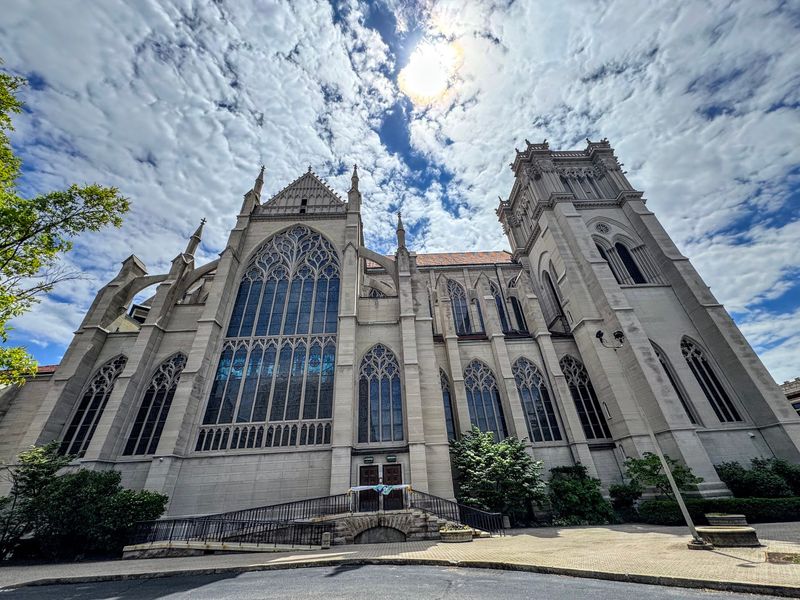
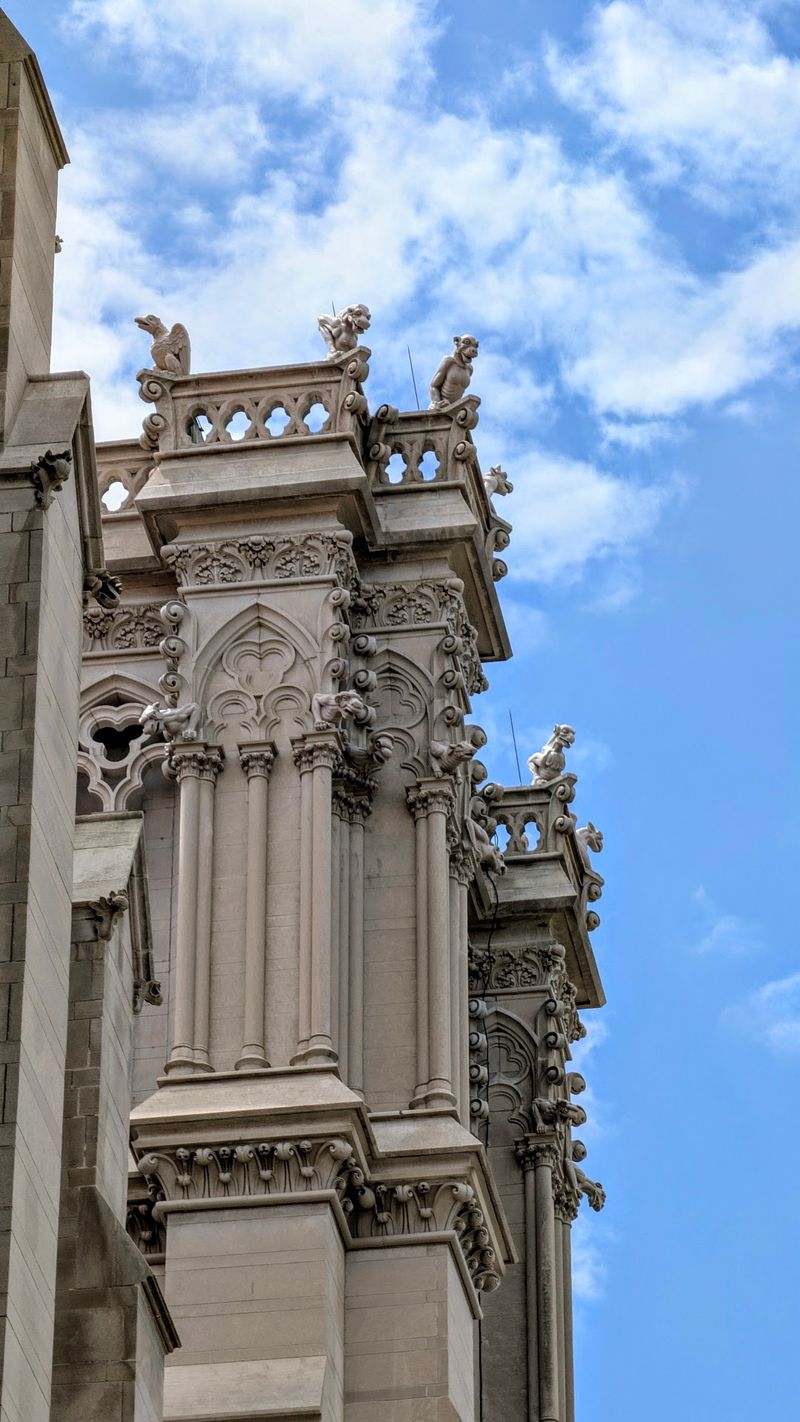
Gargoyles usually belong in Paris, yet a whole gang of them perches above a Kentucky sidewalk. The Cathedral Basilica of the Assumption in Covington displays 32 gargoyles and 26 chimeras on its exterior.
Each one copies a figure designed by French architect Eugène Viollet-le-Duc for Notre Dame.
Here’s a fun twist. In Paris, many gargoyles work as rainspouts that shoot water away from the walls.
The Covington crew does no plumbing at all, because these figures are purely decorative.
Tradition says gargoyles protect a building from evil spirits. That makes them part bodyguard, part sculpture, and fully dramatic.
Honestly, it’s a pretty great job description.
The figures recently got a serious makeover, too. The original terra cotta versions dated to the 19th century and had worn down over time.
A multi-year restoration replaced them with exact replicas, wrapping up around early 2026.
So the faces you see today look sharp and fresh. Bring a zoom lens or binoculars, since the details sit high on the facade. Spotting a favorite creature might become your new hobby. Mine would be whichever one looks most grumpy.
You’ll find the Cathedral Basilica of the Assumption at 1140 Madison Avenue, Covington, Kentucky.
The Window That Makes Everyone Stop Talking
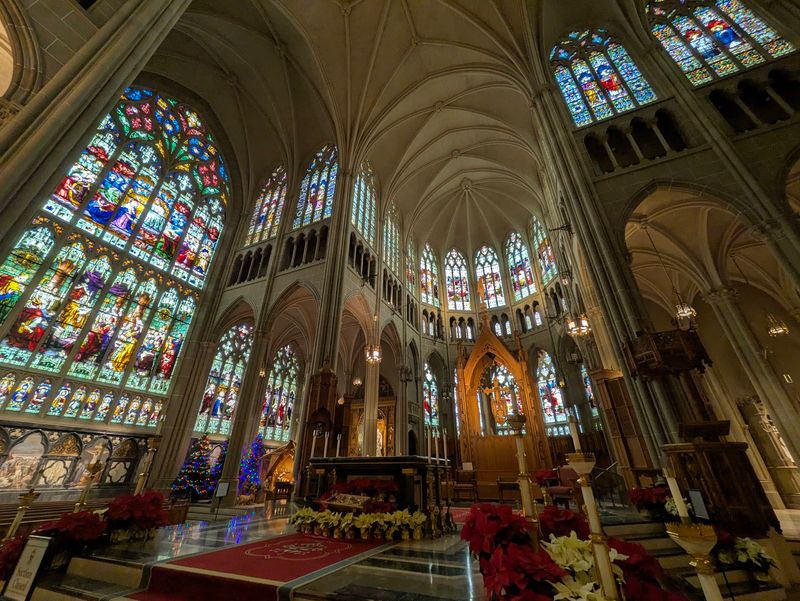
Sixty-seven feet high and 24 feet wide. Those are the measurements of the north transept window, and they still sound made up.
The window is recognized as the largest church stained glass window in the United States. Many sources also call it the world’s largest handmade church stained glass window.
Either way, you’ll need to tilt your head way back to take it all in.
Size is only part of the story. The glass holds 117 different figures, which is basically a crowd scene in color.
It shows the Coronation of the Virgin Mary above the Council of Ephesus from A.D. 431.
That council formally proclaimed Mary as the Mother of God. So the window works like a giant history lesson you can read from top to bottom.
Start with the upper scene, then trace the bishops below.
Here’s my tip: plan your trip for a sunny day. Light pouring through all that glass changes the whole room.
A cloudy afternoon still looks lovely, but bright sun turns the colors almost electric. Take your time, because you’ll keep finding new faces.
Why The Locals Call It America’s Notre Dame
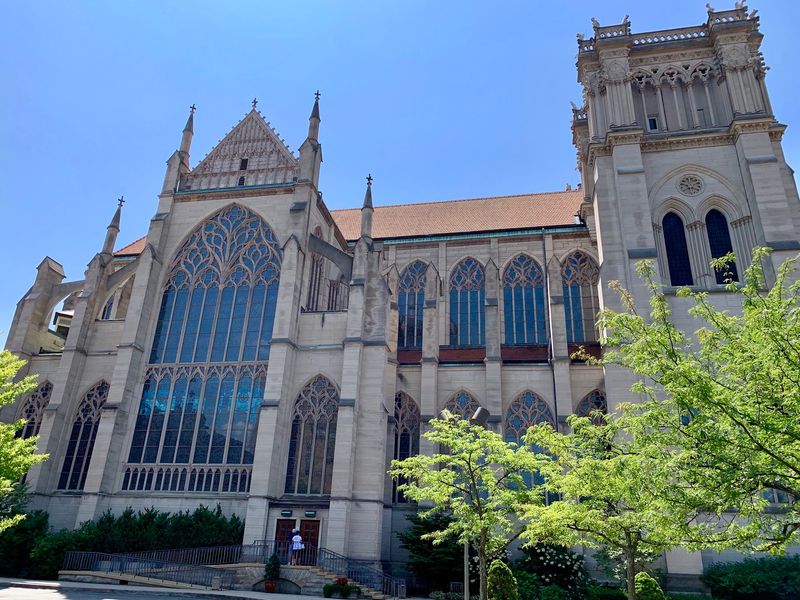
Paris inspired the outside, while a different French church shaped the inside. That combination gives this building its own personality.
The facade is modeled after Notre Dame Cathedral in Paris. Its carved portals and big rose window explain the nickname America’s Notre Dame.
Stand across the street, and the resemblance gets pretty obvious.
Inside, though, the design follows the Abbey Church of St. Denis in France. That medieval abbey is famous for its early Gothic style.
So you’re really getting two French landmarks in one Kentucky visit.
The overall look is French High Gothic, with pointed arches and lots of vertical drama. Even the foundation tells a story, since it’s built from Bedford Indiana limestone.
Not everything here traveled across an ocean.
Look closely at the front and you’ll notice something missing. Builders planned twin towers that never went up.
The cathedral is still considered largely unfinished.
I actually like that detail. It makes the building feel human, like a dream that got most of the way there.
And most of the way, in this case, is still spectacular. You won’t feel shortchanged.
Your Neck Will Get A Workout Under This Ceiling
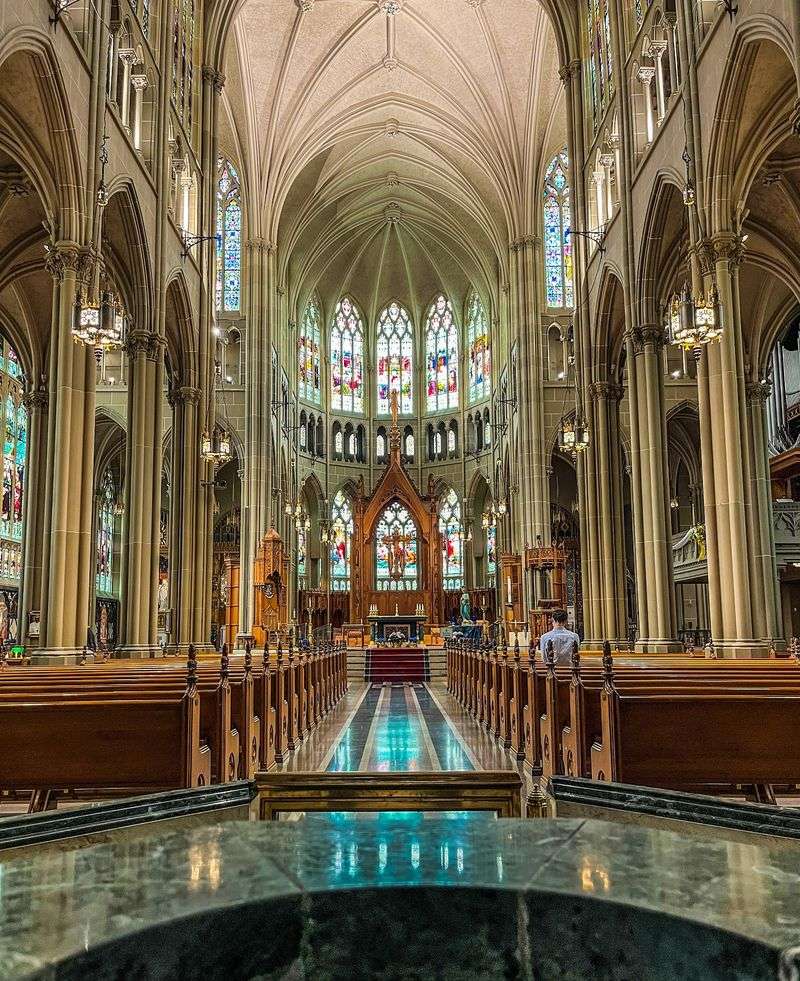
Eighty-one feet. That’s how high the nave rises inside this cathedral, and your eyes will notice immediately.
The ceiling uses quadripartite rib vaulting, which sounds fancy but is easy to spot. Stone ribs cross overhead and divide each section into four parts.
Even better, this vaulting is load-bearing, so it actually holds things up.
Plenty of churches fake the Gothic look with lighter materials. Here, the structure does real work.
That honesty is part of the charm.
Now add the glass. The cathedral holds 82 stained glass windows, and many line the nave walls.
All that color makes the space look brighter and glassier than many European cathedrals.
Most windows came from Franz Mayer and Co. in Munich, Germany. They were handmade and installed between 1908 and 1923.
Each one shows a biblical event or a scene tied to the sacraments.
A good approach is to walk slowly along one side, then switch. Pick a window and try to name the story before reading about it.
It’s like a museum, except the ceiling keeps stealing your attention.
Tiny Tiles Build Something Huge
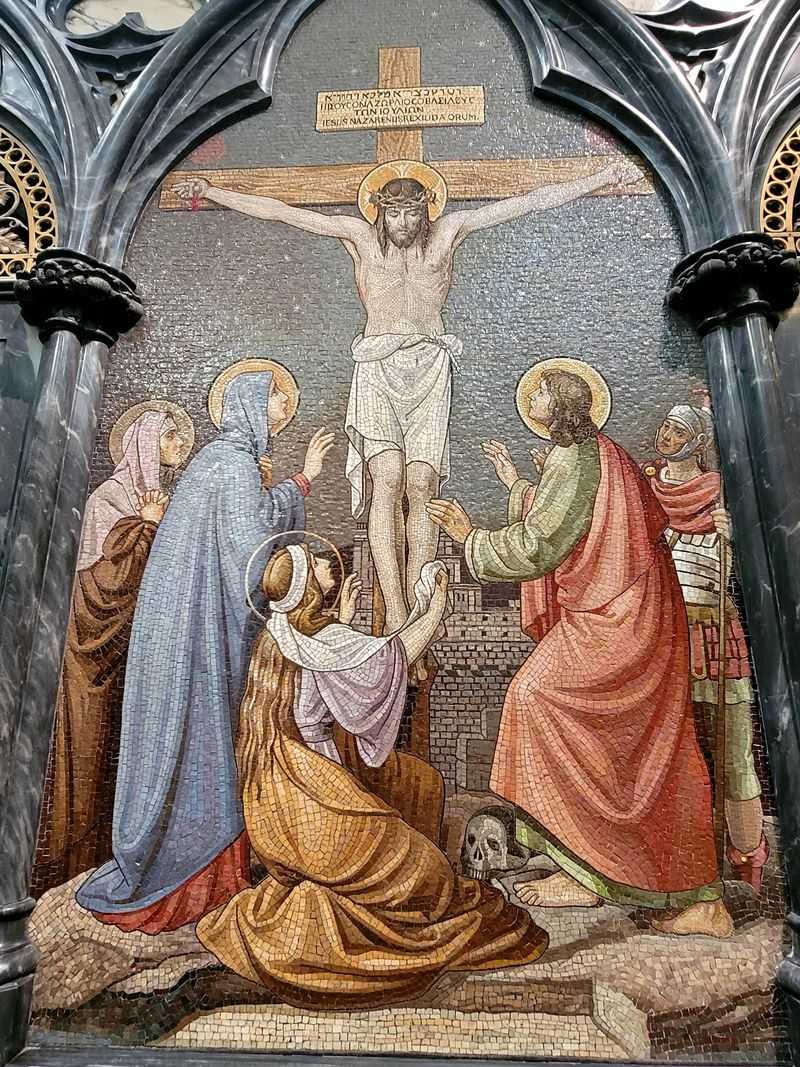
Count to 70,000 and you’d be tired. Now picture placing that many tiles into one artwork, then doing it over and over.
That’s roughly the scale of the mosaic Stations of the Cross here. Each station holds about 70,000 to 80,000 enamel glass tiles.
They were created in Venice, Italy, a city famous for this exact kind of craft.
The colors aren’t flat, either. Gold and mother-of-pearl highlights catch the light as you move.
Step to the side, and certain details seem to shimmer.
The Stations of the Cross show a series of scenes from the final hours of Jesus. Many Catholics pray along them, especially during Lent.
Even if you’re not religious, the artistry is hard to ignore.
Get close, but stay respectful of the space. From a few feet away, the scenes look almost painted.
Up close, you finally see the tiny pieces doing all the work.
This is a great section for kids, honestly. Ask them to guess how many tiles are in one panel.
Their wildest guess might still come up short.
A Hometown Painter Left His Mark Here
Frank Duveneck grew up in Covington and became an acclaimed American artist. His work lives inside the cathedral, just a short trip from his roots.
Head to the Blessed Sacrament Chapel to find it. Duveneck created a three-panel triptych and a mural there.
Both pieces focus on Eucharistic themes.
Duveneck lived from 1848 to 1919, so his career overlapped with the cathedral’s construction. I love that a local artist helped decorate this grand building.
It keeps the place tied to its own community, not just to Europe.
Speaking of construction, the timeline is interesting. Work began around 1894 or 1895, and the main body was dedicated in 1901.
Even then, it wasn’t finished.
The facade and many windows arrived between 1908 and 1910. The whole vision came from Bishop Camillus Paul Maes, the third Bishop of Covington.
He clearly didn’t believe in small plans.
When you visit this chapel, slow down a little. It feels quieter and more personal than the soaring main space.
Notice how the paintings contrast with the glass and stone nearby.
More Than 300 Relics And Some Very Old Music
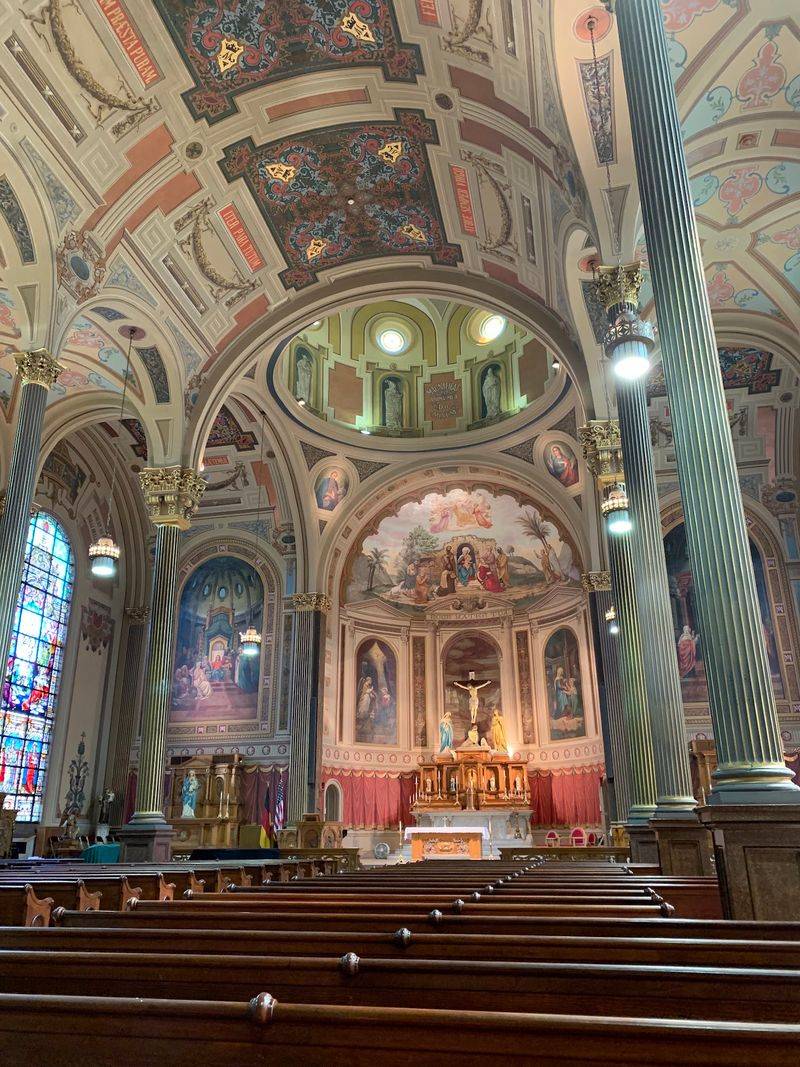
Behind the main altar sits a collection most people never expect in Kentucky. The cathedral houses more than 300 authenticated relics.
Among them is a purported carpal bone of St. Paul. That’s a small wrist bone, in case you skipped anatomy class.
The collection also includes skulls from companions of St. Ursula.
For Catholics, relics connect believers with the saints. For history fans, they show how faith traditions traveled across centuries.
Either way, it’s a memorable stop. Note that some areas don’t allow photos, so ask a greeter first.
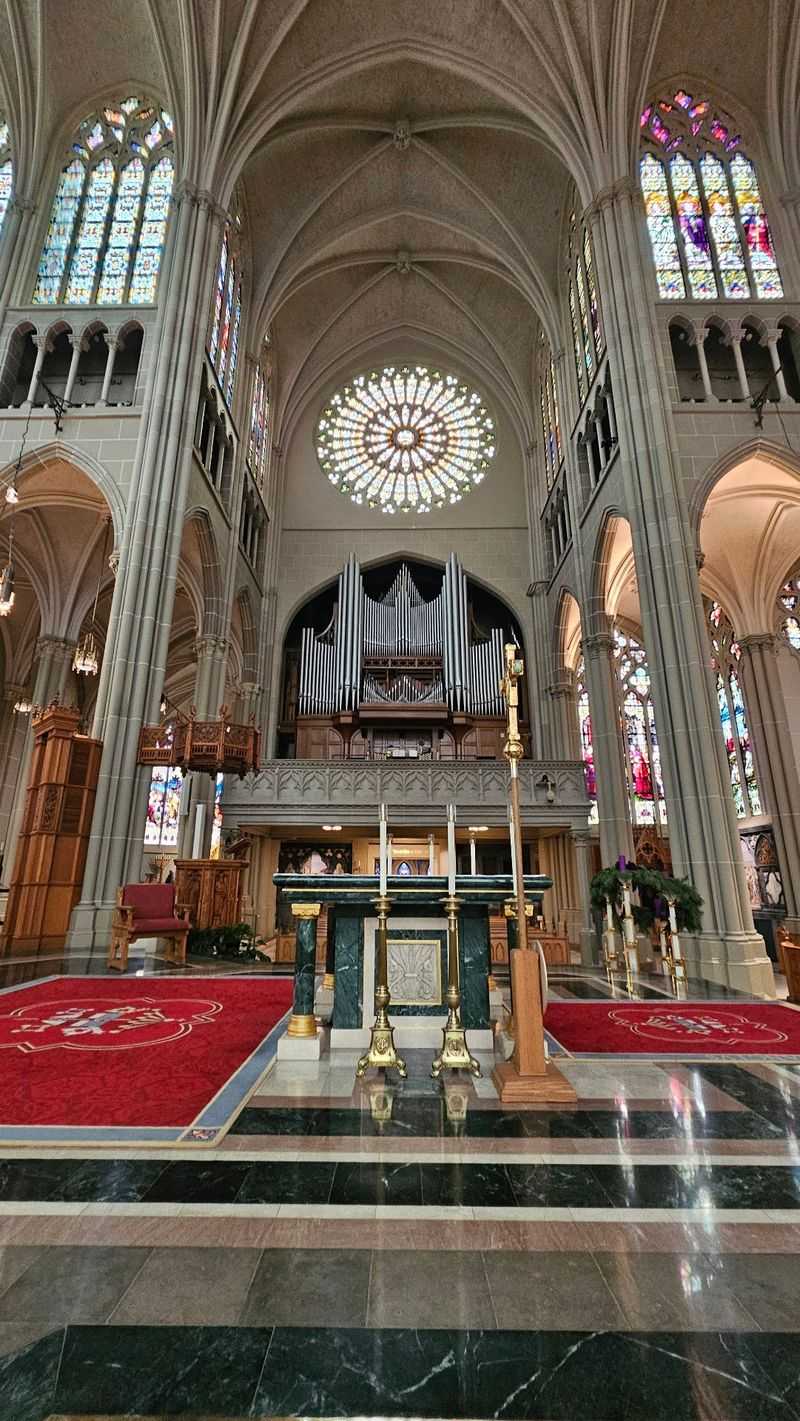
Your ears get a treat here, too. The cathedral holds three pipe organs.
One is a Matthias Schwab Organ built in 1859.
That organ was salvaged from Old St. Joseph Church. It’s older than the cathedral itself, which is a fun twist.
The building got a hand-me-down that outranks it in age.
Don’t skip the two rose windows, each 26 feet across. One shows floral designs around a papal tiara.
The other features the Alpha and Omega. Between relics, organs, and rose windows, this corner rewards curious visitors.
Plan Your Visit Like A Pro
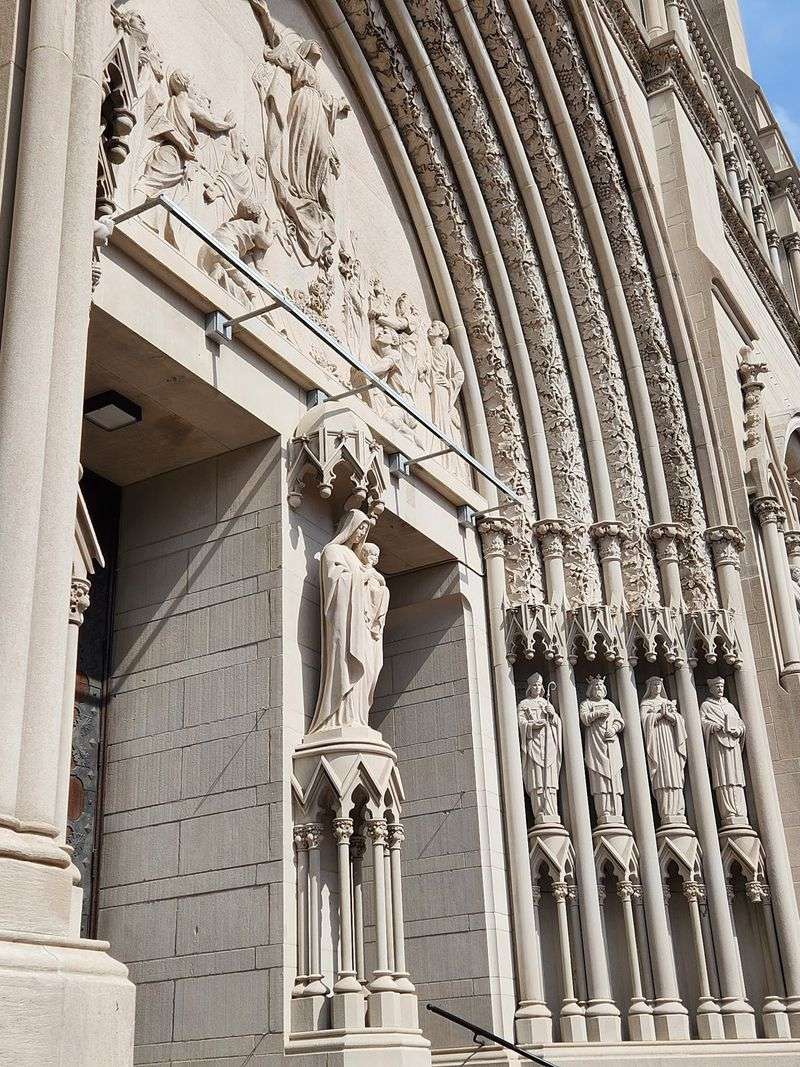
Good news first: there’s no admission fee.
Visitors enter through the North side entrance. A Greeters Desk sits nearby, and self-guided audio tour books are sold there.
Leaving a donation is a kind way to help keep the doors open.
Visiting hours generally run from 9 a.m. to 3 p.m. on weekdays. Saturday and Sunday hours shift, and special liturgies or holidays can change things.
Check before you go so you don’t arrive to a locked door.
Remember this is an active Roman Catholic church. Mass happens daily on weekdays at 8:15 a.m. and several times each weekend.
If you’re not participating, sit quietly during services.
Want more depth? Groups of ten or more can schedule guided tours in advance for a small fee.
Public guided tours often follow the 10 a.m. Sunday Mass.
Since those Sunday tours aren’t guaranteed every week, call the parish office ahead. A little planning goes a long way.
Then you can relax and enjoy the view.
A Papal Honor And A Spot On A Statewide Trail
Pope Pius XII noticed this place in 1953. On December 8 of that year, he raised it to the rank of minor basilica because of its unusual beauty.
That’s a big deal in the Catholic world. Only about 85 minor basilicas exist in the United States.
So the title explains the full name, Cathedral Basilica of the Assumption.
The location makes visiting easy. Covington sits right across the Ohio River from Cincinnati.
You could cross a bridge and swap states in minutes.
Kentucky also recognizes the cathedral as one of eleven stops on the Kentucky Faith Trail. That makes it a natural anchor for a bigger road trip.
Pair it with other stops and turn one afternoon into a weekend.
Thousands of people visit each year, from across the country and around the world. They come from many different faiths, too.
You don’t need to be Catholic to appreciate glass, stone, and craftsmanship.
So, gargoyles outside, record-setting glass inside, and Venice-made mosaics on the walls. All of that waits in one Kentucky river town.
I’d call that a pretty strong reason to cross the bridge.