This Legendary California Jazz Festival Packs 73 Performances Into One September Weekend
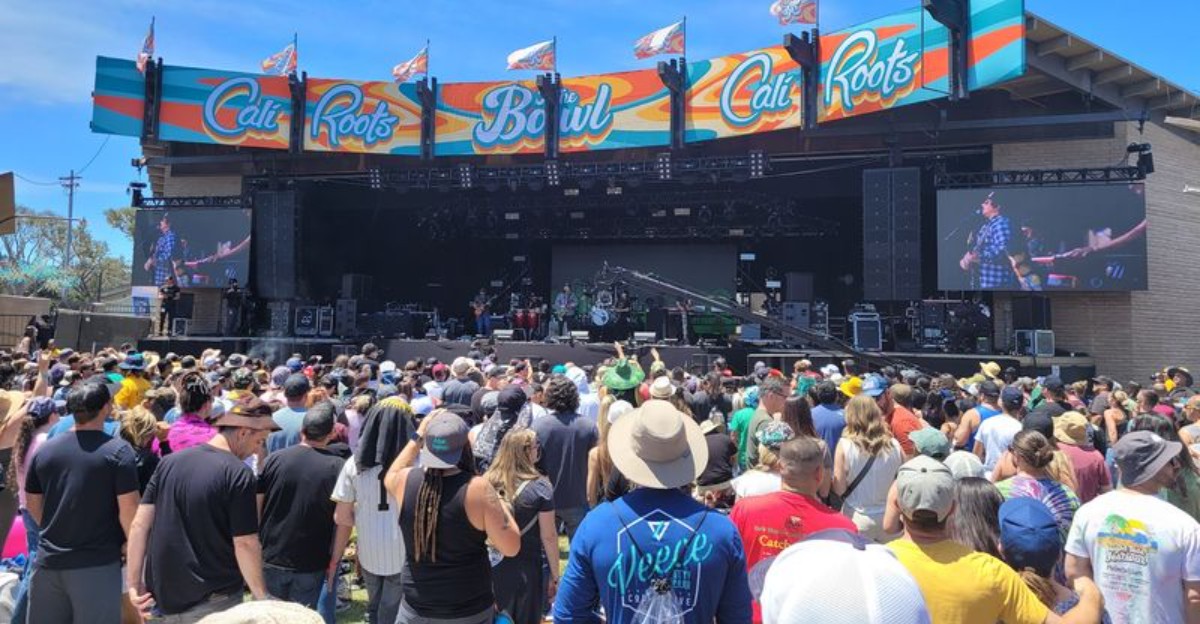
Seventy-three performances can make a weekend feel wonderfully overbooked. That’s part of the appeal.
This legendary California jazz festival turns September into a blur of stages, shifting sounds, packed sets, and moments that are almost impossible to plan perfectly in advance.
You may start the day with a schedule.
Then one performance runs long, another pulls you across the grounds, and suddenly the best part of the afternoon is something you never intended to see.
That unpredictability gives the weekend its energy.
Big names may draw the first wave of attention, but discovery is just as important.
A smaller set, an unfamiliar musician, or a completely different style can end up becoming the part you remember most.
With this much music squeezed into one weekend, standing still is probably the hardest option.
Three Days Turn Monterey Into One Huge Jazz Destination
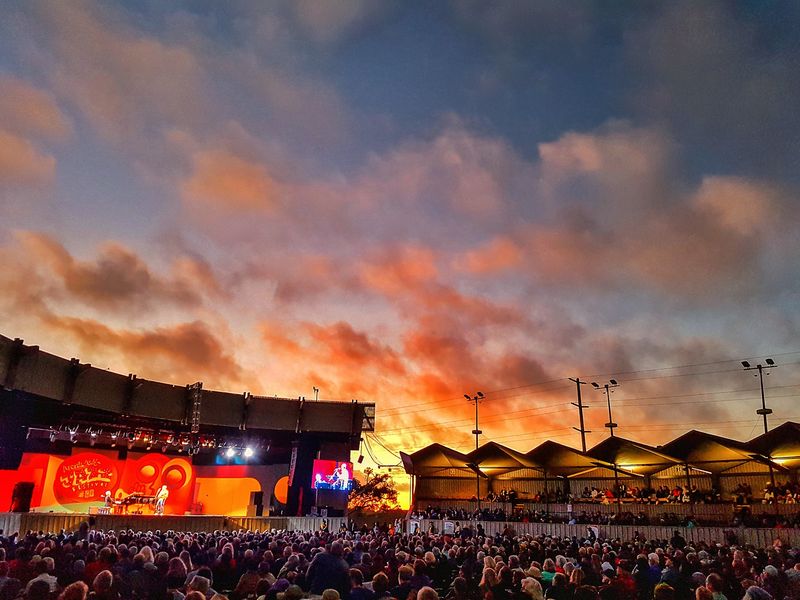
Three full days of music is a lot to take in, and the 69th festival spreads it out generously.
Gates welcome guests Friday, September 25 through Sunday, September 27, 2026, with 73 performances promoted across the weekend.
Sixty of those shows and activities happen on the four Grounds stages, and 13 take place on the Jimmy Lyons Stage inside the Arena.
Everything unfolds at the Monterey County Fairgrounds, located at 2004 Fairground Road, Monterey, California 93940.
Walking distances between stages are short, so shifting from one set to another rarely eats up much of a schedule.
Pacing matters more than speed here. Trying to catch every act would leave little room for food breaks or simply sitting under the trees for a while, and most people find a rhythm of two or three sets followed by a rest.
Coastal weather adds another layer to the planning. Afternoons may feel mild and bright while evenings turn cool once the sun drops, so layers are a practical choice rather than an afterthought.
Weekday crowds do not apply to a Friday through Sunday event, though Friday afternoon usually feels calmer than Saturday, when gates open earlier and the grounds fill up.
Arriving early on any day gives a quieter window to explore the layout before the schedule gets crowded.
A Music Tradition That Started Back In 1958
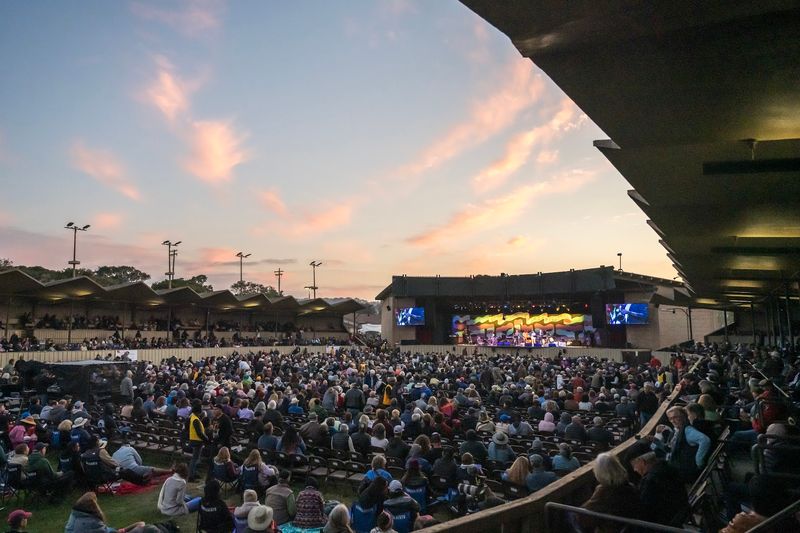
Very few music events can point to a debut date and still be running decades later.
The first Monterey Jazz Festival opened on October 3, 1958, and it is recognized as the longest continuously running jazz festival in the world.
Founding credit goes to a jazz critic and a jazz disc jockey who wanted a West Coast home for the music they loved.
That opening year gathered a remarkable roster, including Louis Armstrong, Dizzy Gillespie, Max Roach, the Modern Jazz Quartet, Sonny Rollins, Dave Brubeck, Cal Tjader, Harry James and Billie Holiday.
Reading that list gives a sense of how serious the festival was from day one.
Jazz education has been part of the mission from the beginning, not something added later for good publicity.
That thread still runs through the modern schedule, which places student groups alongside touring professionals.
History shows up in small ways once visitors are on the grounds. Stage names honor people who shaped the event, and anniversary performances often tie current sets back to earlier decades.
Knowing a bit of that background changes how a first visit feels.
Opening Night Belongs To A Big Band And A Celebrated Vocalist
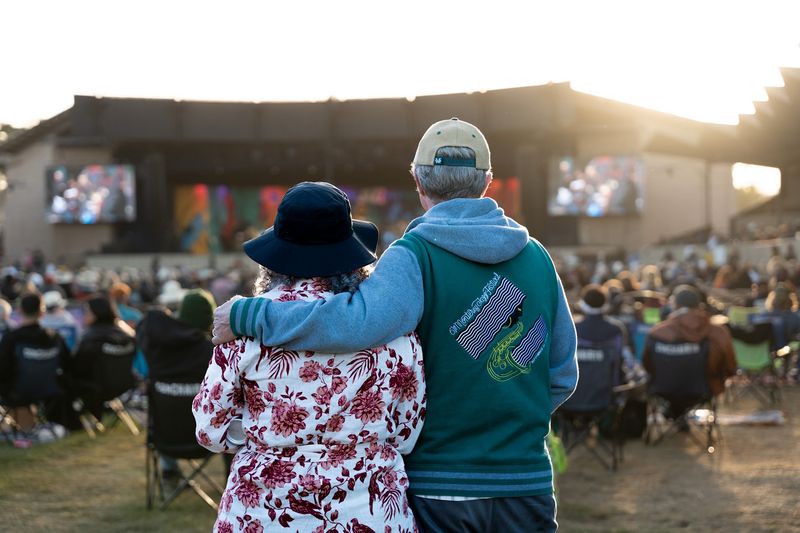
Opening night sets the tone for everything that follows, and 2026 starts with serious firepower.
The Jazz at Lincoln Center Orchestra with Wynton Marsalis takes the Jimmy Lyons Stage at 7 p.m. on Friday, September 25, joined by special guest Cécile McLorin Salvant.
A full big band paired with a vocalist gives the evening both volume and nuance.
Arena seating is reserved, which means Arena ticket holders have an assigned spot rather than a scramble for space.
Arriving with time to spare helps, since gates open at 3 p.m. Friday and the walk to seats can slow down as showtime approaches.
Sound carries differently in an outdoor arena than in a concert hall. Brass sections tend to feel bright and direct, while quieter vocal passages reward an audience that settles in and stops shuffling around.
Evening temperatures near the coast usually drop after sunset, so a jacket or blanket makes a long set far more comfortable.
Chair rentals are offered through conCHAIRto for people spending time on the Grounds before the Arena show.
Anyone new to jazz could hardly ask for a better introduction.
An All-Star Latin Jazz Tribute Extends Friday Evening
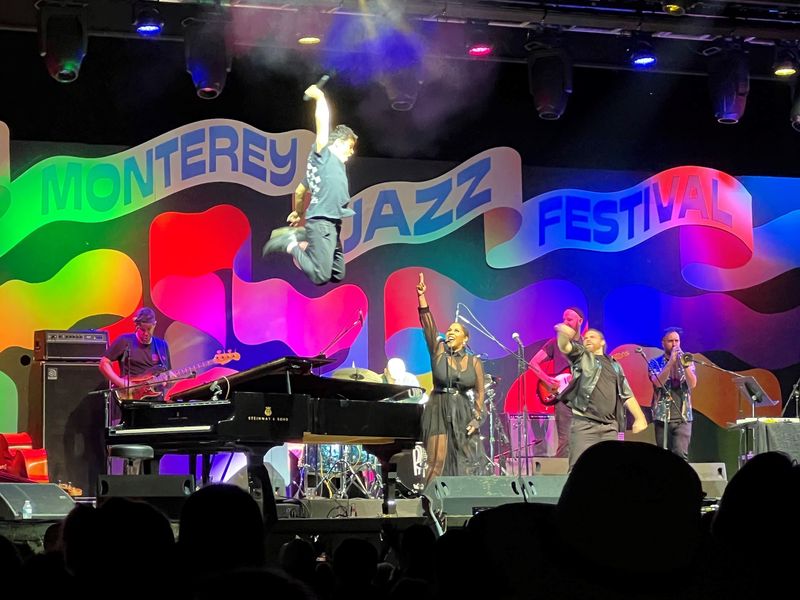
Two major Arena performances in a single night is unusual, and Friday delivers exactly that.
The Eddie Palmieri Experience: An All-Star Celebration follows on the Jimmy Lyons Stage at 8:45 p.m. on Friday, September 25.
Back-to-back headline sets make opening night feel like a full weekend compressed into a few hours.
Latin jazz brings a different energy than a big band program. Percussion sits front and center, rhythms layer on top of each other, and the audience often responds by moving rather than sitting still.
Late sets call for a little forethought. Fairgrounds parking is limited and sold out for 2026, so knowing the plan for getting back after a 10 p.m. finish is worth sorting out before the music starts.
Off-site parking is available at Monterey Peninsula College with shuttle service running during festival hours. Building that ride into the evening timeline keeps the end of the night from feeling stressful.
Food and drink purchases at the festival are cashless, which speeds up lines between performances.
Grabbing something during the gap between the 7 p.m. and 8:45 p.m. shows is usually easier than waiting until the crowd surges at intermission.
Opening night ends loud, warm and rhythmic, which is a fine way to begin three days of listening.
A Mysterious 1958 Throwback Set Nods To The First Year
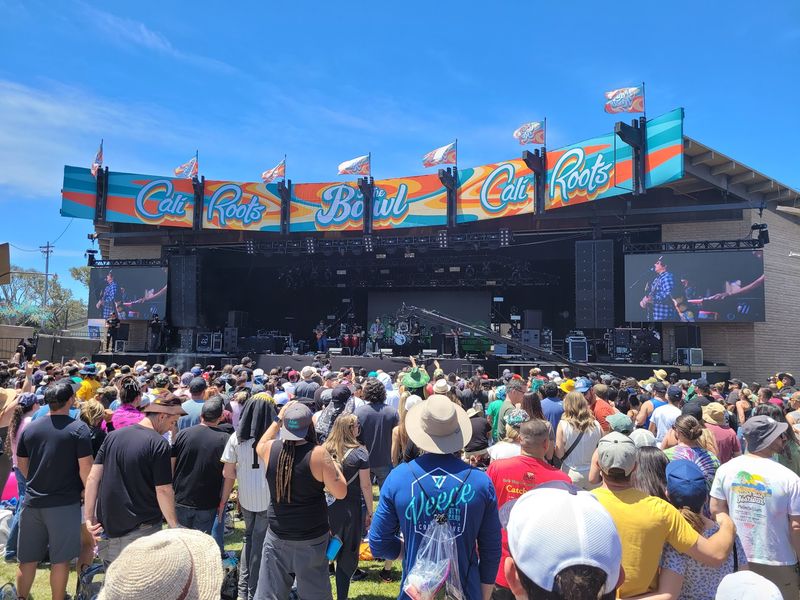
Curiosity is a powerful reason to show up somewhere, and one Saturday listing offers plenty of it.
A performance titled Monterey Surprise: 1958 Throwback appears on the Saturday, September 26 schedule at the Ray Drummond West End Stage. Details are deliberately kept vague, which is part of the appeal.
The reference point is clear even if the roster is not. The first festival took place on October 3, 1958, so a throwback set connects directly to the event’s earliest hours.
West End Stage is an outdoor venue with roughly 2,000 seats, which makes it substantial without feeling as formal as the Arena. Access comes with a Grounds ticket, so no Arena seat is required to attend.
Surprise programming tends to attract listeners who arrive early and stay put. Getting there before the scheduled start is the most reliable way to secure a comfortable spot rather than standing at the back.
Sound at the smaller stages feels closer and more conversational. Individual instruments separate more clearly, and the space between songs carries a relaxed hum of chatter.
Sets like this one feel specific to Monterey rather than something a traveler could catch on any tour route. That local flavor is exactly what keeps regulars coming back year after year.
A Sunday Quartet Revisits Forest Flower Sixty Years On
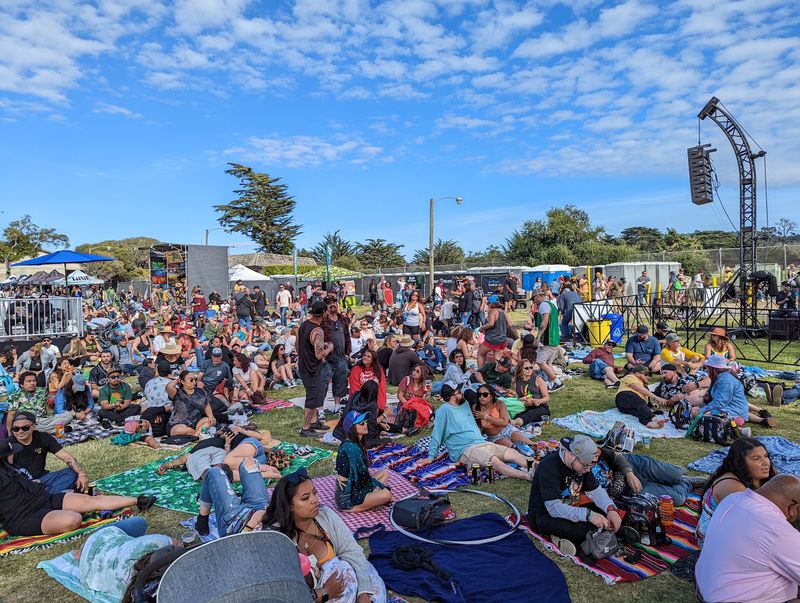
Landmark albums have a way of coming back around, and Sunday makes room for one of them.
The Charles Lloyd Quartet: Forest Flower 60th Anniversary is scheduled to perform on Sunday, September 27. The performance marks six decades since the recording that carries the Monterey name in jazz history.
Anniversary sets tend to draw a mixed audience. Longtime listeners arrive with memories attached to the music, while newer fans get to hear a piece of history performed live rather than through speakers.
Sunday has a gentler pace overall. Gates open at 11 a.m., and by the closing day many visitors have settled into a routine of knowing where the shade is and which walkways move fastest.
Comfort makes a difference on a third consecutive day of music. Supportive shoes, a refillable water bottle and a seat cushion or rented chair all help the hours pass more easily.
Listening closely pays off with a quartet format. Bass lines and cymbal work sit right alongside the saxophone, so the interplay between players becomes the main event.
Connecting a 1966 recording to a 2026 stage gives the weekend a satisfying sense of continuity. Past and present sit in the same seats, and the music does the linking without any explanation needed.
Sunday Night Closes With A Piano And Bass Pairing For Miles
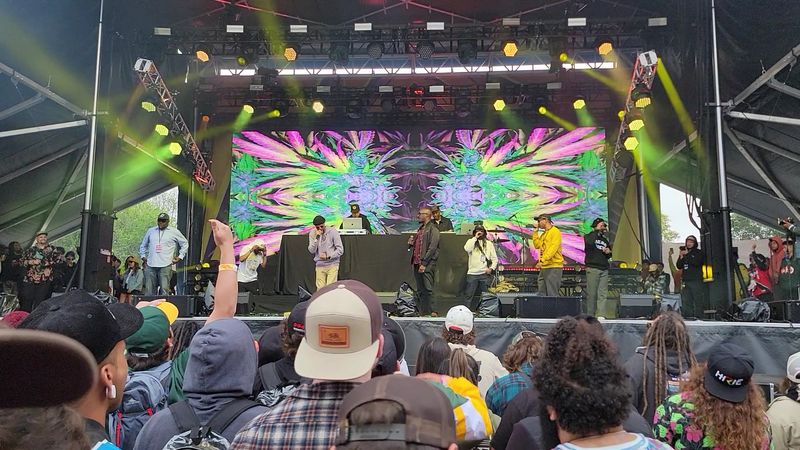
Closing night deserves something memorable, and the 2026 schedule saves a heavyweight for the end.
Herbie Hancock and Ron Carter: For Miles is scheduled for Sunday, September 27 at 7:45 p.m. on the Jimmy Lyons Stage. The festival describes the pairing as one of its special Only in Monterey events.
Two musicians who shared bandstand history bring a particular kind of chemistry.
Piano and bass conversations rely on listening as much as playing, and audiences often notice the quiet stretches as much as the loud ones.
The Jimmy Lyons Stage sits within a 5,400-seat Arena, so even a spare duo setup reaches a large crowd. Arena tickets include a reserved seat, which removes any guesswork about where to sit for the finale.
Late Sunday departures are worth planning around. With fairgrounds parking sold out for 2026, the Monterey Peninsula College shuttle becomes the practical route back after the show ends.
Warm layers matter most on this night of all nights. Sitting still through a long evening set outdoors gets chilly quickly once the coastal air settles in.
Ending three days with a pairing like this gives the weekend a natural final chord. Walking out afterward, the grounds empty slowly and quietly.
Student Ensembles Share The Schedule With Established Names
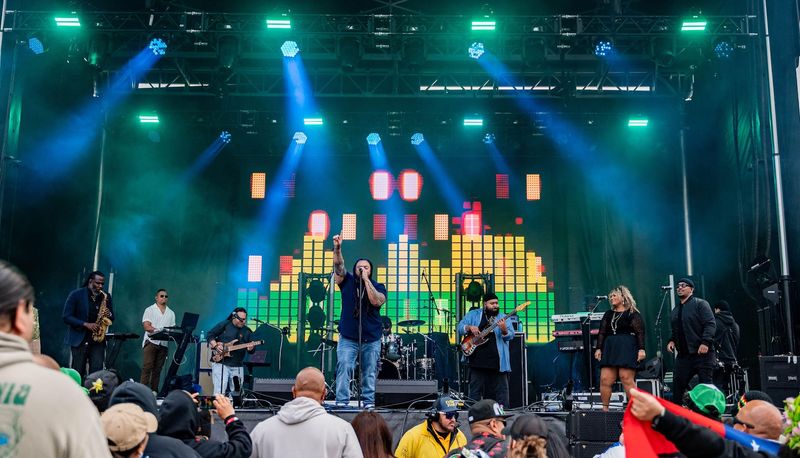
Watching a teenager nail a solo in front of a real crowd is one of the quieter thrills of this weekend.
The lineup includes the Next Generation Jazz Orchestra, the Next Generation Women in Jazz Combo, Monterey Jazz Regional All-Star Ensembles and student jam sessions.
The Texas Southern University Jazz Ensemble also performs during the festival.
Education has been a focus since 1958, so these sets are not filler between big names.
Financial assistance is provided for students taking part in the Next Generation Jazz Orchestra and Next Generation Women in Jazz Combo programs.
Student performances often run earlier in the day. Arriving shortly after gates open at 11 a.m.
Saturday or Sunday is the easiest way to catch several of them.
Families tend to find these sets especially approachable. Shorter programs and enthusiastic playing hold attention well, and the smaller stages allow for easy exits if a break is needed.
Jam sessions have a looser structure than scheduled concerts. Players trade turns, tempos shift, and the atmosphere feels more like a workshop than a formal show.
There is something grounding about hearing a school ensemble a few hours before a legendary duo takes the Arena.
The weekend covers the full arc of a musical life, beginning to established, all on the same set of grounds.