This Louisiana Japanese Garden Hides A Peaceful Bamboo-Filled Retreat Inside New Orleans City Park
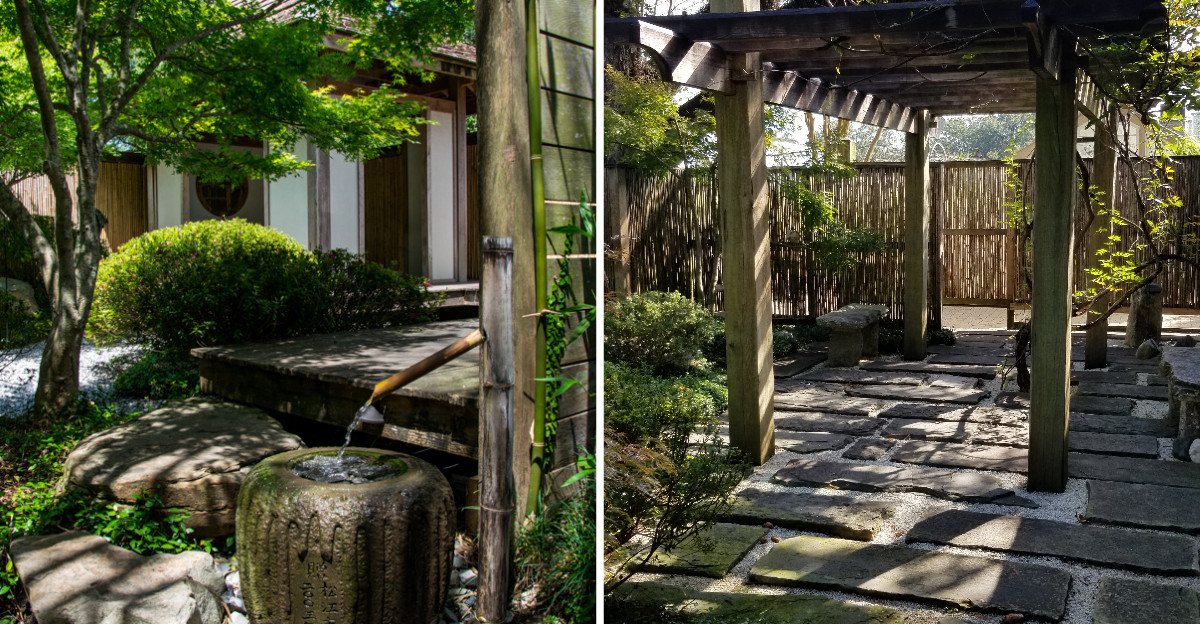
A Japanese tea garden opened in July 2005, and a month later it sat under more than a foot of floodwater.
The plants suffered badly. The stonework and structures held their ground. I have a soft spot for places that refuse to quit.
This one is wrapped in bamboo and dotted with stone lanterns sent from a sister city in Japan. Its name even honors a writer who once called this corner of Louisiana home.
In my book, that is a lot of story for a small garden. The quiet part is the real draw, though.
Some places whisper instead of shouting, and this one whispers beautifully.
A Bamboo Hideaway Waits Inside A Garden Inside A Park
Nesting dolls have nothing on this setup. Yakumo Nihon Teien Japanese Garden sits inside the New Orleans Botanical Garden, which sits inside New Orleans City Park.
The wider park spreads across roughly 1,300 acres, while the Botanical Garden encompasses ten acres and more than 2,000 plant varieties.
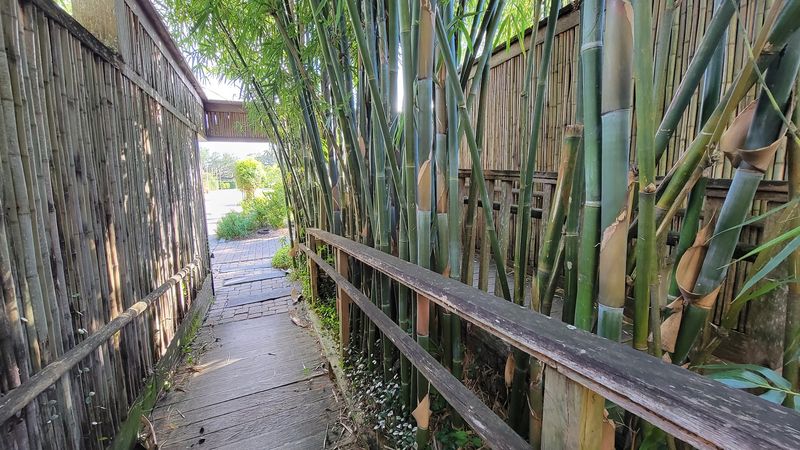
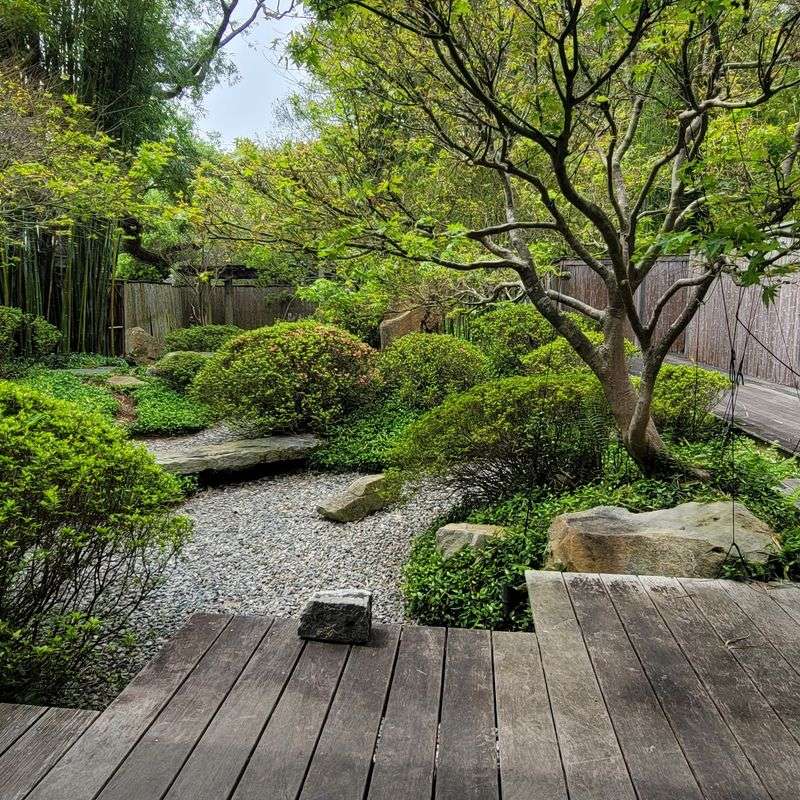
Beyond the miniature Train Garden, near the Garden Study Center and Lath House, bamboo fencing marks the Japanese garden’s secluded setting. Stems rise above stone compositions, clipped shrubs, and a winding path.
Instead of demanding attention with one enormous attraction, the design invites visitors to notice how different materials work together.
Bamboo provides enclosure, trimmed greenery shapes the views, and natural stone offers a steady contrast to leaves moving in the breeze. It’s an unusually gentle corner of Louisiana’s lively cultural landscape.
The garden is undergoing renovation and restoration in 2026, so visitors cannot currently walk through it.
The surrounding Botanical Garden remains open, offering a chance to explore its other collections while this smaller landscape receives attention.
Four Determined Women Dreamed This Place Into Being
Back in 1985, four women had a big idea. Colleen “Co” Thian, Betty Lyons, Coralie Nesser, and Madeline Jones established the Japanese Garden Society to bring a traditional Japanese garden to New Orleans.
It took years of planning and fundraising before their idea could take physical shape.
The project eventually found a home within City Park’s existing Botanical Garden. Landscape architect Robin Tanner designed the grounds, carefully selecting significant stones at a Tennessee quarry before they traveled south.
In a garden where the position of a rock can change an entire view, those decisions were more important than they might first appear.
Ground was broken in 2003, and the first phase opened in July 2005. Twenty years had passed since the society’s formation, making the opening a particularly meaningful milestone for its supporters.
The organization later became the Japanese Garden Foundation of New Orleans, continuing the work of developing, caring for, and promoting the space.
Its purpose reaches beyond the landscaping itself. The garden was intended to introduce Japanese aesthetics and cultural traditions to the city.
The Storm Came Fast And The Garden Found Its Way Back
Timing can be cruel. Just a month after its July 2005 opening, Hurricane Katrina brought floodwater more than a foot deep across the garden.
Much of the new planting needed to be replaced, yet the major stonework and structures remained largely intact.
That gave the restoration team a strong foundation. Instead of beginning from an empty site, they could work with the existing paths and carefully positioned rocks, rebuild the plantings, and improve the layout.
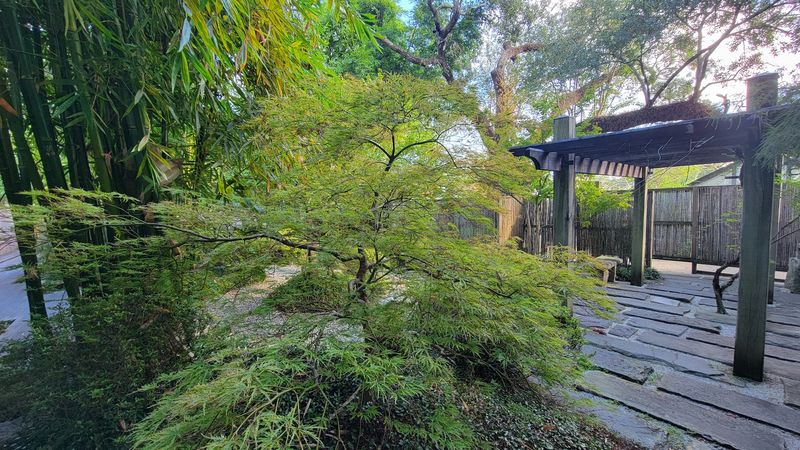
A small Japanese-style shelter, known as a machiai, was also added during the recovery.
By 2007, the garden celebrated a grand reopening. The change was remarkable for a landscape whose original planning had taken two decades.
Rather than becoming a story about one opening day, the site developed a second chapter shaped by restoration and continued care. Bamboo, trees, and carefully pruned shrubs require attention long after the first planting.
The garden’s history reflects a broader Louisiana tradition of restoring cherished community spaces, with every surviving stone part of that continuing story.
Meet The Writer Hiding In The Garden’s Name
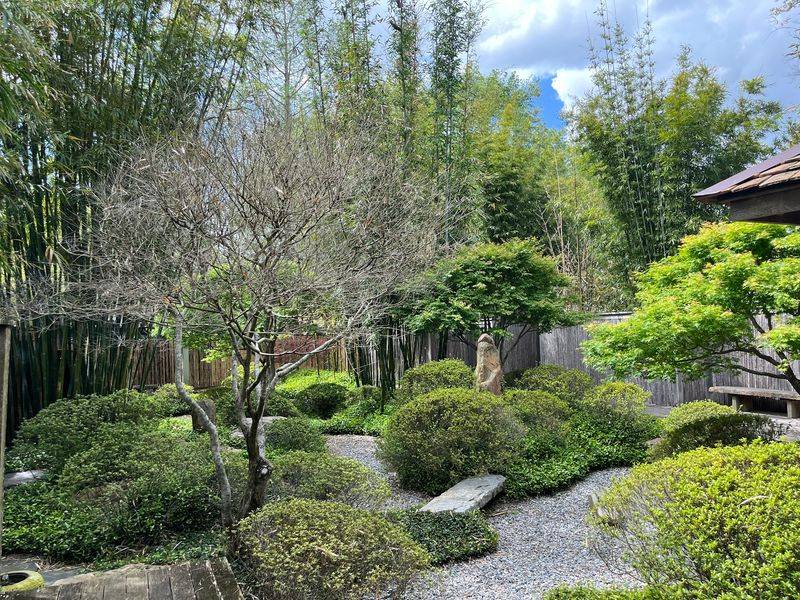
Most garden names stick to plants. This one honors a writer whose life connected New Orleans with Japan.
Yakumo Nihon Teien translates in part to “Japanese garden,” while Yakumo refers to Lafcadio Hearn, who later took the Japanese name Koizumi Yakumo.
Hearn was born in Greece and worked as a journalist and author in New Orleans during the late nineteenth century. His writing explored the city’s culture and everyday life.
In 1890, he traveled to Japan, where his interest in local customs and stories became a central part of his work. He taught for a time in Matsue, married into a Japanese family, and later became a Japanese citizen.
His books helped introduce Japanese traditions and folklore to English-speaking readers, giving his name particular meaning in a garden devoted to cultural exchange.
Matsue is also a sister city of New Orleans, so the connection extends beyond the writer’s biography. The two cities are linked through both history and the gifts placed within the garden.
Stone Lanterns Traveled Halfway Around The World
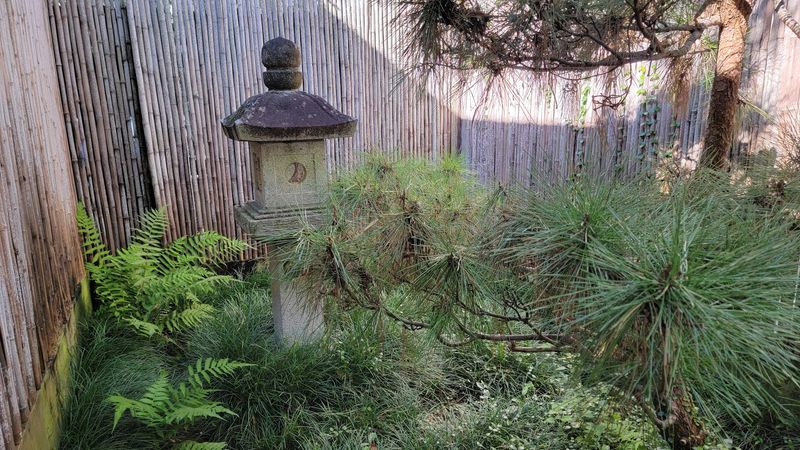
Some gifts arrive in a box with a bow. Others are carved from stone and travel all the way from Matsue, Japan.
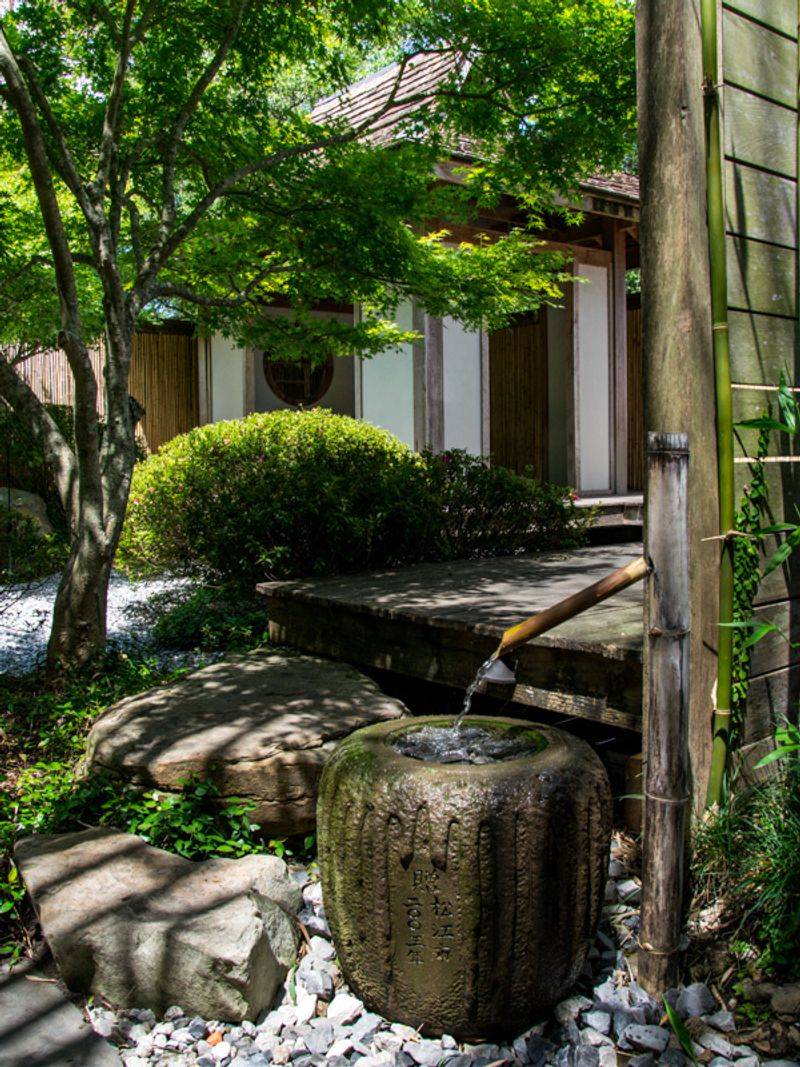
The sister city contributed three substantial pieces to this garden: two traditional stone lanterns and a water basin.
Their forms bring weight and structure to a landscape otherwise full of slender bamboo and soft foliage.
The lanterns are particularly expressive, with their layered stone silhouettes standing out beside carefully positioned planting.
The basin adds another link to Japanese garden traditions, where water and the gestures associated with it can carry ceremonial meaning.
These gifts were meant to celebrate friendship between Matsue and New Orleans. They also connect to the writer whose Japanese name the garden carries, making the stones more than decorative accents.
Look at the paths and rocks around them, too. The overall composition encourages a slower pace, allowing one feature to frame the next rather than competing for attention.
The connection between Japan and Louisiana is carved into these stones.
Grab A Bench At The Little Machiai
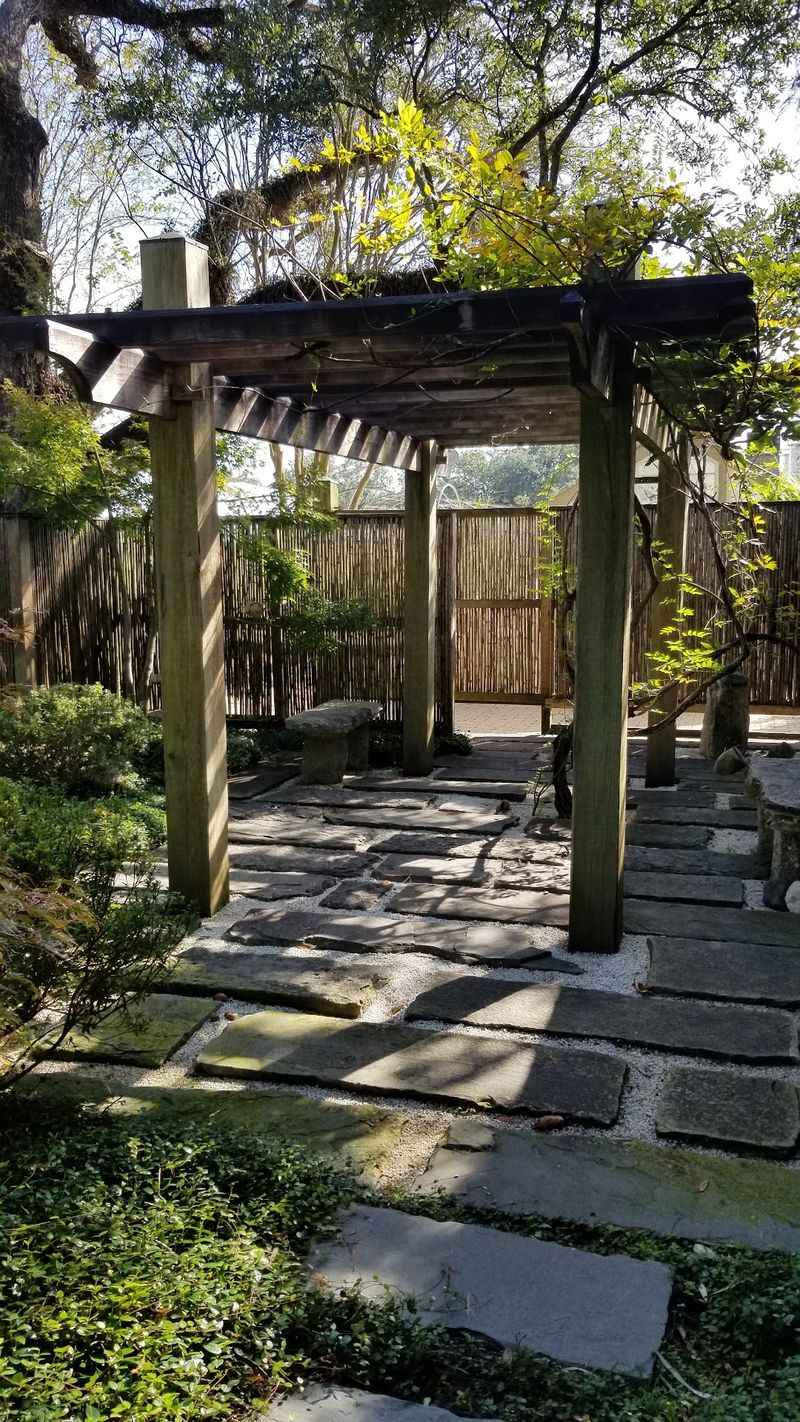
Every tea garden needs a good waiting spot. A machiai is a sheltered place where guests can pause before a traditional tea gathering, and this garden gained one during its restoration after the 2005 flood.
The small structure has a bench facing the planted landscape. Its modest scale suits the surroundings: a roof for shelter, a place to sit, and a carefully considered outlook toward greenery and stone.
Rather than offering a dramatic attraction, it makes stillness part of the design. The shelter has served as a backdrop for cultural activities and even a wedding.
Its connection to the tea-garden tradition also helps explain the thoughtful route through the garden, where the experience is meant to unfold gradually instead of all at once.
It suggests that observing is an activity in itself. A view changes with the season, light, and movement of leaves, even when the structure remains the same.
Once the garden reopens, this is one detail worth giving a little extra attention, whether or not a cultural program is scheduled.
Wisteria And Stone Paths Gave The Garden More Room
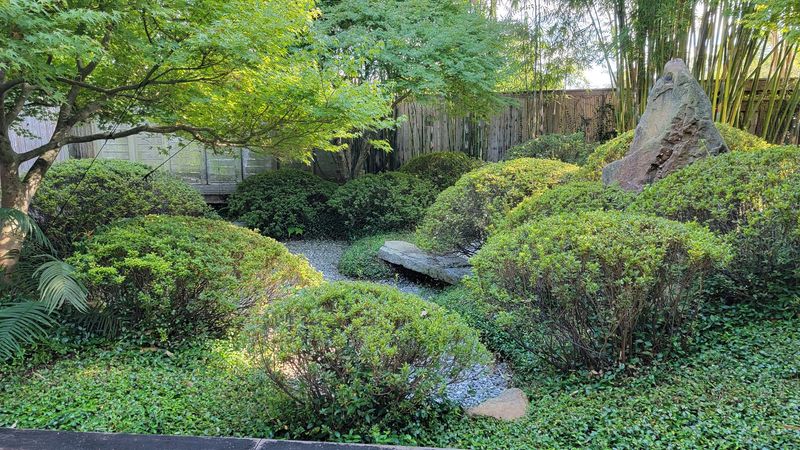
A small garden can still have a big second act. After the initial restoration, Yakumo Nihon Teien expanded to more than twice its original size, creating room for a wisteria arbor, additional stone pathways, and more fencing.
The arbor adds a plant-covered framework to the landscape. As wisteria grows, its climbing stems and seasonal flowers bring a different texture from the tall bamboo.
The pathways encourage visitors to see the garden from changing angles, with stones and plantings arranged to guide the eye.
The expansion also changed how the different elements could be experienced. A longer route offered fresh perspectives on the original plantings, while the arbor introduced a softer overhead feature.
The donated water basin and lanterns remained important focal points, alongside the sheltered seating area. What looks simple at first has been measured, positioned, and maintained with care.
This quiet approach explains why the garden’s recent restoration is about more than adding new plants. Preserving the original intent remains central to its next chapter.
Japanese Arts And A New Chapter For Visitors
A garden can be a classroom without feeling like one.
Yakumo Nihon Teien was created as a natural setting for bonsai, ikebana, and sado, the Japanese tea ceremony, alongside garden tours and occasional cultural events.
Bonsai involves cultivating and shaping trees in containers, while ikebana uses the placement of flowers and branches as an art form.
A tea gathering brings careful movement and hospitality into a setting built for reflection. These traditions have been featured in programming associated with the garden, though they are not everyday demonstrations.
For now, the Japanese garden itself is temporarily unavailable during its 2026 renovation.
The New Orleans Botanical Garden continues welcoming visitors Tuesday through Sunday, 10 a.m. to 4:30 p.m., with last entry at 4 p.m.
Its entrance is at the Oscar J. Tolmas Visitor Center, 5 Victory Ave, New Orleans, LA 70124. General Botanical Garden admission applies, with Wednesday admission available at no charge for Louisiana residents.
While waiting for the Japanese garden to reopen, explore the nearby Train Garden, conservatory, or larger botanical collections.