This Louisiana Shrine Recreated A Famous Pilgrimage Without Leaving The City
You can climb a replica of Rome’s famous Holy Stairs in Louisiana, and the custom is to do it on your knees.
Put that into perspective for a second, because the original stairs sit beside a church in Rome, an ocean and several time zones away.
That means a centuries-old pilgrimage tradition lives within reach of a regular weekday morning.
For anyone who can’t cross the Atlantic for a prayer, that’s more useful than it first sounds.
The same grounds also hold a grotto inspired by Lourdes, the French town famous for its spring of water and its pilgrims.
How did one city neighborhood end up borrowing two of Europe’s best-known holy places at once?
Rome’s Holy Stairs Have A Surprising Twin
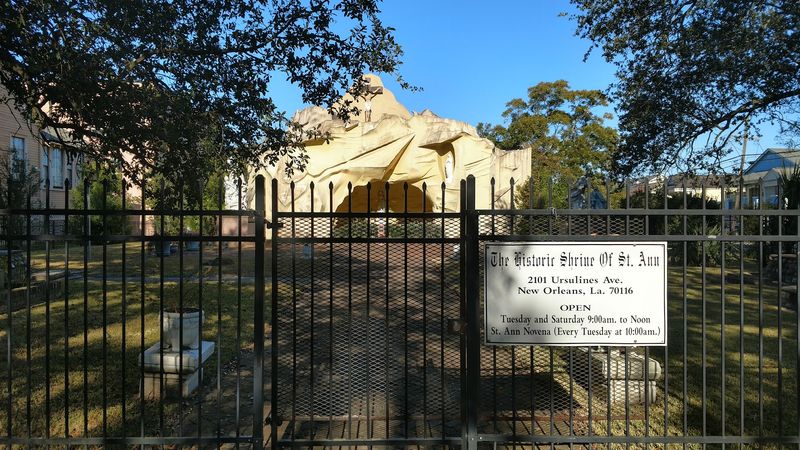
Rome has its Scala Sancta, and New Orleans has a replica inside St. Ann’s Shrine.
According to Catholic tradition, the original staircase is associated with steps Jesus climbed in Jerusalem. The twenty-eight marble steps now stand near Rome’s Basilica of St. John Lateran, where pilgrims have long approached them on their knees.
The staircase in Tremé gives that devotion a local setting.
It rises within a grotto-like structure, turning an everyday act of climbing into a deliberate sequence of prayer. Pictures of the Stations of the Cross line the stairway, offering subjects for reflection as visitors make their way upward.
A religious practice associated with an important European pilgrimage site became part of a neighborhood shrine in Louisiana.
The structure is compact compared with a cathedral, but the combination of stairs, enclosed passageways, and open sky creates a memorable experience. Its craftsmanship and history are worth studying even without making the climb.
Your Knees Will Remember This Climb Long After You Leave
Walking up stairs is easy. Climbing them on your knees while praying is a whole different kind of effort.
That is the traditional approach at St. Ann’s Shrine. The climb moves slowly, with time to reflect on the images along the staircase. Rather than racing to the upper level, pilgrims pause as part of a religious practice that reaches far beyond New Orleans.
The stairs turn at a landing, creating an enclosed passage. The nearby images guide the experience, connecting the physical climb with the Stations of the Cross.
If kneeling isn’t comfortable or possible, a visitor can still spend time in quiet reflection on the lower grounds. The custom is optional.
Because the building is historic and maintained by volunteers, pay attention to any posted instructions before using the stairs. Move carefully, allow room for anyone praying, and avoid treating the climb as a physical challenge to complete quickly.
What makes the ritual memorable is its pace. A staircase normally takes seconds; here, the journey itself is the reason for coming.
The Surprise Waiting Above The Staircase
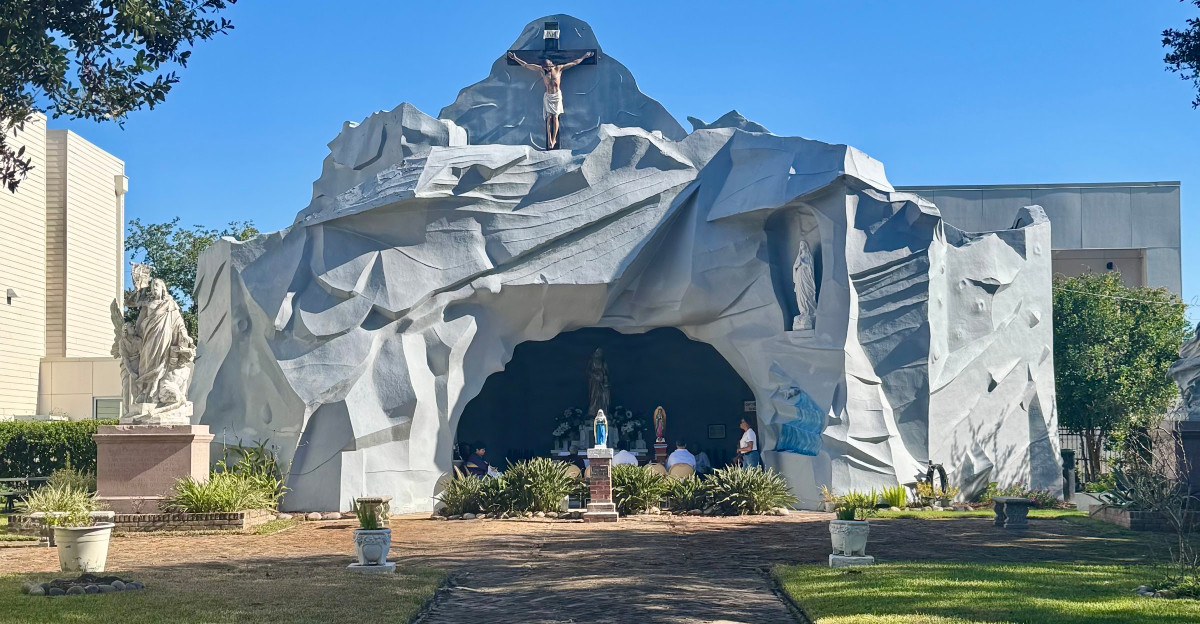
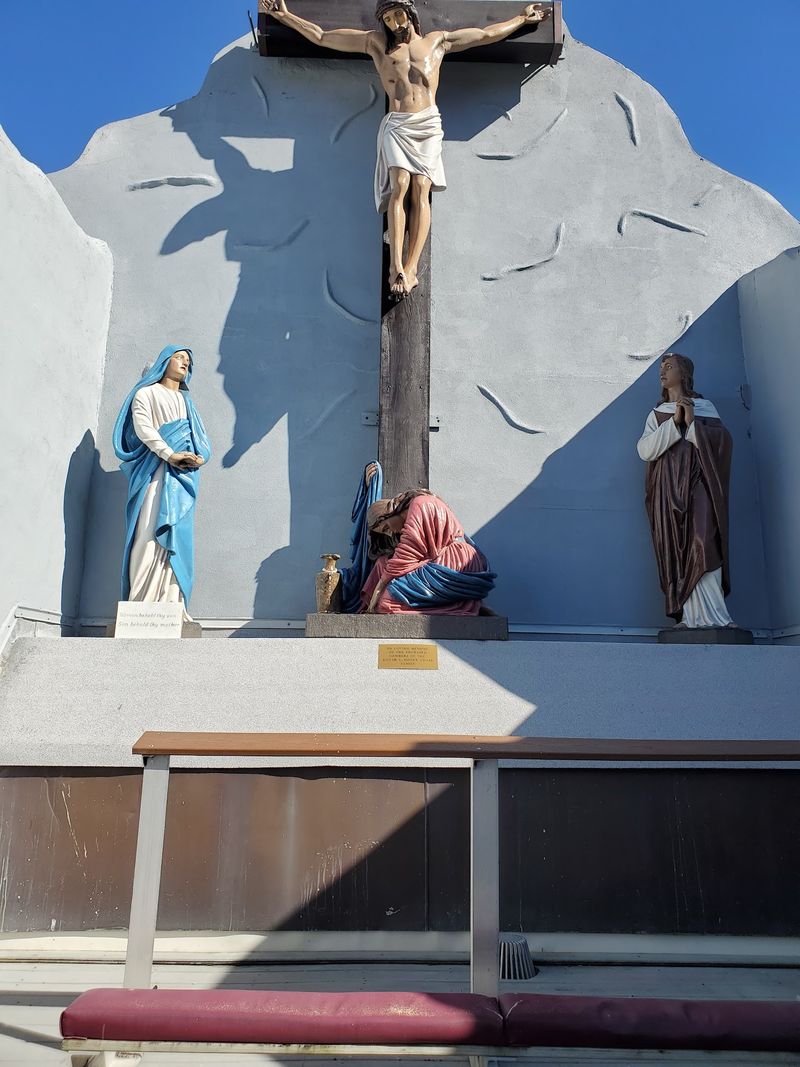
Finish the climb, and the scene above is much more dramatic than an ordinary landing. A large cross stands over the grotto, accompanied by sculptural figures from the Christian tradition.
The cross rises roughly fifteen feet, while the surrounding grotto structure reaches about thirty-five feet. The cross is visible above the walls from the street, hinting at the courtyard beyond.
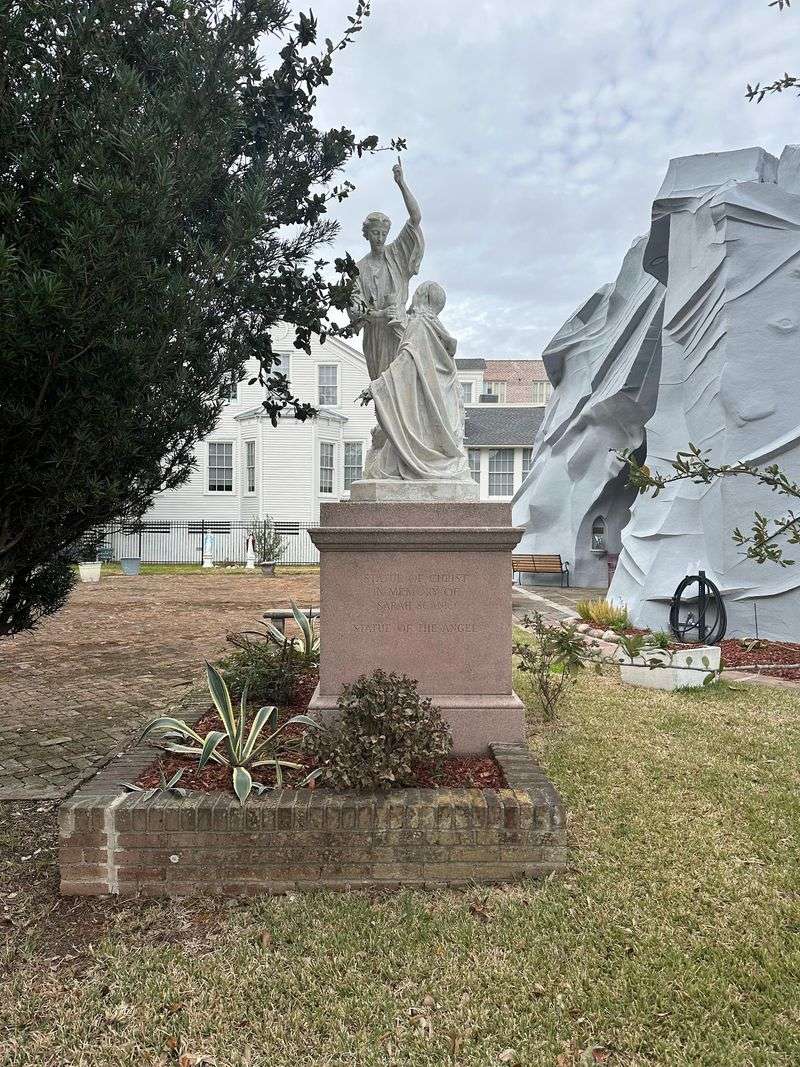
St. Ann herself is honored elsewhere on the grounds. Inside the grotto, a statue depicts her with her daughter Mary. That is especially fitting because Catholic tradition regards Ann as Mary’s mother and Jesus’ grandmother.
The combination gives the shrine two different focal points: the dramatic sculptural scene above and the more intimate area devoted to St. Ann below. Even a compact courtyard can hold an astonishing amount of symbolism.
Visitors interested in religious history can take their time comparing the scenes rather than rushing from one feature to the next. The carefully arranged figures make this New Orleans landmark far more than a simple outdoor staircase.
France Joins The Story With A Grotto Inspired By Lourdes
One famous pilgrimage wasn’t enough for this corner of New Orleans. The shrine also recreates the setting of Lourdes, the French town associated with reported appearances of Mary in 1858.
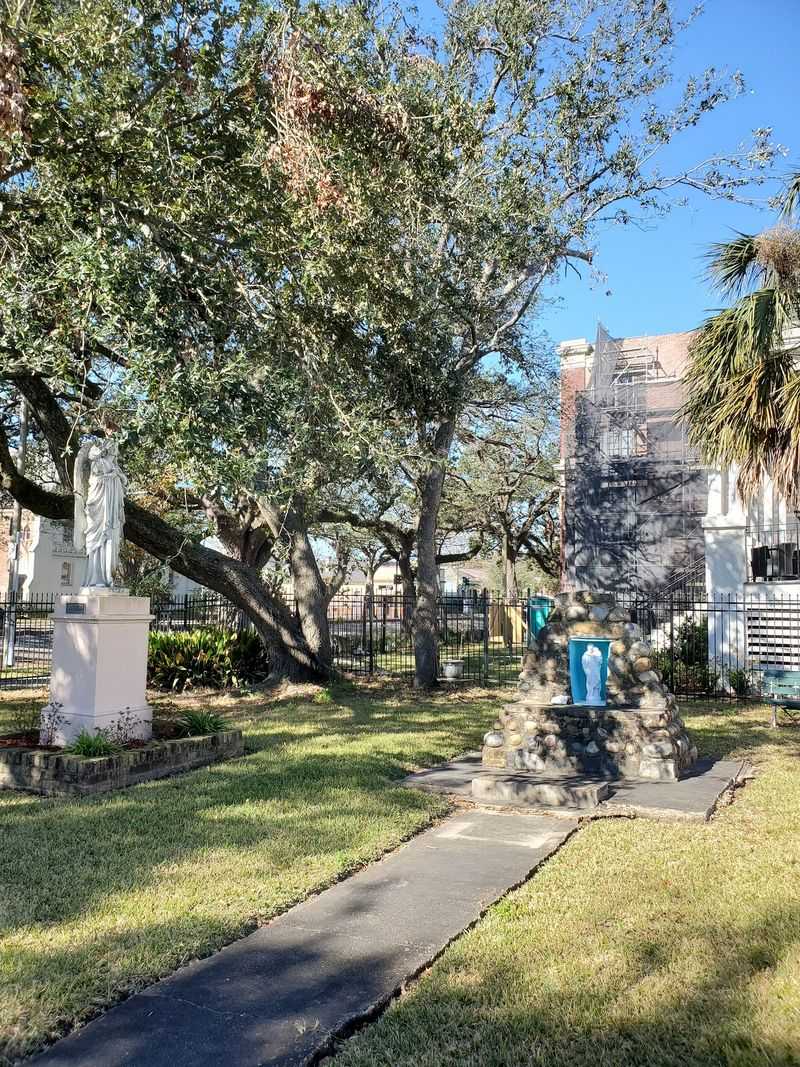
The Lourdes-inspired grotto brings that tradition into a walled courtyard in Tremé.
Its gray, stone-like surfaces and religious statuary create the impression of a rocky sanctuary, despite the surrounding city streets. A statue of Mary occupies an exterior niche.
The outdoor grotto project took shape during the 1930s, building on a much older local devotion to St. Ann.
Its design brought together the Lourdes setting and the Holy Stairs tradition in one place rather than treating them as separate attractions.
This is what makes the site so unusual. A visitor can stand near the statue associated with Lourdes, enter the grotto, and discover the Roman-inspired staircase within the same small complex.
It’s a place for personal prayer, but the architecture also offers an unexpected introduction to the ways European religious traditions were adapted in Louisiana. A quiet pause gives you time to appreciate the details.
The Water Tap Has Its Own Tradition
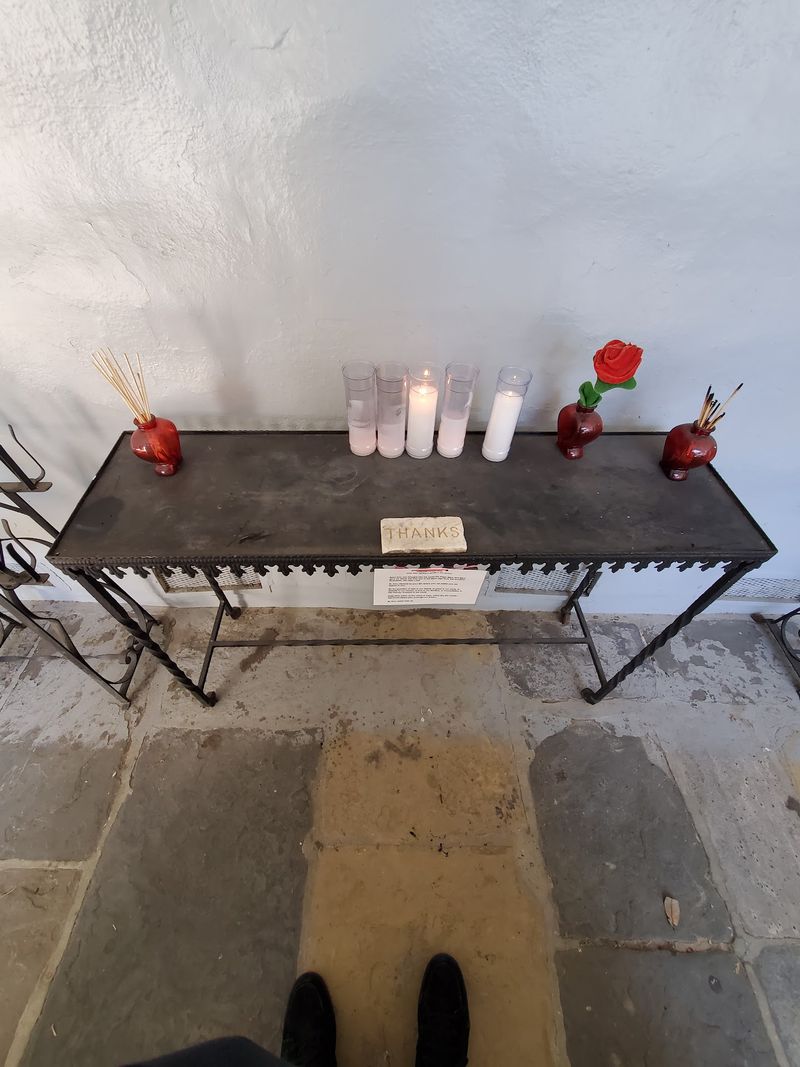
Plenty of people leave a religious shrine carrying a small reminder of their visit. Here, holy water has long been part of the local devotional practice.
A tap beneath the exterior statue was historically used for collecting water.
Another tap was placed along the route through the grotto, where people could wet their fingers before making the sign of the cross. These details connect the site with familiar Catholic rituals.
The connection to Lourdes is symbolic. The New Orleans grotto is a reproduction of a French pilgrimage setting, not a source of water transported from France.
If collecting water is part of your visit, ask a volunteer whether the tap is operating and whether bottles are permitted. Facilities at a historic site can change as maintenance work continues.
You can also simply observe the niche, statue, and surrounding stonework. Together they show how a devotional custom was woven into the design of the shrine itself. Those details reward visitors interested in either devotion or history.
More Than A Century Of Devotion Lives Here
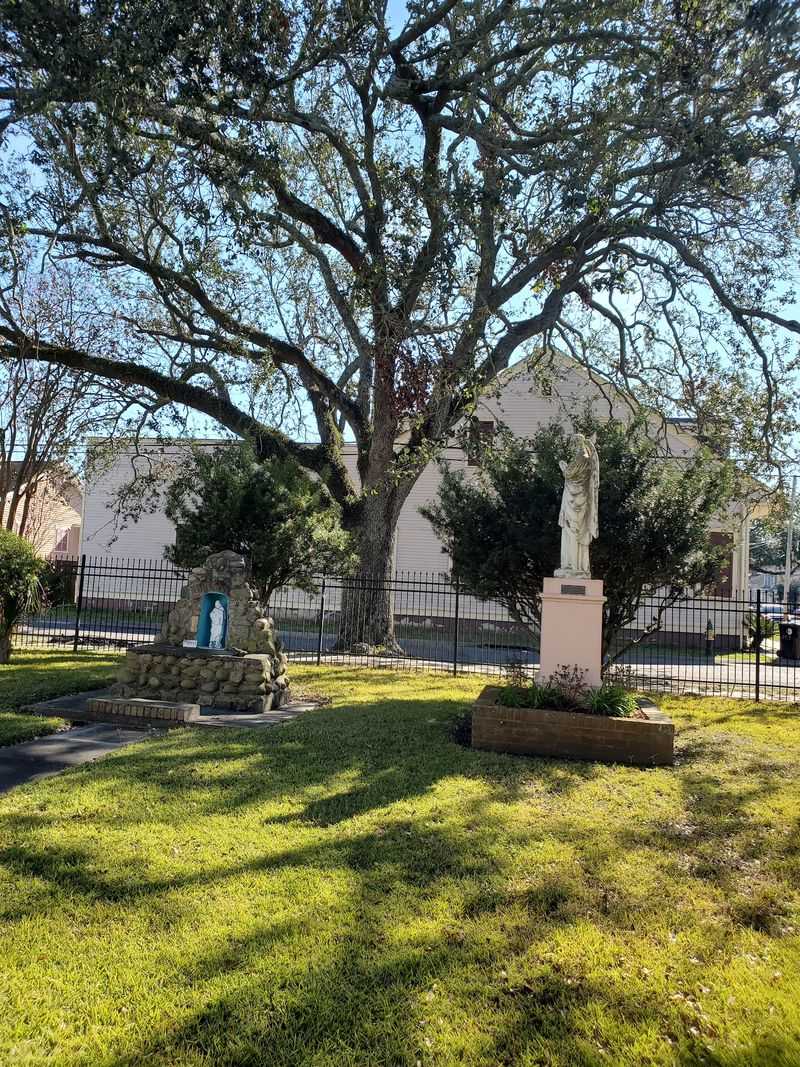
The story began long before the grotto appeared on Ursulines Avenue.
St. Ann Parish was established in New Orleans in 1852, and a special shrine devoted to the saint was dedicated in 1902. The first shrine stood at the earlier church on St. Philip Street.
As the community grew, parish activities moved to Ursulines Avenue in the 1920s. Plans for a grander religious complex followed, while the outdoor shrine became an enduring feature of the block.
Devotions honoring St. Ann united local families. The annual observance on July 26 became an important occasion for prayer, and the tradition continued across generations.
The parish’s institutional arrangements changed over time, and the title of National Shrine became associated with a church in nearby Metairie.
The historic grotto on Ursulines Avenue, however, continued as a neighborhood place of devotion. This is the historic site, distinct from the church in Metairie.
For anyone curious about Louisiana’s religious heritage, the little courtyard tells a story spanning more than a hundred years, multiple buildings, and a remarkably persistent local tradition.
Neighborhood Volunteers Keep The Shrine Looking Its Best
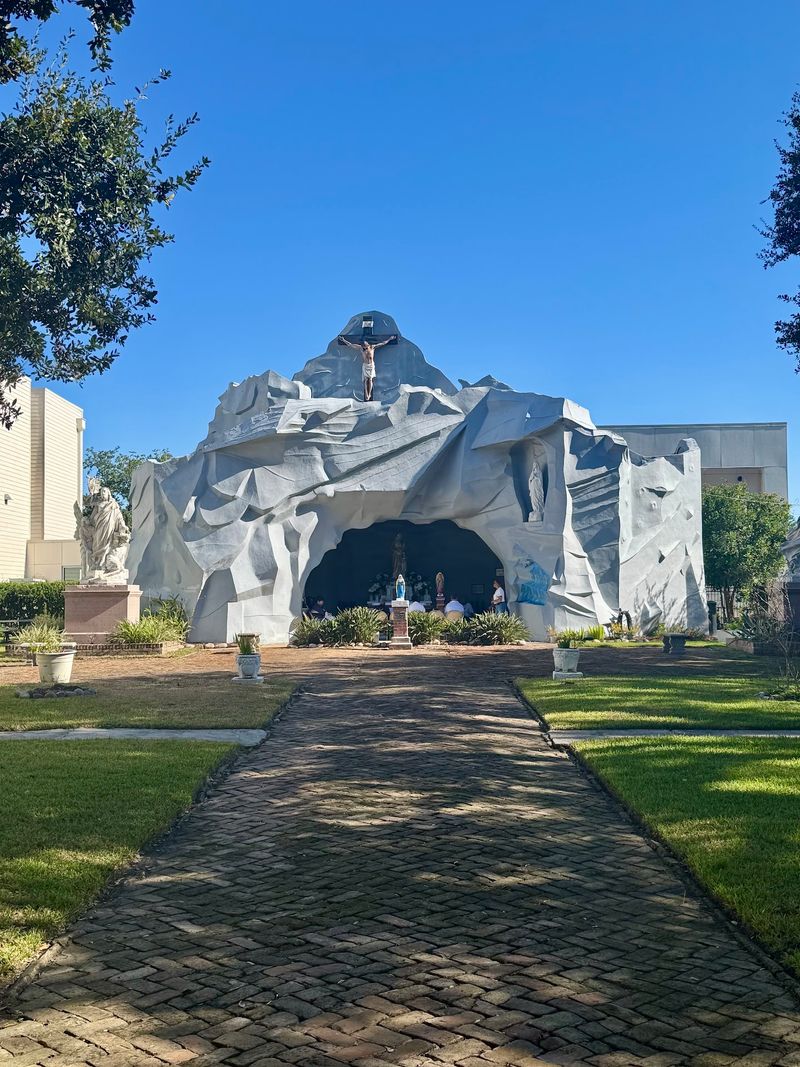
A place this old needs regular attention, and the work here has been substantial.
Volunteers have restored statues, repainted the grotto, refreshed the grounds, and helped preserve its distinctive sculptural centerpiece.
One restoration replaced the large cross and repaired the figure mounted on it.
The grotto’s exterior and interior also received new gray paint designed to recall the appearance of stone. Community groups joined cleanup days, giving the courtyard a renewed sense of care.
That attention reaches smaller details too. The grounds hold religious statues, and a gift shop has offered rosaries and devotional items. Availability can vary with staffing and the shrine’s short opening schedule.
The site remains connected with St. Peter Claver Parish, and local volunteers help provide access to visitors. This community involvement is an important reason the historic structure remains part of Tremé.
It’s not a large museum with a full-time visitor operation. It’s a maintained place of worship in an ordinary neighborhood, with real people giving their time to keep it accessible.
Even the illuminated cross above the grotto reflects that effort. That upkeep preserves part of the city’s cultural landscape.
Set An Alarm Because The Gates Keep Short Hours
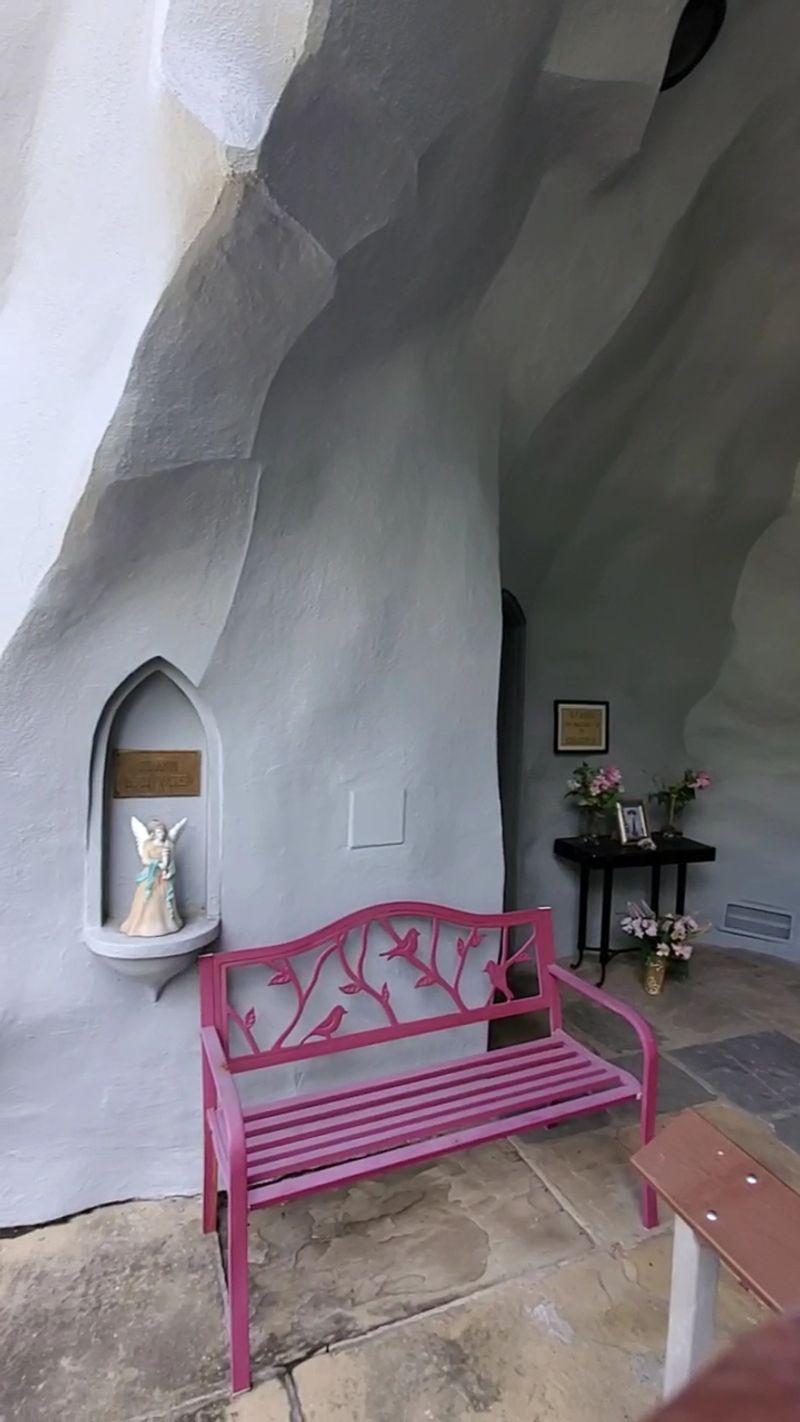
Timing matters here more than at most attractions.
The shrine’s published visiting hours are Tuesday, Thursday, and Saturday from nine in the morning until noon. Since volunteers help maintain access, confirm the schedule ahead of a special trip, especially around holidays.
A Tuesday novena traditionally begins at ten. Visitors can plan around that time according to their interests.
You’ll find the historic St. Ann’s Shrine at 2101 Ursulines Ave, New Orleans, LA 70116, in the Tremé neighborhood.
It occupies a gated courtyard near residential streets, away from the busier downtown sightseeing routes. Respect nearby homes and posted instructions.
When the gate is closed, parts of the structure can still be seen from the public sidewalk, including the cross rising above the grotto. Entry to the grounds, however, depends on the opening schedule.
Allow enough time for the stairs, the Lourdes-inspired features, and the statues honoring St. Ann.
A short visit can reveal how two European pilgrimage traditions became part of one Louisiana neighborhood, and why that unusual combination still matters today.