This Nebraska City Took Home One Of The State’s Top Tourism Awards
Tourism awards usually sound like something decided in a conference room.
The interesting part comes afterward, when you look at the city itself and start figuring out what earned the recognition.
One Nebraska destination recently took home one of the state’s top tourism honors, putting fresh attention on a place that already gives visitors plenty of reasons to linger.
The award adds another layer to the story without changing what makes the city enjoyable in the first place.
There are walkable areas, cultural stops, local food, and enough variety to build an entire weekend without forcing the schedule.
Recognition like this can be useful because it points toward places doing something especially well.
Then the fun part begins. You get to see if the city lives up to the trophy.
The Tourism Award That Put Lincoln In The Spotlight
Statewide recognition rarely arrives without a story behind it, and February 2026 brought exactly that moment for the capital city.
The Nebraska Tourism Industry Awards handed the Outstanding Marketing Campaign honor to Visit Lincoln for its Taste 27th Digital Marketing Campaign.
Competition came from strong entries submitted by Visit Columbus, Visit Omaha, and the Lancaster County Super Fair.
What stands out about the win is its focus. Rather than promoting the entire city at once, the campaign zoomed in on a single corridor and let the businesses there carry the message.
Awards like this matter to travelers for a practical reason. They often point toward places locals actually use, not just polished attractions built for out-of-town crowds.
For anyone building a trip, the award works as a starting map. It signals where to eat, which neighborhoods reward slow walking, and how much of the city can be covered without long drives.
Recognition also tends to bring attention, so popular spots might feel busier on weekends. Weekday visits usually offer quieter streets and easier seating at restaurants.
One Street Helped Earn The Big Recognition
Behind the trophy sits a stretch of pavement that most travel guides once skipped entirely.
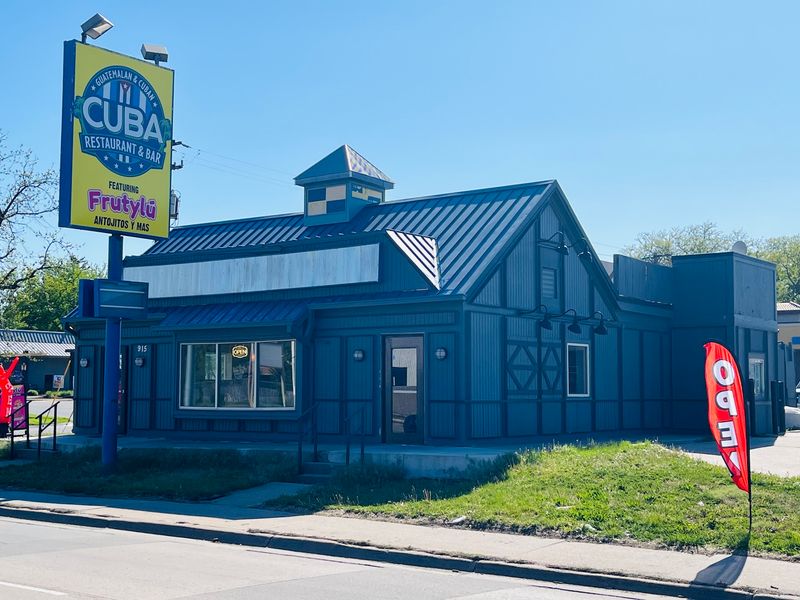
North 27th Street became the centerpiece of the Taste 27th campaign, presented as a corridor full of locally owned restaurants and international kitchens.
Videos and digital storytelling carried the message, showing kitchens, storefronts, and the people running them.
A visitor passport rounded out the effort, giving people a reason to keep returning and try somewhere new.
Programs like that work well because they turn eating into a small collection project rather than a single meal.
Practically speaking, the corridor spreads over several blocks, so walking the whole thing in one visit takes commitment.
Splitting it across two or three stops usually feels more comfortable, especially in winter or during summer heat.
Parking is generally available near individual businesses, though lots can be small. Arriving slightly before the standard lunch or dinner rush often means shorter waits.
Many of the restaurants are family operated, which affects pacing. Service may move at a relaxed rhythm, and hours can shift, so calling ahead helps.
The campaign’s real value shows up in how it reframed an everyday commercial street. Recognition came not from adding something new but from paying attention to what already existed.
North 27th Street Feels Like A Food Trip Around The World
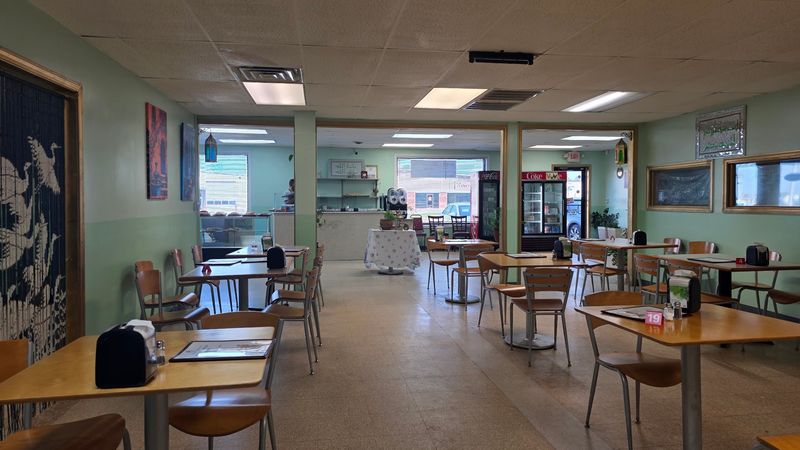
Few blocks in the state pack this many cuisines into such a short distance.
The official Taste 27th program features restaurants serving Thai, Ethiopian, Vietnamese, Guatemalan, Middle Eastern, Mexican, European, and Chinese food.
Thai dishes appear at Blessing Thai Restaurant, while Tiru Ethiopian handles Ethiopian cooking.
Vietnamese options include Vung Tau Pho Grill and Pho Factory.
Quiche Restaurante Guatemalteco covers Guatemalan cooking, and Middle Eastern flavors turn up at Shish Kebab and Fattoush.
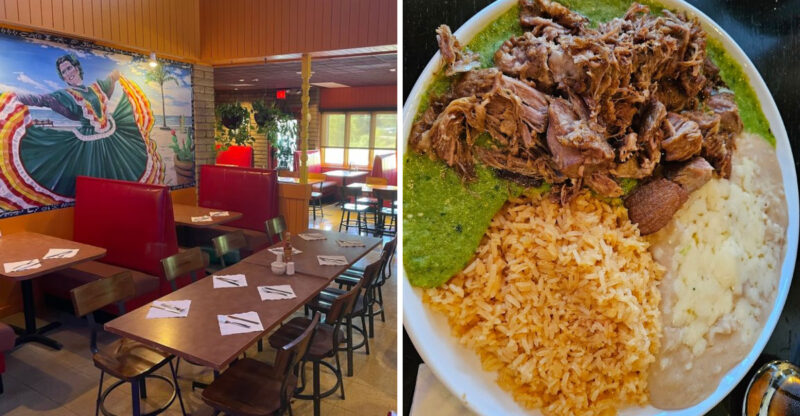
Mexican choices are especially common, with Amparito’s Market, Lobo City Mex Supermarket, Taqueria Los Reyes, and Al Nor all part of the program.
Samovar European Deli and Villa Amore represent European tastes, while Golden Wok and China Inn round out Chinese offerings.
Most of these spaces are modest in size, with straightforward seating and moderate noise levels. Lighting tends to be practical rather than moody, which makes reading menus easy.
Ordering etiquette stays simple across the corridor. Asking about spice levels or unfamiliar dishes is normal, and staff usually explain willingly.
Some locations double as markets, so shelves of imported groceries sit beside the dining area. Bringing a little cash may help at smaller counters.
Spreading visits across a few days lets flavors stand out instead of blurring together.
Historic Haymarket Gives Downtown Its Old-School Character
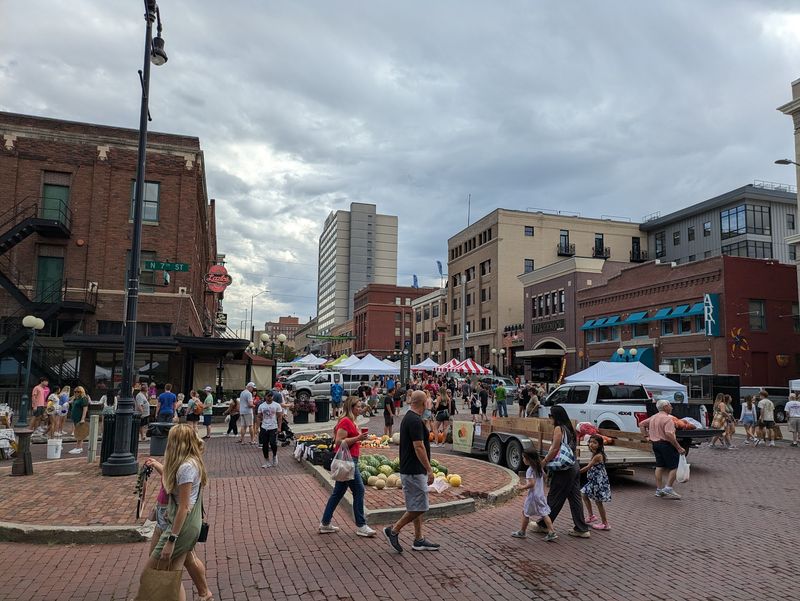
Brick underfoot changes the way a downtown feels, and that difference shows up quickly here.
Restored warehouse buildings and brick streets give the Historic Haymarket its recognizable look, filled with shops, restaurants, and entertainment venues.
The district sits in the vicinity of 7th and P Street, Lincoln, NE 68508, with its district office at 335 N 8th St B, Lincoln, NE 68508.
Pinnacle Bank Arena stands nearby and hosts concerts and sporting events throughout the year. The arena itself is at 400 Pinnacle Arena Drive, Lincoln, NE 68508.
Walkability is one of the district’s strongest points, since most of it can be covered on foot in under an hour. Brick surfaces can be uneven in places, so sturdy shoes make a difference.
Weekday afternoons usually feel calm, with easier sidewalk space and quieter patios. Event nights at the arena bring noticeably heavier foot traffic and fuller restaurants.
Garages and street parking serve the area, though availability shifts depending on what is happening downtown. Checking the arena schedule before visiting helps set expectations.
The district also connects easily to the University of Nebraska-Lincoln campus, which makes combining stops straightforward.
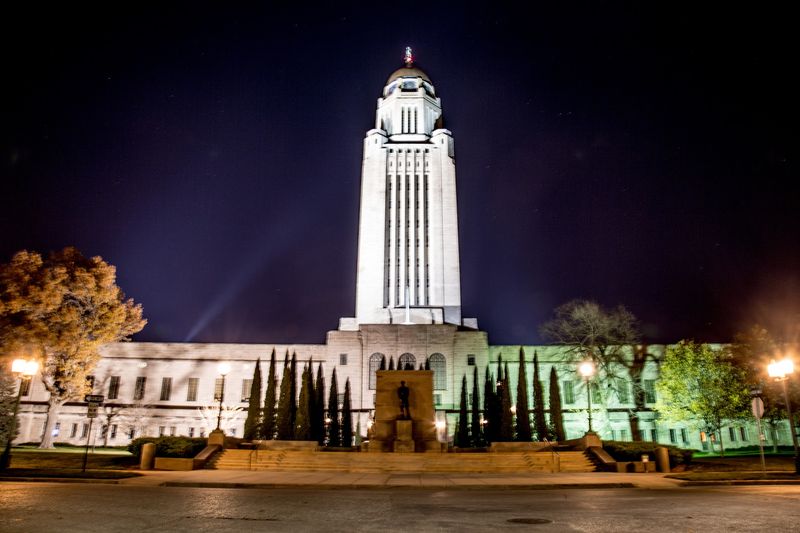
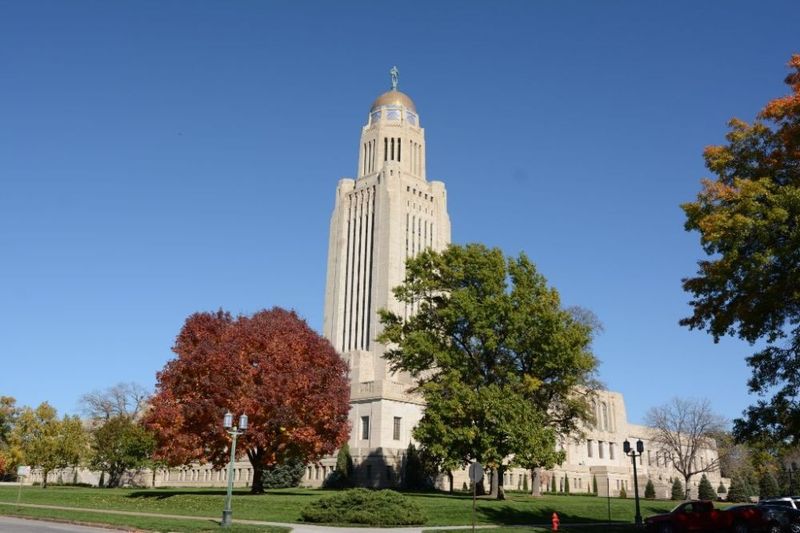
The State Capitol Rises 400 Feet Above The City
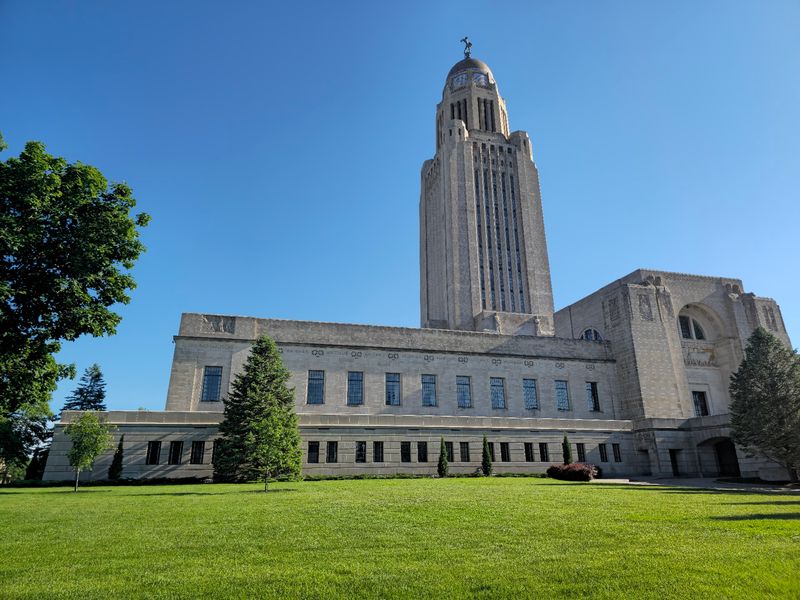
Most state capitols wear domes, but this one wears a tower, and that choice reshaped an entire skyline.
Construction of the Nebraska State Capitol ran from 1922 to 1932, producing a roughly 400-foot tower visible from well outside the city. The building sits at 1445 K Street, Lincoln, NE 68508.
Inside, mosaics, murals, and stonework fill the corridors, and the detail rewards slow walking. Ceilings and floors carry artwork that many visitors miss when moving quickly.
An observation deck on the 14th floor offers elevated views across the city and surrounding farmland. Access can depend on weather and building operations, so conditions vary.
Floors are hard and echo carries, which gives the interior a hushed, formal quality. Benches are limited, so factoring in rest stops helps on longer visits.
Legislative sessions bring more activity to the building, while off-session weekdays usually feel quieter. Either way, the space functions as a working government building first.
Photography is popular near the rotunda, where light shifts noticeably through the day. Morning visits often bring softer light through upper windows.
Allowing an hour gives enough time for the main floors and the tower view. Combining the stop with nearby gardens works well since distances are short.
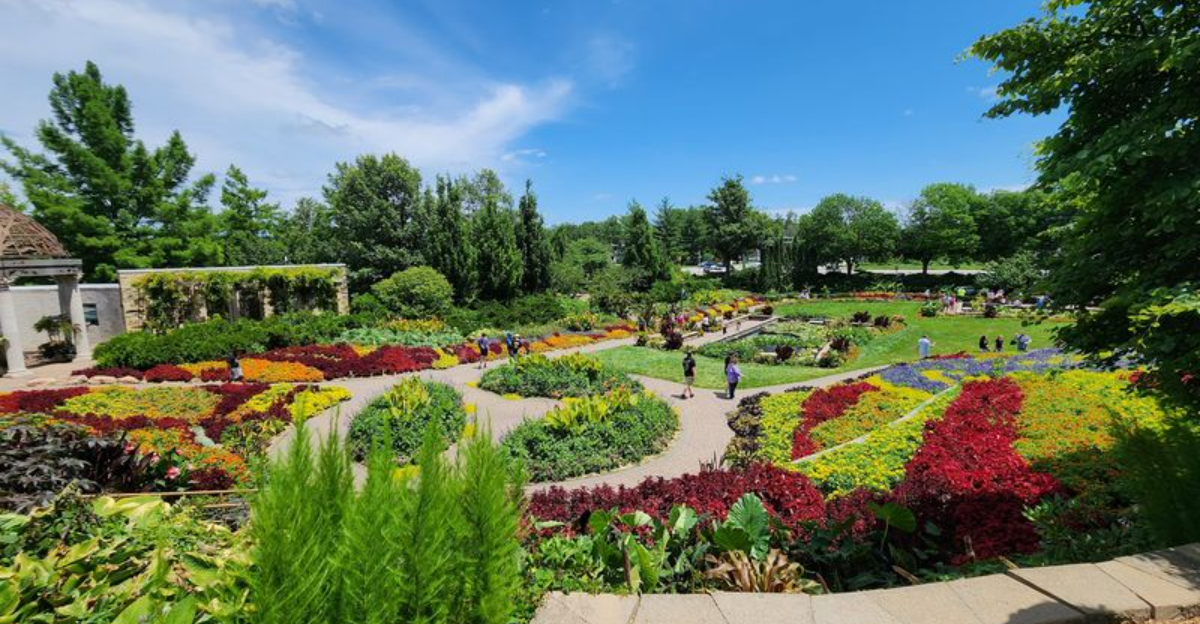
Sunken Gardens Packs Thousands Of Flowers Into A Tiny Space
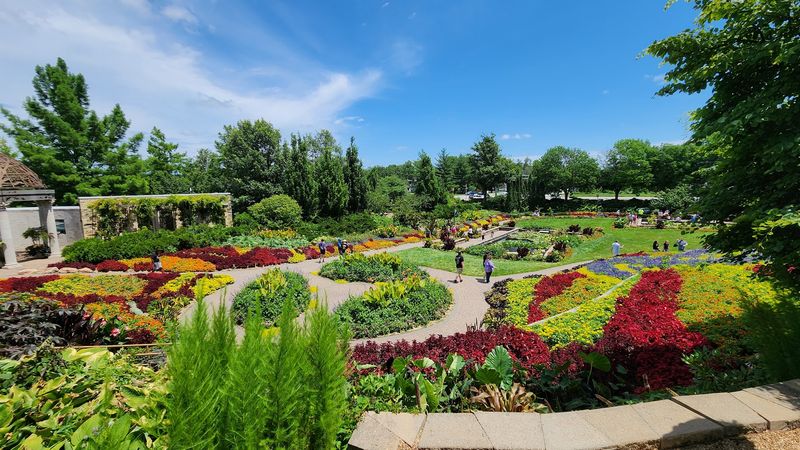
Color arrives in layers at this small city garden, stacked down terraces instead of spread flat.
Covering about 1.5 acres, the Sunken Gardens date to 1930 and hold terraced beds planted with thousands of annuals. The garden sits at 27th and Capitol Parkway, Lincoln, NE 68502.
Each year brings a new floral design using more than 30,000 annuals, so repeat visits rarely look identical. Reflecting ponds, a waterfall, paved pathways, and an ornate gazebo fill out the space.
Recognition extends beyond the state, since this is the only Nebraska garden included in National Geographic’s Guide to Public Gardens: 300 Best Gardens to Visit in the United States and Canada.
Sound plays a real part in the visit, with moving water softening traffic noise from nearby streets. Shade is limited, so hats and water help on hot afternoons.
Paved paths and steps make up much of the route, and the terraced layout involves elevation changes. Visitors with mobility concerns may want to review the upper pathways first.
Peak bloom generally falls in summer, while spring and autumn offer sparser but calmer scenes. Early mornings tend to be the quietest window.
Pioneers Park Brings Prairie Country Into The City
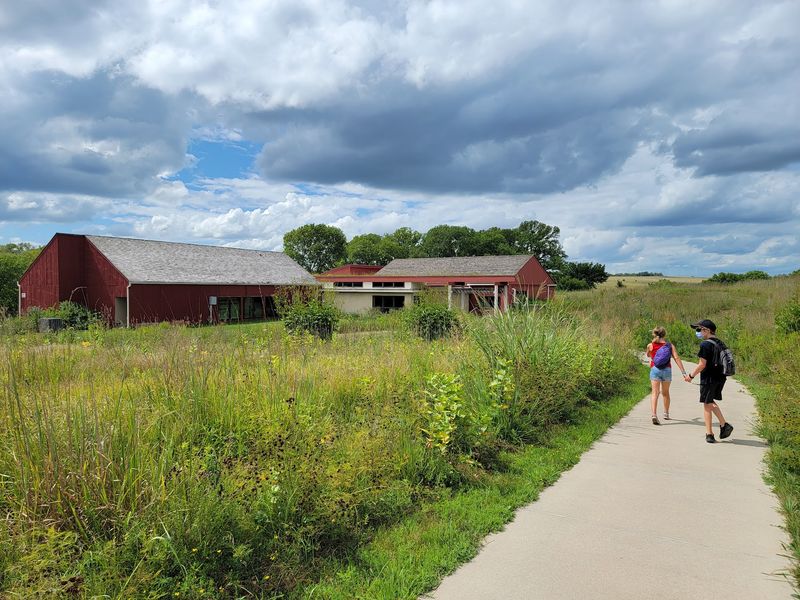
Bison grazing within city limits sounds unlikely, yet that is part of everyday life at this preserve.
Pioneers Park Nature Center protects over 600 acres of native Nebraska prairie, woodland, and wetland. The nature center is located at 3201 S Coddington Ave, Lincoln, NE 68522.
More than eight miles of walking trails run through the property, moving between grassland openings and shaded woods. Herds of bison and elk live on site, along with birds of prey.
Trail surfaces vary, and some paths turn soft after rain, so checking footwear makes sense. Prairie sections offer little shade, which matters most in midsummer.
Sound changes noticeably here, with insects and wind through grasses replacing traffic noise. Early morning and late afternoon usually bring the most animal activity.
Distances between viewing areas are walkable but not short, so allowing at least ninety minutes helps. Water and insect repellent are practical additions in warm months.
Autumn brings changing grass color and cooler walking conditions, while winter opens up longer sightlines through bare trees. Each season presents a different version of the same landscape.
The preserve pairs well with the larger Pioneers Park for anyone wanting picnic space afterward.
Trails, Parks, And New Additions Keep Growing
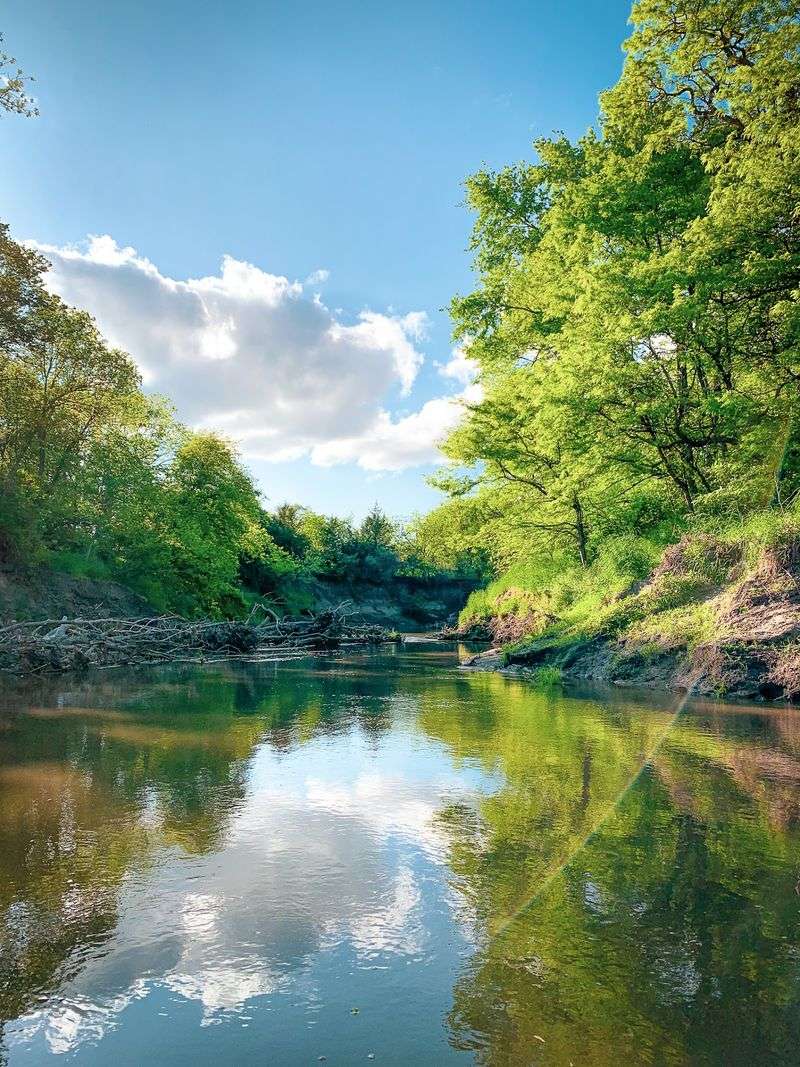
Getting around without a car turns out to be easier than most visitors expect in this capital city.
The trail system stretches beyond 185 miles, including more than 144 miles of hard-surface and crushed-rock paths.
Nearly 27 miles of paved park trails weave through green spaces, while Wilderness Park adds about 39 miles of unpaved routes.
Surface variety means walkers, runners, and cyclists can pick conditions that suit them. Crushed rock feels softer underfoot, while paved sections work better for strollers and wheels.
Free indoor options exist too, including the Sheldon Museum of Art on the University of Nebraska-Lincoln campus.
The museum sits at 451 North 12th Street, Lincoln, NE 68588, and holds more than 12,000 works of American art inside a modernist building.
Admission there costs nothing, which makes it an easy stop during a rainy afternoon. Galleries stay quiet and cool, offering a break from walking.
Park growth continues as well, with 168 parks now in the city system. Canopy Yard opened in April 2026 near 7th and N Streets, featuring what the city describes as the largest skatepark between Denver and Des Moines.