This Nebraska Town Still Tends The Grave Of A Ponca Girl Lost On The 1877 Forced Journey
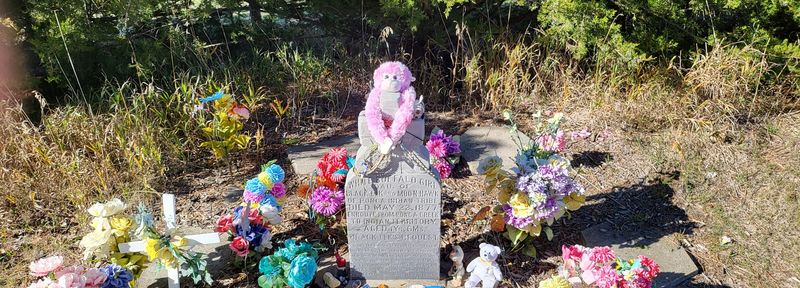
One small grave in a Nebraska cemetery is the only one allowed to keep flowers all year long. It belongs to a Ponca girl who was just 18 months old in the spring of 1877.
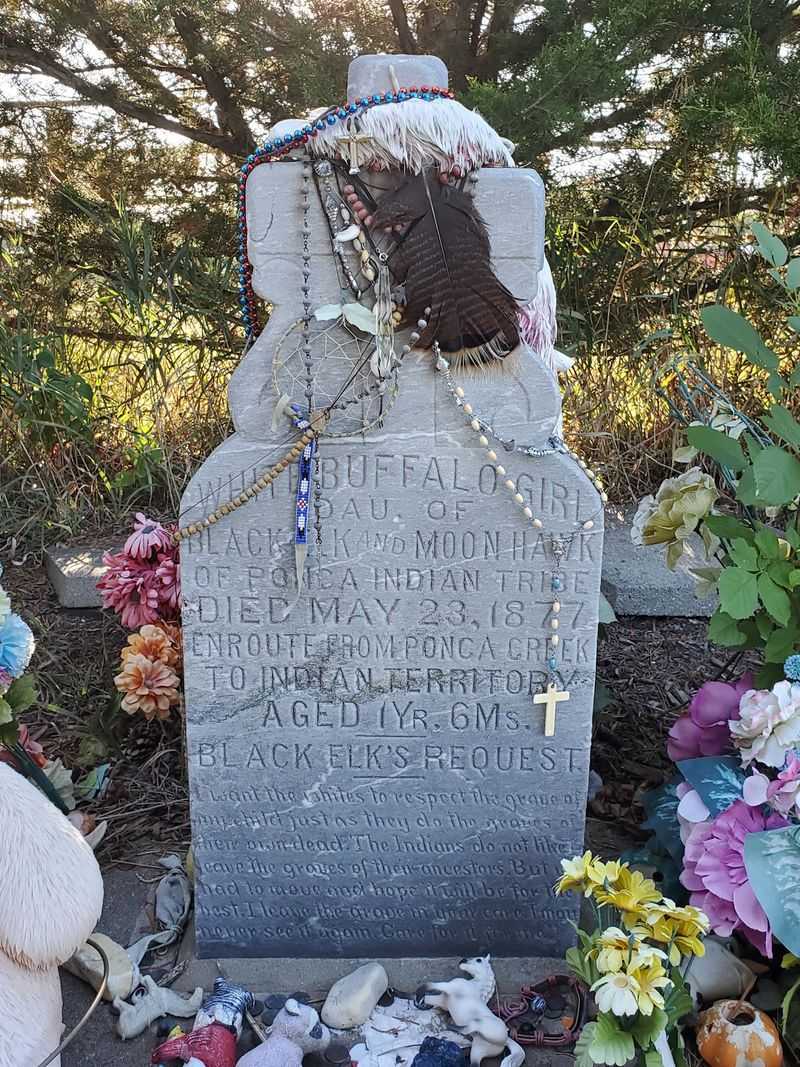
Her name was White Buffalo Girl. Her people were being moved from their homeland to Indian Territory, and the journey could not wait for her family to grieve.
Before leaving, her father asked the townspeople to care for her grave as they would their own. I can’t imagine a heavier request to hand to strangers.
I also can’t imagine a better answer than the one this town gave.
Nearly 150 years later, people still keep that promise. Coins left on the stone help pay for the next round of flowers.
So how does a whole community carry one father’s words for this long?
A Quiet Cemetery Holding A Very Old Promise
Laurel Hill Cemetery sits on the north side of Neligh, a small town in northeast Nebraska. Most visitors come to see one grave, and it belongs to a child.
The White Buffalo Girl Grave Site marks where a Ponca girl was laid to rest in May 1877. She was about 18 months old when her family passed through this area on a forced journey south.
From the outside, the cemetery looks like many others on the Nebraska prairie. Rows of stones, mowed grass and family names that go back generations fill the grounds.
Her grave stands apart for one simple reason. People have been looking after it for nearly a century and a half.
That care was not an accident or a passing kindness. It began with a direct request from her father, and the town said yes.
So while the setting is quiet, the story behind it is anything but small. It touches on Ponca history, a landmark court case and a promise that outlived everyone who first made it.
Each section ahead covers one part of that story. Think of it as a short visit before you ever start the car.
Where The Ponca Called Home Before 1877
Long before Neligh had a cemetery, the Ponca people lived near the mouth of the Niobrara River. That stretch of northeast Nebraska was their ancestral homeland.
They farmed, hunted and raised families there for generations. The land held their villages, their stories and the graves of their relatives.
Then came a serious government mistake. An 1868 treaty assigned Ponca land to the Sioux, even though the Ponca still lived on it.
Officials later decided the Ponca should move to Indian Territory, in what is now Oklahoma. The Ponca did not want to leave the place they knew as home.
In 1877, the removal went ahead anyway. Hundreds of men, women and children set out on a long walk south across Nebraska.
The weather that spring was cold and wet. Travel was slow and hard, especially for the very young and the elderly.
Knowing this background makes the grave in Neligh easier to understand. It isn’t a random burial on a map.
It is a marker on the route of a people who were pushed away from their own river valley.
Eighteen Months Old On A Road Heading South
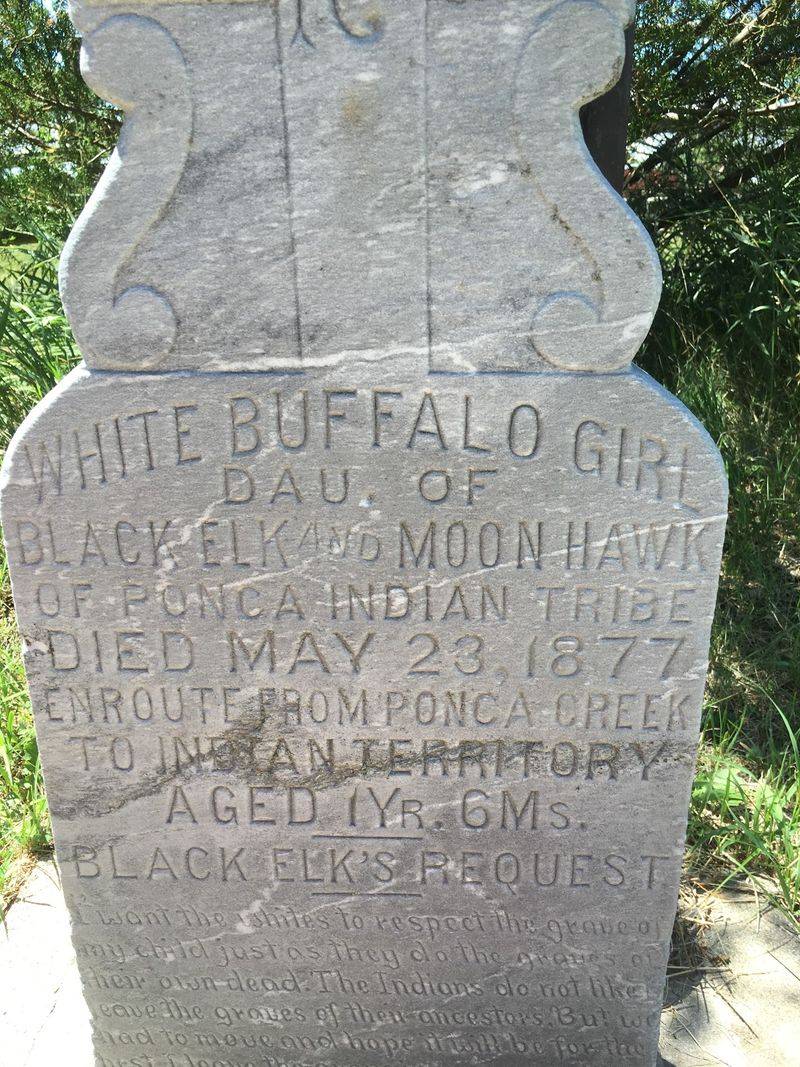
White Buffalo Girl was only a toddler in May 1877. She was about 18 months old when the Ponca removal began.
Just a few days into the journey, the group reached the area around Neligh. That is where she was lost to illness and hardship.
Her parents were Black Elk and Moon Hawk. They belonged to a nation already grieving the loss of its home.
Now they faced something no family should face on the road. They had to bury their little girl and then keep walking.
The removal party could not stay behind for long. Soldiers and officials kept the group moving toward Indian Territory.
That meant her grave would sit far from her people. Nobody in her family could count on coming back to visit it.
Hardship on that journey touched many more Ponca families in the months ahead. Her story became one well-known piece of a much larger chapter.
Still, it helps to remember her as one child with a name. White Buffalo Girl had parents who loved her, and they wanted her remembered with dignity.
Neligh made sure she was.
Words From Black Elk That Still Echo Today
Few requests in Nebraska history are as direct as this one. Before the Ponca moved on, Black Elk spoke to the people of Neligh.
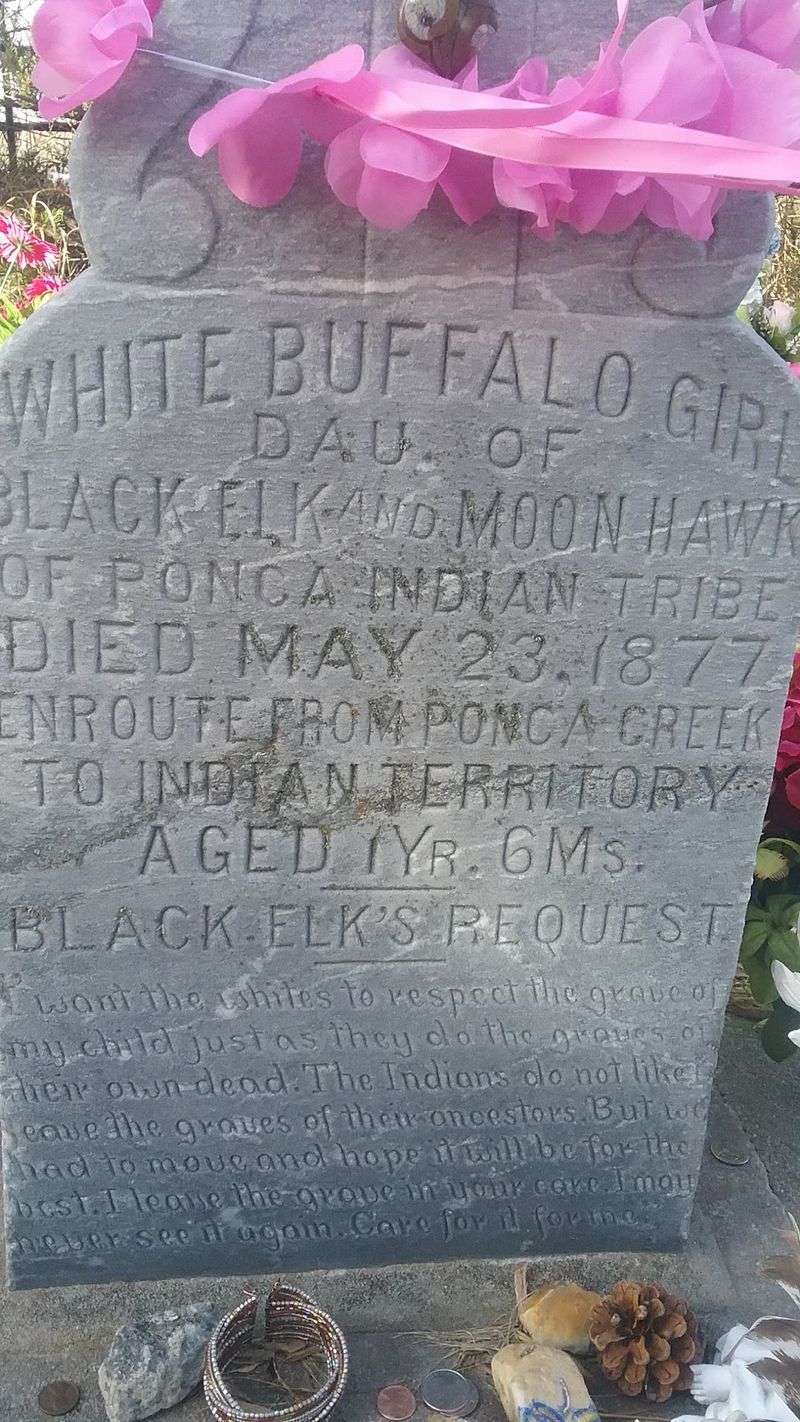
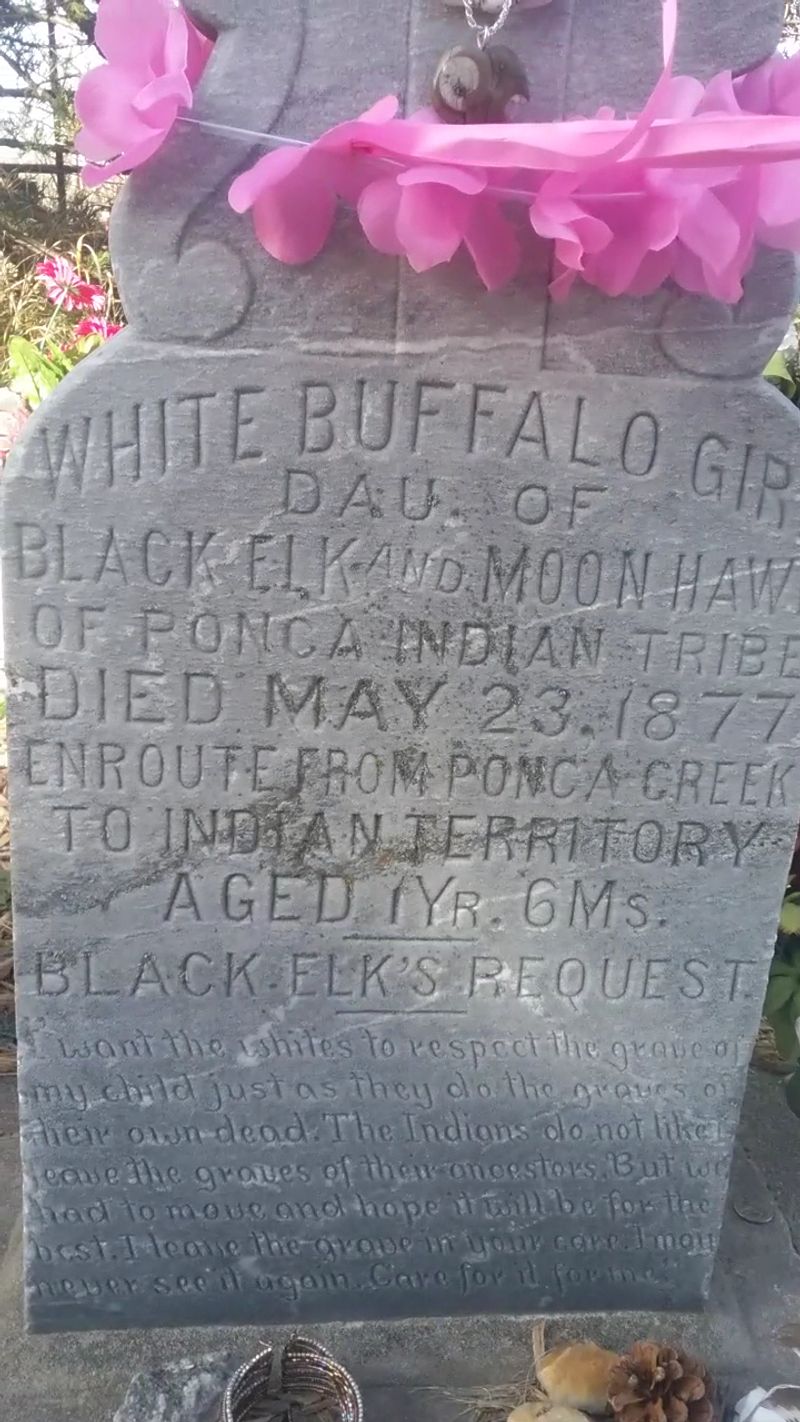
His words have been repeated ever since. “I want the whites to respect the grave of my child just as they do the graves of their own dead,” he said.
He continued with a line that still lands hard. “I leave the grave in your care. I may never see it again.
Care for it for me.”
Read it slowly and you can feel the weight. A father handed his daughter’s resting place to people he barely knew.
I believe that kind of trust deserves an answer. Neligh gave one, and it never really stopped answering.
The request asked for respect, not a monument. He wanted her treated the same as any child from town.
That simple standard shaped everything that followed. Families tended her grave alongside their own, season after season.
Today, his words are part of how the site is explained. They turn a small plot into a lasting agreement between two peoples, written in actions rather than ink.
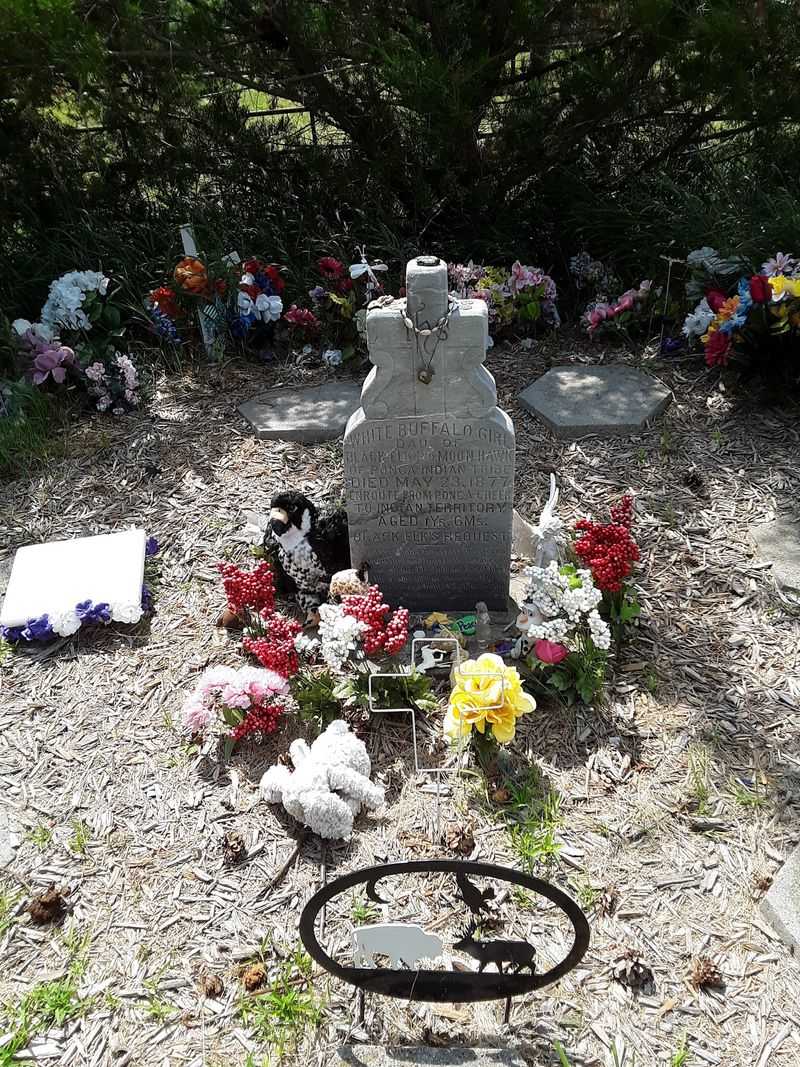
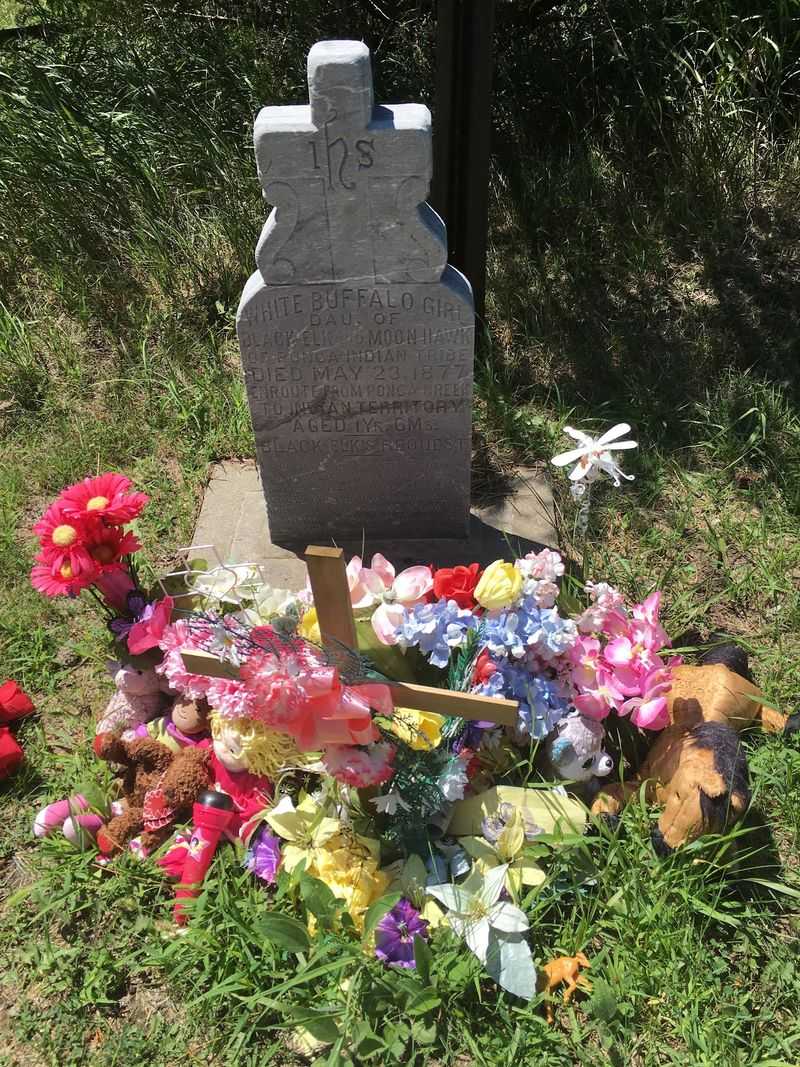
Fresh Flowers All Year Make Her Grave Stand Out
Cemetery rules usually treat every grave the same. In Laurel Hill Cemetery, one exception has become a beloved tradition.
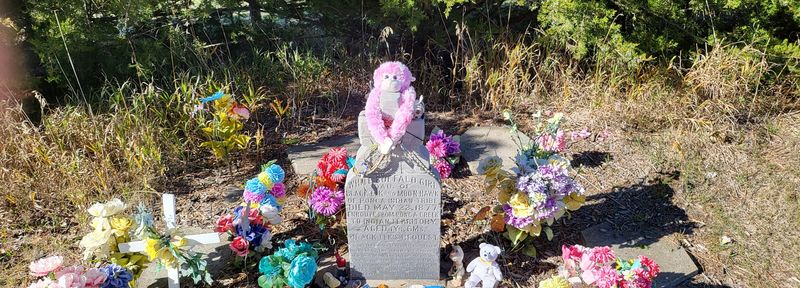
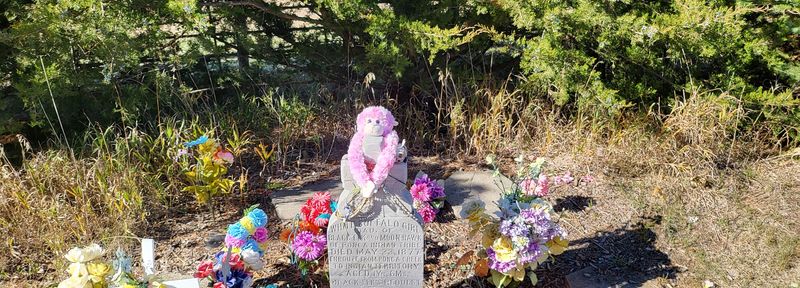
White Buffalo Girl’s grave is the only one where flowers may stay year-round. Other arrangements get cleared away on a seasonal schedule.
That small rule says a lot. Even in a Nebraska winter, her resting place is meant to look cared for.
You can spot it without a map in many seasons. Bright blooms against brown grass or snow are hard to miss.
Flowers might seem like a modest gesture. Over nearly 150 years, though, modest gestures add up to something remarkable.
The tradition also keeps the story visible. A stranger who stops by learns right away that this grave matters to someone.
It connects straight back to Black Elk’s request. He asked for her grave to be respected, and fresh color is one clear way to show it.
Plenty of historic sites rely on plaques alone. Here, living flowers carry part of the message.
That feels fitting for a promise that the town has kept alive rather than simply recorded.
Small Change With A Surprisingly Big Job
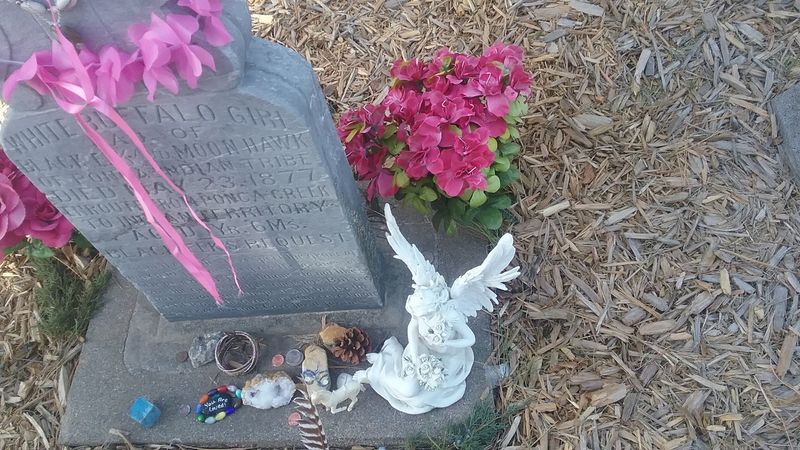
Pennies, nickels and quarters often rest on her grave. They aren’t left there by accident.
Visitors place small change at the site as a quiet show of respect. That money goes toward buying future flowers for her grave.
It’s a clever little system. Each person who stops can help keep the tradition going without any fuss.
Nobody needs to sign up or join a committee. A coin or two is enough to become part of the story.
I like how practical it is. The care isn’t only about feelings, it’s about keeping real flowers on a real grave.
Kids especially tend to understand this kind of gesture. Setting down a coin is simple, and the reason behind it is easy to explain.
If you plan to visit, slipping a few coins into your pocket makes sense. Just leave them gently and avoid disturbing anything else.
The habit links today’s visitors to the townspeople of 1877. They promised care, and every coin keeps that promise funded.
Not many historic sites let you contribute in such a personal, low-key way.
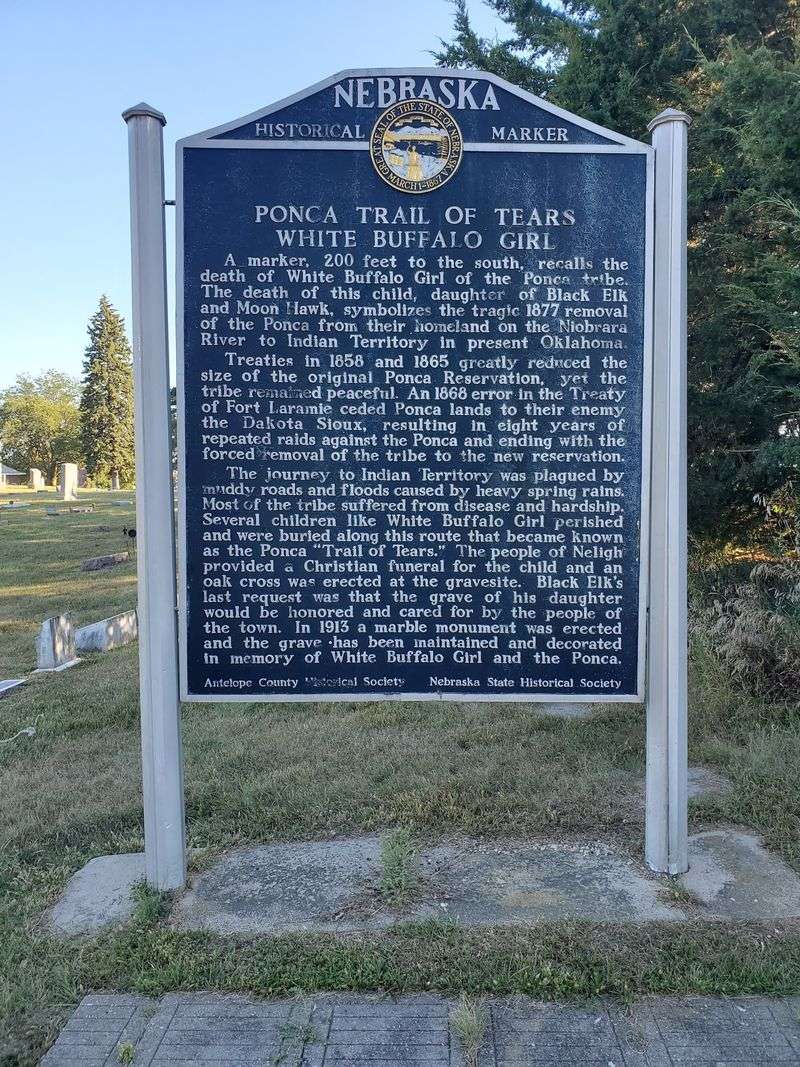
A State Marker Puts Her Story Into Words
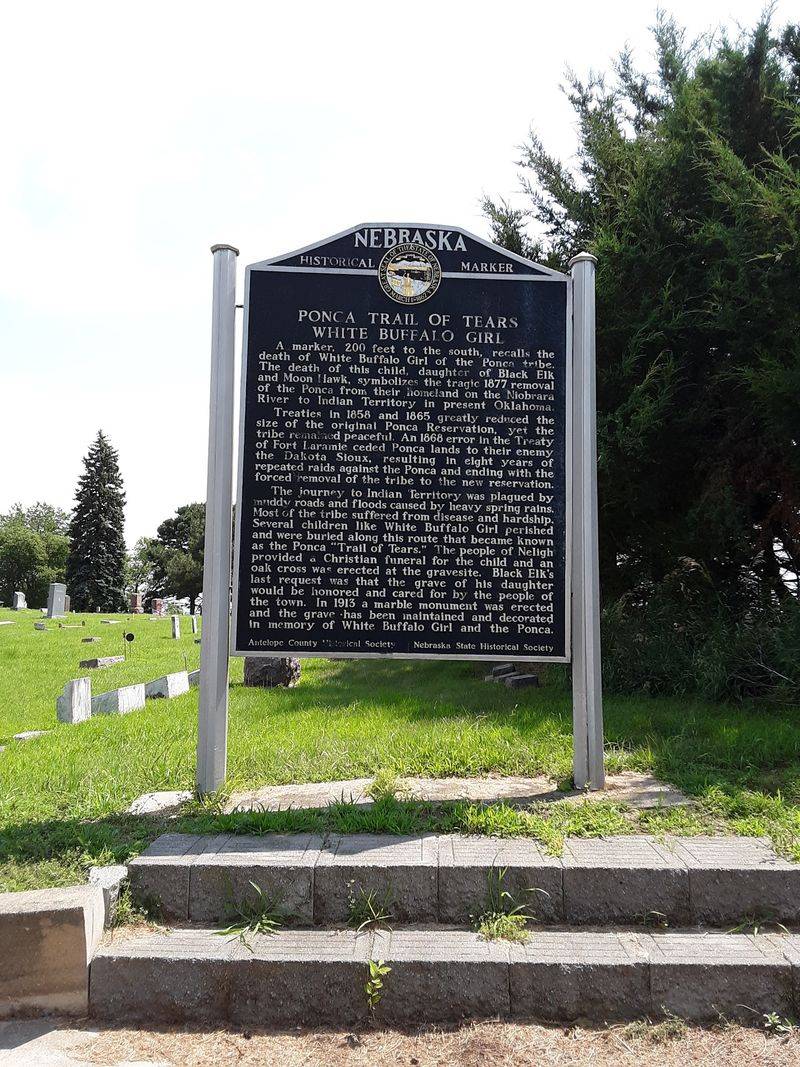
History Nebraska recognizes White Buffalo Girl with a state historical marker. It explains who she was and why her grave is here.
That marker does important work for first-time visitors. Without it, the grave might look like any other small headstone.
The text covers the 1877 removal and her family’s brief stop near Neligh. It also shares the request her father made before moving on.
Reading it before heading to the grave helps a lot. You arrive knowing her name, her parents’ names and the reason behind the flowers.
Historical markers can feel dry sometimes. This one carries a story that sticks with you long after the drive home.
It also confirms that the site matters well beyond town limits. The state itself considers her story part of Nebraska’s shared history.
Take a minute with the words before you walk further. The details give the quiet grounds a clearer meaning.
Families with older kids may find the marker a natural starting point. It turns a cemetery stop into a short, memorable history lesson without needing a guidebook or a tour.
Standing Bear And A Courtroom Moment In 1879
Her story connects to one of the most important court cases in American history. It involves Chief Standing Bear of the Ponca.
Standing Bear’s son, Bear Shield, passed away after the move to Indian Territory. The chief had promised to bury him in the Ponca homeland in Nebraska.
So Standing Bear headed north with a small group. Along the way, they were arrested and held at Fort Omaha.
His case went to federal court in Omaha in 1879. The judge ruled that a Native American is a person within the meaning of the law.
That ruling was a major step for civil rights. Standing Bear’s own words in court are still taught and quoted today.
White Buffalo Girl’s grave and Standing Bear’s journey belong to the same chapter. Both grew from the 1877 removal and the losses that followed.
Standing at her grave, you’re touching one thread of that bigger story. It’s a reminder that Nebraska played a central role in how the country thought about human rights.
That link makes a quiet cemetery feel connected to something far larger.
Her Grave Sits Along The Standing Bear Trail
Mapping the Ponca journey across Nebraska turns up several meaningful stops. White Buffalo Girl’s grave is one of them.
The site is recognized as a landmark along the Chief Standing Bear Trail. That route traces the Ponca removal and Standing Bear’s return north.
Efforts are underway to win national historic trail status for the route. Supporters want the whole journey honored, not just scattered pieces.
A section of former rail line in southeast Nebraska, running south from Beatrice toward Kansas, is part of that bigger effort. Plans call for the Ponca Tribe of Nebraska to own that stretch.
For travelers, the trail idea opens up a longer road trip. You can follow the story from the Niobrara region down through the state.
Neligh makes a natural stop on that route. The grave is easy to reach and carries one of the trail’s most personal stories.
A trip like this teaches history at highway speed, with pauses that matter. Each stop adds a new face or place to the Ponca story.
Starting with a single grave keeps the bigger history grounded and human.
Thanks Have Traveled Back From The Ponca People
Promises feel even bigger when the other side notices. The Ponca people have noticed Neligh’s care for a very long time.
Members of the Ponca Tribe of Oklahoma have visited Neligh to thank the town. Those visits honored generations of residents who kept looking after her grave.
Descendants of Standing Bear and other Ponca families have also expressed gratitude. To them, White Buffalo Girl is family, not just history.
That shift matters. Her grave becomes a meeting place between a Nebraska town and the people her father represented.
Plenty of historical sites tell stories about the past. Fewer still bring the descendants of that past back to say thank you.
It shows the promise was never one-sided. Black Elk trusted strangers, and those strangers’ great-grandchildren earned thanks from his people’s descendants.
Moments like these give the site real warmth. They prove that a small act of decency can bridge very different histories.
Visiting today, you’re stepping into that ongoing relationship. Treat it with the same respect both sides have shown each other for nearly 150 years.
That’s the best way to honor everyone involved.
Good Manners Matter In An Active Cemetery
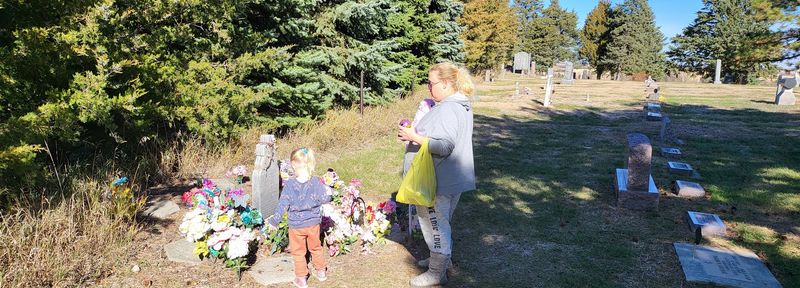
Laurel Hill is still a working community cemetery. Local families visit relatives here, and many graves are cared for privately.
That means good manners go a long way. Stay on paths where you can and avoid walking across other family plots.
Some families post signs asking visitors not to touch their graves. Please honor those requests, even if a nearby stone catches your eye.
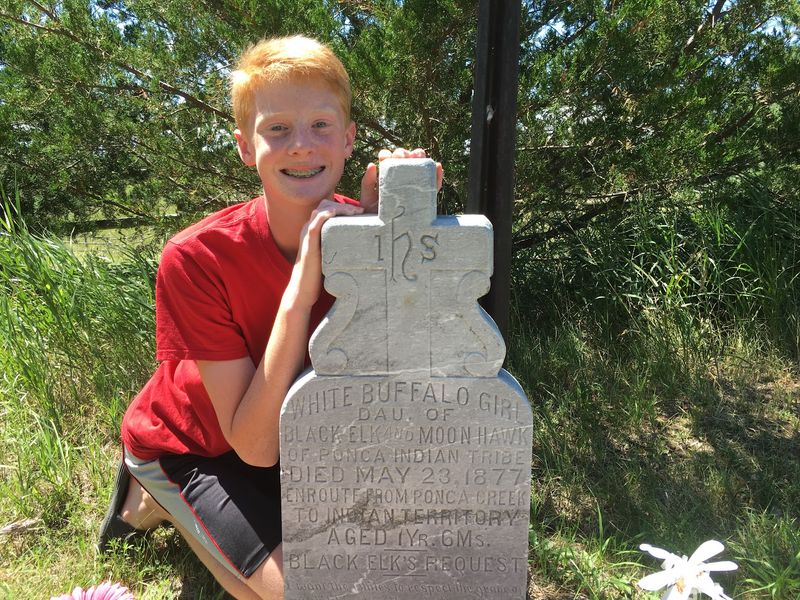
Photos are part of many trips, which is understandable. Just keep them respectful and avoid posing on or against any headstone.
White Buffalo Girl’s grave deserves the same quiet care. Leave flowers or coins gently, and don’t remove anything already there.
Children can learn a lot here with a little guidance. A short talk before arriving helps them understand why voices stay low.
Pets, picnics and loud music don’t fit the setting well. Save those for a park later in the day.
Respect is the whole point of this site. Black Elk asked for it in 1877, and every visitor today has a chance to give it.
A Mill On The Elkhorn Makes A Fine Second Stop
Once you’ve paid your respects, Neligh has another piece of history nearby. The Neligh Mill State Historic Site sits along the Elkhorn River.
It’s a preserved flour mill from the town’s early years. History Nebraska operates the site, so it pairs naturally with the state marker you just read.
The mill shows how this part of Nebraska grew in the late 1800s. Farmers brought grain, and the mill turned it into flour for local families.
Visiting both places gives a fuller picture of the era. One tells a story of loss and kindness, the other a story of settlement and work.
Check seasonal schedules before you go, since historic sites often keep limited hours. Planning ahead saves a disappointing drive.
Neligh is small, so getting between the two spots is quick. You can easily fit both into a single afternoon.
That makes the trip worthwhile for day-trippers from Norfolk, O’Neill or farther away. A meaningful stop and a classic mill make a well-rounded Nebraska outing.
Add a stroll through downtown, and the day feels complete.
Finding Your Way To Cemetery Road
Getting here is refreshingly simple. The White Buffalo Girl Grave Site sits at 84937 Cemetery Rd, Neligh, NE 68756.
Neligh is the county seat of Antelope County in northeast Nebraska. U.S.
Highway 275 runs through town, which makes the drive straightforward from several directions.
Once in town, head to the north side and follow signs toward Laurel Hill Cemetery. A navigation app should take you right to the entrance.
The state marker helps you confirm you’re in the right place. From there, the decorated grave is usually easy to spot.
No admission fee applies to visiting a public cemetery like this one. Still, bringing a few coins for the flower tradition is a nice touch.
Wear comfortable shoes, since grass can be uneven or damp. Nebraska weather changes fast, so a jacket rarely hurts.
Daylight visits make the most sense for reading the marker and walking the grounds. Respect any posted cemetery rules about access.
Plan for a short stop, though many people linger longer than expected. Stories like this one tend to slow you down in the best way.
Why One Small Grave Belongs On Your Nebraska List
Big attractions grab the headlines across Nebraska. This one asks for only a few quiet minutes and a little respect.
In return, you get a story that is hard to forget. A father’s request, a town’s answer and a promise still being kept today.
The White Buffalo Girl Grave Site suits history lovers and families with curious kids. It also fits anyone driving the Standing Bear story across the state.
It won’t fill an entire day by itself. Paired with the Neligh Mill and a downtown stroll, though, it makes a meaningful outing.
I believe places like this matter more than their size suggests. They show what ordinary people can do with patience and decency.
Nebraska has plenty of sites tied to its past. Few involve a living tradition you can personally help continue with a coin or a flower.
So add Neligh to your next drive through the northeast. Read the marker, find the bright blooms and spend a moment with her name.
White Buffalo Girl was never forgotten here. Your visit is one more way of keeping it that way.