This North Carolina Children’s Museum Turns Spring Break Into Pure Joy
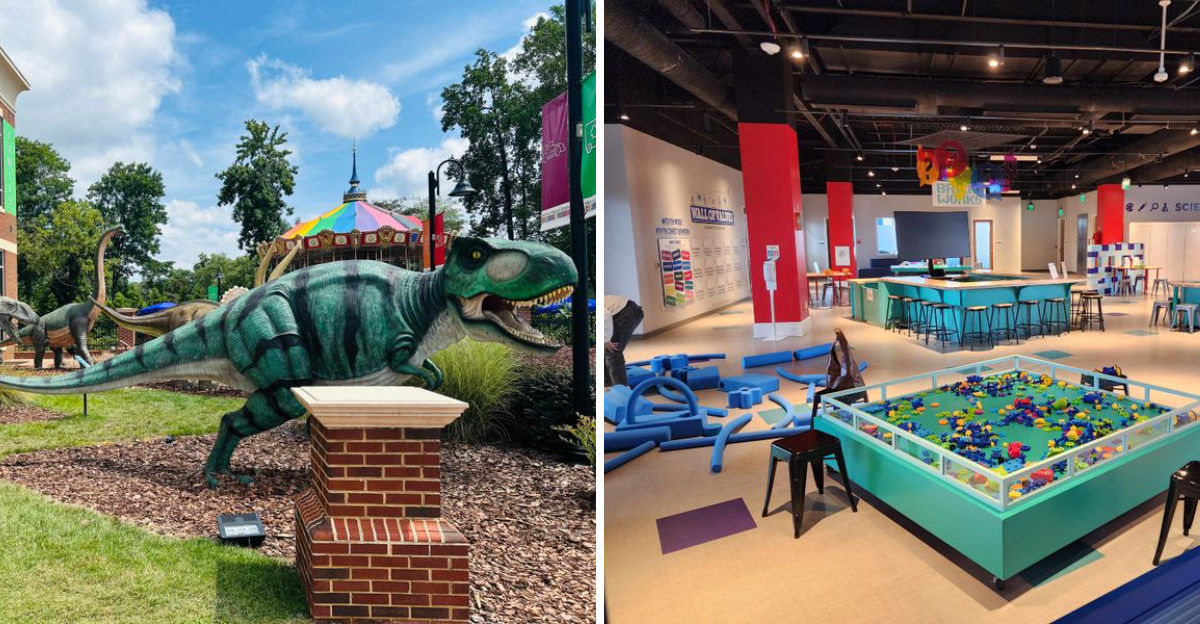
Picture a place where dinosaurs roam alongside astronauts, mysteries wait around every corner, and your little ones can actually touch everything in sight. Spring break takes on a whole new meaning when you step through the doors of a museum designed specifically for kids who’d rather climb than stand still.
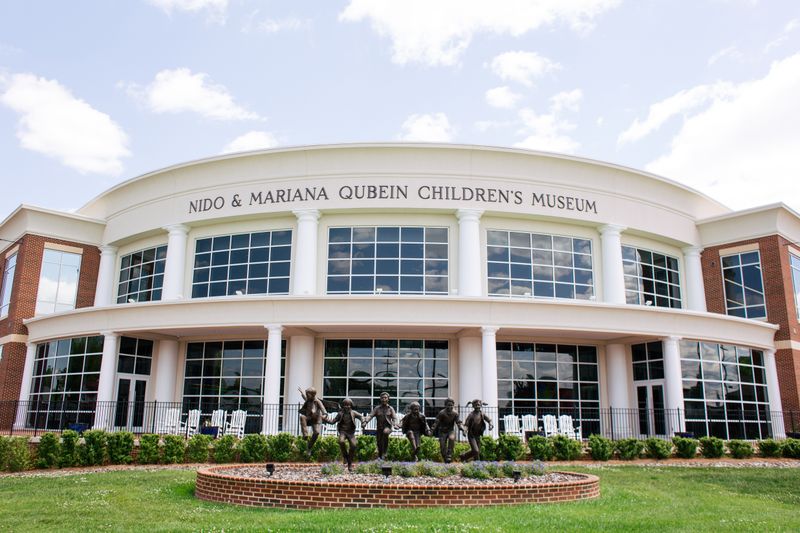
North Carolina just might be home to the most joyful spring break destination you’ve never heard of yet. The Nido & Mariana Qubein Children’s Museum at 200 Qubein Ave, High Point, opened its colorful doors in 2022 and immediately became the place where childhood imagination runs wild.
Forget passive exhibits behind velvet ropes; this spot invites families to jump, splash, solve puzzles, and pretend their way through an unforgettable day. With over 40,000 square feet of interactive exhibits spread across multiple floors, plus outdoor adventures waiting just beyond the building, this museum proves that learning happens best when it feels like pure play.
1. Kid’s Point Brings High Point To Kid-Size Life
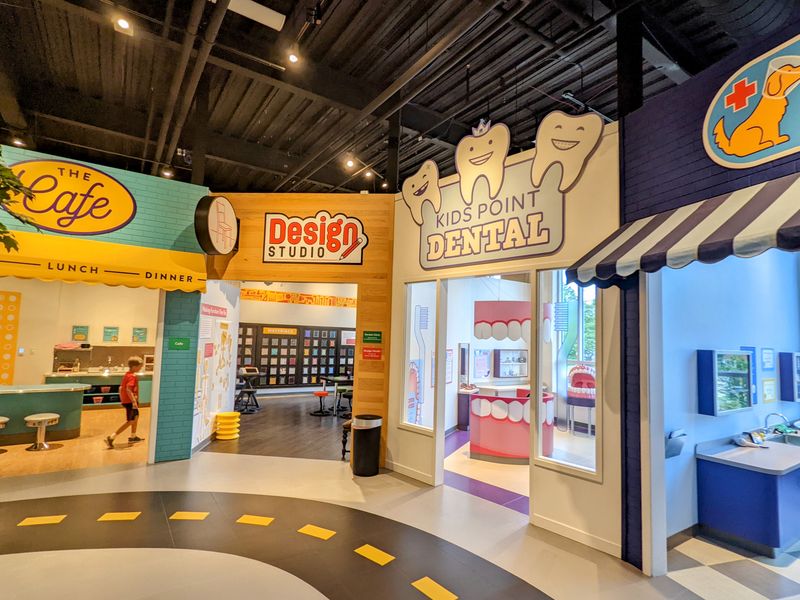
Walking into a miniaturized version of your own city feels surreal in the best possible way. Kid’s Point recreates High Point at a scale perfect for children, complete with a grocery store where they can shop, scan items, and bag their finds like real customers.
The veterinary clinic lets aspiring animal doctors care for stuffed patients while learning compassion and responsibility.
A furniture design studio nods to High Point’s famous furniture heritage, letting kids sketch designs and arrange miniature showrooms. Every storefront and business teaches something different about community roles and daily life.
Children naturally gravitate toward role-playing, and this exhibit channels that energy into understanding how towns actually function.
Parents love watching their kids negotiate prices at the market or diagnose a teddy bear’s imaginary ailment. The attention to local detail makes it especially meaningful for High Point families.
Spring break groups spend hours cycling through different professions, never running out of scenarios to explore in this pint-sized metropolis.
2. Mars Academy Launches Future Space Explorers

Forget earthbound adventures when you can train for a mission to the Red Planet instead. Mars Academy transforms curious kids into astronaut candidates through hands-on challenges involving aeronautics, sustainable energy, and geology.
The simulated mission feels remarkably real, complete with control panels, communication systems, and problem-solving scenarios that astronauts actually face.
Children learn how spacecraft navigate through space, why sustainable energy matters on long missions, and what Martian rocks can teach us. The exhibit brilliantly balances fun with genuine STEM concepts that stick with kids long after they leave.
Teamwork becomes essential as groups work together to complete mission objectives and overcome obstacles.
Spring break timing means kids have energy to burn, and Mars Academy channels that into focused exploration. Parents appreciate how the exhibit makes complex scientific concepts accessible without dumbing them down.
By the time young visitors complete their mission, they’ve absorbed lessons about physics, teamwork, and perseverance while having an absolute blast pretending to explore another planet.
3. Hall Of Mysteries Challenges Young Detectives
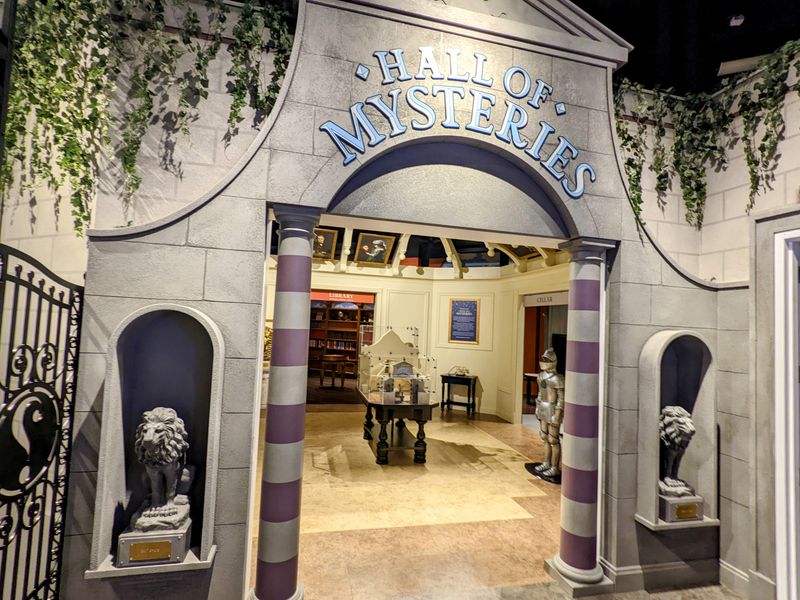
Every child secretly dreams of being a detective, and this exhibit delivers twenty-plus mysteries begging to be solved. The antique toy room presents puzzles hidden among vintage playthings, while the Optic Attic bends perception with mind-boggling illusions.
A Mayan Ruin Room transports young archaeologists to ancient civilizations where they decode symbols and uncover secrets.
The Coding Cellar introduces programming logic through physical puzzles that feel more like games than lessons. Each mystery requires different skills, ensuring every child finds challenges that match their interests and abilities.
Critical thinking develops naturally when kids are motivated by genuine curiosity rather than obligation.
Spring break visitors often return multiple times because solving all twenty mysteries in one visit proves nearly impossible. Parents notice their children approaching problems more methodically after spending time in these rooms.
The variety keeps siblings with different ages and interests equally engaged, a rare feat in family attractions that usually cater to narrow age ranges.
4. Water Works Makes Engineering Education Splash-Worthy
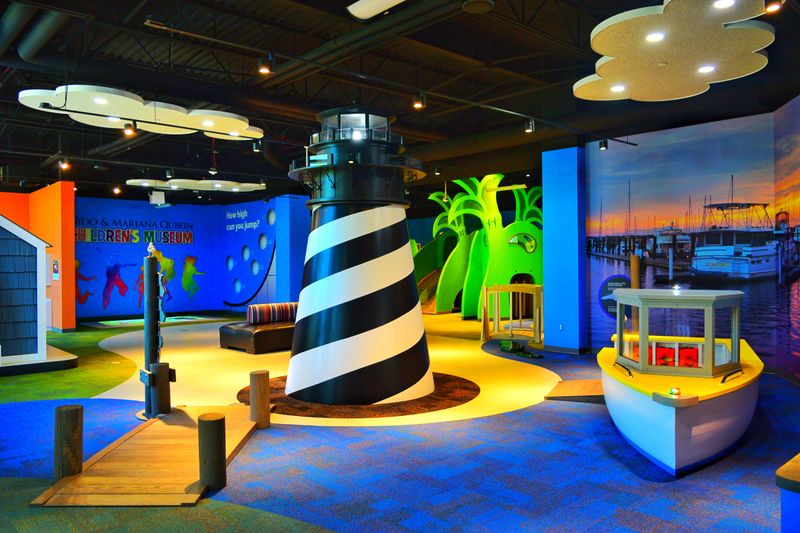
Few things captivate children quite like water play, and this exhibit harnesses that fascination for educational gold. Boat racing channels let kids experiment with hull designs, weight distribution, and propulsion methods while competing against friends.
Water vortex displays demonstrate fluid dynamics in ways that textbooks never could, making abstract concepts suddenly concrete and visible.
Engineering principles reveal themselves through trial and error as children adjust variables and observe results. The hands-on nature means learning happens through experimentation rather than explanation, which research shows creates deeper understanding.
Splash-proof aprons keep clothes relatively dry while imaginations get thoroughly soaked in possibility.
Spring break crowds flock here because water play never gets old, even after multiple visits. Parents appreciate the educational value hidden inside what looks like pure entertainment to their kids.
The exhibit proves that physics and engineering aren’t boring subjects reserved for older students but rather exciting mysteries that even preschoolers can begin exploring through play and observation.
5. GiNormous Gives Toddlers Their Own Giant World
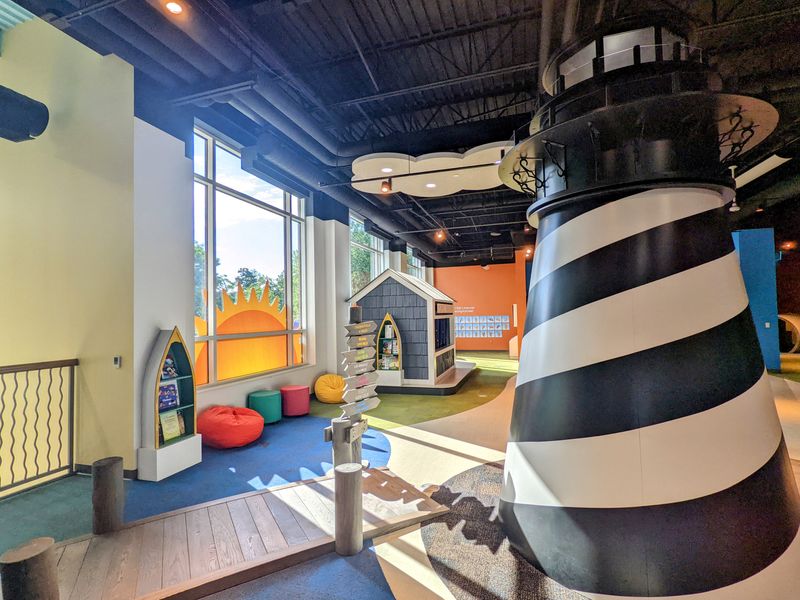
Toddlers often feel left out at attractions designed for older kids, but this space flips the script entirely. Oversized furniture makes little ones feel tiny in the best way, giving them the perspective adults usually have.
Giant chairs, enormous books, and supersized everyday objects create photo opportunities parents can’t resist while providing sensory experiences toddlers adore.
Shadow puppet stations encourage creativity and storytelling at a developmentally appropriate level. The entire space prioritizes safety with soft surfaces, rounded edges, and age-appropriate challenges that build confidence without overwhelming.
Older siblings can join the fun without dominating the space, making it genuinely inclusive for mixed-age families.
Spring break means parents of young children need destinations where everyone can participate comfortably. GiNormous delivers that rare environment where toddlers aren’t just tolerated but celebrated as the primary audience.
The exhibit recognizes that children under four learn through completely different mechanisms than older kids, and it honors those developmental needs with thoughtful design that feels magical rather than educational.
6. STEAM Lab Turns Creativity Into Innovation
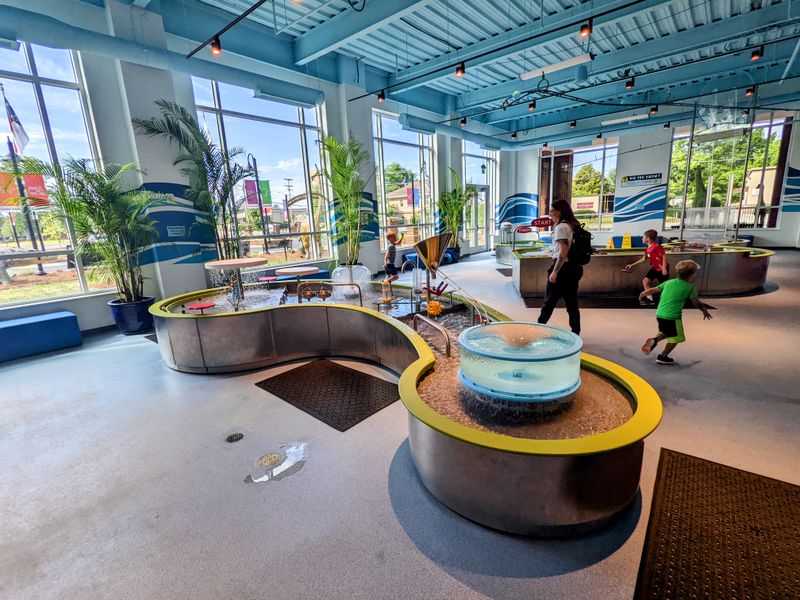
Science, Technology, Engineering, Arts, and Mathematics converge in this dedicated space where innovation feels accessible to everyone. Unlike traditional labs that separate disciplines into silos, this area shows how they naturally interconnect in real-world problem-solving.
Children might design structures, program simple robots, create digital art, or conduct experiments depending on the day’s programming.
The rotating activities mean repeat visitors always find something new to explore and master. Instructors guide without dictating, encouraging kids to develop their own solutions rather than following predetermined steps.
This approach builds genuine confidence and creative thinking skills that standardized testing often overlooks but employers desperately need.
Spring break workshops often dive deeper into specific topics, giving kids extended time to really develop projects. Parents watch their children persist through challenges because the activities feel personally meaningful rather than assigned.
The lab demonstrates that STEAM education doesn’t require expensive home setups or advanced degrees to facilitate, just curiosity, materials, and permission to experiment freely without fear of making mistakes.
7. Double-Decker Carousel Spins Whimsical Magic
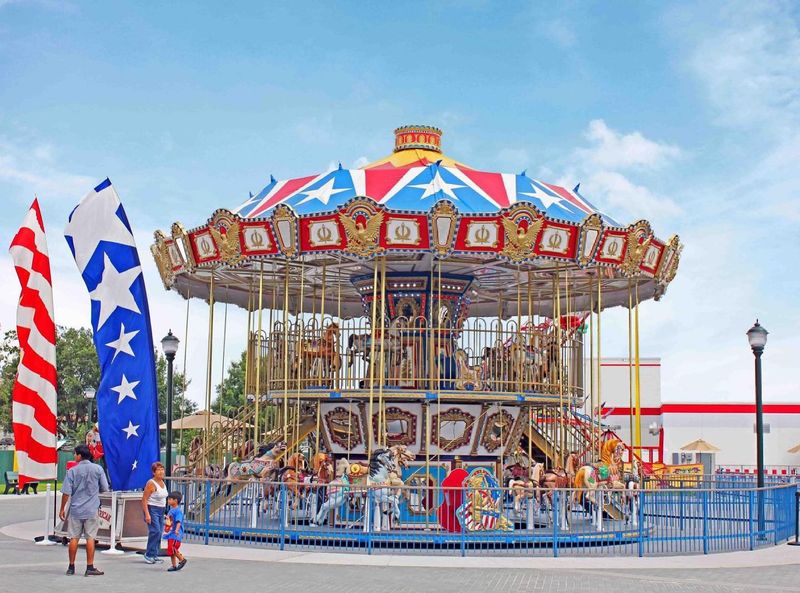
Carousels typically occupy boardwalks and amusement parks, making this indoor treasure especially delightful and unexpected. Two levels of beautifully crafted creatures offer rides that feel both nostalgic and fresh simultaneously.
The whimsical animals include traditional horses alongside more imaginative options that spark conversations and storytelling among young riders.
Detailed craftsmanship shows in every painted detail and smooth mechanical operation that makes the ride feel timeless. Younger children stick to the first level while adventurous older kids claim the upper deck for slightly different perspectives.
The carousel provides a gentler break between more active exhibits, giving families a chance to rest while still enjoying something special.
Spring break visitors often use carousel rides as transitions between exhibit areas or as rewards after completing challenges elsewhere. Parents appreciate the universal appeal that spans age groups and ability levels, making it genuinely inclusive.
The music and movement create sensory experiences that complement rather than overwhelm, and the photo opportunities against the colorful backdrop become treasured family memories that outlast the actual ride time.
8. Outdoor Adventure Zone Extends Learning Beyond Walls
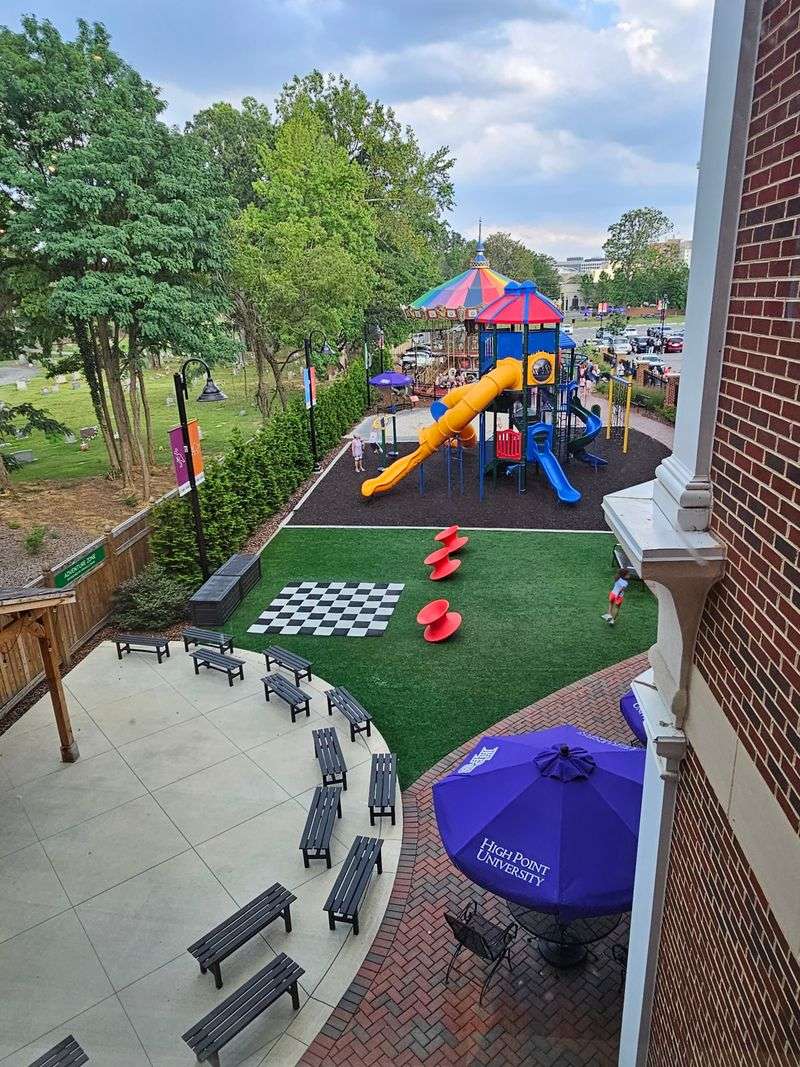
Museums don’t have to mean indoor-only experiences, and this outdoor space proves it brilliantly. The Dino Dig lets children unearth real fossils, creating tangible connections to paleontology that pictures in books simply cannot match.
Brushes, tools, and patient excavation teach scientific methods while satisfying every kid’s urge to dig in dirt and discover treasures.
An open-air amphitheater hosts performances, storytelling sessions, and educational programs under the sky. The playground incorporates learning elements into traditional play structures, and butterfly gardens teach ecology through observation of living ecosystems.
Fresh air and sunshine complement indoor exhibits perfectly, giving kids different sensory experiences and energy outlets.
Spring break weather in North Carolina often cooperates beautifully with outdoor plans, making this zone especially valuable during that season. Parents love that kids can burn energy on playground equipment between more structured activities inside.
The outdoor space acknowledges that children learn through their bodies as much as their minds, and sometimes the best education happens while running, climbing, and exploring nature.
9. Cinema Offers Immersive Educational Entertainment
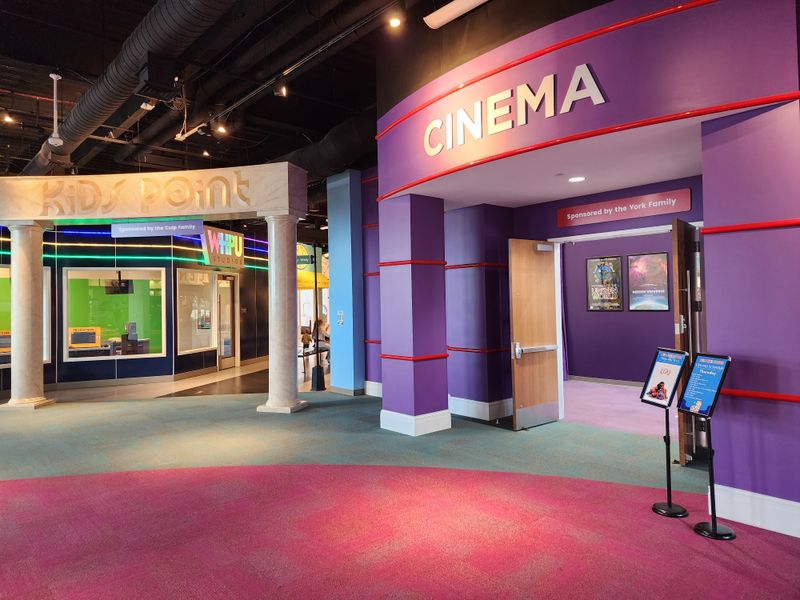
Sometimes learning needs a comfortable seat and a big screen to really sink in. This mini theater screens short films covering diverse topics from nature documentaries to cultural explorations to scientific phenomena.
The curated selection ensures content remains age-appropriate while still offering substance that teaches something valuable and genuinely interesting.
Film length stays manageable for younger attention spans, typically running fifteen to twenty minutes rather than feature-length productions. The shared viewing experience lets families discuss what they’ve seen together, reinforcing lessons and encouraging questions.
Climate-controlled comfort provides welcome relief during hot spring break days or when little legs need rest between active exhibits.
Parents appreciate the educational value packed into entertainment that kids actually want to watch rather than endure. The cinema serves as both learning tool and strategic break in the museum flow, giving everyone a chance to recharge.
Films rotate regularly, so repeat visitors discover new content rather than rewatching the same material, maintaining freshness that keeps the theater relevant across multiple trips throughout spring break and beyond.
10. Super U FIT Lab Teaches Bodies Through Movement
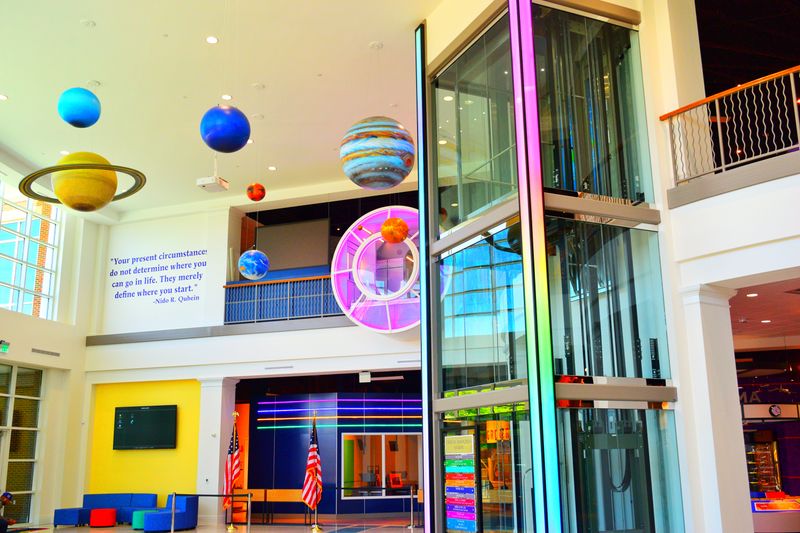
Understanding anatomy and health becomes exponentially more interesting when you’re actively using your body to learn. This interactive space teaches children how their muscles, bones, heart, and lungs work through physical challenges they can feel happening in real time.
Climbing walls demonstrate muscle groups in action, while heart rate monitors show cardiovascular response to different activity levels.
Balance challenges teach coordination and proprioception, and nutrition displays connect food choices to energy and performance. The exhibit makes abstract biological concepts concrete through immediate physical feedback that kids can understand intuitively.
Wellness education starts early here, building healthy habits through positive associations rather than lectures about what they should or shouldn’t do.
Spring break often means kids have been sitting in cars or planes, making this active space especially appealing for burning accumulated energy. Parents watch their children push personal limits and celebrate physical achievements alongside cognitive ones.
The lab demonstrates that physical education and health literacy deserve the same priority as traditional academics, and learning about your body works best when you’re actually moving it.
11. Phillips Collection Dinosaur Exhibit Brings Prehistoric Wonder
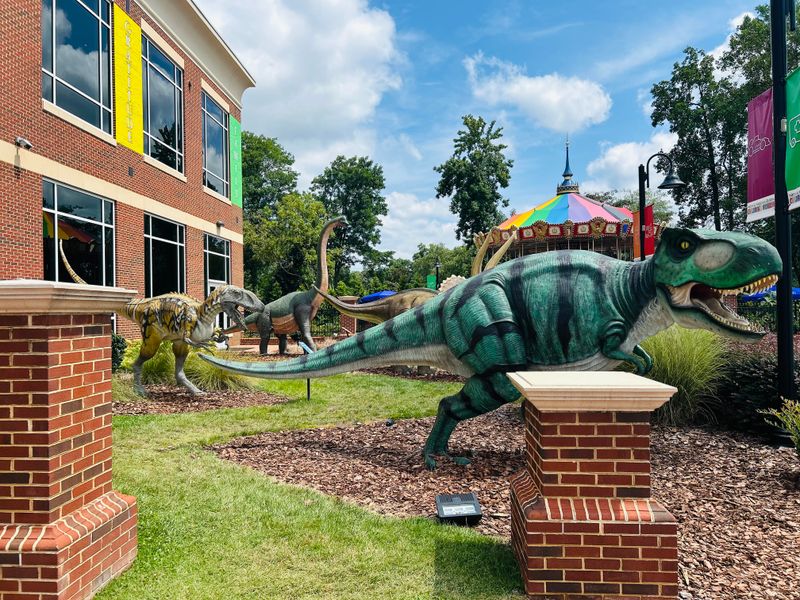
Life-size dinosaurs command attention in ways few other exhibits can match for sheer awe factor. The Phillips Collection donation includes a towering Brachiosaurus that makes visitors crane their necks, a formidable Triceratops showing off its impressive horns, a sleek Velociraptor demonstrating predatory design, and of course a fearsome T-Rex that inevitably becomes everyone’s favorite photo opportunity.
These aren’t simple statues but detailed replicas that teach anatomy, scale, and prehistoric ecosystems through visual impact. Children naturally compare their own size to these ancient giants, making abstract concepts like millions of years and extinction suddenly tangible.
The exhibit sparks questions about evolution, adaptation, and what Earth looked like before humans existed.
Spring break crowds gather around these prehistoric celebrities, creating spontaneous learning moments as kids share dinosaur facts with each other. Parents appreciate how the exhibit bridges entertainment and education without feeling forced or preachy.
The dinosaurs serve as gateway learning, often inspiring deeper interest in paleontology, geology, and natural history that extends far beyond the museum visit itself into books, documentaries, and future career aspirations.
12. Certified Autism Center Ensures Inclusive Welcome
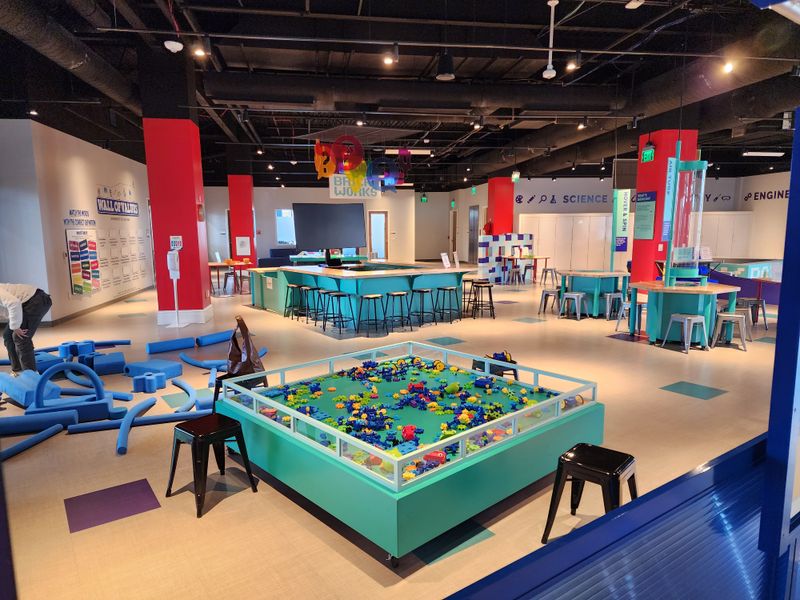
True accessibility goes beyond ramps and elevators to include sensory and neurological considerations often overlooked. The museum’s designation as a Certified Autism Center means staff receive specialized training to understand and accommodate autistic and sensory-sensitive visitors.
This commitment creates an environment where all families feel genuinely welcome rather than merely tolerated or begrudgingly accommodated.
Sensory-friendly features include quiet spaces for overwhelm recovery, visual schedules to reduce anxiety about what comes next, and staff who understand non-typical communication styles. The certification process requires ongoing training and assessment, ensuring standards remain high.
Families who’ve struggled at other attractions finally find a space designed with their specific needs in mind from the beginning rather than added as afterthought.
Spring break can overwhelm sensory-sensitive children, making this certification especially valuable during high-traffic periods. Parents report feeling less stressed because the environment anticipates rather than reacts to their children’s needs.
The museum demonstrates that inclusion requires intentional design, training, and commitment, not just good intentions, and that accessible spaces ultimately benefit everyone by reducing stress and increasing enjoyment for all visitors.
13. Community Engagement Programs Extend Impact Beyond Walls
Museums serve communities best when they actively reach beyond their physical walls into schools and neighborhoods. Field trip programs bring entire classrooms to experience exhibits together, often providing access to children who might not otherwise visit.
Special events throughout the year create reasons to return repeatedly, building ongoing relationships rather than one-time visits.
Educational programs align with school curricula, making the museum a valuable teaching partner rather than just an entertainment venue. Community involvement opportunities let families give back through volunteering, donations, or participation in special initiatives.
The museum positions itself as a community hub where families naturally gather, learn, and connect with each other.
Spring break programming specifically targets families looking for meaningful activities during school vacation weeks. Parents discover that the museum offers more than random visits might suggest, with depth that rewards regular engagement.
The community focus ensures that the museum remains relevant and responsive to actual family needs rather than operating in isolation, and that accessibility extends beyond physical admission to include financial assistance and outreach that brings museum experiences to those who need them most.