This North Carolina Festival Is About Bugs, But That’s Not Even The Weirdest Part
This one is not for the bug-scared crowd.
Every September, downtown Raleigh basically hands the streets over to insects and hopes everyone keeps their cool.
There are cockroach races, bug-based dishes, and enough creepy-crawly chaos to make an arachnophobe reconsider the entire afternoon.
Somehow, that is exactly the fun.
This North Carolina event turns curiosity into a full-day spectacle, with thousands of visitors crowding around battles, demonstrations, and food challenges they will absolutely talk about later.
You may arrive saying, no chance I am eating that.
Then someone else takes a bite, the crowd cheers, and suddenly your confidence gets suspiciously brave.
If bugs normally make you run, consider this your funniest possible test of courage with your friends watching.
Yes, This Festival Actually Wants You To Eat Bugs
Local chefs create insect-based dishes for visitors to sample, with recipes changing from one BugFest to the next.
The tasting station is called Café Insecta, and it is the part of the festival people talk about all year.
Past menus have featured sweet and spicy chili worms, cricket cobbler, and a creamy mac and cheese with crickets stirred right in. Chefs hand out samples, and visitors can vote for their favorite dish while supplies last.
Insects show up in traditional cooking across many countries, so this is less about shock value and more about widening your idea of dinner.
The textures surprise people most, since roasted crickets snap like toasted seeds rather than anything squishy.
Go hungry, go curious, and let someone in your group take a photo of your face during that first taste.
It usually turns into the best souvenir of the day.
A lively celebration fills the North Carolina Museum of Natural Sciences at 11 West Jones Street in Raleigh.
More Than 100 Creepy Crawly Activities Take Over Downtown Raleigh
Picture a downtown street closed to cars and filled instead with tents, microscopes, craft tables, and the steady hum of a few thousand happy people. That is what BugFest day looks like in Raleigh.
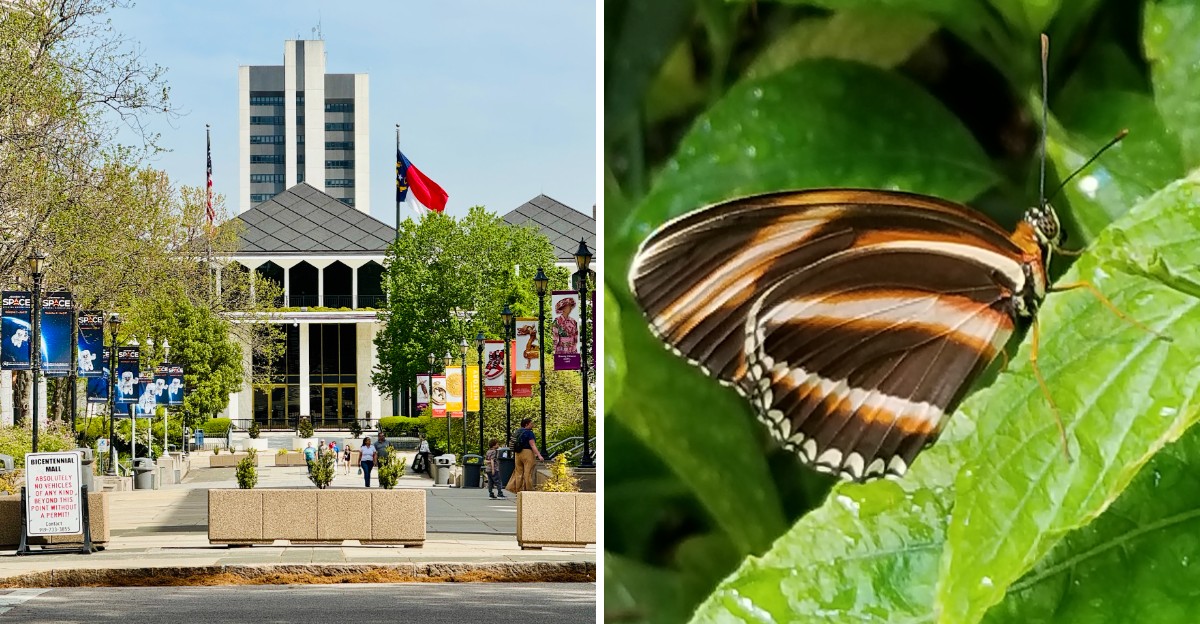
The festival stretches across both museum buildings, the Nature Exploration Center and the Nature Research Center, then pours outside onto Jones Street, Edenton Street, and Bicentennial Plaza.
Altogether there are more than 100 exhibits, games, crafts, and demonstrations to work through.
Crowd favorites include the Roachingham 500, a cockroach race with genuine spectator energy, along with Stag Beetle Battles and the Arthropod Olympics, where kids roll pretend dung balls like champion dung beetles.
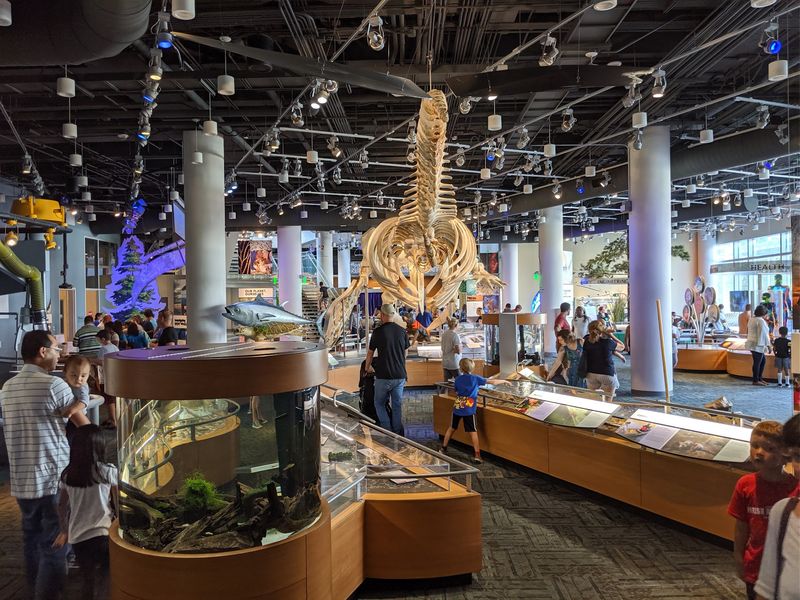
Indoors you get air conditioning, working research labs, and the museum’s regular exhibits, from whale skeletons to towering dinosaur fossils under the glass dome.
Outdoors you get open sky, live demonstrations, and room to wander. A smart plan is to grab a map at the entrance and pick five must-do stops before you start exploring.
Escalators and elevators connect the floors, restrooms are plentiful, and there are benches when small legs need a break. Wear comfortable shoes.
You will cover more ground than you expect.
September 19 Is When North Carolina Goes Completely Bug Crazy
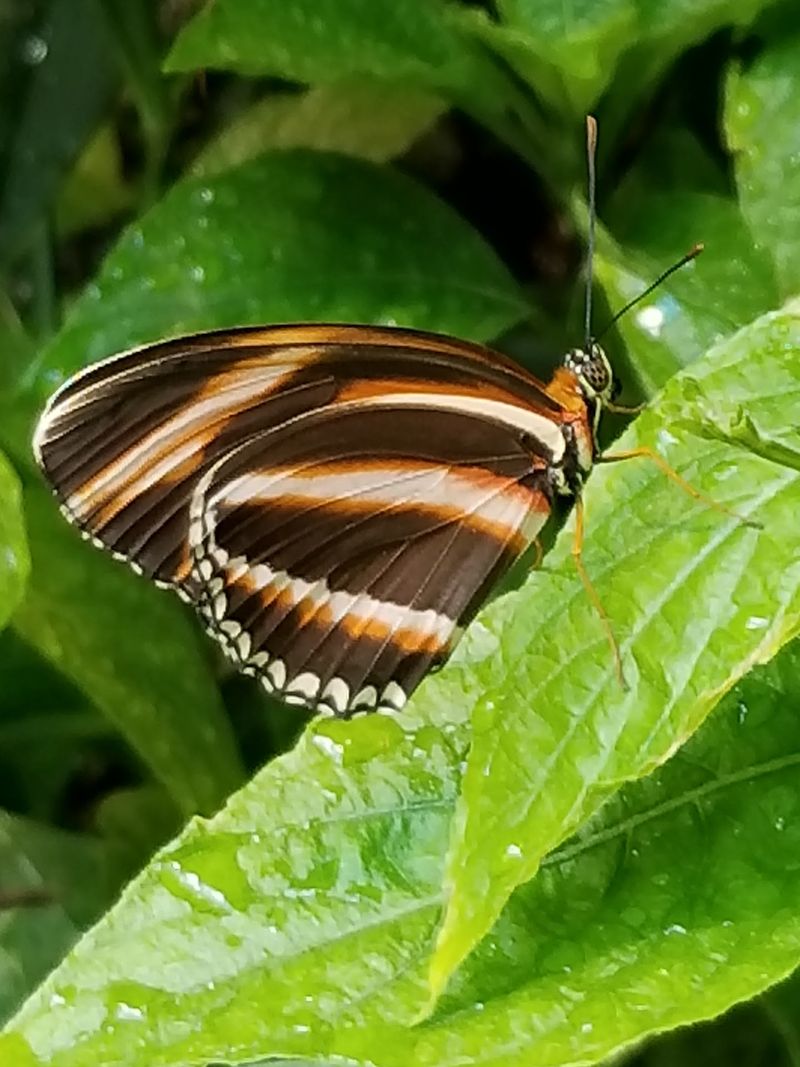
Circle Saturday, September 19, 2026 on the calendar and treat it like a holiday for anyone who has ever flipped over a log to see what lives underneath. Doors open at 10 a.m. and the celebration runs until 7 p.m.
The 2026 edition marks the 30th annual BugFest, which has grown into the largest single-day insect festival in the country.
Thirty years of beetle races and cricket snacks is a serious tradition.
Everything centers on a world-class institution at 11 West Jones Street, right in the heart of downtown Raleigh. The museum itself spans multiple floors across two connected buildings joined by a bridge, so the festival has plenty of room to breathe.
Arriving near opening gives you the longest window to explore, because the Nature Research Center, the upper floors of the Nature Exploration Center, and a few outdoor stations close at 5 PM.
Museum Visitor Lot 1 and the Green Square Parking Deck are free on weekends, with spaces available on a first-come, first-served basis.
One Saturday in North Carolina, nine full hours, and an entire kingdom of tiny creatures waiting.
Café Insecta Might Be The Strangest Food Stop You Make All Year
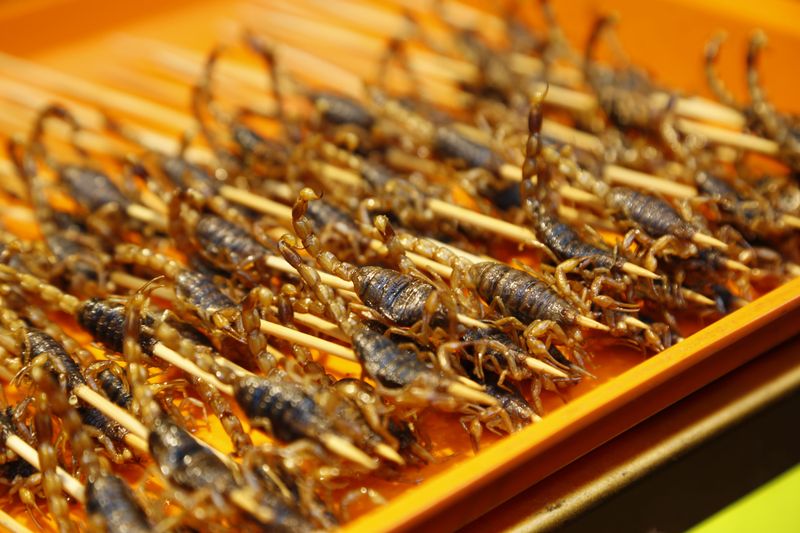
Bugnana Pudding. Cricket Cobbler. Those are real dishes that have come out of the Café Insecta kitchen, and reading them on a menu board does something funny to your brain.
Local cooks run this pop-up, and they take it seriously.
The exact 2026 dishes have not been announced, but five Triangle-area food businesses are currently listed as Café Insecta participants.
Honestly, if you closed your eyes you might guess you were at a bake sale.
Samples are small by design, so you can try several things without committing to a full plate of anything. Desserts tend to be the gateway, since sweetness makes the unfamiliar feel friendly.
Bring a little patience, because this is one of the busiest spots at the whole festival, and the line builds fast after midday.
Water fountains and the museum café upstairs give you a backup plan.
What sticks with people afterward is not the weirdness.
It is the realization that food can be delicious and completely unexpected at the same time.
This Year’s Tiny Stars Can Hop, Jump And Hide In Plain Sight
Each BugFest picks one group of arthropods to celebrate, and for 2026 the theme is hoppers: plant, leaf, and tree.
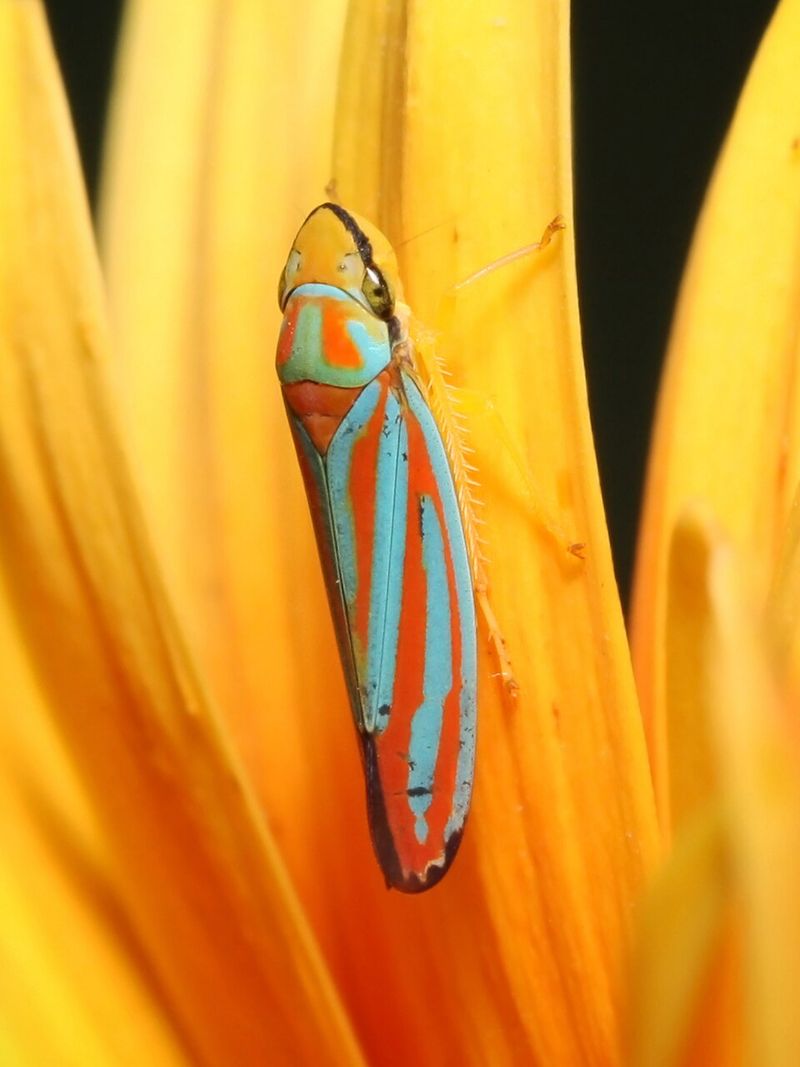
The headliner is the red-banded leafhopper, a jewel-toned insect barely bigger than a grain of rice.
Look at one under a magnifier and the colors are almost unbelievable, with turquoise stripes and warm orange bands running along its back.
Most people walk past hundreds of them in a garden without ever noticing.
Exhibits built around the theme explain how these insects launch themselves many times their own body length, how they feed on plant sap, and how their patterns help them disappear against leaves and bark.
Camouflage turns out to be a whole art form in the insect world.
Museum scientists and volunteers set up viewing stations where you can study live and preserved specimens up close. Kids often end up more fascinated by the jumping mechanics than by anything else at the festival.
The theme changes every year, which is exactly why repeat visitors keep coming back to this corner of North Carolina.
One trip teaches you about hoppers, the next might introduce you to something entirely different.
Stick Around Until 5 P.M. Because BugFest Is Throwing A Birthday Party
Late afternoon brings a shift in mood.
The sun drops behind the downtown buildings, the light turns golden across Bicentennial Plaza, and the festival changes from busy science fair to street party.
Because 2026 marks the 30th anniversary, the celebration keeps rolling well past the museum’s usual closing time, with live music and performers holding the crowd until 7 p.m.
Anniversary programming varies year to year, so check the daily schedule when you arrive.
Families who planned to leave after lunch often end up staying, spreading out on the plaza and letting kids burn off the last of their energy while music drifts across the pavement. It is a relaxed, easygoing stretch of the day.
Crowds thin a little by then, which means shorter lines at the remaining activity tents and better views at demonstrations.
Photographers will appreciate the softer light on the museum’s glass rotunda.
Thirty years of insect appreciation deserves a proper send-off, and the evening hours are where the festival stops teaching for a moment and simply celebrates.
Pack a light layer for the last hour.
September evenings here can cool off faster than you expect.
Scientists Are Waiting To Answer The Bug Questions You Were Afraid To Ask
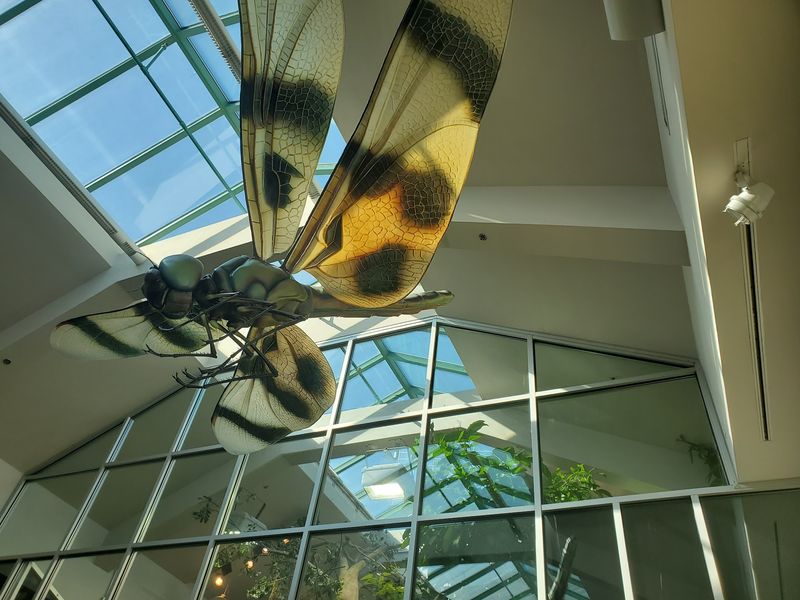
Ever wondered why mosquitoes seem to find you first, or how ants organize themselves without anyone giving orders? Real entomologists spend the day at BugFest waiting for exactly those questions.
They staff tables throughout both buildings, armed with specimen trays, microscopes, and an obvious eagerness to talk.
No question is too basic, and the researchers genuinely enjoy the ones kids come up with.
The museum’s working labs add another layer to this.
Glass walls let visitors watch paleontologists and scientists doing actual research, a feature that impresses teenagers and adults just as much as the festival tents do. These conversations are the heart of BugFest.
Education and conservation drive the whole event, and the goal is to help people understand how arthropods pollinate plants, recycle nutrients, and keep ecosystems running.
Somewhere between the third question and the tenth, the creepy factor tends to fade.
What replaces it is curiosity, and occasionally a kid announcing that they want to study insects for a living. Jot a question down before you go.
Having one ready makes it much easier to walk up and start talking.
The Wildest Part, This Entire Raleigh Adventure Is Free
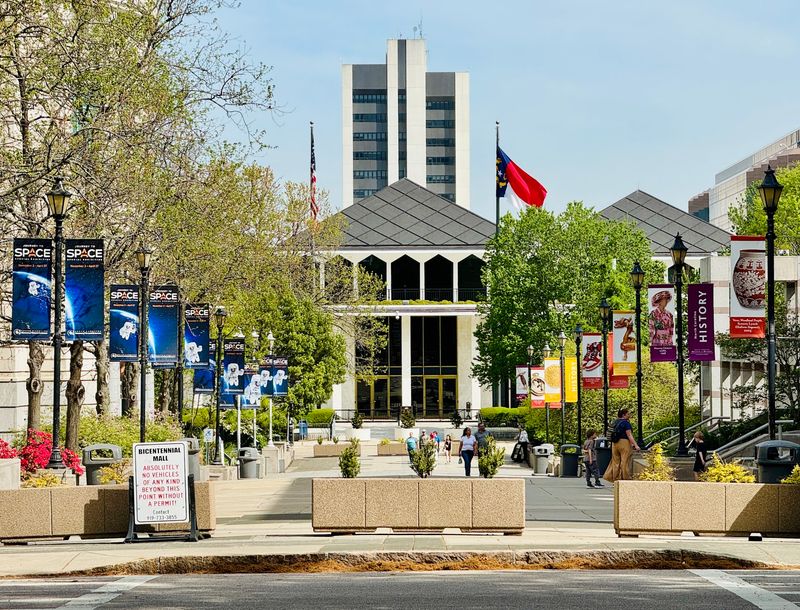
Nine hours of programming, more than 100 activities, live music, and scientists on hand to answer anything. Total cost of admission: nothing.
General admission to the North Carolina Museum of Natural Sciences is free every day it is open, and BugFest follows the same rule for all ages.
Donations are welcomed, and certain special ticketed exhibits carry a separate fee, but the festival itself costs zero.
That policy changes who gets to show up. Big families, school groups, visitors passing through town, and locals who just want an afternoon out can all walk in without checking their wallets first.
The museum backs it up with genuinely thoughtful facilities: clean restrooms on every floor, plenty of seating, elevators and escalators, a gift shop stocked with educational toys, and a café on the fourth floor near the butterfly room that closes at 4 p.m.
Museum Visitor Lot 1 and the Green Square Parking Deck are free on weekends, although other downtown parking and optional purchases may cost extra.
Free science of this quality is rare anywhere.
Finding it at the center of North Carolina’s capital city, wrapped inside a bug festival, is the happiest kind of strange.