This North Carolina German Bakery Still Uses Family Recipes Dating Back To The 1600s
Follow the smell long enough and Cary starts feeling suspiciously far from home.
One doorway later, the whole mood changes.
Suddenly, centuries of family baking tradition are sitting much closer than Germany ever seemed on a map. That is the trick this little North Carolina bakery pulls off so well.
Nothing about it feels rushed or mass-produced.
The recipes carry the kind of history that makes a normal pastry break feel oddly important. Even the display case seems to know it has heritage to protect.
You may walk in planning to grab something small. Very ambitious.
Bavaria has other plans for your afternoon.
Some Of The Recipes Here Trace Their Roots All The Way Back To The 1600s
Most bakery recipes get passed down a generation or two.
A handful of the ones used here reportedly go back nearly four centuries, carried across the Atlantic from Southern Germany by the family who still bakes them. Annelore Gstattenbauer grew up around food and hospitality.
Her family history in Germany includes a brewery, a restaurant, and a bed and breakfast, and that long line of cooking knowledge shaped the way she bakes today.
What makes those old recipes work in a modern kitchen is patience. Doughs are given real time to rise, fillings are made from scratch, and nothing gets rushed to save a few minutes.
The bakery has long emphasized fruit, nuts, chocolate, and other ingredients to balance sweetness in its German-style desserts.
Traditional German baking leans on butter, nuts, fruit, and good chocolate rather than heavy frosting.
Walking in feels a little like stepping into a family kitchen that happens to have hundreds of years of practice behind it.
You can taste the difference at Annelore’s German Bakery, where cakes and breads are made fresh daily at 308 W Chatham St, Cary, NC 27511.
One Family Food Tradition Has Been Going Strong Since 1665
Think about what was happening in 1665.
Colonial America was barely getting started, and in Southern Germany, one family was already serving food and drink to travelers.
That family lineage belongs to Annelore, and the thread of brewing, cooking, and hosting guests has never really snapped.
Instead of fading into a scrapbook, it moved with her to North Carolina, where the recipes still get used week after week inside a working bakery. Continuity like that is rare in the food world.
The bakery says its signature pastries contain no preservatives, dough enhancers, or additives, while its breads are made without preservatives or artificial ingredients.
Norbert works alongside Annelore as a founder and bread baker, while Annelore’s background centers on pastry and the family’s baking traditions. For visitors, the history isn’t just a fun story on a wall.
It shows up across traditional items ranging from layered tortes and Bee Sting Cake to sourdough, pumpernickel, and Brötchen.
Few bakeries anywhere can point to a food tradition that old and still deliver it fresh each morning.
German Chocolate And Flour Help Give These Pastries Their Old World Flavor
Ingredients matter more than most people realize, and the team here proves it by shipping some of theirs across the ocean.
German chocolate and German flour form the backbone of many items on the shelves.
European flour behaves differently than a lot of standard American flour, which affects how bread crumb and pastry layers turn out.
The chocolate is less sweet and more intense, which is exactly why the cakes taste closer to what you would find in Munich than in a supermarket bakery. Local farms fill in the rest.
Honey from Bee Blessed and seasonal fruit and nuts from Godwin Farm, Britt Farm, and Redbud Farms show up when they’re at their best, blending Carolina agriculture with Bavarian technique.
The bakery says its pastries are handmade daily, while its breads are baked fresh each morning without preservatives or artificial ingredients.
Pumpernickel, sourdough, imported German chocolate, and several other traditional ingredients remain part of the current bakery lineup.
The bakery combines imported German ingredients with locally sourced produce and honey when those ingredients are available.
The Bee Sting Cake Might Be The Sweetest Reason To Visit Cary
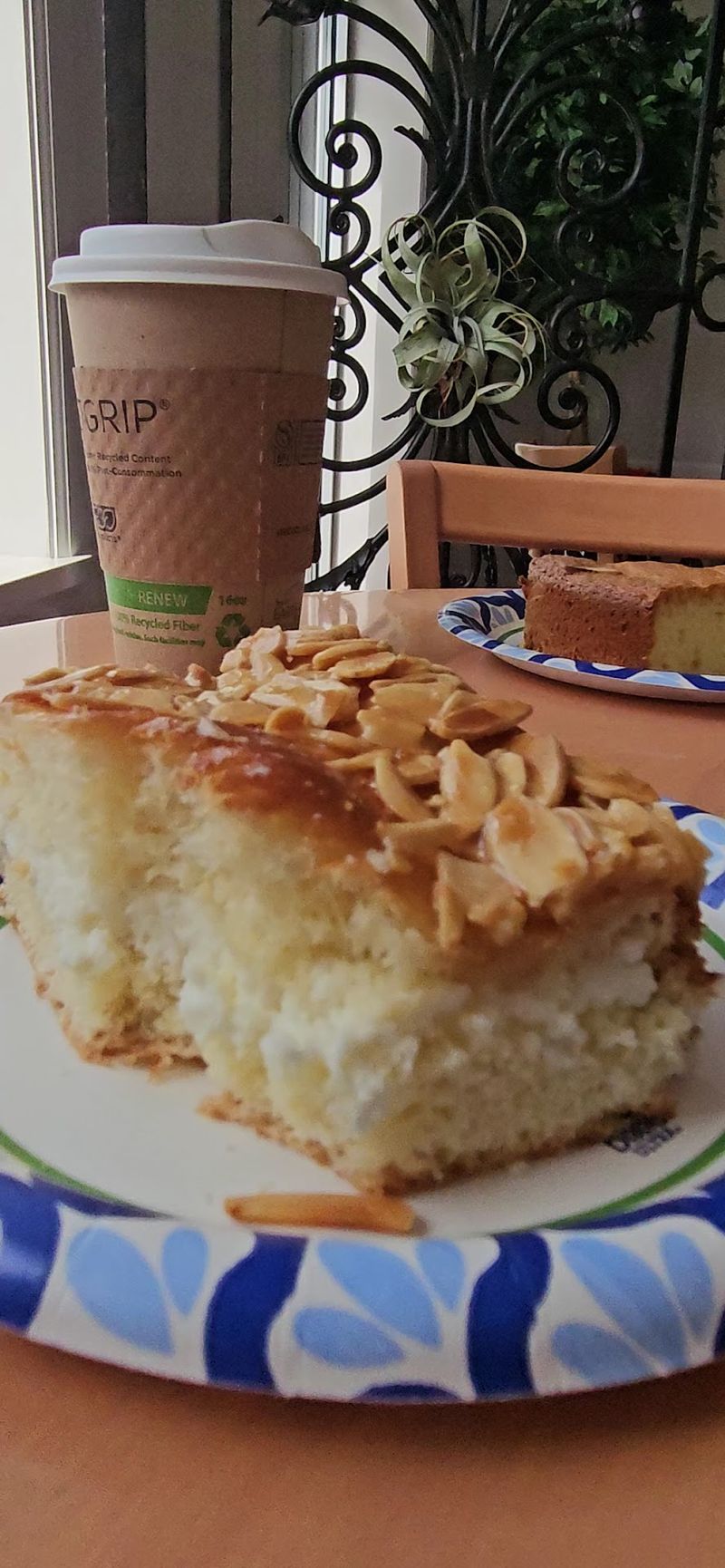
Bienenstich, or Bee Sting Cake, has a name that sounds like a warning and a taste that feels like a reward.
Legend says German bakers once threw beehives at invaders, and the cake was baked to celebrate. The version sold here follows the classic Bavarian build.
A soft, fluffy yeast dough forms the base, a triple Bavarian cream fills the middle, and a crown of honey-caramelized almonds adds crunch on top.
Texture is the whole experience.
You get pillowy, creamy, and crisp in a single bite, and the sweetness stays gentle because the honey does most of the work.
The bakery itself lists Bee Sting Cake as one of its best sellers and says it is available daily.
Since the cream filling is fresh and made without preservatives, the cake is best eaten the day you buy it rather than saved for later in the week.
Bee Sting Cake is currently listed as available daily, although individual bakery selections can vary. Pair a slice with coffee at one of the cafe tables and you have a small, satisfying trip to Bavaria.
Wait Until You See The Seven Layers Hiding Inside The Prinzregententorte
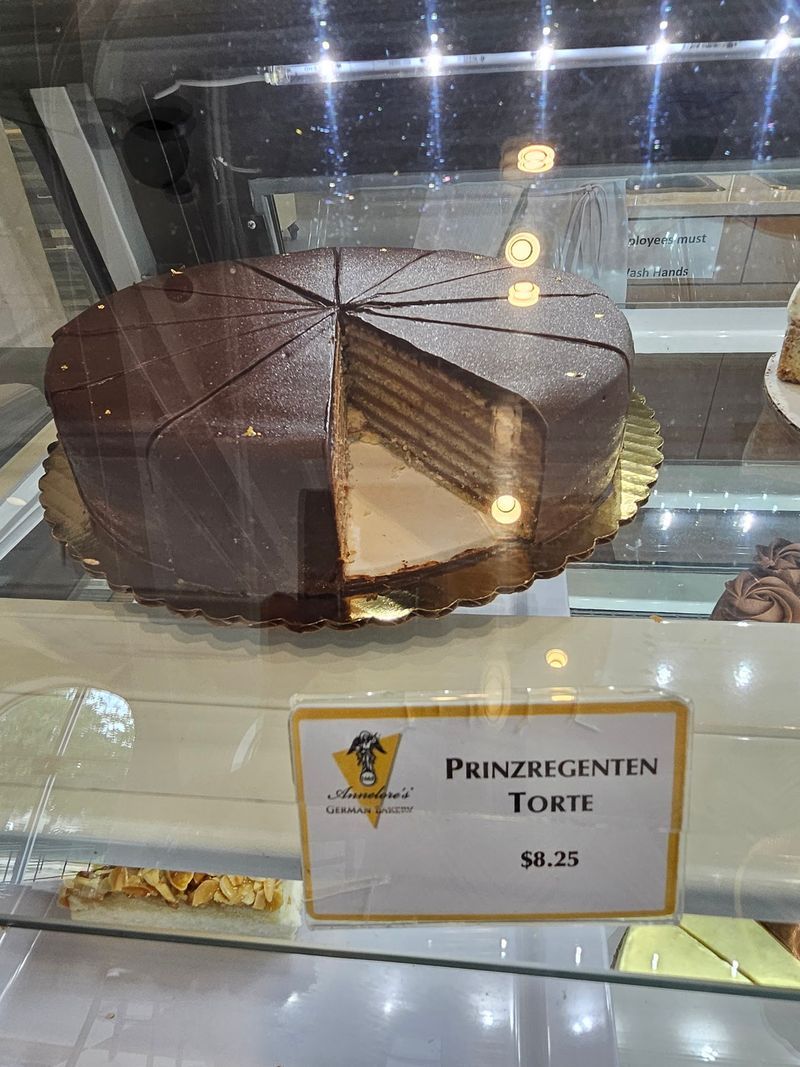
Cut into a slice of Prinzregententorte and count the stripes.
Seven paper-thin sponge cake layers stack up, each one separated by silky chocolate buttercream.
The cake was created in honor of Bavaria’s Prince Regent, which explains the royal treatment it still gets.
Apricot jam and a glossy chocolate ganache finish the top, and every slice served here wears a real gold flake. Baking it is slow, careful work.
Each sponge layer must be spread and baked separately, then cooled and assembled without cracking, so this is not something a rushed kitchen can fake.
Imported German chocolate is used in the bakery, while this torte combines seven sponge layers with chocolate buttercream, apricot preserves, ganache, and edible gold.
It’s one of the more talked-about items in the display case, right alongside the German chocolate cake and Black Forest cake.
Ordering a single slice is a smart way to try it before committing to a whole torte for a birthday or holiday gathering. Photograph it first. That gold flake catches the light beautifully, and your friends will ask where you found it.
This Bakery Started With A Small Farmers Market Table Before Getting Its Own Home
Every big shop starts somewhere, and this one started on a four-foot table.
Around 2008, Annelore and Norbert began selling German baked goods at the State Farmers Market with barely enough room to spread out their trays.
Word traveled the way it usually does with good food: one customer at a time.
About twelve years later, in 2017, the couple opened their brick-and-mortar bakery in downtown Cary. The farmers market connection never disappeared.
Shoppers still spot them at the Raleigh market, which is how plenty of people discover the bakery in the first place. Growth from a folding table to a 3,600-square-foot building is a genuinely encouraging story for anyone with a small food dream.
Keeping both spots going takes serious early-morning effort, since everything is baked fresh rather than trucked in.
Visiting the shop gives you the widest choice, but the market booth remains a friendly, low-pressure introduction to what the family makes.
Everything From The Breads To The Pastries Leans Into Traditional German Baking
Sweets get the spotlight, but the bread deserves equal billing.
Crusty Brotchen rolls, dense pumpernickel, and hearty sourdough loaves fill the shelves most mornings.
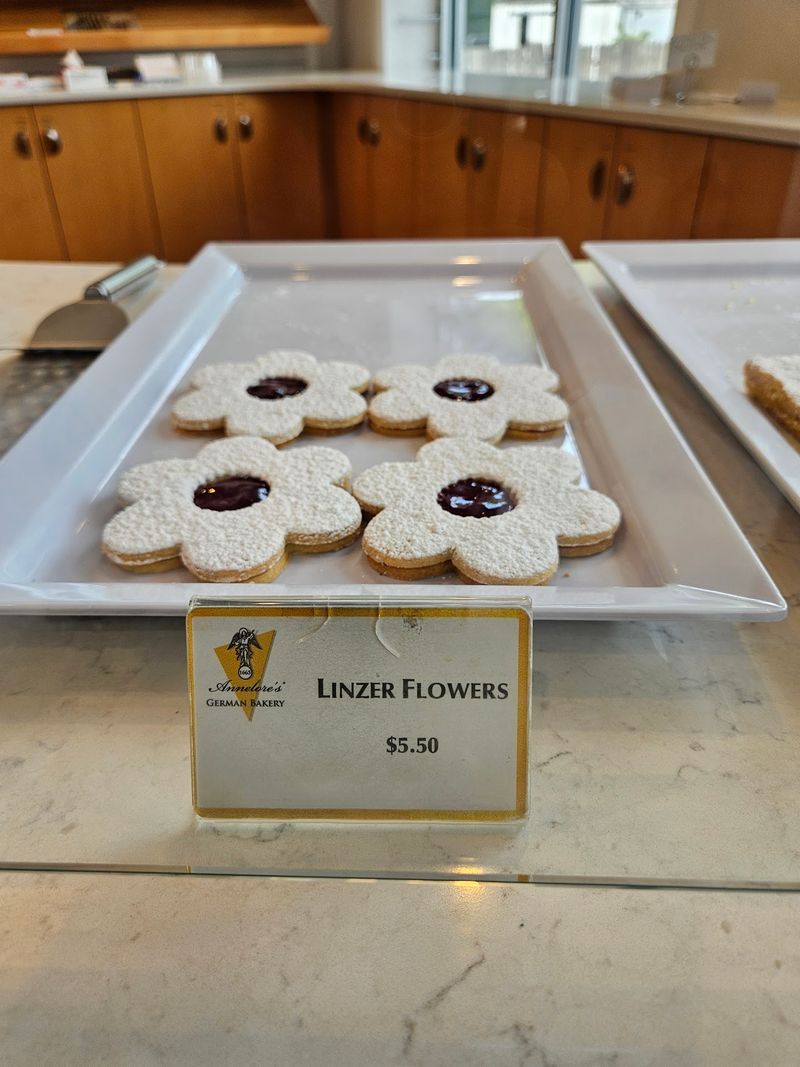
Bavarian pretzels are another favorite, chewy inside with that deep brown exterior you rarely find outside Germany. Apple strudel, linzer cookies, and decorated butter cookies round out the traditional side of the menu.
Savory options give you a real meal instead of just dessert.
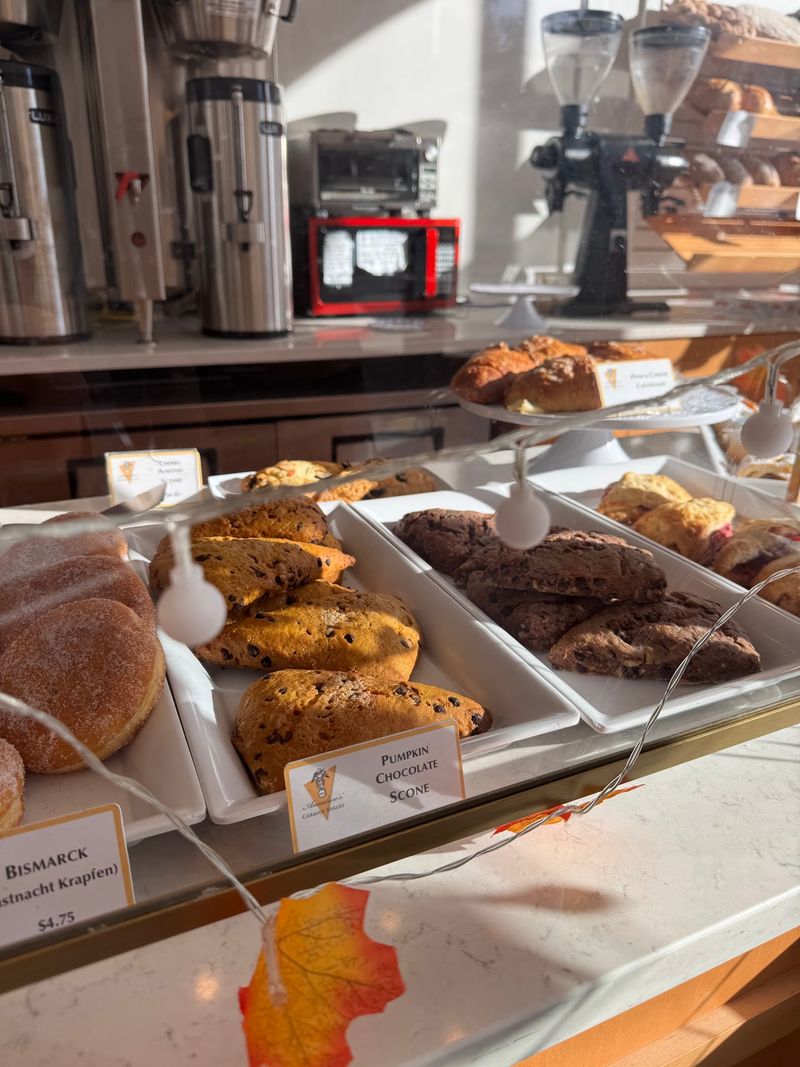
Spinach and feta turnovers, bacon cheddar scones, potato bacon cheese turnovers, and quiche all rotate through the case.
Because the kitchen skips preservatives, selection shifts with the day and season, and popular items can sell out before closing. Families often grab a loaf for the week plus a few cookies for the kids, which makes one stop do double duty.
Prices run higher than a grocery store bakery, typically several dollars per item, but portions are generous and the craftsmanship shows.
Asking the staff for recommendations pays off.
Many customers say the team happily explains what each German item is and suggests pairings for coffee or tea.
Why This Downtown Cary Bakery Feels Like A Little Piece Of Germany In North Carolina
Step inside and the Munich coffee house inspiration becomes obvious.
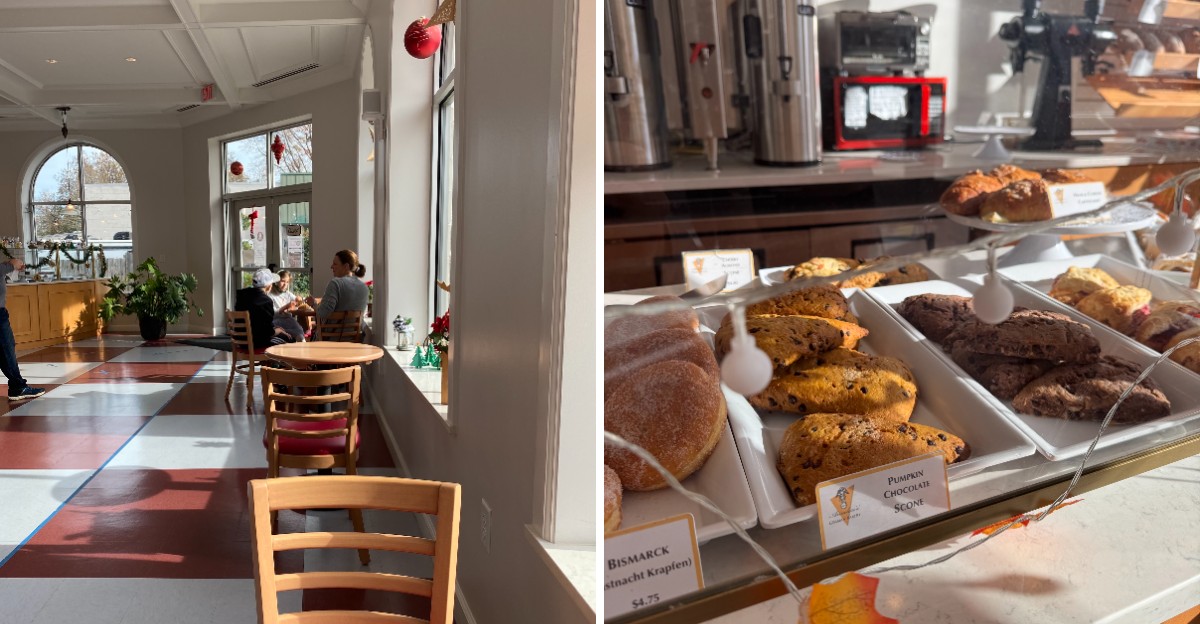
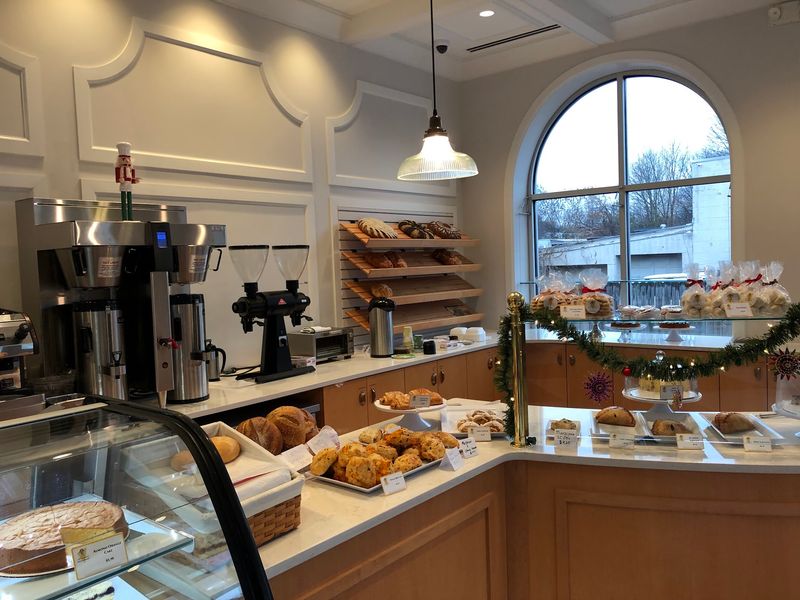
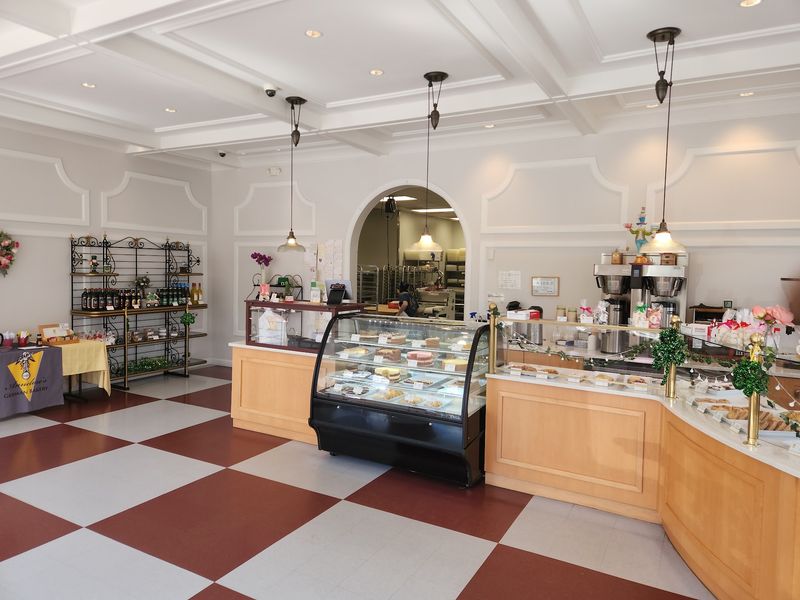
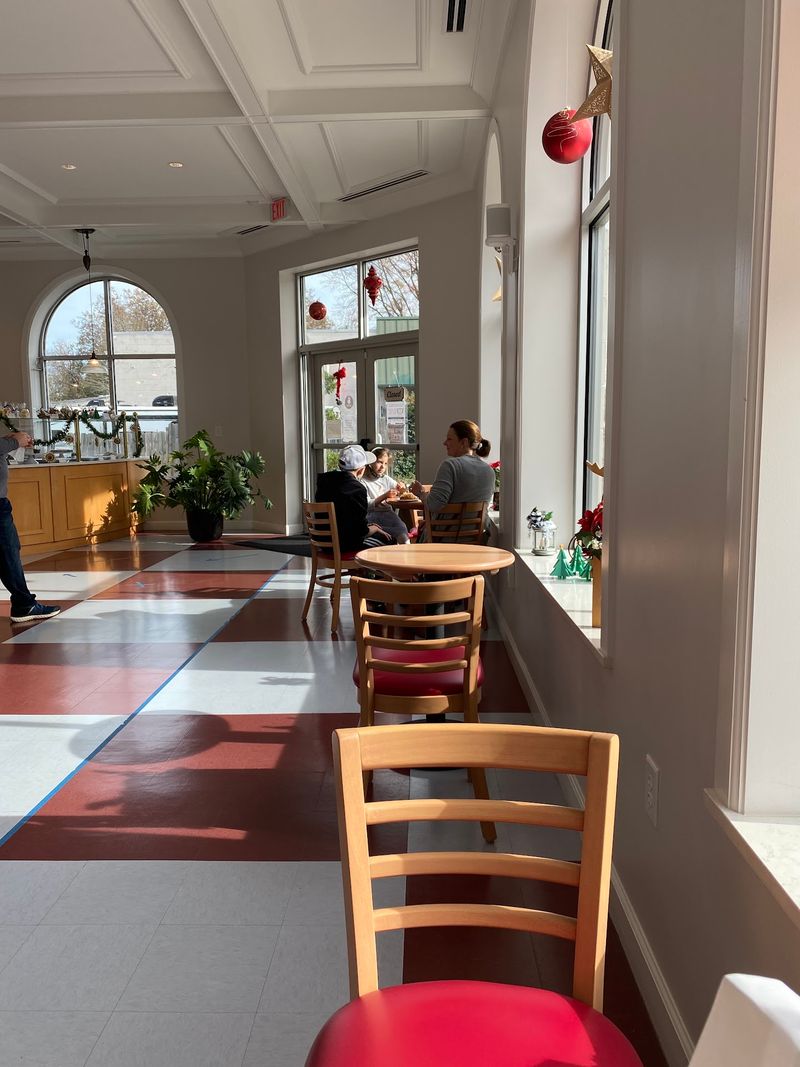
Bright windows, polished surfaces, and a long curved display area set a calm European mood that feels worlds away from a strip mall bakery.
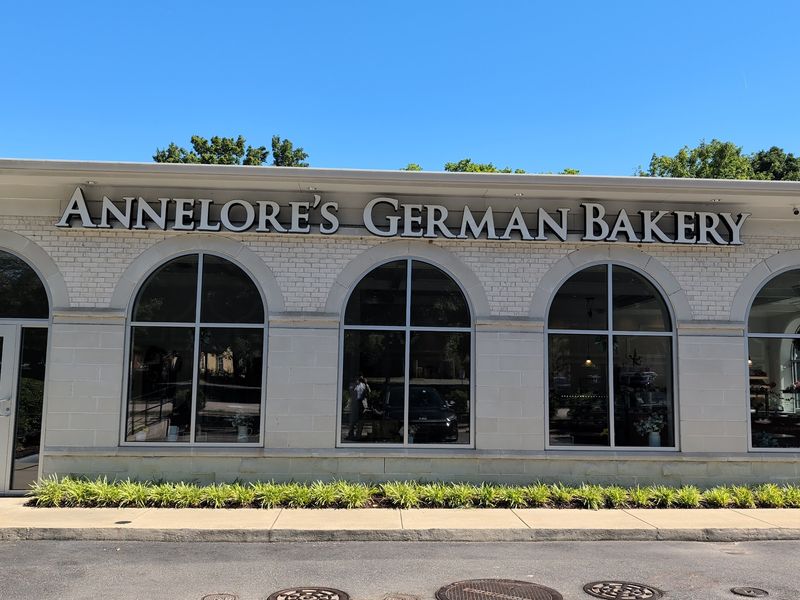
The building stands on its own along Chatham Street in downtown Cary, covering about 3,600 square feet with a small cafe area for sitting down with a pastry and a hot drink.
A 3,600-square-foot commercial kitchen handles production, and the layout allows what the owners call theater baking, so guests can watch the work happening.
Hours are Monday through Friday from 7:30 a.m. to 5 p.m., Saturday from 7:30 a.m. to 4 p.m., and Sunday is currently 9 AM–3 PM, according to the bakery’s own site.
Parking is easy compared with many downtown spots, which makes a quick stop realistic even on a busy Saturday.
With a 4.6-star average across hundreds of reviews, the place has become a regular stop for locals and a worthwhile detour for visitors exploring the Triangle.
Bring a friend, order something you cannot pronounce, and enjoy the discovery.