This North Carolina House Hides More Than 300 Tubas, And It Might Be The Loudest Little Museum In America
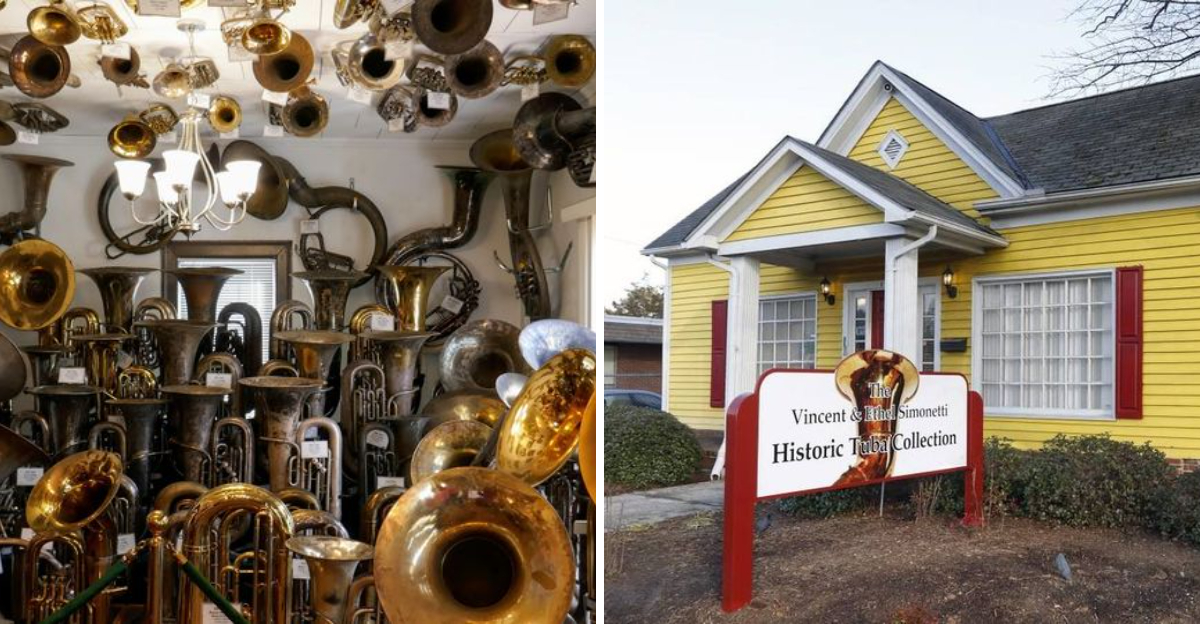
A small yellow house should not be able to hold this much musical thunder, but Durham apparently enjoys keeping secrets with excellent lung support.
Inside, more than 300 members of the tuba family crowd five rooms in a North Carolina museum that feels delightfully impossible from the moment visitors step through the door.
The whole place sounds like a punchline until you realize how rare, careful, and genuinely fascinating the collection is.
Even people who cannot tell a brass instrument from a plumbing emergency may find themselves staring longer than expected. That is the charm.
The museum is quirky without feeling silly, historic without feeling stiff, and unexpected enough to make a simple visit feel like discovering a hidden bass note in the middle of town.
This Little House Holds A Seriously Huge Brass Surprise
Nothing about the outside prepares visitors for what waits inside 1825 Chapel Hill Road, Durham, NC 27707. The yellow house looks modest from the street, more like a neighborhood home than one of the most unusual music collections in the country.
Then the tour begins, and the rooms start filling your vision with brass. Bells point from walls, curved tubing loops across displays, and instruments from different eras sit close enough together that the whole place feels wonderfully impossible.
The V & E Simonetti Historic Tuba Collection contains more than 300 instruments connected to the tuba family, representing a broad history from around 1830 to the present.
That range makes the house feel less like a novelty stop and more like a serious archive disguised as a local surprise.
It is often described as one of the largest private tuba collections in the world, and the focus on this specific instrument family gives the museum a personality almost nobody sees coming.
Durham has restaurants, universities, galleries, ballgames, and historic neighborhoods, but this little house delivers a very different kind of bragging right.
A visit starts with disbelief and usually ends with visitors wondering how something this specialized became so fascinating so fast.
More Than 300 Tubas Make The Rooms Feel Packed With Sound
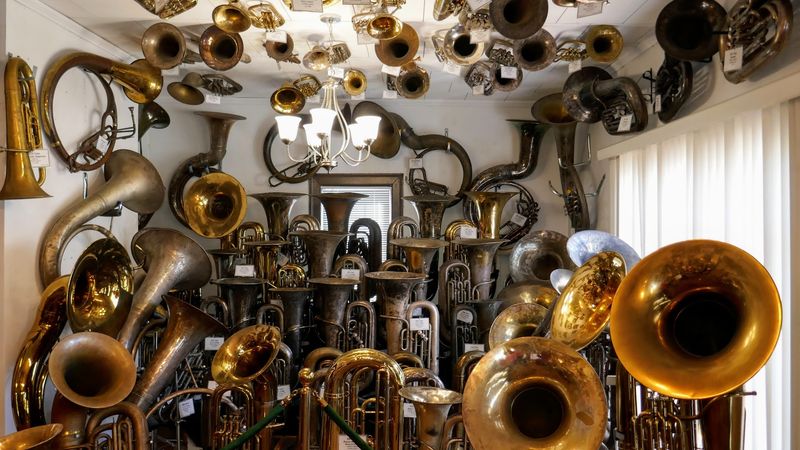
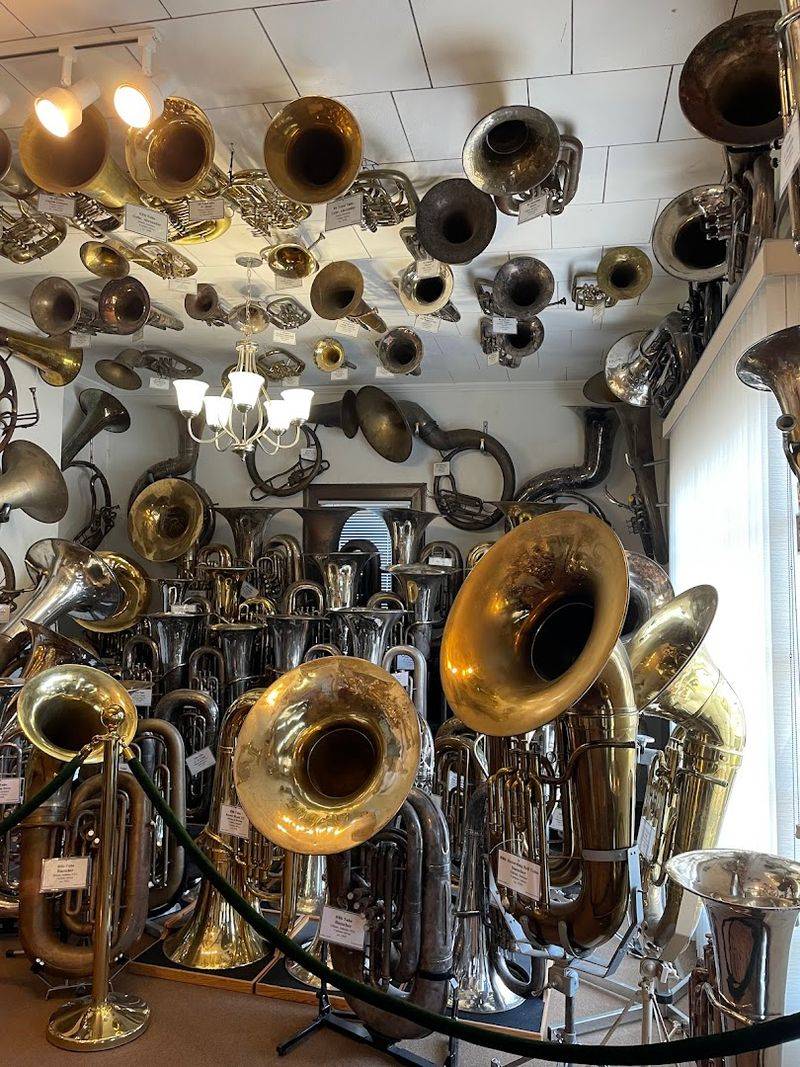
Stepping into the collection feels like walking into a room that is holding its breath in brass. The instruments are not playing, but the shapes alone make the space feel loud.
Huge sousaphone bells, compact euphoniums, antique tubas, helicons, saxhorns, and other low-brass relatives crowd the five-room house with a density that is hard to describe without sounding ridiculous.
More than 300 instruments are housed here, and each one helps explain how the tuba family changed across countries, makers, musical needs, and nearly two centuries of design.
Names like C.G. Conn, York, H.N.
White, and other important manufacturers show up throughout the collection, giving music lovers plenty to study.
Non-musicians can still enjoy the visual oddness of it all, because some pieces look elegant, some look massive, and some look like they were invented during a very creative dare.
The rooms do not feel sterile or distant. They feel personal, packed, and alive with someone’s lifetime of attention.
That closeness is part of the charm. Instead of staring across a roped-off gallery, visitors stand right inside the story.
Every turn reveals another bell, another curve, another strange instrument with a past that deserves explaining.
The First Instrument Already Feels Like A Conversation Starter

Early in the collection, history starts looking less polished and far more surprising. One of the oldest pieces associated with the museum’s story is a serpent from around 1830, an instrument whose winding wooden body looks almost nothing like the shiny brass tubas most visitors expect.
That odd shape matters because it helps show what came before the modern valve tuba.
The first patented tuba arrived in 1835, and the Simonetti collection includes an 1845 tuba described as closely resembling that early patented design.
Seeing those pieces near later brass instruments makes the evolution feel immediate instead of academic.
A textbook can explain innovation, but standing in a room with the actual shapes makes the change much easier to understand.
The serpent alone can stop visitors for longer than expected because it looks part musical instrument, part museum creature, and part proof that history rarely moves in a straight line. Kids may find it strange.
Musicians may find it thrilling. Curious travelers may simply enjoy the fact that Durham has a house where an 1830 serpent helps tell the story of the tuba family.
The first big surprise is not the number of instruments. It is realizing how weird and inventive the whole family tree really is.
You Realize Fast This Is Not A Normal Museum Stop
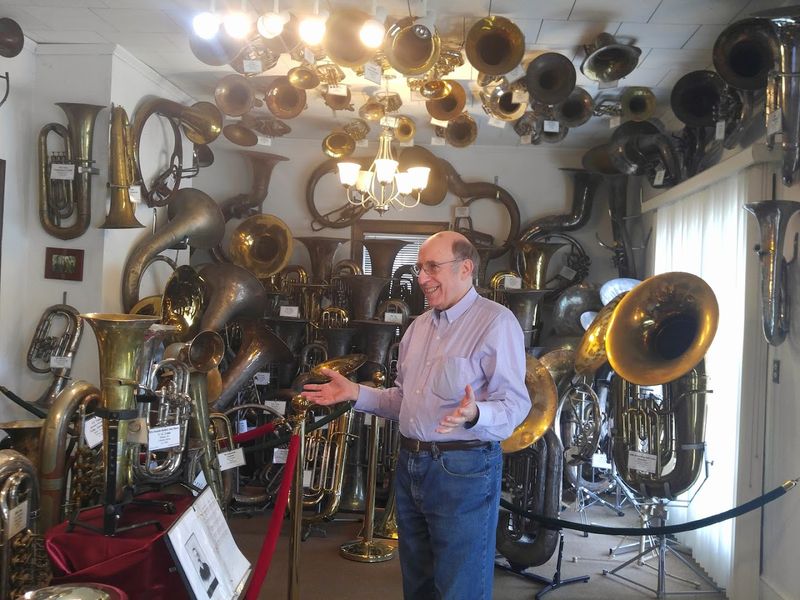
Typical museums often hand visitors a map and let them drift. This one works better because the tour is guided, personal, and deeply connected to the person who built the collection.
Vincent Simonetti, a former principal tuba player with the North Carolina Symphony, brings the instruments to life through stories, context, technical details, and the kind of enthusiasm that cannot be faked.
His collecting journey began in 1965 with a circa-1910 Cerveny helicon discovered in Boston while he was touring as a tuba player. Over the next decades, the collection expanded substantially during his 27 years as owner of The Tuba Exchange, which he founded in 1984.
That background gives the tour more weight because the instruments are not random antiques gathered for display. They are the result of decades spent playing, selling, studying, repairing, collecting, and loving low brass.
Visits usually feel more like an educational conversation than a self-guided stroll, and that is exactly what makes the stop memorable. Questions are part of the fun.
Visitors who know nothing about tubas can still follow along because the stories make the collection approachable.
By the end, even people who arrived as casual tourists may find themselves caring deeply about valves, bells, makers, and musical evolution.
Historic Horns Trace Nearly Two Centuries Of Music
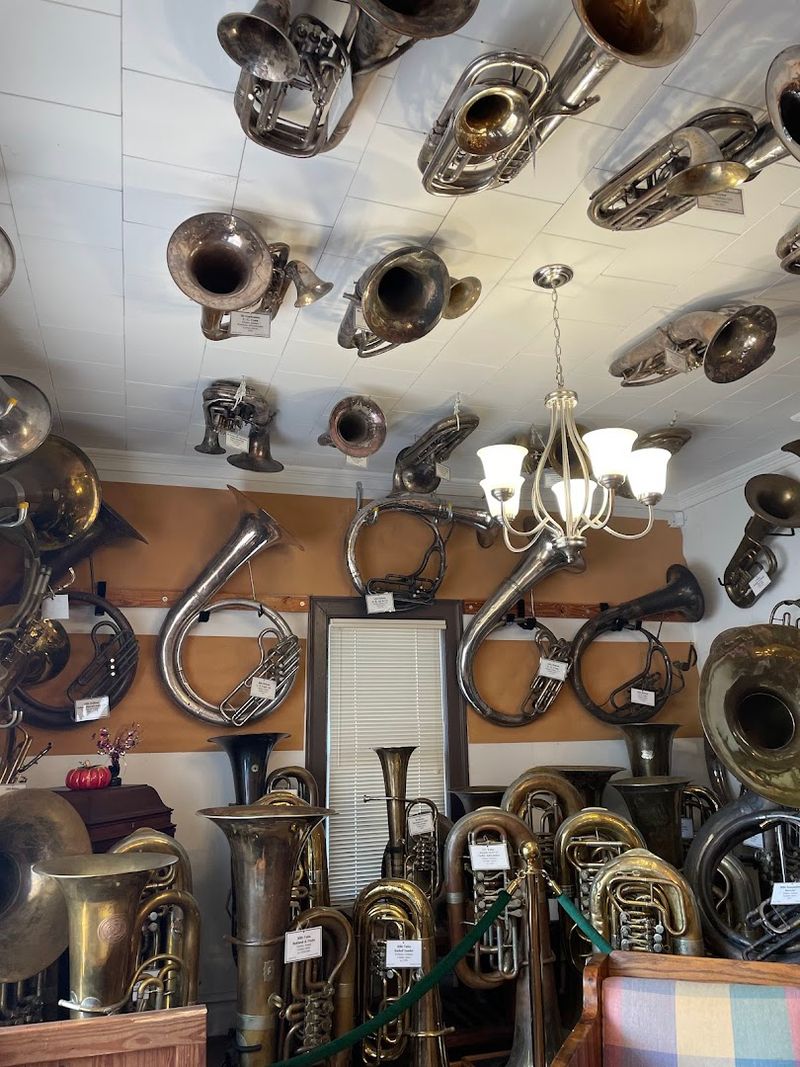
Instrument history gets surprisingly dramatic when it is packed into five rooms. The Simonetti collection covers the tuba family from around 1830 to the present, showing how designs changed as musicians, composers, manufacturers, and performance settings demanded new sounds.
Saxhorns, ophicleides, euphoniums, sousaphones, helicons, and traditional tubas all help build the timeline, each one revealing a different solution to the same basic question: how should low brass sound, carry, travel, and play? The collection’s strength is not only its size.
It is the way the pieces can be compared up close. Early designs sit near later innovations, and visitors can see how valves, tubing, bells, posture, and portability evolved.
Rare pieces add extra excitement, including unusual double instruments and historic models that most people will never encounter anywhere else.
North Carolina may not be the first place that comes to mind for global brass history, which makes the setting even more satisfying.
Durham becomes the unlikely place where visitors can watch nearly two centuries of musical engineering unfold room by room. The collection proves that tubas are not just background instruments waiting at the back of the band.
They have their own wild, inventive, and surprisingly beautiful history.
Durham Gets One Of America’s Strangest Little Collections
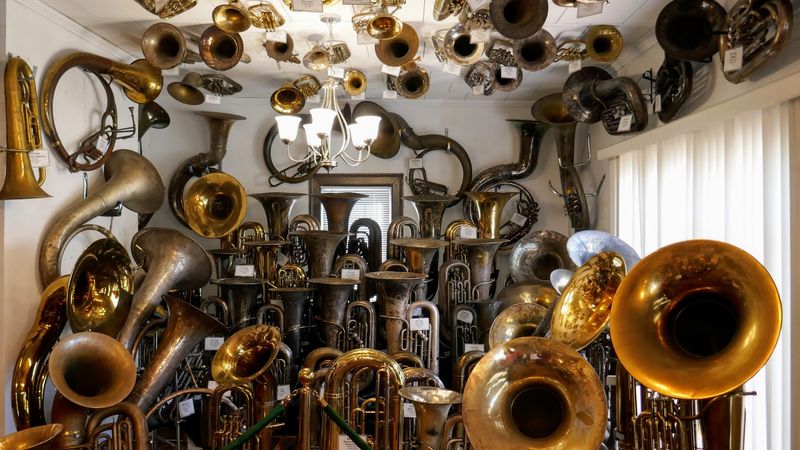
Durham already has enough personality to handle a house full of tubas. The city’s mix of universities, old buildings, restaurants, music, art, and offbeat cultural stops makes this collection feel oddly at home, even though the concept is wildly specific.
The V & E Simonetti Historic Tuba Collection sits at 1825 Chapel Hill Road, away from the most obvious tourist corridors, which gives the visit a hidden-in-plain-sight quality.
People can drive past without realizing one of the world’s most unusual private low-brass collections is sitting behind the door.
That residential feeling adds to the delight. This is not a giant institution with a marble entrance and gift-shop maze.
It is a personal collection made public through appointment-based tours, generosity, and decades of expertise. Pairing the visit with a Durham meal makes the day even better, since the city’s food scene is strong enough to turn a niche museum trip into a full outing.
Grab lunch, tour the collection, then try explaining to someone afterward that you just saw hundreds of tubas inside a yellow house. It sounds made up.
That is the best part. Durham has plenty of polished attractions, but this one wins on sheer surprise.
Private Tours Make The Visit Feel Extra Personal

Appointment-only access might sound inconvenient at first, but it protects the best part of the experience. The collection is open for visits by appointment, with posted public hours on Tuesdays and Thursdays from 3 p.m. to 6 p.m., and visitors are asked to schedule at least 24 hours in advance.
That structure keeps the setting calm, focused, and personal instead of crowded and chaotic.
There is no regular admission fee listed for standard visits, though donations are welcome, which makes the depth of the experience feel especially generous.
Scheduling can be done through the museum’s contact information, including the phone number 919-599-3791. Once inside, visitors get a guided look that feels far more meaningful than simply reading labels alone.
The tour length can vary, but many visitors describe it as lasting around an hour to an hour and a half, depending on questions and conversation. That unhurried pace lets the instruments become characters rather than objects.
Small group energy also makes it easier to ask about odd shapes, rare pieces, music history, or Simonetti’s own collecting journey. The result feels less like visiting a museum and more like being invited into someone’s extraordinary lifelong project.
This Tuba Museum Turns Curiosity Into A Full-Blown Detour
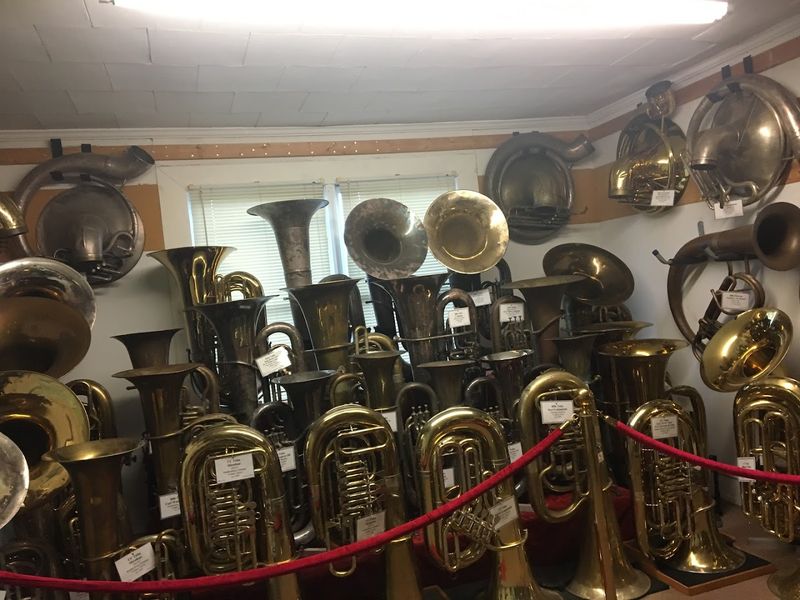
Some travel stops are famous because everyone has already been told to visit. This one works because most people have no idea it exists until the phrase “historic tuba collection” lands in front of them and refuses to leave.
The V & E Simonetti Historic Tuba Collection is the kind of place that starts as a joke, a curiosity, or a “why not?” detour, then turns into one of the most memorable stops of the day.
More than 300 instruments, a deeply knowledgeable guide, rare pieces, and a modest Durham house combine into an experience that feels impossible to duplicate.
The official website, simonettitubacollection.com, provides planning details, and appointments are essential because visitors cannot simply show up and expect a self-guided tour. That little bit of planning is worth it.
Music students, band families, brass players, museum lovers, and people who just enjoy deeply specific oddities can all find something here. Pair the tour with coffee, lunch, or dinner in Durham, and the outing becomes a perfect mix of strange and satisfying.
North Carolina keeps producing places that reward curiosity, and this house may be one of the loudest-looking quiet stops in the state.