This North Carolina House Still Has Bullet Holes In Its Walls From A 1781 Revolutionary War Skirmish
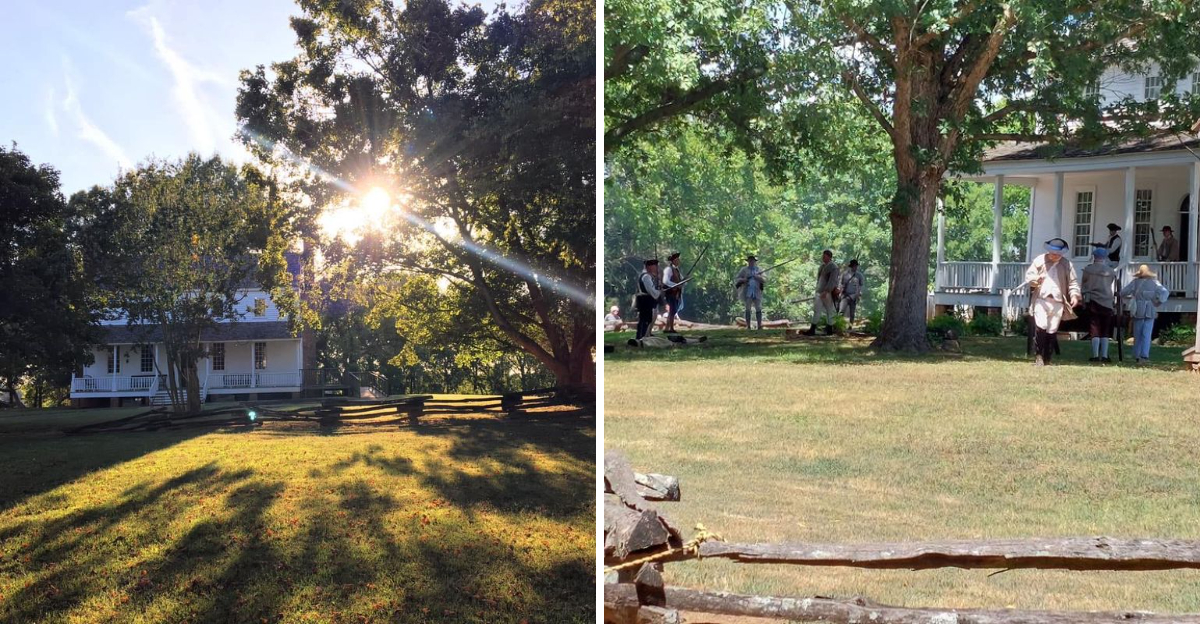
Most old houses show their age through creaky floors and faded paint. One North Carolina landmark still has bullet holes in its walls.
Built around 1772, the house overlooks a horseshoe-shaped bend in the Deep River and preserves evidence from a 1781 Revolutionary War skirmish.
Whig militia inside the home exchanged fire with Loyalist forces, leaving damage that remains visible more than two centuries later.
Those marks make the history feel unusually immediate. This is not a replica, movie set, or dramatic local rumor.
The walls themselves still carry the evidence.
Visitors cannot currently tour the property, however. The site is closed while a new visitor center is being built, with reopening expected in early 2027.
Once access returns, the experience will connect the preserved home, river setting, battle damage, and later history of the property. Few historic sites make the past feel this close without saying a word.
Inspect The Bullet Holes That Still Mark The House’s Wooden Walls
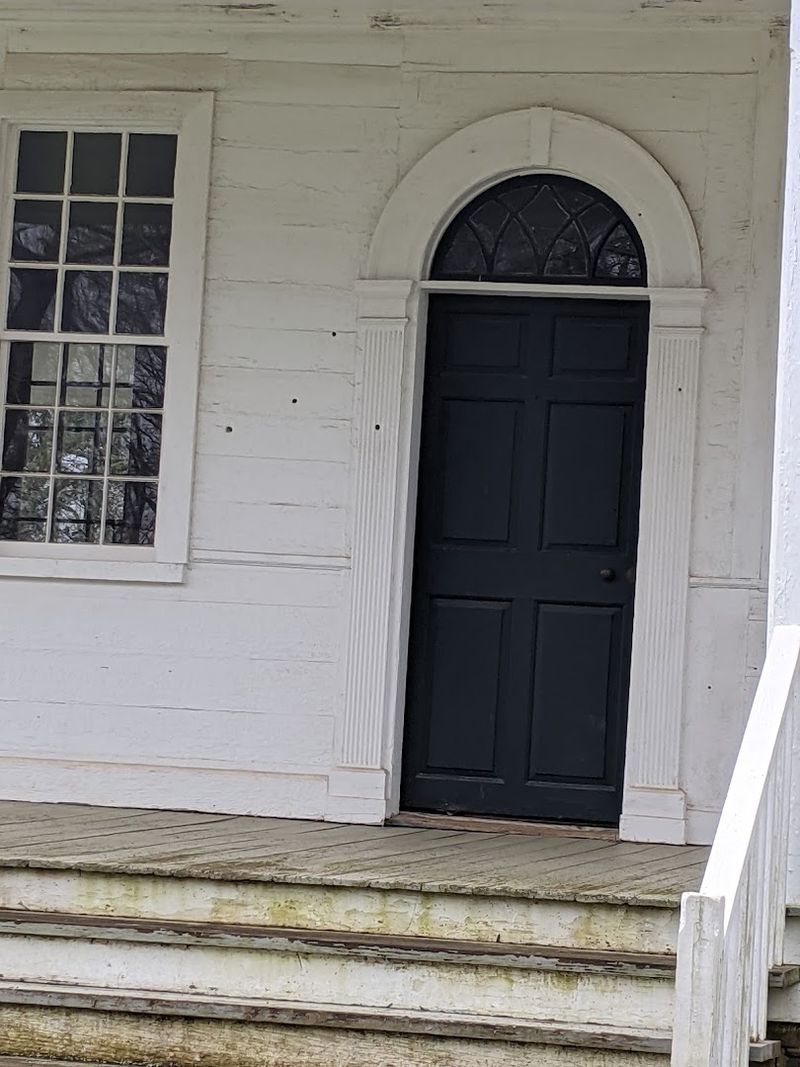
Battle scars give this house its most unforgettable detail.
Numerous marks from the 1781 Revolutionary War skirmish remain visible throughout the historic house. North Carolina Historic Sites notes that visitors can see the battle scars and even feel some of the bullet holes, while NCpedia confirms that many are still visible on the exterior.
Those marks make the story feel less distant than a date on a plaque. Wood that once formed an ordinary family home became a surface that recorded gunfire, fear, strategy, and survival.
The bullet holes also remind visitors that this was not a distant military field. It was a domestic space pulled directly into the Revolution’s bitter backcountry fighting.
The official site describes the home as one of the first big houses of upland North Carolina frontier country, built on a hilltop above the Deep River bend. That setting makes the visible damage even more striking.
A graceful old house, antique furnishings, and quiet grounds all seem calm at first. Then the walls interrupt that calm.
They show exactly where the 1781 fight reached the structure, turning preservation into something physical, immediate, and hard to forget.
Stand Where A Revolutionary War Skirmish Erupted In 1781
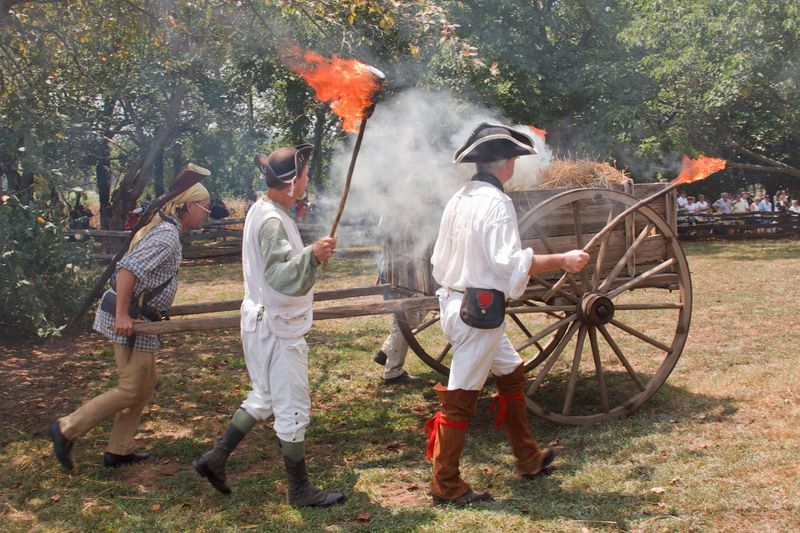
July 29, 1781, changed the meaning of this property forever. North Carolina Historic Sites says fighting erupted around the home when Philip Alston’s band of Whigs were attacked by Tories under David Fanning.
The site’s history page explains that the attack happened while Alston and his men were camped at the house, and that Fanning’s force was larger. The Liberty Trail identifies the site as a Patriot outpost where a four-hour skirmish took place that day.
That context matters because the Revolution in North Carolina’s backcountry often looked painfully local. These were not only formal armies meeting in distant lines.
Communities split into Whig and Tory factions, and the conflict moved through farms, roads, homes, and river country. Standing on the grounds, once the site reopens, means standing where a private house briefly became a defensive position.
The Deep River bend, the old structure, and the quiet landscape make the contrast sharper. Today the place feels still and green.
In 1781, the same ground held shouting, smoke, barricades, and decisions that carried real consequences for everyone inside.
Learn Why Loyalist Fighters Surrounded Philip Alston’s Home
Revenge helped push the fight toward the Alston property. North Carolina Historic Sites says Fanning’s attack was directly related to the death of his pilot, Kenneth Black, which gives the skirmish a more personal backstory than a simple clash between sides.
Fanning was not a random figure passing through the area. The state’s history page describes him as a notorious Loyalist leader who had returned to North Carolina by 1781, set up near Cox’s Mill on the Deep River, and launched repeated attacks on area Whigs.
That made central North Carolina part of what the state calls a bitter backcountry civil war, with Loyalists and Patriots striking each other through irregular warfare. Knowing that background gives the bullet holes more meaning.
They were not created by a detached military exercise. They came from a fight shaped by loyalty, politics, personal loss, local grudges, and the rough conditions of war in the Piedmont.
Alston’s home became a target because the conflict had become intimate. The Revolution here was not clean or distant.
It reached doorways, fences, river bends, and family houses.
Follow The Story Of A Battle That Lasted Several Intense Hours
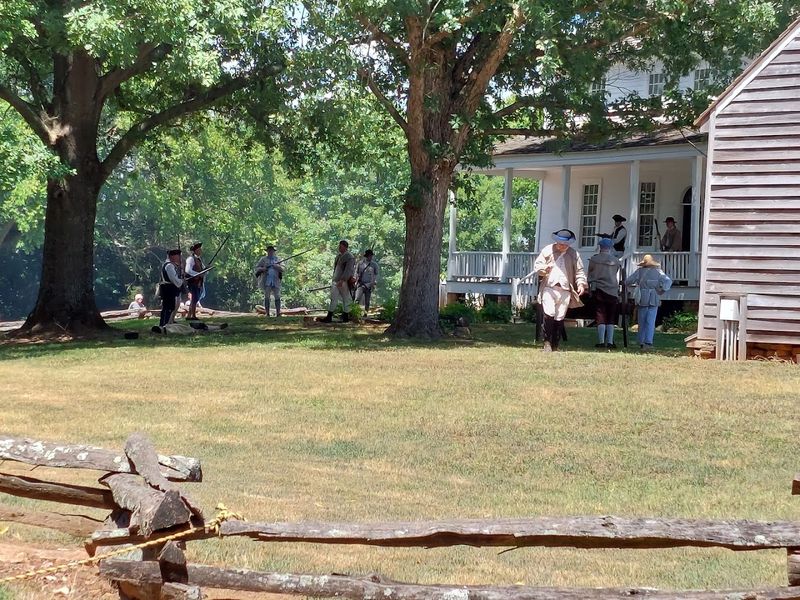
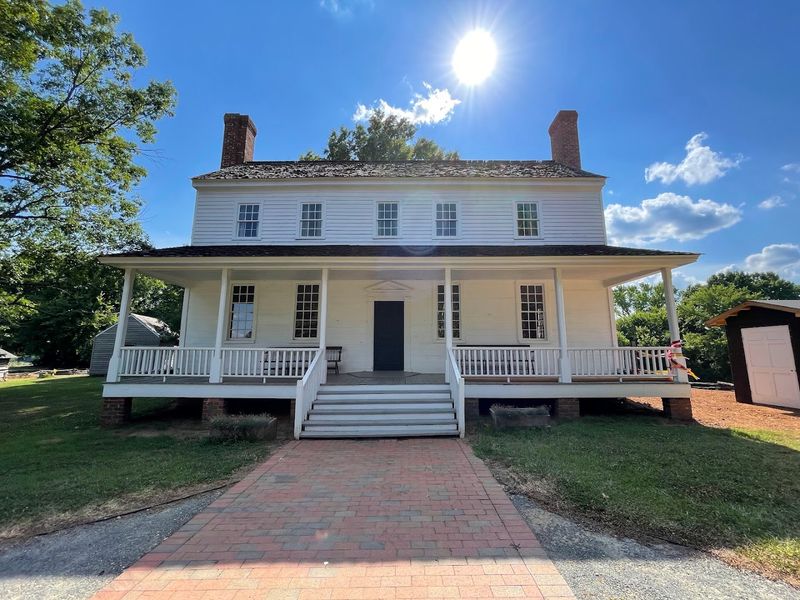
Four hours can feel endless when a house is under attack. The Liberty Trail says the skirmish lasted four hours and describes how David Fanning’s larger Tory force attacked Alston’s men before attempting to burn the house with a cart of flaming straw.
North Carolina Historic Sites also records that Fanning’s forces tried to set the house on fire by rolling a cart filled with burning straw against it. That detail gives the story a frightening escalation without needing exaggeration.
Gunfire had already marked the wooden walls. Then fire became the next threat.
Inside, Alston’s side had to hold the house while the pressure outside grew worse. Outside, Fanning’s men tried to force a surrender without letting the fight drag on indefinitely.
The official account says the fighting ended after several casualties on both sides, with Alston surrendering and the house left riddled with bullet holes. The timeline makes the site feel cinematic, but the reality was harsher and more confined.
A small house, a split community, a river bend, and a few hours of fighting created a story that still clings to the wood more than two centuries later.
You Can See How Close The Gunfire Came To The People Inside
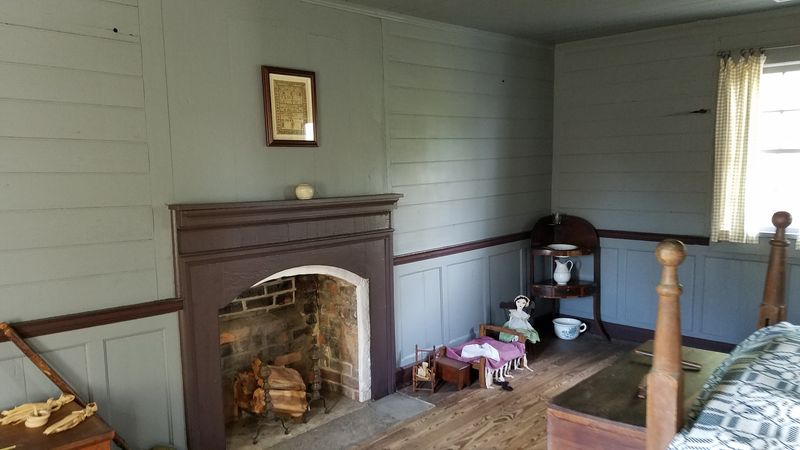
Wooden walls make the danger visible in a way written summaries cannot fully match. NCpedia highlights an image of the back door of the Alston House showing bullet holes around the door, and the state site says the house still contains numerous battle scars from the skirmish.
Those marks help visitors understand how close the fight came to the people inside. This was not a symbolic confrontation happening somewhere nearby.
Musket fire struck the actual structure, leaving damage that remains part of the building’s interpretation. Stories connected to the Alston family, including Temperance Alston’s role in the surrender, make the site feel more human than a plain military summary.
The official history does not need dramatic embellishment to land. A house under fire says enough.
So does a door surrounded by bullet holes. When the site is open, guided interpretation can connect those physical marks to the wider conflict between Whig militia and Loyalist forces.
That is the value of the house as preserved evidence. It lets people see the distance between attacker, defender, and family space.
In some spots, that distance was only a wall.
Hear How Temperance Alston Helped Bring The Fighting To An End
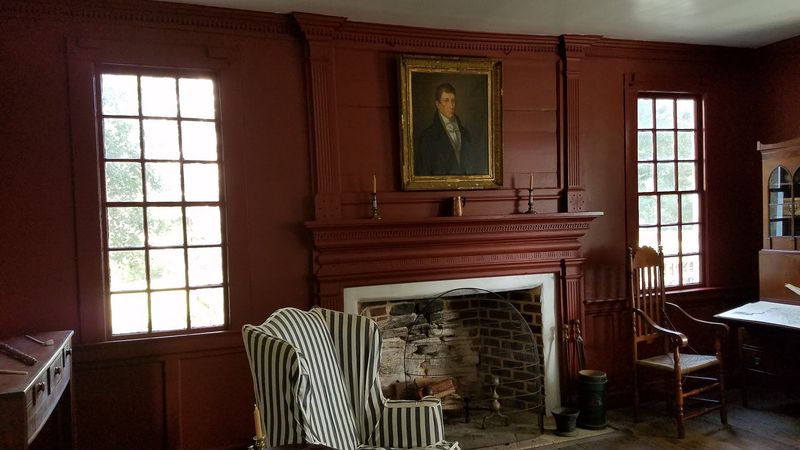
Temperance Alston’s part in the surrender keeps the story from belonging only to the men with weapons.
NCpedia says Mrs. Alston negotiated the terms of her husband’s surrender to Colonel Fanning, and the Liberty Trail also notes that Alston ultimately surrendered after the attack and casualties on both sides.
The official state page preserves the parole written by David Fanning and signed by Philip Alston at Deep River on July 29, 1781. That document turns the end of the skirmish into something concrete.
The fight did not simply fade away. It ended with terms, signatures, and the formal language of parole.
Temperance’s role matters because it adds courage and negotiation to a story that could otherwise become only a tale of attack and defense.
She has long been remembered as central to the surrender narrative, and that memory gives the house a different emotional shape.
The most powerful moment may not be the loudest one. It may be the moment when someone had to step between survival and further destruction, then push the fight toward an end.
At House in the Horseshoe, that part of the story belongs to Temperance.
Explore The 1772 House Beyond Its Most Famous Battle Scars
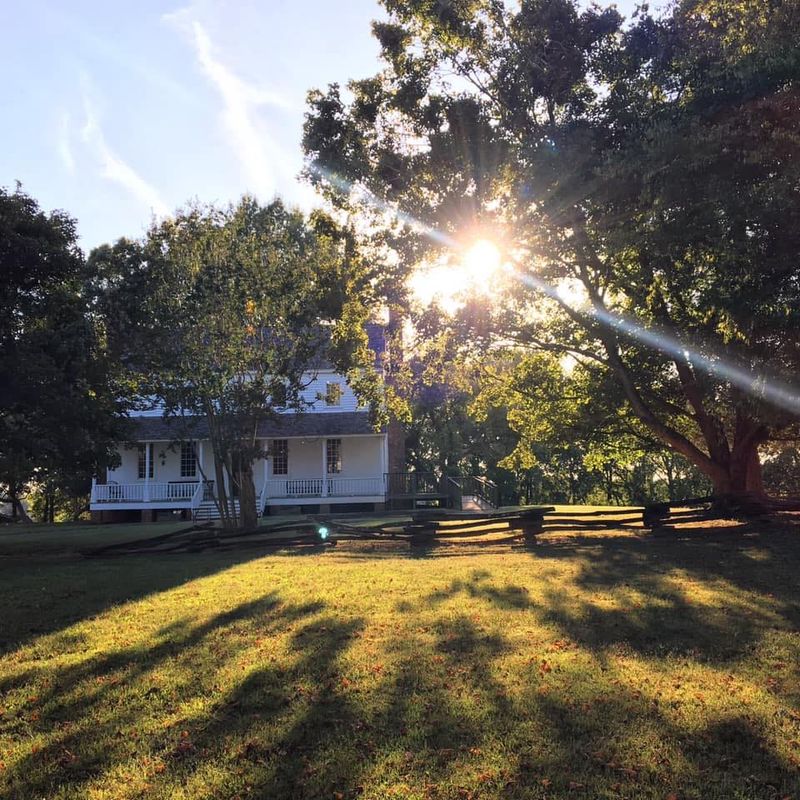
Architecture gives the Alston House importance beyond the bullet holes. North Carolina Historic Sites says Philip Alston built the home around 1772 on a hilltop above the horseshoe bend of the Deep River, and NCpedia calls it one of the first big houses in the North Carolina backcountry.
The house later entered another chapter when Benjamin Williams bought the property in 1798. The state identifies Williams as a four-term North Carolina governor who renamed the property “Retreat” and enlarged the house with wings for a kitchen and master bedroom.
Late colonial and early Federal details shape the two-story frame house, including its gable roof, shed porch, and center-hall plan. North Carolina Historic Sites also highlights the double-shouldered Flemish bond chimneys and fine interior woodwork, especially the north parlor mantel.
That makes the site more layered than a single skirmish stop.
It is also a story of frontier ambition, plantation life, political power, preservation, and changing interpretation. The visible damage draws people in, but the house’s craftsmanship and later Williams history give them more reasons to keep looking.
Walk The Grounds Inside The Deep River’s Horseshoe-Shaped Bend
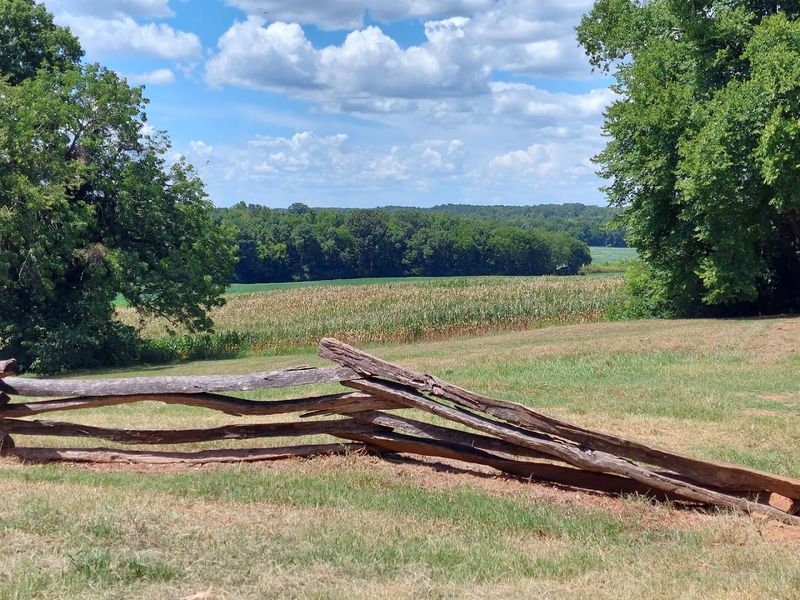
River geography gives the site its name and much of its quiet beauty. North Carolina Historic Sites says the house stands on a hilltop above a horseshoe bend in the Deep River, while the official page describes spring and summer flowers surrounding the plantation house named for that bend.
Later preservation added another layer to the grounds. NCpedia says the Moore County Historical Association bought the house, outbuildings, and 4.2 acres in 1954, the state took over the property the next year, and House in the Horseshoe became a North Carolina State Historic Site in 1971.
The site is currently temporarily closed while construction moves forward on a new visitor center.
North Carolina DNCR announced that construction was scheduled to begin in December 2025, that the site would close for about a year, and that the project is expected to finish in early 2027.
The official location page also lists the current address as 288 Alston House Rd., Sanford, N.C. 27330, and says the site is temporarily closed until further notice during visitor center construction.
When it reopens, the Deep River bend, preserved house, battle scars, and upgraded exhibits should make the visit even stronger.