This North Carolina Mansion Lets You Tour A 1920s Estate Climb A Lighthouse And See Wild Horses In One Day
One day. One mansion. One lighthouse. Wild horses on the beach.
That sounds less like an itinerary and more like somebody got carried away planning a vacation.
Yet this corner of North Carolina somehow makes the whole thing work.
The morning can begin inside a grand 1920s estate where the rooms still carry plenty of old-school drama. By midday, 220 lighthouse steps are waiting to remind everyone that scenic views occasionally require legwork.
Then comes the plot twist. The afternoon trades polished floors for sand, and suddenly the search is on for free-roaming horses along the Outer Banks.
No part of this day feels normal, which is exactly the appeal.
The mansion brings the history. The lighthouse delivers the height.
The horses completely ignore the schedule.
Somewhere in between, there is probably time to wonder how all three ended up so close together.
Do not overpack the itinerary. This one already has enough personality for an entire weekend.
Tour A Grand 1920s Estate Filled With Gilded Age Detail
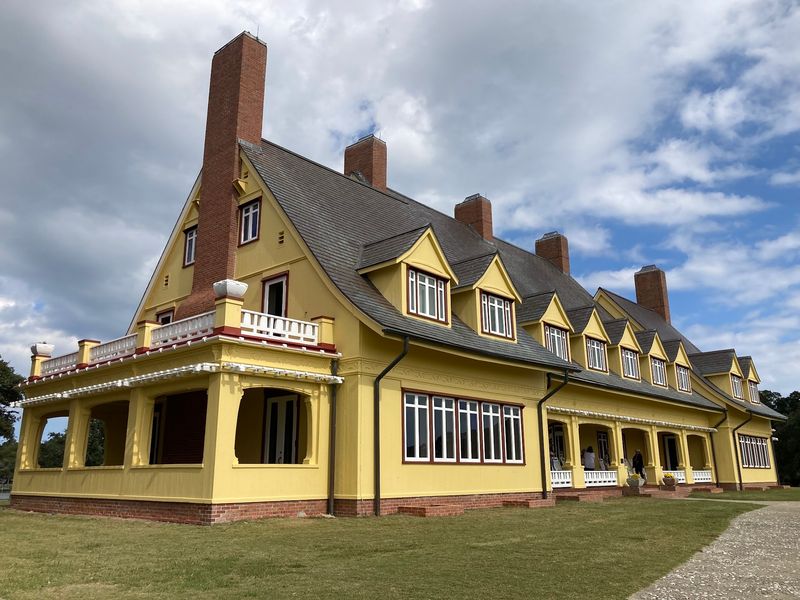
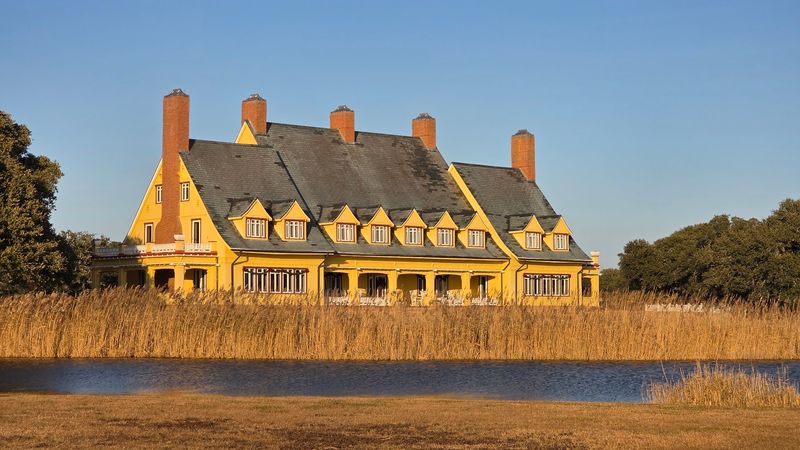
Yellow walls, a copper shingled roof, and mahogany doors greet you before you even step inside. The 21,000-square-foot mansion at 1100 Club Road, Corolla, was built between 1922 and 1925 for Edward Collings Knight Jr. and his wife, Marie Louise LeBel Knight.
Originally called Corolla Island, the house is a rare example of Art Nouveau architecture on the coast of North Carolina.
Inside, the details slow you down. Stained glass panels with water-lily patterns filter soft light across original woodwork, and the curved lines of the Art Nouveau style show up in railings, door hardware, and light fixtures.
Modern conveniences were part of the plan too. Electricity, running water, and an Otis elevator were rare luxuries in a remote spot like this in the 1920s, and the tour points them out along with the systems that kept the household running.
Self-guided tours run Monday through Friday from 9 AM to 4 PM, and photography is not permitted indoors, so plan to simply look closely. The dining room woodwork traveled here from the family’s Rhode Island home.
You Can Climb The Currituck Beach Lighthouse Right Next Door
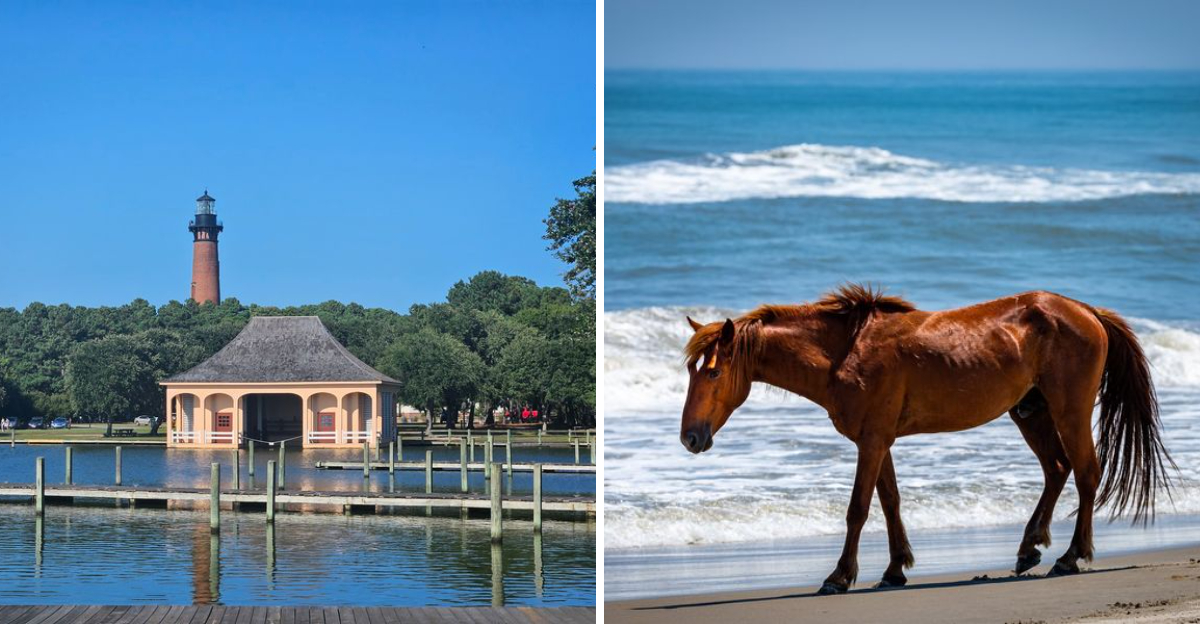
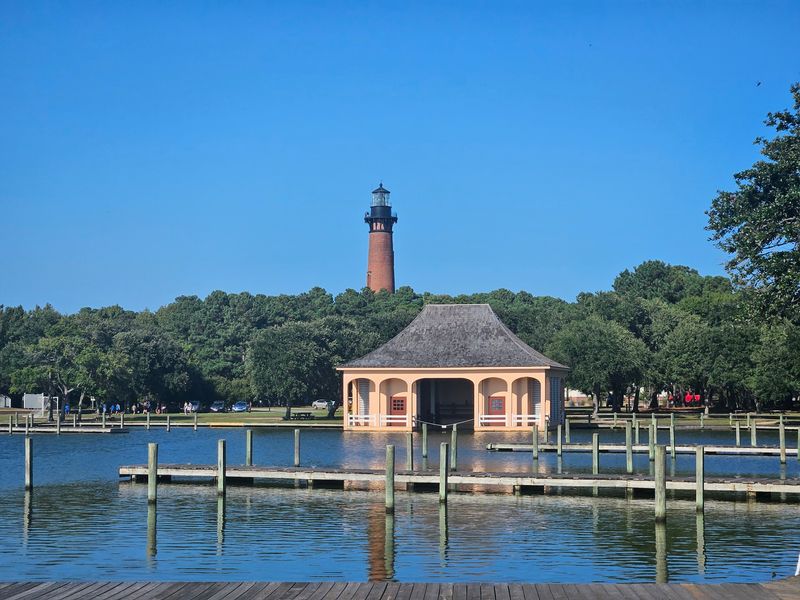
Red brick, never painted, rising 162 feet above the maritime forest: the Currituck Beach Lighthouse has been a landmark since 1875. A short walk from the mansion grounds brings you to its base, close enough that many people do both stops in a single morning.
The climb is 220 steps up a spiral staircase. Landings give you a chance to catch your breath, and the air cools noticeably as you near the top.
From the gallery deck, the view opens in every direction. Currituck Sound spreads west in shades of gray-green, the Atlantic runs east in long white lines of surf, and the rooftops of Corolla village sit below among the live oaks.
Its original first-order Fresnel lens still sits in the lantern room, throwing light as far as 18 nautical miles out to sea. Climbing season generally runs from mid-March through late November, which makes it an easy addition to a spring or fall trip along the coast of North Carolina.
Sturdy shoes help, and a water bottle is worth carrying up. Small children who can handle stairs often count them aloud.
Walk The Waterfront Grounds Before Heading Into Corolla Village
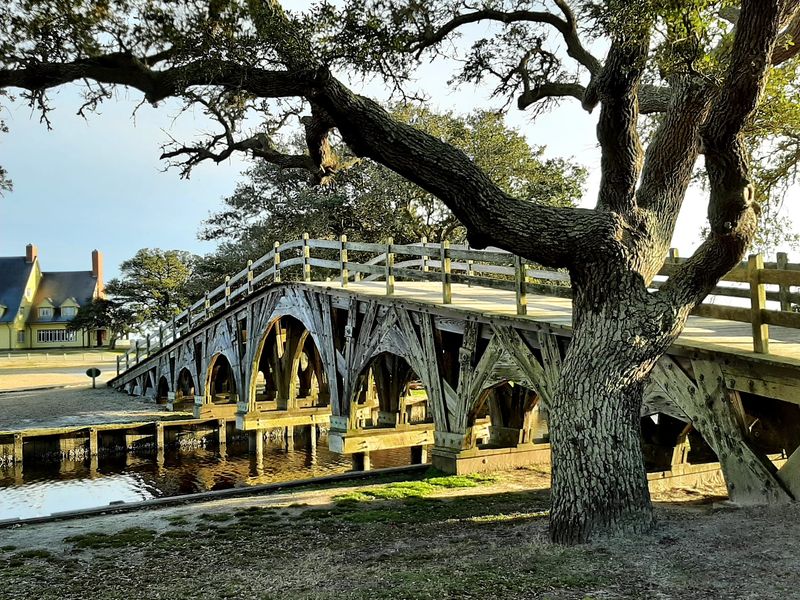
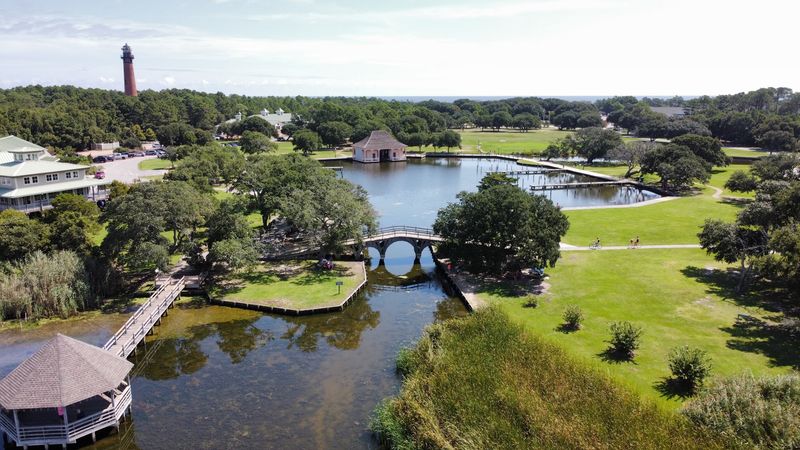
Thirty-nine acres of lawn, pond, and shoreline wrap around the mansion, and walking them costs nothing at all. A footbridge arches over still water where turtles sun themselves on warm afternoons.
The park entrance sits at 1100 Club Road in Corolla, with parking, restrooms, and shaded paths that link to the rest of the historic district.
Down by the sound, the old boathouse still stands beside its canal. Crabbing from the dock is a longtime pastime here, and herons and egrets often work the shallows nearby.
Picnic tables, a playground, and open grass make the grounds easy with kids in tow. A gazebo offers shade if the sun gets strong, and boardwalks connect the lawn to the neighboring museum and lighthouse property.
When you are ready for shops, Corolla Village is a few minutes away on foot or by bike. Small owner-run stores there carry coastal clothing, handmade jewelry, books, and local sweets, and the lanes are shaded by twisted live oaks.
Morning is quiet; late afternoon brings a steady breeze off the water. Either way, comfortable shoes beat sandals on the gravel paths.
See How The Mansion’s Original Owners Spent Their Summers
Marie Louise LeBel Knight had strong opinions about how a house should work, and she helped shape nearly every decision here. She and her husband, Edward, were people of considerable means who wanted a private retreat far from city routines.
Their season on the Outer Banks was the cooler one. The couple used the property as a winter home, arriving when the marshes filled with waterfowl and the beaches emptied of summer crowds.
Comfort mattered as much as scenery. An electric refrigerator, indoor plumbing, a private swimming pool, and a passenger elevator meant that daily life ran smoothly even in a place with few neighbors for miles.
The tour also opens a window on the staff who kept things going. A servant call box and the original electrical panel are pointed out, and the working spaces behind the elegant rooms tell their own story about 1920s household life.
Marie Louise was also an advocate for women’s rights, a detail that adds unexpected depth to a house often described only in terms of its woodwork. Their careful records help explain how the estate ran.
Bring Your Camera For Some Of The Best Soundside Views In Corolla
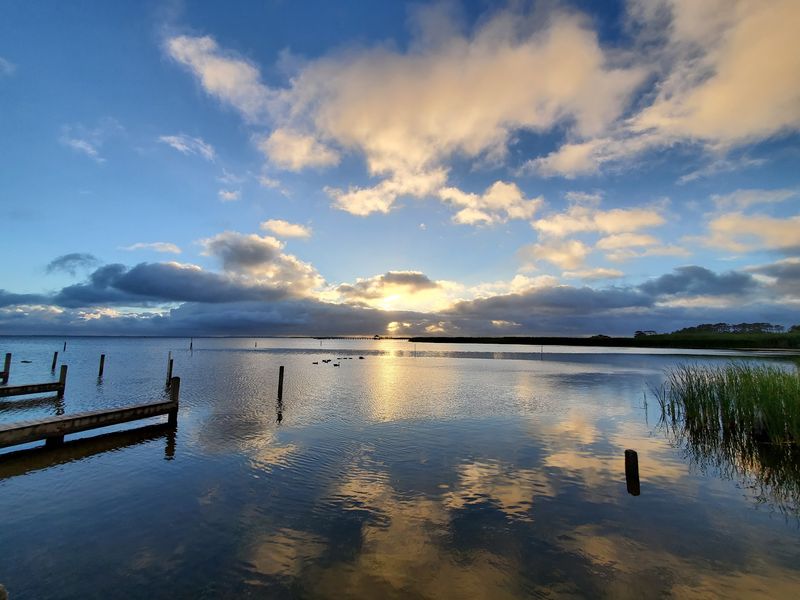
Photographers tend to linger on the soundside lawn, and it is easy to see why once the water goes glassy. Reflections double the reeds along the shoreline, and the low profile of the sound keeps the horizon wide and uncluttered.
Wildlife adds movement to a frame. Great egrets stalk the shallows on stilt legs, blue herons lift off with slow wingbeats, and osprey circle above the maritime forest edge.
A bald eagle turns up now and then over the tree line.
The footbridge works well as a foreground, especially shot low so the arch leads the eye toward the mansion’s yellow walls. The boathouse and canal make a tidier composition, framed by the pilings of the dock.
Remember that cameras stay put away inside the house, so save your storage for the grounds. A polarizing filter helps cut glare off the water, and a longer lens pulls in birds without crowding them.
Overcast days still work, with softer color on the sound.
Sound carries here as well, so listen for the rattle of a kingfisher before you spot it in Corolla’s shoreline brush.
Book A Wild Horse Tour And Head North Onto The Beach
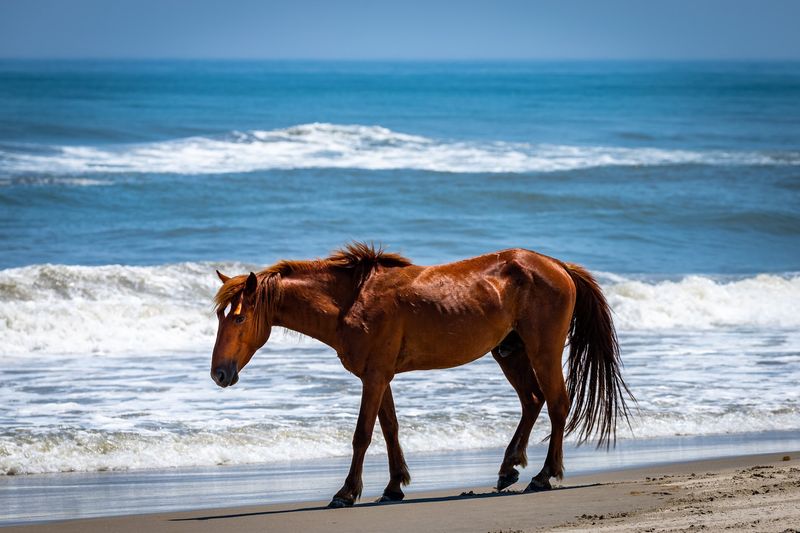
North of Corolla, the paved road simply ends and the beach becomes the highway. Out there, bands of Colonial Spanish Mustangs, often called Banker horses, graze on sea oats and marsh grass with the ocean at their backs.
Guided trips are the practical way to see them. Companies such as Corolla Wild Horse Tours and Wild Horse Adventure Tours run open-air safari trucks and custom Hummers over the sand, usually for about an hour and a half to two hours.
Guides do more than drive. They trace the herd’s bloodlines back to Spanish horses of the 1500s, explain the rules that keep people at a respectful distance, and point out the conservation work that protects these free-roaming herds along the northern beaches of North Carolina.
Expect bumps, wind, and sand in your hair. Sunglasses, a hat with a strap, and a secure hold on your phone all help.
Booking ahead matters in summer, when trucks fill quickly. Morning departures often bring cooler air and calmer wildlife.
Most tours leave from the northern end of Corolla, minutes from the estate.
Turn Three Very Different Outer Banks Experiences Into One Easy Day
Currituck County packs a lot into a small radius. The mansion, the lighthouse, and the wild horse beaches sit within a few miles of each other, so nobody spends the day behind the wheel.
A sensible order starts indoors. Arrive at the estate when doors open at 9 AM, give the rooms about an hour, then walk over for the lighthouse climb while your legs are still fresh.
Lunch fits neatly in the middle. Corolla Village and the nearby shopping areas offer barbecue, seafood baskets, ice cream, and bakery stops, all within a short walk or bike ride of the park.
Afternoon belongs to the horses. Book a tour that returns before dinner and you still have daylight left for the grounds.
Guides usually build in a stop for photos before heading back down the sand.
One practical note: the estate is open Monday through Friday, so weekend travelers should plan the house tour for a weekday and save Saturday for the beach. Calling ahead at 252-453-9040 confirms seasonal hours.
The variety is what makes the hours feel unhurried.
Stay Until Sunset When The Estate Grounds Look Even Better
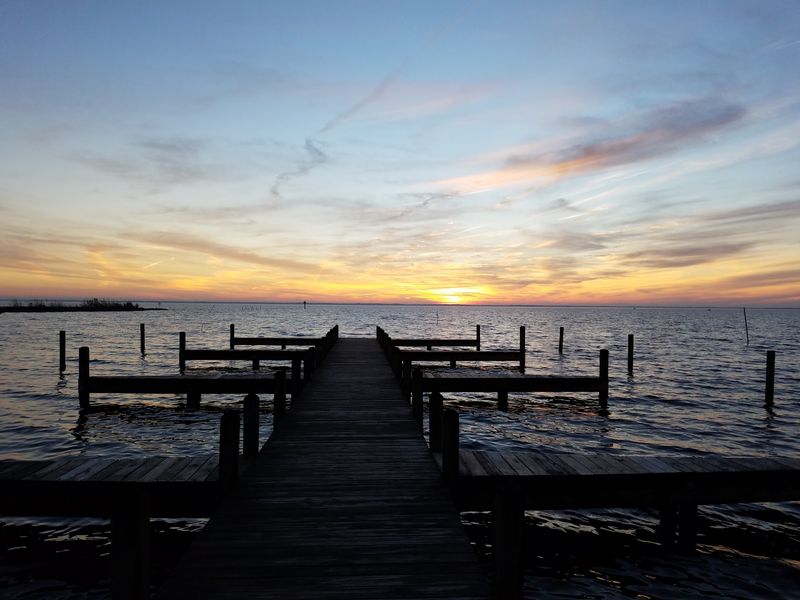
Late light does something specific to this property. The sound turns copper and rose, the mansion’s yellow siding warms toward gold, and the unpainted brick of the lighthouse next door glows a deep red.
Walking trails loop the lawns and lead down to the water. The park at 1100 Club Road stays open past the mansion’s closing time, so the grounds remain yours after the tours end.
Benches and a gazebo give you somewhere to sit while the color changes.
Sounds shift too. Frogs start up in the pond, gulls quiet down, and the breeze off Currituck Sound softens as evening settles in.
The pond mirrors the last of the light until a breeze breaks it apart.
Bring bug spray for still evenings in warmer months, and a light layer for the wind. Families often let kids run the open grass while the sky does its work.
Sunset times shift by more than two hours between June and December, so check before you plan.
Few evenings on the Outer Banks feel as unhurried as one spent watching daylight fade over this corner of North Carolina.