This North Carolina Quarry Lets You Scuba Dive Through A Graveyard Of Sunken Boats And Vehicles
A school bus has no business sitting at the bottom of a quarry.
That is exactly why divers keep wanting to see it.
Beneath one North Carolina lake, the scenery gets stranger the deeper you go.
Familiar shapes slowly appear through the water, except nothing about finding them underwater feels familiar.
The whole place has the energy of a forgotten movie set that somebody accidentally flooded. Then another object comes into view and the mystery resets.
It is equal parts training ground and underwater scavenger hunt.
Just remember, the coolest surprises here come with fins, tanks, and a very healthy respect for planning.
A Sunken School Bus Is Waiting For Divers Beneath The Surface
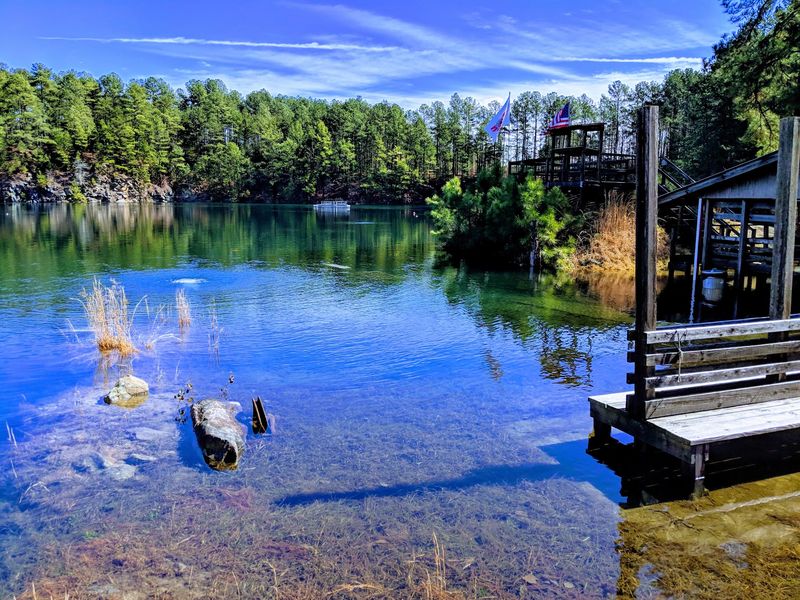
A familiar row of windows looks completely different when bubbles drift past instead of children climbing aboard.
The submerged school bus gives divers a recognizable landmark, with its long body creating a striking shape against the quarry bottom.
RBM Quarry is private PDRA property, so divers must enter as current members, authorized guests, or students using the association’s training-pass system. Approach slowly and keep your fins above the bottom so you do not stir sediment across those windows.
Older dive reports cited visibility around 15 to 30 feet, but current conditions can vary substantially with weather, water conditions, and activity in the quarry.
Enjoy the bus from outside rather than treating its openings as an invitation to enter.
Submerged vehicles can have sharp edges, narrow spaces, and loose material, so any interior or overhead exploration should remain within your training and current site rules.
For a memorable photograph, let your buddy hover beside the exterior while you leave room around the frame.
The contrast between everyday transportation and quiet freshwater surroundings supplies the surprise, so there is no need to touch, climb on, or disturb the attraction.
The quarry is based at 350 Greenbay Road, Mooresville, NC 28117.
An Airplane Joins The Underwater Graveyard Of Unexpected Wrecks
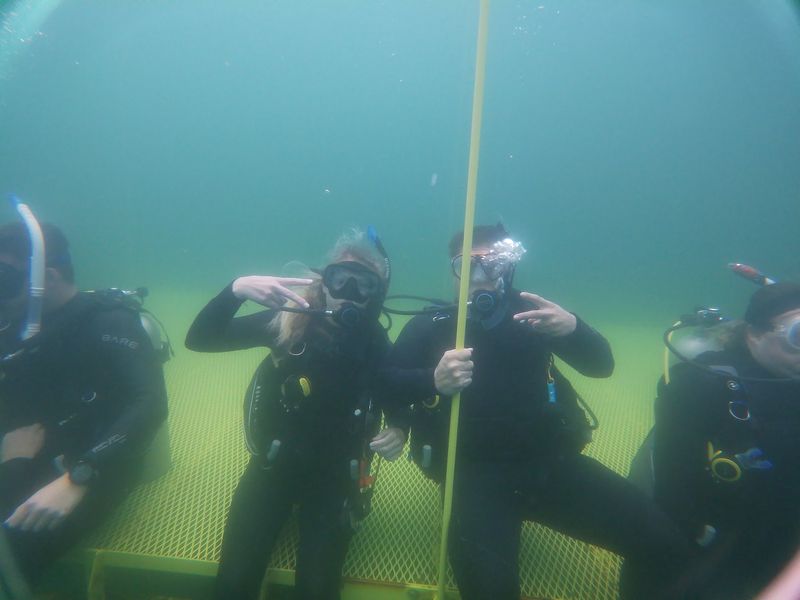
Wings belong in the sky, which makes their appearance underwater especially surprising.
An airplane is among the quarry’s reported attractions, adding a different outline to a landscape already filled with objects that seem far from home.
Rather than guessing its model or former job, appreciate the parts you can actually observe.
The fuselage and wings offer useful visual reference points, and looking from several safe angles can reveal how differently an aircraft reads beneath the water. Ask for the current attraction map or a site briefing before planning your route.
Knowing the aircraft’s position and depth helps you decide whether it fits your training, available air, and planned return path.
Finding a wreck should never become more important than staying within your limits.
A buddy photograph works best when everyone agrees on the setup before descending. Keep clear of openings and avoid settling onto any part of the structure, even if it appears solid.
Underwater light changes color and contrast, so a broad view may tell the story better than a close detail.
Pause, watch your bubbles rise, and take in the strange pairing of aviation and freshwater scenery before moving onward at a relaxed pace with your buddy beside you.
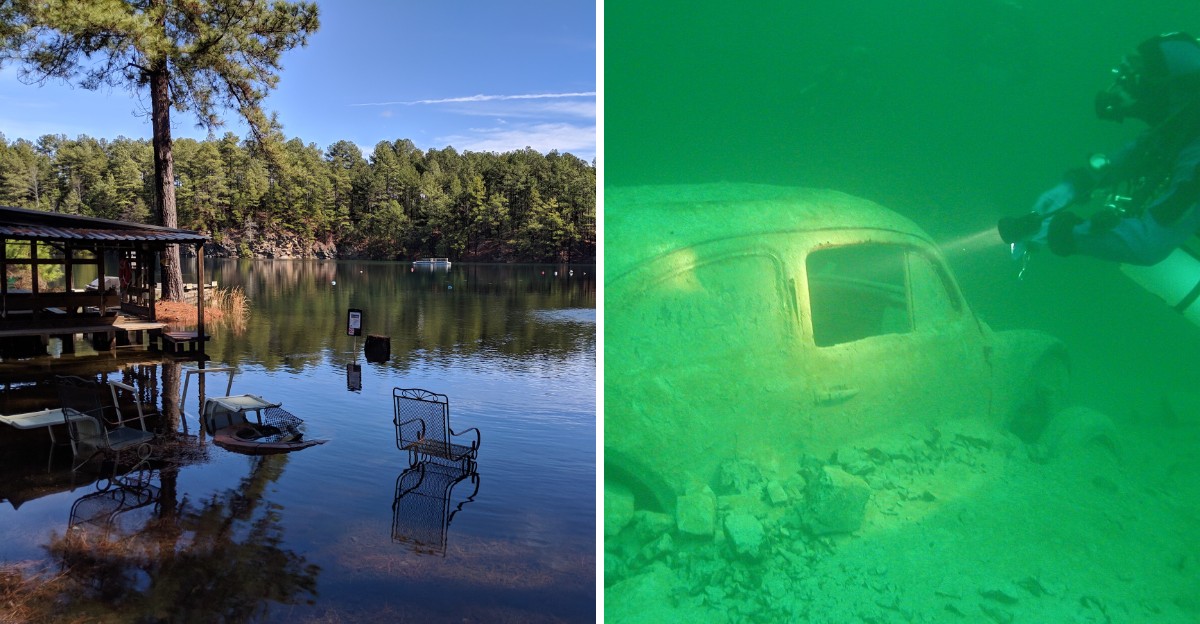
Cars And A Crane Truck Turn Every Descent Into A Treasure Hunt
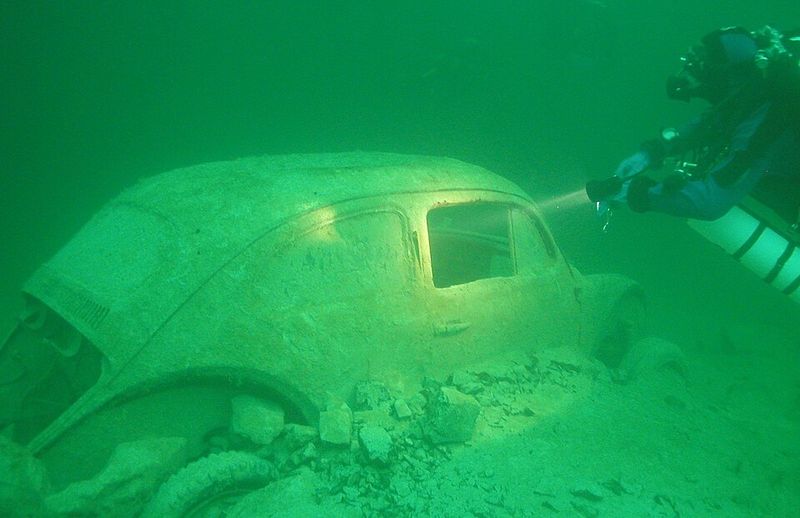
A wheel or roofline emerging from the haze can turn a routine swim into a small discovery.
The quarry map identifies several submerged vehicles, including cars and a crane truck, giving divers another reason to slow down and look carefully.
For a North Carolina diving outing with a playful twist, these objects offer recognizable shapes rather than distant scenery alone.
However, the treasure hunt is about finding and observing attractions, not collecting pieces or moving anything from its resting place. Choose a manageable route with your buddy before entering the water.
Ask which vehicles are currently accessible, how they connect to other landmarks, and whether any navigation lines or markers have changed since reopening.
An older photograph or map may not reflect present conditions.
As you approach, use small fin movements and keep enough space to turn without brushing the vehicle.
Details such as window frames and body panels can become harder to see quickly if sediment rises around them.
There is no prize for seeing everything during one descent.
Picking one or two targets leaves more attention for buoyancy, air checks, and the return journey, while giving each discovery time to feel special rather than becoming another hurried stop on an overly ambitious underwater checklist today.
A Sailboat, A Cruiser And Other Boats Sit On The Quarry Floor
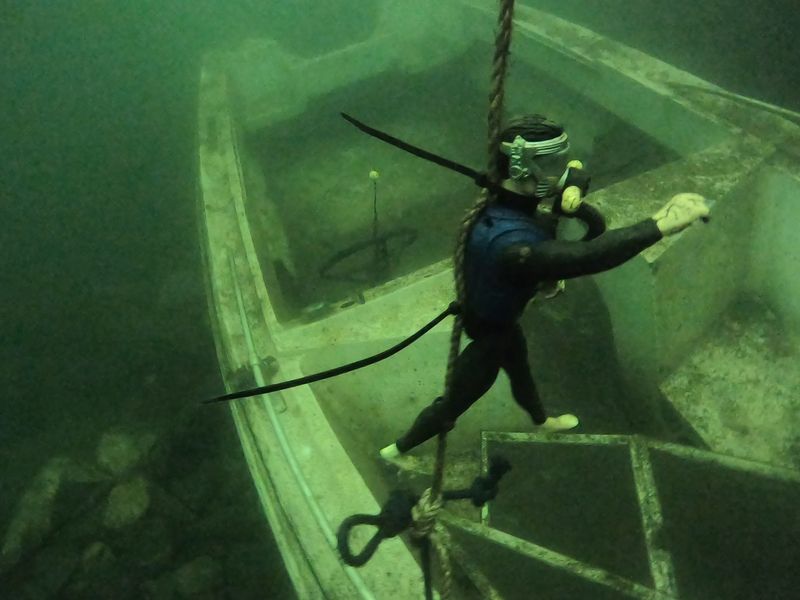
Boats usually invite thoughts of sunlight and rippling wakes, but here the view comes from beneath them.
A sailboat, a cruiser, and numerous other boats are mapped among the quarry’s submerged attractions, bringing several different hull shapes into the underwater landscape. Comparing those shapes gives a dive a simple theme.
Notice how a narrow sailing hull differs from a broader powered vessel, then look at the way openings and cabin structures break up each outline.
The cruiser sits in roughly 90-plus feet of water, so the boats should not all be treated as beginner destinations.
Confirm each target’s current depth during your briefing and choose only those that match your certification, experience, and conditions.
Stay outside cabins and avoid passing beneath structures that could block a direct ascent.
Even a small boat can create an overhead environment, where ordinary open water training is not enough for safe entry.
A slower circuit around an accessible hull often offers more than a rushed attempt to reach another wreck.
Watch the light fade across the surface, leave surrounding sediment untouched, and remember that the most satisfying route is one you can complete comfortably with enough air and time for a controlled return to the exit.
Dive Platforms Make This A Serious Training Ground For New Scuba Divers
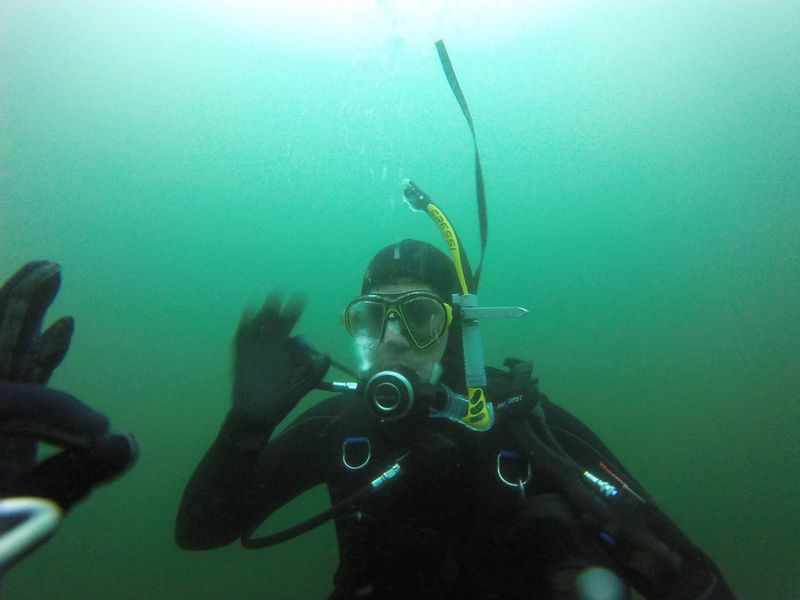
Learning to stay still underwater can be harder than swimming forward.
Training platforms give instructors and students a defined place to work on skills while keeping the session focused on practice rather than sightseeing.
At this North Carolina quarry, the platforms are part of the appeal for developing divers.
An instructor can use an appropriate training area for mask clearing, equipment checks, and buoyancy exercises, choosing activities that suit the course and that day’s conditions.
A quarry is still an open water environment, not a swimming pool with guaranteed comfort. Visibility, temperature, depth, and other divers can affect a lesson, so beginners should enter through a recognized training program rather than attempting to teach themselves.
Ask your instructor what exposure protection to bring and whether equipment rental must be arranged elsewhere.
Confirm membership or guest access requirements before traveling, since a training booking should not be assumed to cover every entry rule.
Between exercises, notice how breathing and small adjustments affect your position above the platform.
That quiet progress is worth celebrating: control learned here supports future dives around the bus, aircraft, and boats without kicking up sediment or crowding a buddy, making later exploration calmer, clearer, and more enjoyable for everyone sharing the water.
Some Of The Deepest Attractions Send Experienced Divers Far Below The Surface
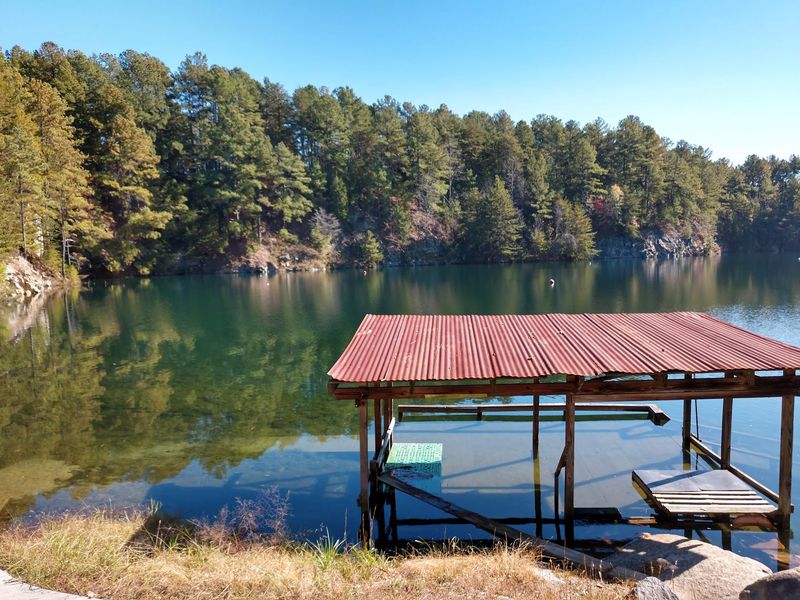
Depth changes more than the scenery: it changes how a dive must be planned.
Reports place some quarry attractions around 90 feet or deeper, where shorter allowable bottom times and greater air use demand careful attention.
The deep cruiser illustrates why experience matters at depths around 90 feet and beyond.
Reaching it is not simply a longer version of visiting a shallow platform, and the trip should fit your training rather than stretch it. Cold can also become a deciding factor during deeper exploration.
Historical reports describe bottom temperatures around 45 to 46 degrees Fahrenheit, but conditions may differ, so ask for recent information instead of packing around a single old reading.
Select exposure protection with guidance from an instructor or qualified dive professional.
Agree on maximum depth, turnaround pressure, time limits, and emergency procedures before entering.
Each diver should understand the plan, monitor their own computer, and remain ready to cancel the deeper portion if visibility or comfort falls short.
There is nothing disappointing about choosing a shallower attraction instead.
Good judgment keeps the outing enjoyable, while a controlled ascent and any required stops deserve the same attention as the wreck itself; the goal is a complete, comfortable dive, not merely a number on a screen.
Years After Closing, Divers Can Finally Explore This Underwater Playground Again
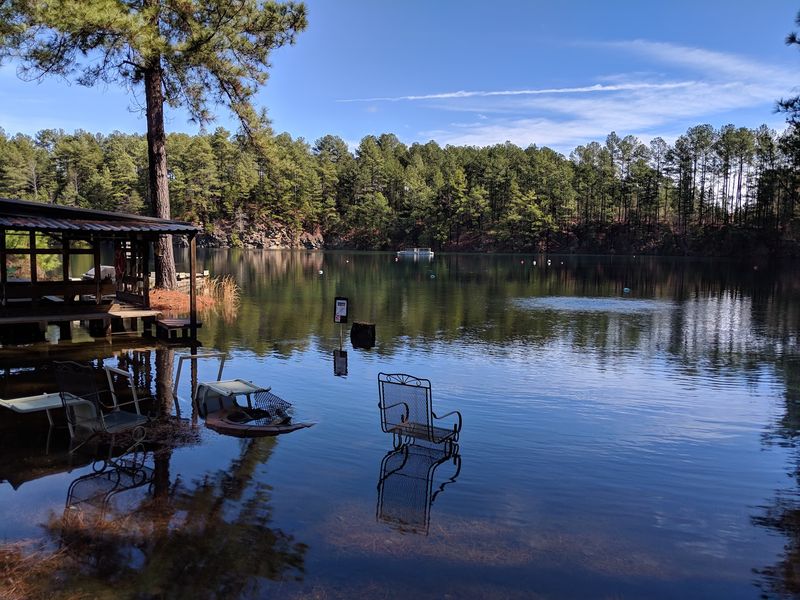
Returning to a favorite dive site means more when the gates have stayed closed for an extended period.
PDRA reopened RBM Quarry to members on May 2, 2026, following its zebra mussel closure.
That date marks a return to access, not permission to ignore current rules.
Before making the drive, confirm the association’s latest membership requirements, guest arrangements, entry procedures, and any restrictions affecting the attractions you hope to visit.
Zebra mussels are invasive freshwater animals that can spread between waterways on equipment.
The closure makes cleaning responsibilities especially relevant, and divers should follow PDRA’s current instructions rather than rely on a general rinse or an old routine.
Ask how gear must be cleaned, drained, and dried before arrival and after leaving.
Include items that hold water, not just the equipment that is easiest to see, and never move quarry water or aquatic life to another site.
Build extra preparation time into your outing so those steps do not become a hurried afterthought.
Reopening is an invitation to enjoy the submerged collection responsibly, with each visitor helping protect access and the freshwater surroundings that make this unusual diving destination worth returning to again and again.
Why This Former Rock Quarry Feels Like A Museum Built Entirely Underwater
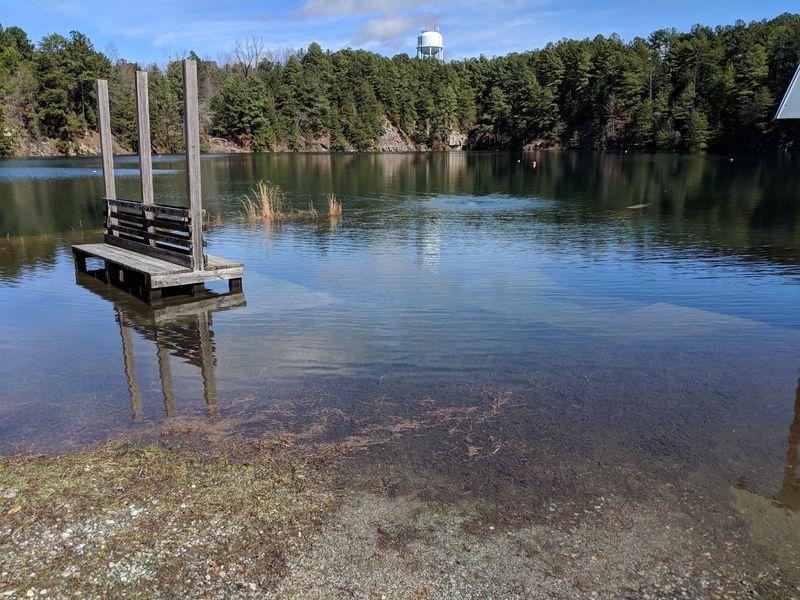
Instead of walking past display cases, visitors float beside objects that once belonged above the surface.
The former rock quarry brings transportation shapes into one freshwater setting, making the museum comparison feel natural without pretending these attractions share a documented history.
In North Carolina, RBM Quarry offers a distinctive way to observe familiar objects from unfamiliar angles.
A bus window, an aircraft wing, or a boat hull becomes part of a changing scene shaped by light, depth, and visibility.
Fish add movement to that otherwise still collection.
PDRA reported live fish after the zebra-mussel treatment, although individual species sightings are never guaranteed and should be enjoyed without feeding, chasing, or handling the animals.
Leave every attraction as you found it and follow the quarry’s rules protecting aquatic life.
The most useful souvenir is a photograph or a careful dive log recording your route, conditions, and the details you noticed.
After surfacing, dry off and give yourself time to reflect before packing away clean equipment.
What makes the place memorable is not a polished exhibit label or a dramatic story, but the simple sight of ordinary objects resting in an extraordinary setting, with bubbles rising past them and living fish carrying on their own quiet journeys.