This 17-Foot-High North Carolina Skywalk Turns Into A Glowing Light Tunnel After Dark

Seventeen feet does not sound very high until the sidewalk suddenly decides to climb into the trees.
By day, this elevated walkway gives a North Carolina park an unexpected little dose of adventure without requiring hiking boots or heroic calves.
Then sunset flips the switch.
Glowing rings light up around the path and turn an ordinary stroll into something that looks suspiciously like a portal with excellent landscaping. Kids speed ahead.
Adults slow down for photos. Nobody is treating it like a simple shortcut anymore.
That is the trick here. You arrive thinking you are crossing the park.
A few minutes later, you are walking through a glowing tunnel above the ground and wondering why every pedestrian bridge does not put in this much effort.
Come after dark. The walkway clearly saves its best outfit for nighttime.
A 17-Foot Rise Completely Changes The Way The Park Feels
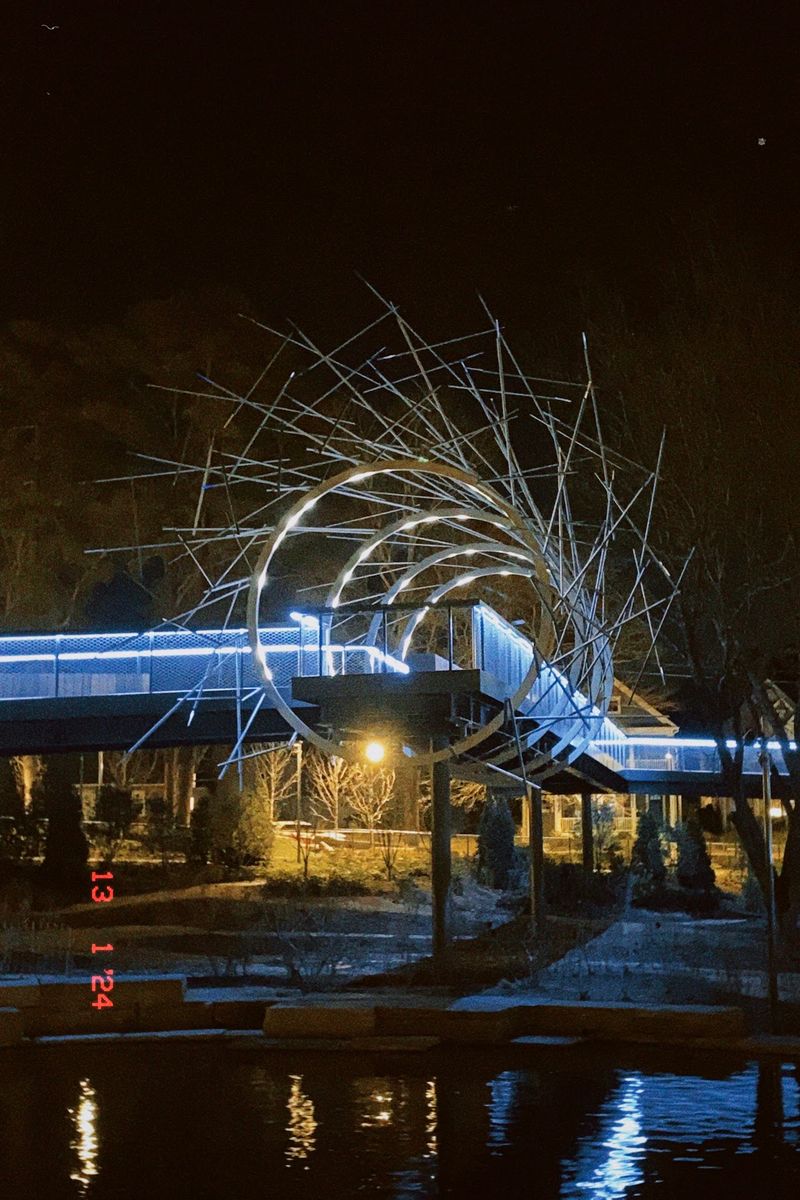
Climbing above ground level does something surprising to a familiar park. Rising 17 feet into the leafy canopy, the elevated walkway carries you into a layer of Downtown Cary Park most people never reach.
Visitors find the park at 327 S Academy St, Cary, North Carolina, where the walkway stretches 471 feet through the treetops.
Sturdy railings frame the path, and benches appear at intervals so you can sit and listen to leaves rustling above the chatter drifting up from below. Branches that once towered over you now sit at eye level.
Even a short pause up there feels restful, with the treetops swaying and the pond glinting somewhere beyond the railing.
Sunlight filters through in shifting patches, and the whole park reorganizes itself into a map of curving paths, lawns, and gardens. Younger walkers often race ahead to peer down at the pond, while grown-ups slow their pace to take in the wider view.
The rise is gentle enough for strollers and easygoing walkers, so nobody has to work hard to reach that new perspective.
After Dark, The Glowing Tunnel Becomes The Part Everyone Talks About
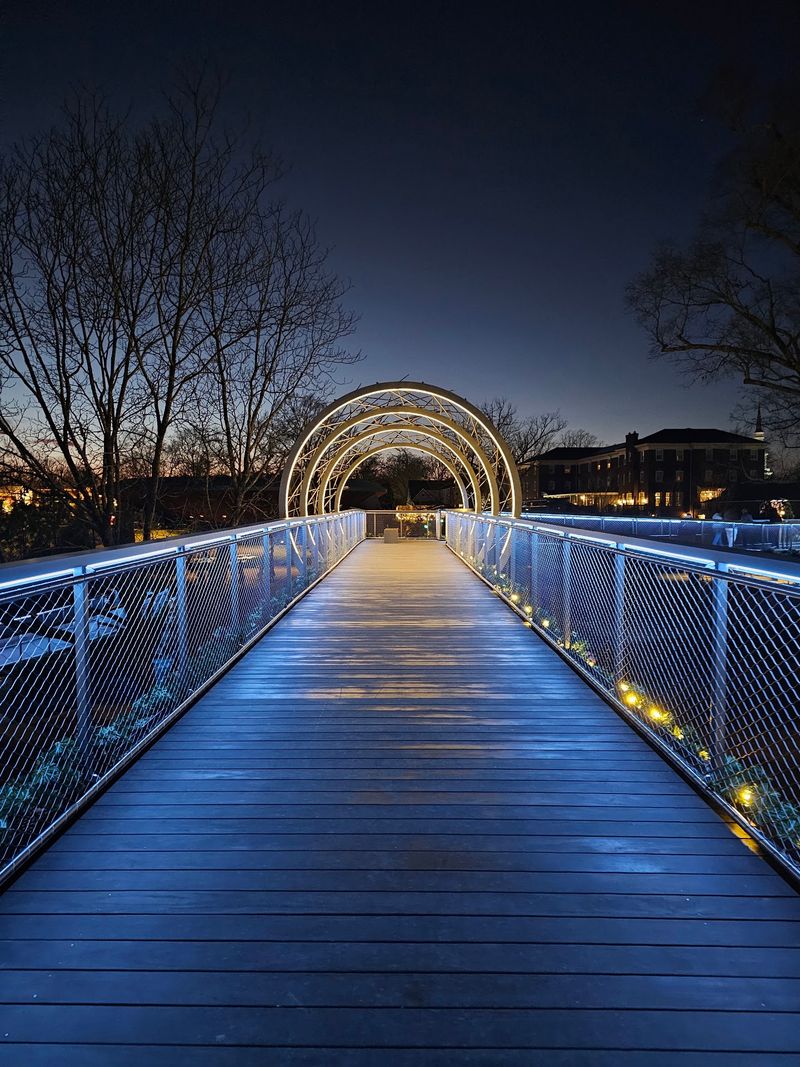
Sunset flips a switch on the whole experience. Daylight has its charms, but the evening version is the one that pulls crowds.
Artists Laura Haddad and Tom Drugan created the public art installation known as Light Passage, which wraps portions of the walkway in four large rings.
Programmable LED channels run inside those rings, sending color across the deck in slow waves and quick bursts. Between the rings, a spinning matrix of pipes fills the open space, a shape the artists drew from tree branches and bird nests.
Prisms finish the effect, scattering bright spectrums onto the sculpture and across the path under your shoes.
Look down and the show doubles: the circular stormwater pond below catches every color and stretches the display into something that seems twice as big.
Walking through feels a little like stepping inside a kaleidoscope that keeps rearranging itself. Kids tend to spin in circles chasing the shifting hues, while quieter visitors simply lean on the rail and watch the sequences repeat.
No two passes look quite the same.
Daylight Shows Off The Design, But Night Is When It Really Comes Alive
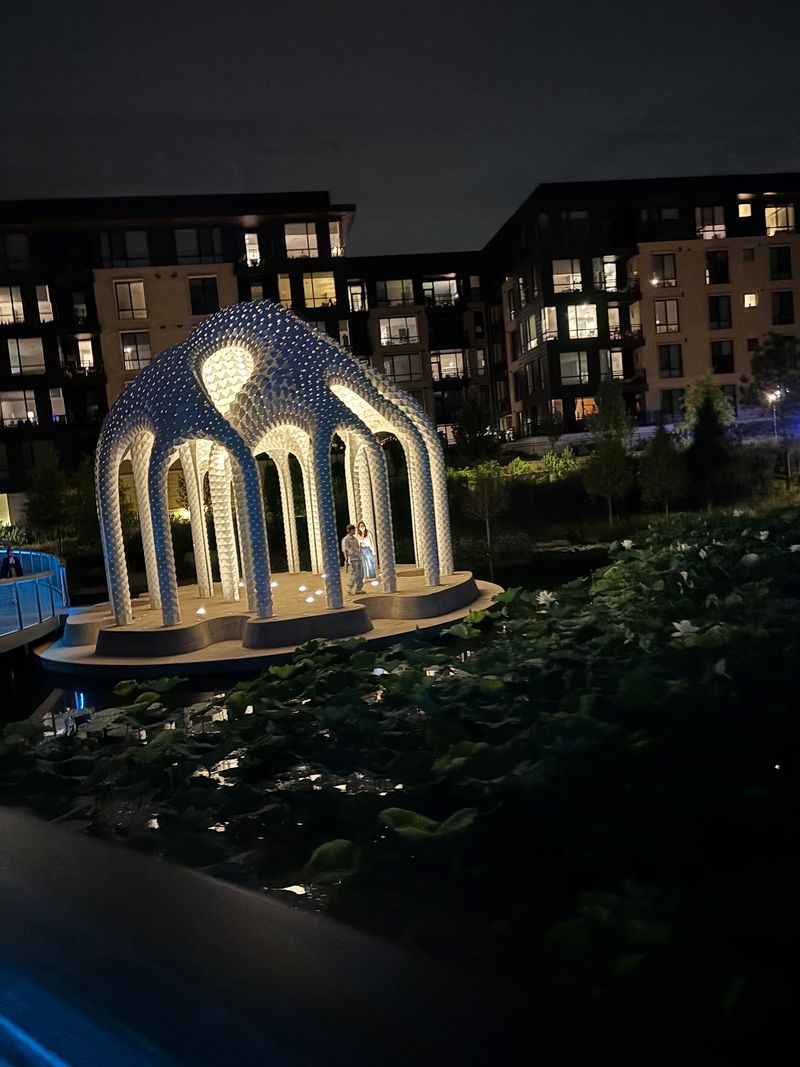
Two very different visits hide inside one structure. Daytime walkers who arrive at 327 S Academy St, Cary, North Carolina, will notice how the Light Passage sculpture catches sunshine, throwing soft patterns that shift whenever clouds pass overhead.
Steel, glass, and open sky do most of the work in those hours.
Evening rewrites everything. As the LEDs power up, the pedestrian bridge turns into a beacon visible from the lawns below, and the geometry that looked structural at noon suddenly looks theatrical.
Reflections start creeping across the pond, and the trees turn into silhouettes framing the rings.
The park keeps generous hours, open daily from 7 AM to 11 PM, so seeing both versions in a single trip is easy.
A smart plan is to arrive an hour before sunset, walk the length once in daylight, grab a seat by the pond, then head back up as the colors begin.
That order gives you the engineering first and the artistry second. You leave with a fuller sense of how carefully the two were stitched together.
Your Walk Above The Ground Comes With A Very Different View Of The Park

Entry from Walker Street sets the tone right away, since the climb begins before you even notice you are leaving the ground. From up here, Downtown Cary Park unfolds in pieces you might otherwise walk right past.
The Barkyard, the park’s dog area, becomes a small stage of wagging tails and quick laps. Off in the water, Willow Isle floats like a green raft, its branches trailing toward the surface of the pond.
Benches nearby make it easy to watch both at once.
Engineers routed the 471-foot structure carefully so its supports stay clear of the critical root zones belonging to the older trees.
That choice explains the walkway’s gentle curves, which bend around trunks instead of cutting through them.
Sounds change too. Conversations soften, birdsong sits closer, and the hum of downtown slips into the background.
Bring a water bottle on warm afternoons, since shade comes and goes as the canopy thins. Pause at one of the benches and the park feels less like a place to cross and more like a place to study slowly.
Photos Turn Out Especially Good Once The Lights Start Kicking In
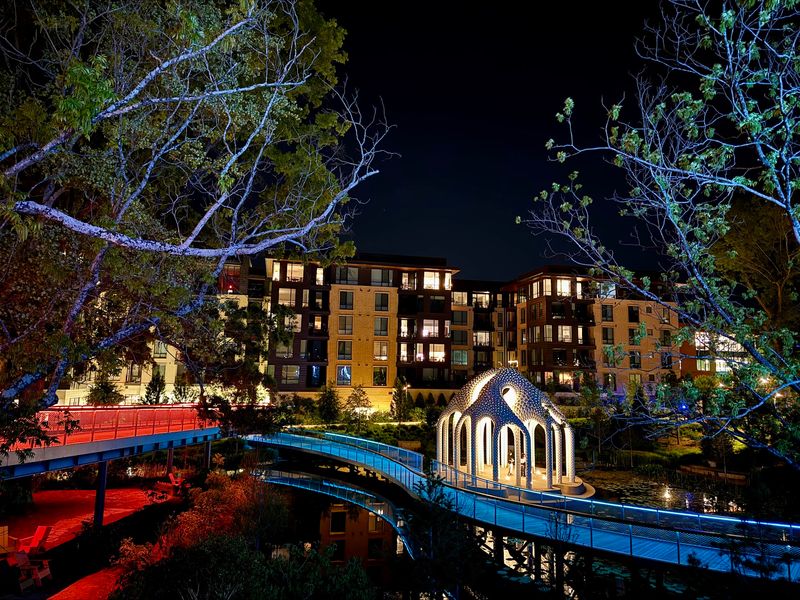
Camera batteries get a workout here. Tripods are not required, though a small one helps.
The best window opens during blue hour, when the sky still holds a deep navy glow and the LED channels are already running full color.
Shoot from the lower path first and let the circular stormwater pond do the heavy lifting, since its surface mirrors the rings and doubles every hue.
Then climb up and frame a shot straight down the tunnel, where the repeating arcs create natural leading lines.
A few practical notes help. Steady your phone on the railing instead of holding it midair, switch on night mode, and give the sequence a few seconds to change before you tap.
Wide shots capture the whole sculpture; close crops catch prism spectrums landing on the deck.
Portraits work beautifully too, with color washing across faces in shades that change every few moments. Arrive on a still evening if you can, because calm water makes the reflection sharper.
Patience pays off, since the lighting cycles continue.
A Quick Stroll Somehow Feels More Like An Attraction Than A Pathway
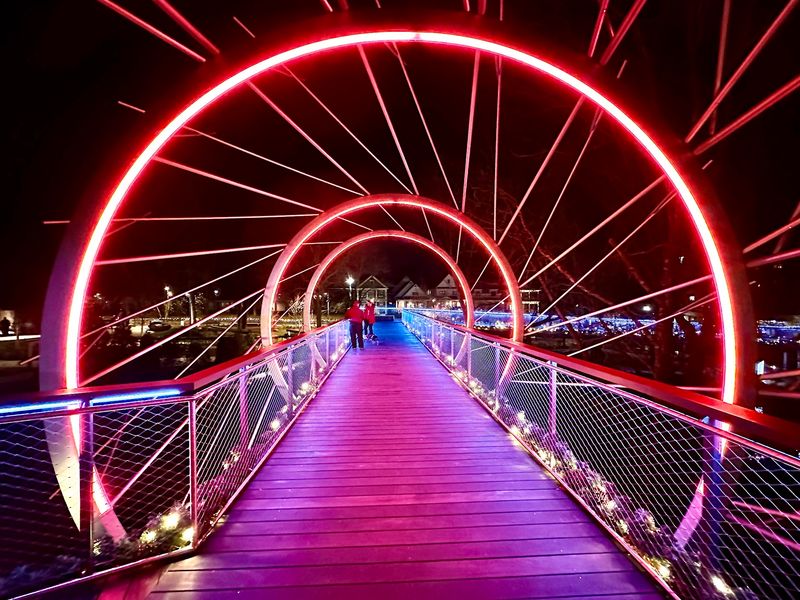
Grand opening day arrived in November 2023, and the elevated path immediately became more than a shortcut. Word spread quickly.
Plenty of bridges move people; this one asks them to linger.
Part of that comes from height, part from the art, and part from the simple novelty of standing level with the branches. Visitors often walk the full 471 feet, turn around, and do it again just to catch a different lighting sequence.
Others pause halfway, resting on a bench while the canopy rustles overhead.
Fun detail: the structure is a walkway and a sculpture at the same time, so the handrail you touch is part of the artwork’s setting. It also gives the park a landmark that looks different every hour.
Few pedestrian paths in North Carolina can claim that.
The route is flat once you are up, easy on knees, and short enough for a quick outing. Ten minutes covers it at a relaxed pace, though most people stay far longer, and the stroll quietly becomes the reason you came.
Families, Couples, And Evening Walkers All Seem To End Up Here Eventually
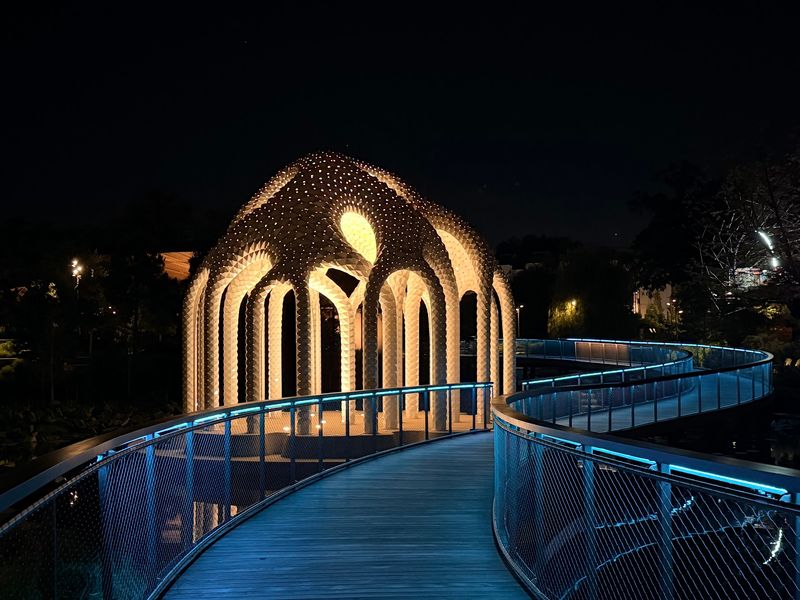
Different visitors, same magnetic pull. Reaching the walkway from 327 S Academy Street in downtown Cary takes only a few minutes on foot, so families often roll strollers up the ramp while children point at every color change.
Couples slow their steps along the illuminated deck, where the glow softens everything it touches.
Evening walkers treat the loop as part of a routine, climbing above the crowds for a quieter lap before heading home. Dog owners often pair it with a stop at the Barkyard below.
Photographers claim spots near the rings, tripods folded under one arm, waiting for the sequence they like best.
Because the deck stays open until 11 PM, late arrivals still get the full show. Benches give older visitors and tired little ones a place to rest without leaving the view behind.
Cool fall evenings bring sweater weather and unusually clear reflections.
Weekends bring more company, so a weeknight visit feels calmer. Parking nearby fills fastest on Friday nights.
One Visit After Sunset Is Usually Enough To Put This Spot On Your Repeat List
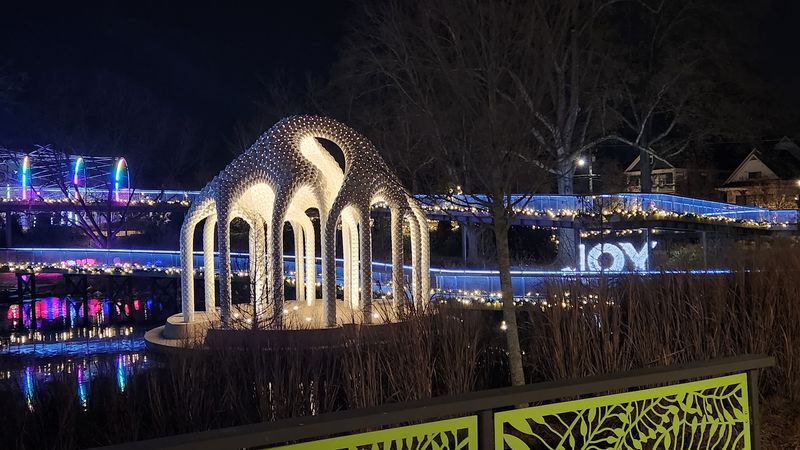
Something about that first walk after sunset sticks with you. Maybe it is the height, maybe the way prism colors slide across the deck, or maybe the pond doubling everything below.
Repeat visitors notice details they missed: a new sequence in the rings, the shape of the pipe matrix against a dark sky, the reflection breaking apart when a breeze crosses the water.
Kids invent games around the changing colors, and the same route feels new each time.
Seasons shift the mood as well. Bare winter branches let more light escape into the park, while summer leaves press close and make the tunnel feel snug.
Holiday evenings draw a livelier crowd, and quiet weeknights offer near-solitude.
Plan around 20 minutes if you only want the highlights, or an hour if you like to sit and watch. Pair the trip with a walk through the gardens or a stop by Willow Isle for a fuller evening.
Among all the outdoor stops in North Carolina, this one keeps pulling people back.