This North Carolina WWII Relic Tells Incredible Stories
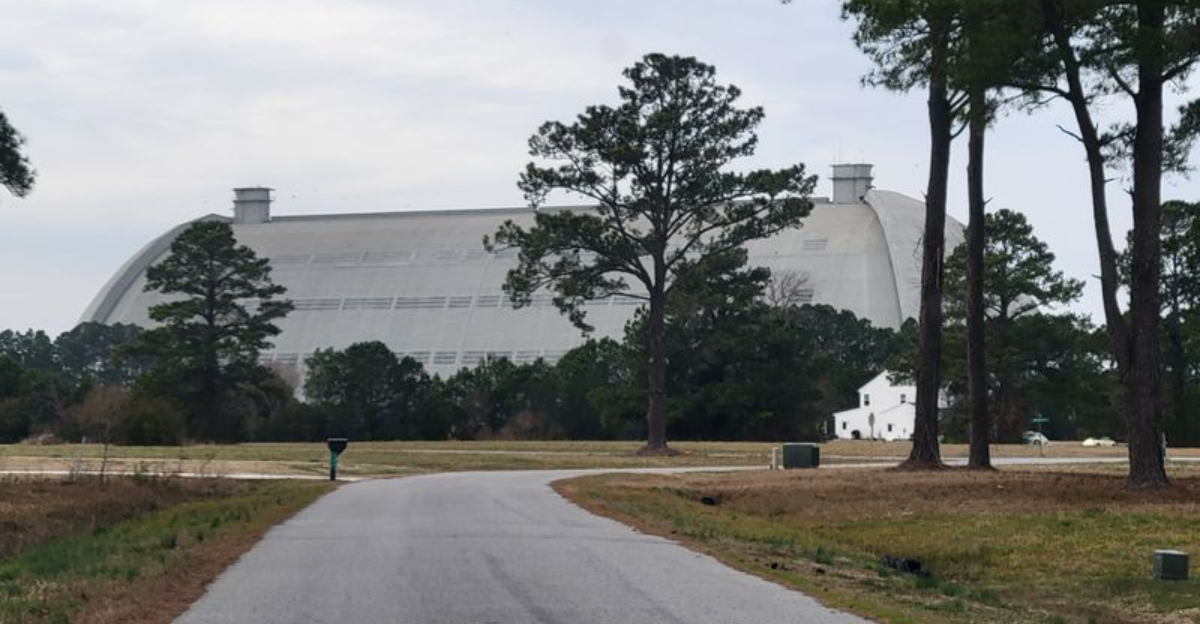
Picture a steel giant rising from the Carolina flatlands, its massive frame stretching nearly a thousand feet across the horizon. Where horses graze peacefully nearby and coastal winds sweep through open fields, an enormous monument to wartime innovation stands watch over Elizabeth City.
This is the Weeksville Dirigible Hangar, a colossal structure that once sheltered Navy blimps hunting enemy submarines along the Atlantic coast. Located at 173 T Com Dr, Elizabeth City, this architectural marvel has witnessed decades of history, from desperate wartime patrols to cutting-edge aerospace experiments.
When North Carolina keeps secrets this big, you can see them from nearly fifty miles away. The hangar’s towering presence dominates the landscape like a cathedral of steel, its cavernous interior once echoing with the hum of dirigible engines and the urgent voices of sailors defending American waters.
Today, this remarkable survivor continues serving national defense while offering glimpses into a fascinating chapter of American military history that most people never knew existed.
1. A Monument Built For War
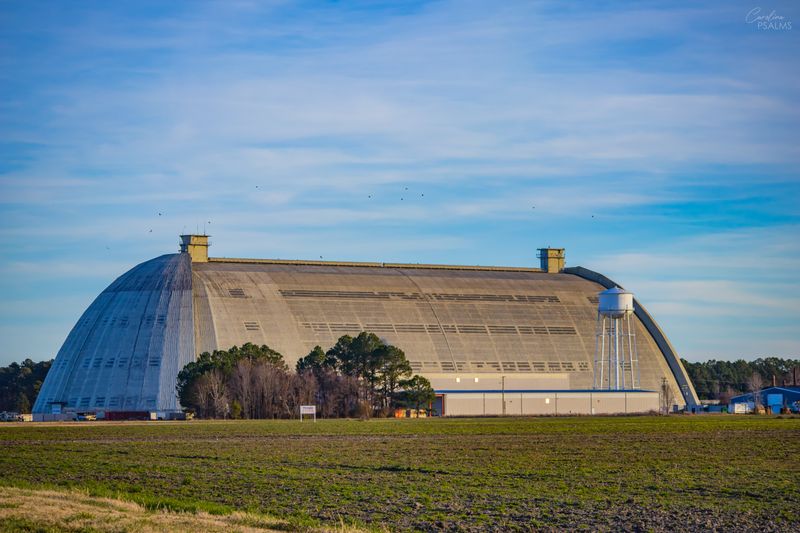
Construction crews worked around the clock between 1941 and 1942, racing against time as German U-boats prowled American waters. The Navy needed a shelter for its anti-submarine blimps, and they needed it fast.
What emerged from the coastal plains near Elizabeth City became one of the largest steel structures ever built.
The finished hangar measured an astonishing 960 feet in length, 328 feet in width, and towered 190 feet above the ground. Engineers designed the massive arched roof to withstand fierce coastal storms while protecting delicate airships inside.
The steel framework required thousands of tons of material during a period when every ounce of metal was precious.
Workers faced incredible challenges building such an enormous structure in rural North Carolina. The remote location meant transporting massive steel beams and construction equipment across difficult terrain.
Despite these obstacles, the hangar rose from empty fields in record time, ready to house the blimps that would defend America’s eastern coastline from underwater threats lurking just offshore.
2. Hunting U-Boats From The Sky

German submarines terrorized merchant shipping along the Atlantic coast during the war’s early years, sinking vessels within sight of American beaches. The Navy turned to an unexpected weapon: lighter-than-air patrol craft that could hover for hours, scanning the waves below.
Up to twelve K-class blimps called the Weeksville hangar home during the war’s darkest days.
These airships carried depth charges, radio equipment, and sharp-eyed crews who spent endless hours searching for periscope wakes and oil slicks. When they spotted a U-boat, radiomen would transmit coordinates to nearby aircraft and destroyers.
The blimps themselves rarely attacked directly, but their presence forced submarines to stay submerged, limiting their effectiveness.
Crews endured cramped conditions, mechanical failures, and dangerous weather during their patrols. One reviewer’s uncle served as a radioman on these dirigibles, hunting U-boats from the sky while stationed just twenty-three miles from his family farm.
His stories captured the tension of spotting enemy submarines and calling in planes to eliminate the threats lurking beneath American waters.
3. The Wooden Giant That Followed
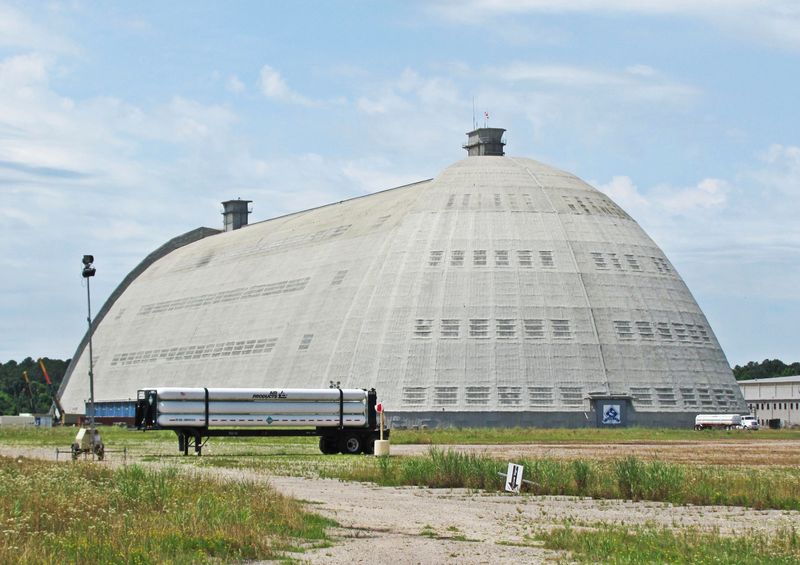
Steel became so scarce by 1943 that the Navy made a bold decision: build a second hangar entirely from wood. Architects and engineers designed what became one of the largest wooden structures on Earth, using timber instead of precious metal needed for ships and weapons.
The wooden hangar rose beside its steel sibling, equally impressive in size and ambition.
Carpenters and construction teams assembled massive timber beams into soaring arches that rivaled the original structure. The wooden hangar could accommodate even more aircraft than its predecessor, maximizing the base’s capacity to launch submarine-hunting patrols.
Its construction demonstrated American ingenuity and adaptability during wartime resource shortages.
For over fifty years, both hangars stood side by side, landmarks visible across the flat coastal landscape. The wooden structure survived hurricanes, harsh weather, and decades of use before tragedy struck in 1995.
Despite its eventual fate, the wooden hangar represented a remarkable engineering achievement, proving that necessity truly mothers invention when a nation fights for survival against determined enemies threatening its shores.
4. The Day Fire Consumed History
August 3, 1995, started as an ordinary summer day at the facility. A welder was performing routine maintenance inside the massive wooden hangar when sparks from his torch found something flammable.
Within minutes, flames raced through the timber structure that had stood for over half a century.
The fire grew so intense that witnesses reported seeing the glow from nearly fifty miles away. Firefighters arrived quickly but could only watch as the enormous wooden structure became an inferno.
The hangar’s massive size and wooden construction created perfect conditions for a catastrophic blaze that consumed decades of history in a single afternoon.
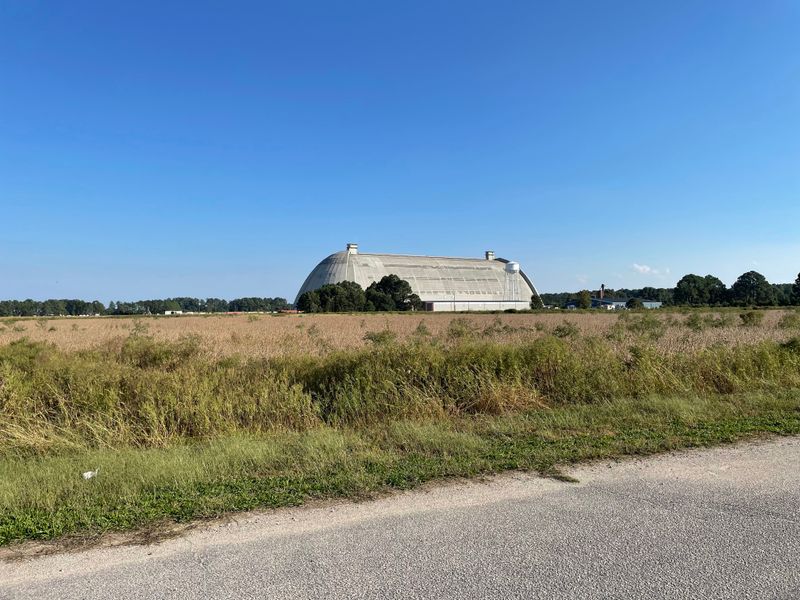
One reviewer mentioned seeing the corners of the burned hangar still standing, skeletal reminders of what once existed. The steel hangar survived unscathed, but the loss of its wooden companion removed an irreplaceable piece of World War II architecture.
The fire eliminated one of the world’s largest wooden buildings, leaving only memories, photographs, and the determination to preserve the remaining steel structure for future generations who deserve to understand this remarkable chapter of American military history.
5. NASA’s Satellite Testing Ground
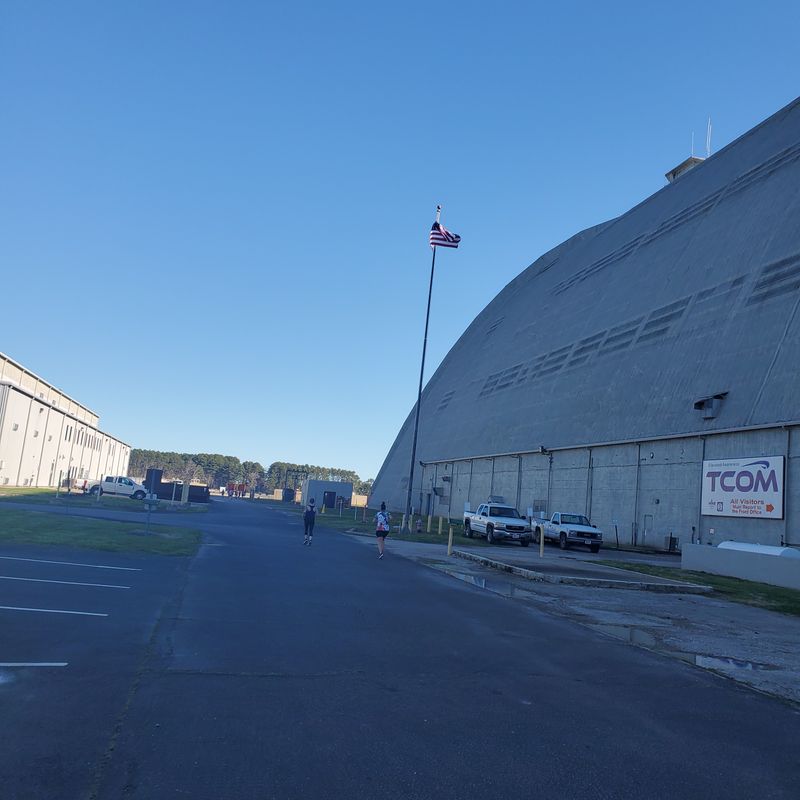
After the Navy decommissioned the base in 1957, the massive hangar found new purpose in the space age. NASA scientists recognized that the enormous enclosed space offered perfect conditions for testing experimental equipment.
In 1959, they arrived at Weeksville to work on Project Echo, one of America’s first communications satellites.
The hangar’s vast interior provided a controlled environment for inflating and testing the balloon satellite before launch. Engineers could examine the delicate material away from wind and weather, ensuring everything functioned properly before risking an expensive rocket launch.
The same building that once sheltered submarine-hunting blimps now protected cutting-edge space technology.
Project Echo succeeded beyond expectations, bouncing radio signals across continents and proving that satellite communications could work. The Weeksville hangar played a quiet but important role in this achievement, demonstrating how military facilities could transition to peaceful scientific purposes.
This period in the hangar’s history often gets overlooked, but it represents an important bridge between World War II defense needs and Cold War space exploration that defined America’s technological progress through the mid-twentieth century.
6. Modern Military Airship Production
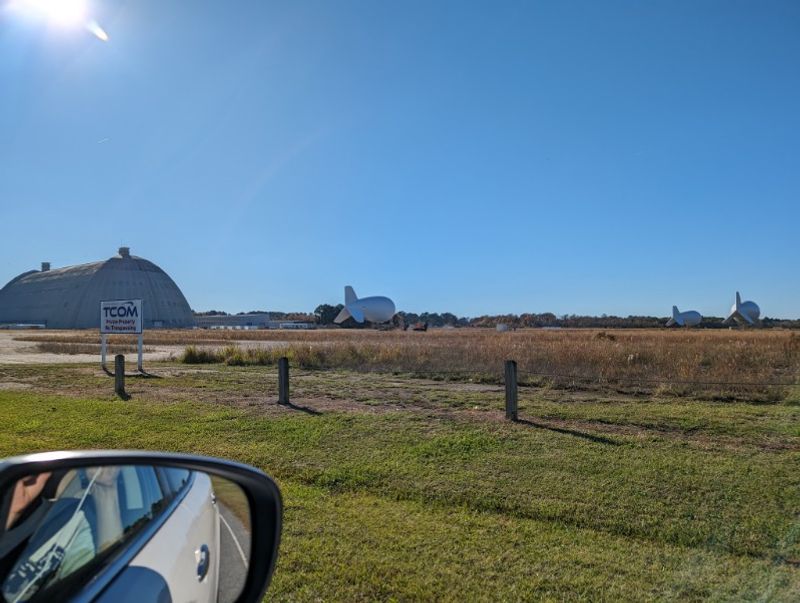
Today, TCOM operates the surviving steel hangar at 173 T Com Dr, continuing the facility’s tradition of lighter-than-air aviation. The company manufactures tethered aerostats and surveillance blimps for military and government clients.
These modern airships serve very different purposes than their World War II predecessors, providing persistent surveillance rather than hunting submarines.
The hangar’s enormous interior remains perfect for constructing and testing large helium-filled balloons. TCOM’s aerostats can hover at high altitudes for extended periods, carrying radar and communication equipment along borders and military installations.
The manufacturing process requires the same kind of vast enclosed space that made the hangar valuable eighty years ago.
Security restrictions prevent public tours and photography inside the facility, as several reviewers discovered. The military nature of current operations means visitors can only admire the structure from outside.
One reviewer mentioned beautiful flooring and cleanliness, suggesting TCOM maintains the historic building with care. The hangar continues serving national defense, proving that well-designed structures can adapt to new technologies while honoring their original purpose of protecting American interests through innovative aviation.
7. Architectural Kinship With Famous Hangars
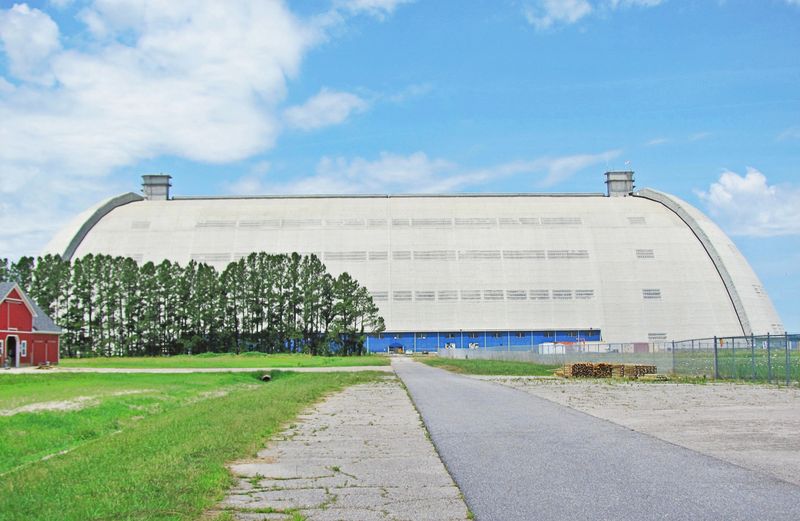
Architects designed only a handful of airship hangars large enough to shelter full-sized dirigibles during the early twentieth century. The Weeksville hangar shares its distinctive arched design with famous siblings scattered across America.
The Goodyear Airdock in Akron, Ohio, and Hangar One at Moffett Field, California, represent the same engineering approach to an unusual challenge.
These structures required innovative solutions to cover enormous spaces without internal support columns. Engineers developed similar arch designs that distributed weight efficiently while creating unobstructed interiors.
The family resemblance among these hangars reflects shared engineering principles and the limited number of firms capable of designing such ambitious structures.
Walking beneath any of these massive arches creates the same sense of awe that cathedral visitors experience. The Weeksville hangar stands as North Carolina’s contribution to this exclusive architectural family.
While some sister hangars have been demolished or repurposed, Weeksville’s survivor continues operating in its intended role. The building’s design proved so successful that its basic principles still work for modern aerospace applications, demonstrating how thoughtful engineering creates structures that remain functional generations after their original construction.
8. National Historic Recognition
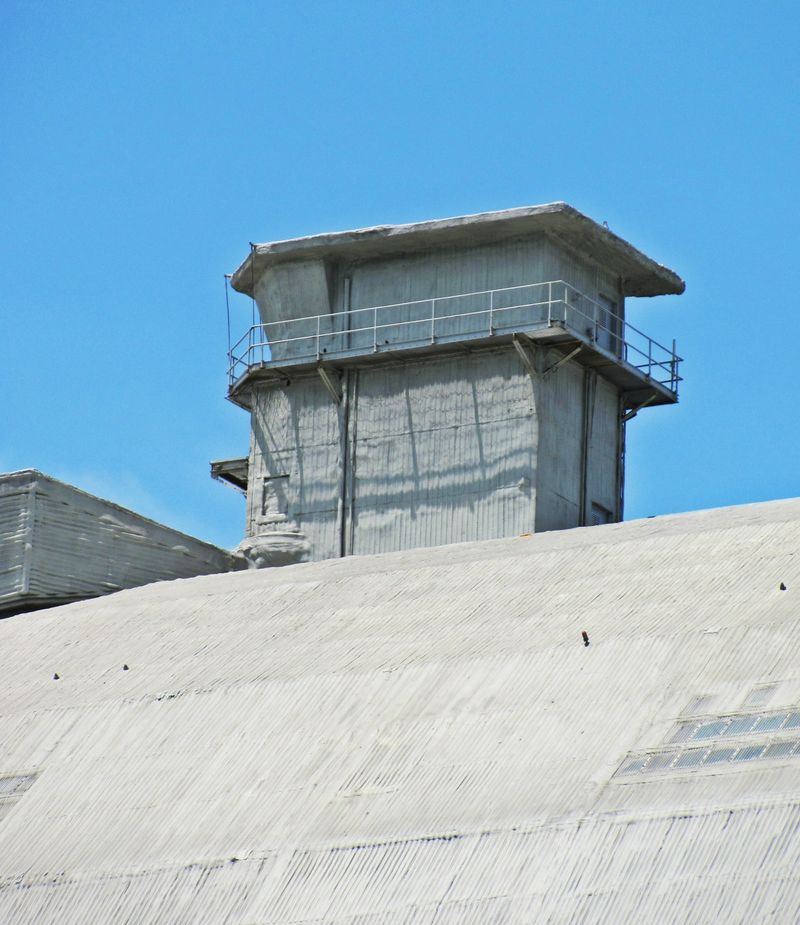
Recognition came decades after the war when historians and preservationists realized how few airship hangars survived. The Weeksville Dirigible Hangar earned placement on the National Register of Historic Places, joining other significant American landmarks deemed worthy of protection and remembrance.
This designation acknowledges both the structure’s architectural importance and its role in defending the nation during critical years.
Historic registration brings attention and sometimes funding for preservation efforts. The designation helps ensure that future generations can experience this remarkable building rather than reading about it in history books.
Federal recognition also raises public awareness about North Carolina’s contributions to World War II beyond the more famous battles and military bases.
The hangar represents multiple historical threads: wartime construction, naval aviation, architectural innovation, and coastal defense. Its registration documents these overlapping stories for researchers and visitors.
One reviewer expressed hope to return for a proper visit, reflecting growing interest in World War II sites as that generation’s veterans pass away. Historic designation helps keep these physical connections to the past alive, reminding modern Americans of the enormous industrial effort required to win the war and protect the homeland from threats that once lurked just offshore.
9. Community And Economic Legacy
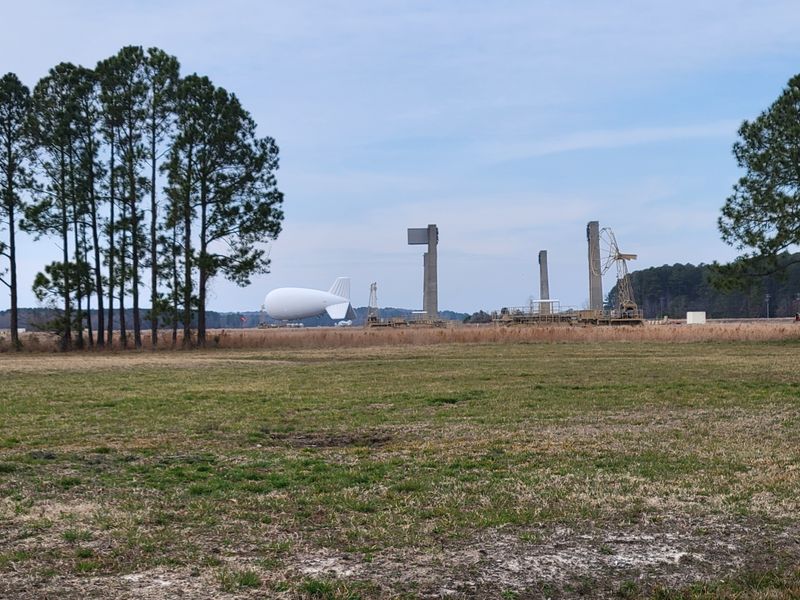
Naval Air Station Weeksville transformed the surrounding area when it opened during the war. Thousands of sailors, construction workers, and support personnel flooded into rural Pasquotank County, creating jobs and economic activity where little existed before.
Local businesses thrived supplying the base, and families rented rooms to military personnel stationed far from home.
The base’s presence shaped Elizabeth City’s identity for generations. Children grew up watching blimps launch on patrol, and local residents found employment supporting military operations.
Even after decommissioning, the facility continued influencing the region through aerospace research and eventually TCOM’s manufacturing operations. The economic ripples from that original wartime construction still touch the community today.
One reviewer’s uncle grew up just twenty-three miles away and served at Weeksville throughout the war before returning to run the family farm. His story represents countless local connections between the base and surrounding communities.
The hangar stands as more than a military relic; it symbolizes how World War II reached into every American community, transforming rural regions into contributors to the national defense effort and leaving lasting impacts on local economies and identities long after the war ended.
10. Educational Window Into Naval Aviation
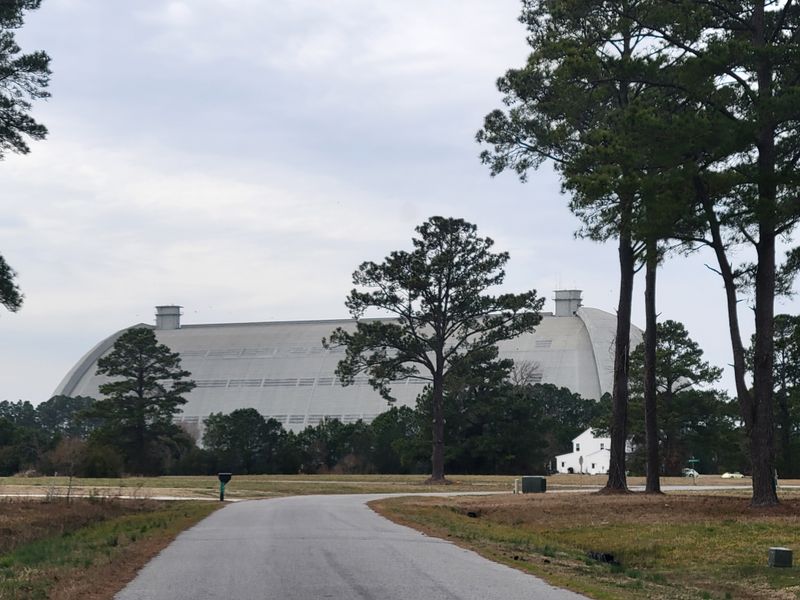
Schools, historians, and military enthusiasts recognize the hangar as an invaluable teaching resource. The structure provides tangible connections to World War II history that textbooks cannot replicate.
Standing before the massive building helps students understand the scale of wartime industrial efforts and the innovative technologies deployed to defend American shores.
The site offers lessons spanning multiple subjects: engineering, military history, aviation development, and industrial design. Teachers can discuss how the Navy adapted lighter-than-air technology for anti-submarine warfare, explaining the strategic thinking behind unconventional weapons.
The hangar’s survival through decades of changing military needs demonstrates adaptation and the importance of preserving historical structures.
Several reviewers mentioned the educational value of visiting or working at the site. One delivery driver appreciated encountering “what history” during a routine work stop.
Another reviewer who received a spontaneous tour twenty years ago still remembered the experience vividly. These encounters with living history create lasting impressions that books alone cannot achieve.
The hangar serves as an outdoor classroom where visitors of all ages can explore how Americans responded to existential threats, innovated under pressure, and built structures that continue serving the nation eight decades later.
11. Preservation Challenges And Efforts
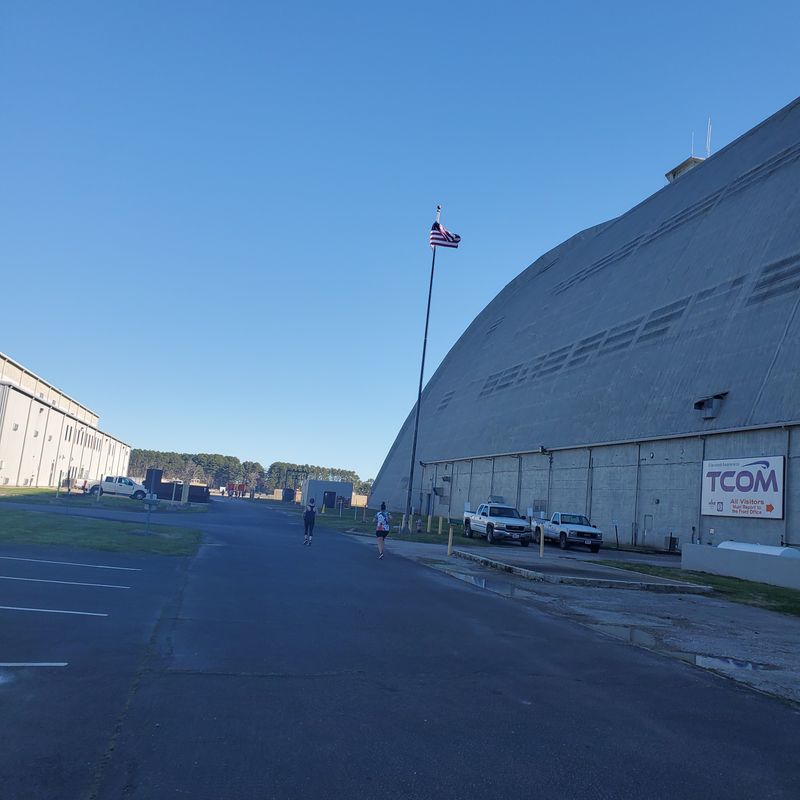
Maintaining an eighty-year-old steel structure requires constant attention and significant resources. Coastal weather, salt air, and simple age threaten the hangar’s integrity.
Preservation advocates work to secure funding for necessary repairs while TCOM’s ongoing operations provide practical reasons to keep the building functional.
The 1995 fire that destroyed the wooden hangar served as a wake-up call about preservation urgency. Once historic structures disappear, they cannot be rebuilt authentically.
The remaining steel hangar became even more precious after its companion’s loss, focusing preservation efforts on protecting this sole survivor.
Balancing historic preservation with active industrial use presents unique challenges. TCOM needs a functional facility for manufacturing, which sometimes conflicts with preservation priorities.
Security requirements limit public access, preventing the kind of tourism that helps fund preservation at other historic sites. Despite these obstacles, the hangar’s continued operation arguably provides the best preservation: a building actively used tends to receive better maintenance than an empty monument.
The ongoing effort to protect this remarkable structure requires cooperation among preservation groups, current operators, and government agencies committed to honoring North Carolina’s World War II heritage for future generations who deserve to witness this engineering marvel.
12. Visiting This Coastal Landmark
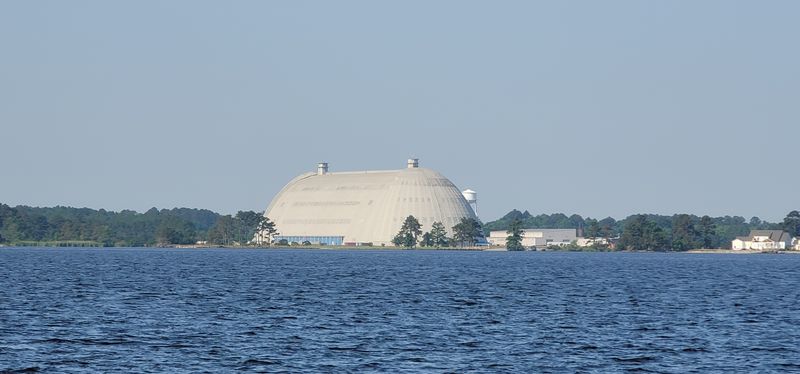
Security restrictions mean visitors cannot tour the hangar’s interior, but the structure’s massive exterior creates impressive views from public roads. Runners participating in the Coast Guard Marathon pass the facility, and one reviewer described the experience as “once in a lifetime” despite windy conditions.
The hangar’s sheer size makes it worth seeking out even without interior access.
Photographers find the building particularly striking during golden hour when angled sunlight emphasizes the steel framework’s geometric patterns. The surrounding flat landscape offers unobstructed views, and horses sometimes graze in nearby fields, creating unexpected pastoral scenes alongside the industrial giant.
The contrast between peaceful countryside and massive military architecture makes for memorable photographs.
Located at 173 T Com Dr in Elizabeth City, the hangar sits slightly off main tourist routes but rewards curious travelers who make the detour. Visitors should respect security signage and private property boundaries while enjoying exterior views.
The site offers no visitor facilities or interpretive displays, so researching the history beforehand enhances the experience. Despite limited access, standing before this colossal structure provides powerful connections to World War II history and the ongoing story of American innovation in lighter-than-air aviation that continues inside these historic walls.