This Old-School California Polish Restaurant Still Serves A Near-Original Menu Almost 50 Years Later
A menu can reveal a lot about what a restaurant refuses to let go.
Here, nearly five decades of change have not erased the dishes that built the place in the first place.
The names, flavors, and comforting old-school combinations still carry the weight of a restaurant that knows exactly what its regulars came back for.
This California dining room keeps Polish tradition front and center without trying to modernize every corner of the experience. There is something appealing about that kind of confidence.
Order the classic you recognize or take a chance on the plate that sounds completely unfamiliar.
Either way, the meal lands with a sense of continuity that newer restaurants cannot manufacture overnight.
Menus evolve for plenty of good reasons. Sometimes, though, the more interesting story is what stayed put.
A Polish Kitchen That Opened Its Doors Back In 1973
Chef Elina O’Lague, a Polish immigrant, opened the doors of her first restaurant in Berkeley in 1973.
That means the business has been cooking Polish food for more than half a century, which is rare for any restaurant in California.
Think about what was happening then. Disco was on the radio, and most Americans had never heard the word pierogi, let alone tasted one.
O’Lague was betting that people would fall for the food she grew up with, and she turned out to be right.
Her cooking leaned on dishes that Polish families made at home: dumplings pinched shut by hand, cabbage rolls simmered in tomato sauce, and soups that took hours. Nothing was trendy.
Everything was filling.
What is worth appreciating is how much staying power that original idea had. Restaurants usually reinvent themselves every few years to chase whatever is popular, and plenty of 1970s spots simply disappeared.
Instead, this one kept its core recipes and built an audience slowly, one plate at a time.
When you sit down at Solidarity today, you are eating food that traces straight back to a kitchen that opened during the Nixon administration.
Santa Monica Became The Restaurant’s Forever Address In 1978
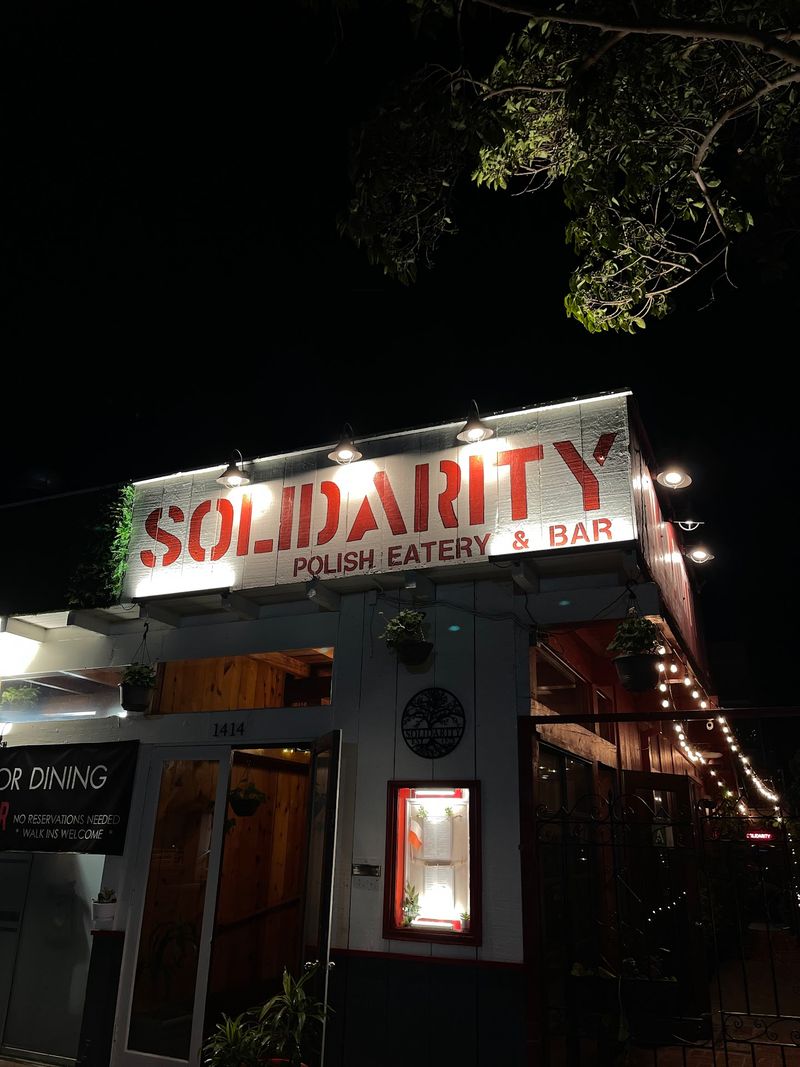
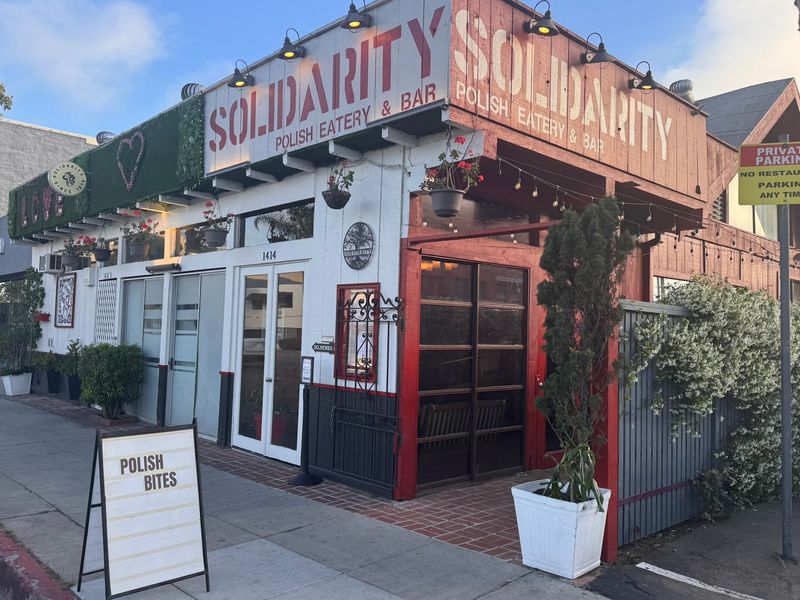
Five years after starting up north, the restaurant packed up and headed to Santa Monica in 1978. It landed at 1414 Lincoln Boulevard and never moved again.
Nearly five decades in one spot in a beach city where rents climb and storefronts turn over constantly is no small thing. Whole blocks around it have changed hands, filled with chains, and changed again.
Regulars talk about the place as a hidden gem, partly because Lincoln Boulevard is a busy street where you might drive past without noticing an old house set back from the road.
Once you know it is there, though, it is hard to forget.
Parking is available in the back, which is a genuine relief in that part of town. Plenty of visitors mention how easy it is to find a spot compared to the streets closer to the pier.
The address matters for another reason too. Being on Lincoln rather than in the tourist-heavy Third Street area means the crowd skews toward locals, couples, and people who came specifically for the food.
If you are mapping out a Santa Monica trip, this one sits a short drive from the beach but feels a world away from the boardwalk noise.
The Nearly Unchanged Menu Is The Headline Here
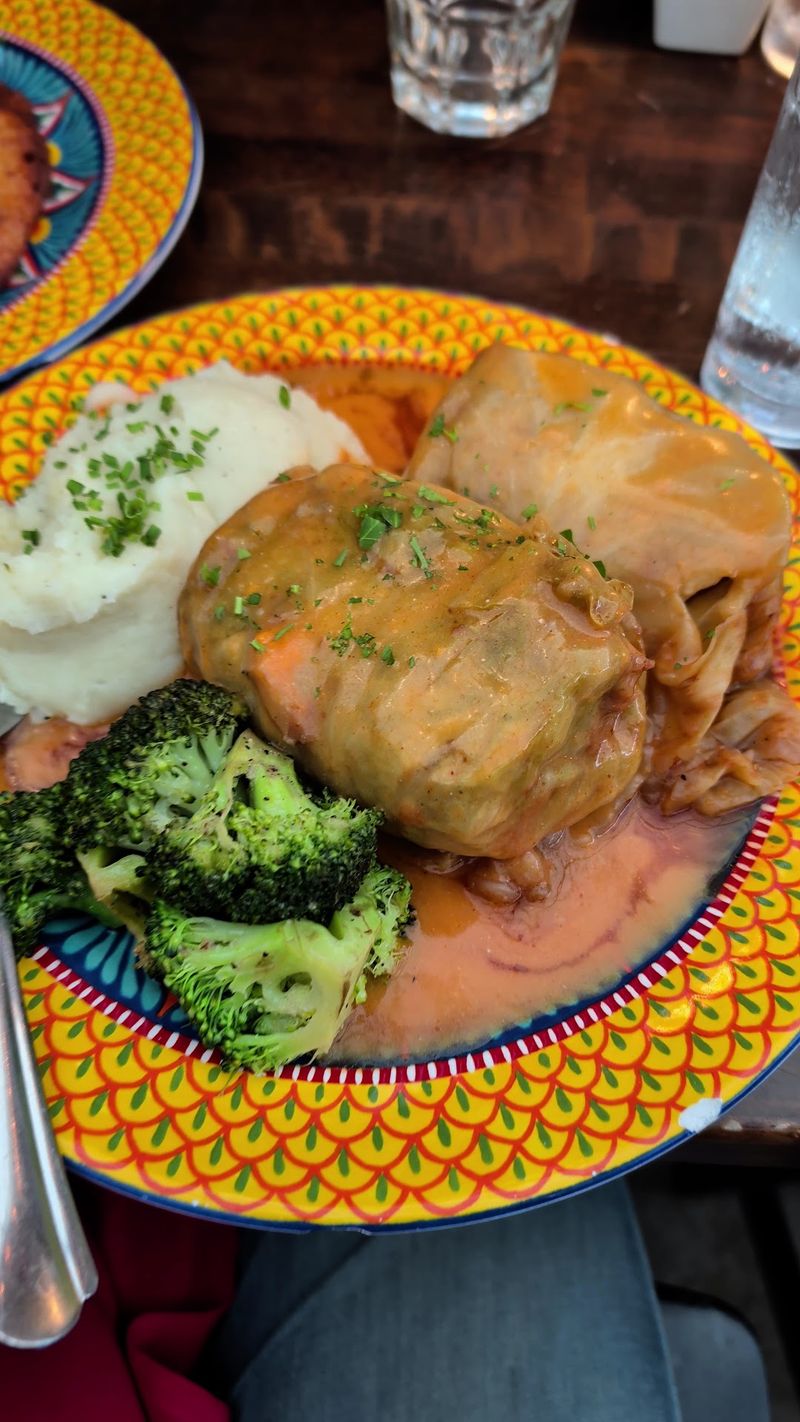
Here is the part that surprises people most: the restaurant says its menu stays close to the original, with many dishes served for almost 50 years running.
Most kitchens rewrite their menus every season. Ingredients get swapped, portions shrink, and a beloved dish quietly vanishes.
Solidarity took the opposite road and treated its recipe list like something worth protecting.
That consistency has a real payoff for diners. Someone who ate stuffed cabbage there in 1985 can bring their adult kids back and order the same thing, and it will taste like they remember.
It also removes the guesswork. You are not walking into an experiment.
The stroganoff, the pierogi, and the hunter’s stew have been tested by thousands of customers over decades, and the kitchen has had plenty of time to get them right.
Not everyone is equally impressed. A few Polish-born guests have wished for more traditional touches, like rye bread with the bigos or a sharper sour note in the white borscht.
Even so, the ratings tell a clear story: 4.6 stars across more than 780 reviews. For a menu that has barely budged in half a century, that is a strong argument for leaving well enough alone.
Handmade Pierogi Anchor The Whole Operation
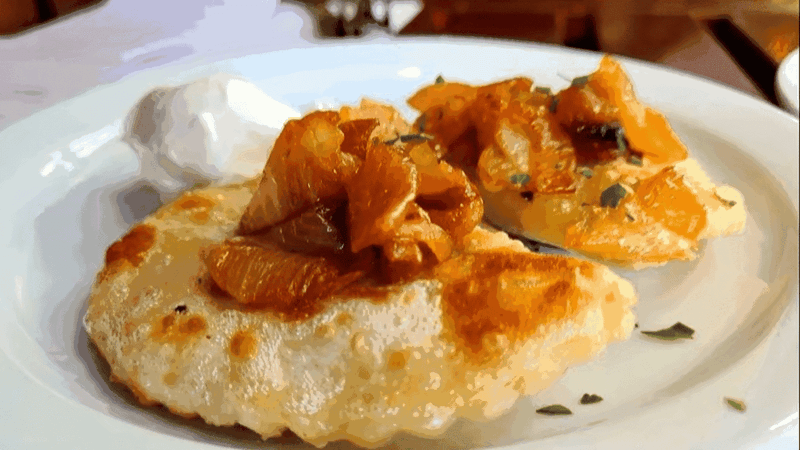
The dumplings show up in four fillings: potato and cheese, mushroom and sauerkraut, beef and onion, and chicken.
Each one gives you a different corner of the Polish pantry, and ordering a mix is the smartest move if you are dining with friends.
Regulars describe them as stuffed full and crisped nicely on the outside. One customer joked that the place is pure comfort wrapped in pierogi, and honestly that sums up the vibe.
A small tip for first-timers: the word pierogi is already plural in Polish. One dumpling is a pierog.
A Polish-born reviewer made that point rather firmly, and it is a fun bit of trivia to drop at the table.
If you have only had frozen supermarket dumplings, the difference is obvious right away. Homemade dough has a chew to it, and the fillings taste like actual food rather than paste.
Start your meal with them. They arrive quickly, they are easy to share, and they set the tone for everything that follows.
Kids tend to love them too, which makes the restaurant an easier sell for family dinners than you might expect.
One Small Plate Lets You Sample Four Classics At Once
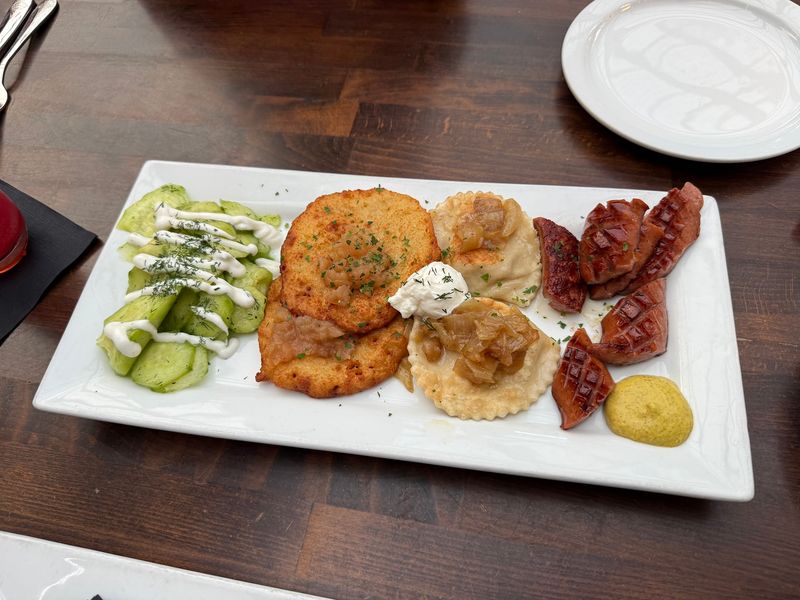
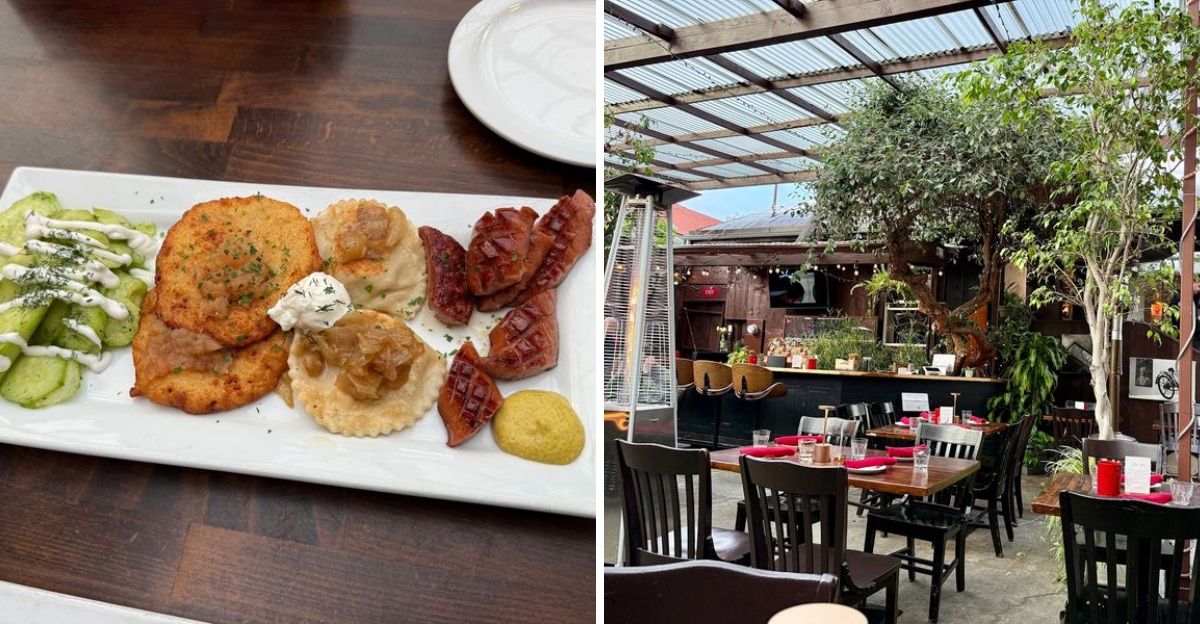
Indecisive eaters, this one is for you. The small-plate taster puts kielbasa, traditional pierogi, placki potato pancakes, and mizeria cucumber salad on a single plate.
Placki are shredded potato pancakes fried until the edges go lacy and crisp. Mizeria is a cool, creamy cucumber salad that cuts through all that richness, which is exactly why it belongs on the plate.
The combination works as a crash course in Polish cooking. Salty sausage, soft dumpling, crunchy potato, and cold refreshing salad hit four completely different notes in one sitting.
Several reviewers have grabbed the taster during happy hour and called it one of the better deals in Santa Monica. That is meaningful in a neighborhood where a plain appetizer can wreck a budget.
It also solves the classic table argument. Instead of everyone ordering separately and then eyeing each other’s food, one taster in the middle lets the group try a bit of everything before committing to mains.
Worth knowing: a few guests have found the kielbasa milder than the smoky Polish sausage they grew up with. If you like bold, ask your server which sausage preparation packs the most punch.
Hearty Main Courses Straight Out Of A Grandmother’s Playbook
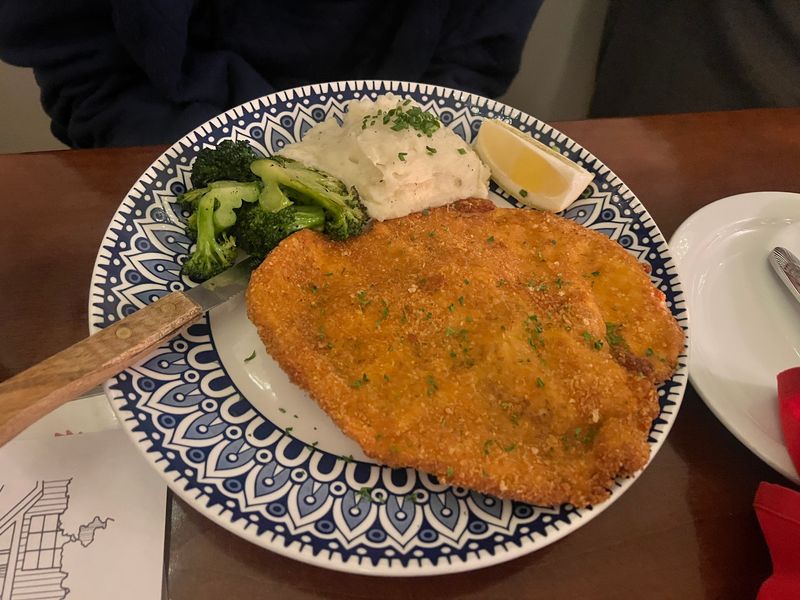
Comfort food rules the dinner menu, and nobody is apologizing for it.
Beef stroganoff arrives with spaetzle, the little egg noodles that soak up mushroom sauce beautifully.
One diner said the meat melted in their mouth, and another admitted that spaetzle was a first-time discovery they ended up finishing entirely.
Schnitzel comes in chicken or pork, served with mashed potatoes and guests keep pointing out that it stays juicy instead of drying out under the breading.
Gołąbki, the stuffed cabbage rolls, and chicken paprikash both hold their spots on the list. Bigos, the hunter’s stew, tastes like a cozier cousin of beef stew and pairs well with a cold evening on the patio.
Then there is the roasted duck. A visitor who had eaten duck in Warsaw said the crispy version here matched their memory of the real thing, and the lingonberry sauce got singled out as the finishing touch.
Portions run generous without being sloppy. Multiple guests have noted the food feels light rather than greasy, which is not always true of Eastern European cooking.
Out Back, A Patio That Feels Like A Secret Garden
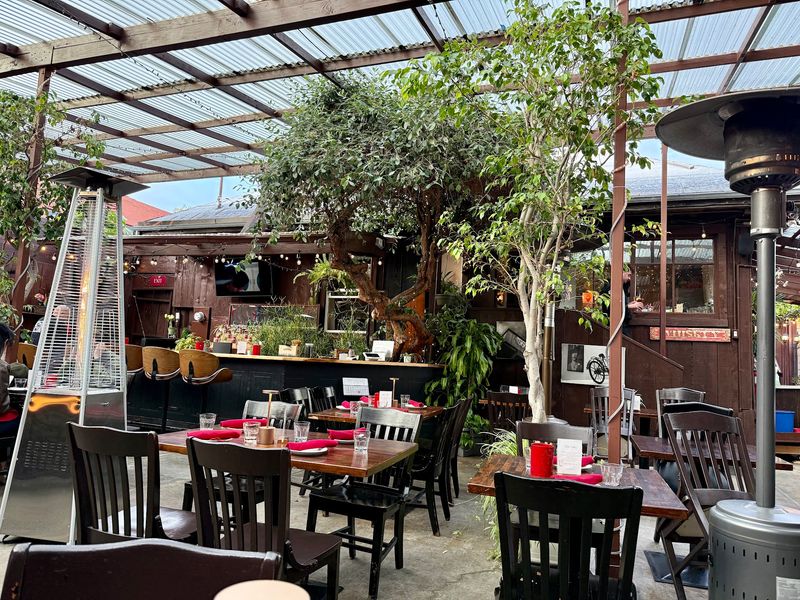
Eighty-one reviews mention the patio, which makes it one of the most talked-about features of the whole restaurant.
Walled in on all sides and strung with lights, the backyard turns into something genuinely magical after sunset. One guest called it a secret garden for people who appreciate good food and even better stories.
A feijoa tree grows back there, and the restaurant treats it as part of the property’s history rather than just landscaping.
Feijoa, also called pineapple guava, produces a sweet green fruit that most Californians have never tasted.
Heaters keep things comfortable on cool evenings, so the patio works year-round. The surrounding walls block street noise from Lincoln Boulevard and create a surprising amount of privacy.
The space also hosts events. One visitor showed up for a language exchange night and stayed for the food, while another found the patio closed for a private booking and had to sit inside.
Lesson learned: if outdoor seating is the reason you are going, call ahead or book a reservation. The number is 310-393-8831.
Bring a light jacket anyway. Santa Monica evenings cool off fast once the ocean breeze picks up, heaters or not.
A Few Modern Touches Slipped In Alongside The Classics
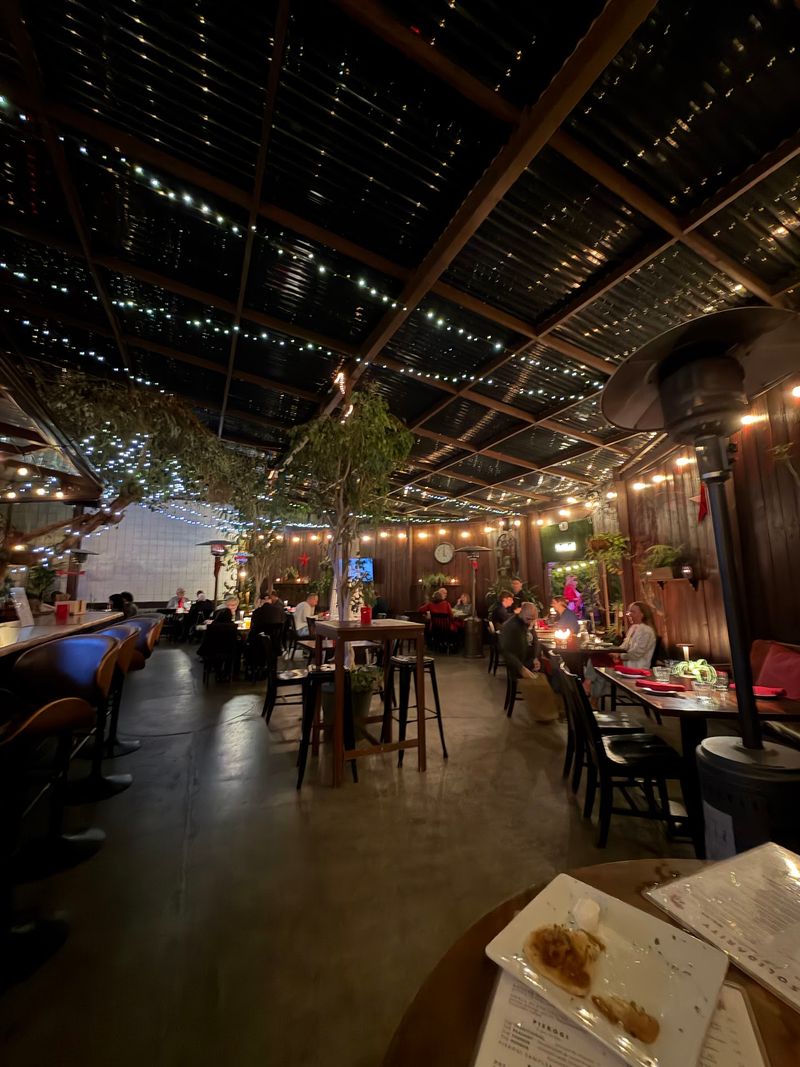
Sticking to tradition does not mean ignoring 2026 entirely.
The restaurant now works in plant-based Polish cooking and locally sourced ingredients. The clearest example sits right on the dinner menu: gołąbki can be ordered with beef or a plant-based filling.
That flexibility helps mixed groups. A family with one vegetarian no longer has to argue about where to eat, and everyone can order roughly the same dish.
Feedback on the meatless options is mixed, though. One vegan diner found the plant-based stuffed cabbage underwhelming and wished the sauce had more punch, while noting the beet salad was tasty but not filling enough for a full meal.
So here is honest advice: if you eat plants only, the choices are limited and results vary. Call ahead and ask what is available on the night you plan to visit.
There is also a dog menu, which delighted at least one family who brought their pup along to the patio.
Traditional kitchen, contemporary conveniences, and nobody had to gut the recipe book to make it happen.