This 77-Year-Old California Italian Restaurant Has Singing Waiters And Customer-Signed Bottles Hanging From The Ceiling
Some restaurants want you to admire the food. This one seems determined to make sure you remember the room.
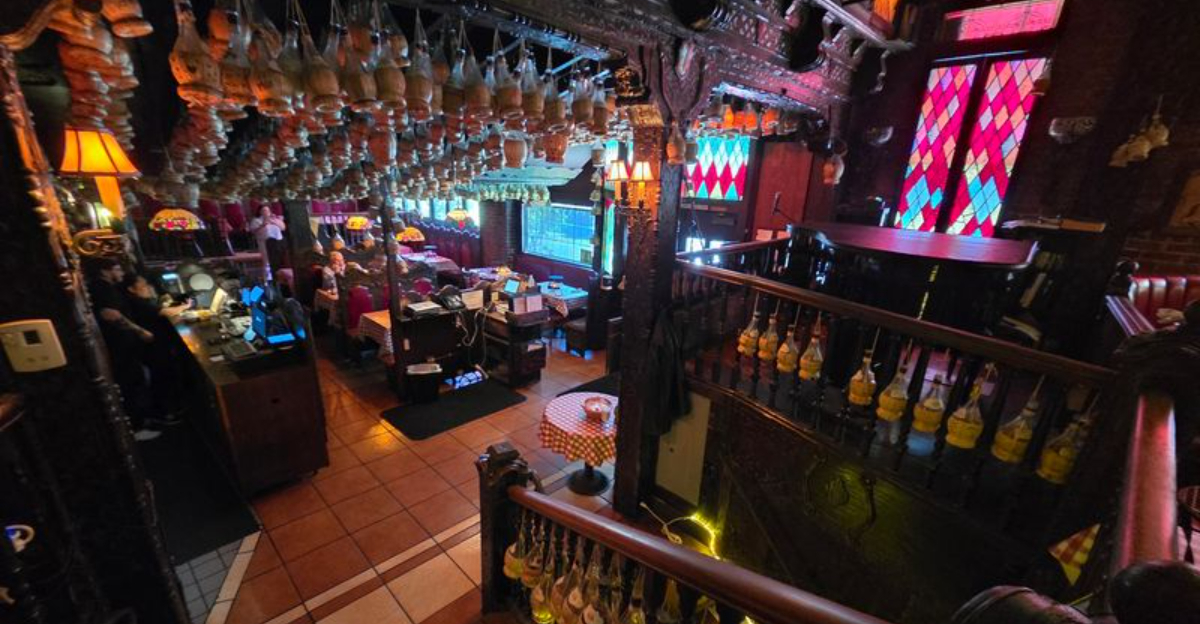
Voices rise between tables, waiters break into song, and hundreds of signed bottles hang overhead like souvenirs from decades of dinners.
It is loud, a little theatrical, and wonderfully unapologetic about its old-school personality.
Hollywood has plenty of polished dining rooms, but this California classic feels more like a living scrapbook.
Look up before you even open the menu. Names, dates, and scribbled messages crowd the bottles above, each one adding another tiny piece to the restaurant’s history.
Then the singing starts and the whole place shifts again, somewhere between dinner service and neighborhood show.
The food may bring you in hungry. The ceiling and the chorus are what make the night difficult to forget.
Feeding Hollywood Since 1949
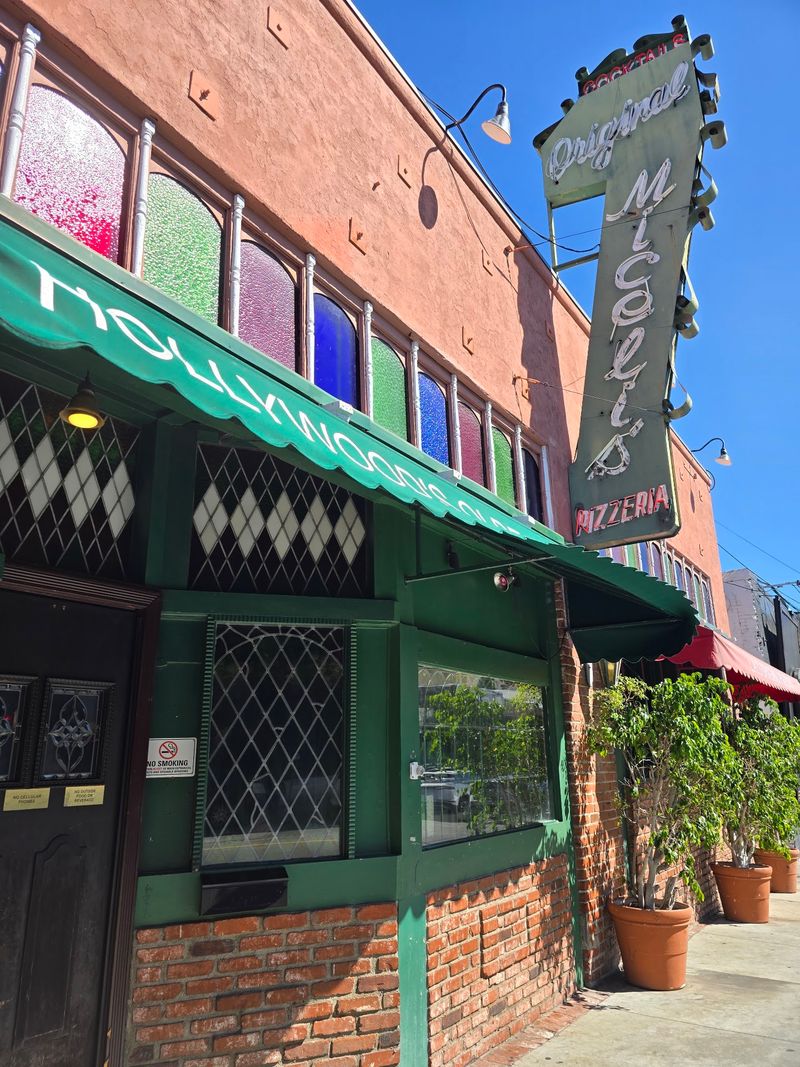
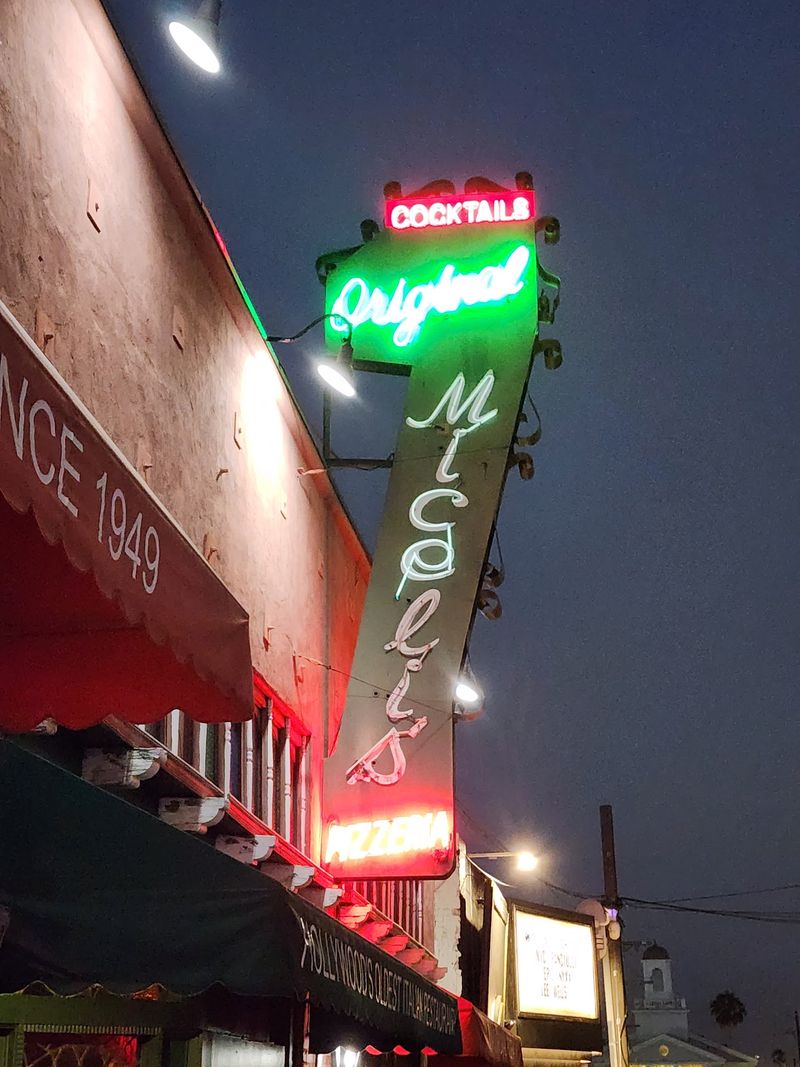
Very few restaurants in Los Angeles can claim an unbroken run stretching back to the years right after World War II.
Carmen and Sylvia Miceli opened the doors in 1949 with help from family members, and the business has stayed in operation ever since.
Miceli’s Italian Restaurant sits at 1646 N Las Palmas Ave, Los Angeles, California 90028, tucked onto a side street rather than a busy main drag.
That location has earned it the title of Hollywood’s oldest Italian restaurant, and by 2026 the establishment reaches roughly 77 years of service.
Longevity like that usually says something about consistency. The recipes and the general rhythm of a meal have not been overhauled to chase trends, which is a big part of why families keep coming back.
Doors open daily at 11:30 AM, with service running until 9:30 PM, so lunch is a genuinely pleasant and quieter option.
Weekday afternoons feel calmer, while evenings bring the fuller, livelier version of the experience.
Anyone curious about the postwar era of the neighborhood will find the place useful as more than a meal.
It functions as a living piece of local history that still takes reservations, still turns out pizza, and still fills its tables every night of the week.
Your Server Might Suddenly Start Singing
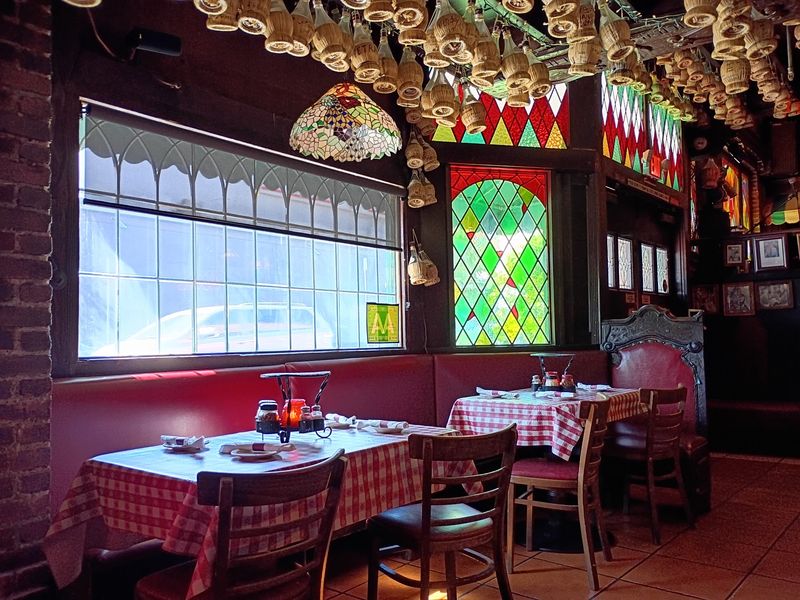
Ordering dinner here can turn into something closer to a small concert. Servers at Miceli’s are known for their voices, and many have professional stage backgrounds, including Broadway experience.
The song list moves around quite a bit. Traditional Italian numbers, operatic pieces, and Broadway standards all show up, depending on who is working that night and what the room seems to want.
What surprises first-timers is the timing. A server may take an order, drop off plates, then step away from the table entirely to join the pianist for a few minutes before returning to work.
Performances tend to break out every so often during the evening rather than running nonstop, so conversation still has room to breathe between numbers.
Noise levels rise while someone is singing and settle afterward, which makes the pacing feel like a series of little intermissions.
Guests hoping to catch the singing should aim for dinner rather than an early lunch, since the live music is an evening feature.
Tables closer to the piano give the clearest view, though seating near the instrument fills quickly and cannot always be guaranteed even with a reservation.
Applause is welcome and expected. Clapping between courses is simply part of how the room works here.
The Ceiling Is Covered With Old Signed Bottles
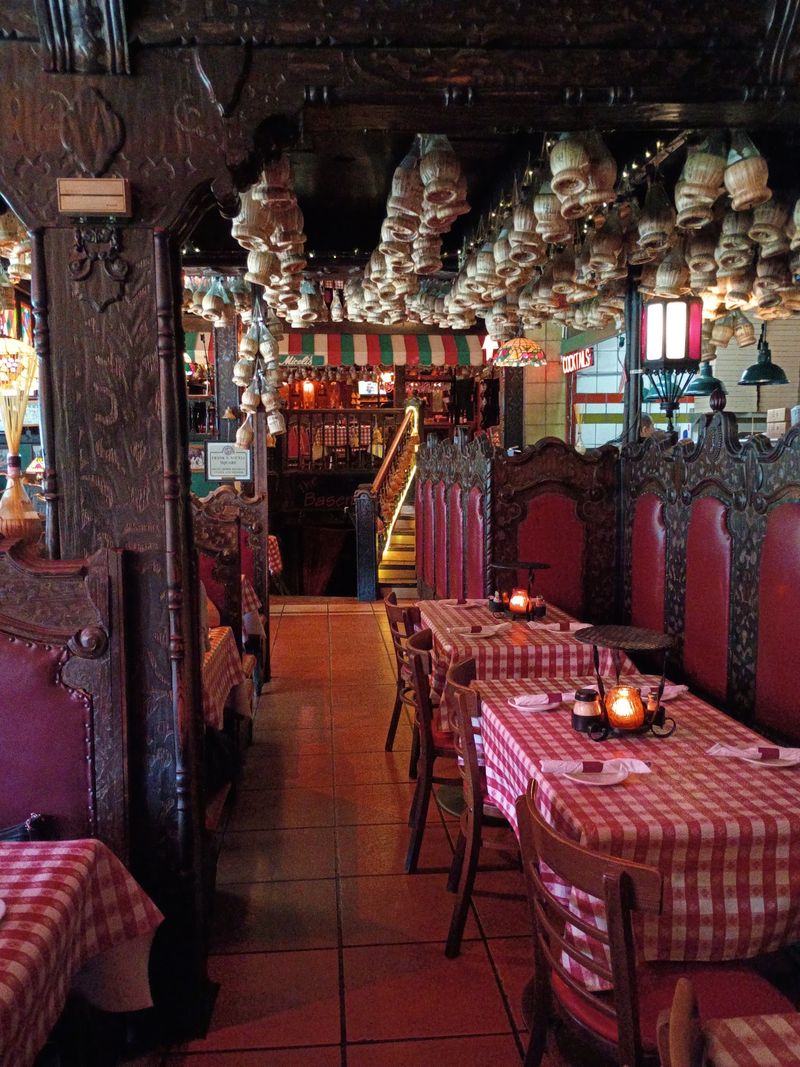
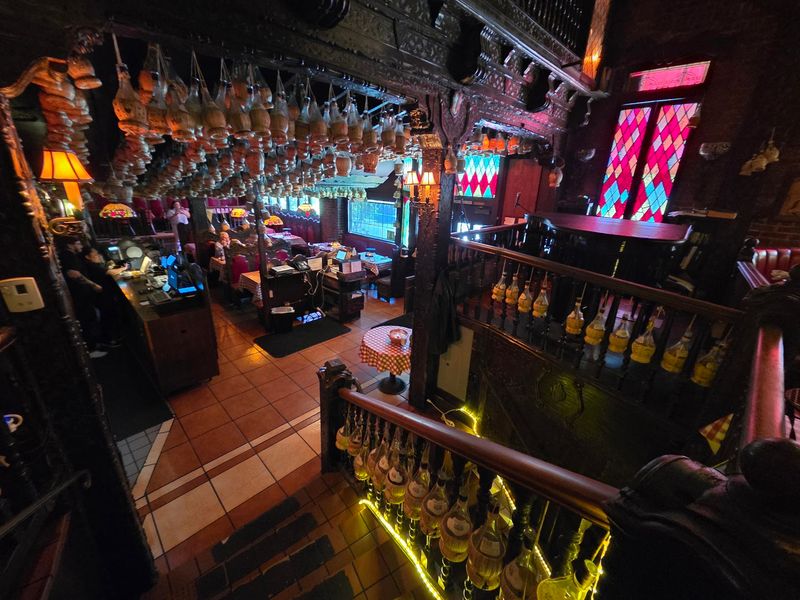
Look up and the room gets stranger in the best way. Hundreds of empty straw-wrapped fiasco bottles hang overhead, packed tightly enough that the actual ceiling is barely visible in places.
Most of them are not just decoration. Many carry handwritten messages, names, and dates left behind by diners over the decades, which turns the whole overhead surface into a kind of scrapbook.
Reading them is oddly absorbing. Some notes mark anniversaries, some mark birthdays, and others are just a name and a year scrawled in marker by someone passing through Hollywood a long time ago.
Light from the chandeliers filters through the glass and straw, creating a warm, textured glow rather than the flat brightness of a modern dining room.
That soft overhead lighting is one reason the space photographs so well and feels comfortable for long dinners.
Families with kids often find the ceiling to be an easy distraction while waiting for food, since spotting individual signatures becomes a small game.
Booth seating gives the best upward view because the bottles hang low over those areas.
Height varies across the room, so anyone especially tall may want to stay aware while standing up from a table.
Some Of The Booths Are Nearly A Century Old
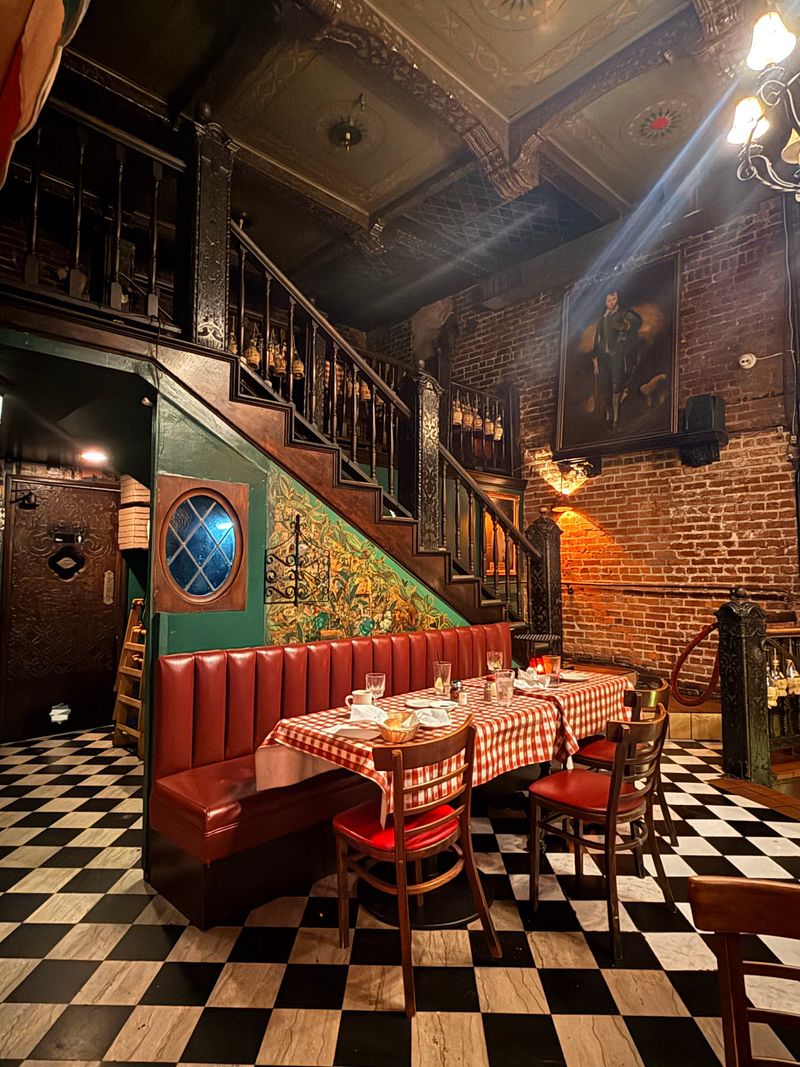
Here is a detail that catches people off guard: parts of the furniture predate the restaurant itself.
Several of the hand-carved wooden booths and wall panels were salvaged from the Pig ‘n Whistle, a well-known neighboring Hollywood restaurant that closed in 1952.
Since that establishment first opened in 1927, some of the booths now holding diners date back nearly a hundred years.
Carmen Miceli brought them over rather than letting the woodwork disappear when the building changed hands.
Sitting in one feels different from a modern banquette. The backs are tall and solid, the carving is deep and hand-done, and the whole structure creates a sense of enclosure that muffles noise from surrounding tables.
Comfort holds up reasonably well for a long meal, though the seats are firm rather than cushioned in the plush way newer restaurants favor. Couples and small groups usually find them cozier than the open tables.
Booths are limited in number and popular, so requesting one at the time of booking makes sense.
Availability depends on how busy the night is, and staff cannot always accommodate specific seating requests.
Running a hand along the carved edges is a quick reminder that the wood has outlasted almost everything else on the block.
Family Recipes That Trace Back To Sicily
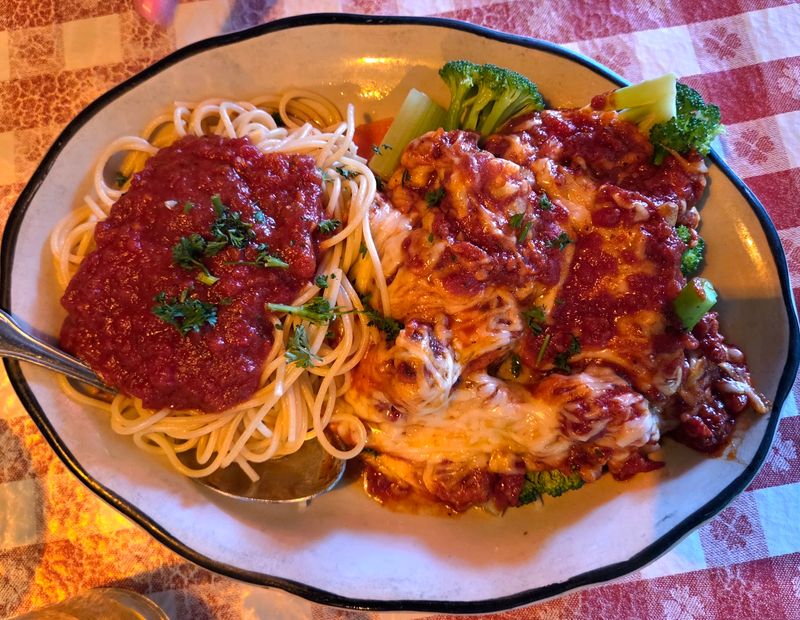
Long before the singing and the film shoots, the business began as a straightforward pizzeria. Recipes came through the family from Sicily, and pizza remains a major part of what leaves the kitchen today.
The menu has grown well beyond that starting point. Spaghetti, ravioli, baked pasta dishes, lasagna, and chicken parmigiana all sit alongside the pizzas, covering the familiar range of Italian-American cooking.
Portions are generally generous, which is worth planning around. Sharing an appetizer and taking leftovers home is a normal approach here rather than an unusual one.
Sauce gets a lot of attention from regulars, and marinara comes up often in conversation about the place.
Garlic bread and antipasto are also frequently ordered as starters, with the antipasto substantial enough to work as a light meal on its own.
Anyone with dietary questions should ask directly, since ingredients and preparations can change and staff are the reliable source. Vegetarian pasta and pizza options do appear on the menu.
Lunch service starts at 11:30 AM and tends to be a calmer window for trying dishes without a crowded room.
Prices reflect a sit-down Hollywood restaurant rather than a counter-service spot, so budgeting accordingly makes for a smoother visit.
The Dining Room Has Played Hollywood On Screen
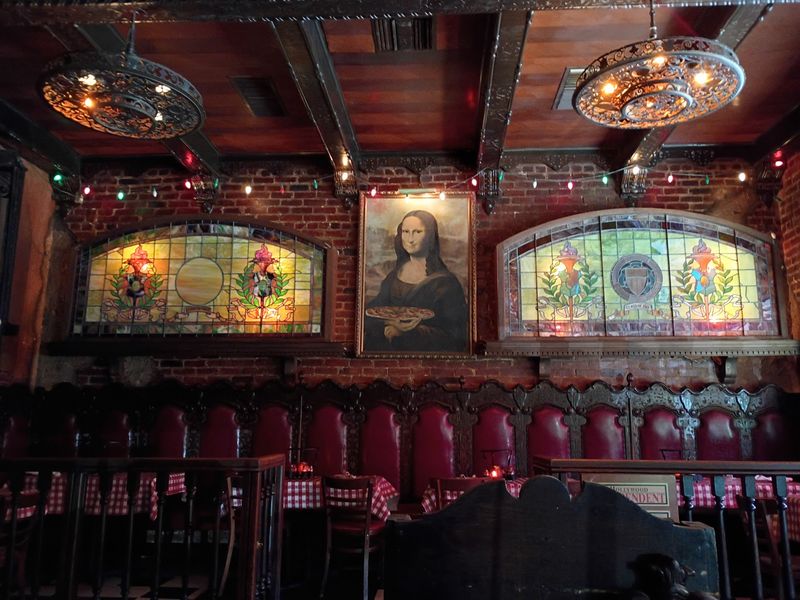
A room this theatrical was always going to attract cameras. The Hollywood location has appeared in film and television productions over the years.
Its unchanged interior is part of the appeal for production teams. Because the decor has stayed largely the same since 1962, the space can stand in for several different decades without much dressing.
Diners occasionally get a flicker of recognition mid-meal. A booth or a stretch of bottle-covered ceiling can look familiar long before anyone remembers exactly where they saw it.
Filming does not happen during regular service, so a visit will not involve stepping over cables or working around crews. The restaurant operates as a restaurant.
Signs posted outside address phone use, and the room has a somewhat old-fashioned attitude toward devices at the table. Being discreet with photos and keeping cameras low-key is the respectful approach.
Anyone building a Hollywood filming-location walk will find the spot convenient, since it sits within easy walking distance of several other landmarks.
Combining a late lunch here with an afternoon of sightseeing works well, especially on a weekday when the dining room stays quieter.
Famous Names Have Filled These Tables
Decades of proximity to studios and theaters left a mark on the guest list.
Historical accounts connect the restaurant with figures ranging from The Beatles to Jim Carrey, along with political names including John F. Kennedy and Richard Nixon.
One story stands out as particularly Hollywood. Lucille Ball is said to have learned pizza dough tossing here while preparing for a television episode, which fits a place that started as a pizzeria.
Nothing about the room advertises this loudly. There is no roped-off celebrity booth or wall of oversized portraits demanding attention, which keeps the atmosphere relaxed.
For visitors, the practical takeaway is simple. Sitting in a booth that has served the industry for generations costs the same as sitting anywhere else in the dining room.
Current guests are just as likely to be families celebrating birthdays or locals grabbing an early dinner. That mix keeps the place feeling like a neighborhood restaurant rather than a tourist stop.
Staff are used to questions about the history and generally happy to share a story or two when the pace allows. Asking during a slower stretch, rather than the peak of dinner service, tends to get a fuller answer.
Live Piano Sits At The Center Of Everything
Music is not background filler here. Live piano remains a defining feature, and it is the thread that makes the singing-waiter tradition work rather than feel random.
The instrument sits within the dining area itself, not on a distant stage. Sound carries through the room naturally, and servers can step over to sing without any setup or announcement.
Evenings are when the piano really shapes the experience. Melodies run through dinner service, rising during performances and easing back into something quieter between them.
Volume stays manageable for conversation most of the time, though tables closest to the piano do get the fullest sound.
Guests who prefer a quieter meal may be more comfortable on an upper level or during lunch hours.
Requests are sometimes possible depending on the night and how busy the room is, but nothing is guaranteed. Asking politely rather than expecting a specific song is the right move.
What results is something between a restaurant and a small dinner show.
Nobody hands out tickets, and the meal remains the main event, yet the music turns an ordinary Tuesday dinner into an evening people remember and describe to friends later.