12 California Outings That Make A Normal Day Trip Feel Delightfully Strange
A perfectly normal day trip never accidentally ends with “What on earth was that place?”
California is full of spots that seem to have escaped whatever meeting decided attractions should make sense.
You head out expecting a pleasant afternoon and somehow end up face-to-face with something bizarre, charming, or impossible to explain.
Hours pass differently on outings like these. The map stops being useful. Curiosity takes over.
One unexpected stop leads to another until the original plan barely matters anymore.
Nobody comes home excited about a day that went exactly as expected.
People remember the giant oddity and the moment the whole trip took a turn nobody saw coming. That is where the best stories usually start.
1. Salvation Mountain
Somewhere on the edge of the Sonoran Desert sits one of the most unexpectedly joyful places in the entire country.
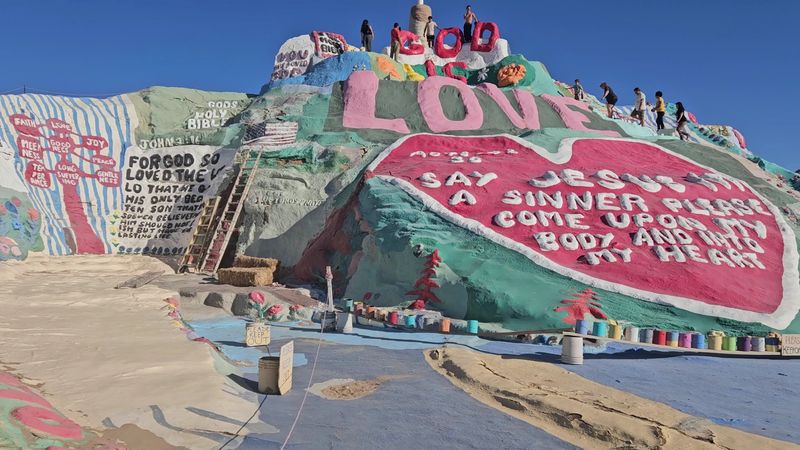
Salvation Mountain, located at 603 Beal Rd, Niland, CA 92257, was built over several decades by Leonard Knight using adobe, straw, and thousands of gallons of donated paint.
The result is a hillside explosion of color, with flowers, trees, rivers, and biblical messages layered on top of each other in a style that can only be described as outsider folk art at its most sincere.
Getting there requires driving through Niland and past the entrance to Slab City, a community of off-grid residents who have made the surrounding desert their home.
The mountain itself stands roughly three stories tall and stretches wide enough that exploring its nooks and painted caves could take a full hour.
There are no admission fees, though donations are genuinely appreciated to help with ongoing preservation efforts.
Visiting on a weekday tends to mean fewer crowds and a quieter experience. The colors look especially vivid in the morning light when the desert air is still cool.
Flat shoes are helpful since the painted surface can be uneven underfoot.
2. Cabazon Dinosaurs
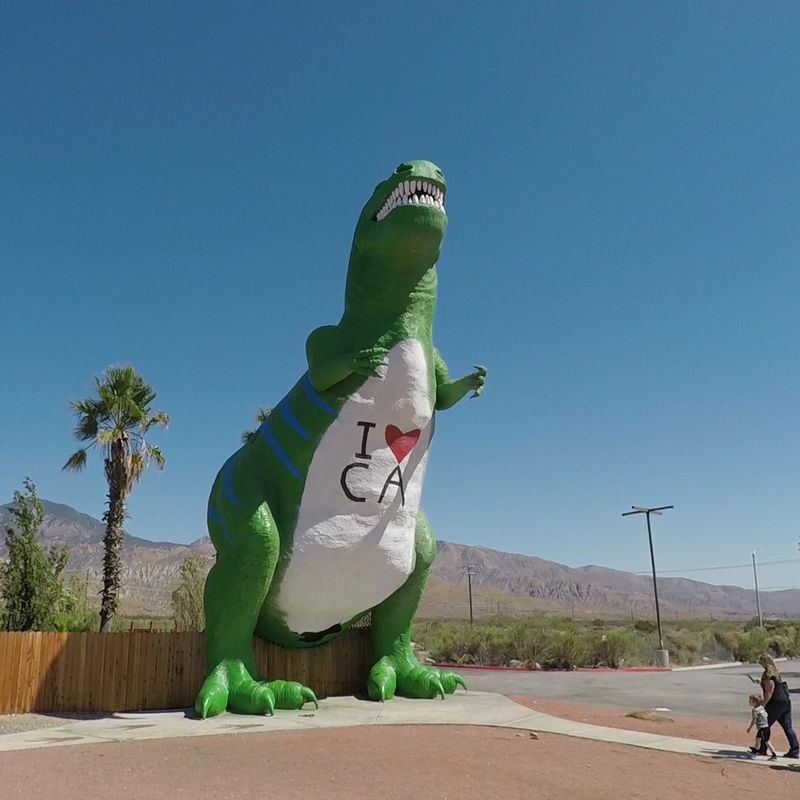
Standing beside the freeway like prehistoric sentinels, the two enormous dinosaur statues at Cabazon have been stopping traffic and sparking curiosity since the 1960s.
The attraction began as the passion project of a sculptor named Claude Bell who wanted to draw visitors to his roadside restaurant.
The larger of the two figures is a Brontosaurus, and climbing inside its belly reveals a gift shop that somehow makes the whole experience even more surreal.
Most people recognize the site from its appearance in the 1985 film Pee-wee’s Big Adventure, and that pop culture connection gives the stop a nostalgic quality that fans of the movie tend to appreciate.
A creationist museum has been added in recent years, so visitors should be aware that the educational content reflects that perspective.
The main draw for most day-trippers is simply the spectacle of the statues themselves.
Parking is easy and the site is compact enough to explore in under an hour. A small admission fee may apply for entry to certain areas.
Children tend to find the sheer scale of the dinosaurs genuinely thrilling rather than kitschy.
3. Museum of Jurassic Technology
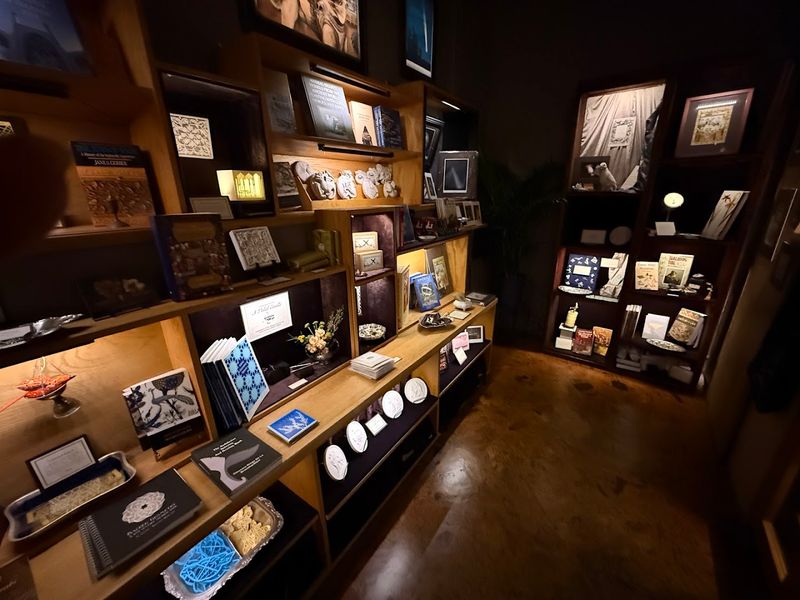
Once you enter the Museum of Jurassic Technology it feels as if you have gone through a door that leads somewhere slightly outside of reality.
The venue, situated at 9341 Venice Blvd, Culver City, CA 90232, presents its exhibits with the careful seriousness of a natural history institution while displaying content that blurs the line between fact and fiction.
Visitors encounter displays about microscopic sculptures, obscure natural phenomena, and figures from history that may or may not have existed in the way described.
The museum does not announce itself as a place of illusion, which is part of what makes it so disorienting in the best possible way.
Dimly lit corridors and hushed audio create an atmosphere that feels genuinely reverent, even when the subject matter is puzzling.
Some visitors leave convinced they have learned something profound while others leave pleasantly unsure of what they actually witnessed.
Admission is modest and the space is small enough to explore thoroughly in a couple of hours. A rooftop garden with a tea room provides a calm spot to sit and process the experience.
The museum tends to be quiet on weekday afternoons, which suits the contemplative mood of the place quite well.
4. Winchester Mystery House
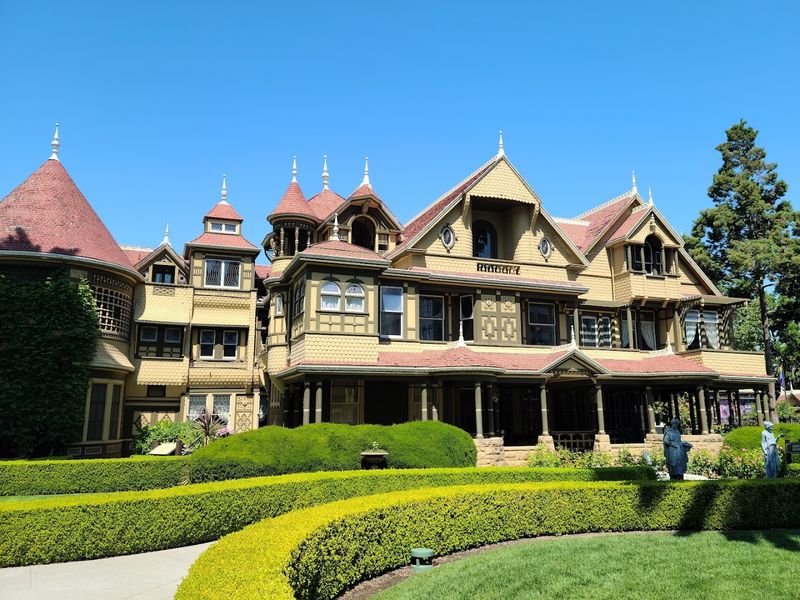
Few buildings in California carry as much architectural strangeness as this massive Victorian mansion in San Jose.
The Winchester Mystery House was built continuously for nearly 38 years by Sarah Winchester, who reportedly believed that constant construction would appease the spirits.
The result is a labyrinthine 160-room mansion filled with staircases that lead into ceilings, doors that open onto walls, and hallways that turn back on themselves without warning.
Guided tours run regularly throughout the day and cover different sections of the house depending on the tour type chosen.
The standard daytime tour covers the main floors and highlights the most famous architectural oddities.
Evening tours tend to lean into the ghostly history of the property and are popular with visitors who enjoy that kind of atmosphere.
The gardens surrounding the house are well maintained and worth a slow walk before or after the tour.
Comfortable footwear is recommended since the tour involves a good amount of walking on uneven historic flooring.
Booking tickets in advance is a smart move on weekends and during peak travel seasons when the attraction draws larger groups.
5. The Mystery Spot
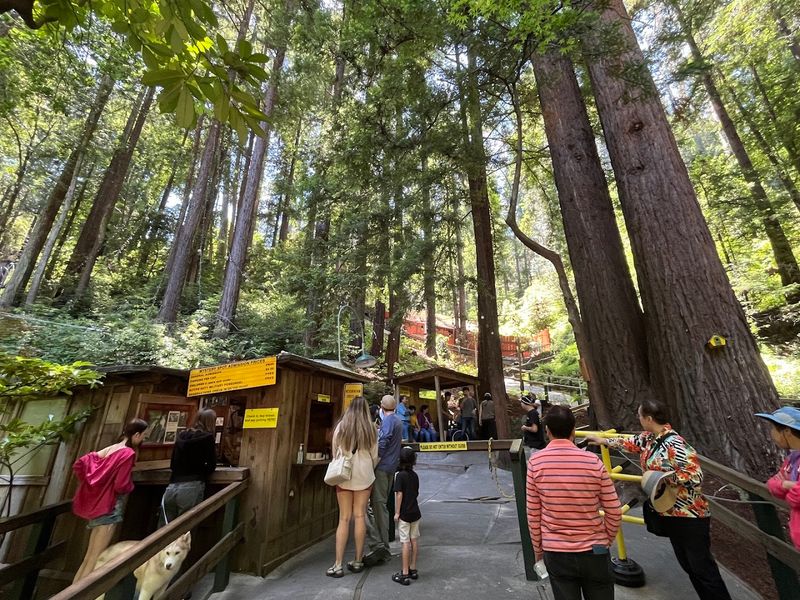
There is something deeply satisfying about standing in a spot where your brain simply refuses to accept what your eyes are telling it.
The Mystery Spot is a gravitational anomaly attraction set in the redwood forests above Santa Cruz where balls roll uphill.
People appear to shrink and grow depending on where they stand, and the feeling of leaning forward at an impossible angle seems perfectly natural inside the tilted structure on the property.
The experience is guided, which means a staff member walks groups through a series of demonstrations designed to highlight the perceptual strangeness of the location.
The explanations offered for why these phenomena occur tend to vary in their scientific rigor, which adds to the playful charm of the whole visit. Most tours last around 45 minutes and move at a comfortable pace.
The forested setting makes the walk up to the site pleasant even before the demonstrations begin. Parking is available nearby for a small fee.
Weekends bring larger crowds so arriving earlier in the morning gives a better chance of a relaxed visit. Children find the experience genuinely baffling in a way that tends to produce a lot of laughter.
6. Forestiere Underground Gardens
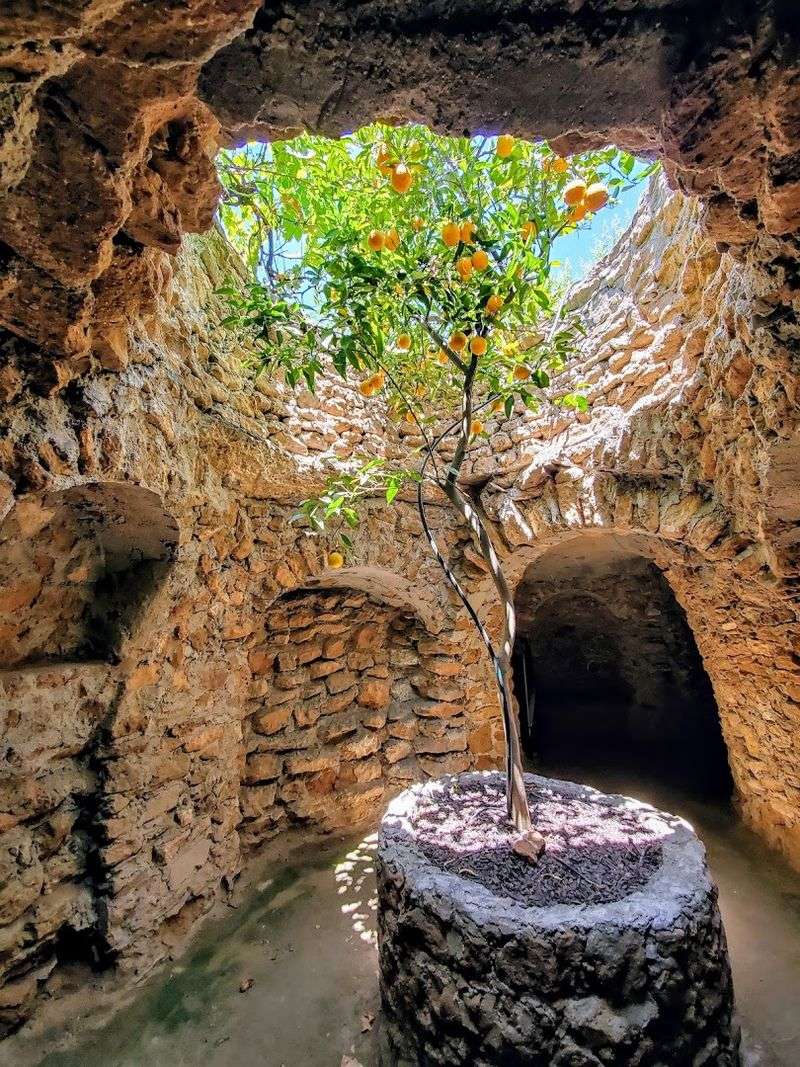
Hand-dug over the course of roughly 40 years by one determined man, these underground gardens beneath Fresno represent one of the most quietly remarkable achievements in California history.
They were excavated by Baldassare Forestiere starting in the early 1900s as a way to escape the brutal Central Valley heat.
What began as a simple underground dwelling eventually grew into a sprawling network of rooms, grottos, courtyards, and passageways covering more than ten acres underground.
The most astonishing detail of the space is that citrus and fruit trees grow throughout the underground rooms, their roots planted below ground while their branches reach up through carefully placed skylights toward the open sky.
The combination of cool underground air and natural light filtering down through those openings creates an atmosphere unlike anything found at a typical garden or historic site.
Guided tours are the only way to visit and they run on a seasonal schedule, so checking current hours before making the trip is essential.
The temperature underground stays cool even in summer, making it a genuinely refreshing stop during hot months. Groups are kept small enough that the tour feels personal rather than rushed.
7. Queen Califia’s Magical Circle
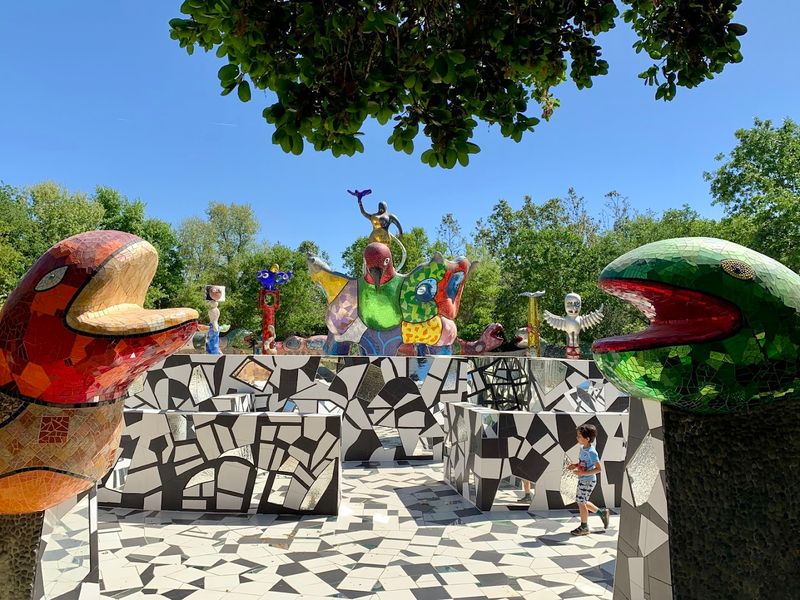
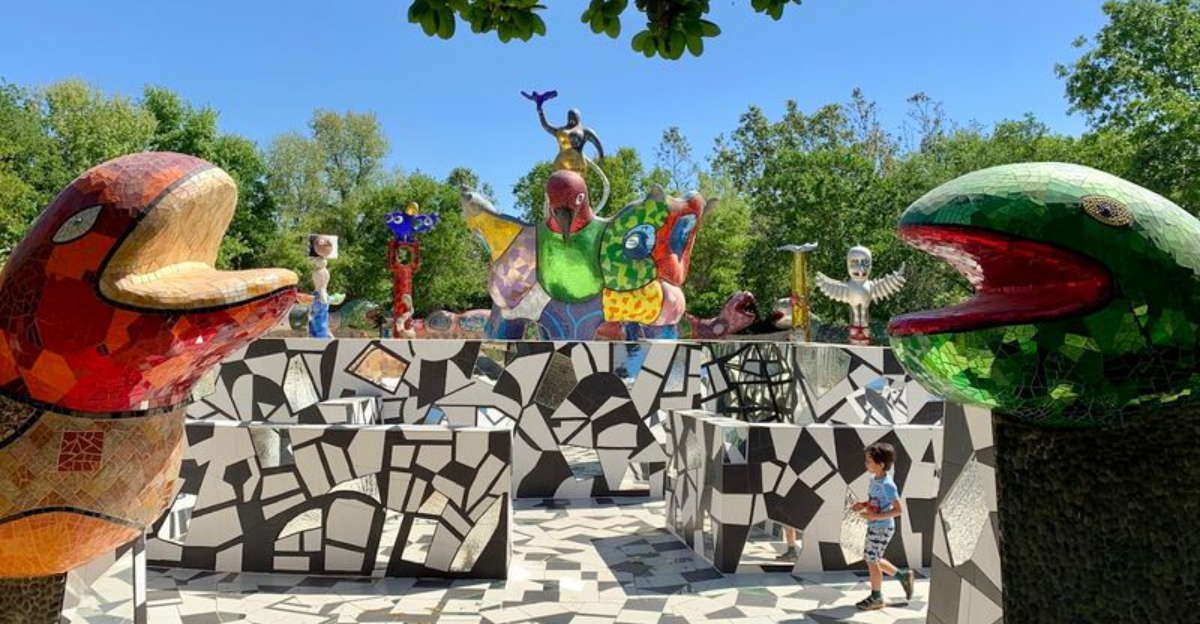
Inside a public park in Escondido, this sculpture garden feels like stumbling into a world built from myth and mosaic.
Queen Califia’s Magical Circle, situated within Kit Carson Park at 3333 Bear Valley Pkwy, Escondido, CA 92025, was created by French-American artist Niki de Saint Phalle as her final major work.
The garden features nine large totemic sculptures and a central queen figure, all covered in colorful mosaic tile and surrounded by a serpent wall that forms the boundary of the enclosed space.
The figures draw from California’s mythological origins, referencing the fictional Black queen Califia from a 16th-century Spanish novel who gave the state its name.
Standing among the sculptures gives a sense of being inside a story rather than simply looking at art.
The mosaic work is dense and detailed enough that spending time close to each figure reveals patterns and imagery not visible from a distance.
Entry to the garden is free and the space is compact but richly layered. Visiting on a clear day makes the colors of the tile work particularly striking.
The garden is accessible by foot from the main park parking area and tends to be quieter on weekday mornings.
8. Sunny Jim Sea Cave
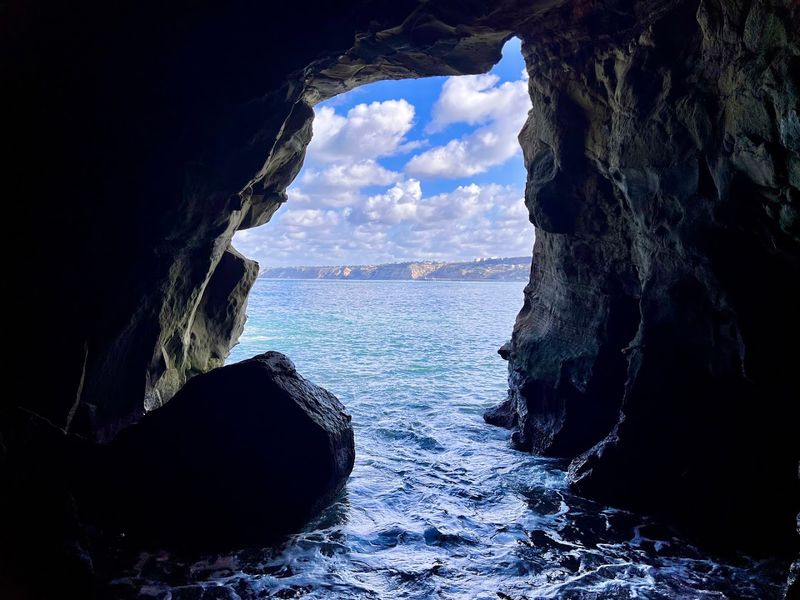
Most sea caves require a kayak or a boat to reach, but this one in La Jolla is accessible by walking down a hand-carved tunnel through solid rock.
The Cave Store sits above the cave entrance and sells a small admission ticket that grants access to a steep wooden staircase descending 145 steps through the tunnel to the cave opening.
At the bottom, the cave opens onto the Pacific Ocean and the sound of water moving through the rock is genuinely striking.
The cave earned its name from a resemblance to the comic strip character Sunny Jim, whose silhouette some visitors see in the natural rock formation at the cave entrance.
The tunnel itself was dug by hand in 1902 to give paying visitors access to the cave without needing a boat, which makes the history of the place nearly as interesting as the cave itself.
The stairs are steep and the footing can be slippery, so sturdy shoes are a practical necessity.
The experience is short but memorable, lasting around 20 to 30 minutes for most visitors. Arriving during low tide tends to offer a more dramatic view of the cave interior.
9. Noah Purifoy Outdoor Desert Art Museum
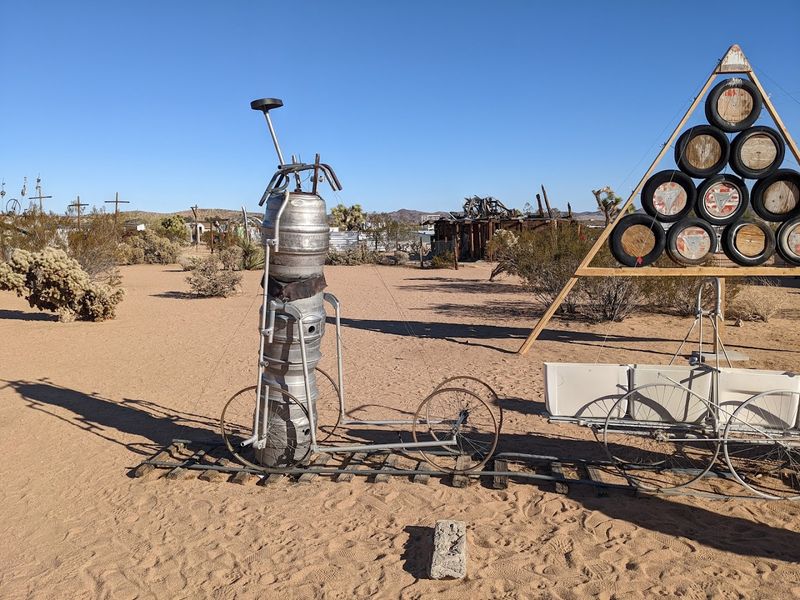
Spread across ten acres of open desert near Joshua Tree, this outdoor museum feels less like a curated gallery and more like a world that assembled itself from forgotten things.
It contains over 100 large-scale assemblage works that Purifoy built during the last 15 years of his life using found objects, salvaged materials, and debris.
Many of the pieces were influenced by the aftermath of the 1965 Watts Riots, and that historical weight gives the work a resonance beyond its visual strangeness.
Walking through the site takes roughly an hour, though some visitors spend considerably longer moving slowly between the sculptures and taking in the way the desert light shifts around the objects at different times of day.
There are no walls or barriers separating visitors from the work, which creates an unusually intimate relationship between the art and the person experiencing it.
Mornings and late afternoons are significantly more comfortable temperature-wise.
The surrounding desert landscape becomes part of the visual experience in a way that makes the whole site feel inseparable from its setting.
10. Confusion Hill
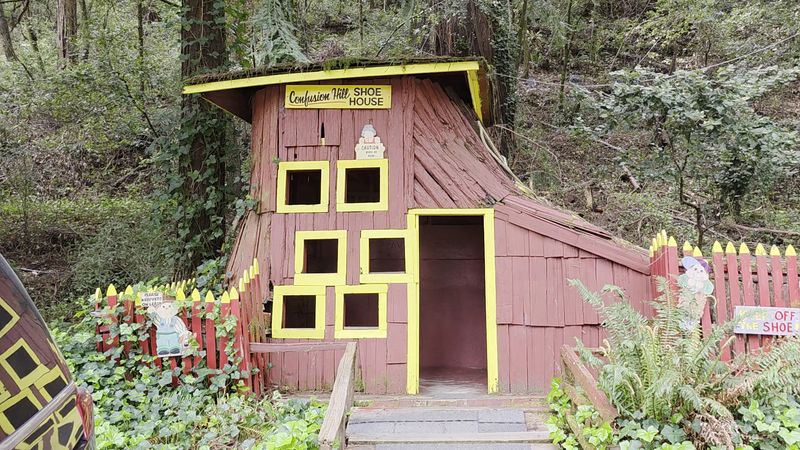
Nestled in the redwoods along Highway 101, this roadside attraction has been baffling passersby since 1949 and shows no signs of becoming any less strange.
It’s a gravity house and roadside park where water appears to flow uphill, people seem to change height depending on where they stand, and the tilted interior of the main structure makes every simple movement feel wrong.
The whole setup leans into its own absurdity with a cheerful confidence that makes the experience genuinely fun rather than gimmicky.
Beyond the gravity house, the property includes a mountain train ride through the redwoods and a collection of carved redwood sculptures that make for good photos.
The Chimney Tree, a hollow redwood on the property that visitors can step inside, has been a draw since the park first opened.
The combination of natural wonder and playful roadside attraction gives the stop a layered quality that holds interest for more than just a quick photo.
The site is family-friendly and the admission fee is modest. Stopping here pairs well with other redwood country destinations along Highway 101 like Leggett’s Drive-Thru Tree.
11. Bubblegum Alley
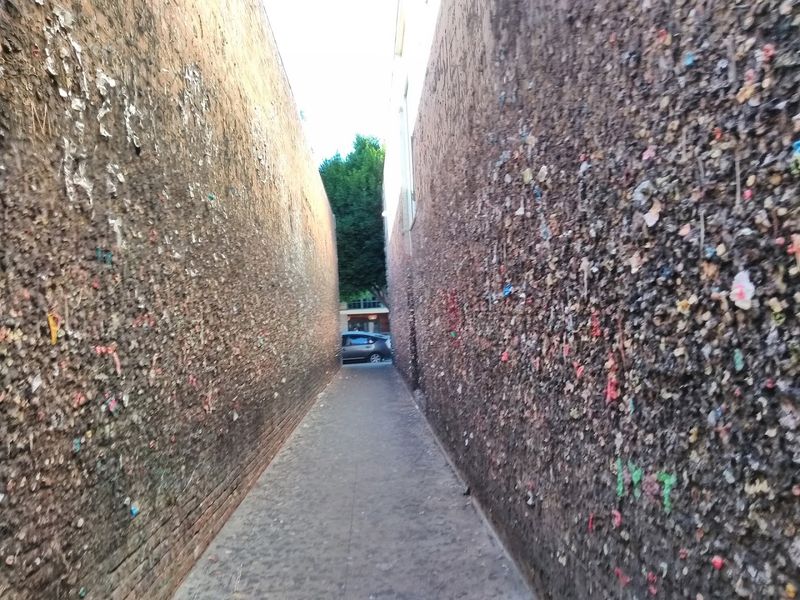
Few places in California provoke as strong a reaction as this narrow alley in downtown San Luis Obispo, where the walls are covered floor to ceiling in decades worth of chewed bubblegum.
Bubblegum Alley has been accumulating its sticky artwork since at least the 1950s, though the exact origin of the tradition is debated.
What is not debatable is the sheer visual intensity of the place, with thousands of pieces of gum pressed into the brick in swirls of pink, blue, green, and white that form an accidental mosaic.
The alley runs about 70 feet long and connects Higuera Street to Garden Street, meaning visitors pass through it rather than simply standing at an entrance.
Many people bring a fresh piece of gum to add their own contribution to the wall, continuing a tradition that has outlasted multiple attempts by local residents to have the alley cleaned.
The smell is what catches most first-time visitors off guard before the visuals even register.
Entry is free and the alley is accessible any time of day. Visiting in the morning tends to mean fewer people and better light for photos.
The surrounding downtown area has cafes and shops that make it easy to combine with a longer stroll.
12. Pioneertown
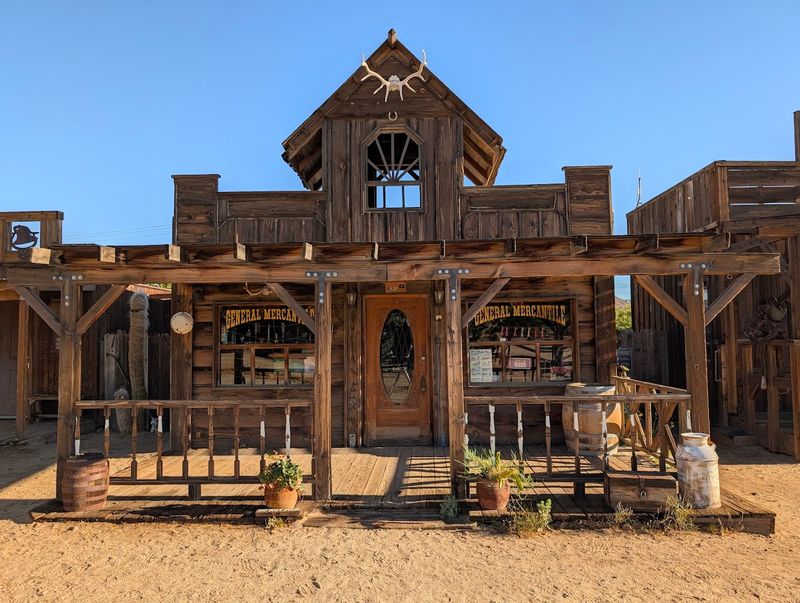
Built in 1946 as a functional movie set for Western films, this small community in the high desert never quite stopped pretending to be a frontier town and the result is one of the more surreal places to spend an afternoon.
Pioneertown features a main street of wooden storefronts that were used as actual filming locations for dozens of films and TV shows in the late 1940s and 1950s.
Roy Rogers and Gene Autry were among the performers who used the location during its Hollywood heyday.
Today the buildings still stand and several operate as real businesses including a bowling alley, a motel, and a handful of shops.
The most well-known current draw is Pappy and Harriet’s Pioneertown Palace, a live music venue and restaurant that has built a devoted following for its eclectic lineup of performers.
The combination of genuine history and current activity gives the town a layered quality that pure ghost towns tend to lack.
The surrounding desert landscape makes the drive to Pioneertown part of the experience, especially on clear days when the rock formations along Pioneertown Road catch the afternoon light in interesting ways.