This Old-School California Restaurant Has Been Roasting Prime Rib Since 1946
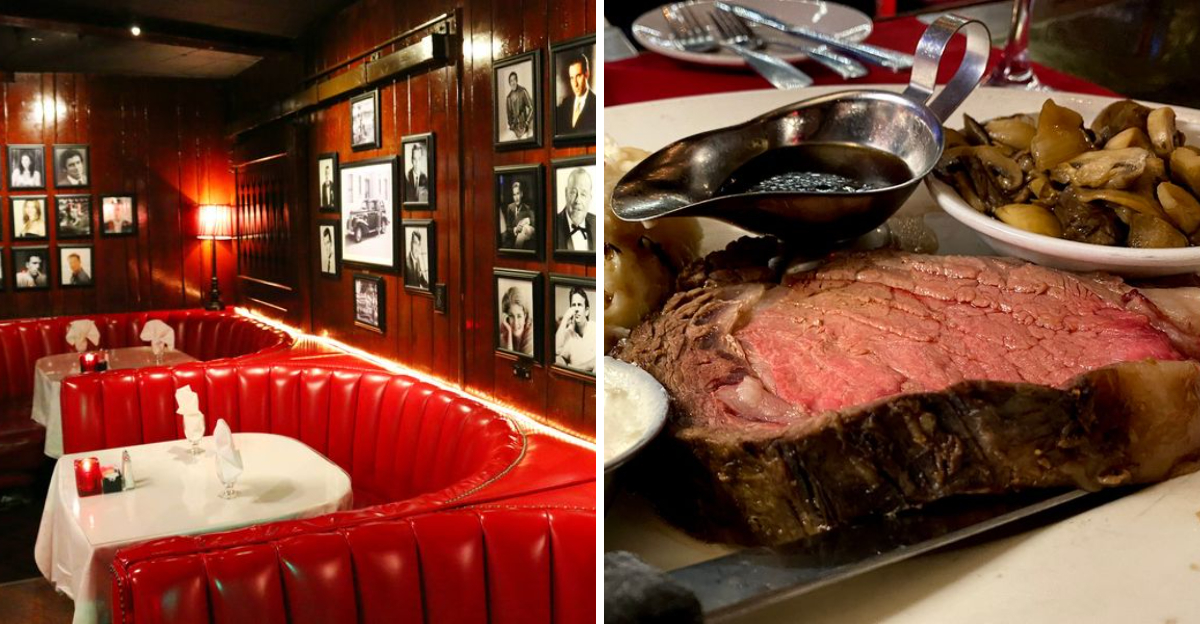
Prime rib has survived plenty of food trends since 1946. It has not needed much help.
Inside this old-school dining room, the appeal still comes from the sort of dinner that once made going out feel like an event.
Settle into a booth, let the room’s throwback character sink in, and prepare for a meal with very little interest in chasing whatever is fashionable this year.
For generations, this California restaurant has kept its classic steakhouse spirit remarkably intact.
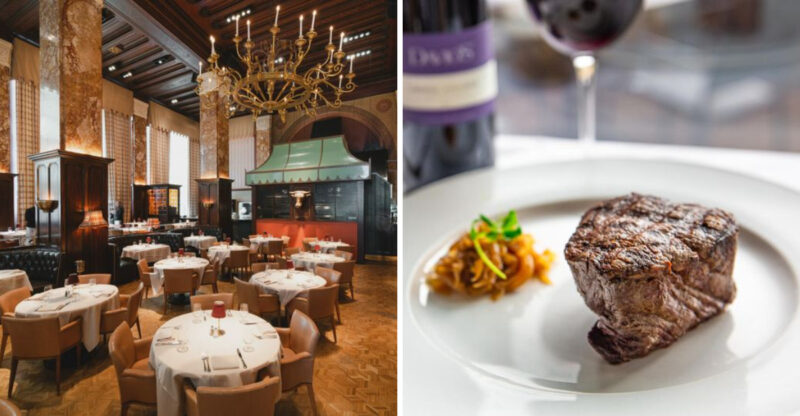
The prime rib remains the headline act. Thick slices arrive rosy and tender, carrying the kind of familiarity that explains why certain dishes never disappear from a menu.
There is history here, but it does not feel trapped behind glass. It comes with a plate.
And after nearly eight decades of roasting prime rib, that may be the most appropriate way to experience it.
Eighty Years Of Service Arrives In 2026
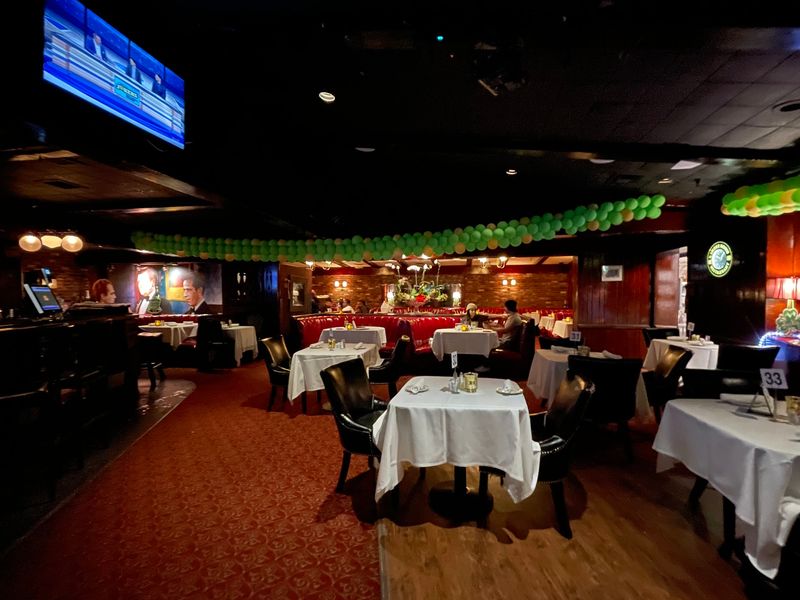
Doing the math is simple and still a little startling. Opening in 1946 means 2026 marks eighty years of continuous business, a stretch that almost no other restaurant in the Los Angeles area from that era can match.
Longevity like that is not just a fun number on a menu. Staying open through changing neighborhoods, changing tastes and changing studio fortunes takes a kind of steadiness that flashier places rarely manage.
Part of the appeal for diners today is exactly that sense of continuity.
Ordering a slow-roasted roast beef dinner in a room built for slow-roasted roast beef dinners feels different than eating the same dish in a brand new space designed to look old.
Guests often mention the old Hollywood atmosphere when describing a visit, and much of that feeling comes from the simple fact that the place was never rebuilt to chase a trend.
For travelers assembling a list of historic California dining rooms, an eightieth anniversary is a fair reason to move this one higher.
Milestone years sometimes bring extra attention and busier evenings, so a reservation is a sensible plan if a specific date matters.
A 46-Seat Beginning At Pass And Riverside
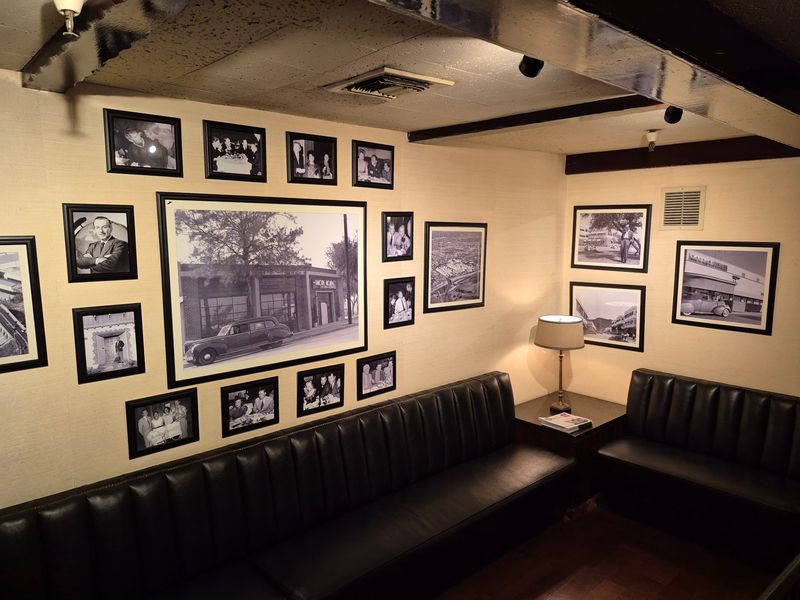
Hard to picture now, but the whole operation began in a room that could hold only forty-six people.
The first Smoke House stood at the corner of Pass Avenue and Riverside Drive in Burbank, a modest spot rather than the sprawling dining room guests know today.
Forty-six seats means a handful of booths and a few tables, with a kitchen sized to match. Filling that room was easy once word spread among studio workers looking for a hot lunch nearby.
Popularity became a problem in the best possible way. The owners eventually had to hunt for somewhere larger because turning people away every night is no way to run a restaurant.
Knowing the humble starting point makes the current building more interesting to walk through.
The scale of the place today is a direct result of demand that outgrew a tiny original space rather than an ambitious plan drawn up in advance.
Small beginnings also explain the menu philosophy that stuck. A forty-six seat restaurant cannot afford to be complicated, so straightforward American cooking done consistently became the foundation.
That original corner is gone as a restaurant site, but the story behind it still shapes how the place operates.
Settling Into The Former Red Coach Inn Building
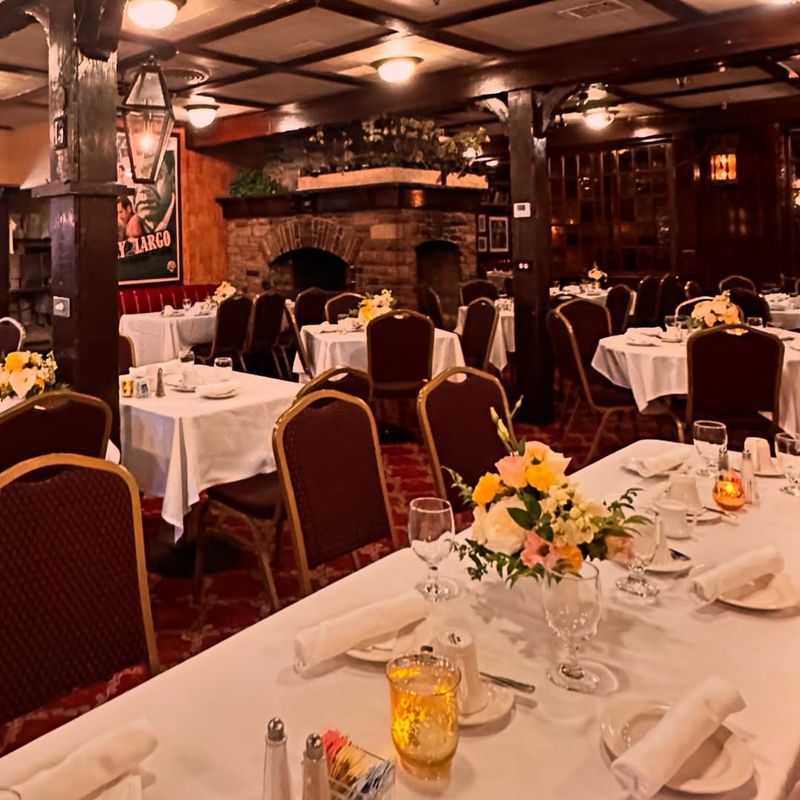
Moving day came at the end of the 1940s, and the new address turned out to be permanent.
Smoke House Restaurant now operates at 4420 Lakeside Dr, Burbank, CA 91505, in a building originally constructed as the Red Coach Inn in 1947 that never opened as a restaurant under that name.
Taking over a finished but unused restaurant building was unusually good luck. The layout was already built for dining, which helped the move happen without years of construction.
Seven-plus decades in the same structure means the walls themselves carry the history. Additions and updates have happened over time, but the bones and the general feel have stayed recognizable.
Walking in, the transition from bright Southern California daylight to the dim interior takes a moment for your eyes to adjust. Lighting stays low throughout the evening, which many guests describe as part of the charm.
Practical detail worth knowing: valet service is available and street parking exists nearby, though pricing can change over time. Arriving a few minutes early gives you room to sort parking without feeling rushed.
Hours run from 11:30 in the morning most days, with Sunday starting at 10, so lunch visits are entirely possible.
Warner Bros. Sits Right Across The Street
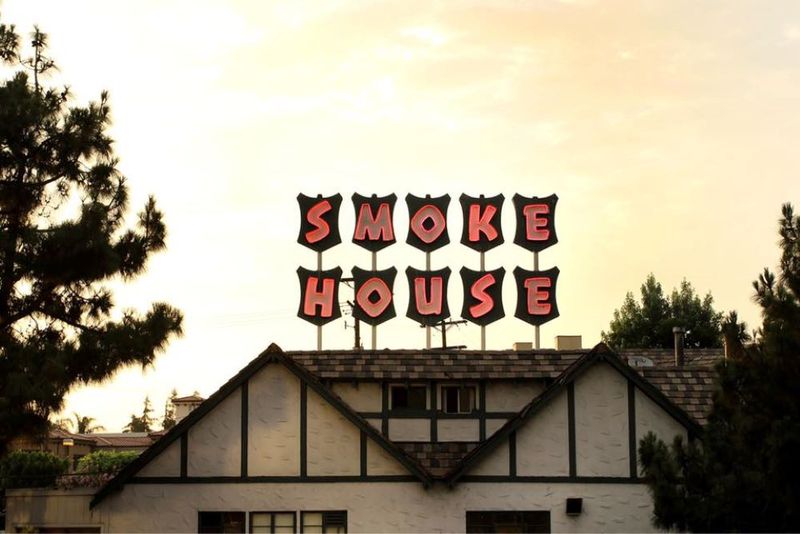
Location explains almost everything about how this restaurant developed.
The dining room sits directly across from the Warner Bros. studio lot, which made it the closest sit-down option for thousands of people building sets, editing film and acting in front of cameras.
Proximity like that shapes a lunch crowd. Studio schedules run long and unpredictable, so a nearby place serving substantial food became part of the workday for decades.
Visitors touring the area often pair a studio visit with a meal here, and the short distance makes that easy without extra driving. Midday tends to be a natural window for that combination.
Being neighbors with a working studio also gave the restaurant its steady supply of stories. Framed photographs on the walls reflect generations of guests who worked a few hundred feet away.
For anyone planning a Burbank day, the geography is genuinely convenient rather than a marketing angle. Lakeside Drive keeps the restaurant slightly tucked away from the busiest thoroughfares while remaining minutes from the studio gates.
Weeknight crowds can still be strong even later in the evening, so calling ahead helps. A reservation removes the guesswork if your plans depend on a specific time.
Early Hollywood Regulars Set The Tone
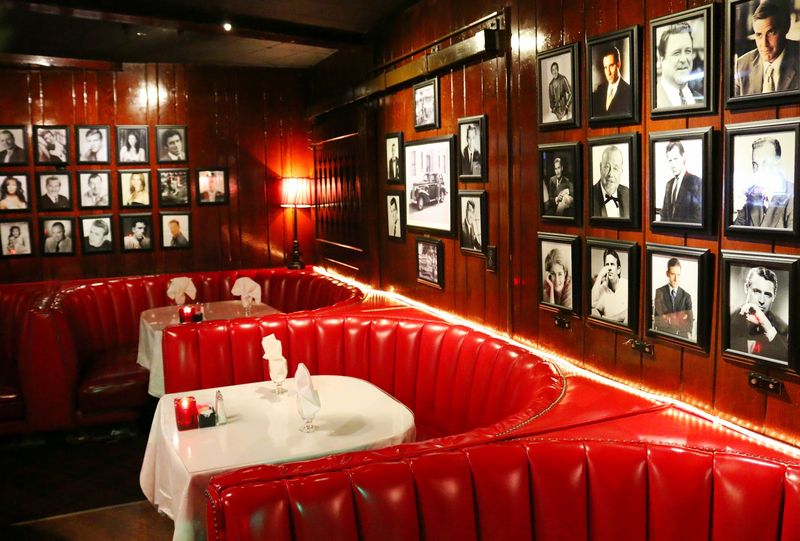
Guest lists from the early years read like a radio broadcast schedule.
Bob Hope and Bing Crosby are among the well-known early customers named in the restaurant’s own history, and their presence helped establish the room as an entertainment industry hangout.
Nearby studios did the rest of the work. When performers, writers and crew members all eat in the same place night after night, a restaurant becomes a gathering spot rather than just a kitchen.
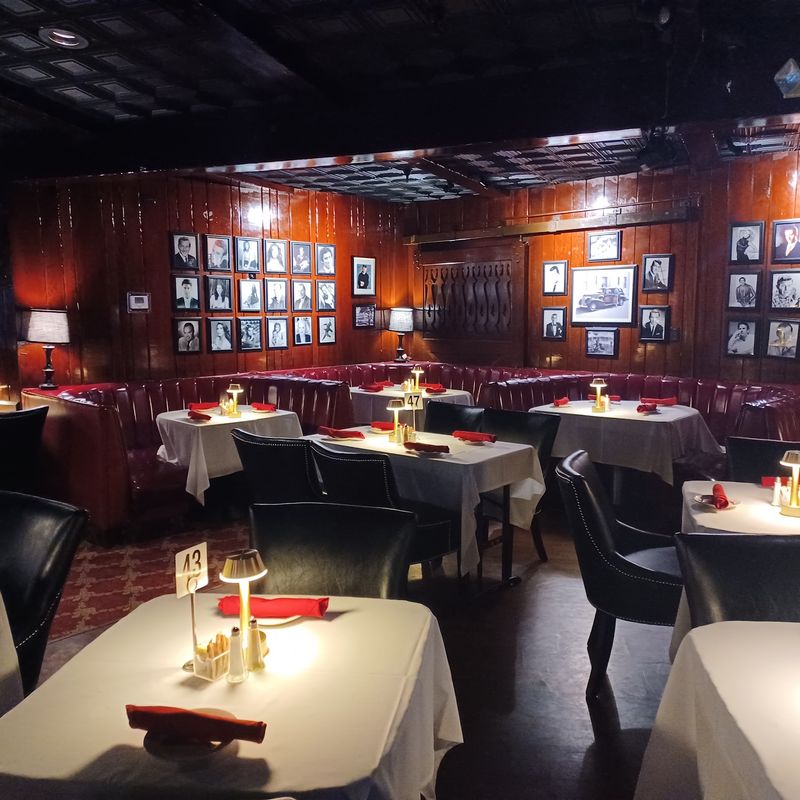
Framed photographs covering the walls document that stretch of time, and plenty of guests spend part of their visit reading them. Tables near the perimeter tend to offer the best view of the collection.
The connection continued in unexpected ways. A well-known actor named his production company Smokehouse Pictures after the restaurant, which is a fairly permanent kind of compliment.
None of that history changes how the food arrives at your table, but it does change how the room feels. Sitting in a booth that has hosted eight decades of industry conversation adds a layer to an ordinary dinner.
Curiosity about the walls is normal and welcome here. Taking a slow walk toward the dining room instead of hurrying to your seat is worth the extra minute.
Prime Rib That Genuinely Dates Back To 1946
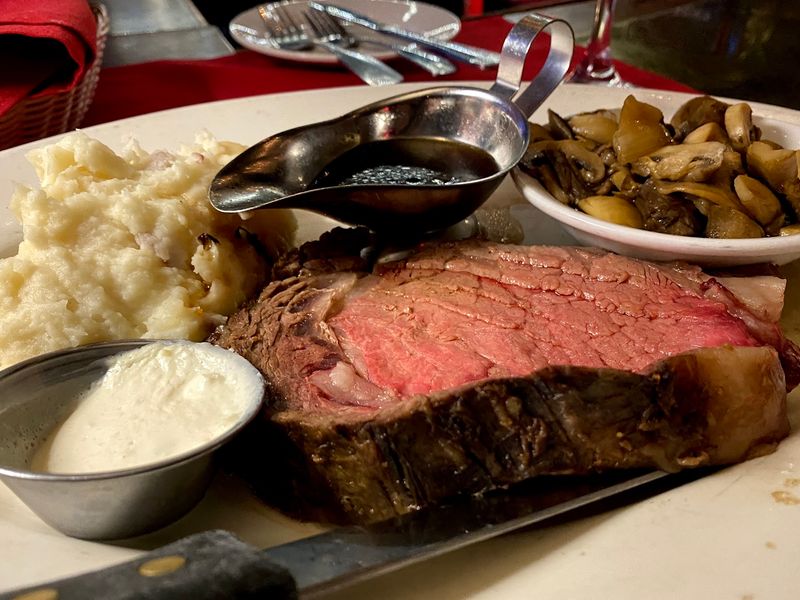
Very few dishes in Los Angeles County can claim an unbroken run since the year World War II veterans were coming home.
Prime rib has been listed as a Smoke House specialty since 1946, and it still arrives the classic way with au jus and horseradish alongside.
The roast is cooked slowly rather than seared fast, which is what gives it that soft, even pink center instead of a sharp crust and gray edges.
Slow roasting also keeps the meat juicy enough that the au jus works as a companion rather than a rescue.
Horseradish on the side is not decoration either, since its sharpness cuts through the richness of the beef and resets the palate between bites. A small dab goes a long way, so it is worth starting light and adding more.
Prime rib shows up often in customer conversation about the restaurant, which tells you plenty about what regulars order.
Portions are described by many guests as generous, so sharing sides or planning for leftovers is reasonable.
Anyone visiting for the first time might treat the prime rib as the anchor of the meal and build around it, rather than ordering several heavy plates at once.
Two Prime Rib Sizes To Choose Between
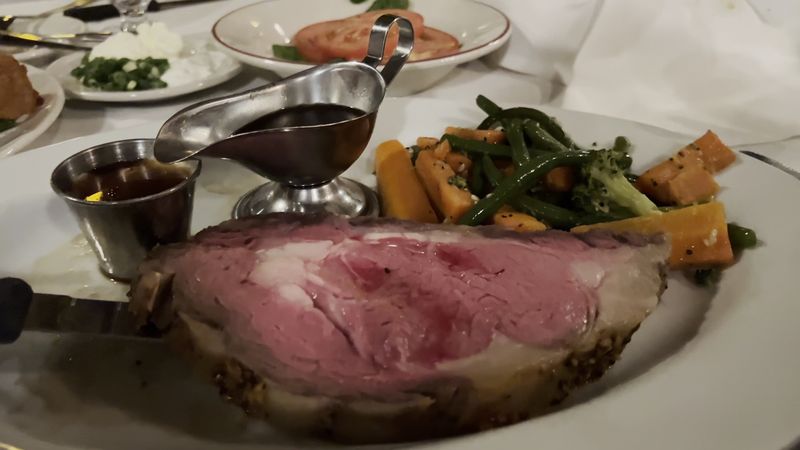
Decision-making gets simpler when a menu is honest about size. The dinner menu currently offers prime rib in a Regular Cut and a larger Smoke House Cut, both slow-roasted and served with a classic side.
Choosing between them mostly depends on appetite and whether appetizers are involved. Guests who start with garlic cheese bread or soup often find the Regular Cut plenty.
The larger cut appeals to anyone treating the meal as the main event of the night. Several diners describe pairing it with a loaded baked potato and still taking food home.
Both versions arrive with au jus and horseradish in keeping with tradition. Requesting the fat trimmed is a common ask and generally accommodated.
Sides open up the rest of the plate. Baked potato, mashed potato and vegetable options are typical, and some upgrades carry an additional charge.
Prime rib is a slow-roasted item, which means availability late in the evening is never guaranteed at any restaurant serving it. Earlier seatings reduce the chance of missing out.
For a first visit, ordering the Regular Cut and adding a shared appetizer gives a good sense of the kitchen without overwhelming the table.
Cameras Eventually Turned Toward The Restaurant Itself
Feeding the film industry for decades eventually led to the obvious next step.
The dining room became a filming location itself, and the restaurant’s official history specifically highlights its appearance in the 2016 film La La Land.
Other credits followed the same pattern. The 2012 film Argo used the space, and an episode of the television series The Office was filmed there as well.
Recognizing the room from a screen is part of the fun for many visitors. The vintage booths and paneling photograph as instantly period-appropriate, which is exactly why productions keep choosing it.
Guests sometimes point out corners they recognize while walking to their table. Staff are used to the questions, and the wall photographs give plenty of additional context.
Filming has never turned the place into a museum, though. Regular service continues to be the main business, and the dining room functions as a working restaurant first.
Anyone curious about screen locations in the Los Angeles area gets a rare combination here: a place you can actually sit down and eat in rather than photograph from the sidewalk.
Ordering dinner in a room that has appeared in an Academy Award-winning musical costs no more than dinner anywhere else nearby.