This Tiny California College Is An Unexpected Bargain For Students
College doesn’t have to come with a jaw-dropping price tag.
California is home to a tiny college that offers an unexpectedly affordable private education.
That alone makes it worth a closer look, especially for students who want a more intimate campus without automatically taking on an enormous financial burden.
There’s something appealing about a college that keeps things small. Fewer students can mean a quieter campus and a more personal academic experience.
It can also create a stronger sense of community, where familiar faces become part of everyday life.
The real surprise here, though, goes beyond tuition.
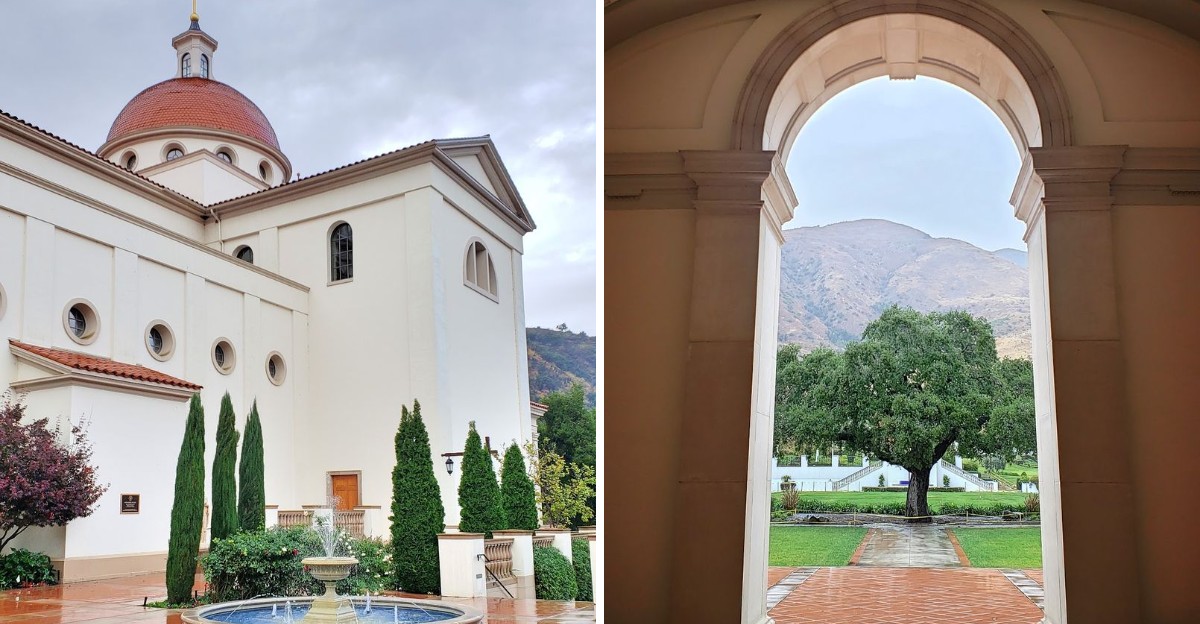
This college has a distinctive approach to education and a setting that feels worlds away from the typical university experience.
An Enrollment Of Just 566 Students Across Two Campuses

Small does not begin to cover it.
Thomas Aquinas College reports a combined enrollment of 566 students across both of its campuses, which is smaller than plenty of American high schools.
The California location holds roughly 372 undergraduates, so daily life unfolds at a pace where faces become familiar within weeks rather than years.
That size changes how the ordinary parts of college feel.
Dining halls, walkways, and study spaces stay busy without becoming crowded, and students rarely wait in long lines for anything.
Shared meals and shared reading assignments give people an easy starting point for conversation, since everyone is working through the same material at the same stage.
Families weighing this option should think honestly about what a tiny community offers and what it asks in return.
Privacy is limited, and the social circle stays consistent from freshman year through graduation.
Some students find that steady familiarity comforting, while others may prefer the anonymity of a larger school.
Visiting during a regular class day gives the clearest sense of fit.
The campus office hours run Monday through Friday from 8:30 AM to 5 PM, so weekday visits line up better with staff availability than weekend trips do.
A No. 8 National Ranking Among Best-Value Small Colleges

Rankings come and go, but value studies tend to catch the attention of parents doing math at the kitchen table.
A 2026 SmartAsset study placed Thomas Aquinas College at No. 8 nationally among small colleges and universities, measuring factors that included cost, graduation rate, and earnings.
The main campus sits at 10000 Ojai Rd, Santa Paula, CA 93060, and the school can be reached by phone for questions about admissions or visits.
What makes that ranking interesting is the combination it reflects.
A school can be cheap without being effective, or effective without being affordable, and value studies look for schools that manage both.
The college pairs a fairly modest published price with a strong record of students finishing their degrees on schedule.
Families should still treat any single ranking as one data point rather than a final answer.
Methodologies differ between publications, and results shift from year to year as data gets updated.
The more useful move is to compare the actual net cost after aid against similar schools on a personal list.
Still, recognition like this helps explain why a college with one degree program and fewer than 600 students keeps showing up in conversations about smart college spending.
Four-Year Graduation Rates That Beat Most Schools

Finishing college in four years is far less common than most families assume.
At this school the four-year graduation rate is reported at 82%, while the 2026 SmartAsset study lists an 83% graduation rate for the institution.
Either figure sits well above the national average for four-year completion.
The reason likely ties back to how the academic program is built.
Every student follows the same sequence of courses, so there is no scrambling to switch majors, no lost credits from a change of direction, and no waiting for a required class that fills up.
The path is laid out from the first semester to the last. That structure matters financially more than most people realize.
A fifth year of college adds tuition, housing, and meals while delaying a paycheck, which can quietly erase whatever savings a lower sticker price provided.
Graduating on time is one of the most reliable ways to keep total college costs down.
For students drawn to broad study across many subjects, the set path removes a lot of guesswork and keeps progress steady from year to year.
One Single Bachelor’s Degree For Everyone

Here is something almost no other college can say.
Every single graduate leaves with the same credential, a Bachelor of Arts in Liberal Arts, earned through one integrated curriculum that covers mathematics, science, literature, philosophy, and theology.
Nobody applies to a separate school within the college or competes for a spot in a popular department.
The practical effect shows up in everyday conversation.
Students in different class years can discuss the same books because everyone eventually reads them, and an older student can genuinely help a younger one with material they studied two years earlier.
Study groups form easily since the reading list is universal.
Careers after graduation are not limited in the way some people expect from a broad degree.
Graduates go on to law, medicine, teaching, business, and ministry, usually with additional training or graduate study afterward.
The degree builds reading, writing, and reasoning skills rather than job-specific technical training.
Anyone considering this route should be realistic about the timeline.
Students aiming at specialized fields may need extra coursework or a graduate program to meet licensing requirements.
Talking with the admissions office early about post-graduation plans helps clarify what steps follow the diploma.
Class Sizes Between 14 And 18 Students
Hiding in the back row is not really an option.
Tutorials, seminars, and laboratories at the college generally hold just 14 to 18 students, and the overall faculty-student ratio sits at 11 to 1.
Everyone sits where they can see everyone else, usually around a table rather than in rows.
The size shapes the rhythm of a class period.
Discussions move between voices instead of flowing one direction from a podium, and quiet students get noticed and drawn in rather than overlooked.
Preparation matters because unprepared silence becomes obvious quickly.
Tutors get to know each student’s thinking over a semester, which changes the quality of feedback on written work.
Comments tend to address how a particular student reasons rather than offering generic notes.
Office hours become conversations between people who already know each other well.
Speaking regularly in front of peers builds confidence over time, and most people report that the discomfort fades by the end of the first semester.
For anyone who has ever felt like a number in a room of three hundred, the contrast is dramatic.
Almost Every Required Book Comes Free

Textbook costs catch families off guard every single fall.
For the 2026-27 academic year, the college says nearly all books needed for the academic year are provided to students at no cost.
That covers the core reading that every student works through as part of the curriculum.
Savings here are not trivial. Students at many schools spend hundreds of dollars per semester on required texts, often for books used once and resold at a loss.
Removing that expense makes the total cost of attendance easier to predict from the start.
Having the books provided also supports how classes run.
When the entire seminar holds the same edition, page references line up and discussion moves smoothly without confusion over different translations or printings.
Students can mark up their copies freely as they read.
Families budgeting for the year should still plan for small personal supplies like notebooks, pens, and a laptop if desired.
Checking directly with the college about what the book provision covers for a given year is a smart step, since programs like this can be adjusted over time.
Zero Extra Fees On The Tuition Bill

Hidden fees turn many college bills into a guessing game.
For 2026-27, direct costs at the school are listed as $31,900 for tuition plus $11,800 for housing and meals, with no additional fees attached.
The number families see is the number families pay before aid is applied.
Elsewhere, fee lines can stack up quickly with technology charges, activity fees, health service fees, and orientation costs.
Those extras sometimes add over a thousand dollars a year that never appeared in the original comparison. A no-fee structure makes side-by-side comparisons far more honest.
Budgeting still requires attention to items outside direct costs.
Travel to and from campus, personal spending, and health insurance if not already covered should all appear on a family worksheet.
A student flying in from another state will spend more on transportation than one driving from a nearby California town.
Requesting a full cost of attendance breakdown from the college is the cleanest approach.
The document lists both direct and estimated indirect costs, which helps families see the real annual figure.
Campus Jobs Paying At Least $4,300 A Year

Earning money while studying is a normal part of life on this campus.
Beginning with the 2026-27 academic year, students who are not receiving institutional work-study or grant aid can work eight hours per week in campus departments and earn at least $4,300 for the school year.
Positions sit within various departments across the college.
Eight hours weekly works out to roughly one shift per day across a few days, which most students can fit around a reading-heavy schedule.
Campus jobs also come with the convenience of a short walk rather than a commute, since work sites sit within the same compact grounds as classes and housing.
Money earned this way can cover personal expenses, travel home for breaks, or reduce the amount a family borrows.
Working on campus carries side benefits beyond the paycheck.
Students build relationships with staff across departments and pick up practical habits around responsibility and time management.
Those experiences show up on a resume alongside the degree.
Anyone interested should ask the financial aid office how campus employment interacts with other aid.
Eligibility rules differ depending on whether a student already receives institutional work-study or grant support.