This One-Of-A-Kind Nebraska Animal Rescue Lets You Cuddle Goats And Sleep Under The Stars
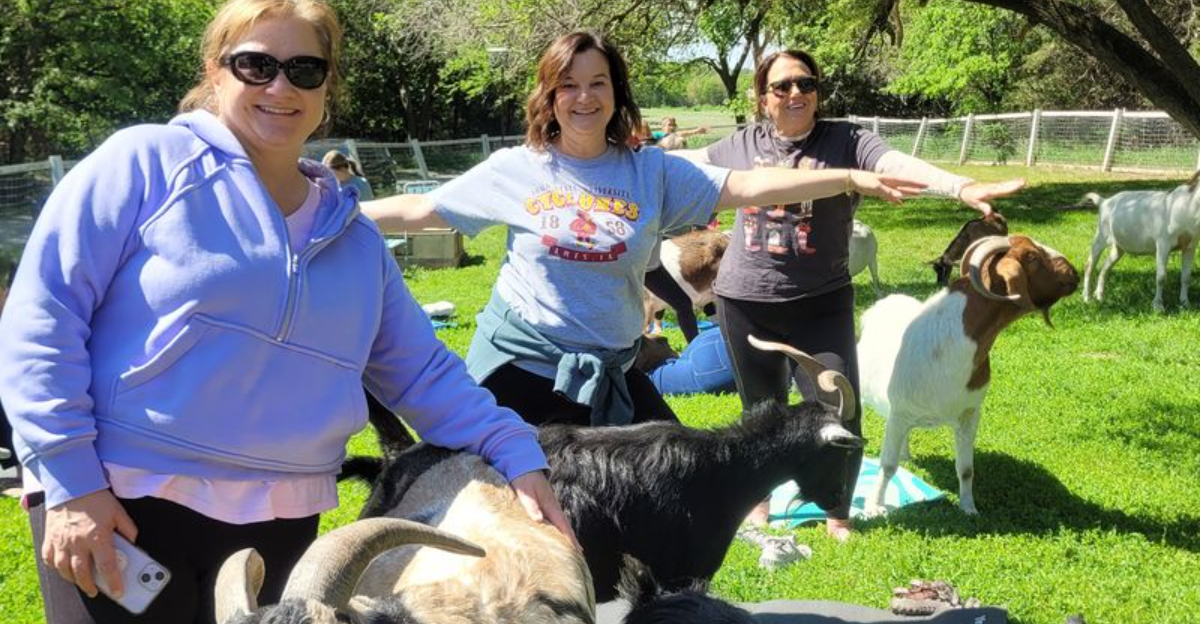
You came for the yoga with goats. Then sunset happens.
Suddenly, the whole visit shifts from playful to peaceful as the rescue quiets down and staying overnight starts sounding much better than heading home.
A few curious animals may still be nearby, but the pace feels completely different once daylight fades.
This Nebraska rescue gives animal lovers a rare chance to spend time with goats and sheep while supporting a place built around their care.
Expect the kind of visit that works best when you slow down. Sit with the animals. Learn a little about their stories. Let the kids linger if they are having the time of their lives.
Then, if you are staying overnight, trade the usual hotel routine for a much simpler evening under the stars.
A Real Nonprofit Sanctuary, Not A Petting Zoo
The difference between a sanctuary and an attraction shows up in the details, and it shows up quickly here.
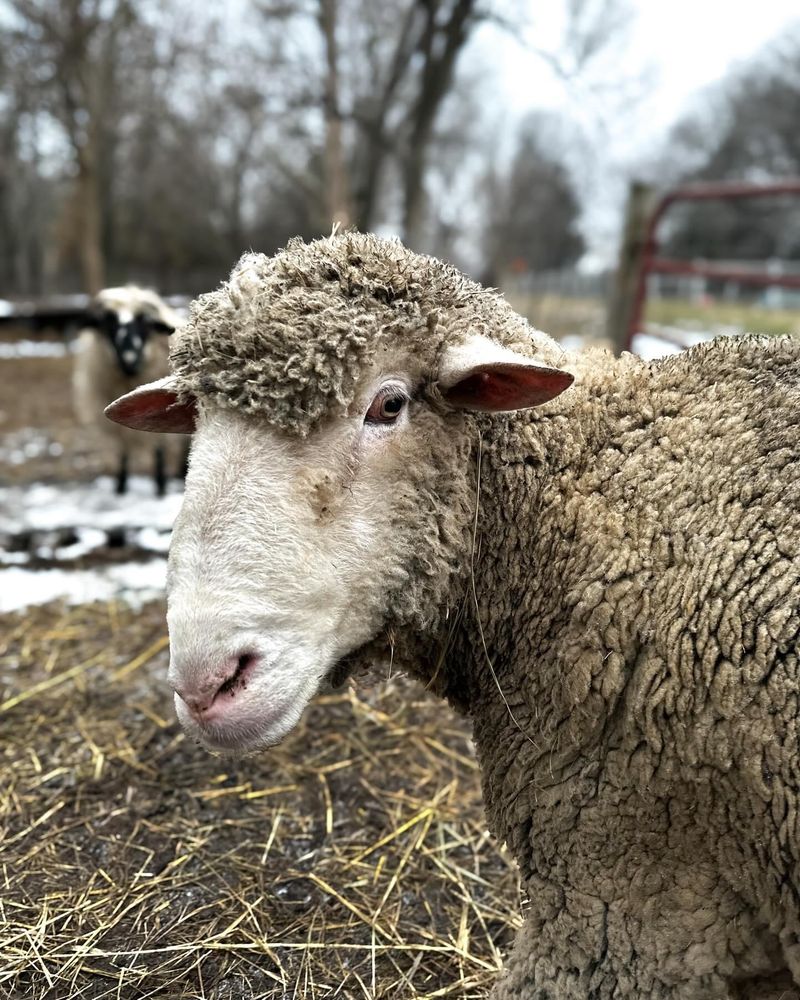
Shepherd’s Rest Goat & Sheep Rescue operates as a recognized 501(c)(3) nonprofit organization, and its stated mission is to rescue, rehabilitate, and provide permanent sanctuary for goats and sheep in need.
The rescue can be found at 426 W Cedar Rd, Pickrell, NE 68422, roughly a half hour south of Lincoln by car.
Public education is part of the work too, specifically education about goats and sheep as therapy animals.
Beyond housing animals, the organization offers qualified animal-assisted therapy and trains people to provide that therapy with animals adopted through its program.
The guiding philosophy is to bring animals and people together in a way that supports healing for both sides of the relationship.
Understanding that mission changes how a visit feels. Guests are stepping into a place built around the animals rather than around entertainment, which means the pace follows the herd instead of a schedule.
Hours are listed as 4 to 8 PM Monday through Friday and noon to 6 PM on weekends, though calling ahead at 402-580-5299 is the sensible move since farm days shift.
Thirteen Acres Of Woodland And Meadow Near Indian Creek
Space is the first thing that registers when the driveway opens up.
The sanctuary occupies 13 acres near Indian Creek, and the land is a mix of woodland and meadow rather than one flat pasture.
Trees edge parts of the property while open grass carries the middle, and the camping area sits within that patchwork instead of being separated from it.
Terrain like that shapes how a visit feels physically. Footing shifts between mowed paths, packed dirt, and grass, so closed shoes with decent grip make more sense than sandals, especially after rain.
Sound is different here too. Traffic noise is minimal, which leaves room for birds, wind through the tree line, and the occasional conversation between goats across a fence.
One review mentions the drive in with the note to follow the lane all the way rather than turning back, which is worth remembering since rural lanes can look uncertain to first-time visitors.
GPS gets close, but patience with the final stretch helps.
Shade matters on hot afternoons, and the woodland edges provide some. Summer visits are more comfortable in the later hours listed for weekdays, while spring and fall offer easier walking temperatures overall.
Cuddling The Goats Is Genuinely Part Of The Tour
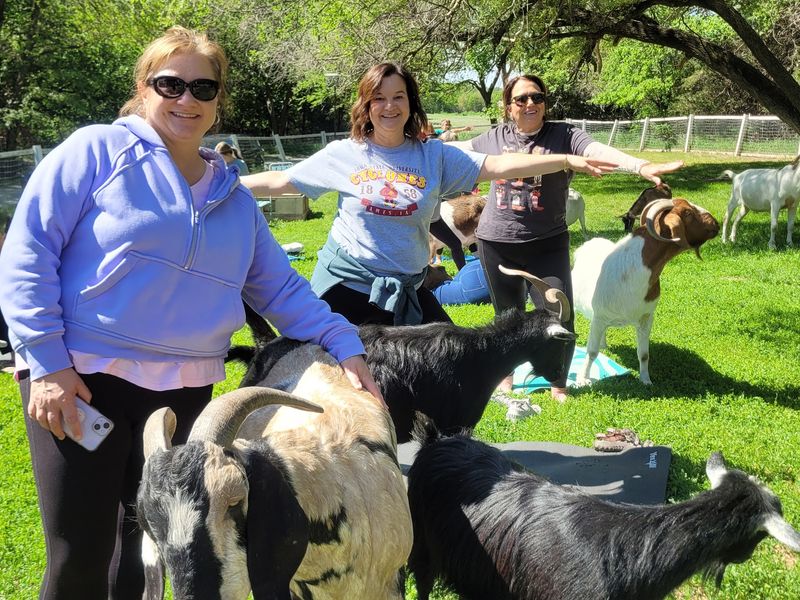
Plenty of places promise animal contact and then keep a fence between guests and the animals the whole time.
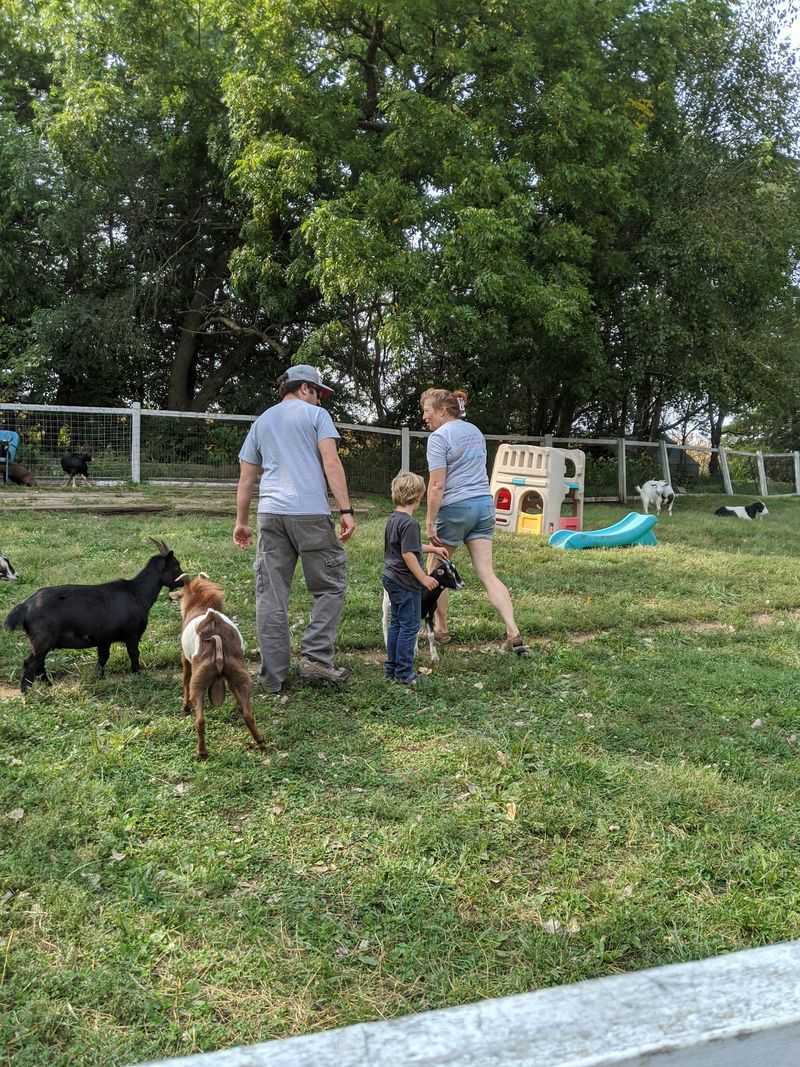
Guided tours at the rescue specifically allow visitors to spend extra time cuddling and posing with the resident animals.
That means sitting down, letting a goat come over, and getting photos that include actual contact rather than a distant shot.
Goats have distinct personalities, and reviews mention that residents here have names and recognizable temperaments. Some lean in for scratches, some prefer to inspect shoelaces, and some nap through the whole thing.
Practical tip: wear clothes that can handle hoof prints and a little hay. Goats are curious about pockets, zippers, hair ties, and anything dangling, so leaving loose accessories in the car saves trouble.
Letting an animal approach first works better than reaching for it.
Baby goats come up repeatedly as visitor favorites, which makes spring visits appealing when kids are on the ground and active. Availability of babies is seasonal and cannot be guaranteed.
Asking questions is welcome, and staff and volunteers are described as informative and friendly across many reviews.
Goat Yoga Runs From Spring Through Fall
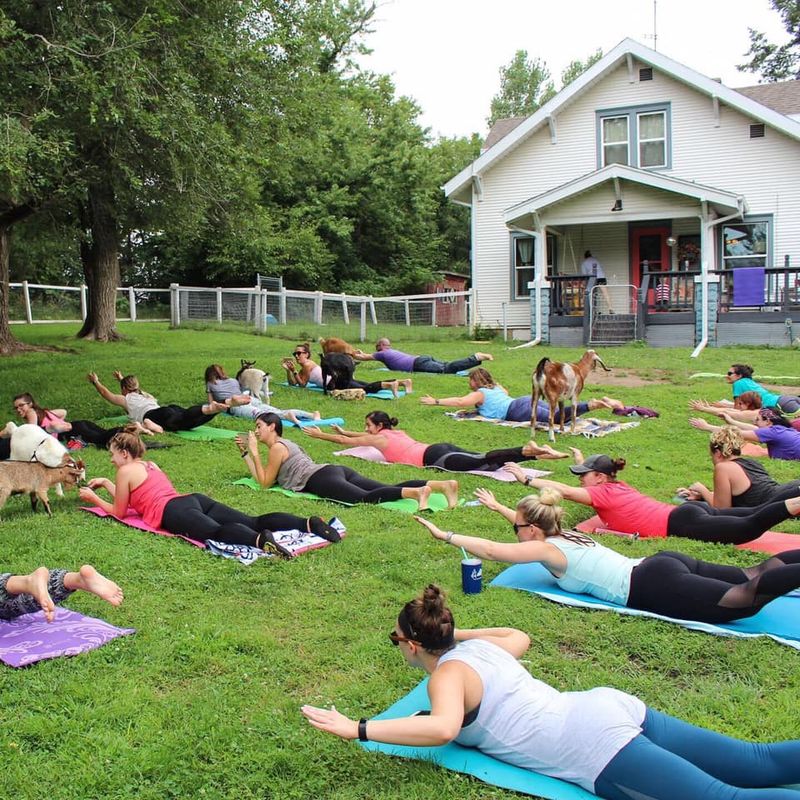
Stretching gets a lot more entertaining when a goat decides your mat belongs to it.
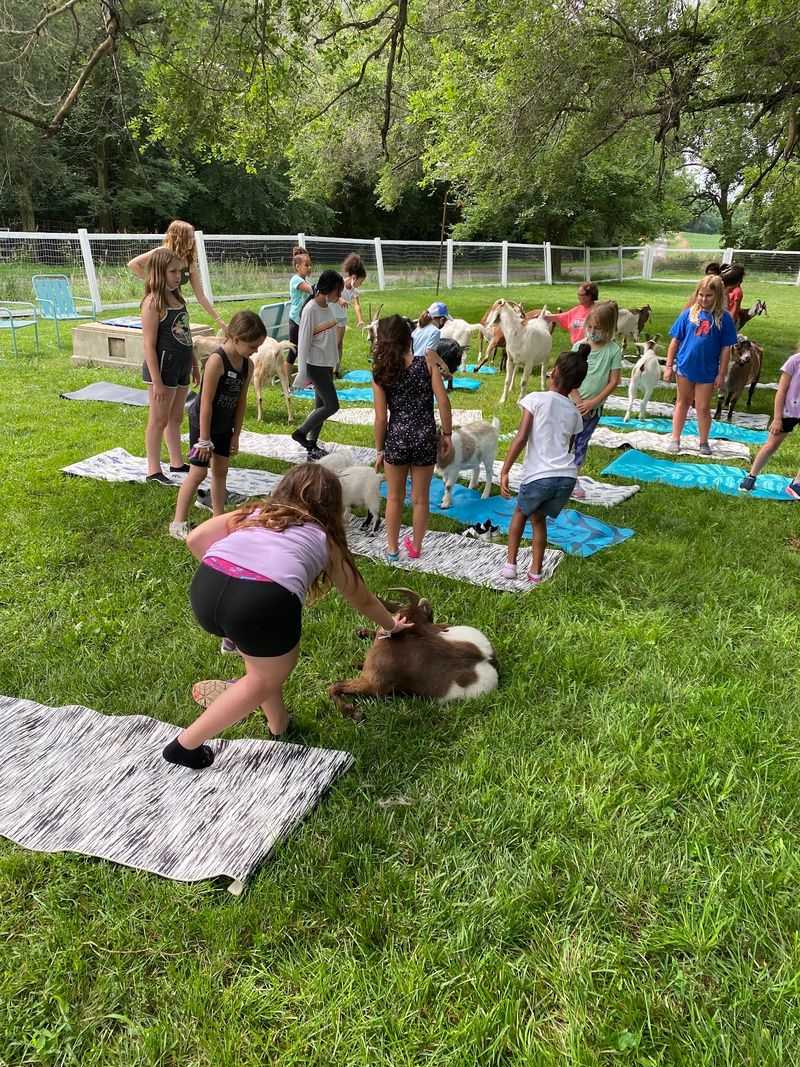
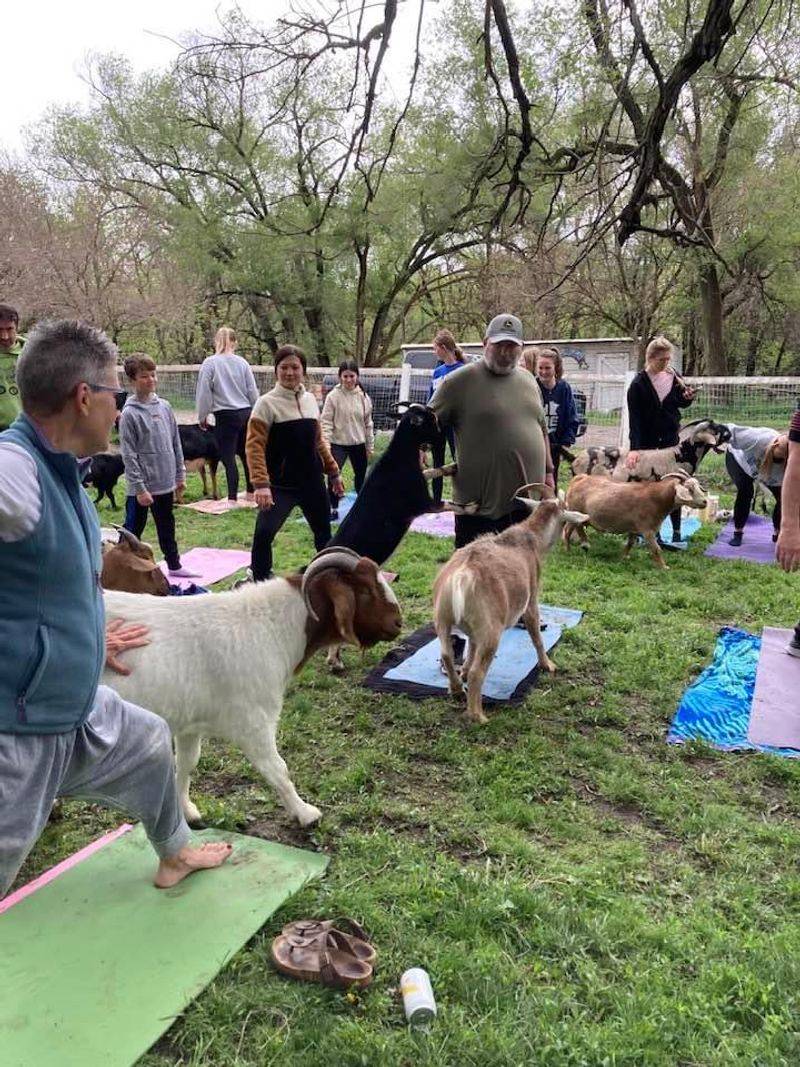
Goat yoga at the rescue runs seasonally from spring through fall, and the 2026 calendar includes public sessions extending into October. Cost is listed at $20 per person for a class.
Classes are followed by opportunities for goat cuddles, tours, or exploring the walking trails, so the session works as a starting point for a longer visit rather than a quick in-and-out activity.
Budgeting extra time afterward makes the drive out worthwhile.
No advanced yoga experience is needed for this kind of class. Movements stay accessible, and honestly, the goats interrupt often enough that perfect form is beside the point.
Reviews repeatedly describe the instruction as friendly and the animals as sociable, with goats climbing, nudging, and inspecting participants mid-pose.
Bringing a mat that can get dirty is smart, as is checking session availability in advance since public dates are limited and weather dependent. Outdoor classes are subject to conditions.
Group bookings have happened here before, including camp groups.
Walking Trails And Quiet Meditation Paths
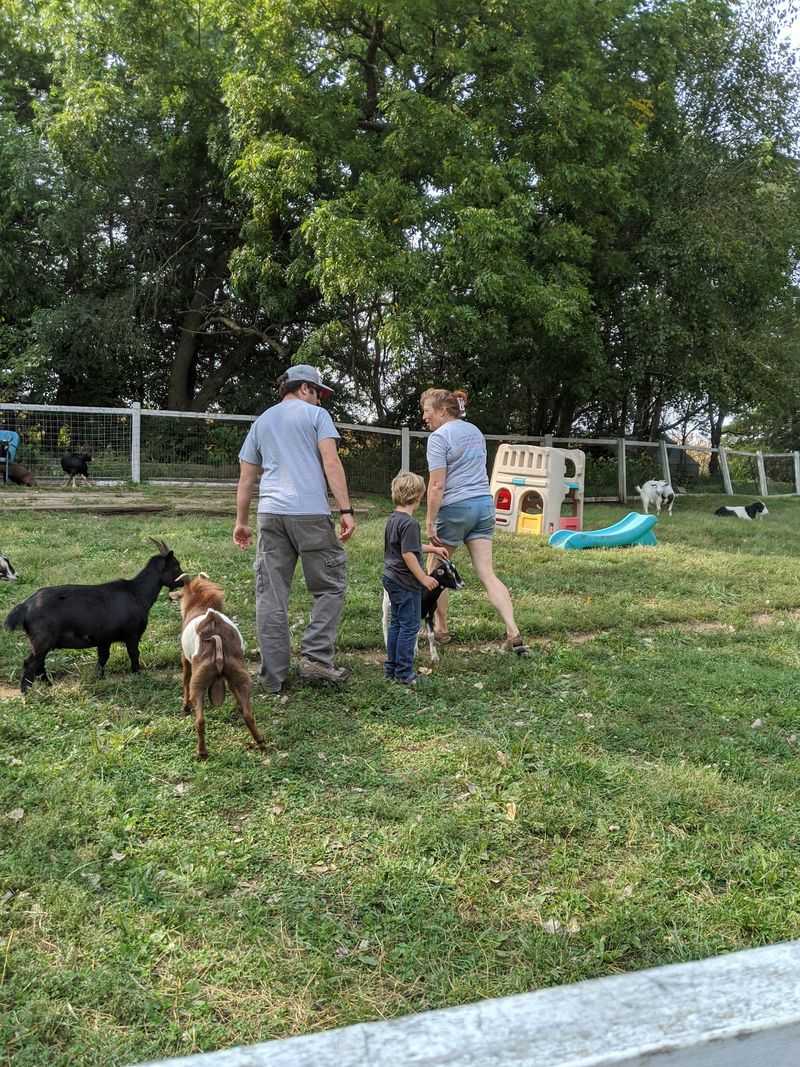
Some visitors come for the animals and end up staying for the walk. Walking trails wind through the property, and guests are invited to explore them during tours.
The rescue also promotes walking meditation paths for people who want something slower and quieter than a pen full of goats.
Trail surfaces are natural rather than paved, which affects accessibility. Anyone using a mobility device or pushing a stroller may find the animal areas easier to manage than the wooded paths.
Woodland sections offer shade and a noticeable temperature drop on warm days. Open stretches give longer views across the meadow and toward the creek bottom.
Walking meditation is simply a slow, attentive walk, and the setup suits it well because there is little to interrupt the rhythm. Birdsong, wind, and distant animal sounds fill in where traffic noise would normally sit.
Past guests have noted the privacy and the walking paths as highlights, and dogs have been welcomed by some visitors, though checking current pet policy directly with the rescue is wise before bringing one.
Overnight Camping Is Actually Available Here
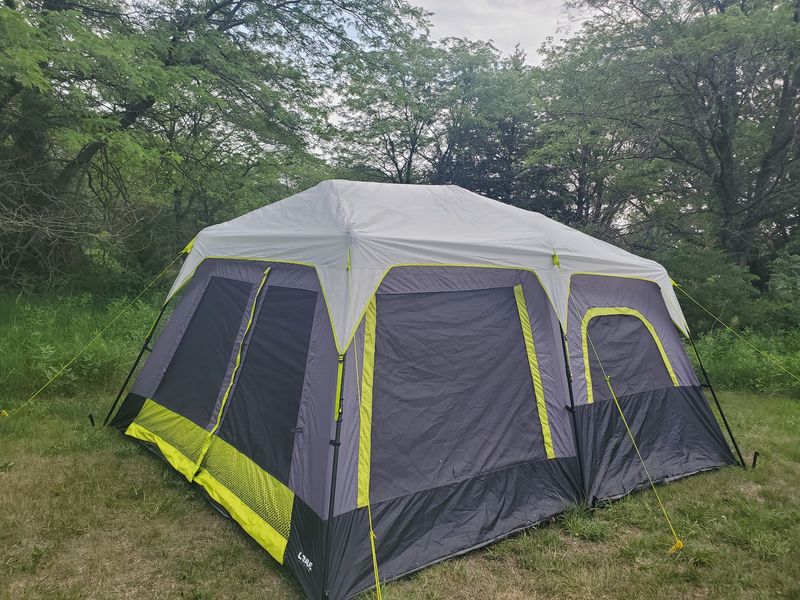
Sleeping over at an animal rescue sounds like an exaggeration until the booking page loads.
Both tent and RV camping are currently offered at Shepherd’s Rest, and the camping listing remains active for 2026.
Reservations run through a camping platform rather than walk-up arrival, so planning ahead is necessary.
Night skies out here benefit from the rural location and limited light spillover. Clear nights allow real stargazing without driving anywhere else.
Evening sound is part of the appeal, and Nebraska Tourism mentions tree frogs appearing at night on the property. Owls, insects, and the occasional animal noise from the barns fill in the rest.
Camping guests should arrive prepared for a working farm rather than a resort. Morning may start early depending on chore routines and animal activity nearby.
One past camper described having the whole place to themselves and finding it peaceful, which speaks to how few sites exist rather than to any guarantee of solitude.
Temperatures swing considerably between day and night in Nebraska, especially in spring and fall, so packing an extra layer and a warmer sleeping bag than expected prevents a rough night.
Camp Amenities Cover The Basics Without Pretending To Be Glamping
Expectations matter more than amenities lists, and the rescue is upfront about what it offers.
The primary RV and tent site currently lists potable water, a toilet, an electrical hookup, and permission for campfires. A separate larger RV site provides 50-amp electrical service for bigger rigs.
Potable water on site means no hauling jugs from town, which is a real convenience for longer stays. Electrical access also helps with fans, lights, and device charging.
The toilet is a camp toilet rather than a full bathhouse, and one past guest noted plainly that it does the job while advising against expecting a glamping setup. That honesty is useful for planning.
Campfire permission depends on conditions, so checking on burn restrictions and bringing firewood or asking the host about it is part of preparation. Dry Nebraska summers can bring temporary limits.
Showers are not part of the listed amenities, which suggests packing wipes or planning a shorter stay. Trash management is worth asking about too.
For RV travelers, the 50-amp option is a genuine advantage since many small rural sites max out at 30-amp service. Confirming site dimensions and turning space before arrival avoids surprises on a narrow lane.
Simple, functional, and clearly described is the theme.
A Hundred-Year-Old Farm Sets The Scene
Age gives a place texture that new construction cannot copy.
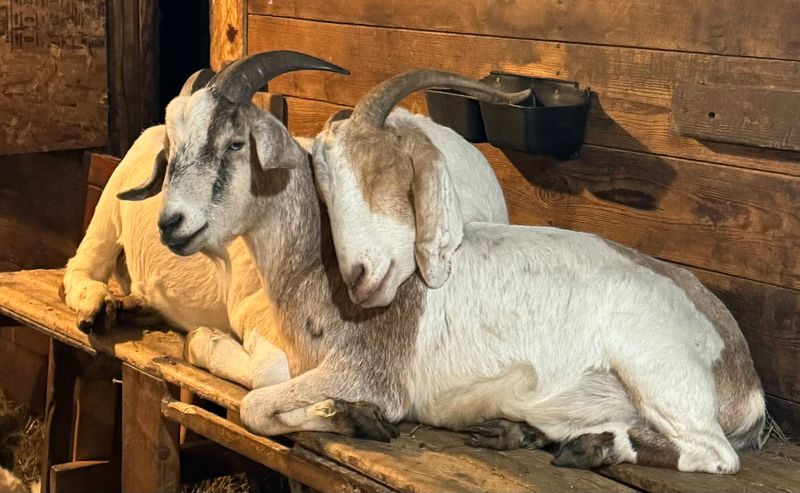
Shepherd’s Rest describes its Pickrell property as a 100-year-old farm, which puts the buildings and layout in a different category from a purpose-built animal attraction.
Weathered wood, established trees, and practical farm structures shape the visual character.
Older farms tend to have uneven ground, narrow doorways, and structures adapted over decades rather than designed all at once. That history is visible in how the pens, shelters, and paths connect.
Pastoral is the right word for the setting, and reviews frequently mention the country scenery as a highlight alongside the animals. Guests have called it a hidden gem more than once.
For photography, the combination of old buildings and animals produces images that feel grounded rather than staged. Late afternoon light on weathered siding is particularly good.
Practically speaking, a century-old working farm means watching footing and respecting posted boundaries around equipment and storage areas. Staff guidance about where to walk exists for good reason.
The contrast between the age of the place and its current purpose is part of what makes a visit memorable. Land that once supported conventional farming now provides permanent homes for animals that needed somewhere to land.
Every Visit Puts Money Back Into Animal Care
Ten dollars does not buy much of an experience most places, which makes the pricing here worth a closer look.
Current tour pricing is $10 for adults and $6 for children, with children under two admitted free. Proceeds go toward the nonprofit and its work providing goats and sheep with permanent homes.
Because the organization is a 501(c)(3), the money supports feed, shelter, veterinary care, and the therapy and education programs at the center of its mission. Reviews mention that funds brought in go to supporting the animals.
Goat yoga sessions are separately priced at $20 per person, and camping is booked through its own listing. Combining activities stretches the value of the drive out from Lincoln or Beatrice.
Donations beyond admission are welcome, and one past visitor encouraged leaving one. Volunteering is another route, and a recent review describes the rescue as an engaging place to volunteer and learn.
Animals here are also available for adoption, which means some residents move on to homes of their own over time.
Booking ahead and confirming hours by phone at 402-580-5299 respects the reality that a small nonprofit runs on limited staffing.