This Oregon Alpine Village Feels More Like Switzerland Than The American Northwest
Did Oregon accidentally borrow a village from Europe? It certainly looks possible here.
Painted storefronts, alpine touches, old traditions, and a hilltop abbey give this small community a personality that feels delightfully unexpected in the Northwest.
The Swiss connection goes deeper than decoration too, which makes the whole thing more interesting than a themed photo stop.
Wander long enough and little surprises keep appearing, including musical details and quiet corners that feel worlds away from a typical American town.
It is charming without trying too hard. One minute you are on a normal road trip, and the next you are wondering whether you somehow crossed an ocean.
A Name With Swiss Roots
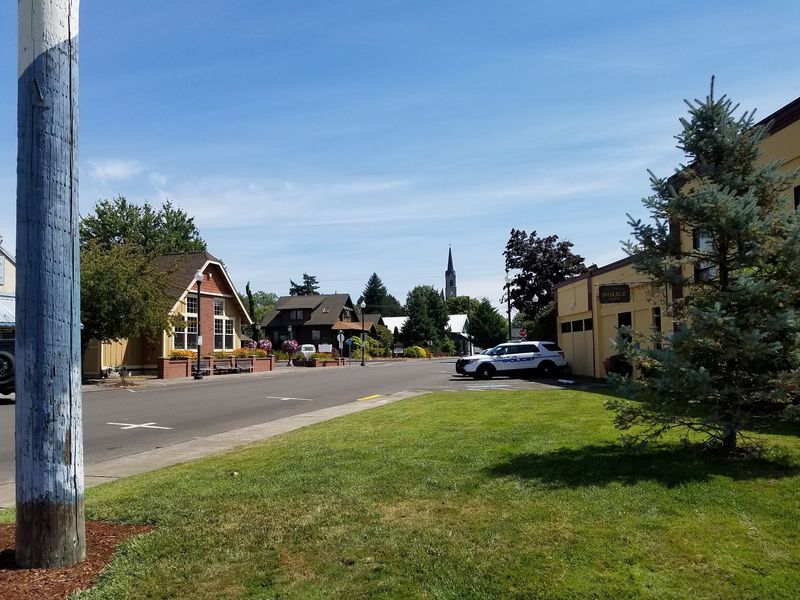
The Swiss connection begins long before the decorative storefronts downtown.
The surrounding Willamette Valley is part of the traditional homeland of Kalapuyan peoples, whose history predates non-Native settlement by generations.
The early town site changed names several times. A railroad station was first called Fillmore, another early town plat was called Frankfort, and the community later became known as Roy.
German Catholic families were settling in the area by the early 1880s. Around the same period, Benedictine monks arrived from Engelberg, Switzerland, and established a religious community nearby.
The name Mount Angel is an English rendering of Engelberg.
That history helps explain why Swiss and German influences remain visible around town today. They are rooted in nineteenth-century settlement rather than being added only for tourism.
Mt Angel was incorporated in 1893, but the community’s story reaches much further back.
The town’s European heritage is important, though it sits within a much older Indigenous history and a wider agricultural story.
Village Streets Worth Slowing Down
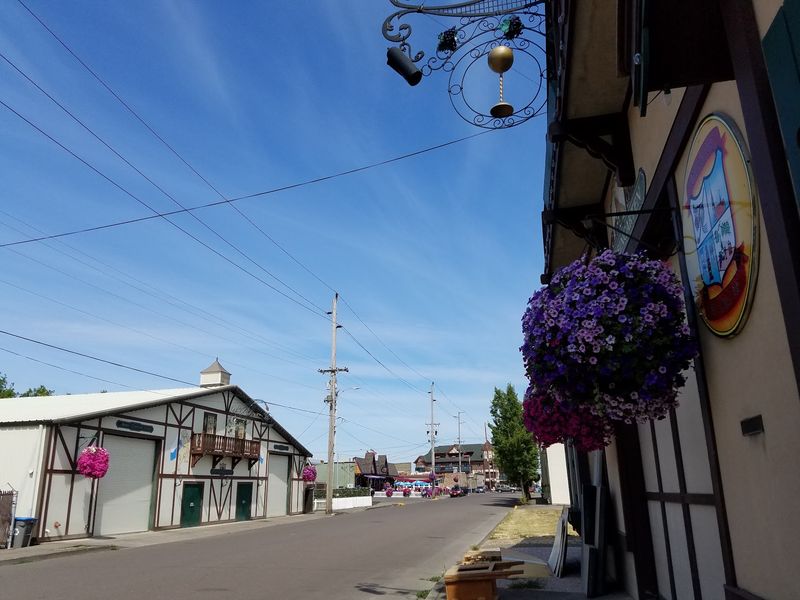
Downtown rewards visitors who look closely rather than hurry between stops.
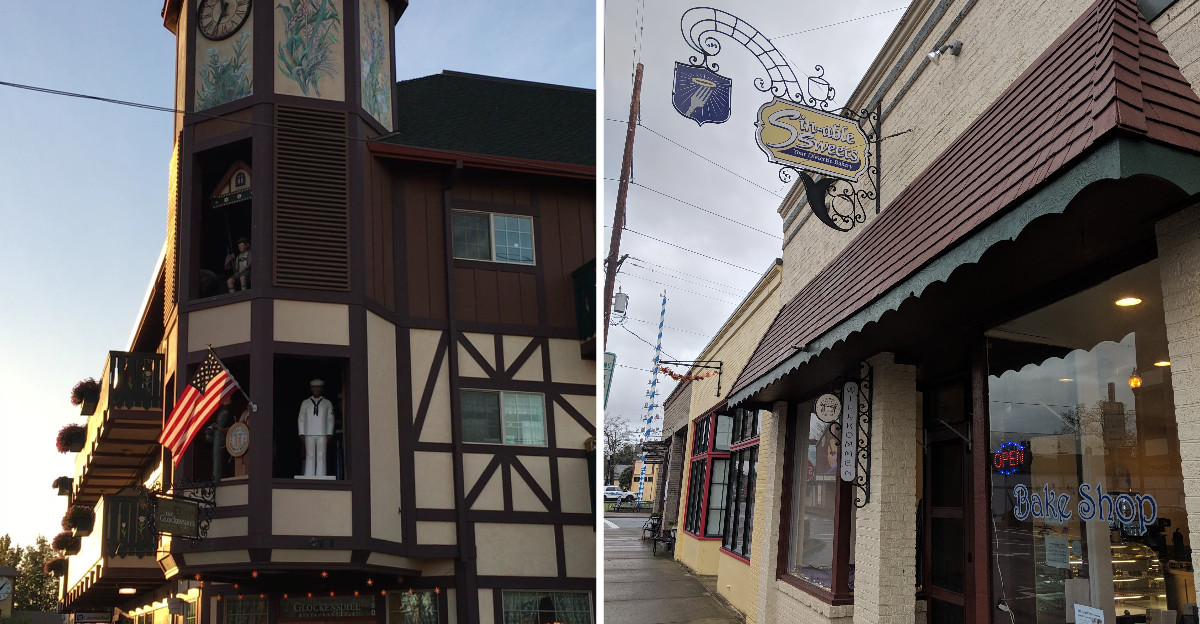
Some storefronts use Bavarian-inspired façades, bright trim, flower boxes, and other details tied to the town’s German and Swiss heritage. Their shapes and colors give the center an Old World character without turning it into an outdoor museum.
The town remains a working community with shops, restaurants, services, churches, and homes mixed into the same compact area.
A short walk makes it easy to notice the changing rooflines, decorative signs, and half-timbered details that appear from block to block.
The alpine feeling comes through in those design touches rather than dramatic mountain peaks. Mt Angel sits in the Willamette Valley, surrounded by farmland rather than high alpine terrain.
That contrast is part of what makes the place interesting. Decorative European references sit against a distinctly Oregon backdrop of fields, nurseries, vineyards, and working farms.
The self-guided Mt Angel Heritage Trail adds another way to connect the streets with local history. Marked stops include the Glockenspiel, historic buildings, the train depot, churches, and the abbey.
The Abbey Above Town
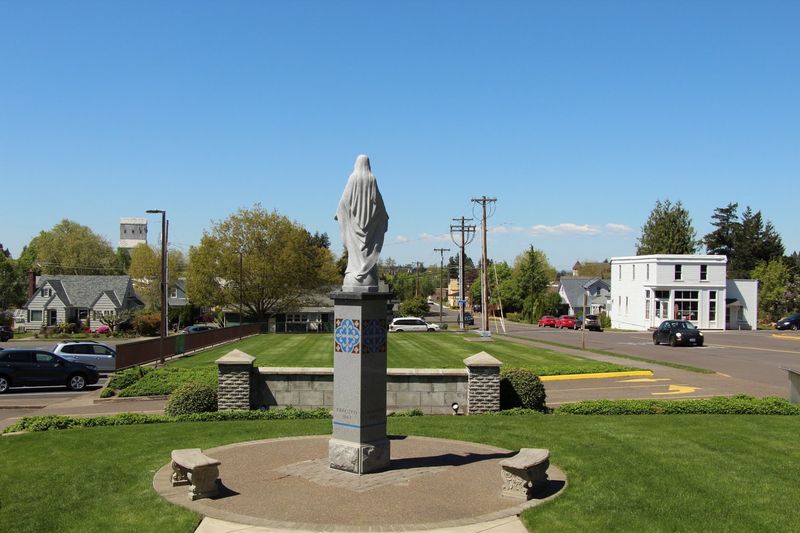
Up on the hill, Mount Angel Abbey offers a quieter side of the community.
Benedictine monks from Engelberg, Switzerland, founded the Oregon community in 1882. The abbey later moved to the top of the butte, where its church, seminary, library, guesthouse, and other buildings now form the hilltop complex.
Clear days open broad views across the Willamette Valley. From designated viewpoints, visitors may also see Mount Hood and other Cascade peaks in the distance.
The abbey remains an active religious community rather than a conventional tourist attraction. Public walkways circle the hilltop, and several buildings are open to visitors while monastery and seminary residential areas remain private.
The Abbey church is currently open during the day for private prayer, and visitors may also attend scheduled Masses and the Liturgy of the Hours.
Current construction affects some attractions. The Abbey Museum is closed until October 2027 because of renovation work around Saint Joseph Chapel.
A self-guided walking map helps visitors distinguish public areas from private ones.
A Library Full Of Light
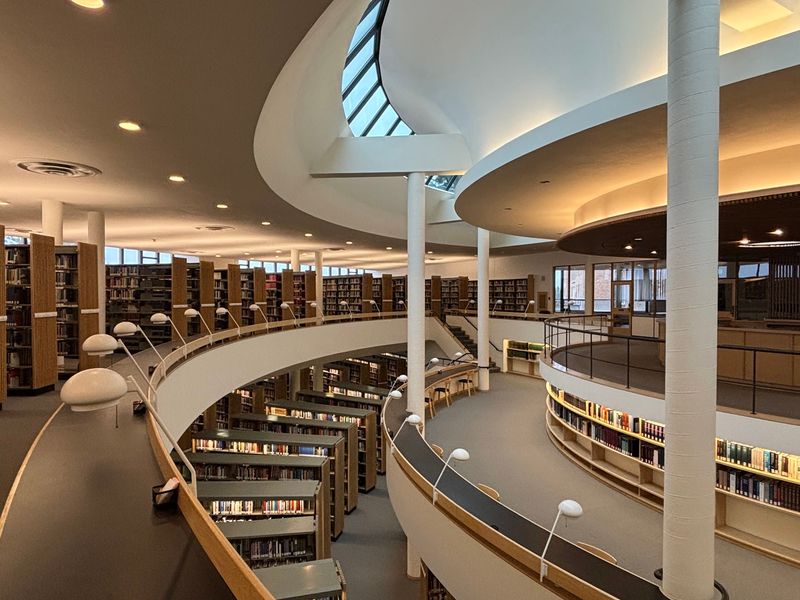
The Mount Angel Abbey Library offers one of the biggest architectural surprises on the hill.
Completed in 1970, the building uses a fan-shaped plan that descends with the slope of the site. Curved forms, radiating book stacks, and carefully positioned skylights spread natural light through most of the interior.
The library’s furnishings are part of the design story too. Chairs, desks, tables, shelving, cabinets, and many light fixtures were created as part of the same architectural vision.
The library holds a major theological collection along with books in philosophy, history, literature, and related subjects.
It remains a working academic library for the abbey and seminary, but it is also open to guests, visiting scholars, and the general public.
Quiet behavior matters because students and researchers use the building throughout the day.
Current fall hours run during both daytime and selected evening periods, though the abbey notes that the schedule can occasionally change.
The building offers a sharp contrast to Mt Angel’s Bavarian-inspired downtown. Clean modern lines on the hilltop show that the community’s visual identity reaches well beyond decorative storefronts.
Music In The Town Center
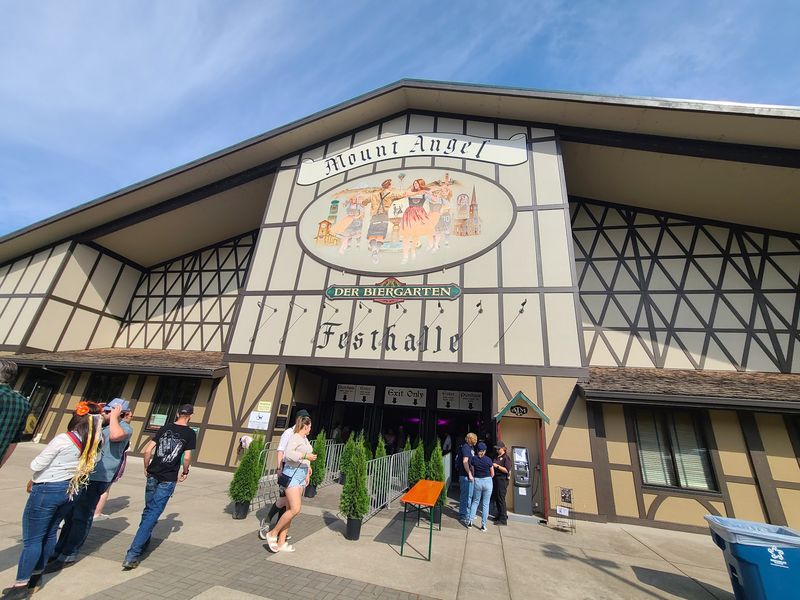
One downtown stop turns checking the time into part of the sightseeing.
The Mt Angel Glockenspiel celebrates the town’s German, Swiss, and Bavarian heritage through music and a set of carved figures that appear during scheduled performances.
The figures represent different parts of local history, including Indigenous presence, the development of the civil and religious communities, and the Oktoberfest tradition.
Current performances take place daily at 11 a.m., 1 p.m., 4 p.m., and 7 p.m.
That makes the Glockenspiel an easy stop to build into a downtown walk without rearranging an entire day.
Its tower stands prominently in the center of town, and the animated figures are visible from the street during the show.
The display adds movement and sound to the decorative details already found on nearby buildings.
After the figures disappear, the tower remains worth another look. Its carved details and painted elements connect the spectacle back to the town’s larger Old World theme.
September’s German Celebration
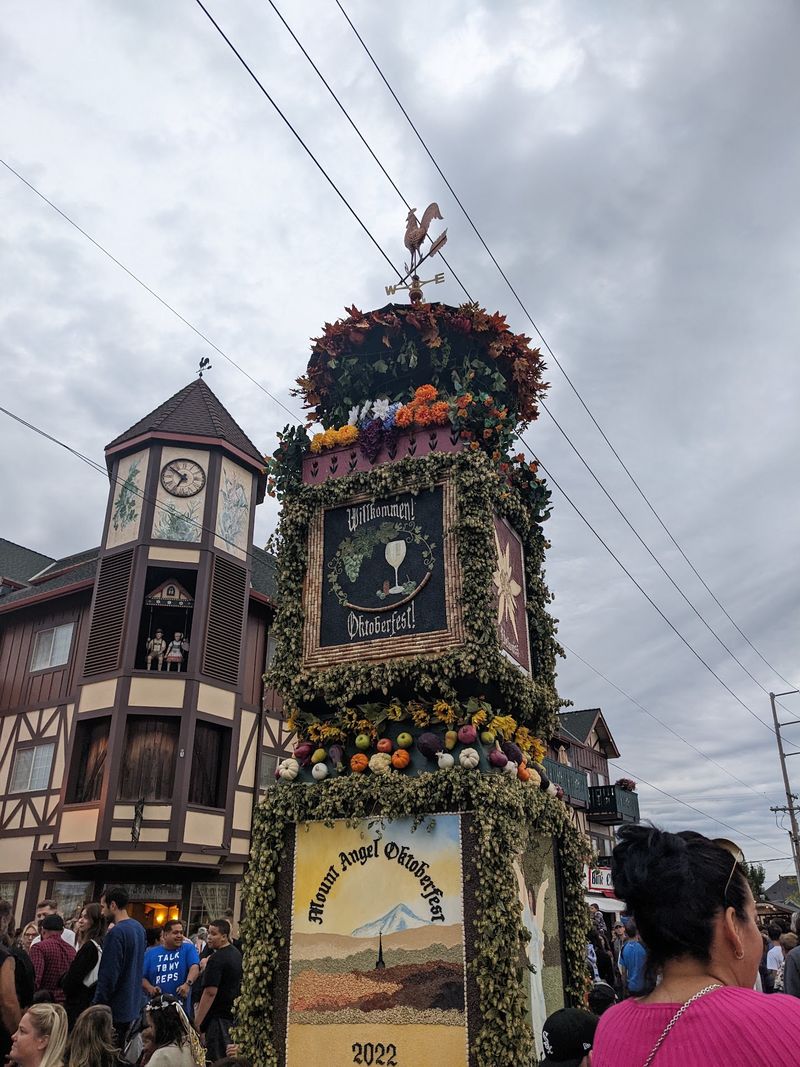
September brings the town’s European traditions into much sharper focus.
Mt Angel Oktoberfest has been held for decades and is now promoted as the largest folk festival in the Northwest. The 2026 celebration ran from September 17 through September 20.
Music, dancing, arts and crafts, family activities, races, displays, and other events spread across downtown and several festival venues.
The town’s dance troupe performs during the festival, while more than 120 artisans took part in the 2026 arts and crafts show.
Food booths are a major part of the event as well. Many are operated by nonprofit organizations, and festival proceeds also support churches, schools, and community groups.
Some entertainment venues require admission, while many performances and outdoor activities remain open without a venue ticket.
Festival days are far busier than an ordinary visit, so parking and walking routes deserve more planning.
Comfortable shoes matter when streets are crowded and multiple venues are on the schedule.
Outside festival week, downtown returns to a much quieter pace, which gives the same architecture and cultural details a completely different feel.
Shops And Farm Country
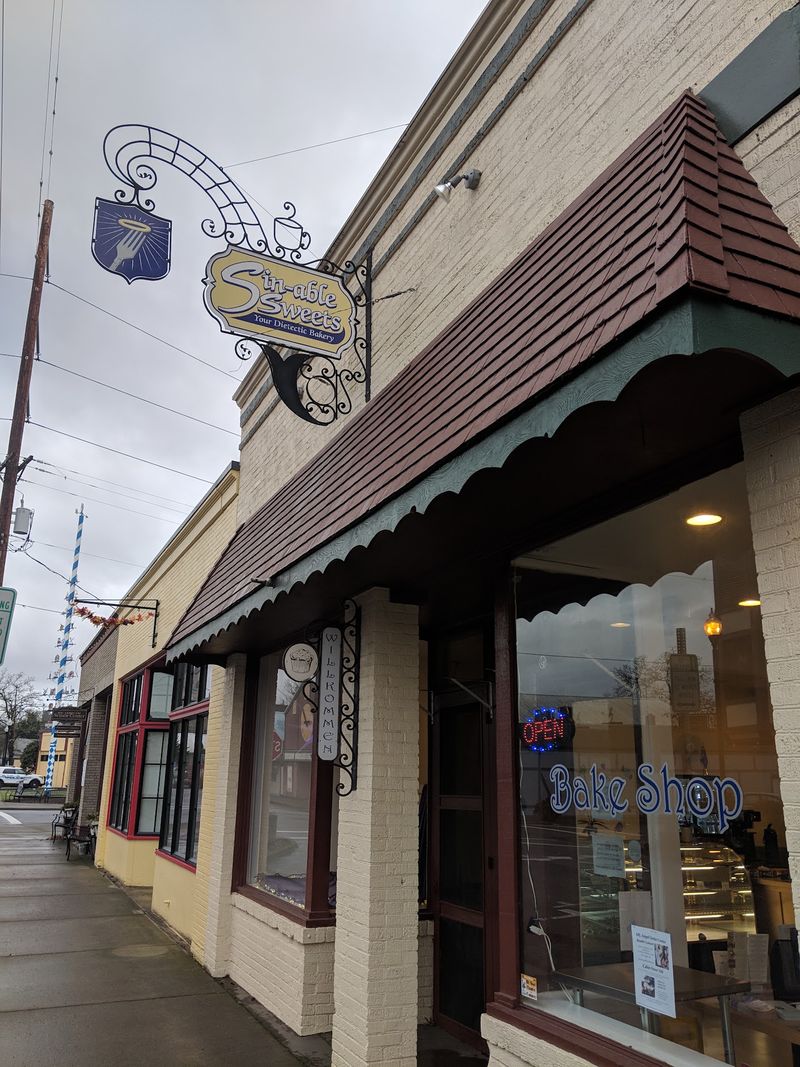
Behind the decorative storefronts, agriculture still shapes the wider community.
Local business and tourism listings point to berries, hops, honey, livestock, vineyards, flower fields, nursery stock, and other crops produced in and around Mt Angel.
That agricultural setting explains why the drive into town feels different from the decorative center. Fields and working farms remain visible beyond the city blocks.
Several current shops sell gifts, specialty goods, clothing, and locally produced items, while other businesses serve the everyday needs of residents.
Opening hours vary, so checking individual businesses before setting aside shopping time can prevent a wasted stop.
Locally produced goods provide another connection between town and countryside. Current listings include honey, berries, hops, meat, and other products made or grown in the area.
The surrounding valley has long supported farming. Earlier chapters of the town’s history included hop fields, dairy farms, flax production, and other agricultural work.
Today that rural setting still keeps Mt Angel from feeling like a purpose-built theme village.
The Bavarian façades may catch attention first, but the fields around town explain just as much about the community’s character.
A Gentler Visiting Pace
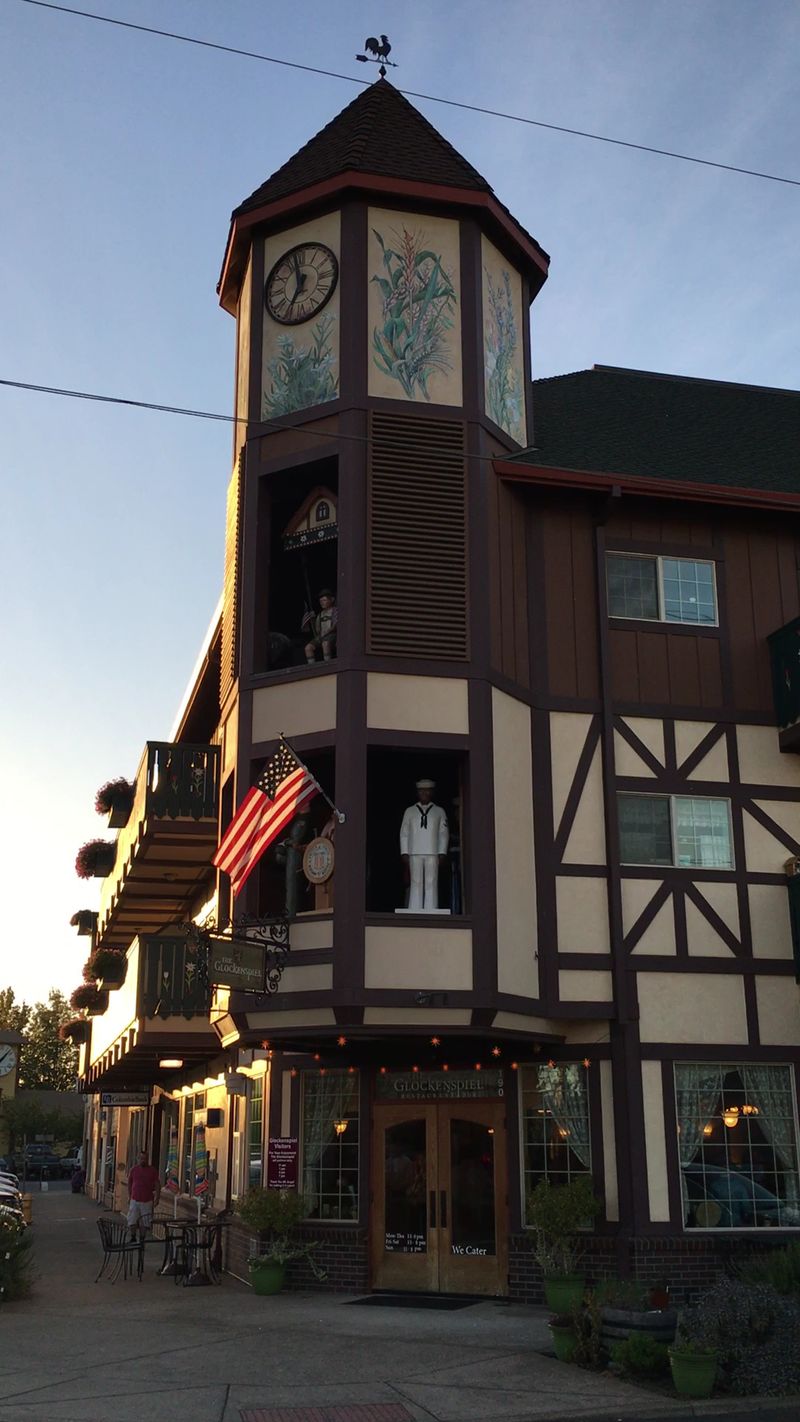
Mt Angel works best when the day is not packed too tightly.
Late spring through early fall generally brings more dependable conditions for walking, though Oregon weather can change quickly enough to make a forecast worth checking.
Summer afternoons can feel warm, while evenings may cool down.
Downtown is compact enough for a short walk between shops, the Glockenspiel, restaurants, and heritage sites. Reaching the abbey and exploring the wider countryside is easier with a car.
Lodging within Mt Angel itself is limited compared with larger nearby communities, and major events increase demand.
The biggest planning detail is simply checking current access before setting out. Abbey facilities, independent shops, and seasonal attractions all follow different schedules.
Visitors heading to the abbey should also remember that the museum is currently closed during the Saint Joseph Chapel renovation, while the church and library remain accessible under their posted schedules.
Mt Angel is small enough to reward attention rather than speed.
The Swiss roots give this Oregon town a distinctive story, but the strongest impression comes from how those traditions continue alongside farming, worship, local businesses, and everyday life.