This Private Florida College Was Once A Gilded Age Hotel, And Its Charming Campus Is Turning Heads
I’m a little jealous of students who walk past Tiffany stained glass on their way to lunch. That dining hall glow sounds like a very fancy reason to skip the vending machine.
Florida has a private college whose main building opened in 1888 as a luxury hotel for wealthy winter travelers. Thomas Edison helped wire it for electricity back when that was a big deal.
The whole thing was poured in concrete mixed with local coquina shell. Today, students sleep in rooms that once hosted presidents and society families.
I like how the past here isn’t locked behind glass. It still gets used every single day, by people cramming for exams.
So bring comfortable shoes, book a tour early, and leave some room in your camera roll.
A Spanish Palace Wearing A College Sweatshirt
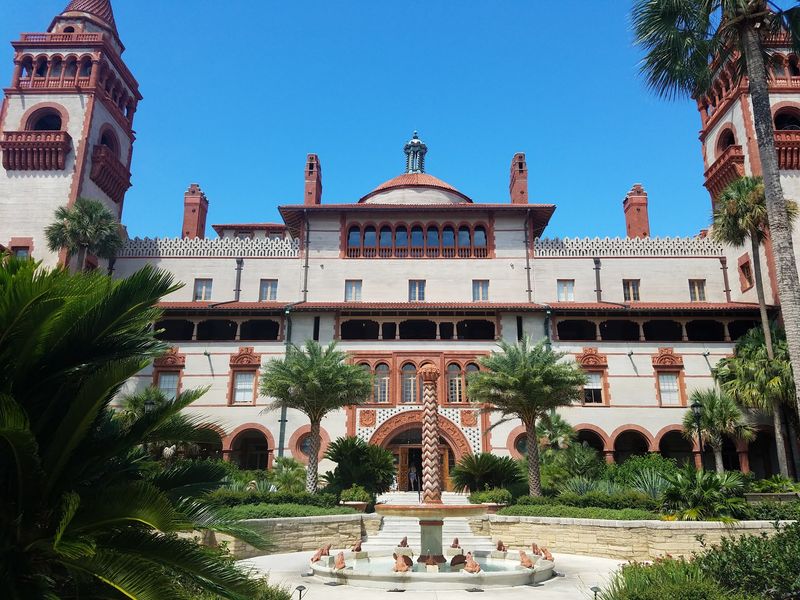
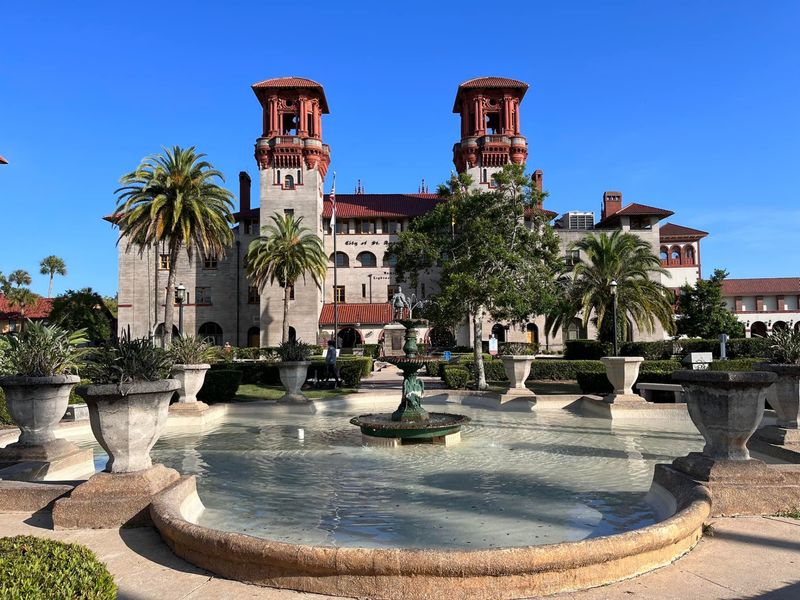
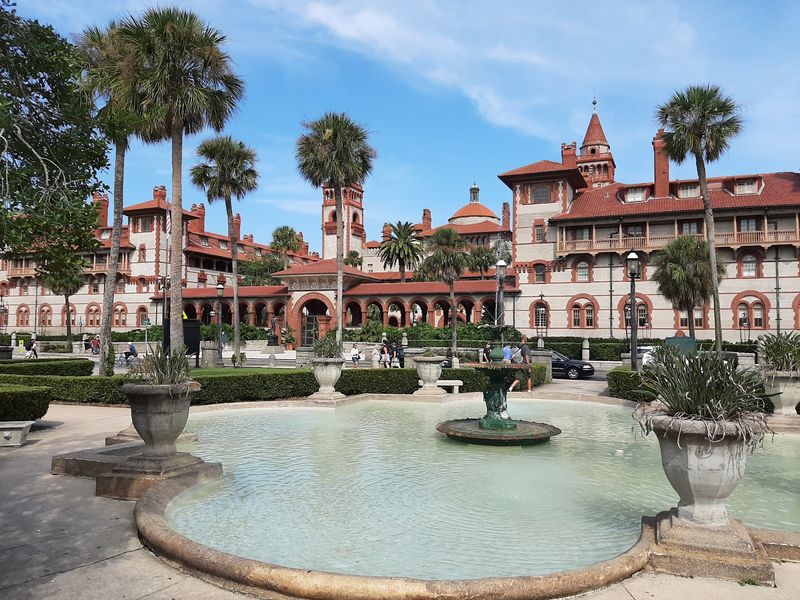
Terracotta roofs, twin towers, and red iron gates are not what most people expect from a campus. Yet Flagler College, a private liberal arts school in St. Augustine, Florida, looks exactly like that.
The star of the show is Ponce Hall, the former Hotel Ponce de Leon. It sits right in the historic heart of the nation’s oldest city, which makes it hard to miss.
You can admire plenty from the sidewalk without stepping inside. The towers, arches, and ironwork make the exterior a natural magnet for cameras.
Many visitors come for a quick look and stay longer than planned. Honestly, who could blame them when every angle looks like a postcard?
Then there’s the bonus round. Buildings added in later decades borrow the same style, so the whole block feels connected.
That matching flair is part of the fun of wandering here. It’s a campus that seems to dress up for company every single day.
Students still attend class and live here, so it isn’t a museum frozen in time. That mix of real college life and Gilded Age drama is the whole appeal.
Keep that in mind as you explore. You’re a guest in somebody’s school, which somehow makes it even cooler.
The Oil Tycoon Who Dreamed Way Too Big
Henry M. Flagler had money from Standard Oil and a vision for Florida.
He wanted a resort grand enough to make wealthy Northerners spend winters in St. Augustine.
The result was the Hotel Ponce de Leon, which opened on January 10, 1888. It was meant to be a showpiece, and it delivered.
Flagler hired the New York firm Carrère and Hastings to design it. They chose an elaborate Spanish Renaissance style that suited the old Spanish city perfectly.
The building came together surprisingly fast for its size. Tour guides love sharing how quickly the crew finished, so I’ll leave that surprise to them.
Flagler’s railroad ambitions also played a huge role. His hotels and rail lines helped shape what modern Florida became along the east coast.
That’s a lot of influence for one building. It wasn’t just a fancy place to sleep, but a starting gun for tourism.
Knowing this backstory changes how the hotel looks. Those towers suddenly read less like decoration and more like a big, confident announcement.
Flagler basically told the country that Florida was ready for visitors. Judging by today’s traffic on the beaches, the country listened.
Concrete, Coquina, And A Little Help From Edison
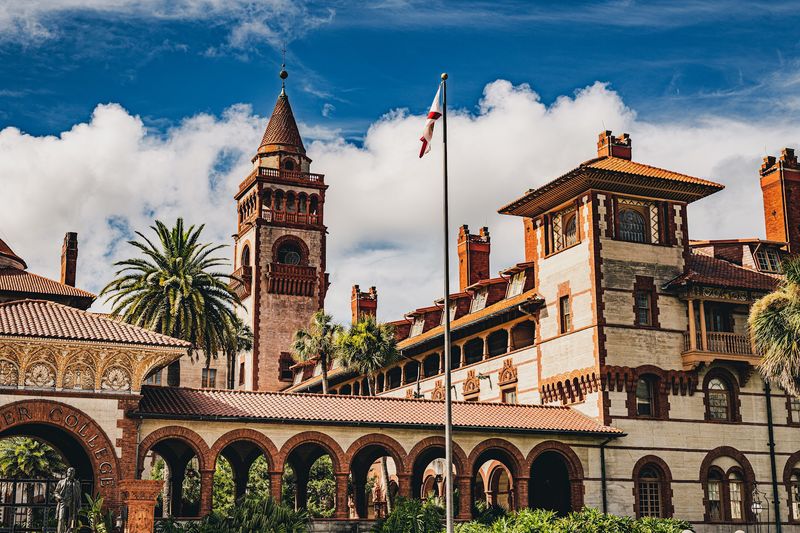
Concrete sounds boring until you learn how early this building used it. The Hotel Ponce de Leon was among the first large multi-story buildings in the country made of poured concrete.
Builders mixed in coquina, a local shell stone, as aggregate. So the walls literally contain bits of the Florida coast.
Then came the electricity. Thomas Edison, a friend of Flagler, oversaw the wiring, making it one of the earliest buildings anywhere with electric power.
Back then, plenty of guests had never flipped a switch. Imagine checking into a hotel and being nervous about the lights.
These firsts are a big reason history buffs adore the place. The tour leans into them, and they land well even with people who swear they aren’t history fans.
It’s fun to stand beside a wall and think about who built it. Workers in the 1880s were testing methods that later became common.
So the building is more than pretty. It’s an engineering story told in shell, cement, and early light bulbs.
Pretty and clever is a rare combination. This structure manages both without breaking a sweat.
Look Up, Because That Rotunda Dome Demands It
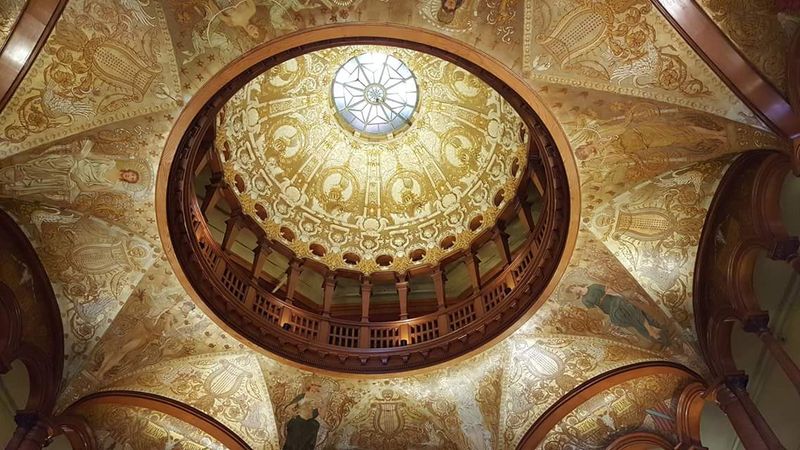
Necks get a workout inside the rotunda. The dome above the grand lobby is the kind of ceiling that stops people mid-step.
Murals by artists such as George W. Maynard and Virgilio Tojetti add to the richness.
Carved wood and imported marble fill in the rest of the frame.
Don’t forget to glance down, too. The floor features an intricate hand-laid mosaic tile that took serious labor to complete.
Here’s a helpful detail. The exterior, courtyard, and rotunda are generally open for visitors to see, while other interior rooms require a paid tour.
That makes the rotunda a great taste test. If it impresses you, and it probably will, the full tour becomes an easy decision.
Photographers should take their time here. The details pile up fast, from painted figures to carved trim to patterned tile.
Wide shots capture the scale, but close-ups catch the craftsmanship. Try both before moving on.
Remember that students pass through the building daily. Keep voices soft and paths clear, and you’ll fit right in.
It’s a lobby that once welcomed rich travelers. Now it welcomes anyone curious enough to look up.
Tiffany Windows Fit For A Very Fancy Lunch
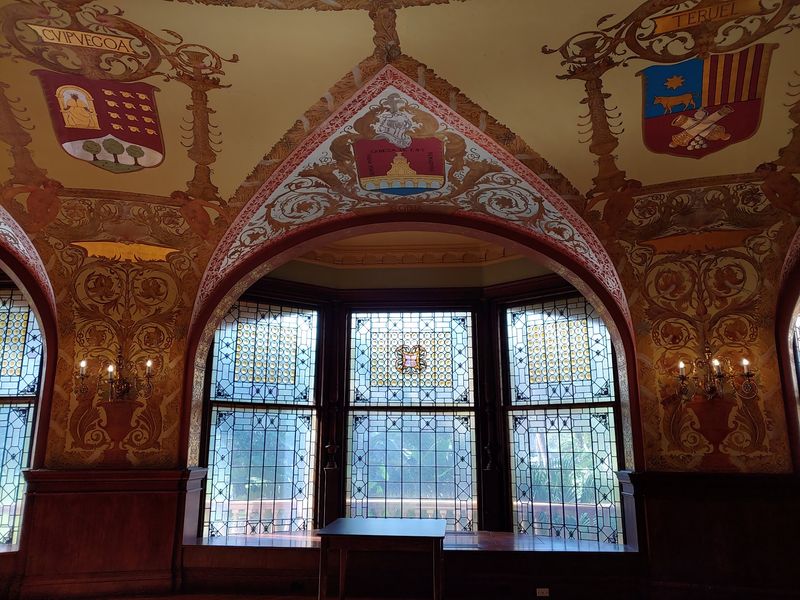
Most college cafeterias come with fluorescent lights. Flagler’s dining hall comes with Louis Comfort Tiffany stained glass instead.
Tiffany worked on decorating the interior of the hotel. His windows in the dining room, numbering 79 panels, form what’s considered the largest collection of Tiffany glass still in use.
Read that last part again. Students actually eat meals under this glass, which might be the most elegant place ever to eat cereal.
The dining hall is one of the rooms reserved for the paid tour. Many visitors say the windows alone justify the ticket.
Colored light, carved details, and a grand ceiling all work together here. It’s easy to see why guests in the 1880s felt pampered at every meal.
Bring patience for photos, since the glass deserves more than a quick snap. Light shifts through the day, so each visit can look a little different.
I can’t imagine studying for finals after lunch in this room. The temptation to just stare upward would be very real.
Of all the treasures on campus, this one gets mentioned most often. Plan your visit so you don’t miss it.
Courtyard Gardens Made For Slowing Down
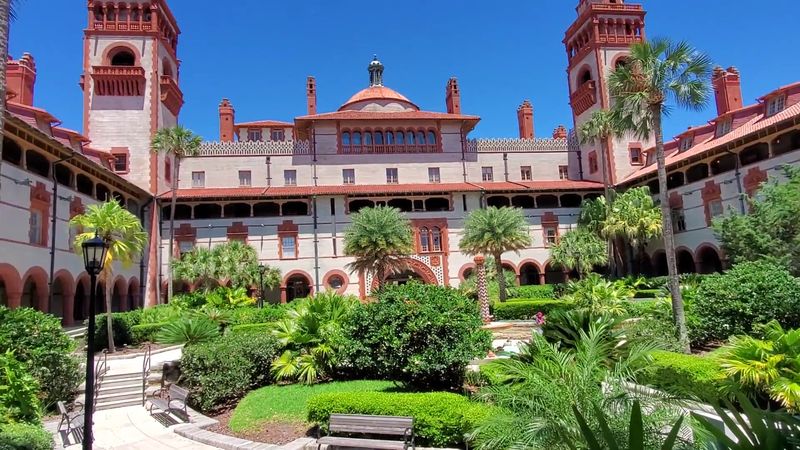
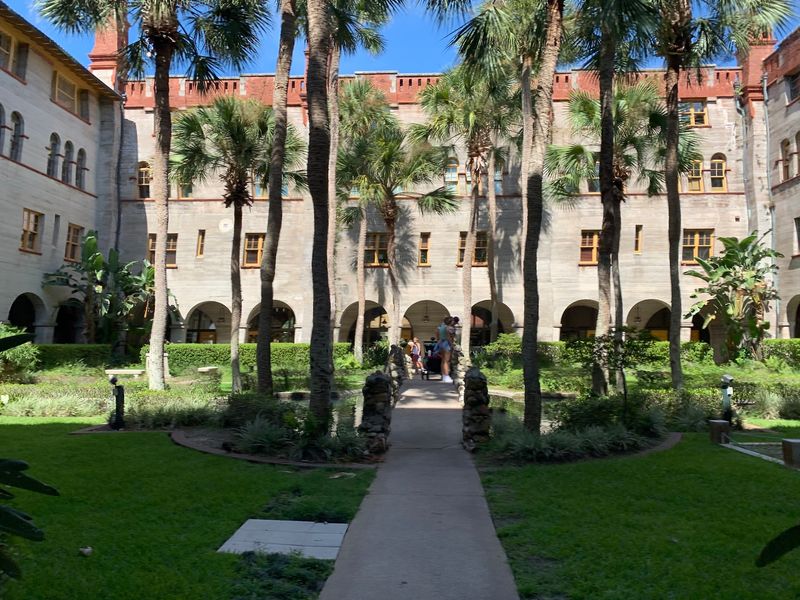
Green space feels extra precious in a busy downtown. The courtyard gardens at Flagler College offer just that, framed by the old hotel’s walls.
Visitors often describe the gardens as peaceful. The grounds are well kept, with plantings that soften all that grand architecture.
It’s a lovely spot to pause between attractions. St. Augustine streets can feel lively, so a calm corner is welcome.
The courtyard is among the areas typically open without the paid tour. That makes it a smart, easy stop even on a tight schedule.
Photographers get a nice mix of towers, arches, and greenery here. It’s one of the best places to capture the building’s full personality.
Summer in Florida brings humid heat and afternoon storms. Morning visits tend to feel more comfortable for strolling outdoors.
Shade matters, too, so plan accordingly. A hat and water bottle never hurt anyone in July.
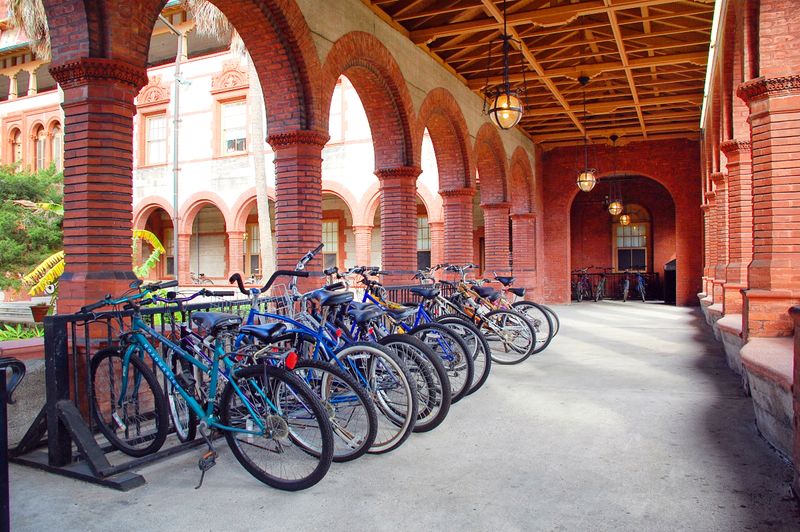
The college has also restored the Ponce Loggias, the covered outdoor spaces around the building. They add to the sense of a place designed for lingering.
Sit for a minute and soak it in. The gardens reward anyone who stops rushing.
How A Grand Hotel Ended Up Teaching Classes
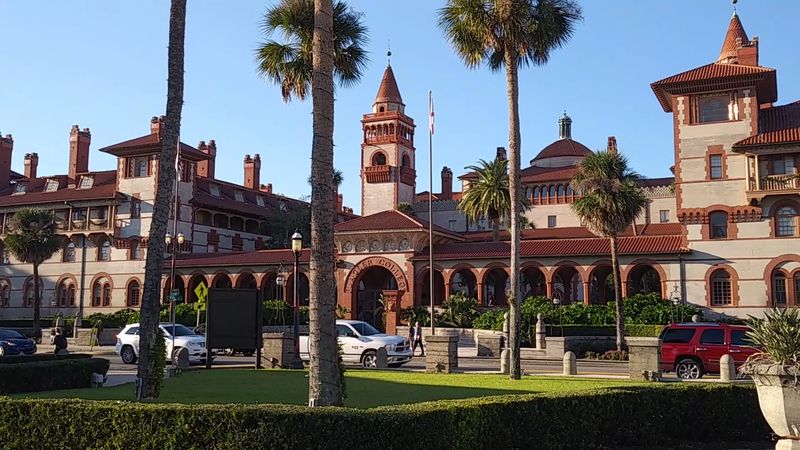
Grand hotels don’t always get happy endings. The Hotel Ponce de Leon hosted society families and several presidents for decades before visitors declined.
The hotel closed in 1967. Just a year later, in 1968, it found a second life as Flagler College.
The school began as a women’s college. It became coeducational in 1971, and it has grown ever since.
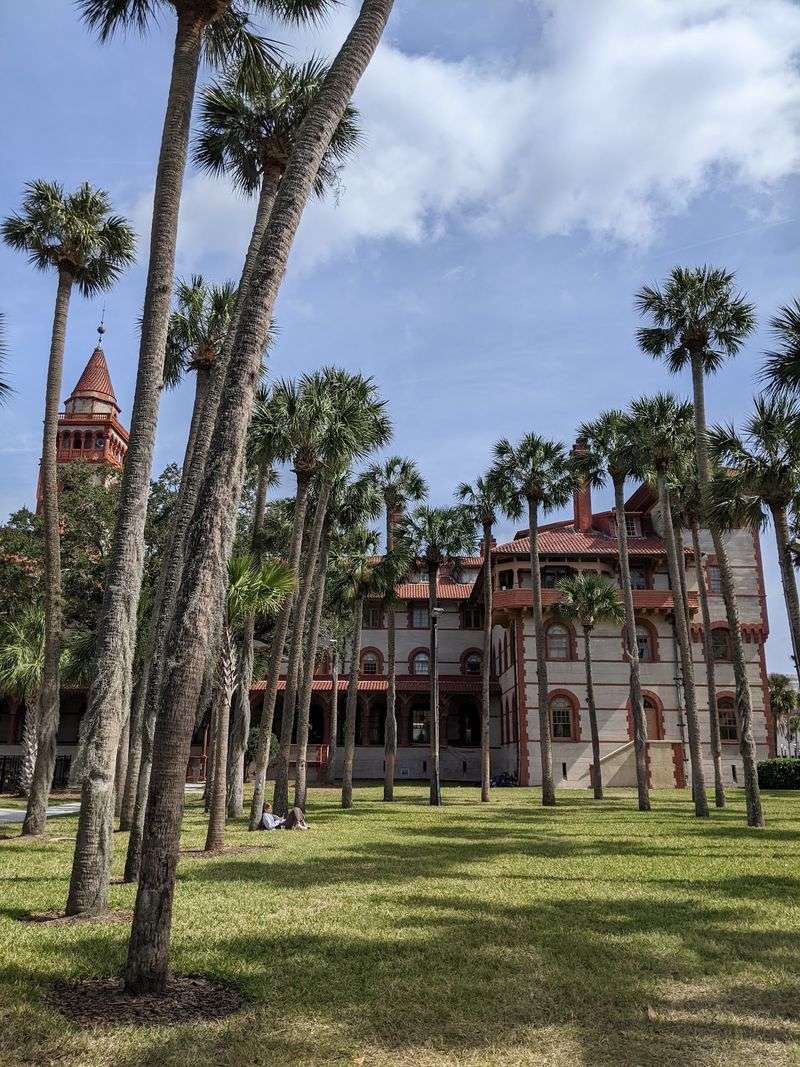
Ponce Hall is now a National Historic Landmark. It serves as a residence hall and the centerpiece of campus.
That’s a pretty wild housing assignment. Some freshmen get cinder block dorms, while others get Gilded Age wings.
The college has also invested in renovations to Ponce Hall’s residential wings. Keeping a building this old ready for modern students takes constant care.
I believe this is the best possible outcome for such a landmark. A building that stays in use tends to stay loved.
Instead of sitting empty, the halls are full of music, chatter, and backpacks. Flagler might be surprised, but I think he’d approve.
It’s preservation with a pulse. And that’s what makes the story worth telling.
Student Guides Who Know Every Secret Corner
Tour guides at Flagler College are often current students. That gives the walk a friendly, insider feel you won’t find in a guidebook.
Visitors regularly praise how informative the guides are. They know the building’s history and seem happy to field questions.
The tour reaches rooms you can’t enter on your own. That includes the Tiffany-lit dining hall and other spaces off-limits to casual wanderers.
Expect around an hour of exploring. Part of the route goes outdoors, so weather can play a role.
The walking is fairly manageable for most groups. Older family members can usually keep pace without much trouble.
It also works as a rainy day plan in St. Augustine. Much of the experience happens indoors, which helps during summer downpours.
Tour times and ticket prices change, so check before heading out. Prices are modest for the access you get.
Is it worth paying when the lobby is free? For anyone who loves architecture or a good story, the answer leans strongly yes.
You’ll leave knowing why the building matters, not just that it’s pretty. That’s the difference a sharp guide makes.
Book Early Or Watch From The Sidelines
Spots on the tour can vanish quickly. Some visitors have found tours sold out days in advance, especially in busy seasons.
Groups have also arrived to find only a few openings left. A family of five can get split up fast that way.
So the smartest move is booking ahead. Reserve once your St. Augustine dates are locked in.
Winter is peak season in Florida, with snowbirds and holiday crowds. Spring breaks and long weekends can fill the calendar too.
The college offers a limited number of tours each day. Exact times shift, so confirm the schedule before driving out.
If tours are full, don’t despair. The exterior, courtyard, and rotunda still give you plenty to admire.
You can always return for the full experience later. Plenty of people treat a sidewalk look as a preview for the next trip.
Arriving a little early is a good habit, too. Downtown parking and foot traffic can slow things down.
Flexibility helps everyone enjoy the day. A backup plan nearby, like a stroll through historic streets, keeps the mood light.
Planning ahead is cheap insurance. Good luck ignoring that Tiffany glass once you’ve seen photos.
A Campus Where Nobody Needs A Car
Location might be Flagler College’s sneakiest perk. The campus sits at 74 King St, St. Augustine, FL 32084, right in the historic district.
That means walkable streets surround it on all sides. You can wander from Ponce Hall to old city sights without moving your car.
St. Augustine is about an hour south of Jacksonville via I-95. It also makes a reasonable day trip from Orlando for anyone up for the drive.
Parking downtown takes a little planning. Public lots near the waterfront and the old fort are common options, with fees that vary.
Once parked, comfortable shoes become your best friend. Brick streets and long strolls add up quickly.
The nearby buildings share the same Spanish flair. Other Flagler-era structures nearby make the whole area feel like one big outdoor gallery.
It’s easy to see why visitors wonder how students focus. With so much to explore steps away, homework faces real competition.
Families can easily build a full day around this area. Start at the college, then let curiosity guide the rest.
Few campuses sit this close to so much history. Here, the classroom basically spills into the street.
Real College Life Behind The Fancy Facade
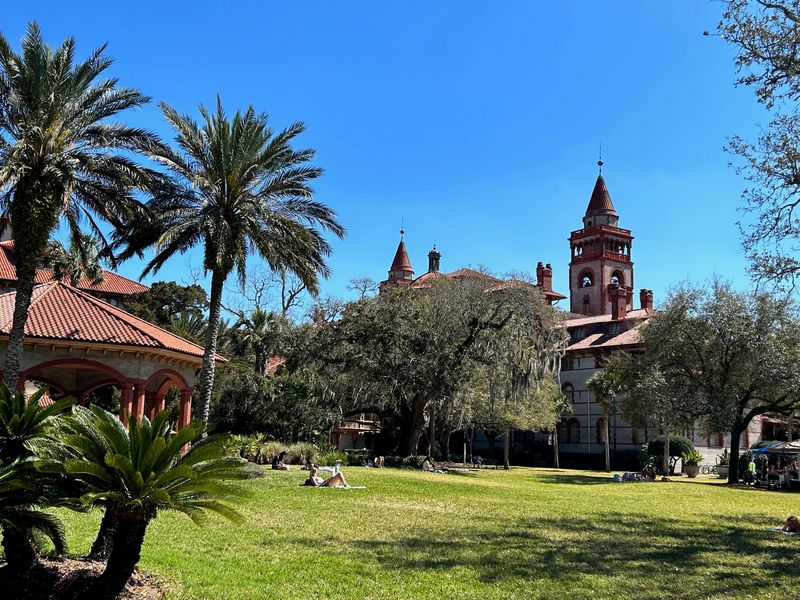
Behind the postcard views, about 2,500 students go about ordinary college life. Classes, clubs, and late-night snacks happen here like anywhere else.
The school offers more than 60 clubs and organizations. There’s a student radio station, WFCF 88.5 FM, and a student newspaper called The Gargoyle.
That newspaper name fits this building perfectly. Few campuses could pull it off so naturally.
Recreation options go beyond studying, too. Students have pools, a fitness center, and a sand volleyball court.
There’s even a kayak launch on the San Sebastian River. It supports both recreation and scientific research.
Dining stretches beyond the historic hall. The student center includes spots like Chick-fil-A and Bento Sushi, plus local coffee.
Newer fire pits and improved landscaping give students places to relax outdoors. The college keeps upgrading spaces while honoring its roots.
For prospective students and parents, that balance matters. A beautiful building is lovely, but daily life needs to work.
Here, it seems to work quite well. Tradition and convenience share the same address without much fuss.
Worth Every Step Through Those Iron Gates
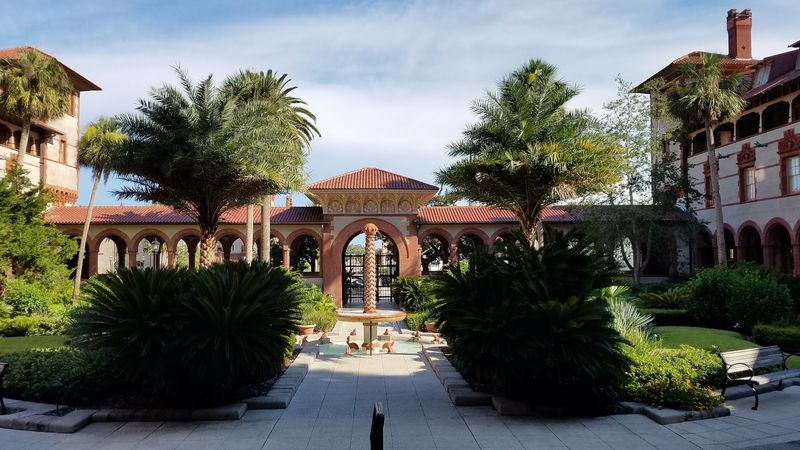
Some landmarks look great and then leave you shrugging. Flagler College does the opposite, revealing more the longer you look.
History lovers get Edison, Tiffany, and Henry Flagler in one building. Architecture fans get towers, domes, mosaics, and carved wood.
Families get a manageable outing with free areas to explore. Prospective students get a glimpse of truly unusual campus life.
My advice is simple. Book the tour early, then give yourself extra time for the courtyard.
Pair your visit with a walk through the surrounding historic streets. It’s an easy way to turn a quick stop into a full Florida day.
During hurricane season, from June through November, check conditions before driving out. Part of the tour happens outdoors, and storms can pop up quickly.
Cooler months make strolling more pleasant, though they also bring bigger crowds. Pick your season based on your patience level.
Either way, the payoff is real. Very few places let you stand inside a Gilded Age dream that still has homework due.
I can’t think of a better reason to visit St. Augustine. Bring curiosity and a charged phone, because you’ll need both.