This Remote California Scenic Drive Leads To Trees Older Than The Egyptian Pyramids
Some road trips make you feel like you have escaped the modern world.
This one takes that feeling a little further, leading into a remote mountain landscape where time seems to operate by entirely different rules.
The road climbs through rugged scenery, with wide-open views and a sense of isolation that makes the journey feel like an adventure before you even reach your destination.
But the real surprise is waiting much farther along.
High in California’s mountains, a scenic drive leads to an ancient world that makes ordinary history seem remarkably recent.
There is something fascinating about visiting a place where the landscape holds secrets measured in thousands of years.
The surroundings may look quiet and almost empty at first, but they have an extraordinary story to tell.
The Scenic Drive Begins With A Climb Into The White Mountains
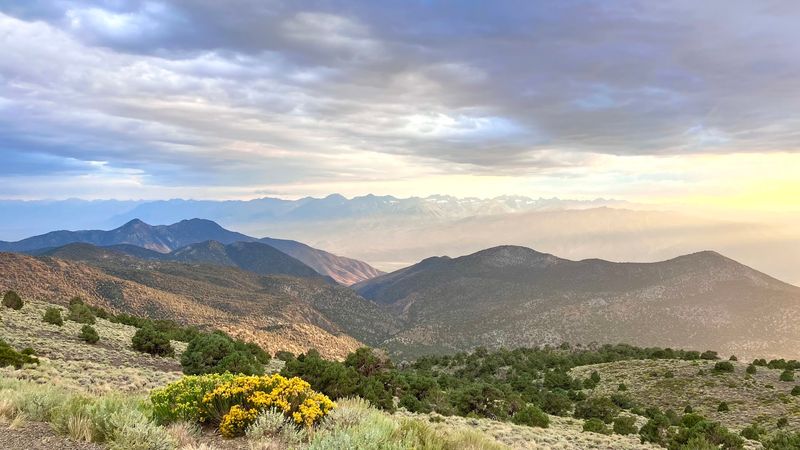
Most trips start in the small town of Big Pine along Highway 395. From there, drivers turn east onto State Route 168 and begin a steady climb out of the Owens Valley.
The first miles roll past dry hills covered in sagebrush and scattered shrubs. After several miles, a left turn onto White Mountain Road points the car higher into the range.
The pavement continues all the way to Schulman Grove, so a regular passenger car can usually handle this part of the trip.
Expect the drive from the highway to the visitor center to take around 40 minutes or more, depending on stops and pace.
The road bends and twists as it gains elevation, and some curves are tight. Travelers who get carsick may feel better if the driver takes the turns slowly and pauses at pullouts.
As the car climbs, pinyon pines and junipers start to show up on the slopes.
The air outside may feel cooler at each stop, so a light jacket on the passenger seat is a smart idea.
Windows down, the breeze can carry a faint piney smell that hints at the forest ahead.
Watch for cyclists, wildlife and loose rocks on the shoulder, especially on blind corners.
White Mountain Road Offers Sweeping Views Of The Sierra Nevada
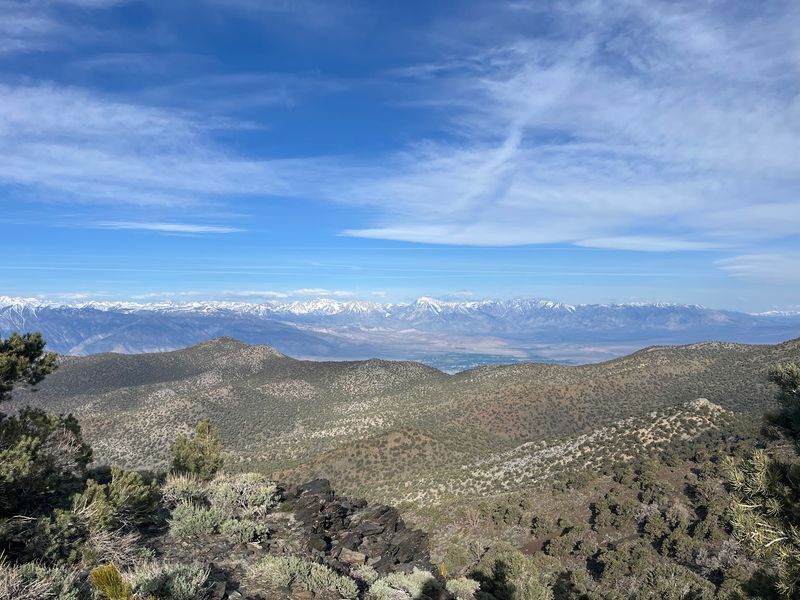
Few roadside stops in the West match the view waiting at Sierra View Overlook.
The pullout sits roughly two miles before the Schulman Grove visitor center, and it is easy to miss without watching for the sign.
Short paths lead to a spot where the whole valley opens up below. Across the Owens Valley, the jagged Sierra Nevada crest stretches along the western horizon.
Patches of snow often cling to the high peaks well into summer, though the amount changes from year to year.
Morning light usually makes the mountains look crisp and clear, while afternoon haze can soften the edges.
Looking the other direction, the land drops toward the wide basins and ranges of Nevada.
Standing between these two very different landscapes helps show how unusual the White Mountains really are.
The wind can be strong here, so holding onto hats and phones is a good habit. Binoculars come in handy for spotting distant ridges and soaring birds.
Interpretive signs at the overlook help name some of the peaks in view.
Spending just ten or fifteen minutes at the railing can be a nice way to stretch the legs and get used to the thinner air.
Some Bristlecone Pines Have Been Alive For More Than 4,000 Years
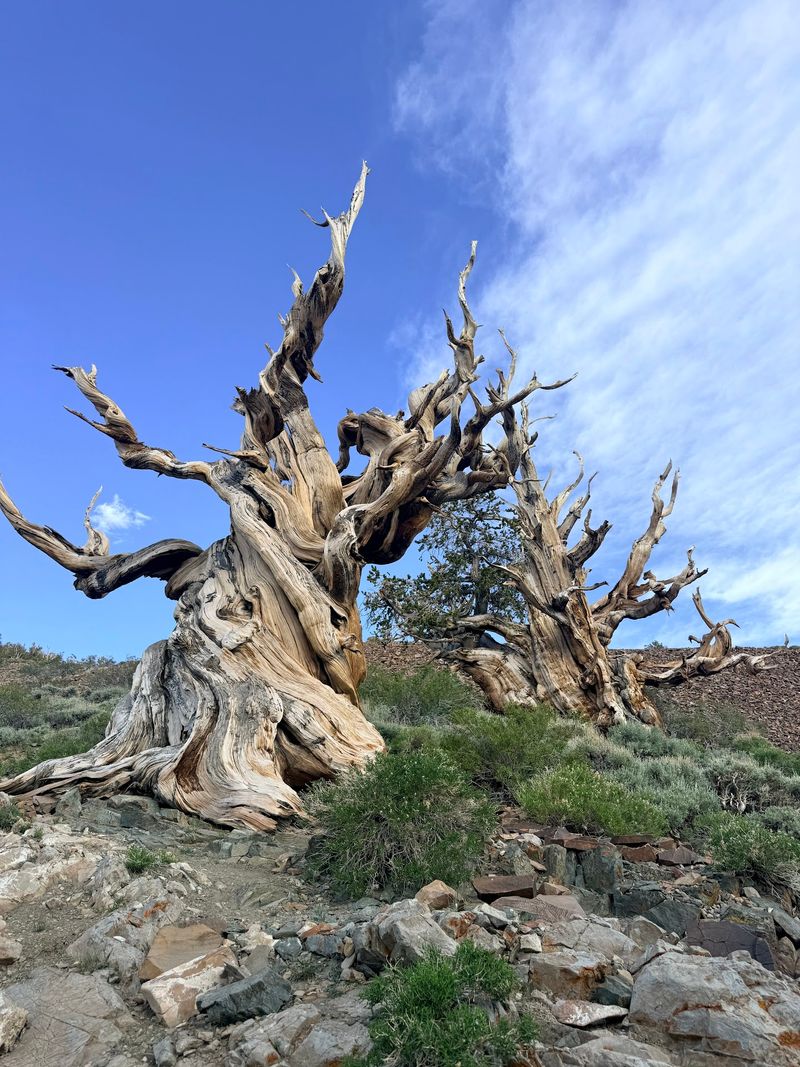
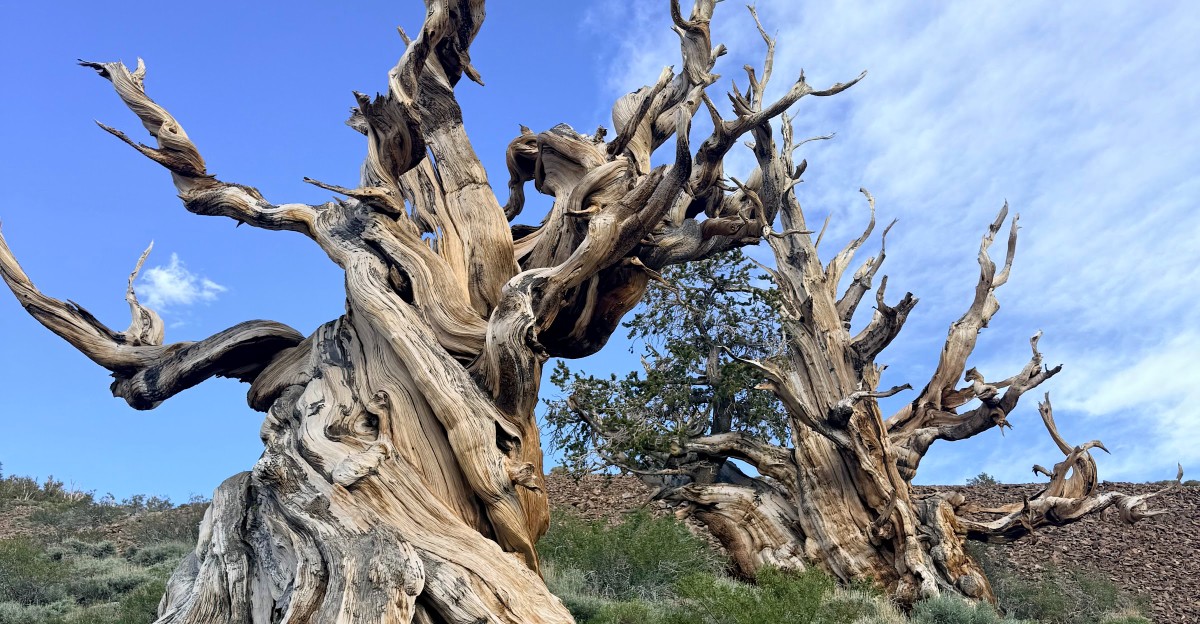
Four thousand birthdays is a hard number to wrap a mind around. Yet several Great Basin bristlecone pines in this forest have reached that age and kept on growing.
Scientists count their rings using thin cores that do not harm the tree. The famous Methuselah tree has been dated at more than 4,800 years old.
Many other trees in the groves are thousands of years old as well, even if they are not as famous.
Some reports also describe an older tree in the area, though its details have not been shared publicly in a way that is easy to check.
What makes these numbers even stranger is how small the trees can look. A bristlecone that has lived for millennia may stand only around 25 to 30 feet tall.
Thick trunks and bent branches give away their age far more than their height does. Walking past one, it helps to slow down and look closely at the bark and needles.
The short needles grow in bunches that look a bit like a bottle brush. Each tree has lived through countless droughts, storms and freezing winters.
Treating them gently by staying on trails and never touching or climbing them helps keep that long story going.
Schulman Grove Sits Nearly 10,000 Feet Above Sea Level
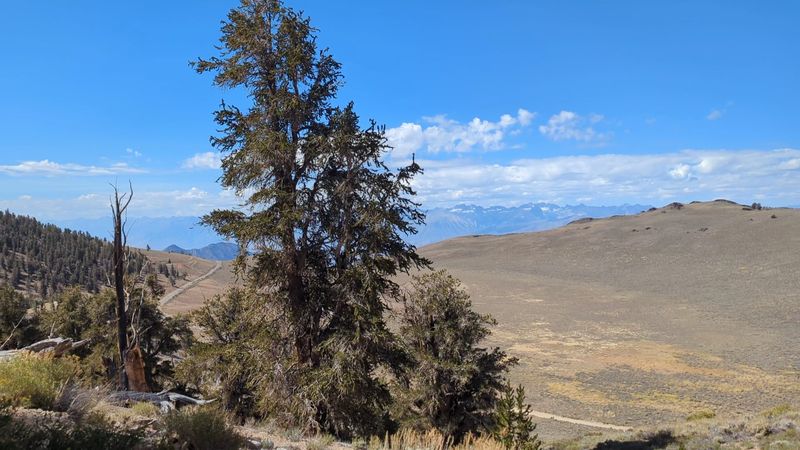
Thin air is the first thing many people notice after stepping out of the car.
Schulman Grove sits at about 10,000 feet, which is higher than many mountain towns in the country.
Even a slow walk across the parking area might leave some folks a bit short of breath.
The grove is named for Edmund Schulman, a scientist whose tree ring research helped reveal how old these pines really are.
Today it serves as the main hub for visitors, with the visitor center, picnic tables and restrooms nearby. Two of the most popular trails start right here.
Altitude can affect people in different ways. Headaches, dizziness or feeling tired are common signs that the body needs time to adjust.
Drinking water, eating a snack and resting in the shade usually help, and heading lower is wise if symptoms get worse.
The sun also feels stronger at this height, even when the air is cool. Hats, sunglasses and sunscreen make a real difference on bright days.
Afternoon thunderstorms can roll in during summer, so watching the clouds and heading back to the car when thunder starts is a good rule.
The Twisted Trunks Look Like Natural Works Of Art
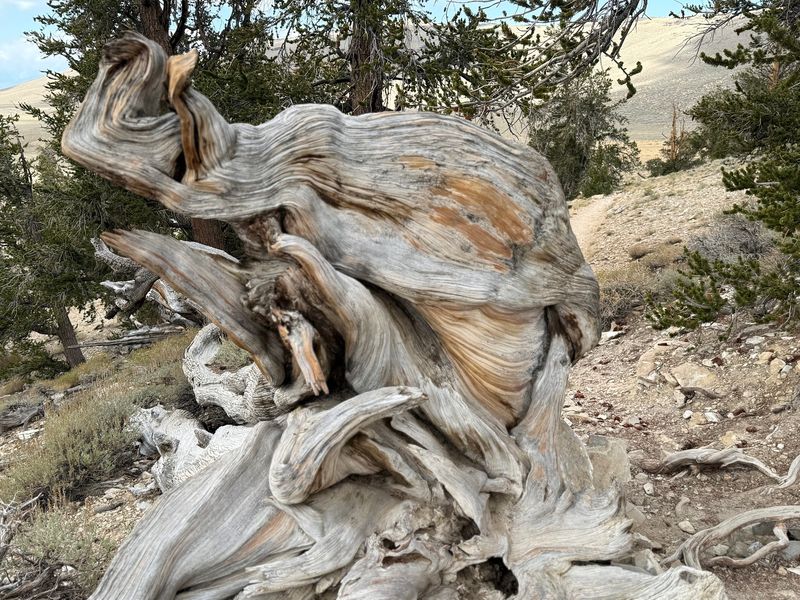
Swirls of gold, gray and rusty orange wrap around many of the trunks like ribbons. Photographers often spend more time on the wood than on the needles.
Up close, the grain looks almost polished, as if someone sanded it by hand. Wind, ice and blowing sand do most of that shaping over hundreds of years.
Parts of a tree may die back while a narrow strip of living bark keeps feeding the branches that remain.
The result is a mix of bare, silvery wood and small patches of green. The wood is dense and full of resin, which helps it resist rot and insects.
Fallen pieces can stay on the ground for a very long time without breaking down.
Leaving that wood in place is important, since collecting it is not allowed and it is part of the scientific record. Light changes the look of the trunks throughout the day.
Early morning and late afternoon sun can make the colors glow, while midday light shows the deep cracks and textures.
The Discovery Trail Offers A Short Walk Among Ancient Trees
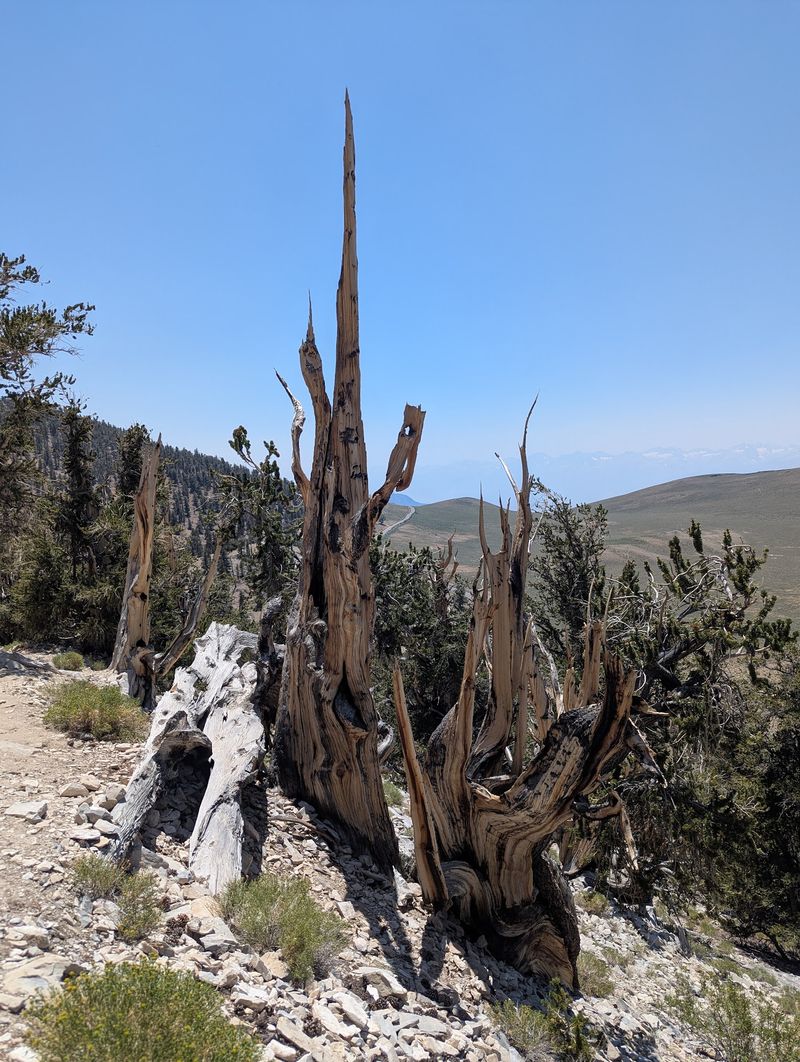
A one-mile loop may sound like an easy stroll, but the altitude changes things.
The Discovery Trail begins near the visitor center at Schulman Grove and climbs roughly 300 feet. Much of that climb comes early, so the first part may feel the hardest.
Benches sit along the route, and they are a welcome sight for anyone catching their breath.
Many hikers finish the loop in about an hour, though stopping often for photos is completely normal. Sturdy shoes help, since the path has rocky and uneven spots.
Interpretive signs along the way explain how the trees survive in such a tough place.
Reading them one at a time turns the walk into an outdoor lesson that feels relaxed rather than rushed.
Near the top, open views stretch out toward distant ranges. The trail then curves past some of the most striking old trees in the grove.
Hiking poles can make the steeper sections easier for people with sore knees.
Watching the visitor center film first can make the walk more meaningful, since it explains what to look for in the trunks and rings.
The Visitor Center Explains How Scientists Use Tree Rings To Study The Past
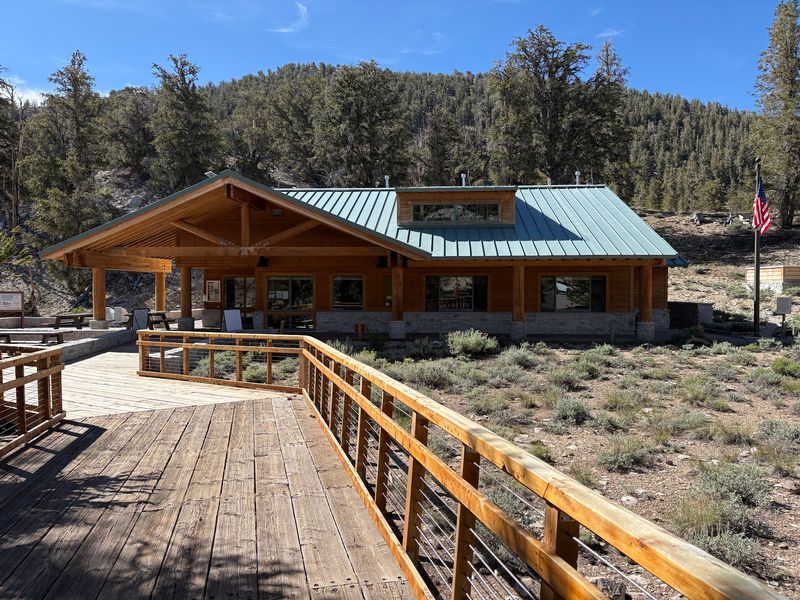
Tree rings work a lot like a diary written in wood. The Ancient Bristlecone Pine Forest Visitor Center sits on White Mountain Rd, Bishop, CA 93514, at Schulman Grove.
Inside, exhibits explain dendrochronology, the science of dating and studying tree rings. Wide rings often point to good growing years, while thin rings can show dry or cold ones.
By matching patterns from living trees and old dead wood, scientists have built a very long record of past climate.
That record has also helped researchers fine-tune other dating methods.
A short film in the small theater tells the story of the trees and the researchers who studied them. Watching it before hiking can make the trails feel much more meaningful.
Rangers and staff are often on hand to answer questions.
The center is seasonal, and hours have been listed as 9 AM to 4 PM during its open period, though dates and times can change.
A small fee applies, and interagency passes such as America the Beautiful are accepted.
The gift shop, restrooms and picnic area nearby make this a comfortable home base for the day.
The Final Stretch To Patriarch Grove Requires Driving On An Unpaved Road
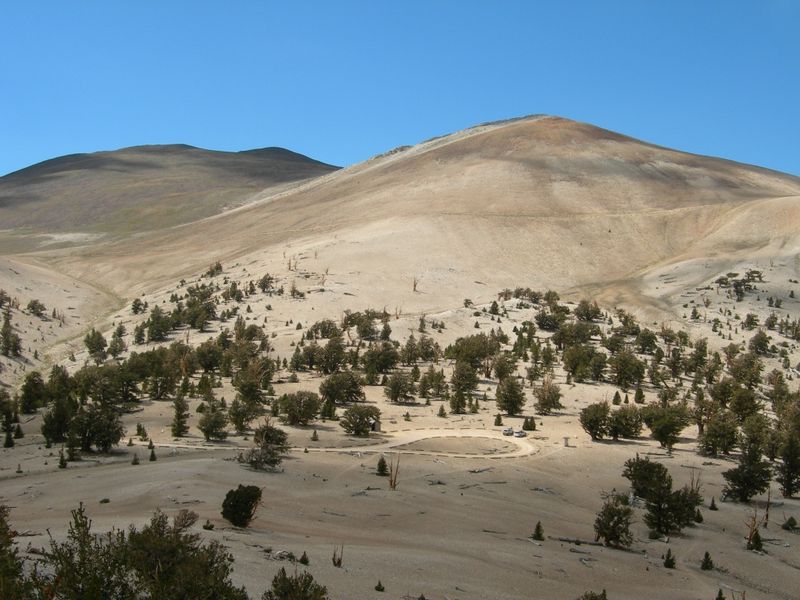
Pavement ends at Schulman Grove, and the road north turns to gravel and dirt. The roughly 12 mile stretch to Patriarch Grove can take around 40 minutes or more each way.
Sharp rocks are common, so driving slowly is the best way to protect tires. Many drivers stick to about 15 miles per hour or less.
High clearance vehicles handle the bumps more comfortably. Some people make the trip in ordinary cars during dry weather, but it may be slow and jarring.
Trailers and large motor homes are not a good fit for this road. After storms, mud and ruts can make conditions much harder, and four-wheel drive might be needed.
The road may also close early or late in the season because of snow. Checking a spare tire and jack before leaving pavement is worth the few minutes it takes.
Cell service is limited, so help can be a long way off. Telling someone the day’s plan adds an extra layer of safety.
On clear days, the views along this road may feel just as rewarding as the grove itself.
The Remote Setting Makes The Forest Feel Far Removed From California’s Busy Tourist Destinations
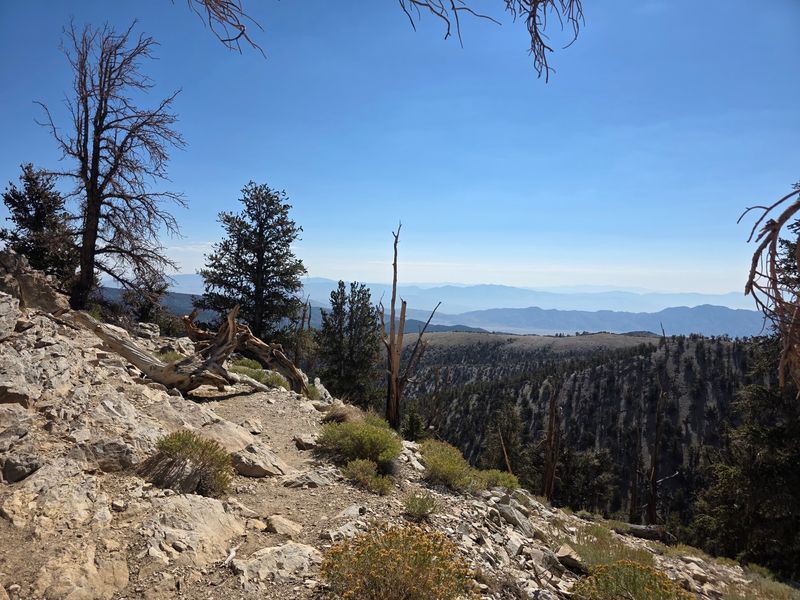
Crowds are not usually part of the picture up here. The forest sees far fewer visitors than big-name parks in the state, even during summer.
Trails often feel quiet enough to hear footsteps crunching on the rocky ground.
Distance plays a big role in that calm. The nearest towns for food, water and fuel sit down in the Owens Valley, with Big Pine being the closest.
Getting to the groves takes real effort, which naturally keeps numbers lower. Phone signal is limited or missing in many spots.
For some people, that break from texts and alerts turns into a highlight of the day. Downloading maps and trail information before the drive keeps everyone on track without a signal.
Night brings its own rewards for those who camp nearby.
Grandview Campground sits along White Mountain Road below Schulman Grove, and the dark skies can be excellent for stargazing.
Nights can get cold at these elevations, so warm layers are a must.
Weekends in midsummer may bring a few more cars to the visitor center lot, but the trails still tend to feel spacious.