This Remote Idaho Highway Is Full Of Hidden Stops And Unexpected Views

Not every road deserves your attention. This one demands it.
There is a highway cutting through central Idaho that will make you pull over more times than you planned, stay longer than you should, and drive slower than the speed limit just to soak it all in. State Highway 75 is not trying to impress you.
It doesn’t have to. The state let the landscape do the talking, and the landscape has a lot to say.
Jagged peaks, glacial lakes, ghost towns frozen in time, and stretches of silence so complete you will actually hear your own thoughts. This is not a shortcut.
This is not a scenic detour. This is the whole point of the drive.
Galena Summit And The Bethine Church Overlook

Galena Summit does not ease you in. At 8,701 feet, it greets you with thin air, sharp wind, and a view so wide it takes a second for your brain to process what your eyes are seeing.
The entire Sawtooth Valley opens up in one sweeping, jaw-dropping panorama.
The Bethine and Frank Church Overlook sits just near the summit and offers a proper pull-off spot. You can park, breathe, and stare without worrying about traffic sneaking up behind you.
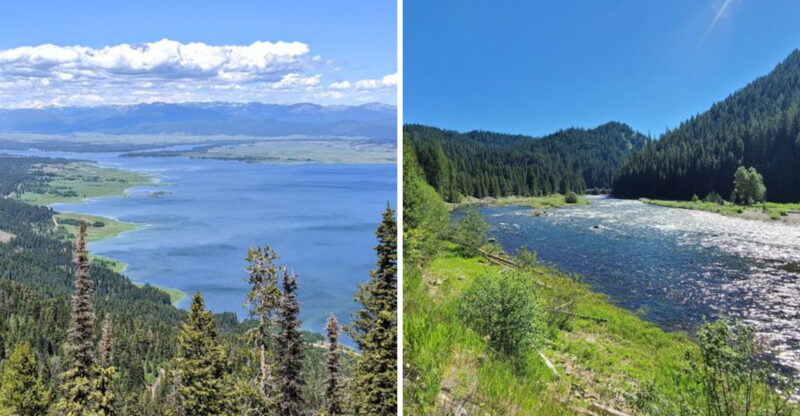
The Salmon River headwaters are visible below, threading through meadows like a silver ribbon. It feels almost too perfect to be real.
Highway 75 climbs steadily toward this point from the south, so the reveal feels earned. First-timers tend to gasp out loud, and honestly, repeat visitors do too.
If you are mapping your route, Idaho 75, Stanley, ID 83278, United States is your anchor point for this entire stretch of road. Everything north and south of it rewards curiosity.
Bring a jacket even in summer because the elevation means the wind has opinions. Morning light here turns the granite peaks gold, which is worth the early alarm.
Redfish Lake And Its Mirror-Like Reflections

Few lakes in the American West pull off this kind of visual drama with such casual confidence. Redfish Lake sits about five miles south of Stanley and frames the Sawtooth peaks like a postcard that never gets old.
The reflections on calm mornings are genuinely surreal. The granite mountains mirror perfectly in the water, making it hard to tell where the peaks end and the lake begins.
The recreation area here is well-developed without feeling crowded or commercial. There are campgrounds, a marina, boat docks, picnic areas, sandy beaches, and hiking trails all packed into one scenic zone.
Boat rentals are available, which makes exploring the far shores surprisingly easy. Fishing here is popular, and the lake has a reputation for producing solid catches.
Plan at least half a day here because one hour will never feel like enough.
Sunbeam Hot Springs Along The Salmon River

Soaking in a natural hot spring while a cold mountain river rushes a few feet away is one of life’s genuinely underrated pleasures. Sunbeam Hot Springs delivers exactly that experience right off Highway 75.
The springs seep out of the rocky bank along the Salmon River, forming warm pools that visitors have been enjoying for generations. The contrast between the hot water and cool river air is something your body remembers long after you leave.
Getting here is straightforward since the springs sit right along the highway corridor. There is no fancy entrance or fee booth, just a pull-off and a short walk to the water.
The Salmon River moves fast and cold beside the pools, which makes the warm soak feel even more satisfying. Early morning visits mean fewer people and better light on the surrounding canyon walls.
This area of the Sawtooth National Forest rewards spontaneous stops more than almost anywhere else. Keep your swimsuit accessible in the car because Sunbeam is the kind of place you absolutely want to be ready for.
The Central Idaho Dark Sky Reserve At Night

Most people plan their Highway 75 trip around the daylight hours, which means they accidentally skip the best show on the schedule. After dark, the Central Idaho Dark Sky Reserve turns the sky into something that feels almost fictional.
This region is one of the largest certified dark sky reserves in the world. Minimal light pollution means the Milky Way appears as a thick, glowing band overhead rather than a faint suggestion.
Photographers drive hours just to set up their tripods here. The combination of mountain silhouettes and a full star field makes for images that look heavily edited even when they are completely straight out of camera.
Campfire restrictions vary by season, so check current conditions before visiting. Regardless, sitting outside on a clear night here requires zero equipment and zero experience to appreciate.
The best viewing windows fall in late summer and early fall when the skies stay clear longest. Bring a warm layer because temperatures at elevation drop fast once the sun disappears behind the Sawtooth peaks.
Shoshone Ice Caves Just Off Highway 75

Not every unexpected stop on this highway involves a mountain view. Shoshone Ice Caves sits just off Highway 75 and offers something completely different from the granite peaks above ground.
These lava tube caves maintain cool temperatures year-round because of how cold air gets trapped inside the volcanic rock. Even in the middle of summer, stepping inside feels like opening a freezer door.
Guided tours walk visitors through the cave and explain the geology behind the ice formations. The history here goes back thousands of years, and the cave walls tell a story that has nothing to do with mountains or rivers.
The cave system was formed by ancient volcanic activity, which makes it a fascinating contrast to the glacially carved landscape visible along the rest of the byway. Two very different geological forces, one incredible road trip.
Kids tend to go wide-eyed the moment they step inside and feel the temperature shift. This stop pairs well with a morning drive south on Highway 75 before heading back north toward Stanley and the Sawtooth peaks.
Stanley Lake And The Quiet North End Of The Byway

Stanley Lake is the kind of place that makes you wonder why you ever bothered with busier destinations. The north end of the Sawtooth Scenic Byway delivers this gem before you even reach the town of Stanley.
The lake sits in a wide mountain bowl with dramatic peaks rising on three sides. McGown Peak reflects in the water on calm mornings, and the silence here is the kind that actually registers in your ears.
Camping spots around the lake fill up in peak summer months, so arriving midweek gives you a much better shot at a quiet site. The trails nearby are accessible and reward hikers with elevated views over the entire basin.
Fishing from the shore or a small watercraft is a popular activity, and the lake stays relatively uncrowded compared to Redfish Lake. That difference in crowd level makes the whole experience feel more personal.
The drive from Stanley to the lake is a short side trip of about eight miles. It earns its place as a must-stop on any serious Highway 75 itinerary.
Wildlife Watching Along The Highway Corridor

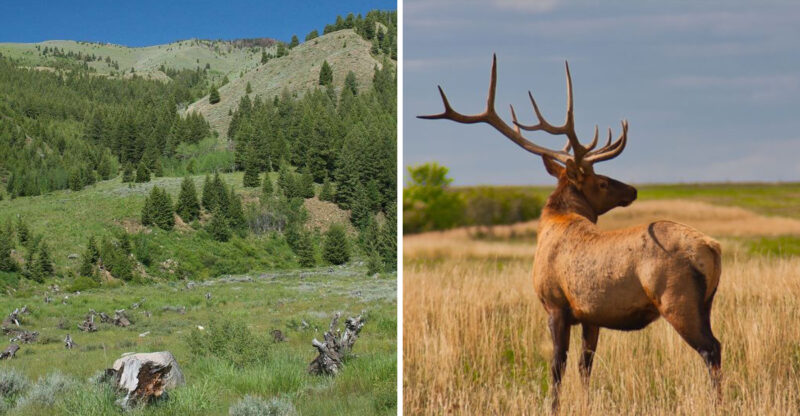
Driving Highway 75 through the Sawtooth National Forest sometimes feels less like a road trip and more like a slow wildlife documentary. The corridor supports elk, deer, moose, pronghorn antelope, mountain goats, marmots, and black bears.
Early morning drives between Stanley and Ketchum offer the highest chance of spotting animals near the road. Meadows along the Salmon River corridor are especially productive, particularly in spring and early fall.
Pronghorn antelope are a surprising sight for first-time visitors expecting only deer and elk. They move fast and tend to appear in open sagebrush flats where the valley widens out south of the mountains.
Pulling over safely and watching quietly from the car is the most effective approach. Animals here are wild and unpredictable, so keeping a respectful distance protects both you and them.
Wolves have been documented in the Sawtooth area, though sightings are rare and genuinely thrilling for those lucky enough to have one. Every mile of this highway feels like it could deliver something unexpected, which is exactly the point.
Hiking To Alice Lake In The Sawtooth Wilderness

Some trails earn their reputation the hard way, and the hike to Alice Lake is one of them. The main route to Alice Lake begins at the Pettit Lake/Tin Cup Trailhead, reached from the Highway 75 corridor.
The route covers approximately 5.5 miles one way and involves a serious elevation gain. Four water crossings add a little adventure to the journey, and good waterproof boots are not optional here.
The lake itself sits in a granite bowl with peaks rising steeply on multiple sides. The water runs cold and clear, and the surrounding rock formations have that raw, untouched quality that keeps backpackers coming back season after season.
Dogs are welcome on leash, but the elevation gain is demanding enough that conditioning your pet beforehand is a smart move. The trail conditions can change quickly, so checking with the Sawtooth National Recreation Area headquarters before heading out is always worthwhile.
The SNRA headquarters is located seven miles north of Ketchum along Highway 75 and covers the full 756,000-acre natural area. Staff there can point you toward current trail conditions and camping regulations.
The Sawtooth Scenic Byway Drive Itself

Sometimes the road itself is the destination, and the Sawtooth Scenic Byway makes that argument better than almost any highway in the country. The designated byway covers about 116 miles of two-lane pavement through some of the most varied mountain scenery in the West.
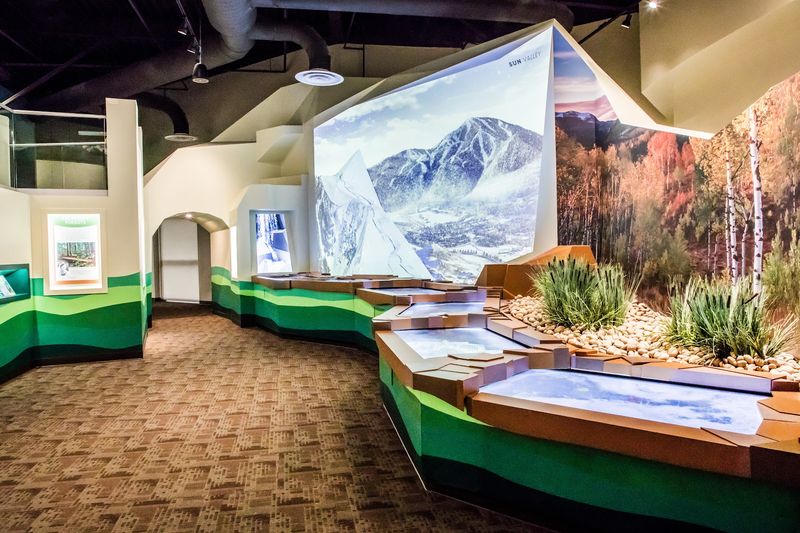
Starting from Shoshone in the south and running north to Stanley, the route passes through the Big Wood River Valley before climbing into the Sawtooth range. Towns like Ketchum, Hailey, and Sun Valley line the southern stretch, while the northern section opens into raw wilderness.
The highway is open year-round, though winter driving requires preparation and awareness of mountain conditions. Summer and fall offer the most accessible experience, with wildflowers peaking in July and aspen colors exploding in October.
The pace of this drive is entirely up to you. Some people cover the full route in a single day, while others spread it across a long weekend to absorb every pull-off and trailhead along the way.