This Small Georgia College Is Ranked The Most Innovative School In America
The most innovative college in America should logically be enormous. Giant labs, packed stadiums, a price tag to match its ambitions, that is what most people picture.
Instead, the top spot in its category landed on a quiet Georgia campus with fewer students than many high schools, raising a fair question: how does a school this small stand out nationally? The answer has nothing to do with size or spending power.
It comes down to what happens inside those brick buildings, where the entire academic experience was rebuilt from scratch rather than patched together over decades. Georgia has plenty of well known universities chasing prestige.
This one earned it differently, and the story behind that ranking is worth understanding before writing it off as a fluke.
The Small Campus With A Big National Title
Rankings usually crown giant universities with enormous budgets and sprawling campuses. One small liberal arts college quietly broke that pattern, proving that size has little to do with impact.
U.S. News and World Report has repeatedly named it the top Most Innovative School among national liberal arts colleges, a distinction that surprises people unfamiliar with the campus.
Enrollment sits under a thousand students, a number that would seem modest anywhere else but works in its favor here.
The edge is not size or flashy spending. It comes from a curriculum rebuilt around leadership and global learning, giving students hands on experience most larger schools cannot match.
Small class sizes mean closer relationships with professors and more room for original thinking, at Agnes Scott College.
Students graduate having pushed boundaries rather than simply checking boxes, prepared for challenges well beyond a traditional classroom. That focus on innovation over tradition explains why this college keeps climbing rankings that larger institutions often dominate.
Find it at 141 E College Ave, Decatur, Georgia, United States.
A Curriculum Rebuilt From Scratch
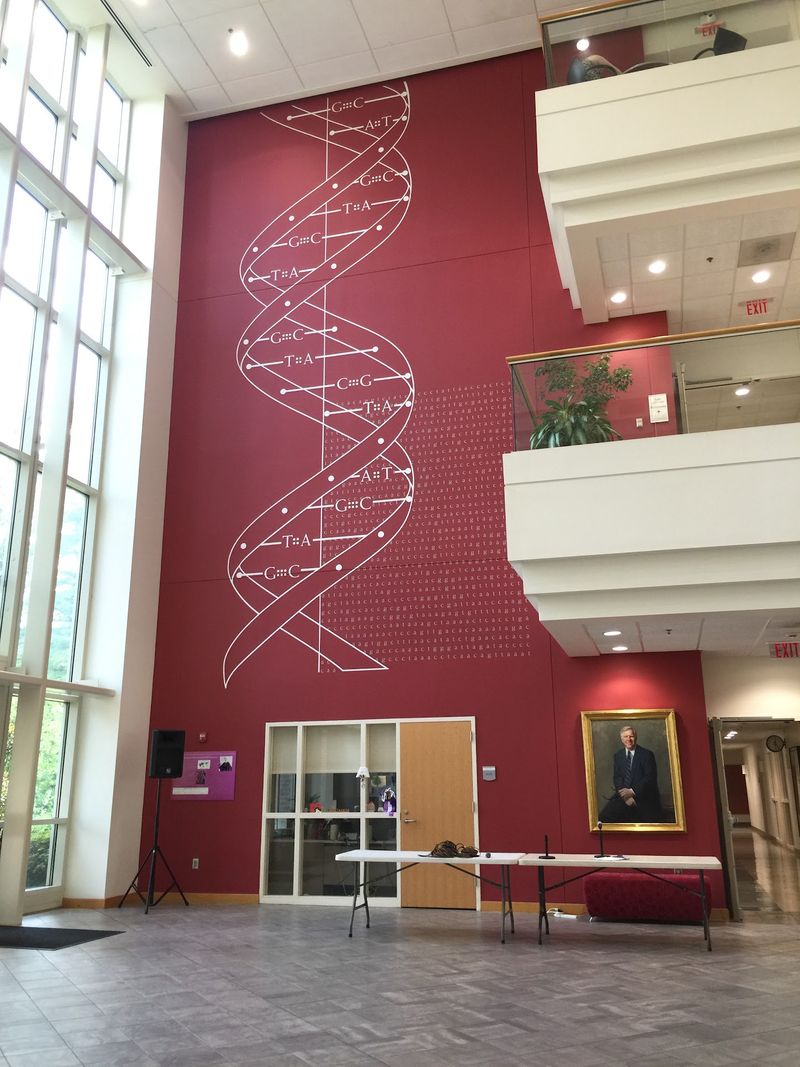
Most colleges bolt fresh ideas onto old course catalogs. This one tore up the plan and started over in 2015, rebuilding its entire academic identity from the ground up rather than patching around the edges.
The result is SUMMIT, a program every student follows from the first week on campus. It blends global learning with leadership training, regardless of major, so no one graduates without both pieces in hand.
The structure applies equally across every department, leaving no room for exceptions or shortcuts.
Biology students, poets, and economists share the same foundation, something almost unheard of in higher education. That common spine is what ranking committees noticed first, and it remains the detail most outside observers find hardest to believe.
The program also builds in mentorship and international experience as core requirements, not optional extras reserved for students with extra time or money. Everyone gets the same access, regardless of background or financial situation.
Nearly a decade later, the results speak for themselves. Graduates leave with a shared vocabulary around leadership and global awareness, no matter which subject filled their transcript.
That consistency, more than any single class or professor, explains why Agnes Scott keeps outperforming schools several times its size.
Freshman Year Comes With A Passport
Imagine starting college and needing a passport by spring. First-year students take a course tied directly to a group trip abroad, built into the curriculum rather than offered as a pricey extra.
Destinations have spanned Europe, Latin America, and Asia, changing from year to year depending on the course theme. The travel is built into the program, so cost does not slam the door shut for students who could never otherwise afford international travel.
Reading about a place is one thing. Standing in it rewires how the lesson sticks, turning textbook concepts into memories that last well beyond finals week.
Professors design each trip around the semester’s coursework, so the travel reinforces classroom material instead of functioning as a separate reward. A history class might land in Rome.
An economics course might head to South America. The location changes, but the goal stays the same: connect ideas to real places before students even finish their first year.
Few colleges attempt this kind of investment for eighteen year olds barely settled into dorm life. Agnes Scott treats global exposure as a foundation, not a luxury, and freshmen leave that first year having already seen more of the world than many adults manage in a lifetime.
Leadership Taught Like Chemistry
Leadership here is not a club that meets on Thursday nights. It is graded coursework, spread across four years, treated with the same seriousness as any lab science or required elective.
Students take leadership classes, then test the lessons in projects, internships, and community work, moving theory into practice long before graduation day arrives. Students can earn a SUMMIT micro-credential in leadership development alongside their academic work.
Team assignments get messy, which is entirely the point. Real leadership rarely looks clean, and professors design group work specifically to expose students to conflict, disagreement, and the slow work of guiding people toward a shared goal.
Nobody skates through on personality alone.
The approach borrows structure from harder sciences, breaking leadership into skills that can be taught, practiced, and measured rather than treated as an innate trait some people simply have. Feedback loops, peer evaluations, and repeated practice all play a role, much like problem sets in a chemistry course.
Guiding people is a skill employers happily pay for, and treating it like coursework rather than an extracurricular gives graduates a head start most competitors never get. Few schools commit resources this seriously to something so often left to chance.
Every Student Builds A Digital Portfolio
A resume can look painfully thin at twenty-one. Students here build digital portfolios instead, creating something far more convincing than a single page of bullet points.
Class projects, research posters, and written reflections all live in one online space, updated continuously from freshman year through graduation. By graduation, the collection shows finished work rather than a list of course titles, giving outsiders something concrete to evaluate instead of vague descriptions of what a class supposedly covered.
The process starts early and builds gradually. Professors require reflection assignments tied to major projects, pushing students to explain not just what they made but why it mattered and what they learned along the way.
Over four years, that habit produces a portfolio with depth, not just volume.
Employers and graduate programs can click straight through the evidence, seeing actual research, writing samples, and finished projects rather than taking a transcript’s word for it. That quiet advantage shows up fast in interviews, where candidates can point to specific work instead of summarizing coursework from memory.
Few schools formalize this kind of documentation across every major and every student. Agnes Scott treats the portfolio as standard practice, not an optional add-on, giving graduates proof of ability that a GPA alone could never capture.
Gothic Towers, Modern Labs
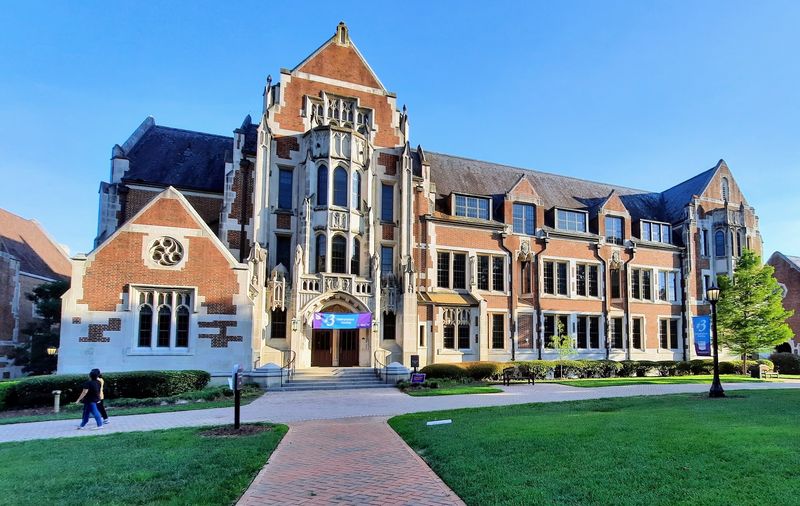
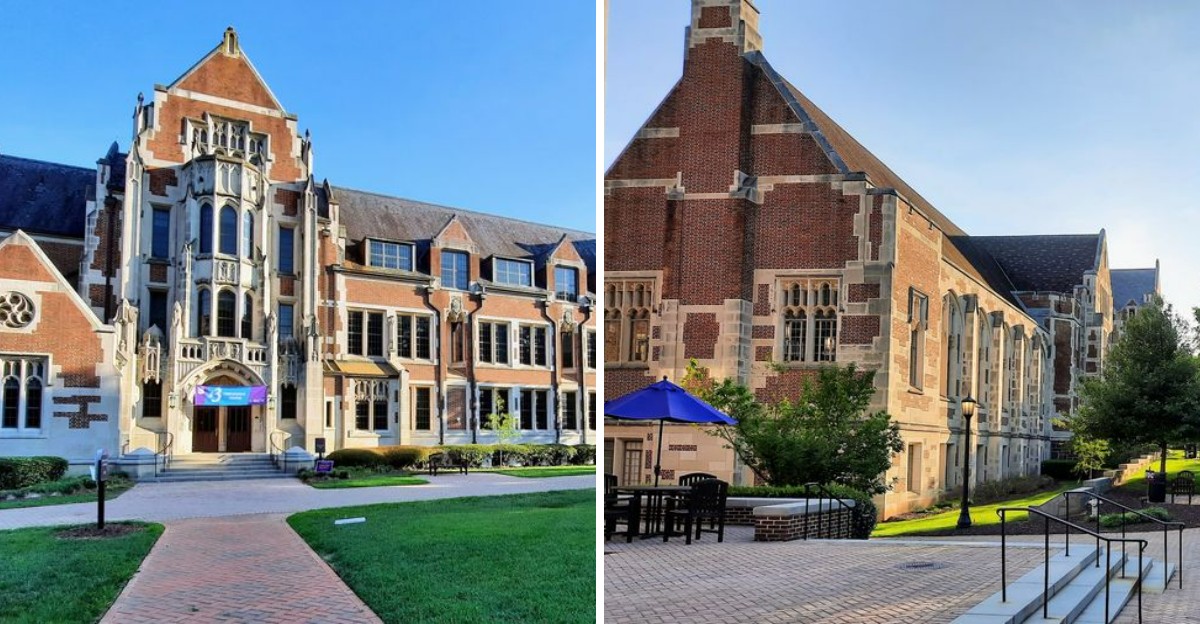
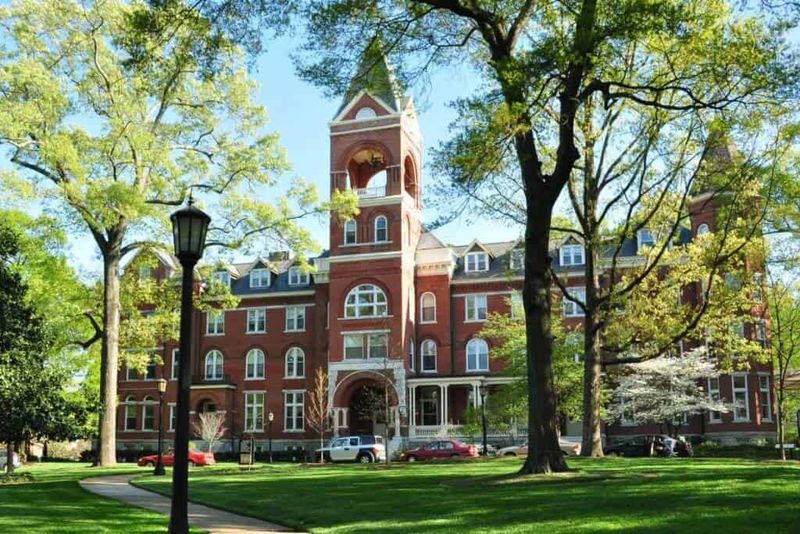
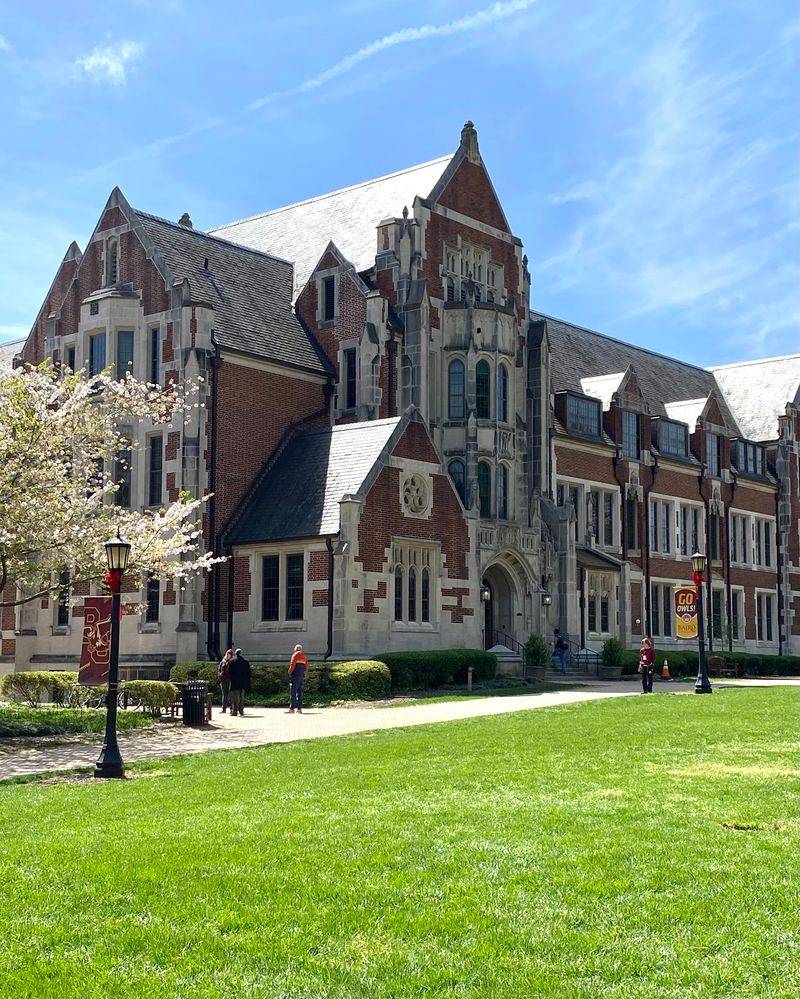
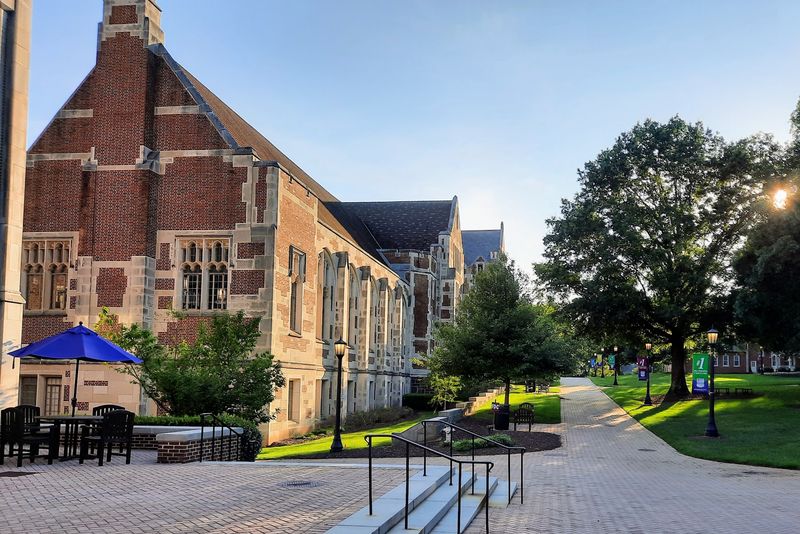
Arched windows and brick towers make the grounds look centuries old. Victorian and Gothic style buildings frame a compact, walkable quad, giving the campus a look closer to a European university than a small American college.
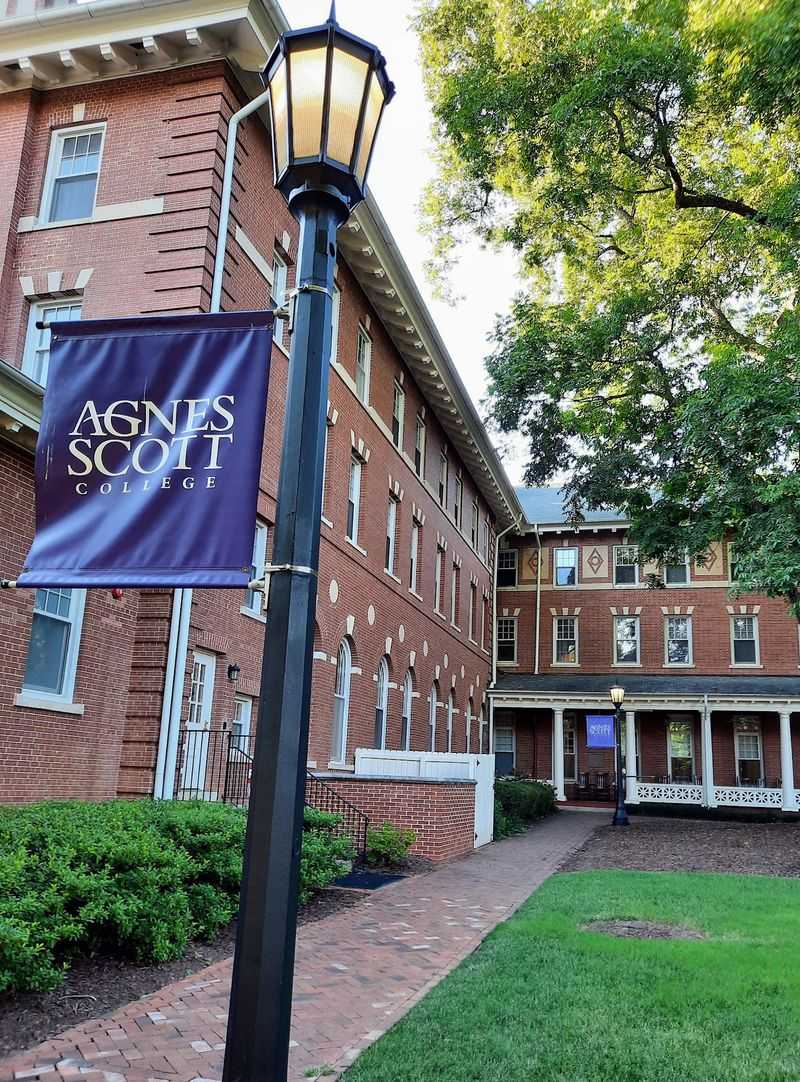
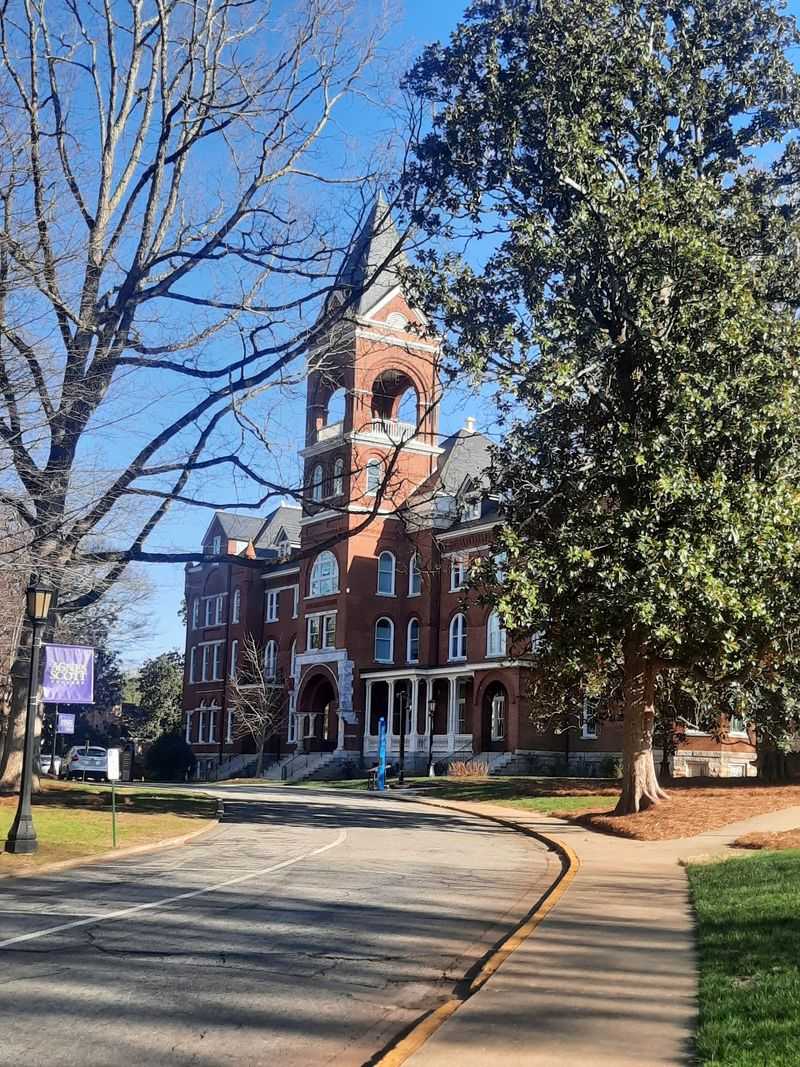
Agnes Scott’s Main Hall, dating to 1891, remains a historic centerpiece of campus and now includes student housing and the Career Exploration Center. Students walk past it daily, often without pausing to consider how much history sits inside those walls.
Film crews have borrowed the scenery more than once, drawn by the same atmosphere that makes visitors slow down and start snapping photos.
Elsewhere on campus, modern facilities such as the Mary Brown Bullock Science Center support teaching, research, and laboratory work. Science facilities keep pace with current technology, even as the exterior architecture refuses to update its look.
The contrast explains the whole school neatly. Tradition and innovation share the same address here, neither one canceling out the other.
Students get a campus that feels rooted in history while still preparing them for problems that did not exist when Agnes Scott Hall first opened its doors.
A Telescope Most Colleges Only Dream About
Stargazing beats scrolling on a clear night. Bradley Observatory houses the 30-inch Lewis H.
Beck Telescope and the Delafield Planetarium, supporting student learning and research in astronomy.
Free public programs draw families and neighbors for evening shows, turning astronomy into something the whole community gets to experience rather than a subject locked away in a classroom. Local schools often schedule visits, and weekend shows fill up fast once word spreads about a clear night ahead.
Astronomy students run their own projects under the same dome, working with professional grade instruments most undergraduates never touch until years into a career. That hands on access shapes research long before graduate school ever enters the conversation.
Very few undergraduate colleges own equipment at this level, and even fewer dedicate it to teaching rather than restricting access to advanced researchers alone. The telescope exists for students first, without layers of approval standing between curiosity and the eyepiece.
Fewer still share it so openly with the surrounding community, treating public outreach as part of the mission rather than an afterthought. That openness turns a science building into a neighborhood destination, proving that serious research and public curiosity can share the same rooftop dome.
Worth A Saturday Visit
Graduates leave with more than a diploma line. Alumnae include Fulbright scholars, physicians, and Grammy winning singer Jennifer Nettles, proof that the school’s mix of leadership training and academic rigor translates into real careers across wildly different fields.
Agnes Scott offers campus visits for prospective students during the academic year, along with select admission events. The quad looks its best in spring, when trees fill in around the Gothic architecture and the whole campus seems to slow down for a few weeks.
Time a visit with a planetarium show if you can, since evening programs add a different kind of energy to the trip beyond a standard daytime tour. Watching the dome open up after sunset gives visitors a sense of what students experience on any given clear night.
Comfortable shoes help on those brick paths, especially if a tour covers the full quad along with the older academic buildings. Between the architecture, the telescope, and a curriculum built around leadership, a single Saturday here offers more to see than most campus visits typically allow.