This South Carolina Swamp Tour Takes You Into A World Of Snakes And More
South Carolina has a swamp tour that makes ordinary sightseeing feel wonderfully wild.
Raised walkways lead through cypress country where snakes, owls, turtles, and birds can appear without warning.
The experience stays peaceful, but there is always something moving, calling, or slipping through the scenery nearby. That mix keeps you watching every step instead of checking the time.
I would take the slow route and keep my camera ready, because the best sighting could happen at any moment.
Forget the usual postcard stop for an afternoon. Are you brave enough to explore this swamp? I hope you are, because it is definitely worth visiting!
A Timeless Cypress Realm
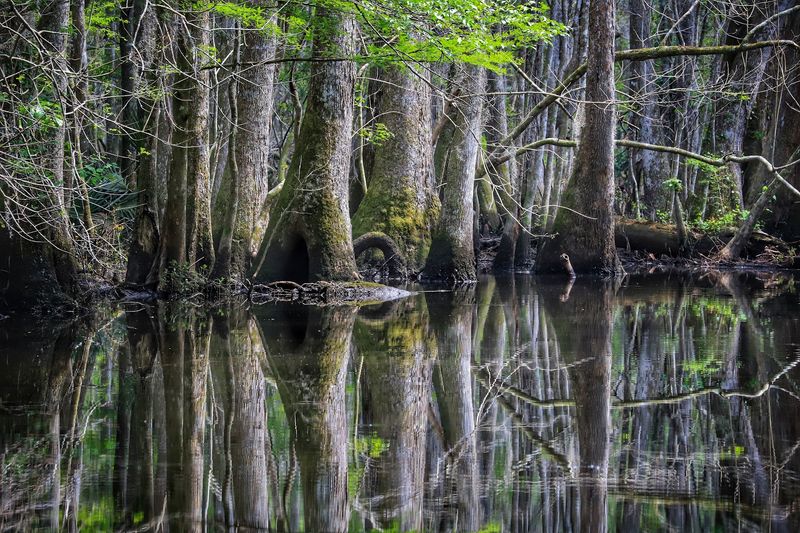
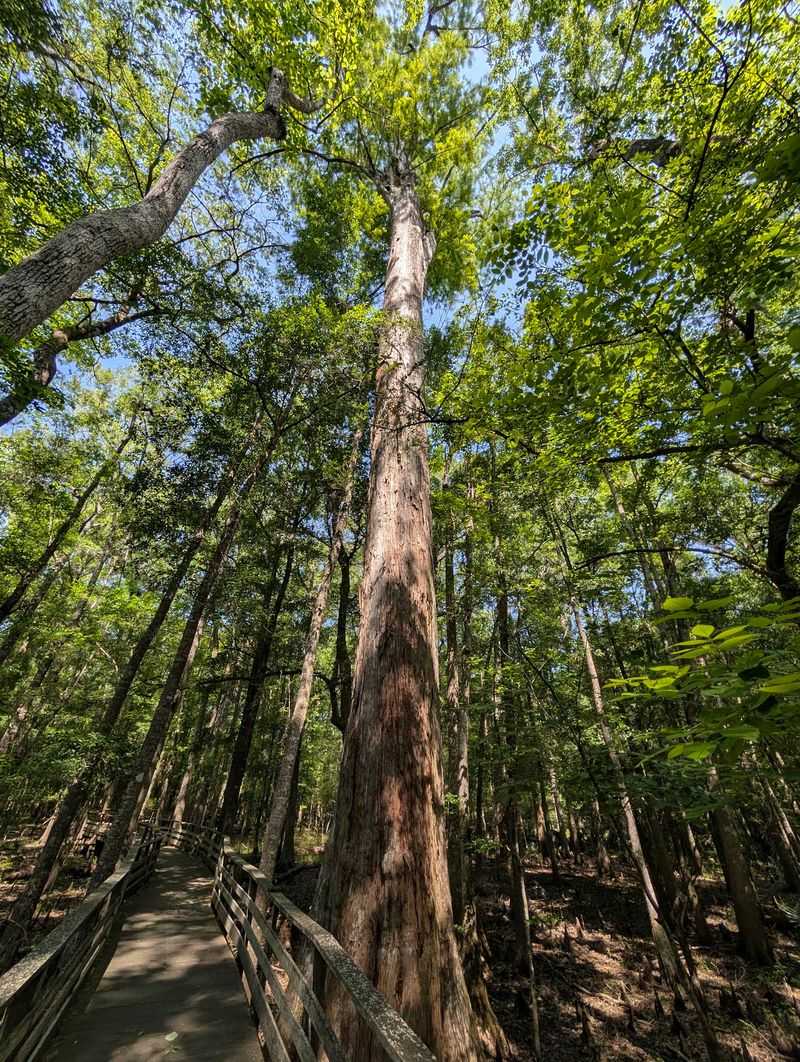
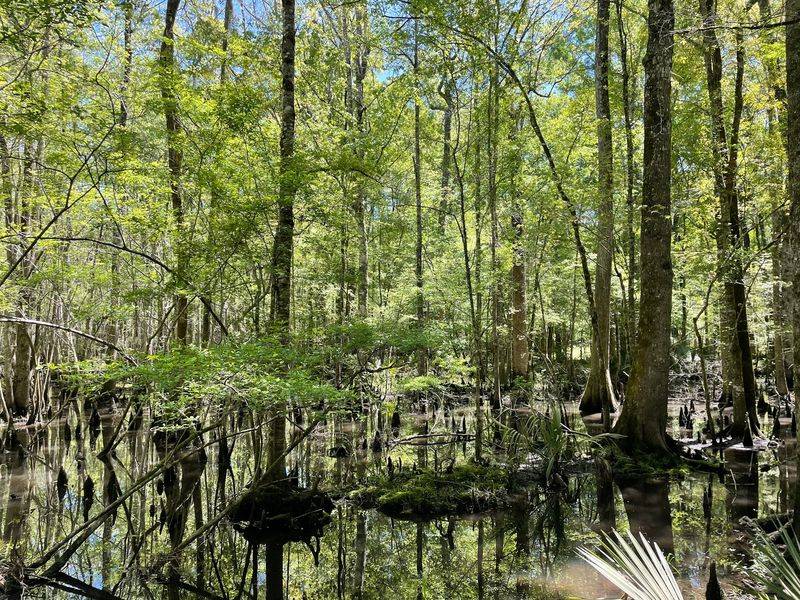
My first steps onto the boardwalk felt like traveling back through time. Towering bald cypress trees, some over a thousand years old, rose straight out of the dark water around me.
Audubon’s Beidler Forest Sanctuary protects the largest uncut, original-growth cypress-tupelo swamp found anywhere in the world.
The air here carries a quiet weight, almost like the forest is holding its breath. Gnarled roots and thick trunks tell stories older than most cities.
The sanctuary spreads across more than 18,000 acres, with an 1,800-acre core of old-growth forest. Inside the Four Holes Swamp, a blackwater creek system, the trees thrive on rainfall alone.
This pristine place has been carefully preserved for generations. It cleans water, stores floodwaters, and shelters countless creatures across the region.
The peace here is real and instant. Your thoughts slow down, and your shoulders relax.
Standing among these giants reminded me how small and new we humans truly are. Few places on Earth let you feel that so clearly, and this swamp does it beautifully.
You can find this remarkable spot at 336 Sanctuary Rd #3324 in Harleyville, tucked deep in South Carolina.
Echoes Of History
Beyond its natural beauty, this land holds powerful human stories. Audubon’s Beidler Forest Sanctuary is recognized as a site connected to the Underground Railroad.
The thick swamp once offered refuge to freedom seekers escaping enslavement, including a man named James Matthews. Walking these grounds, I could almost sense the hope carried through these trees.
The history stretches back even further, to the ancestral lands of the Edisto Natchez-Kusso tribe. In the 1890s, Francis Beidler bought the land planning to log it.
The tough, watery terrain made cutting impractical, so his family left the old-growth forest standing. That decision saved something priceless for South Carolina.
By the 1960s, conservationists understood how rare this place was. The Nature Conservancy and the Audubon Society joined forces to raise money and protect the core acres.
The sanctuary opened to visitors in 1977. Since then it has grown to more than 18,000 protected acres.
Every splash in the water and every rustle of leaves seems to whisper about resilience. Learning this backstory made my visit feel richer and far more meaningful.
Sanctuary’s Heartbeat
Life pulses through every corner of this ancient forest. Nestled inside the wide Four Holes Swamp, the blackwater creek system creates a world unlike any other.
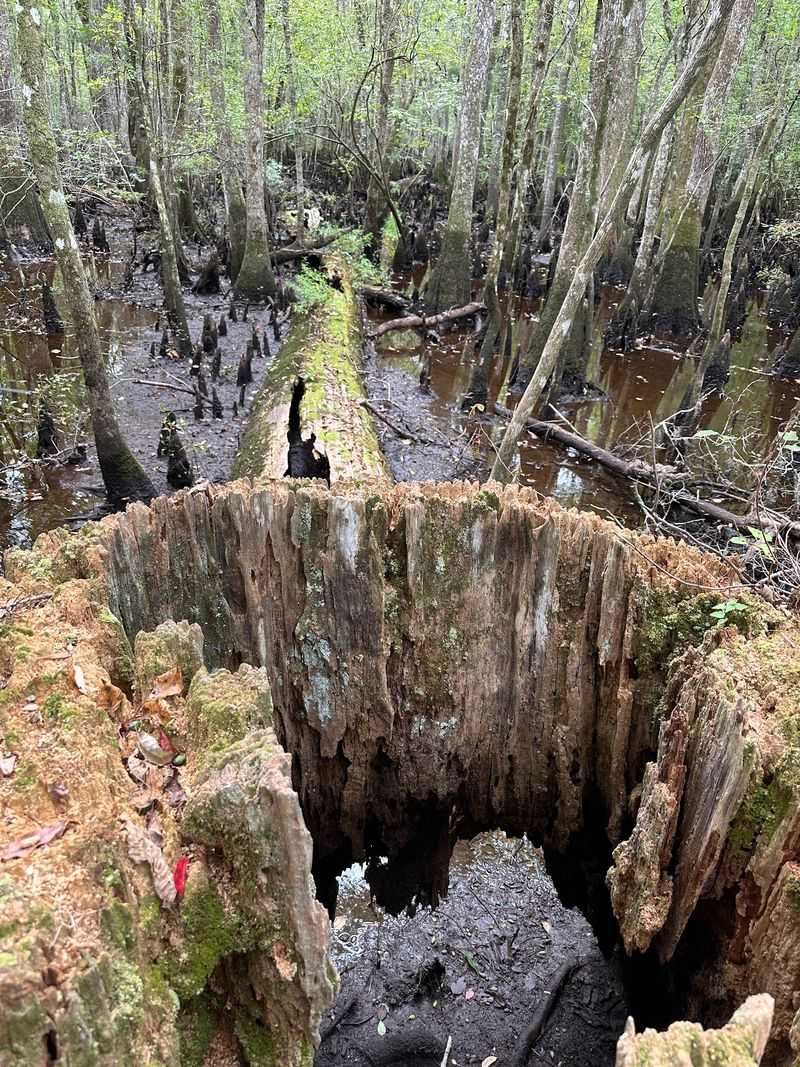
Cypress and tupelo trees crowd together, forming a dense forest barely touched by people. Some bald cypress here have stood for over 1,500 years, making them among the oldest living things in eastern North America.
Their enormous trunks rise from the water while cypress knees poke up like small towers. The scene changes dramatically through the seasons, so no two visits look the same.
The swamp waters, fed only by rain, keep a natural flow that protects this delicate ecosystem. Eventually the water drains into the Edisto River, an important South Carolina waterway.
This flowing system supports a tangled web of plants and animals working together. I loved how the silence felt full rather than empty.
Only swamp sounds broke the quiet, pulling me deeper into the moment. That stillness makes Audubon’s Beidler Forest Sanctuary a place where simply existing feels special.
I left feeling refreshed, like the swamp had reset something inside me. Nature here truly beats with its own steady rhythm.
Boardwalk Wonders
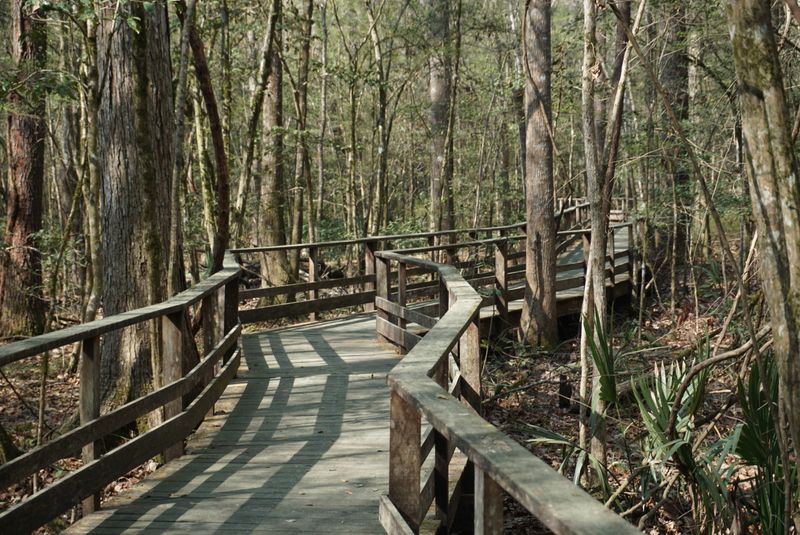
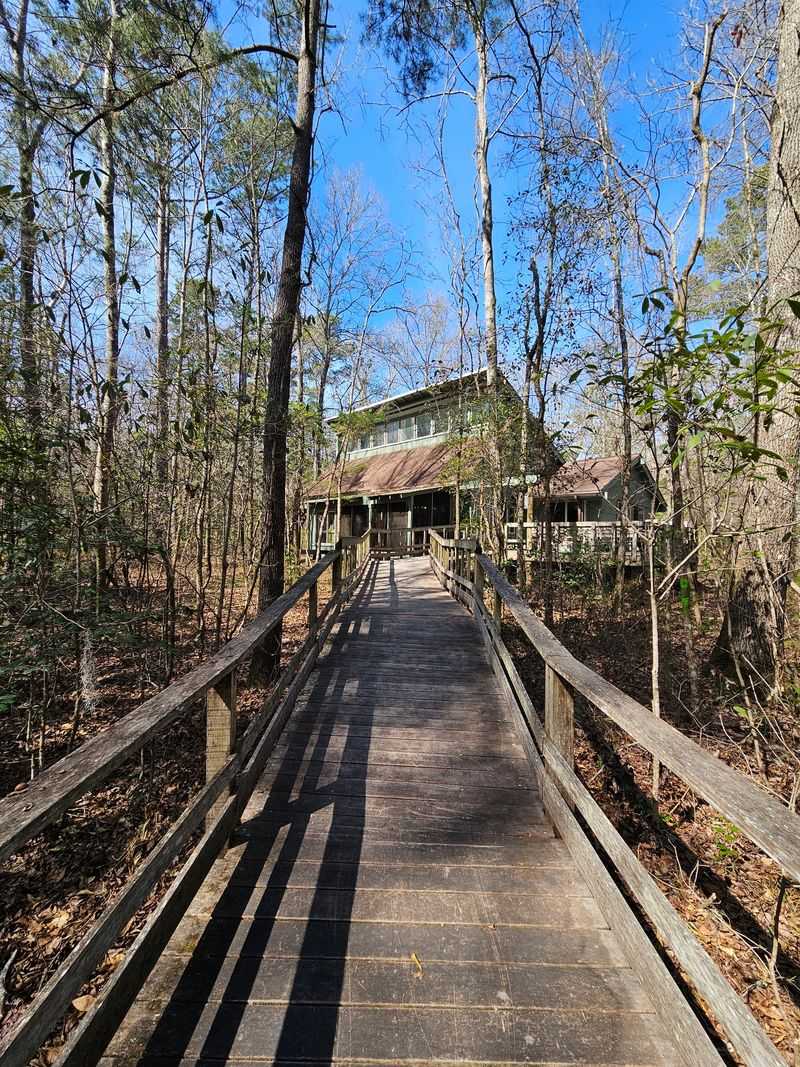
Getting deep into the swamp is surprisingly easy thanks to a fantastic boardwalk. The 1.75-mile, ADA-compliant path lets everyone venture into the ancient forest without disturbing it.
Walking elevated above the dark water, I saw a world that would be nearly impossible to reach on foot. Most guests finish the loop in about 1.5 to 2 hours.
That pace gives you plenty of time to stop, watch, and soak it all in. Benches and rain shelters dot the route, offering cozy spots to rest and breathe.
Beyond the main boardwalk, extra Grassland and Woodland trails wait to be explored. These paths, open dawn to dusk and free to enter, wind through Longleaf Pine restoration areas.
You might spot wildlife there that the swamp boardwalk misses. The visitor center rounds out the experience nicely.
It offers educational displays, a gift shop, and an aviary where an ambassador Blue Jay greets guests. You can even borrow binoculars from the front desk.
Guided Swamp Explorations
Want to uncover the swamp’s hidden secrets? Guided programs at this sanctuary open doors that self-guided walks might miss.
I joined a guided bird walk led by a knowledgeable naturalist who spotted the elusive Prothonotary Warbler in seconds. These specialized tours teach you about native plants, animals, cultural history, and ongoing conservation work.
The magic doesn’t stop when the sun sets. Night explorations and “Firefly Nights” bring the swamp to life after dark.
Imagine walking the boardwalk beneath a blanket of stars, listening to the nighttime chorus. You might even witness fireflies flashing together in synchronized rhythm.
For a bolder adventure, seasonal guided kayak and canoe trips let you glide through the blackwater. Sitting low on the water gives you an entirely new view of the old-growth forest.
Regular guided boardwalk tours offer rich, interpretive stories along the way too. These programs welcome all ages and interests.
Learning from an expert made every detail feel more meaningful to me. Audubon’s Beidler Forest Sanctuary turns a simple walk into a genuine learning journey.
Wildlife Encounters
Get ready for a nonstop parade of creatures around every bend. This ecological haven bursts with life, offering an intimate look at South Carolina’s rich biodiversity.
The article title hints at snakes, and dozens of species do live here. Still, the real avian superstar is the bright Prothonotary Warbler.
With glowing yellow-orange feathers and ink-black eyes, this songbird steals the show each spring. It nests inside the cavities of cypress tree knees.
Audubon’s Beidler Forest Sanctuary hosts one of the highest densities of breeding Prothonotary Warblers in the southern United States. The feathered residents keep coming though.
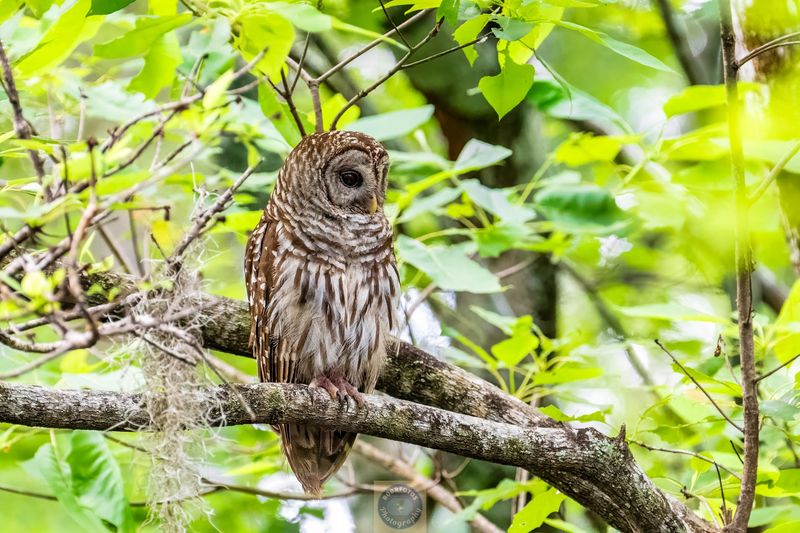
Watch for Eastern Bluebirds, colorful Painted Buntings, and singing Blue Grosbeaks. Overhead, Mississippi and Swallow-tailed Kites glide while Barred Owls peek from hollow trunks.
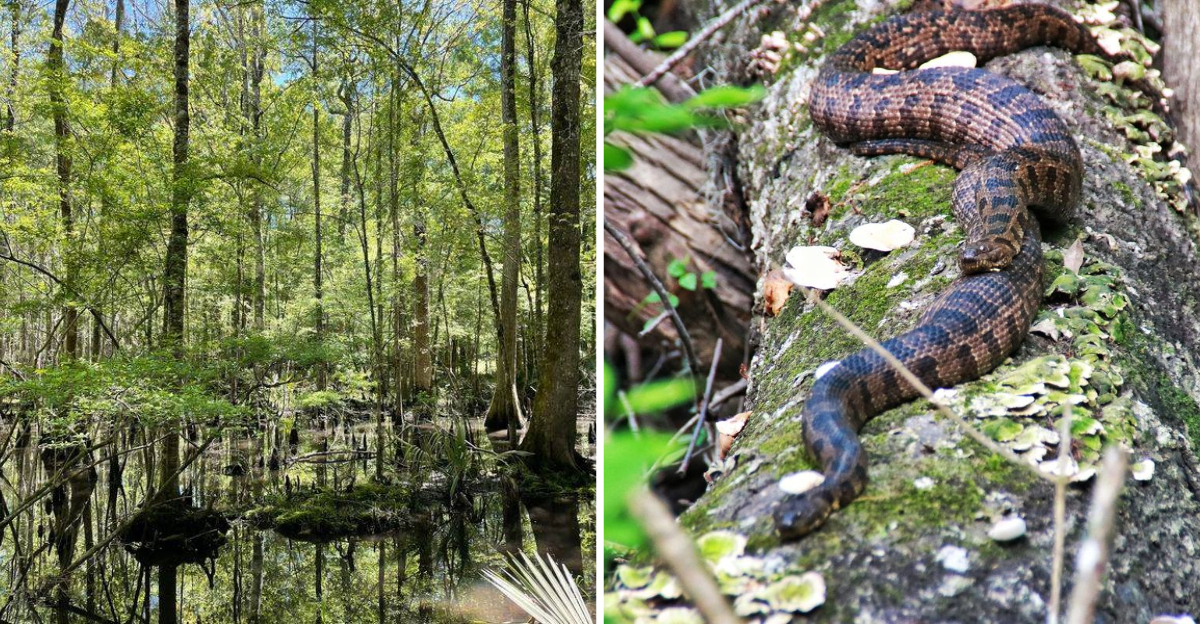
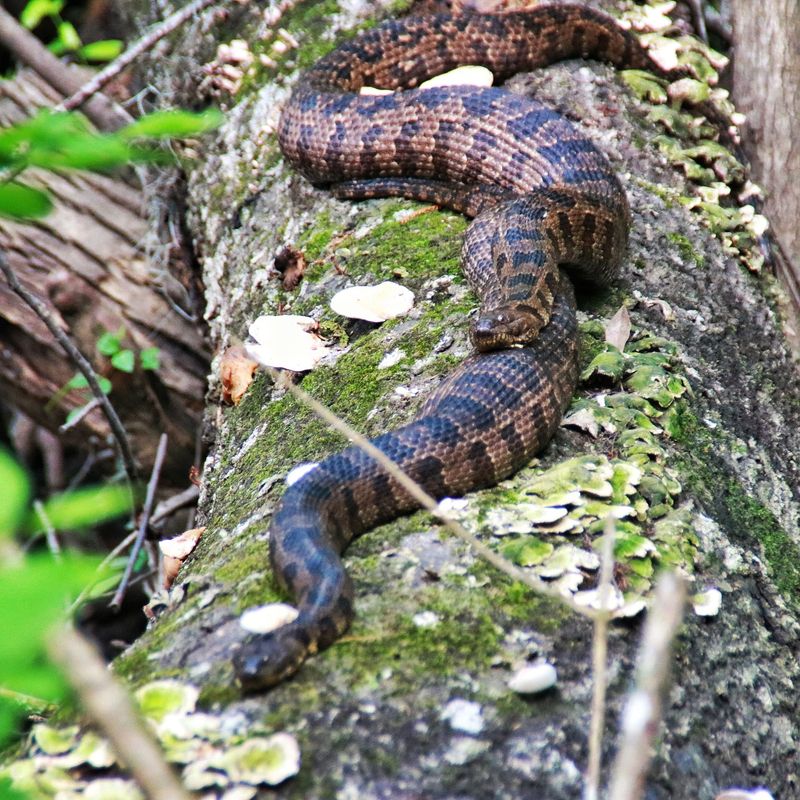
Reptile fans can spot the harmless Brown Water Snake or a Water Moccasin sunning safely at a distance. Alligators show up often, especially around Lake Gibson.
Mammals appear too, from deer to playful river otters and even bats. On my walk, I heard countless birdsongs and glimpsed a snake gliding through the water.
Preserving Ancient Giants
Protecting this forest is a mission worth celebrating. The conservation work here safeguards one of the planet’s most important natural treasures.
This old-growth cypress-tupelo swamp is more than pretty scenery. It is a critical ecosystem whose survival matters for wildlife and people alike.
The National Audubon Society manages the sanctuary, focusing on conserving and restoring habitats for birds and other creatures. This steady care keeps the millennia-old trees and their many species thriving.
Ancient forests like this also store huge amounts of carbon, helping balance our changing climate. Recognition has poured in over the years.
The site became a National Natural Landmark in 1979. In 2008, it earned the title of a Ramsar Wetland of International Importance.
More recently, it joined the Old-Growth Forest Network for its beauty and biodiversity. These honors highlight just how globally special this place is.
Community members pitch in too. Citizen science projects like “Project Protho” work to restore nesting habitats for the declining Prothonotary Warbler.
Planning Your Escape
A little planning makes this swamp trip smooth and fun. The sanctuary generally welcomes visitors Wednesday through Sunday, though hours shift, so check the official website first.
The 1.75-mile boardwalk works beautifully for wheelchairs and strollers. Keep in mind there are no restrooms out on the boardwalk itself.
Use the visitor center facilities before you head out. Bring water too, especially during warmer months, since the loop takes 1.5 to 2 hours.
For the best wildlife sightings, arrive early when crowds are thin. If bugs bother you, September often brings fewer mosquitoes.
Leave your pets at home, as they are not allowed on the trails. This rule protects both the animals and the fragile ecosystem.
Skip bug sprays containing DEET, which are prohibited here. Choose natural alternatives if you need protection.
Staying on marked trails and never touching wildlife keeps this place pristine. Parking can be limited, so calling ahead on busy days is smart.