This Storybook California Town Turns Into A Little Slice Of Denmark For A 3-Day September Festival
September gives this storybook town permission to lean even harder into its Danish side.
For three days, California visitors get a concentrated dose of old-world charm and the kind of small-town celebration that makes wandering from one block to the next feel like part of the event.
The setting already does plenty of the work.
Half-timbered buildings, decorative details, and bakery windows create a backdrop that feels unusually far from an ordinary weekend in the state.
Once the festival begins, that atmosphere gets a fresh layer of energy.
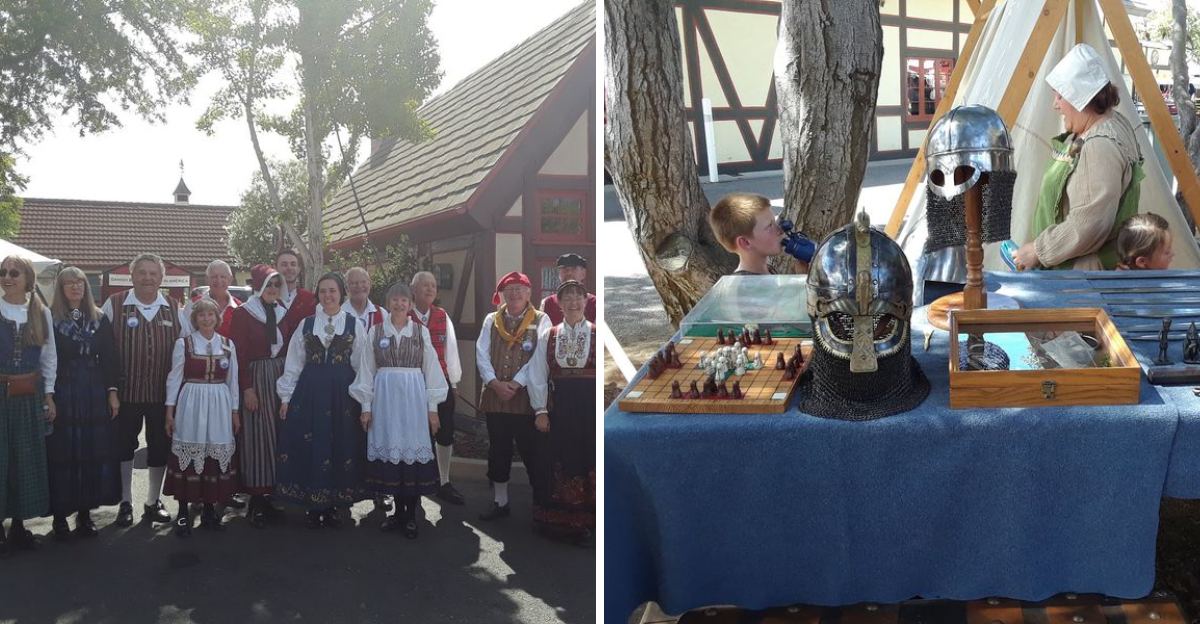
You can hear music drifting through town, spot traditional clothing in the crowds, and find plenty of reasons to keep circling back toward the food.
It is cheerful without feeling oversized.
And for a brief September weekend, the trip can feel a little like Denmark borrowed a few California streets.
An 89-Year Festival Tradition
Back in 1936, the community decided to mark 25 years since its founding with a celebration of Danish heritage.
That first gathering grew into an annual tradition, and the 2026 edition will be the 89th time the festival has taken place.
Solvang itself was established in 1911 by Danish immigrants who wanted to start a folk school, and the architecture that draws visitors today grew out of that identity.
Understanding the age of the event helps explain why so much of the weekend feels rooted rather than staged.
Families who have lived in the valley for generations take part alongside newcomers, and many of the traditions have been passed down through actual relatives rather than reinvented for tourism.
Craft demonstrations, folk dancing, and the food all trace back to specific regions of Denmark.
For anyone planning a first visit, knowing the history makes the small details more interesting.
The costumes worn during the parade are not generic European outfits, and the recipes served at breakfast follow methods that traveled here with settlers over a century ago.
A little background turns a fun weekend into something closer to a living history lesson.
Arriving with that context also makes conversations with volunteers more rewarding, since many of them are happy to explain what a particular craft or dance step actually means.
Three Days Of Danish Celebration
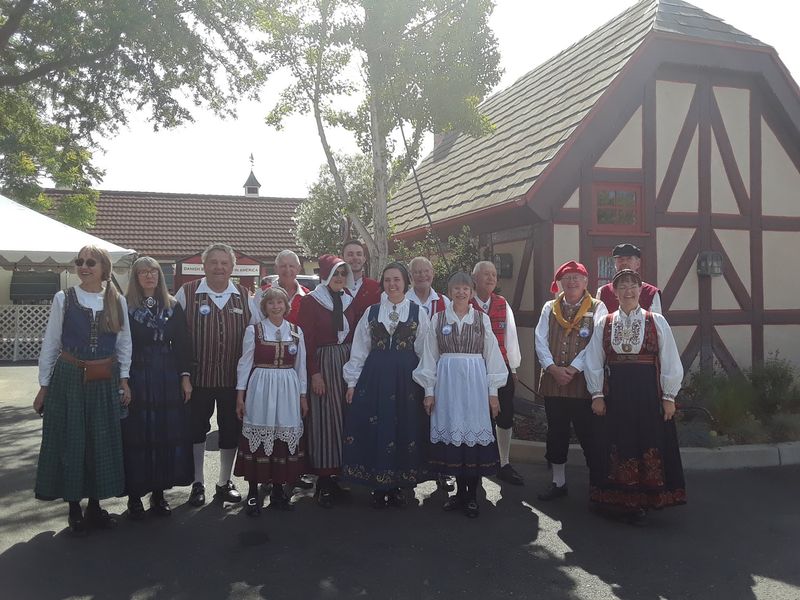
Mark the calendar for Friday, September 18, through Sunday, September 20, 2026, since that is when downtown shifts into festival mode.
General admission is free, which means the parades, street performances, and marketplace are open to anyone who shows up.
Certain special activities and food experiences do require tickets, so checking the official schedule ahead of time helps avoid disappointment.
Weather in the Santa Ynez Valley during September is usually warm during the day and noticeably cooler after sunset. Layers work well, especially for anyone staying through the Friday evening events.
Comfortable walking shoes matter more than anything else, because the downtown core is flat but the distances add up over several hours.
Friday evening tends to feel calmer than Saturday, when the main parade brings the largest crowds of the weekend.
Sunday settles back into a gentler rhythm that suits families with younger children or anyone who prefers shorter lines. Visitors who want a mix of both energy levels often plan a full Saturday and a slower Sunday morning.
Lodging in town fills up during festival weekend, so booking early is the practical move.
Staying within walking distance removes the parking question entirely and makes it easy to return to a room for a midday break.
Friday Night Starts By Candlelight
Few festival openings feel as quiet and warm as a street full of small flames moving through town after dark.
The Torchlight Parade steps off at 7:30 p.m. on Friday, gathering at the intersection of Alisal Road and Laurel Avenue.
Candles are handed out to participants, and joining costs nothing at all. Walking in the parade rather than watching it changes the experience considerably.
The pace stays slow and conversational, and children usually manage the route without trouble since it stays within the downtown area.
Anyone who prefers to watch can find a spot along the sidewalk and still catch the full effect of the moving lights. Arriving 20 or 30 minutes early gives time to find the starting point and settle in.
Parents with small children may want a stroller for the walk back afterward.
Photography works best with a phone or camera that handles low light, though the atmosphere is worth simply watching without a screen.
The parade sets the mood for the rest of the weekend and leads directly into the evening street dance that follows nearby.
Aebleskiver Takes Over Breakfast

The smell of batter cooking in cast iron pans is the unofficial alarm clock of the weekend.
The Aebleskiver Breakfast runs Saturday and Sunday from 8:30 a.m. to noon, set up along Copenhagen Drive and First Street.
Those round Danish pancake spheres are the signature food of the festival, typically dusted with powdered sugar and served with raspberry jam.
Cooking them takes a special pan with rounded wells, and the cooks turn each ball as it sets so it puffs into a sphere.
Watching the process is half the appeal, since the technique looks simple but takes practice. Volunteers usually work in teams, keeping several pans going at once.
Lines build after 9:30 a.m., so arriving close to the 8:30 a.m. start means shorter waits and a better chance at a seat.
Bringing cash can speed things along, though payment options may vary by year.
The portions are filling enough that most people skip a heavy lunch afterward. Anyone who misses the breakfast window can still find aebleskiver at bakeries and restaurants around town throughout the year.
Trying them fresh off the pan at the festival, however, is a different experience entirely.
Old-World Crafts Fill First Street
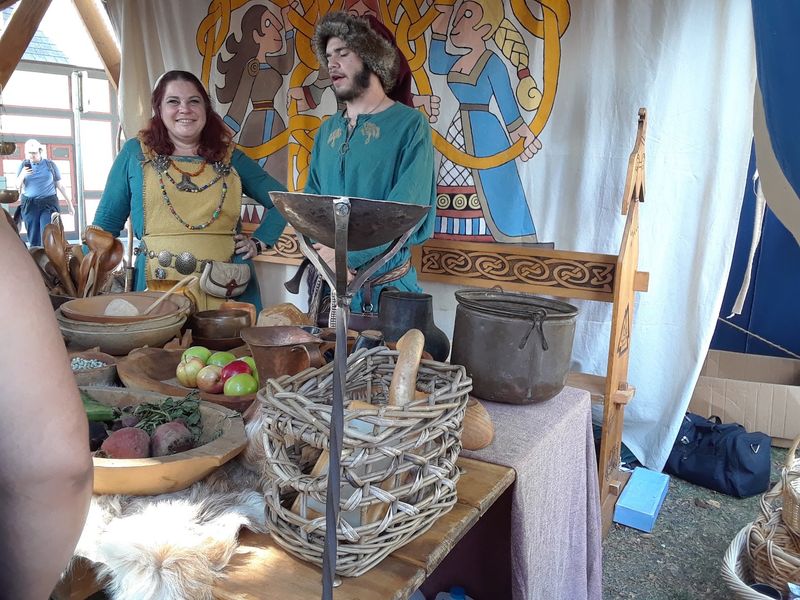
Paper scissors, painted wood, and hand tools take over First Street when the Old World Artisans Marketplace opens.
Doors open at 9 a.m. on both Saturday and Sunday, with booths set along the street.
Demonstrations include papercutting, rosemaling, and woodworking, all traditions with deep Scandinavian roots.
Rosemaling involves flowing floral designs painted onto wooden objects, a technique that developed in rural Norway and spread through Scandinavia.
Papercutting produces intricate designs cut from a single folded sheet, and Hans Christian Andersen himself was known for the craft.
Watching an artisan work through a piece step by step makes the skill much easier to appreciate. Handcrafted fabric art, jewelry, and pottery are also available to browse and buy.
Morning hours are quieter, which gives more room to ask questions and actually talk with the makers. By early afternoon the street fills as parade crowds gather nearby.
Bringing a tote bag makes carrying purchases easier, and small bills help with quicker transactions at booths.
The marketplace is one of the few parts of the festival where the pace stays slow enough for real conversation.
The Big Parade Rolls Through Town Saturday
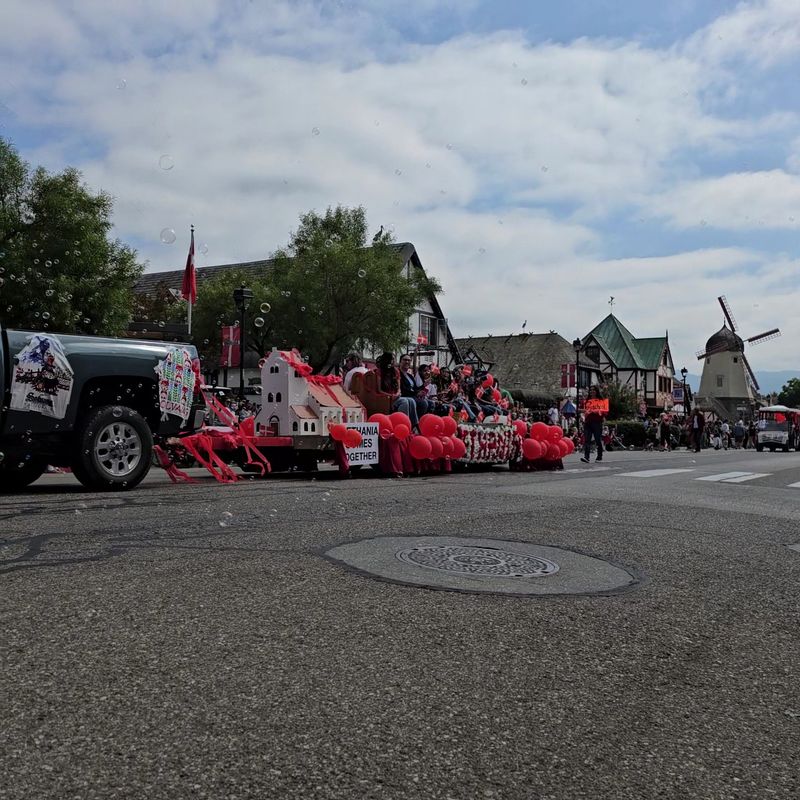
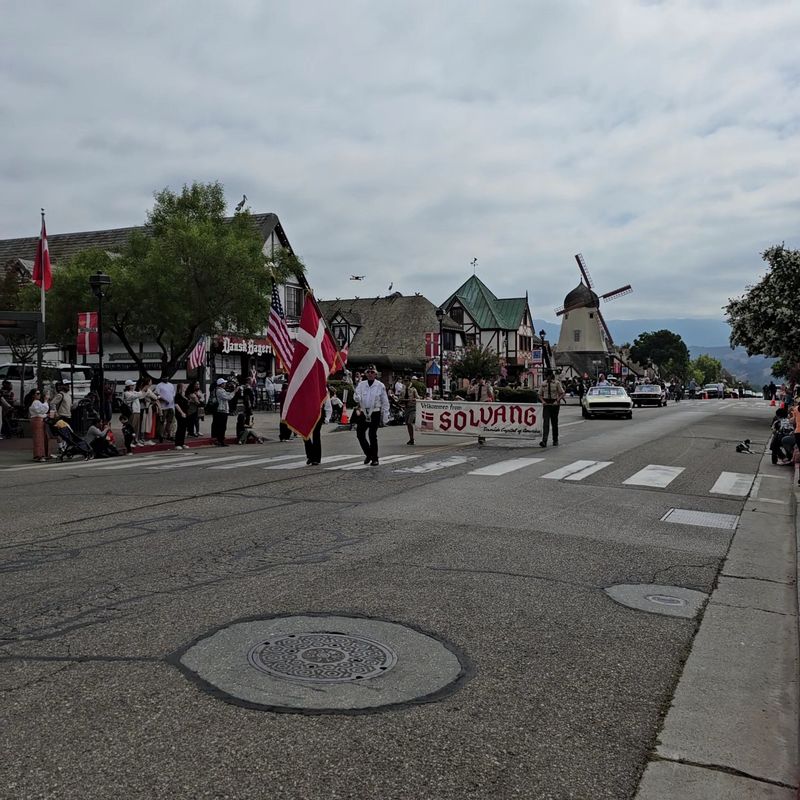
Saturday afternoon belongs to the main parade, and the whole downtown shifts around it.
Kickoff is 2:30 p.m. on September 19, with the route running through the heart of the downtown area. Floats, equestrians, and the Village Dancers all take part, along with community groups and local organizations.
Crowds along the route can be several people deep, so claiming a curb spot an hour ahead is a reasonable strategy.
Folding chairs help for anyone who does not want to stand through the whole thing. Shaded stretches of sidewalk fill up first, which is worth remembering on a warm September afternoon.
Street closures go into effect before the parade begins, so anyone driving should park early and plan to leave the car where it sits.
Public lots around downtown fill quickly on Saturday, and walking a few extra blocks is often faster than circling.
The parade lasts long enough to feel substantial without dragging, and the mix of horses, music, and costumes keeps younger viewers engaged.
Afterward the crowd disperses into the shops and restaurants, so a slightly later dinner tends to mean shorter waits.
Elverhoj Museum Goes Into Living-History Mode
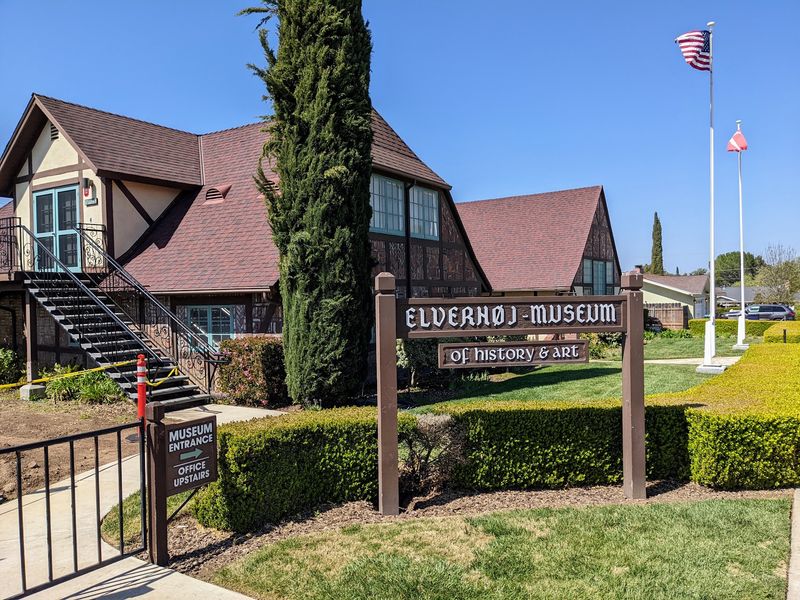
Craftspeople working with their hands turn a quiet museum into something closer to a working village for a day.
The Elverhoj Museum of History and Art can be found at 1624 Elverhoy Way, Solvang, CA 93463, tucked into a residential block just off the main downtown streets.
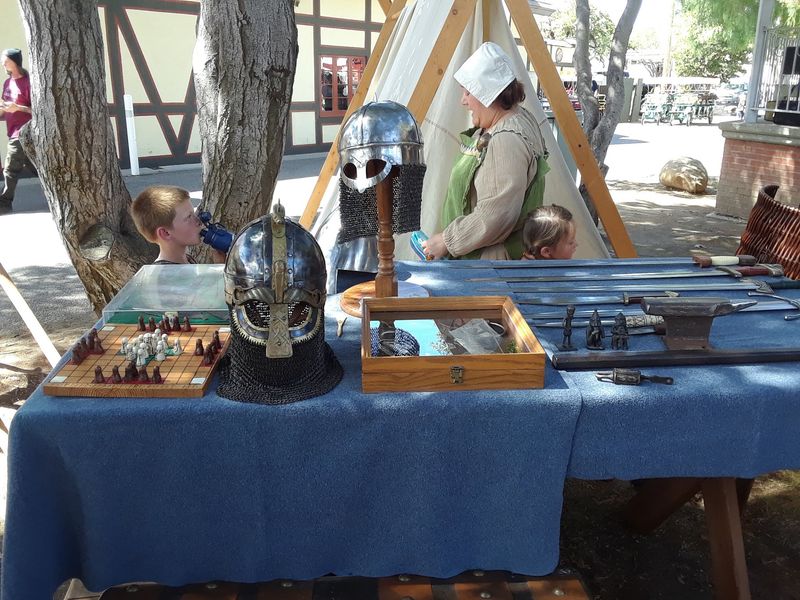
Saturday’s Living History Festival runs from 11 a.m. to 4 p.m. with artisans, craftspeople, and hands-on activities throughout the grounds.
The building itself is a former home built in the style of an eighteenth-century Danish farmhouse, which suits the subject matter well.
Permanent exhibits cover Solvang’s founding, Danish immigration, and folk arts, so a visit adds useful background to everything else happening downtown. Sunday brings free admission from 11 a.m. to 5 p.m.
Walking here from Copenhagen Drive takes only a few minutes and offers a break from the busiest streets.
The quieter setting makes it a good midday stop for anyone feeling worn out by crowds.
Interior rooms are compact, so groups may want to spread out rather than move through together.
Solvang Park Becomes The Family Hub
Shade trees, open grass, and a steady stream of kids make the town park the natural gathering point for families.
The park occupies the block at 1630 Mission Drive, Solvang, CA 93463, right in the middle of the downtown area.
Kid’s Korner operates there Saturday and Sunday from 10 a.m. to 5 p.m. with games, face painting, and a LEGO tent among the activities.
Having a central spot with room to sit down matters more than it sounds during a packed festival weekend. Parents can rest on a bench while children rotate through activities within easy sight.
The grassy areas give younger kids space to move without weaving through sidewalk crowds. Sunday afternoon brings the closing ceremony here at 3 p.m., which wraps up the three days officially.
Arriving a bit before that time makes it easier to find a comfortable place to stand or sit. Restrooms and food options are within a short walk in most directions.
Bringing a small blanket gives families a place to spread out on the grass between activities.
The park stays open year-round, so it remains a pleasant stop on any visit to town, festival or not.