This Storybook-Perfect Village In California Feels Like A Real-Life Fairytale Escape
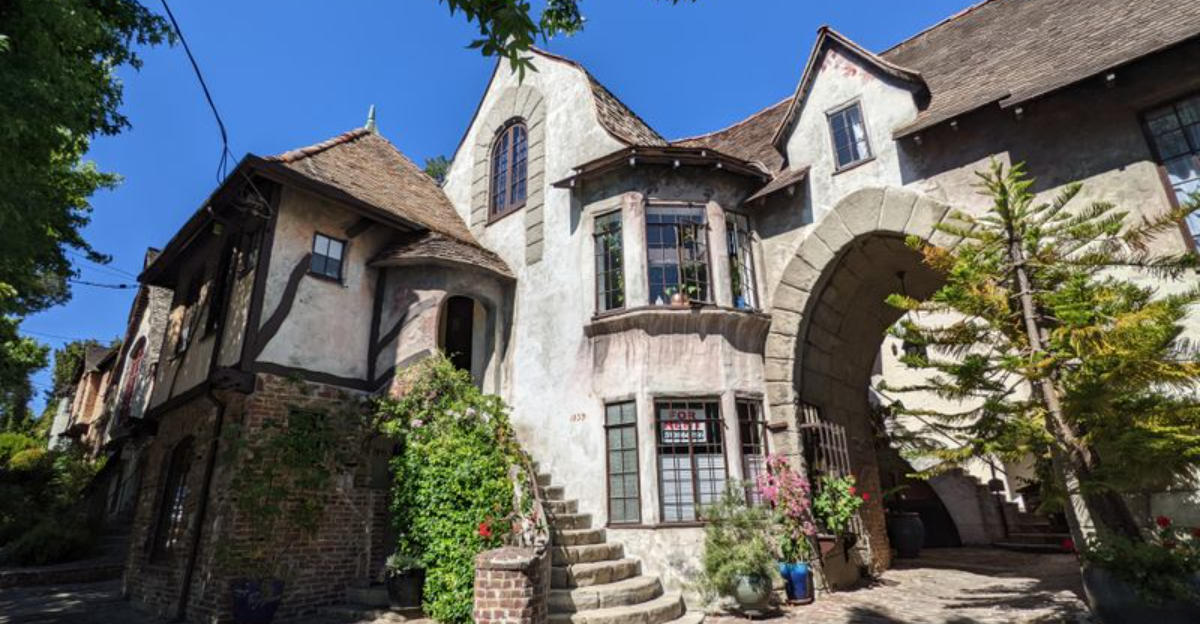
A quiet stroll suddenly feels like a journey into a fairy tale where storybook cottages and old-world details create a sense of magic around every corner.
This charming enclave feels worlds away from modern life yet it sits quietly within California waiting to be discovered.
Known as Thornburg Village (or Normandy Village) this hidden pocket of Berkeley was designed nearly a century ago to resemble a romantic European hamlet.
Steeply pitched roofs, arched doorways, and hand-crafted details give the neighborhood a whimsical personality that feels both nostalgic and intimate.
Walking its narrow pathways feels like stepping into another era where imagination guided architecture and everyday life moved at a gentler pace.
Despite its small size, Thornburg Village leaves a lasting impression offering beauty mystery and a sense of escape that surprises even longtime locals.
It is the kind of place that makes visitors slow down, look closer, and wonder how such a dreamlike setting has remained so quietly preserved for generations.
A Developer’s Dream
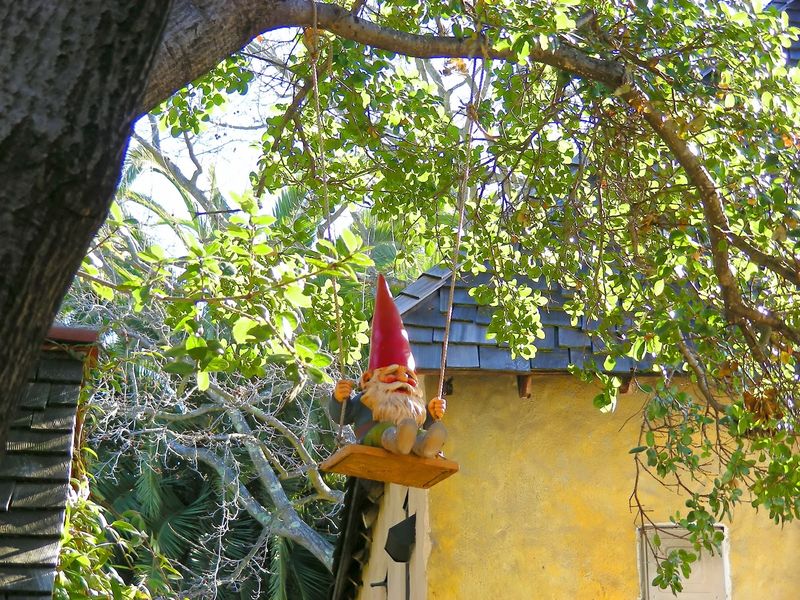
Jack Thornburg was only 25 years old when he envisioned creating a slice of Europe in California. His experiences serving in France during WWI left a lasting impression, inspiring him to bring the charm of French villages back home.
Partnering with Oakland architect William Raymond Yelland, Thornburg set out to build a self-contained community unlike anything Berkeley had seen before.
The original plan included not just homes but also shops and restaurants, creating a vibrant village atmosphere. Zoning restrictions, however, limited the project to residential units only.
Despite this setback, Thornburg pressed forward with his vision, determined to create something truly special. Completed in 1927, the village became a testament to one man’s dream and determination.
The collaboration between Thornburg’s vision and Yelland’s architectural expertise resulted in a neighborhood that would charm generations to come.
Today, visitors can still sense that original passion woven into every stone and timber of these remarkable structures.
European Styles Meet California Sunshine
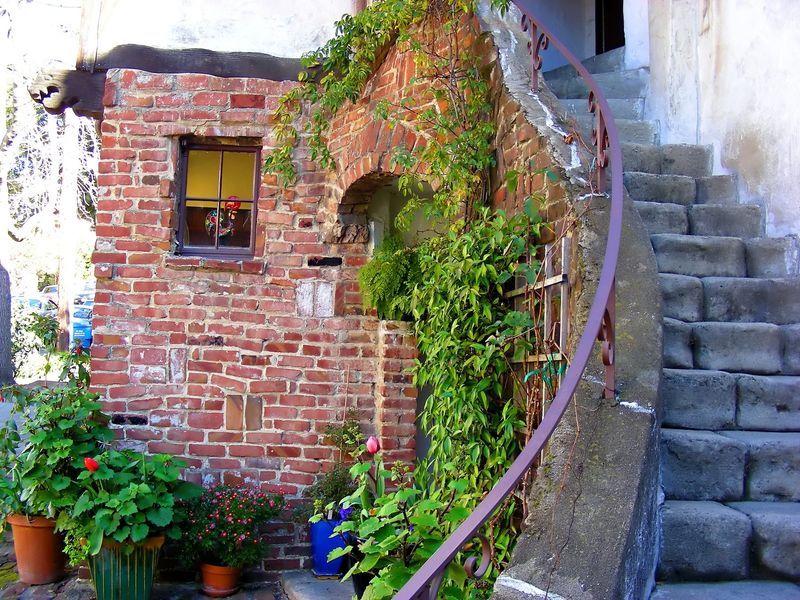
Walking through Thornburg Village feels like touring multiple European countries without leaving Berkeley. The architecture blends French-Norman, Scandinavian, and Mediterranean influences into a cohesive yet varied streetscape.
Each building showcases unique details that reflect these diverse traditions, creating visual interest at every turn. French-Norman elements appear in the steep rooflines and rustic stonework that evoke countryside cottages.
Scandinavian touches emerge in the clean lines and practical design features that balance beauty with function.
Mediterranean influences show up in the warm color palettes and textured surfaces that catch the California light beautifully. This architectural fusion was unusual for its time and remains distinctive today.
Rather than copying one specific style, Yelland and Thornburg created something entirely new by combining their favorite elements from different traditions.
The result feels both familiar and fantastical, grounding visitors in recognizable European aesthetics while surprising them with unexpected combinations that spark imagination and delight.
Location At A Historic Crossroads
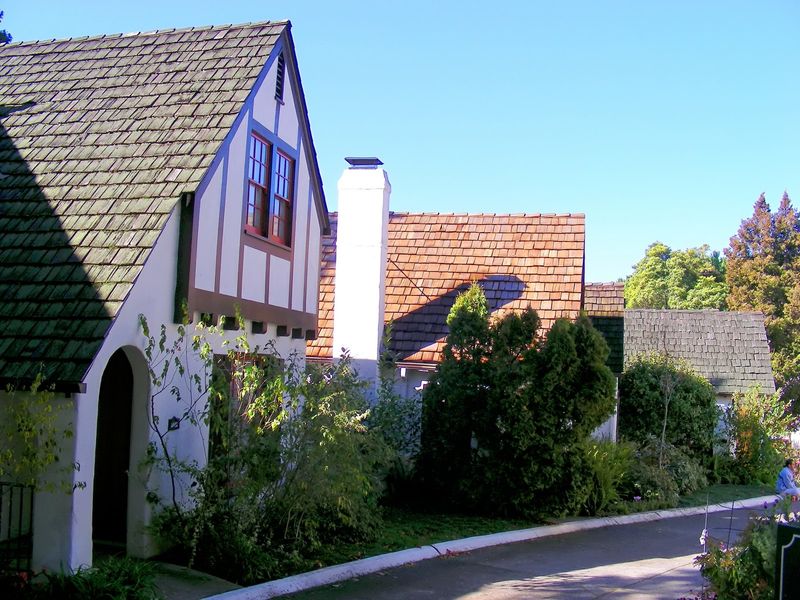
Thornburg Village sits at the intersection of Spruce Street and Hearst Avenue, placing it in one of Berkeley’s most established neighborhoods.
This location offers easy access while maintaining a quiet, residential character that enhances its fairytale atmosphere. The surrounding area features mature trees and established homes that complement the village’s historic charm.
Hearst Avenue itself carries historical significance, named after Phoebe Apperson Hearst, a major benefactor of the University of California, Berkeley.
The street connects the village to broader Berkeley, making it accessible to visitors exploring the city’s cultural landmarks.
Spruce Street, meanwhile, climbs into the Berkeley Hills, offering scenic routes for those who wish to extend their exploration.
The village’s positioning allows visitors to experience its magic without feeling isolated from the rest of Berkeley. Nearby cafes, bookstores, and university sites create opportunities for a full day of exploration.
This balance between seclusion and accessibility makes Thornburg Village an ideal stop for architecture enthusiasts and casual visitors alike.
Brick And Stone That Tell Stories
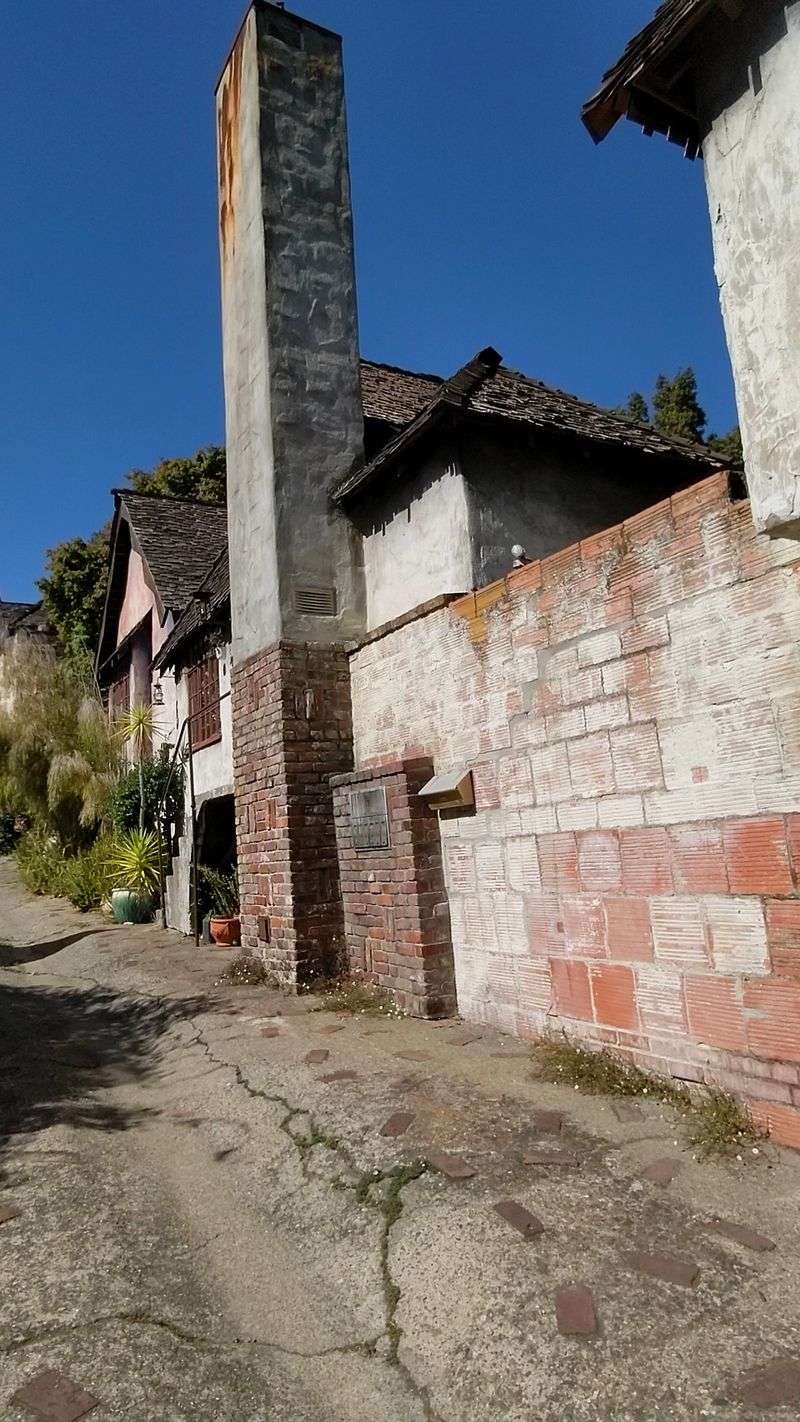
Every surface in Thornburg Village seems to whisper tales from another era. The brick and stone facades were carefully selected and arranged to create texture and visual depth that modern construction rarely achieves.
Weathering over the decades has only enhanced these materials, adding character that cannot be replicated in newer buildings.
Craftsmen laid each brick and stone by hand, creating irregular patterns that feel organic rather than manufactured. Mortar lines vary slightly in width and color, revealing the human touch behind the construction.
These imperfections contribute to the village’s authentic, lived-in quality that makes it feel genuinely old-world rather than artificially themed.
Different types of stone appear throughout the village, from smooth river rocks to rough-hewn blocks that suggest medieval fortifications.
Brick colors range from warm reds to cooler grays, creating subtle variations that prevent visual monotony.
Together, these materials create a tactile richness that invites closer inspection, rewarding visitors who take time to notice the craftsmanship that went into every detail of these remarkable structures.
Steep Gables Reaching Skyward
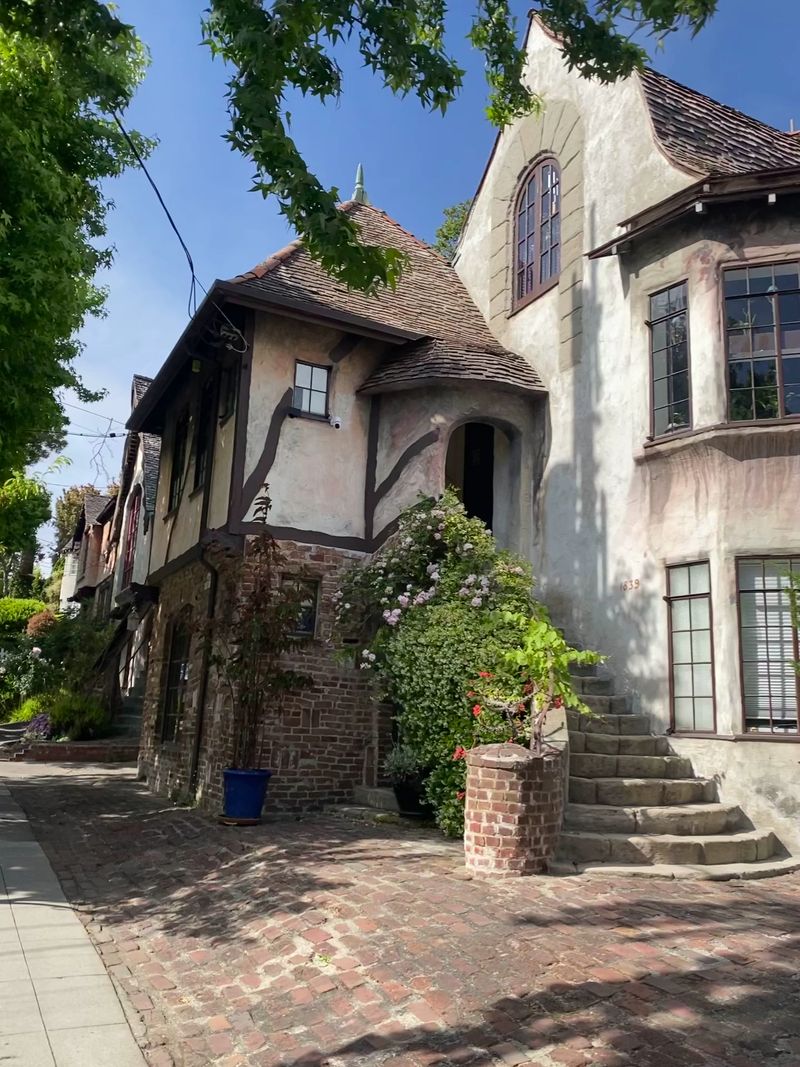
Look up while walking through Thornburg Village and you’ll notice rooflines that seem to defy practical necessity.
The steep gables create dramatic silhouettes against the California sky, drawing the eye upward and adding vertical interest to the compact neighborhood.
These sharply pitched roofs serve both aesthetic and symbolic purposes, evoking European cottages where snow loads required such angles.
In Berkeley’s mild climate, these steep roofs are purely decorative, chosen for their visual impact rather than functional necessity.
This choice emphasizes the village’s commitment to creating an authentic European atmosphere regardless of practical considerations.
The rooflines vary from building to building, preventing the repetitive look that plagues many planned communities.
Some gables feature decorative woodwork or unique window placements that add personality to each structure.
The angles create interesting shadow patterns throughout the day as sunlight shifts across the facades.
These rooflines contribute significantly to the fairytale quality that makes Thornburg Village so photogenic and memorable, giving each building a distinct profile that stands out in visitors’ memories long after they leave.
Tower Rooms And Turrets
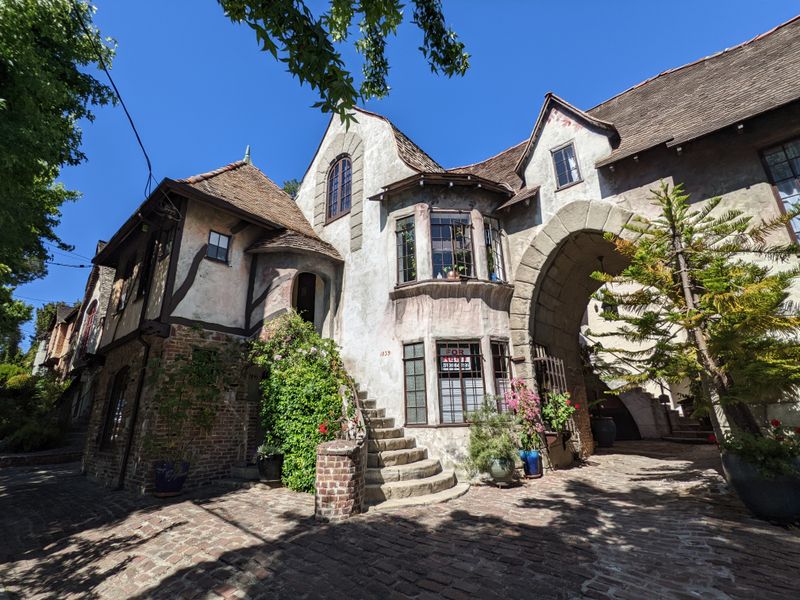
Perhaps nothing captures the fairytale essence of Thornburg Village quite like its tower rooms and turrets.
These architectural features seem lifted directly from medieval castles and romantic illustrations, adding vertical drama and whimsical charm to the residential structures.
Small windows peek from these elevated spaces, suggesting secret rooms where stories might unfold.
The towers vary in size and style, from slender turrets barely wide enough for a reading nook to more substantial tower rooms that could serve as small studies or bedrooms.
Some feature conical roofs that emphasize their castle-like character, while others have more subtle capping that blends with the overall roofline.
These elements break up the horizontal lines of the buildings, creating visual complexity that rewards repeated viewing.
From a practical standpoint, these tower spaces add usable square footage while maximizing the fairytale aesthetic.
The circular or polygonal floor plans create unique interior spaces that differ from standard rectangular rooms.
For visitors viewing from the street, these towers become landmarks that help distinguish one building from another, contributing to the village’s overall sense of being a place where imagination and reality blend seamlessly.
Recognition As A Berkeley Landmark
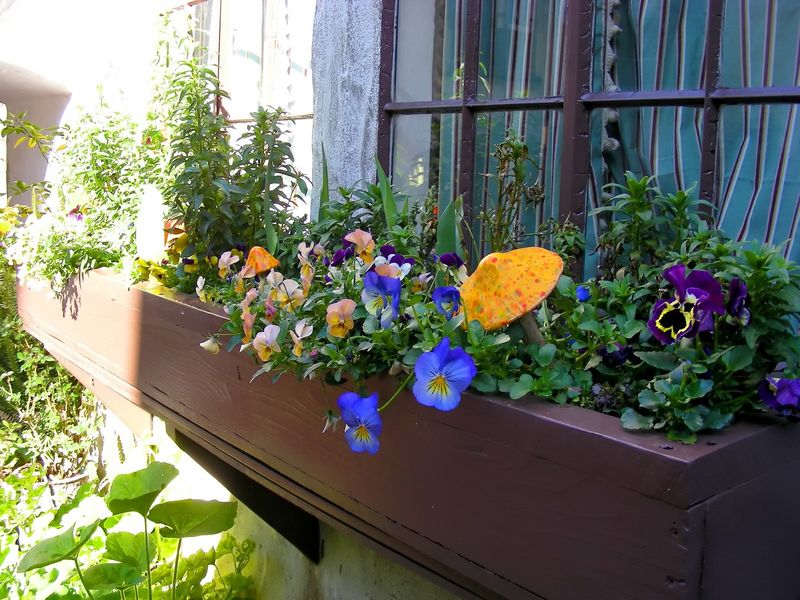
In 1983, the City of Berkeley officially designated Thornburg Village as a Historical Landmark, recognizing its unique contribution to the city’s architectural heritage.
This designation provides legal protection against demolition or major alterations that would compromise the village’s character.
The recognition also acknowledges the neighborhood’s cultural significance beyond its aesthetic appeal. Achieving landmark status requires demonstrating historical importance, architectural significance, or cultural value.
Thornburg Village qualified on multiple grounds, representing a specific moment in California’s architectural history when European romanticism influenced residential design.
The designation ensures that future generations can experience the village much as visitors do today.
This official recognition has raised awareness about the village both locally and among architecture enthusiasts nationwide.
The landmark status appears in architectural guidebooks and walking tour itineraries, drawing visitors who specifically seek out historically significant sites.
For residents, the designation brings both pride and responsibility, as they serve as stewards of a piece of Berkeley’s cultural heritage that belongs not just to them but to the broader community and history.
Private Residences With Public Charm
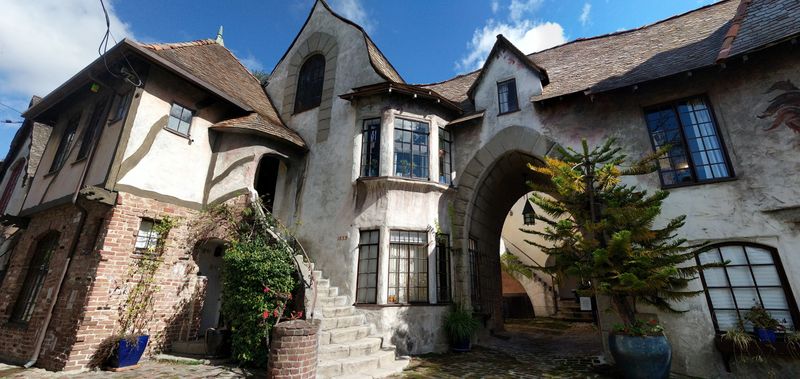
Thornburg Village remains a functioning residential neighborhood where people live their daily lives behind those enchanting facades.
The homes are privately owned, meaning visitors cannot enter the buildings or explore beyond what’s visible from public sidewalks.
This limitation actually enhances the village’s mystique, leaving something to the imagination while respecting residents’ privacy.
Property values in Thornburg Village reflect both the unique architecture and the desirable Berkeley location.
Homes rarely come on the market, and when they do, they attract buyers who appreciate the historical character and are willing to maintain these special structures.
Living in the village means accepting certain limitations, as landmark status restricts exterior modifications that might compromise the architectural integrity.
Residents generally welcome respectful visitors who admire the architecture from appropriate distances.
The neighborhood’s appeal relies on maintaining good relations between those who live there and those who come to appreciate its beauty.
Visitors should stay on public sidewalks, avoid peering into windows, and keep noise levels low to preserve the peaceful atmosphere that makes the village such a special place for both residents and guests.
A Testament To Collaborative Vision
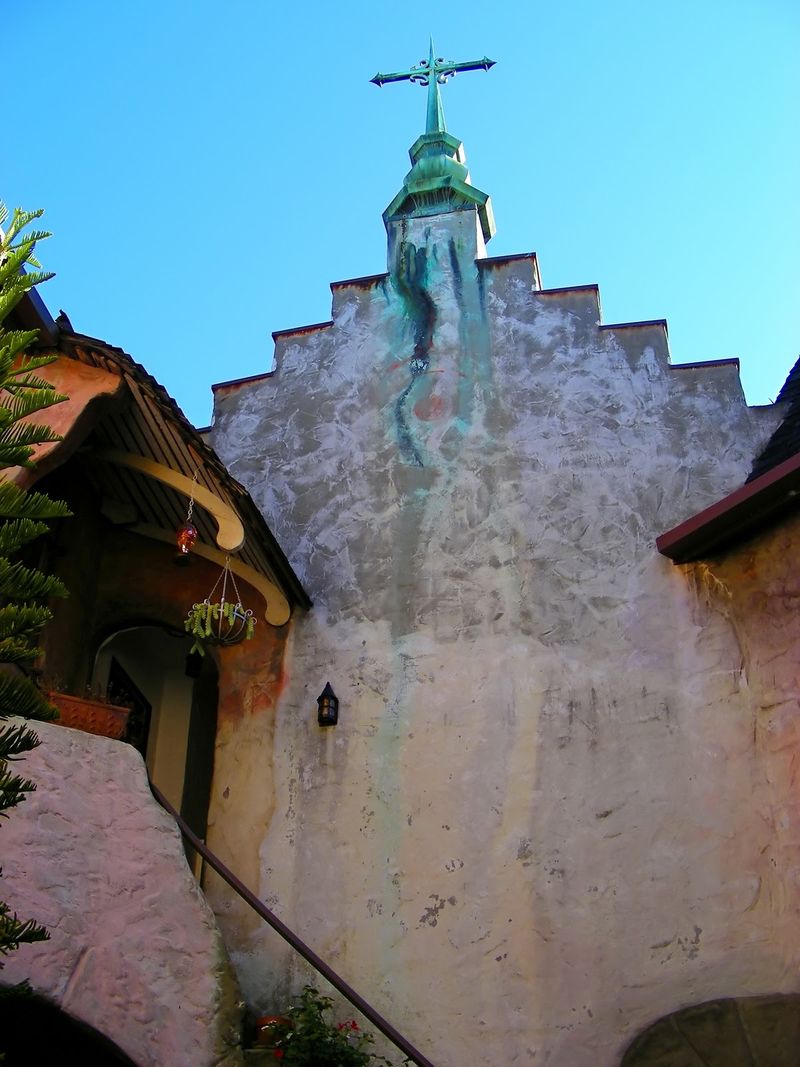
William Raymond Yelland, the architect who brought Thornburg’s vision to life, was known for his distinctive approach to residential design.
His portfolio includes several other notable projects in the Bay Area, but Thornburg Village remains perhaps his most cohesive and imaginative work.
Yelland’s ability to blend multiple architectural traditions while maintaining a unified aesthetic demonstrates exceptional skill and artistic sensibility.
The collaboration between developer and architect was crucial to the village’s success.
Thornburg provided the vision and financing, while Yelland translated those dreams into buildable structures that met practical requirements while maximizing charm.
This partnership shows how great architecture often emerges from productive relationships between visionaries and technicians who can execute ambitious ideas.
Studying Thornburg Village offers insights into 1920s attitudes toward housing and community design.
The era saw numerous experimental communities and architectural movements, but few have aged as gracefully or maintained their appeal across generations.
The village stands as evidence that when quality craftsmanship meets genuine artistic vision, the results can transcend their original time period and continue inspiring people nearly a century later.