This Stunning New California Food Hall Opened Inside A Historic Citrus Packing House
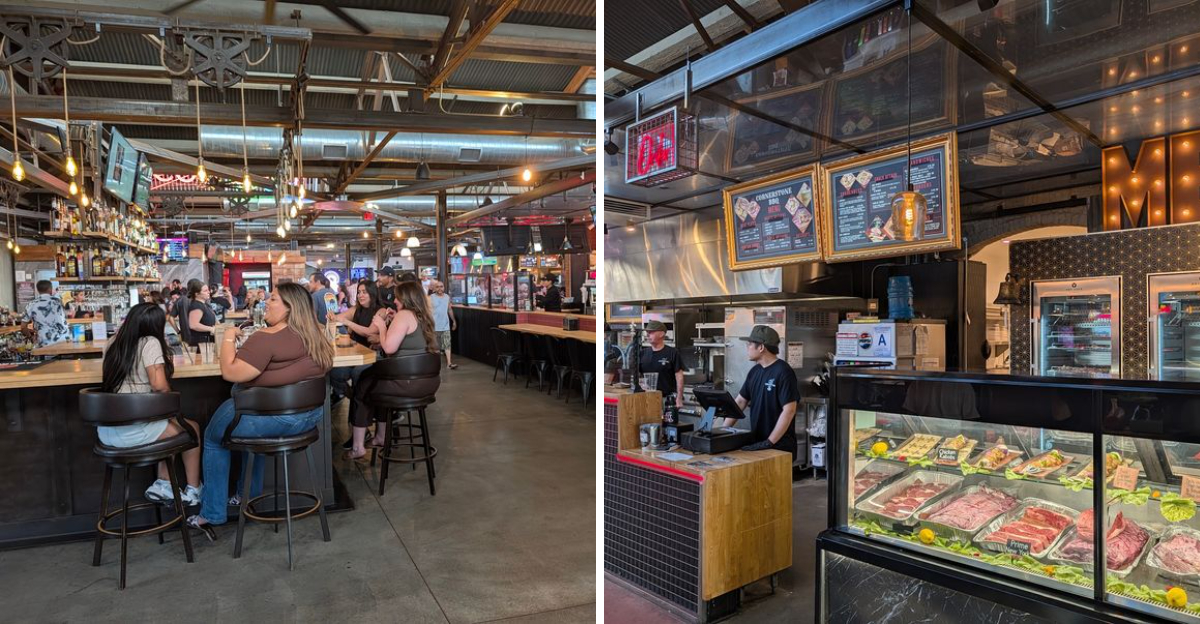
Do not rush to the first counter that smells good. Walk the room once.
The old packing-house bones still give the space character, but now the setting hums with kitchens and enough tempting choices to make ordering feel like a group negotiation.
One person spots something savory. Somebody else is already thinking about dessert. Your original lunch plan lasts maybe two minutes.
This California food hall gives a historic citrus building a lively second act without sanding away the personality that made the structure interesting in the first place.
Bring people who like to share. Split a few dishes. Compare bites. Claim a table, then send everyone back out on separate missions and see who returns with the best find.
The smartest strategy is leaving room for something you did not expect to want.
Citrus Roots That Stretch Back To 1894
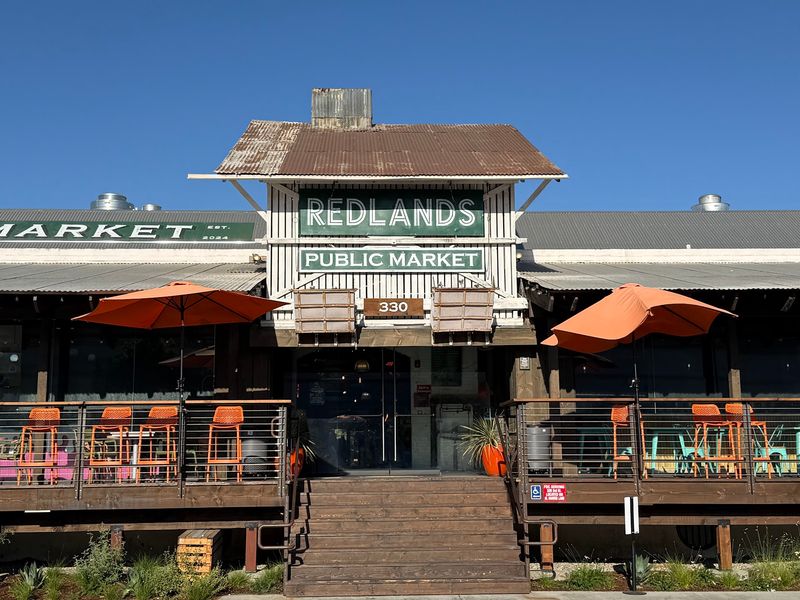
Long before food halls existed, this building had a much simpler job: sorting oranges.
Portions of the structure went up in 1894 as Packing House Number 2343214, a name that sounds more like a serial code than a landmark.
Over the following decades the operation was rebranded and became affiliated with Mutual Orange Distributors, a cooperative tied to the citrus trade that shaped the whole region.
Redlands built much of its early wealth on navel oranges, and packing houses like this one sat near the rail lines so fruit could move quickly to distant markets.
Understanding that background changes how the room feels once inside. The wide open floor was never designed for dining tables, it was designed for crates and workers moving fast during harvest season.
Visitors who care about local history may want to slow down and read the interpretive details placed around the building rather than heading straight for a food counter.
Photographs and orange-crate label imagery appear throughout the space, which helps connect the current use with the original one.
Kids often find the story easier to grasp when they can see the actual machinery and openings that handled fruit.
An $11 Million Restoration That Took Years Of Patience
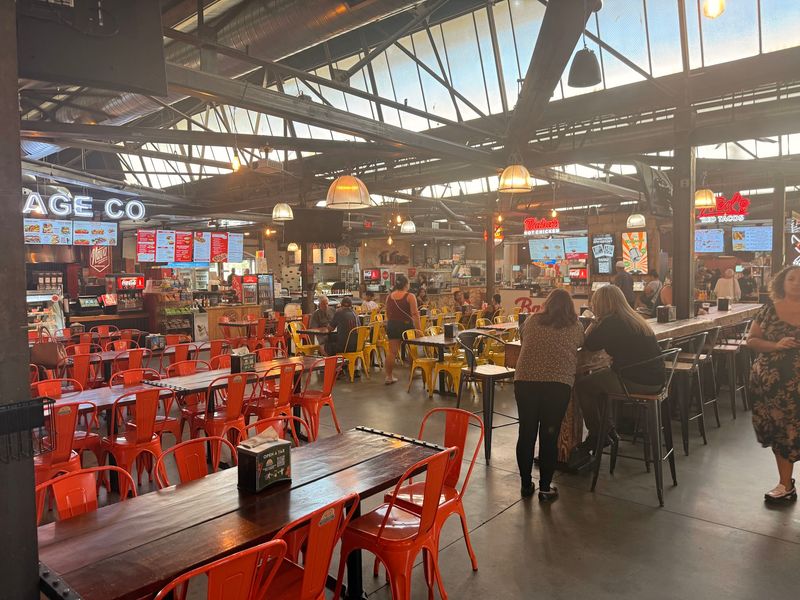
Abandoned buildings rarely come back easily, and this one sat empty for a long stretch.
By around 2000 the packing house had been left vacant, and years passed with the structure simply standing there in downtown Redlands while plans came and went.
The restoration eventually carried a price tag of roughly $11 million and involved several years of planning along with construction delays.
Work of that kind means stabilizing old timber, updating systems for modern safety codes, and keeping historic material intact instead of tearing it out.
The market opened in March 2025, with a grand opening in April and an official ribbon-cutting held on May 2, 2025. Fresh paint and new equipment sit beside surfaces that clearly show their age, which is part of the appeal.
Anyone who has watched an old commercial building sit idle in their own town may appreciate how unusual this outcome is.
Adaptive reuse projects often stall because the cost of saving original structure runs higher than simply building new.
Guests can see evidence of the choices made, from patched brickwork to preserved beams overhead.
The 1931 Freight Elevator Still Sitting In Place
Few pieces of equipment tell a building’s story as plainly as an old freight elevator.
Installed in 1931, this one carried crates of navel oranges down into the cool basement where temperatures helped keep fruit in good shape.
Heavy industrial machinery like that was built to handle serious weight, and the scale becomes obvious standing near it. The proportions are nothing like a passenger elevator in an office building.
Basement storage mattered a great deal in the citrus business because heat could ruin a shipment before it ever reached a rail car.
Moving fruit downward into cooler air was a practical solution long before modern refrigeration became standard everywhere.
Photographers tend to gravitate toward details like this, especially in the softer light near the older sections of the building.
Early hours on a weekday generally offer more room to look around without weaving between crowds.
Preserved industrial features can be easy to walk past when hungry, so it helps to look up and around while waiting for an order.
The elevator remains one of the more interesting survivors from the packing era, and it quietly explains what the whole basement level was originally for.
Over A Dozen Food Concepts Under One Roof
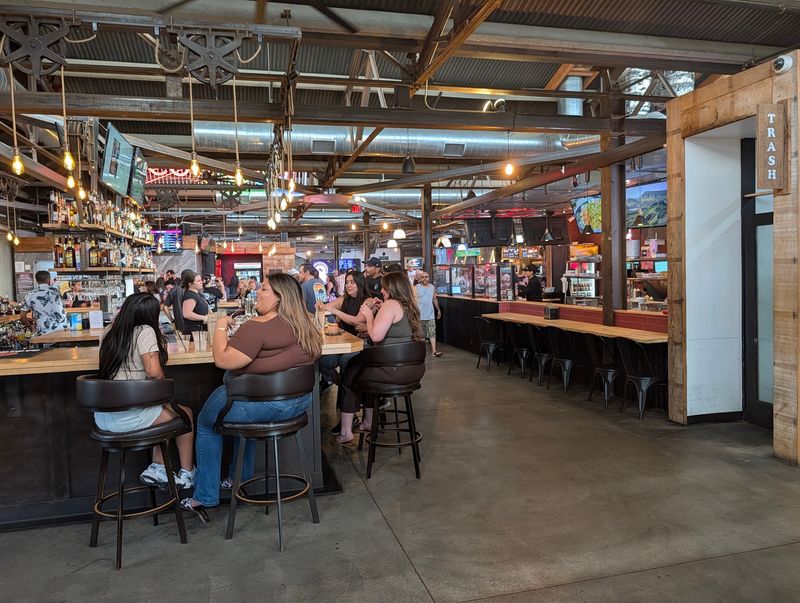
Deciding what to eat here takes real effort, and that is not a complaint.
More than a dozen food concepts operate inside the market, covering barbecue, birria, Lebanese food, Indian cuisine, French bakery treats, gourmet sausage, seafood, pizza, and Japanese food.
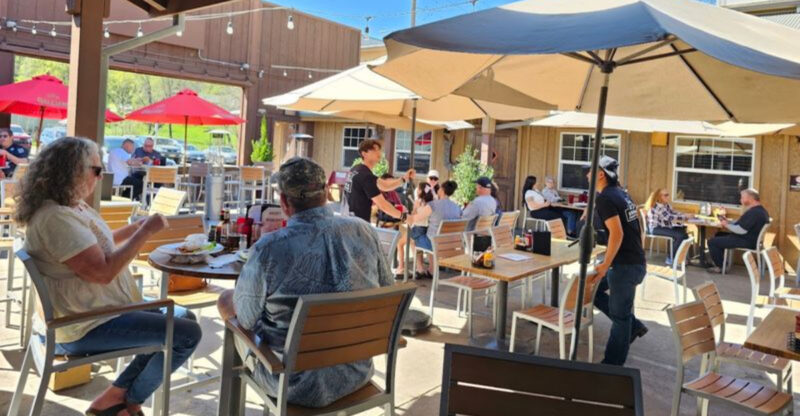
Redlands Public Market sits at 330 3rd Street, Redlands, California 92374, in the middle of the downtown area. The building holds both indoor and outdoor seating, so groups can spread out.
A practical approach is walking the full loop before ordering anything, since menus and prices vary by stall.
Several vendors carry similar drinks, which means a group can order food separately and still sit together. Mixed dietary needs are easier to handle here than at a single restaurant.
Vegan and gluten-free options appear at some stalls, and having many kitchens in one room usually means fewer compromises for the table.
Ordering happens directly at counters, and kiosks are also available for choosing items. Peak periods bring longer lines, so a late lunch or an early dinner often moves faster than the middle of a Saturday.
Bringing a little patience helps, especially with a group that cannot agree. The variety is the point, and rushing through it wastes the best part.
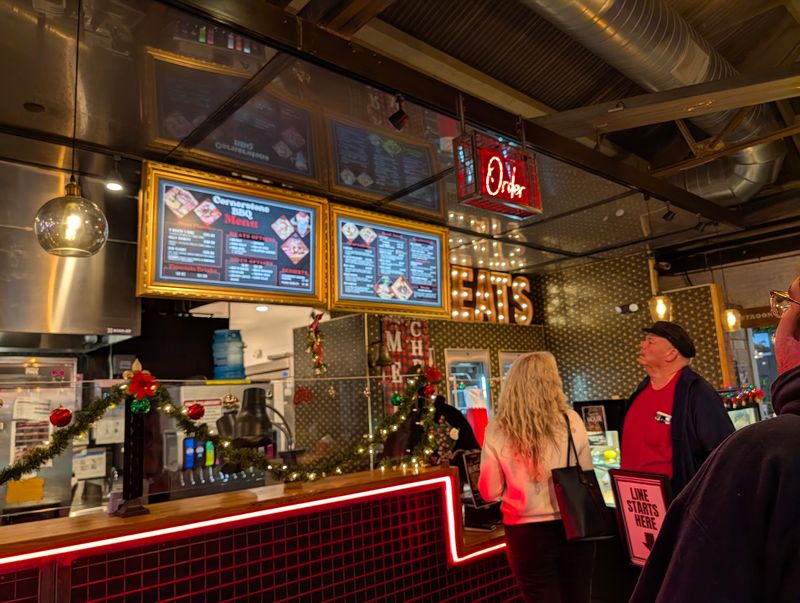
Cornerstone BBQ Keeps A Local Favorite Close To Home
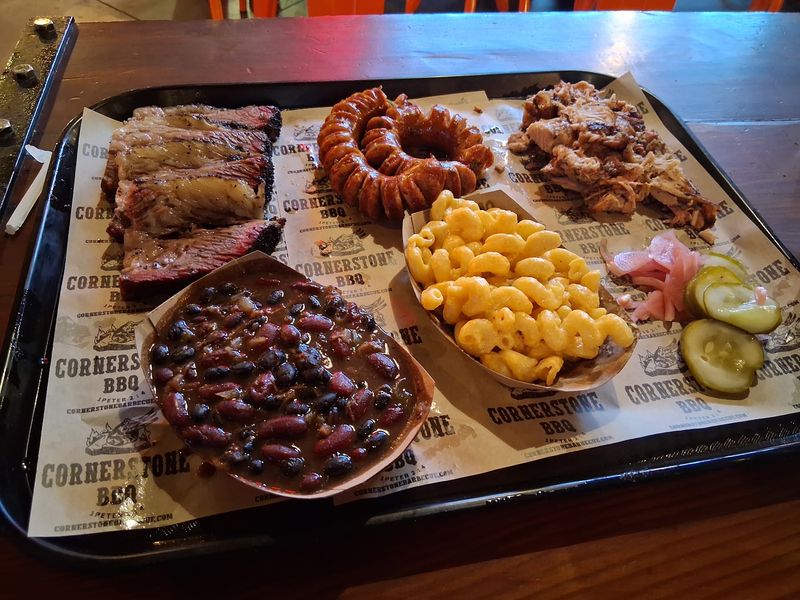
Barbecue has a way of anchoring a food hall, and this one arrived with a name locals already knew.
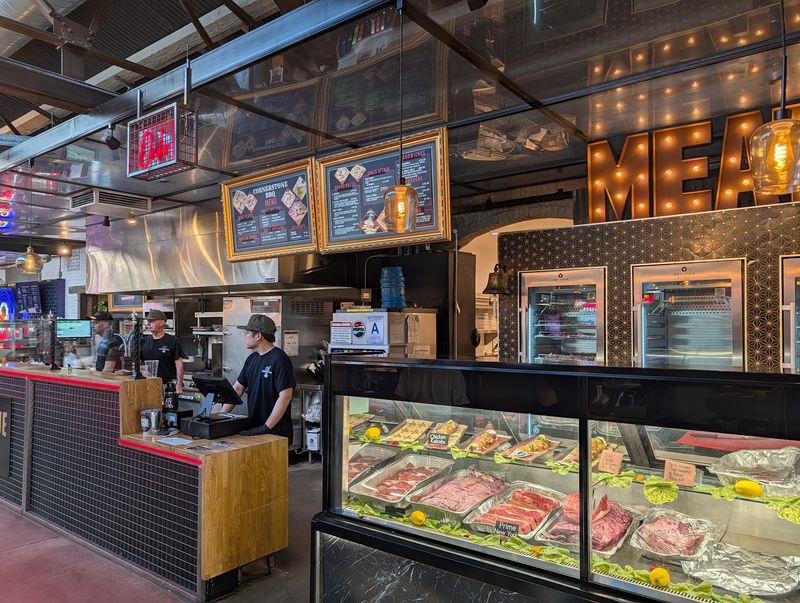
Cornerstone BBQ operates a location inside the market, expanding its meat-focused offerings beyond the familiar barbecue menu it built its reputation on.
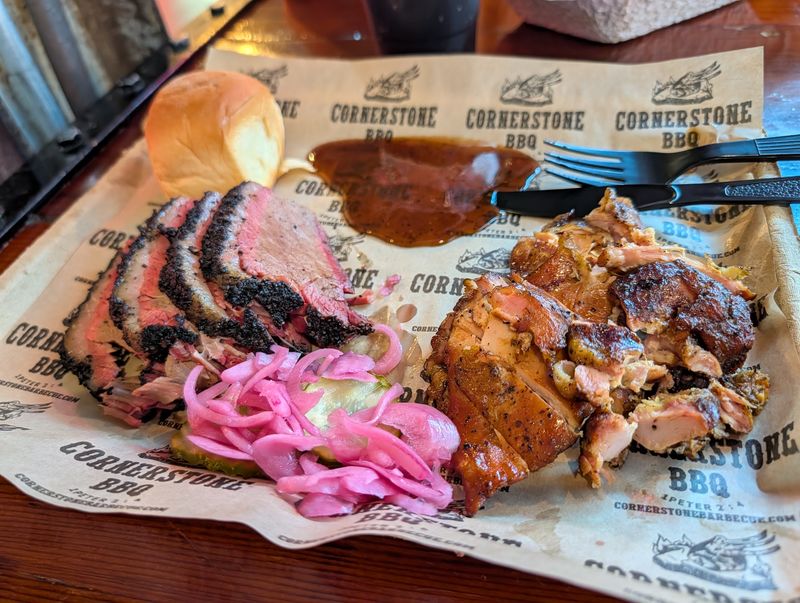
Smoked meats served by the plate remain the draw, with sides available alongside. Brisket comes up often in conversation about the market, which gives some sense of what people order most.
Barbecue counters tend to run out of certain cuts as the day goes on, which is normal for any place cooking low and slow. Arriving earlier in a meal window usually means a fuller selection.
Portions and pricing sit in line with what a full plate of smoked meat typically costs, and combinations of two meats with a side are a common way to order.
Trays travel easily to the communal tables or out to the patio, so seating is flexible. Warm months can make the indoor space feel toasty, and the outdoor courtyard often feels more comfortable then.
Familiar comfort food inside a restored packing house makes for an easy first stop. Starting here and grabbing dessert elsewhere is a solid plan.
Fred’s Red Tacos Covers The Birria Craving
Birria has become one of Southern California’s signature comfort foods, and the market has a vendor dedicated to it.
Fred’s Red Tacos serves birria-style tacos, giving visitors a distinctly regional option among all the international choices.
Slow-cooked beef, red-tinted tortillas, and a cup of consomme for dipping are the hallmarks of the style. Eating them neatly is nearly impossible, so extra napkins are a smart request.
Taco orders usually come out faster than barbecue plates, which helps when part of a group is still deciding. Splitting up and meeting back at a table is the easiest strategy in a hall this size.
Portion sizes make birria a good choice for anyone wanting something substantial without committing to a full entree plate. Two or three tacos generally satisfy an average appetite.
Sharing across vendors works especially well here, since one person can grab tacos while another brings pizza or sushi to the same table. Nobody has to eat the same cuisine to sit together.
Dipping the taco rather than pouring consomme over it keeps things manageable at a shared table.
Hot Chicken And Omakase Sushi In The Same Room
Cravings rarely line up neatly, which is where a food hall earns its keep.
Baba’s Hot Chicken and Shokunin Temaki and Nigiri both operate here, meaning a table can hold spicy fried chicken and carefully plated nigiri at the same time.
Shokunin runs as an omakase sushi bar, a style where the chef guides the selection rather than the guest ordering item by item. Seating at a counter like that is usually more limited than at grab-and-go stalls.
Omakase service moves at its own pace, so allowing extra time makes sense if that is the goal for the visit. Rushing a chef-led progression defeats the purpose entirely.
Hot chicken, meanwhile, is built for immediacy and heat levels vary, so asking about spice before ordering saves regret. Fresh batches taste noticeably better than ones sitting under a lamp.
The contrast between the two is part of what makes the building fun. Loud fried chicken energy and quiet sushi precision coexist without anyone having to leave the room.
Noise levels rise during busy weekend evenings, which may matter for a meal meant to feel calm. Weekday afternoons generally offer a quieter setting for anything that benefits from focus.
Supernova Slice Pizza With An Arcade Right Next Door
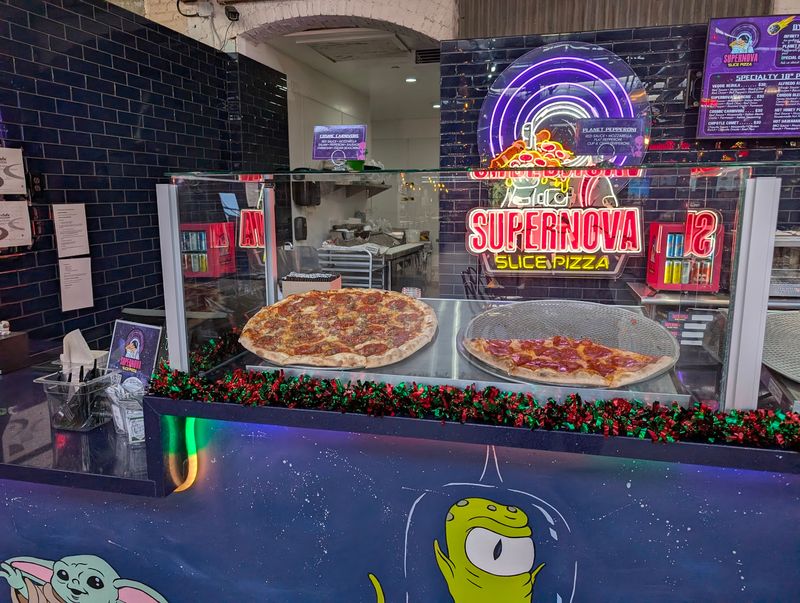
Pizza by the slice solves a lot of problems, especially with indecisive company. Supernova Slice Pizza serves generously sized slices, and the market lists a dedicated arcade next door to the pizzeria among its entertainment offerings.
Games in the arcade include Pac-Man, Mario Kart, Skeeball, and Jurassic Park. Older machines mixed with newer ones give the space a broad appeal across ages.
Slice service tends to be quick, which makes it a good pick when a group is running short on time. Kids often gravitate here first, then head straight for the games.
Having an arcade attached changes the rhythm of a visit, since a meal can stretch into an hour of playing instead of ending at the last bite.
Parents may want to set expectations about spending before the tokens start flowing.
Adults who grew up feeding quarters into cabinets usually enjoy it just as much. Skeeball has a way of turning competitive fast.
Weekends bring more families and more noise around the arcade area, so anyone hoping for a mellow meal might sit farther from that corner.