This Tiny Nebraska River Town Feels Almost Frozen In The 1800s
Some river towns seem to move at a different speed.
Not sleepy. Not empty. Just slower in a way that makes old brick, antique shops, and historic buildings feel like they still have the floor.
Down near the Missouri River, this tiny Nebraska town carries the kind of preserved look that makes a regular afternoon feel oddly transported.
Modern life is still there, of course. Cars pass through. Doors open. People chat. But the setting keeps tugging the eye backward.
Old storefronts, quiet streets, river history, and 1800s-era character give the place a time-capsule feeling without turning it into a museum behind glass.
History gets very comfortable in Nebraska when a river town keeps its old bones.
The best way to take it in is slowly. Wander past the buildings. Peek into the shops. Let the river explain why people settled here in the first place.
Nothing needs to be rushed, because the town’s strongest feature is the feeling that it refused to sand away every trace of its past.
Wander Past Brownville’s Historic Homes
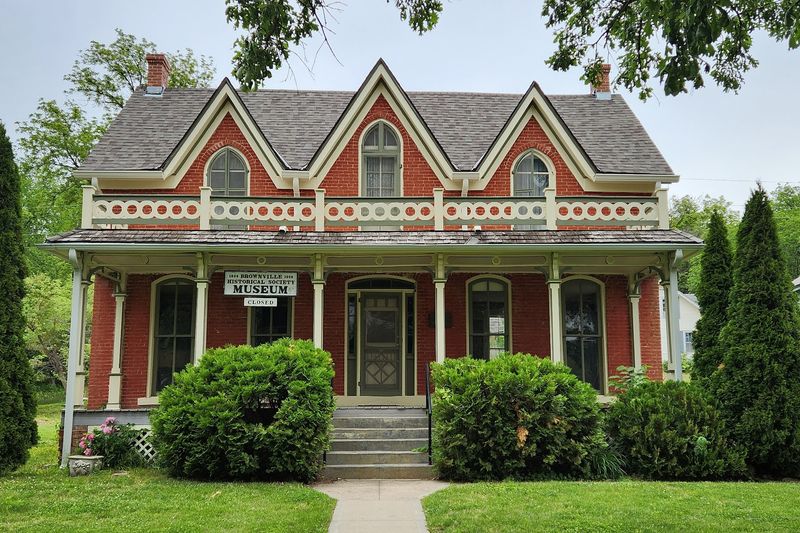
Few things set the tone of a visit quite like stepping onto a quiet street lined with homes that have stood since before Nebraska was even a state.
Brownville holds several carefully preserved historic structures, each tied directly to the town’s early days as a busy Missouri River port.
The Governor Furnas House, the Captain Bailey House, and the Carson House all carry that weight in very different ways.
The Captain Bailey House and the Carson House are both listed on the National Register of Historic Places, which means their preservation meets a high federal standard.
The Captain Bailey House is a seven-gabled brick structure that was actually disassembled and moved brick by brick when the Missouri River shifted course, which speaks volumes about how much the community valued it.
The Carson House dates to 1860 and still holds many of its original furnishings inside.
Most are open from early April through October on weekends, typically from 1:00 PM to 4:00 PM.
Board The Captain Meriwether Lewis Dredge
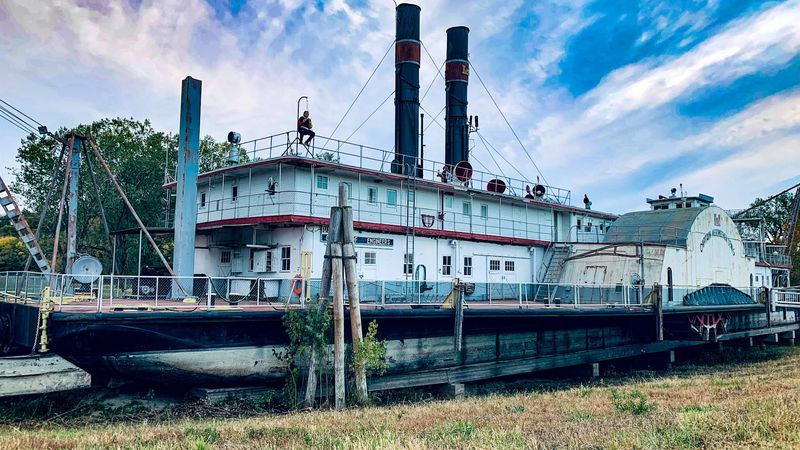
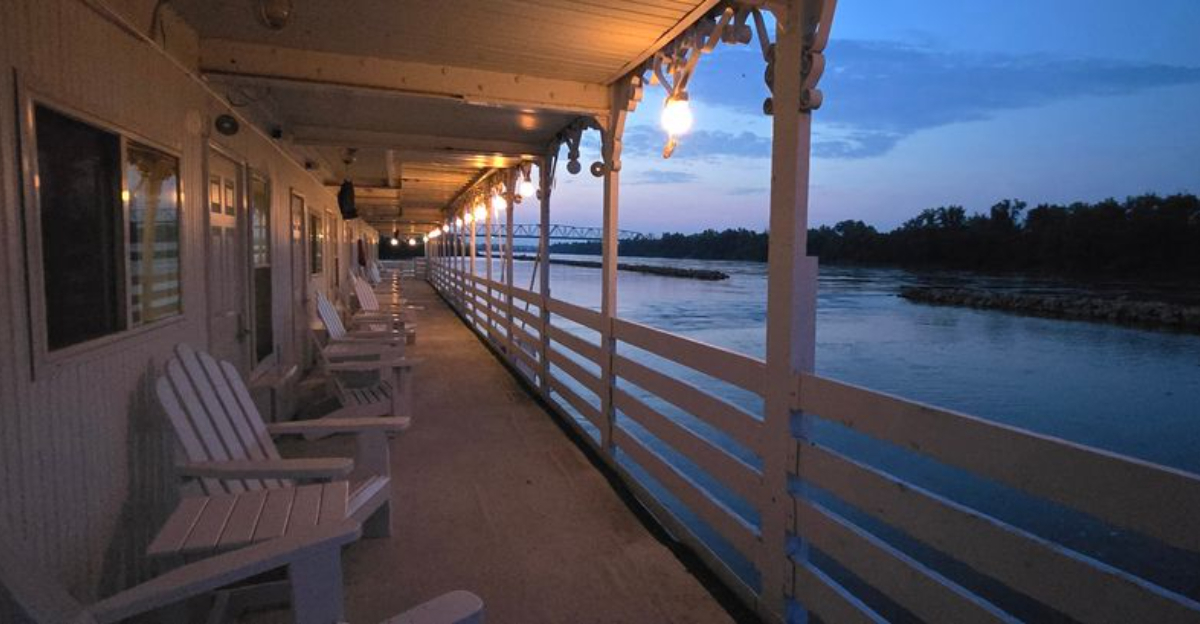
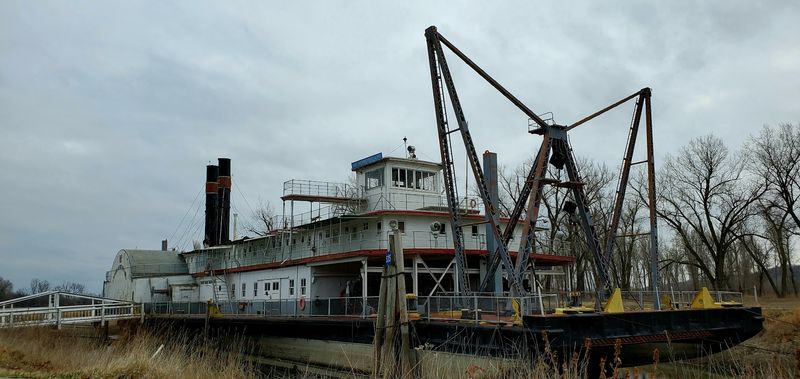
Nothing quite prepares a visitor for the sheer size of a 1931 dredge sitting permanently along the Missouri River.
The Captain Meriwether Lewis is a National Historic Landmark, which puts it in rare company for any attraction in Nebraska, let alone one tucked into a village of under 200 people.
The Museum of Missouri River History is housed entirely inside this vessel, sitting in Riverside Park just south of U.S. Highway 136.
Stepping aboard feels genuinely surprising, partly because the scale of the boat is hard to grasp from a distance and partly because the exhibits inside cover so much ground.
Native American history, westward expansion, and the dredge’s specific engineering role in flood control and river navigation all get serious attention here.
The sidewheel steam paddle design was already considered somewhat old-fashioned when the vessel launched, which makes its story even more interesting.
The U.S. Army Corps of Engineers launched the Captain Meriwether Lewis in December 1931, and it worked the Missouri River for decades before retirement.
Museum hours are typically Saturdays from 1:00 PM to 4:00 PM during the season, though confirming current availability before planning a trip is always worth the extra step.
Follow The Missouri River Story Along The Riverfront
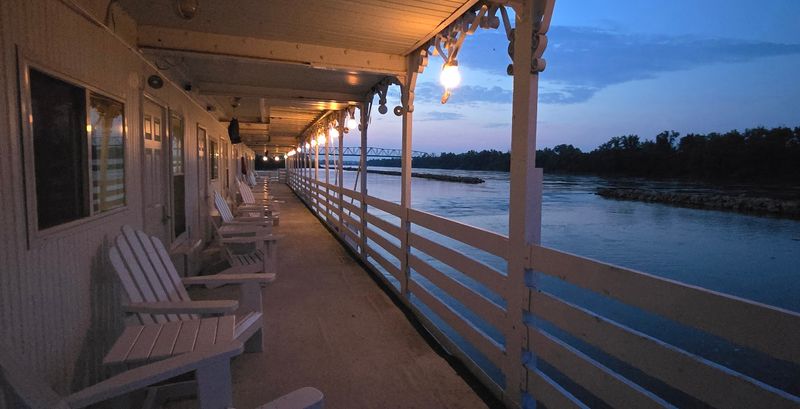
The riverfront in Brownville does something that no single museum or building can fully replicate on its own.
Standing at the water’s edge, the whole reason this town existed in the first place becomes immediately clear.
Before railroads changed everything, the Missouri River was the main highway for commerce, migration, and communication in this part of the country, and Brownville was one of its busiest stops.
At its peak in the mid-1800s, Brownville was a serious port town with hotels, newspapers, warehouses, and ferry crossings that connected Nebraska to Missouri.
The town even had ambitions of becoming the state capital before railroads shifted economic power northward. That backstory gives the riverfront a melancholy depth that feels very different from a simple scenic overlook.
The Captain Meriwether Lewis dredge, launched in 1931 by the U.S. Army Corps of Engineers, extended the river’s working history well into the 20th century by keeping navigation channels clear and managing flood risk.
Visiting the riverfront area around Riverside Park provides the clearest sense of how tightly the town’s identity is woven into the water beside it.
Early morning and late afternoon tend to offer the most peaceful conditions for taking it all in.
Browse The Brownville Historical Society Museums
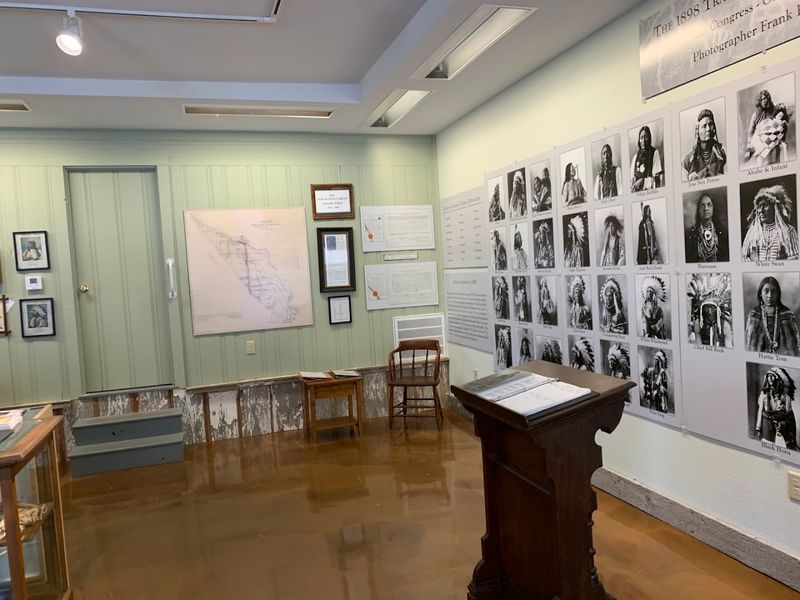
One museum is a good reason to visit a small town, but five museums in a village of under 200 people is genuinely remarkable.
The Brownville Historical Society maintains several significant sites that together cover a wide range of local and regional history.
The collection includes the Governor Furnas House, the Captain Bailey House, the Carson House, the Meriwether Lewis Museum of Missouri River History, and the Chitwood Wheel Museum.
The Chitwood Wheel Museum stands out for its unusual mix of artifacts, including a steam engine, a Nebraska river exhibit, an early printing exhibit, an 1846 cannon, and historic carriages.
That combination gives it a slightly unpredictable energy compared to the more formal house museums nearby.
The Wheel Museum is located at 219 Main Street, Brownville, NE, and it operates on the same general schedule as the other society museums.
Most Brownville Historical Society museums are open from early April through October, Friday through Sunday, from 1:00 PM to 4:00 PM.
Visiting multiple sites in a single afternoon is entirely realistic given how close everything is to each other.
Confirming current hours with the Historical Society directly before a trip is always a smart move, especially for visits early or late in the season.
Catch A Show At Brownville Village Theatre
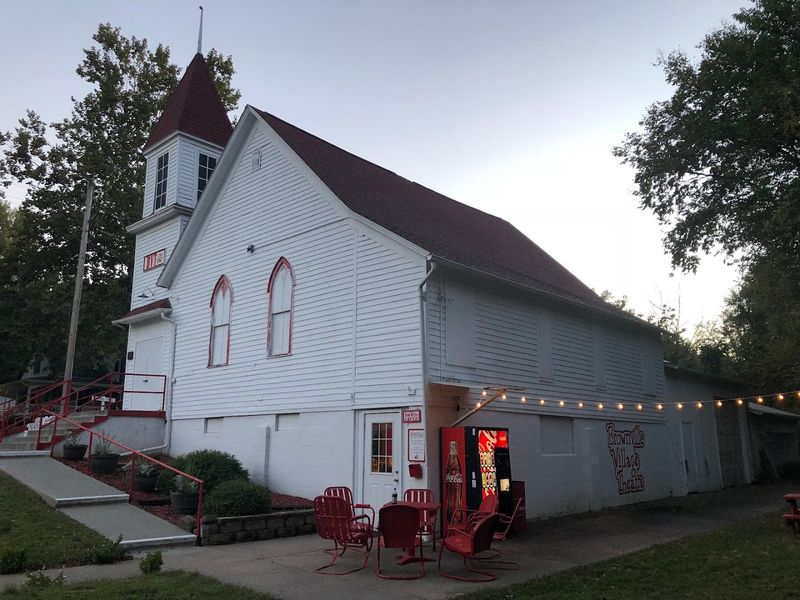
Summer theater in a converted century-old church, performed by students from theater and music programs across the country, is not something most small Nebraska towns can offer.
Brownville Village Theatre is considered one of Nebraska’s oldest community theaters, and it holds its summer repertory season in an intimate space that makes even large productions feel personal.
Each summer season typically features five different productions running on rotating weekends, covering a range of comedies, dramas, and musicals.
The cast changes each year as new student performers arrive, which means the energy shifts a little from season to season while the quality tends to remain high.
Box office hours during the summer season are generally Tuesday through Sunday, from 9:00 AM to 11:30 AM and 1:00 PM to 5:00 PM, with the season beginning around May.
The setting inside the old church building adds a warmth to the experience that a purpose-built theater space often cannot replicate.
Wooden pews, exposed architectural details, and close sight lines from nearly every seat make performances feel communal rather than formal.
Checking the current season schedule and booking ahead is strongly recommended since seating in such a small venue fills up quickly on summer weekends.
Listen Inside Brownville Concert Hall
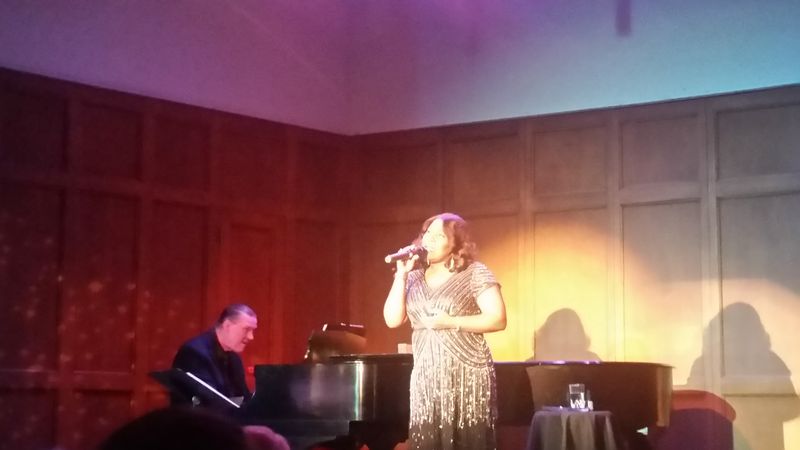
A town with fewer than 200 residents hosting nationally recognized performers from Broadway, jazz, classical, and bluegrass genres is the kind of detail that stops most visitors mid-sentence.
Brownville Concert Hall has built a genuine reputation for bringing serious musical talent to an unexpectedly intimate setting.
The venue is located at 126 Atlantic Street, Brownville, NE 68321, and its concert season runs from March through December.
Performances are typically scheduled on select Friday and Saturday evenings at 7:30 PM and Sunday afternoons at 2:00 PM throughout the season.
Ticket prices have generally ranged from around $19 to $25, though current pricing should always be confirmed directly with the venue since costs can change.
The range of genres covered across the season is broad enough that repeat visitors rarely see the same type of show twice.
The hall’s small capacity is actually one of its greatest strengths.
Sound fills the room without amplification issues, and the distance between audience and performer stays close enough that the experience feels genuinely connected rather than passive.
Arriving a few minutes early is a good habit here since seating is limited and the crowd tends to arrive enthusiastic.
Visit The Ice House Museum
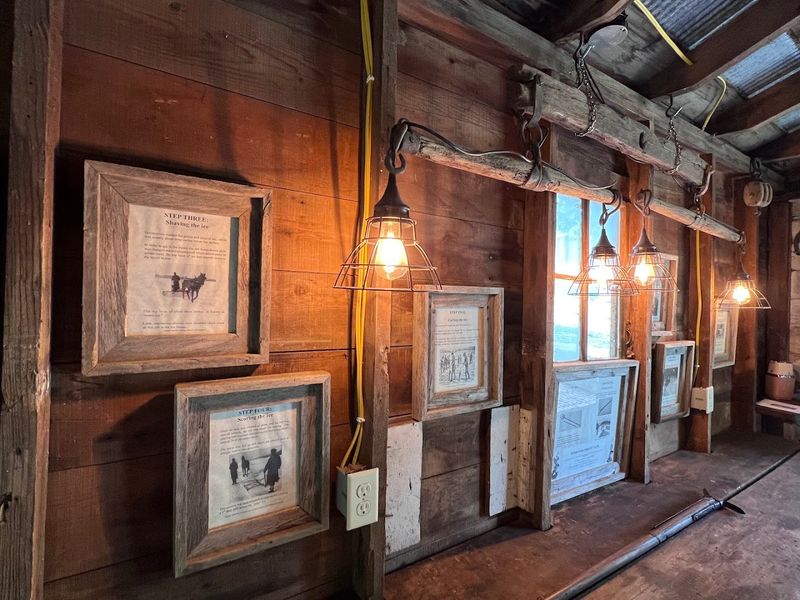
Before mechanical refrigeration changed everything, river towns like Brownville depended on natural ice harvested directly from the Missouri River to keep food and supplies cold through warm months.
The Ice House Museum preserves part of a building that was actually used for that purpose, which gives it a very different feel from the grand historic homes nearby.
Practical, unglamorous, and completely essential to daily life in its time, this kind of structure rarely survives long enough to become a museum.
The Ice House Museum of Brownville is located on South 3rd Street off Main Street, Brownville, NE 68321.
Displays and historical information inside walk through the process of river ice harvesting, explaining how blocks were cut, transported, and stored to last through summer.
It is a hands-on learning experience that works especially well for visitors who want to understand the logistics of 19th-century river life rather than just its aesthetics.
The museum is open during weekend business hours and also by appointment, which gives it a slightly more flexible schedule than some of the other sites in town.
Contacting the Brownville Historical Society in advance is the best way to confirm current availability.
Walk Or Bike The Steamboat Trace Trail
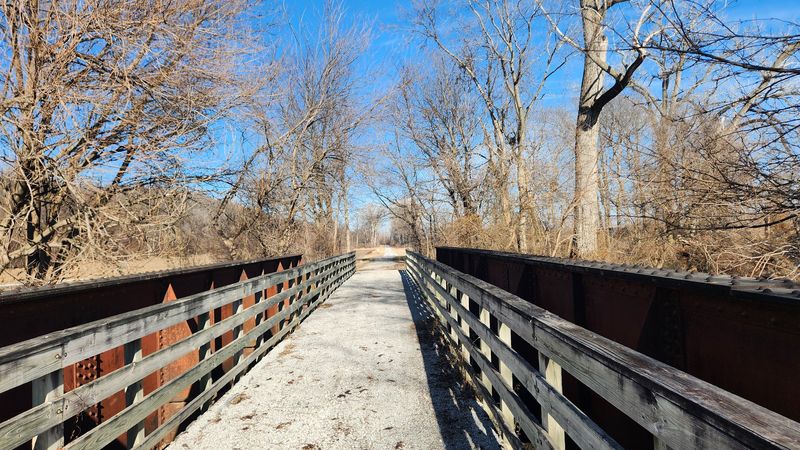
After a few hours moving through museums and historic homes, the Steamboat Trace Trail offers a completely different kind of engagement with the Brownville area.
The trail is a crushed limestone path stretching approximately 22 miles, running parallel to the Missouri River and passing through a mix of bluffs, open farm fields, and wooded stretches.
It is suitable for both walking and biking, and the pace here encourages the kind of slow attention that indoor exhibits sometimes make difficult.
A convenient parking area in Brownville is located at the Lewis and Clark Campsite at the intersection of 648A Avenue and E. Water Street.
From there, visitors can head out along the trail for as long or as short a distance as they prefer, since the route does not require completing the full length to feel worthwhile.
Wildlife sightings along the trail are fairly common, with various bird species and plant communities visible depending on the season.
The trail is open most of the year but closes during Nebraska rifle deer hunting seasons for safety reasons, so checking current conditions before a late-autumn visit is important.
Early morning hours tend to offer cooler temperatures and quieter trail conditions.
The combination of river scenery, natural bluffs, and flat open farmland gives the trail a visual variety that holds attention well beyond the first mile.
Browse Books, Galleries, And Folk Art In Brownville
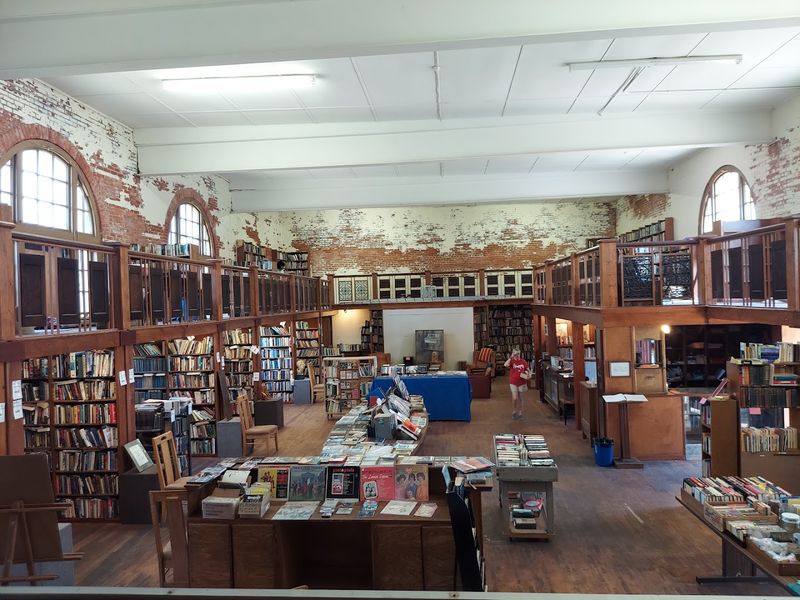
Creative energy runs through Brownville in ways that feel genuinely unexpected for a village its size.
The Flatwater Folk Art Museum alone would be a destination worth driving for, housed in a beautifully renovated church and displaying an extraordinary collection of folk art from around the world.
The museum is typically open Friday through Sunday from 1:00 PM to 4:00 PM, with visits also available by appointment.
The Schoolhouse Art Gallery and Nature Center showcases regional visual artists through summer exhibitions and runs from June through October, Thursday through Sunday, between 1:00 PM and 4:00 PM with free admission.
The Environs Art Studio and Gallery at Second and Main Street presents work inspired by Midwest landscapes, open Fridays and Saturdays from 11:00 AM to 4:30 PM or by appointment.
The Palmerton Gallery focuses on the Missouri River and regional landscapes, open weekends from 1:00 PM to 4:00 PM.
For book lovers, the Buckaroo Bookstore is open Fridays from 6:00 PM to 9:00 PM and weekends from 10:00 AM to 2:00 PM.
The Lyceum combines books with a restaurant and lecture space, adding yet another layer to what Main Street offers on a single afternoon visit.
Plan Your Visit To Brownville With The Right Timing
Getting the most out of a Brownville visit comes down almost entirely to timing.
Most museums, galleries, and cultural venues operate on a seasonal schedule running from roughly April or May through October, with weekend hours being far more reliable than weekday availability.
Arriving outside that window means finding many of the town’s main attractions closed, which can turn an anticipated day trip into a frustrating one.
Summer weekends offer the fullest experience, with the Brownville Village Theatre running its repertory season, the Concert Hall scheduling regular performances, and most museums open simultaneously.
Late spring and early autumn visits tend to have slightly cooler temperatures and fewer crowds while still keeping most venues accessible.
The Steamboat Trace Trail is an exception to the seasonal pattern, remaining open through most of the year except during Nebraska rifle deer hunting periods.
Brownville sits in Nemaha County in southeastern Nebraska, roughly an hour south of Nebraska City and accessible via U.S. Highway 136.
The drive in from most directions passes through rolling farmland and river bluffs that set the mood well before the first historic building comes into view.