This Tiny North Carolina Museum Has The State’s Only Egyptian Mummy On Permanent Display
Bow, mortals. Someone in North Carolina has been waiting about 3,000 years for your visit.
No pyramid marks the spot. No golden throne gives away the secret.
From the street, this small-town museum looks far too ordinary to be guarding anything from ancient Egypt. Then Margaret enters the story.
She is an Egyptian mummy and reportedly the only one on permanent display in the state, resting thousands of miles from the civilization that prepared her for the afterlife.
Now that is a road-trip plot twist.
Visitors can walk in expecting a modest local museum and suddenly find themselves face to face with a life that began when pharaohs still ruled along the Nile.
Three millennia later, Margaret is still drawing curious humans.
The ancient Egyptians believed in eternity. Apparently, they were not exaggerating.
A 3,000-Year-Old Egyptian Mummy Sits Right In The Middle Of Downtown Statesville
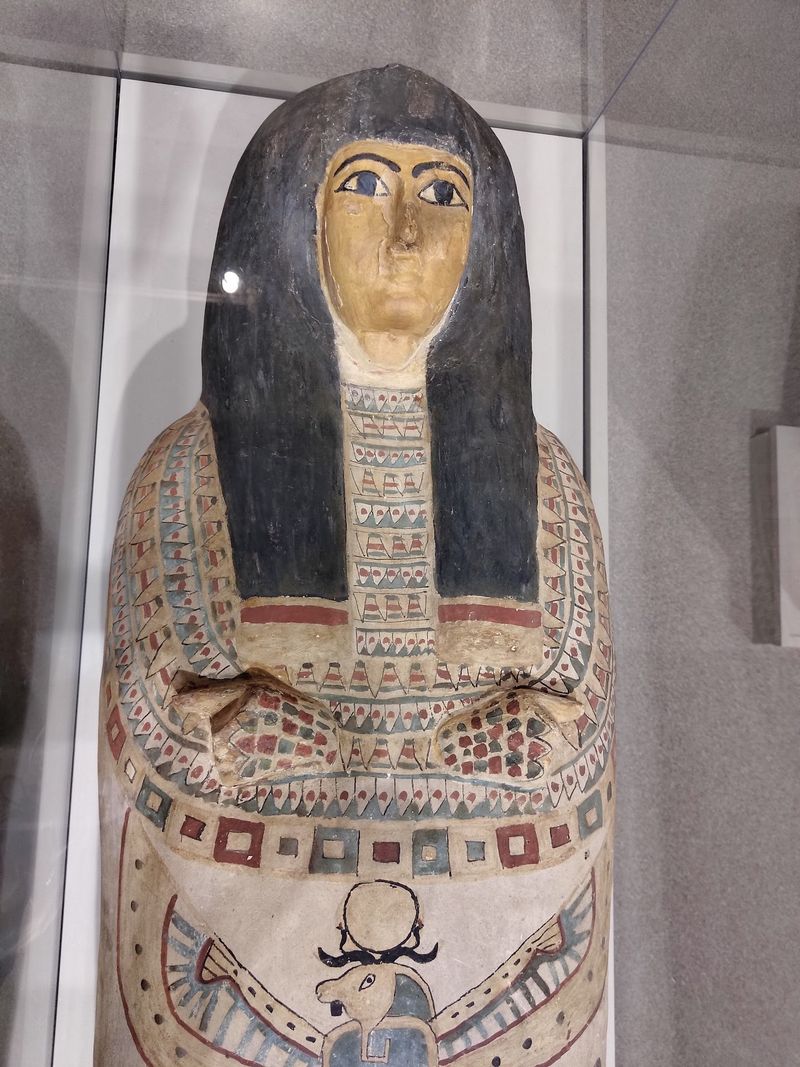
Downtown sidewalks, a courthouse a block away, parked cars, and then an ancient Egyptian resting inside a glass case.
The Iredell Museums sits at 134 Court Street, Statesville, North Carolina, right where you would expect a law office or a lunch counter instead of an ancient civilization.
The mummy known as Margaret is believed to be roughly 3,000 years old, and she anchors the museum’s exhibition space as its most talked-about resident.
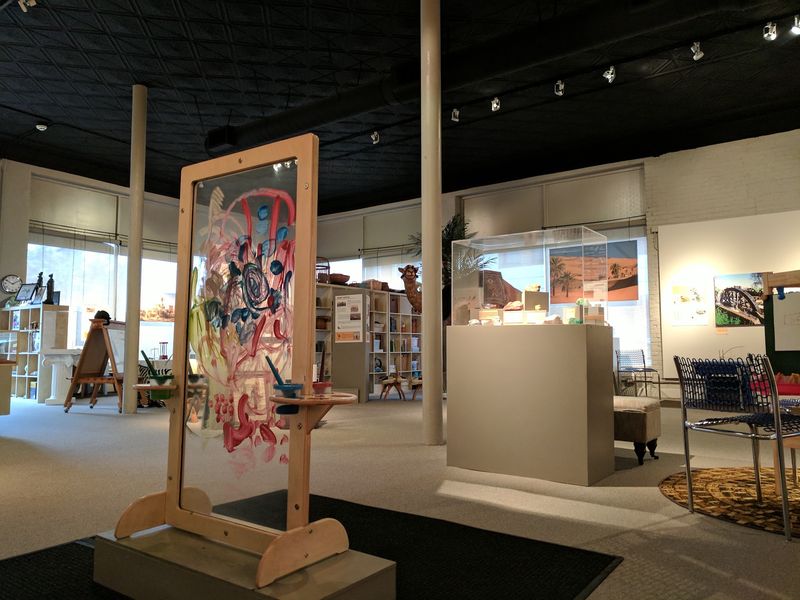
What strikes most visitors first is the scale of the room. Everything happens on the ground floor, which keeps the whole experience easy to walk and simple to follow.
Instead of endless hallways, you get one focused gallery where the star attraction is only a few steps from the entrance. Staff often walk over to answer questions, point out details in the wrappings, and explain what researchers have learned.
Parking downtown is straightforward, restaurants sit within an easy stroll, and admission runs about five dollars, which makes this an affordable stop for a curious afternoon.
Margaret Has Been Fascinating Local Families Since Arriving In 1957
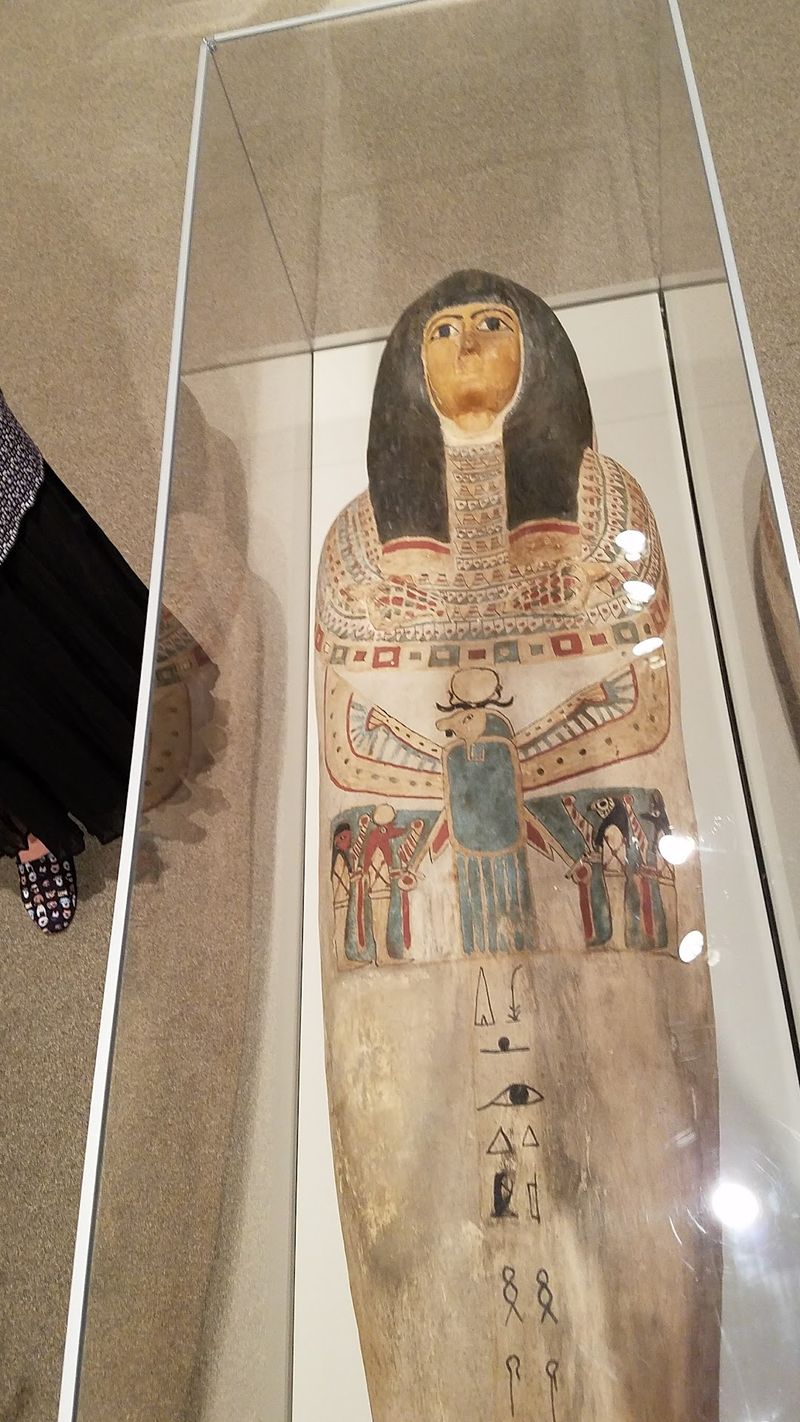
Back in 1957, a shipment arrived in Statesville that no one in town would ever forget. Margaret came here from a museum in Pennsylvania, and almost overnight she became the reason school groups, grandparents, and wide-eyed kids kept coming back.
Generations of Iredell County families now share the same memory: the first time they stood beside her and realized how old she really is.
Longtime residents often describe her as an unofficial member of the community, which is an unusual thing to say about an artifact.
Yet that affection explains why the museum treats her presentation with such care.
Visiting today feels a bit like meeting someone your parents already told you about. Children press close to the case, whispering questions, while adults quietly do the math on how many centuries separate them.
Hours run Wednesday through Friday from 10 AM to 3 PM and Saturday from 11 AM to 4 PM, so plan a weekday morning or a relaxed Saturday afternoon for the calmest visit.
Her Story Reaches Back To Egypt’s Faiyum Region Thousands Of Years Ago
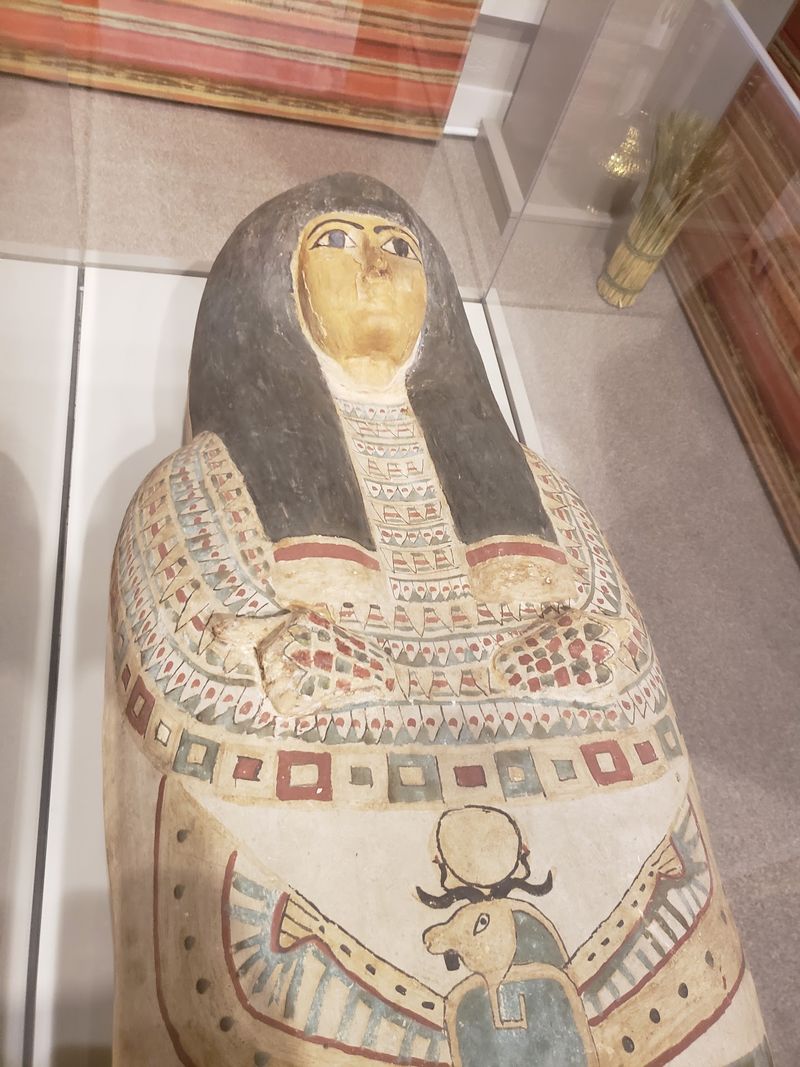
Careful research, carried out with help from the British Museum, pieced together the outline of Margaret’s life. Scholars believe she lived around 3,000 years ago during Egypt’s 22nd Dynasty, in the green and water-fed Faiyum region southwest of the Nile Valley.
That area was known for its lake, its farmland, and its steady harvests, a landscape of palms, reeds, and irrigation channels.
Picture the everyday world she may have known: warm flatbread pulled from a clay oven, dates and figs drying in the sun, lentils simmering, the smell of dust after a rare rain.
Those details turn a wrapped figure into a person with meals, seasons, and neighbors.
The distance between the Faiyum and a courthouse square in North Carolina is enormous, which is exactly what makes the display so memorable.
Museum staff share the research findings during walkthroughs, and asking about her origins usually opens up one of the best conversations of the whole visit.
Come with questions ready.
The Museum’s Permanent Display Turns Ancient History Into Something Surprisingly Personal
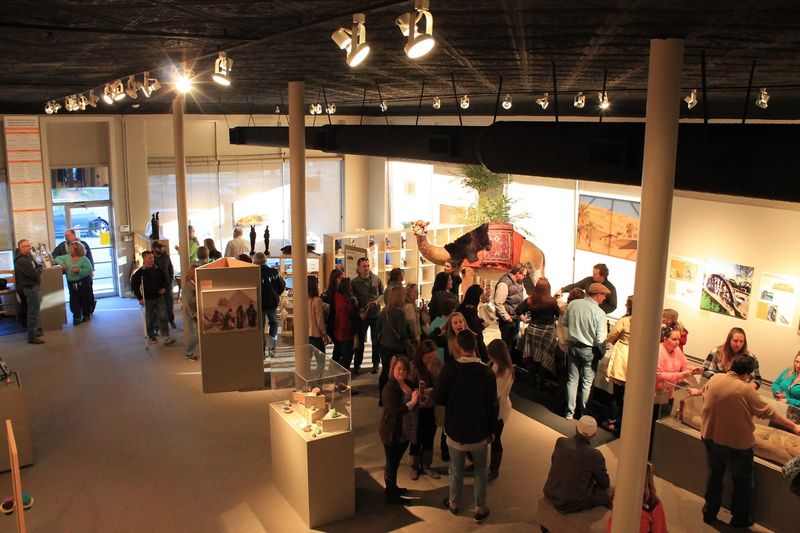
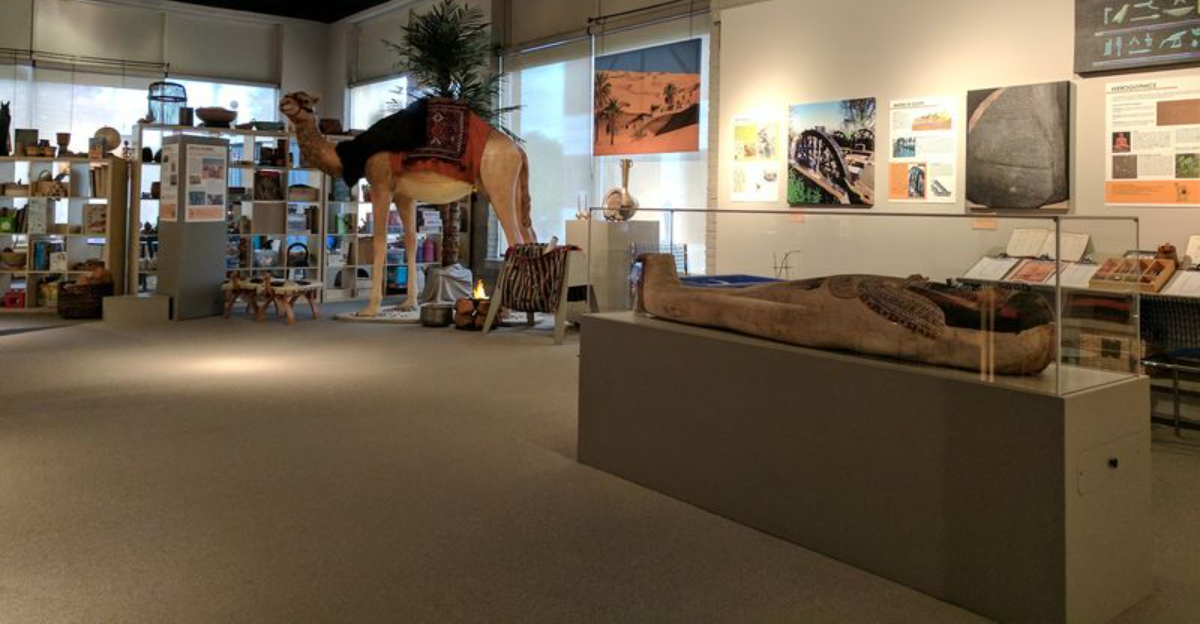
Most museum encounters happen behind glass and stay there. Here, the exhibition called Unraveling Ancient Egypt: A Sensory Tour tries something warmer, inviting guests to imagine the scents, flavors, and sounds that filled Margaret’s world.
Because she remains on permanent display, you never have to check whether the main attraction will be there on the day you visit.
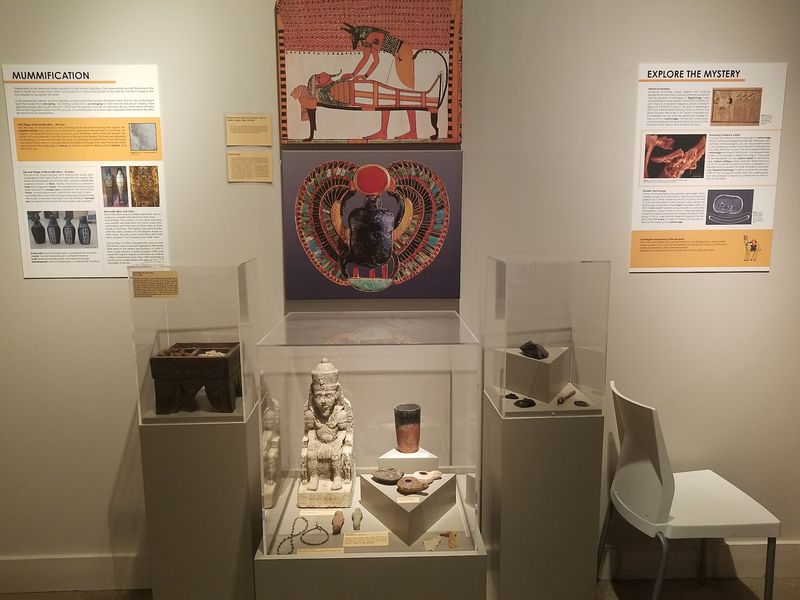
Interpretive panels explain burial customs, the beliefs behind preservation, and what her wrappings reveal. The room stays quiet enough that reading feels comfortable rather than rushed.
Small spaces have an advantage that large institutions cannot match. Nothing competes for your attention, so the details land harder: the shape of the linen, the colors used in ancient decoration, the sheer improbability of standing this close.
Families frequently linger far longer than expected, then loop back for a second look before leaving.
Call ahead at 704-873-7347 if you want to confirm current exhibit conditions, since portions of the building have gone through renovation phases over the years.
Interactive Exhibits Let You Explore Hieroglyphics Archaeology And Mummification
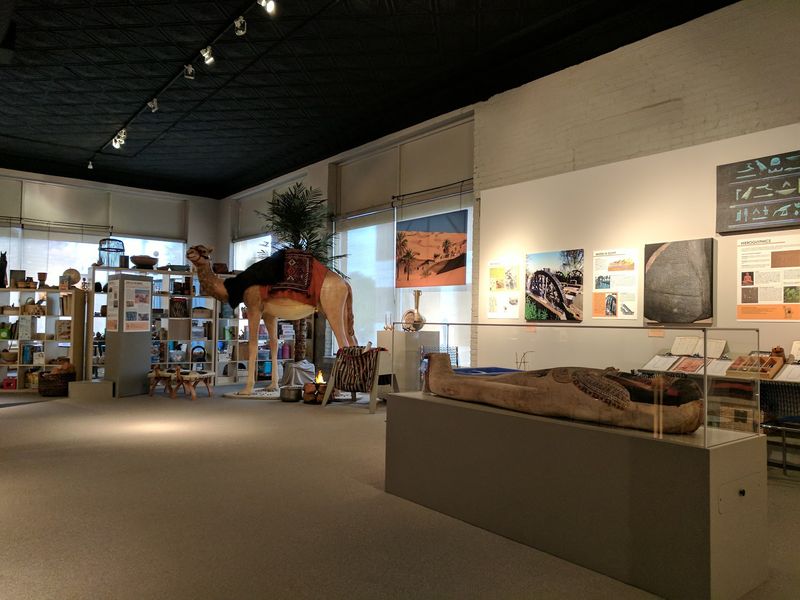
Hands beat plaques every time, and the museum clearly knows it. Within the Unraveling Ancient Egypt exhibit, guests can brush sand away in a mock archaeological dig, practice writing their names in hieroglyphics, and follow the steps ancient Egyptians used to prepare a body for burial.
The museum sits at 134 Court Street, Statesville, North Carolina, which puts all of this within an easy downtown walk.
Younger visitors gravitate toward the dig station first. There is something deeply satisfying about the scratch of a brush against sand and the moment something solid appears underneath.
Older kids and adults often spend longer with the hieroglyphic activity, puzzling out symbols and comparing spellings.
Staff members circulate freely, offering hints and background details without hovering. That kind of attention is rare, and it makes a small gallery feel generous.
Give yourself at least an hour here. Two hours is realistic if children want to repeat their favorite stations, which they almost always do.
Kids Can Dig Into STEAM Activities Before Circling Back To The Ancient Galleries
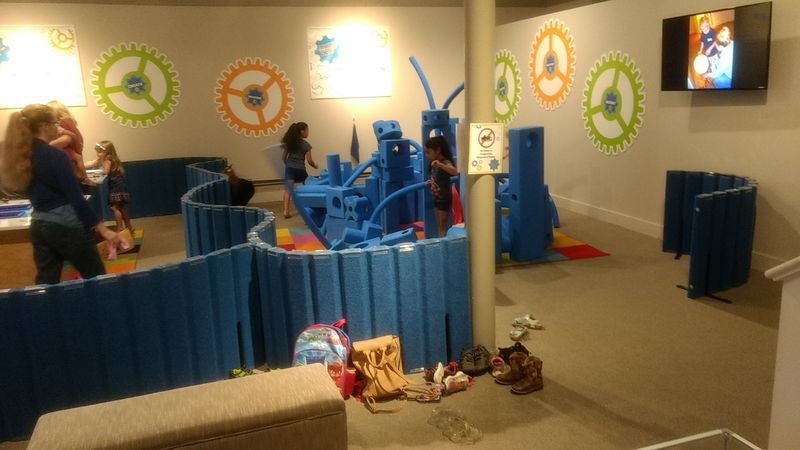
Robots, building blocks, puzzles, and a craft table fill one corner of the museum, and that corner tends to be the loudest, happiest spot in the building.
STEAM programming covers science, technology, engineering, arts, and mathematics, with weekend sessions that give kids something to build, test, or take apart.
Big foam blocks, a train table, and cubbies packed with manipulatives keep hands busy for hours.
The layout works beautifully for mixed-age groups. Toddlers stack and sort while older siblings tackle circuits and construction challenges.
What makes the combination clever is the walk back. After building a machine, children return to the ancient galleries and start noticing engineering in the past: how ancient builders solved problems, how tools shaped materials, how ideas travel across thousands of years.
Admission is roughly five dollars, and children two and under enter free, which keeps a family outing affordable.
Check the museum website for weekend program schedules before you drive, since sessions rotate throughout the year.
A Small Downtown Museum Packs In Far More Than Its Size Suggests
Judging the Iredell Museums by its downtown square footage misses most of the story. The organization also cares for the Gregory Creek Homestead, a living history site with log cabins dating from 1790 to 1890, every one of them originally built in Iredell or Alexander County.
Walking trails thread between the buildings, offering shade, birdsong, and a peaceful counterweight to the indoor galleries.
Standing inside a hand-hewn cabin, you notice the low doorways, the chinking between logs, and how small a family’s whole world once was. Seasonal programs bring the site to life with demonstrations of frontier skills.
Downtown, the exhibits lean into regional history: local artifacts, community stories, and speaker series featuring the people who shaped this county.
Together the two sites cover an unusual range, from the banks of the Nile to a Piedmont farmstead.
Plan your day around both if the homestead is open, then finish with lunch at one of the restaurants a short walk from Court Street.
Few Visitors Expect To Find North Carolina’s Only Permanently Displayed Egyptian Mummy Here
Travelers rolling through on Interstate 40 rarely have ancient Egypt on their itinerary.
That element of surprise is part of the charm, and it explains why so many first-time guests walk in expecting local history and walk out talking about a 3,000-year-old woman from the Faiyum.
Margaret holds the distinction of being the state’s only Egyptian mummy on permanent display, a claim no other institution here can make.
Small museums survive on dedication rather than budget, and this one shows it in the way exhibits are researched, refreshed, and explained.
Renovations have shifted spaces over the years, so a quick phone call or a look at the website helps you time your visit well.
Hours are Wednesday through Friday from 10 AM to 3 PM and Saturday from 11 AM to 4 PM, with Sunday through Tuesday closed.
Bring the kids, budget an hour or two, and let downtown Statesville hand you one of the most unexpected stops in the whole region.