This Tiny North Carolina Town Might Have The Funniest Name In The State
Who names a town with what sounds like the answer to a dare?
Apparently, somebody in North Carolina did.
This tiny community has the kind of name that makes people stare at a map for an extra second just to make sure they read it correctly. Then comes the inevitable laugh. Yes, it is real.
Even better, the story behind the name is wonderfully casual. Local residents reportedly kept debating what to call the place until one suggestion finally ended the argument.
That decision somehow survived for generations.
Today, fewer than 100 people live here, but the town’s unusual identity has become much bigger than its population.
The surrounding pottery country gives the area plenty of history, yet the name is still what grabs attention first.
It sounds like a joke. It sounds like somebody gave up on the naming meeting. And somehow, that is exactly why people remember it.
Start With The Story Behind A Name That Sounds Like A Question
Curiosity is the first thing this little Randolph County community stirs up. Around 1860, families who had settled these rolling Piedmont hills gathered to choose a name for their brand new post office.
The meeting, according to local lore, dragged on and on. Suggestion followed suggestion, and none of them stuck.
Picture the scene: neighbors seated on hard benches, lanterns glowing, someone’s stomach rumbling for supper while the debate circled back to the beginning. Farm chores waited outside, and the evening kept slipping away.
That long, patience-testing conversation is the heart of the tale, and it explains why the name reads more like a shrug than a proclamation. Settlers of German and English descent had been farming this area since the 1700s, so the community already had roots.
What it lacked was a label.
Today the story is passed along in general stores, pottery studios, and travel guides, usually with a grin. Visitors who learn it first tend to enjoy the drive even more, because the name suddenly makes perfect sense before they even reach the first mailbox.
You Can Thank One Very Practical Conversation For The Unusual Name
Impatience, of all things, gave this community its name. As the naming meeting stretched deep into the evening, one tired resident, identified by some historians as Martin Auman, stood up with a solution.
His words have been repeated ever since: why not name the town Why Not and let us all go home? The room agreed, and the two-word name Why Not was adopted for the post office.
Somewhere along the way the space between the words disappeared, and Whynot became a single word on maps, mailboxes, and road signs. Small changes like that happen quietly over decades, usually through handwriting and habit rather than any official vote.
Numbers put the place in perspective. Fewer than 100 people live here, and the community covers less than a square mile of farmland, forest, and scattered homes.
That tiny footprint has not stopped it from earning attention. Lists of unusual place names in North Carolina and well beyond the state line mention it regularly, which means a community of about 100 residents enjoys a reputation far larger than its size.
Look For The Whynot Sign Before You Accidentally Drive Right Past
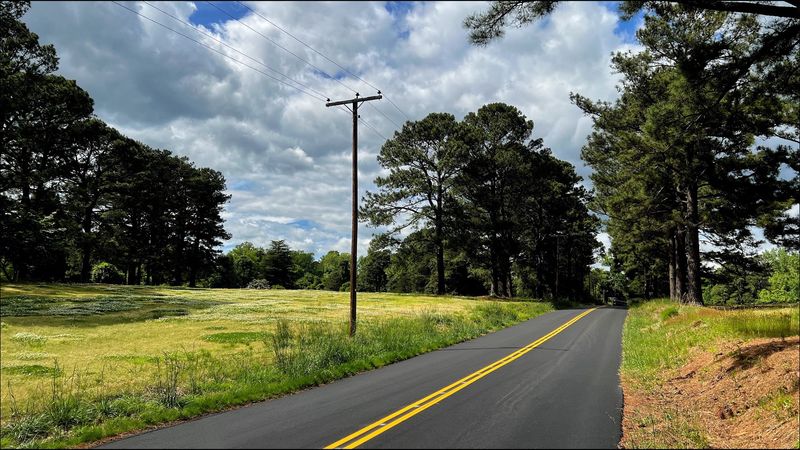
Blink at the wrong moment and you will be past it. The community sits along North Carolina Highway 705, better known to travelers as the Pottery Highway, with mail addressed to ZIP code 27341.
Green forest crowds the shoulders, open fields open up between the trees, and streetlights are rare.
Driving here feels unhurried by design. There are no traffic signals demanding attention, just gentle curves, mailboxes on wooden posts, and the occasional tractor easing onto the pavement between fields of soybeans and hay.
The Whynot General Store serves as the most reliable landmark, a plainspoken building that anchors the crossroads and tells you that you have arrived. Slow down when you spot it.
For orientation, Asheboro is roughly 20 minutes north, and Seagrove sits about one to two miles northwest. Coordinates place the community near 35.53097° N, 79.76365° W, which helps if your map app gets confused.
Take the sign photo. It is the souvenir everyone wants, and it costs nothing but a safe place to pull over.
Discover How This Tiny Community Became Part Of North Carolina Folklore
Folklore does not require a battlefield or a legend about a ghost. Sometimes it only takes a sentence spoken by a tired farmer who wanted his supper.
The naming story has traveled far because it is easy to remember and easy to retell. Nobody needs a history degree to appreciate a group of neighbors settling a decision by shrugging their shoulders.
Travel writers love it, radio hosts repeat it, and residents share it with a knowing look, as if letting you in on a small family joke. Guidebooks across the state list the community among their favorite oddities.
There is something genuinely charming in that practicality. It reflects a Piedmont character built on getting things done, whether that means firing a kiln, mending a fence, or naming a post office in under a minute.
Ask anyone in the area about it and you will likely get a story with slightly different details, because that is how folklore works. The version you hear becomes yours to carry home and repeat at the dinner table.
Follow The Backroads Through The Rural Uwharrie Countryside
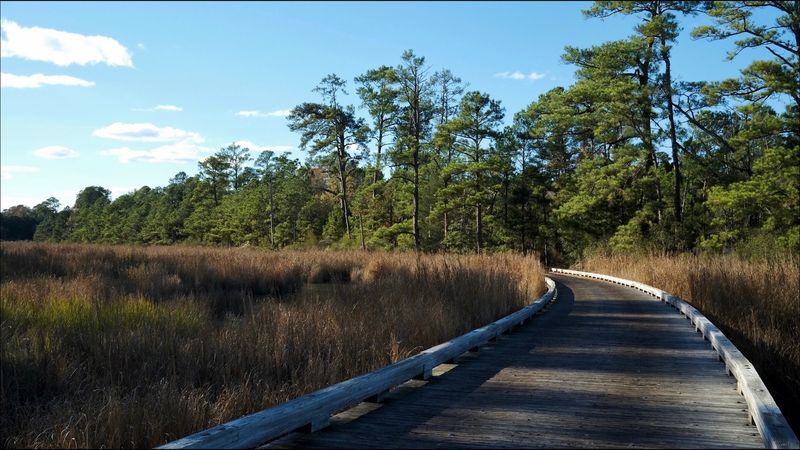
Ancient hills surround this corner of the Piedmont, and they are older than they look. The Uwharrie Mountains, spread across Randolph, Montgomery, and Davidson counties, rank among the oldest formations in North America, worn down by time into rounded green ridges.
Uwharrie National Forest covers more than 50,000 acres nearby. Hiking trails wind through hardwood stands and along creek beds, while other paths welcome mountain bikes and horseback riders.
Spring brings dogwood blossoms and birdsong along the backroads. Autumn turns the ridges gold and rust, and the light through the pines feels soft even at midday.
History waits on those same country lanes. The Pisgah Covered Bridge, built in 1911 and one of only two covered bridges still standing in North Carolina, is roughly a 20 minute drive from Whynot, with a short walking path, a shallow creek, and picnic-worthy shade.
Pack water, comfortable shoes, and a paper map. Cell service dips in the hollows, and part of the pleasure here is following a gravel road without knowing exactly where it ends.
See How Whynot Fits Into The Region’s Famous Pottery Country
Clay is the real currency here. The community sits along NC 705, the route known as the Pottery Highway, where more than 100 studios and galleries fill a 15 square mile stretch of countryside.
Whynot Pottery and Acacia Art Tile both carry the community’s name into the wider craft world. Expect handmade stoneware, glazes in deep blues and warm earth tones, and decorative tiles pressed with leaves, vines, and geometric patterns.
Other studios sit within a few minutes’ drive, including Dirtworks Pottery, Tom Gray Pottery, and Dixieland Pottery. Each potter has a signature, so a mug from one shop looks nothing like a mug from the next.
The tradition traces back to 18th century settlers who dug local clay for jugs, churns, and storage jars. Practical work became art, and families have passed the skill down through generations.
Step inside a working shop and you will smell damp clay and feel warmth from a kiln. Watching a wheel spin a lump into a bowl is quietly mesmerizing, and most artists are happy to explain what they are doing.
Pair Your Visit With A Drive Through Nearby Seagrove
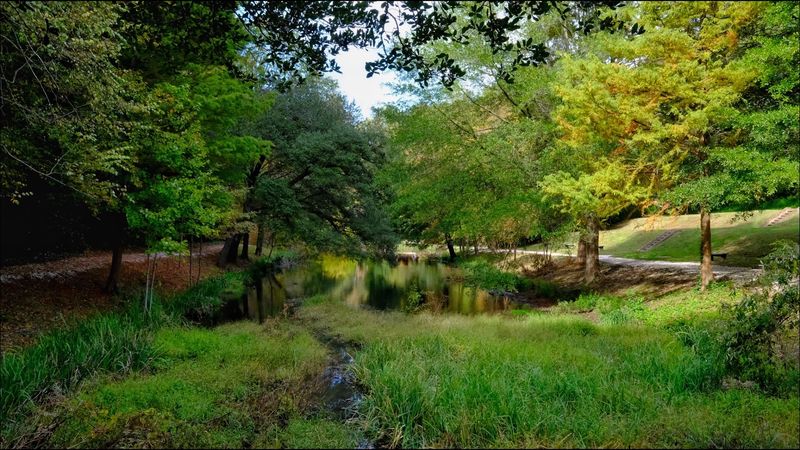
Seagrove makes an easy companion trip, just a mile or two up the road. The little town anchors the Pottery Highway and packs an unusual number of kilns into a small footprint, which makes browsing simple and unhurried.
Jugtown Pottery, listed on the National Register of Historic Places, is one of the most storied stops. Shelves hold salt-glazed pieces and classic forms shaped the same way they were a century ago.
Plan for stops rather than a schedule. Many shops sit behind farmhouses and barns, marked by hand-painted signs, and half the fun is turning down a driveway you did not plan on, following nothing but a small arrow nailed to a tree.
Asheboro, about 20 minutes away, widens the options. The American Classic Motorcycle Museum displays a collection of vintage Harley-Davidsons, and the sprawling state zoo offers walking trails through habitats that stretch across hundreds of acres.
Bring cash and bubble wrap for the pottery. A wide, flat trunk space also helps, because very few travelers leave this stretch of countryside with empty hands.
Leave With The Easiest North Carolina Town Name To Turn Into A Joke
Punchlines rarely come with a ZIP code, but this one does. The name works in almost any sentence, which is exactly why visitors keep repeating it long after they get home.
Say you spent the weekend in Whynot and watch the reaction. Someone always asks why, and then you get to tell the whole story about the long meeting and the neighbor who wanted his supper.
What lingers, though, goes past the joke. Rounded old hills, the hush of a country road, glaze cooling on a stoneware bowl, and the smell of clay dust on your hands stay with you too.
Souvenirs help. A mug from a nearby studio, a photo beside the road sign, and a tile pressed with a fern leaf make a fine set of reminders.
Small places in North Carolina often hold the best stories, and this one proves it with fewer than 100 residents and a name born from pure common sense. Come for the laugh, then stay for the craft, the countryside, and the welcome.