This Unforgettable Texas Roadside Attraction Is Unlike Anything Else In America
I almost drove past it. Then I hit the brakes.
Nothing in the Texas Panhandle prepares you for what sits off Route 66. One moment you are staring at miles of flat, empty land.
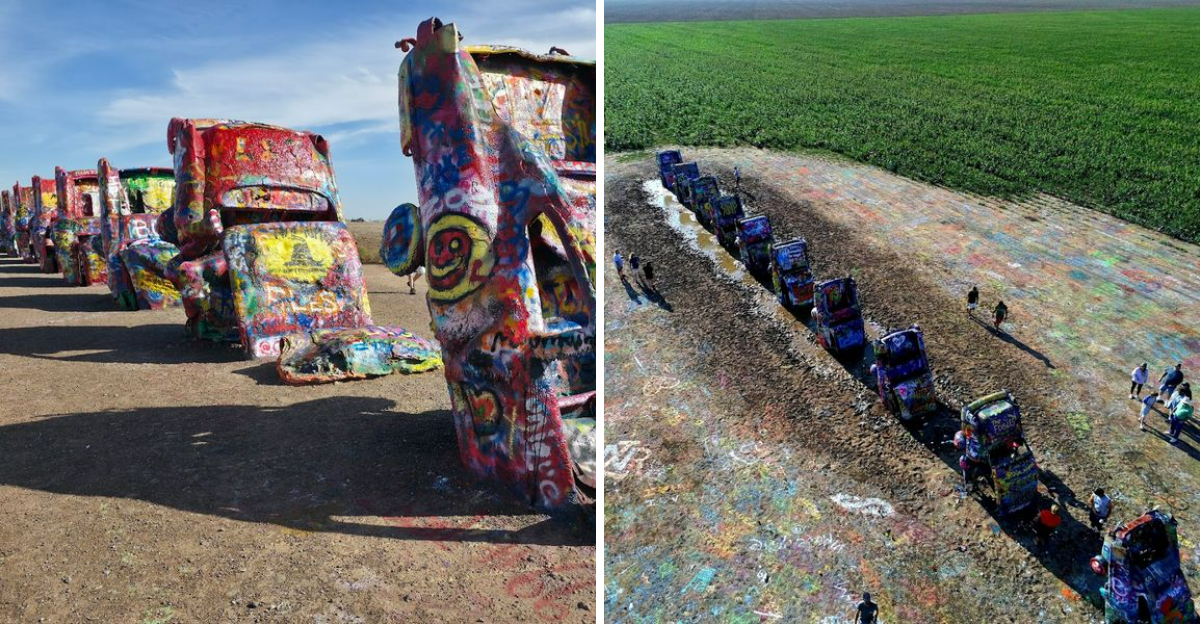
The next, ten half-buried cars are jutting out of the earth at perfect angles, covered in layers of spray paint from strangers who came before you. The state has seen plenty of weird roadside stops.
But this one is different. This one stays with you long after you leave.
People have been pulling over here since 1974. Families, artists, photographers, road-trippers chasing something they cannot quite name.
The state keeps producing wild, unexpected surprises, but nothing quite like this. It is free.
It is open year-round. And it will absolutely mess with your head in the best way possible.
The Story Behind Ten Buried Cadillacs
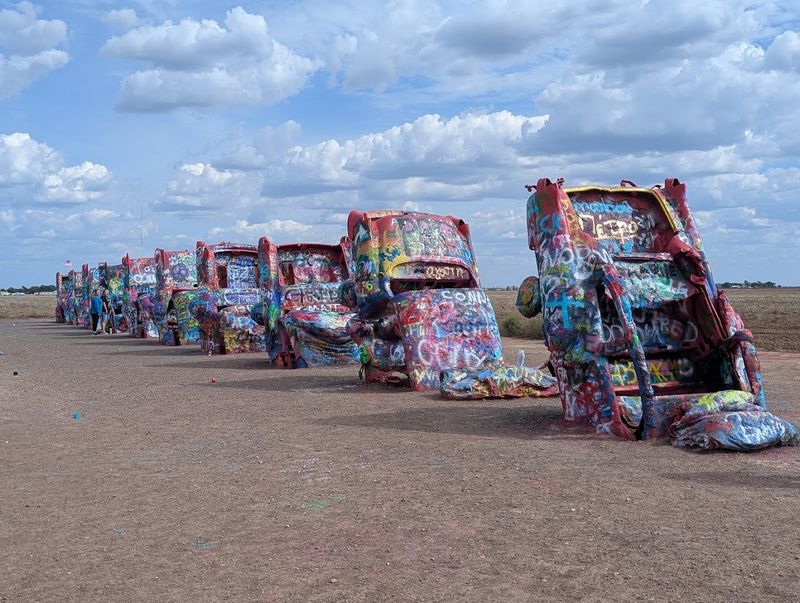
Back in 1974, a group of artists had one of the boldest ideas in American art history. The San Francisco-based art collective Ant Farm, made up of Chip Lord, Hudson Marquez, and Doug Michels, pitched a wild concept to a wealthy Amarillo millionaire named Stanley Marsh 3.
Marsh funded the whole thing without blinking. Ten vintage Cadillacs, sourced from junkyards, were buried nose-first in a flat Texas wheat field.
The models ranged from 1949 to 1963, specifically chosen to show the rise and fall of the iconic Cadillac tailfin.
That tailfin was once a symbol of American ambition and optimism. Burying those cars was a bold artistic statement about consumer culture.
The installation was meant to provoke thought, and fifty years later, it still does exactly that. What started as a serious art project became one of the most visited roadside attractions in the entire country.
Few art pieces have aged this well or stayed this relevant.
You can find it at 13651 I-40 Frontage Rd, Amarillo, TX 79124, United States.
What The Cadillacs Actually Look Like Up Close
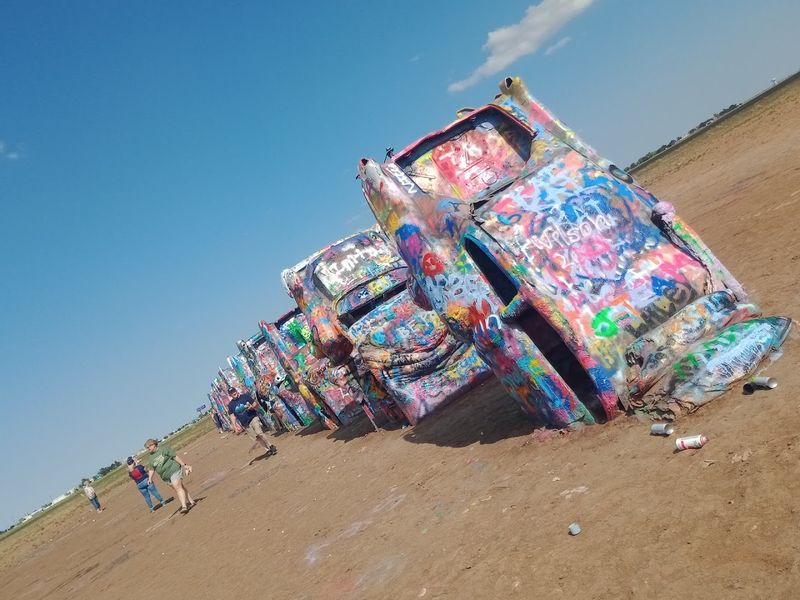
Nothing quite prepares you for that first close-up look. From the highway, the cars appear as colorful silhouettes against a massive sky.
But walk the hundred yards across the field and the real spectacle begins.
The paint on these cars is extraordinary. Layers have built up over decades, and in some spots the paint is reportedly ten to twelve inches thick.
Actual stalactites of dried paint hang from the undersides of the buried vehicles. The original metal is barely visible under all of it.
Each car leans at a specific angle, said to mirror the slope of the Great Pyramid of Giza. That detail may have always been intentional or it may have grown into legend over time.
Either way, it adds to the mystique. You can walk around every single car, get right up close, and touch the surface.
The texture is wild, almost geological. It feels less like a car and more like a painted rock formation.
Bringing a camera with a macro lens here is genuinely worth it. The detail in those paint layers tells the story of millions of visitors better than any sign ever could.
Bringing Your Own Spray Paint Is Part Of The Experience
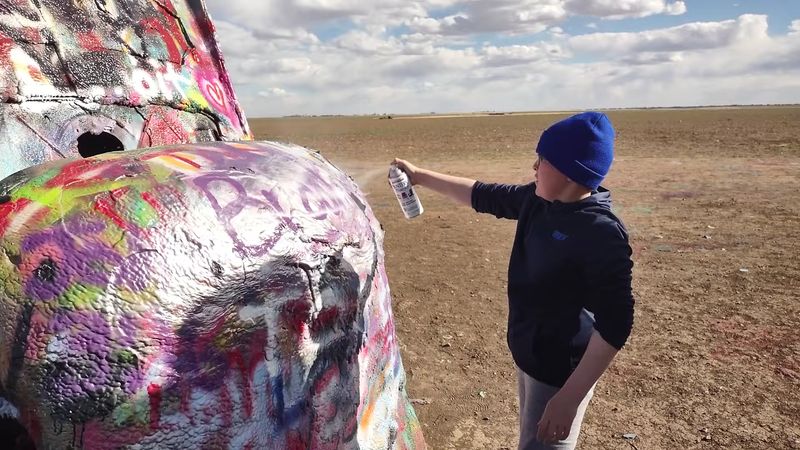
Grabbing a can of spray paint before you arrive is genuinely one of the best decisions you can make for this visit. The interaction between visitors and the artwork is not just allowed here, it is the whole point.
You are encouraged to leave your mark.
Spray paint is often sold near the entrance, though prices can change, and many visitors bring their own. Walmart nearby reportedly carries cans for less if you plan ahead.
Many visitors also leave partially used cans around the cars, so you may find free paint waiting when you arrive.
Black paint tends to show up the most clearly against the existing layers. Once you start spraying, something shifts.
You go from observer to participant, and that feeling is surprisingly satisfying. The cars get repainted in solid colors periodically to mark events or simply reset the canvas.
So whatever you add today might be covered tomorrow, which somehow makes it feel even more meaningful.
It Is Free And Open Around The Clock
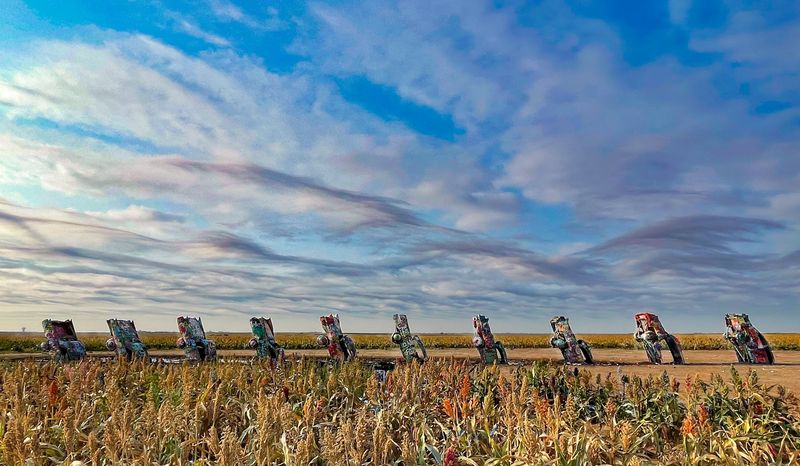
Few major American attractions can honestly claim zero admission cost. This one does, and means it.
The site is widely described as free and open year-round, though daylight visits are usually the most practical and safest. There are no gates, no ticket booths, and no timed entry windows.
That open-access philosophy connects directly back to the original artistic vision. Art should be public.
Art should be free. Dropping in at midnight, sunrise, or during a random Tuesday afternoon is all perfectly fine.
The experience changes depending on when you show up.
Sunrise visits offer incredible light for photography and fewer crowds. Sunset brings warm golden tones that make the graffiti colors pop.
Midday on a summer weekend gets busy, which has its own energy. The wind on this flat stretch of land can be fierce regardless of season, so a jacket is worth packing even in warmer months.
The field itself is unpaved, so sturdy shoes beat sandals every time. Parking is available along the frontage road, and the walk to the cars is roughly one hundred yards.
Free, always open, and endlessly photogenic, this place asks almost nothing of you and delivers far more than expected.
The Route 66 Connection Makes It Even More Iconic
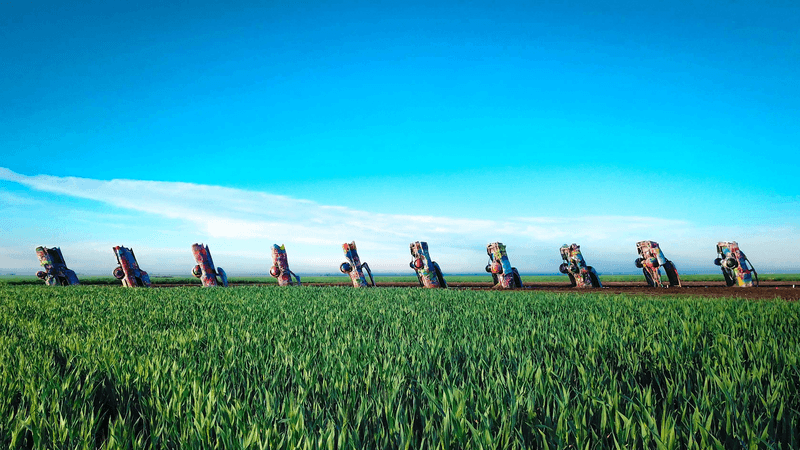
Route 66 carries a kind of magic that is hard to explain to someone who has never driven it. The road connects American history, culture, and landscape in one long, winding thread.
Cadillac Ranch sits directly on that thread, just west of Amarillo along I-40.
The Mother Road was already legendary when these cars went into the ground in 1974. Placing a bold public art installation right alongside it was a perfect match.
Travelers heading cross-country have been adding this stop to their itineraries for five decades now.
The location amplifies everything about the piece. Flat land stretches in every direction.
The sky is enormous. The highway hums in the background.
All of it creates a very specific American feeling that is hard to replicate anywhere else. Songs have referenced it.
Films have featured it. Television shows have stopped here.
The cultural footprint of this installation extends well beyond the physical field it occupies. For anyone doing a proper Route 66 road trip, skipping this spot would feel like reading a book with the best chapter torn out.
It earns its legendary status every single day.
Photography Opportunities That Are Hard To Beat
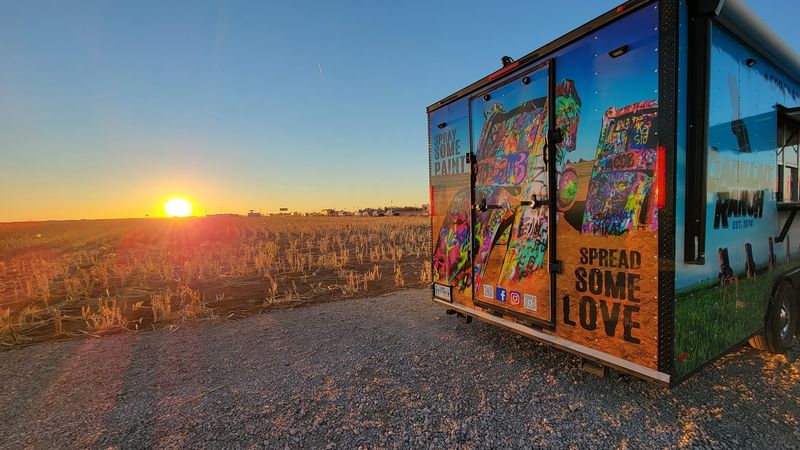
Photographers have been making pilgrimages to this field for good reason. The visual setup here is almost unfairly good.
Ten colorful vertical structures against a massive flat horizon create natural composition every time you point a camera.
Sunrise and sunset are the power hours. The low-angle light catches every texture in the paint layers and turns the sky into a backdrop that looks almost painted itself.
Overcast days produce soft, even light that works beautifully for close-up detail shots of the graffiti surfaces.
Timing matters for crowd management too. Weekday mornings tend to be quieter, giving you more room to move around and set up shots without other visitors in every frame.
The cars are arranged in a loose diagonal line, so shooting from the end of the row captures all ten in one image. Wide-angle lenses make the sky feel even bigger.
Macro settings reveal the insane detail in the paint buildup. Even a smartphone camera produces remarkable results here because the subject matter does most of the work.
Every visit produces a genuinely different set of images because the graffiti surface changes constantly. No two visits ever look exactly alike.
How The Cars Were Chosen And Why It Matters
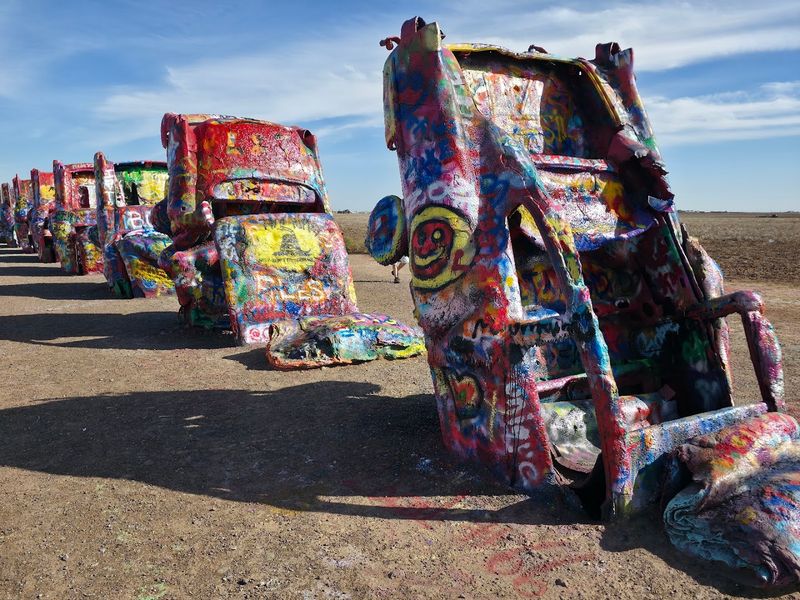
The ten cars were not chosen randomly. Each one represents a specific year in the evolution of the Cadillac tailfin, spanning models from 1949 through 1963.
That tailfin was more than a styling detail. It was a cultural symbol of American confidence and prosperity.
As the tailfin grew taller and more dramatic through the late 1950s, it reflected a country feeling bold and ambitious. When it began shrinking in the early 1960s, that shift mirrored broader cultural changes.
The Ant Farm collective understood that arc and used it as the spine of their concept.
Burying those cars nose-first was deliberate. It was a bold artistic choice about the cycles of culture and style.
The decision to use junked vehicles rather than pristine showroom models added another layer of meaning. These were cars that had already lived full lives.
Pulling them from scrapyards and planting them in the earth gave them a second existence as monuments. The artistic intention behind the selection process is what separates this from a simple novelty act.
There is genuine thought embedded in every angle and every model year on display in that field.
The Move In 1997 And What It Says About The Place
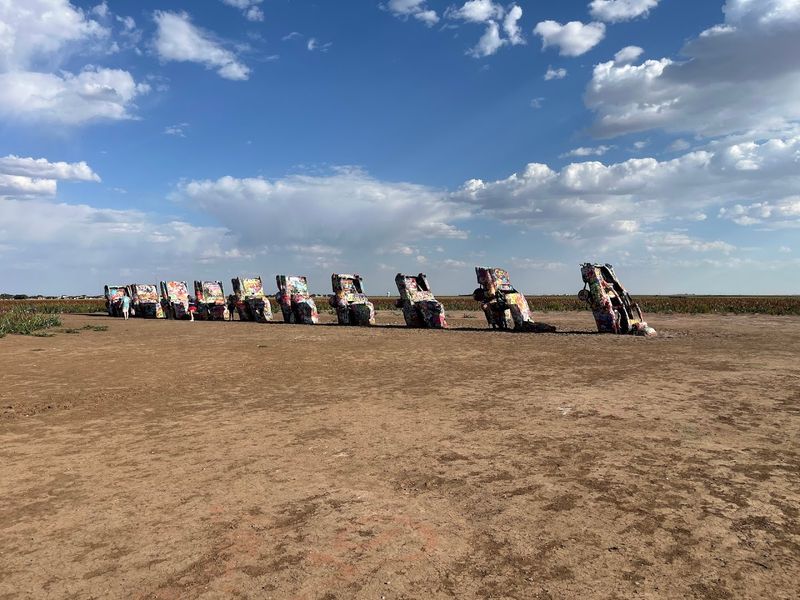
Most art installations stay exactly where they were built. This one packed up and moved.
In 1997, all ten cars were relocated approximately two miles west of the original site. Urban sprawl from Amarillo had started creeping closer, and the decision was made to preserve the open, isolated feeling of the piece.
The move itself became part of the story. Uprooting ten buried cars and replanting them elsewhere is not a small operation.
It required significant effort and demonstrated how seriously the installation was taken by everyone involved. The surrounding landscape had to feel right for the work to function as intended.
That commitment to context is rare. Most public art has to adapt to whatever surrounds it over time.
The decision to physically relocate rather than compromise the visual experience shows a level of curatorial care that goes beyond typical roadside novelty. The current location along the I-40 frontage road still delivers that wide-open, sky-heavy atmosphere the original site had.
Standing there today, you get exactly the sense of isolation and scale the artists were after. The move preserved something that could easily have been swallowed by development and forgotten entirely.
Why This Place Stays With You Long After You Leave
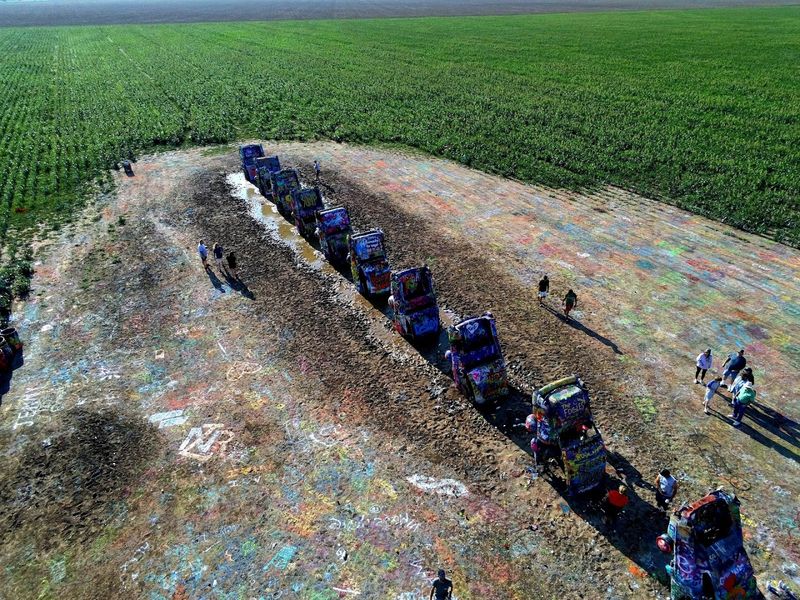
Some stops on a road trip fade from memory within a week. This one tends to stick around in your head for years.
There is something about the combination of scale, strangeness, and participation that makes the experience genuinely memorable.
You are not just looking at something here. You are adding to it.
That small act of spraying your name or a quick design onto a fifty-year-old buried Cadillac connects you to millions of other visitors who did the same thing before you. That chain of human interaction is invisible but very real.
The vendor near the gate sells paint chips collected from the cars, turned into keychains and magnets for around ten dollars each. Those little souvenirs carry actual layers of history from the installation itself.
Visiting with kids, partners, or solo all produce completely different experiences. The place has a rare flexibility that way.
It rewards curiosity and creativity equally. Spend ten minutes or spend a full hour.
Either way, you leave having done something slightly unusual and genuinely fun. That feeling of having participated in something larger than yourself is exactly what great public art is supposed to create, and Cadillac Ranch delivers it every single time.