This Unusual Crochet Museum In California Is Too Strange For Words
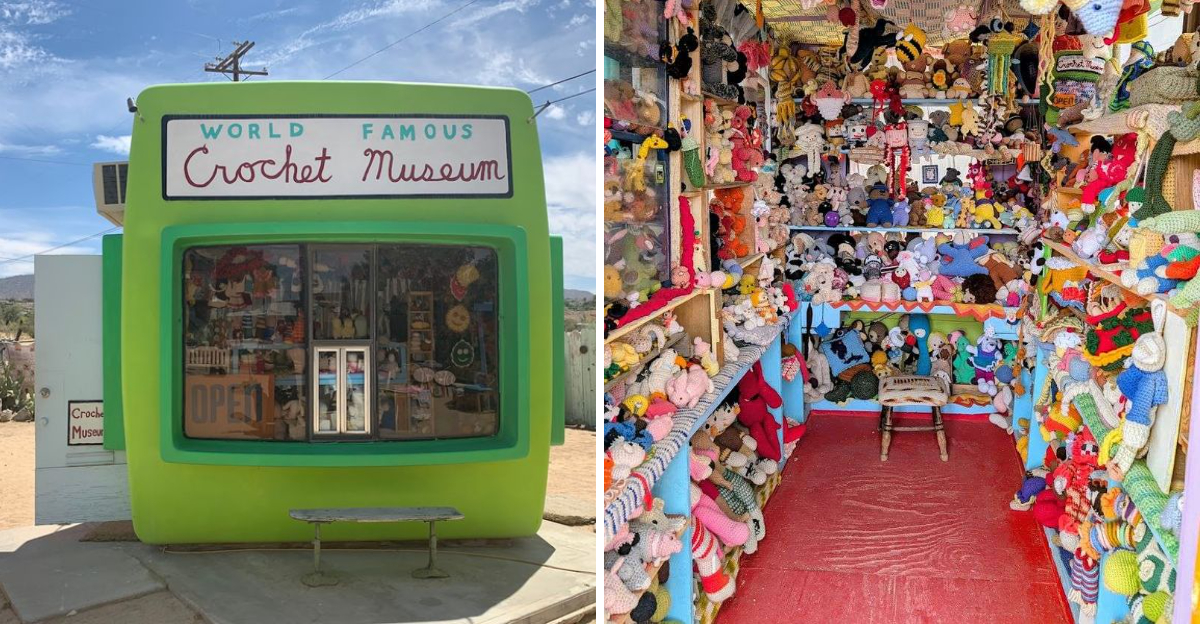
Bright yarn colors appear long before the door even opens. A tiny green building sits beside the desert road. Curiosity pulls people closer almost immediately.
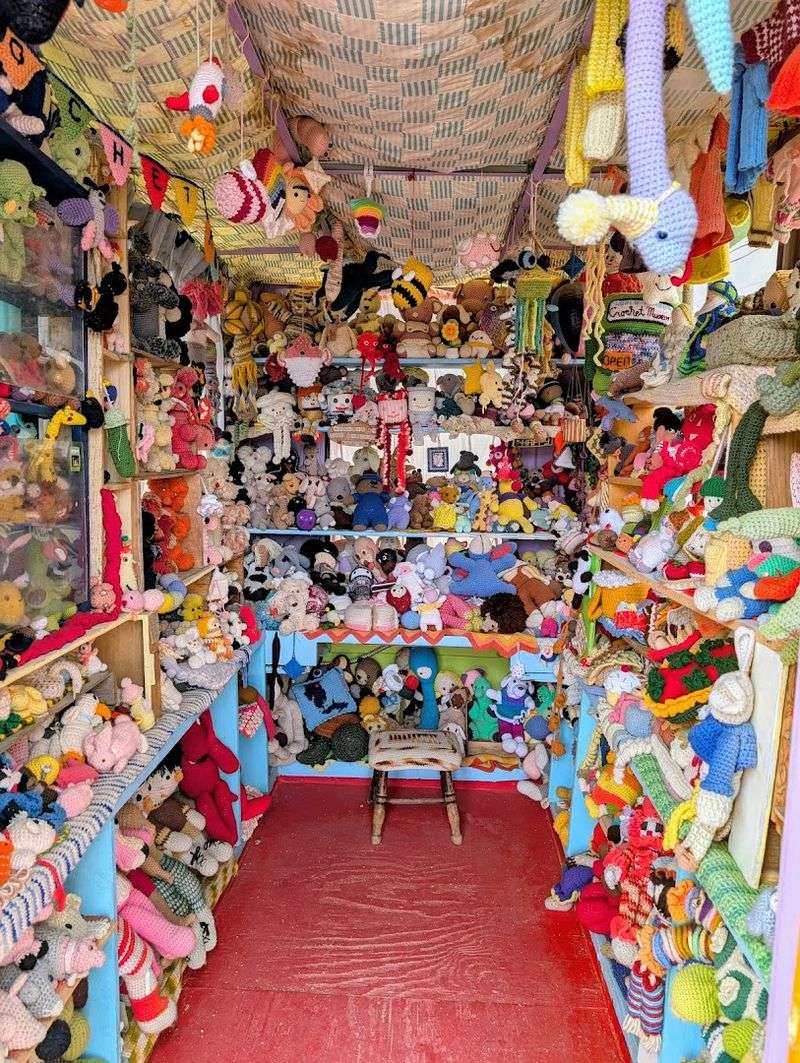
The space inside is small but overflowing with handmade creations. Crocheted animals hang from the ceiling. Dolls, blankets, and yarn sculptures fill every corner.
Visitors often laugh the moment they step inside. The scene feels playful, unexpected, and strangely fascinating all at once. Cameras come out quickly as people try to capture the tiny world of yarn.
Roadside stops rarely look like this. California hides some wonderfully strange surprises for anyone willing to pull over and step inside.
The quirky landmark first opened in the desert art community of Joshua Tree and quickly became a favorite detour for travelers exploring the surrounding landscape.
Today the tiny attraction known as the World Famous Crochet Museum in Joshua Tree continues to welcome curious visitors looking for one of the most unusual and charming roadside stops anywhere in California.
1. It Started Life As A Drive-Through Photo Booth
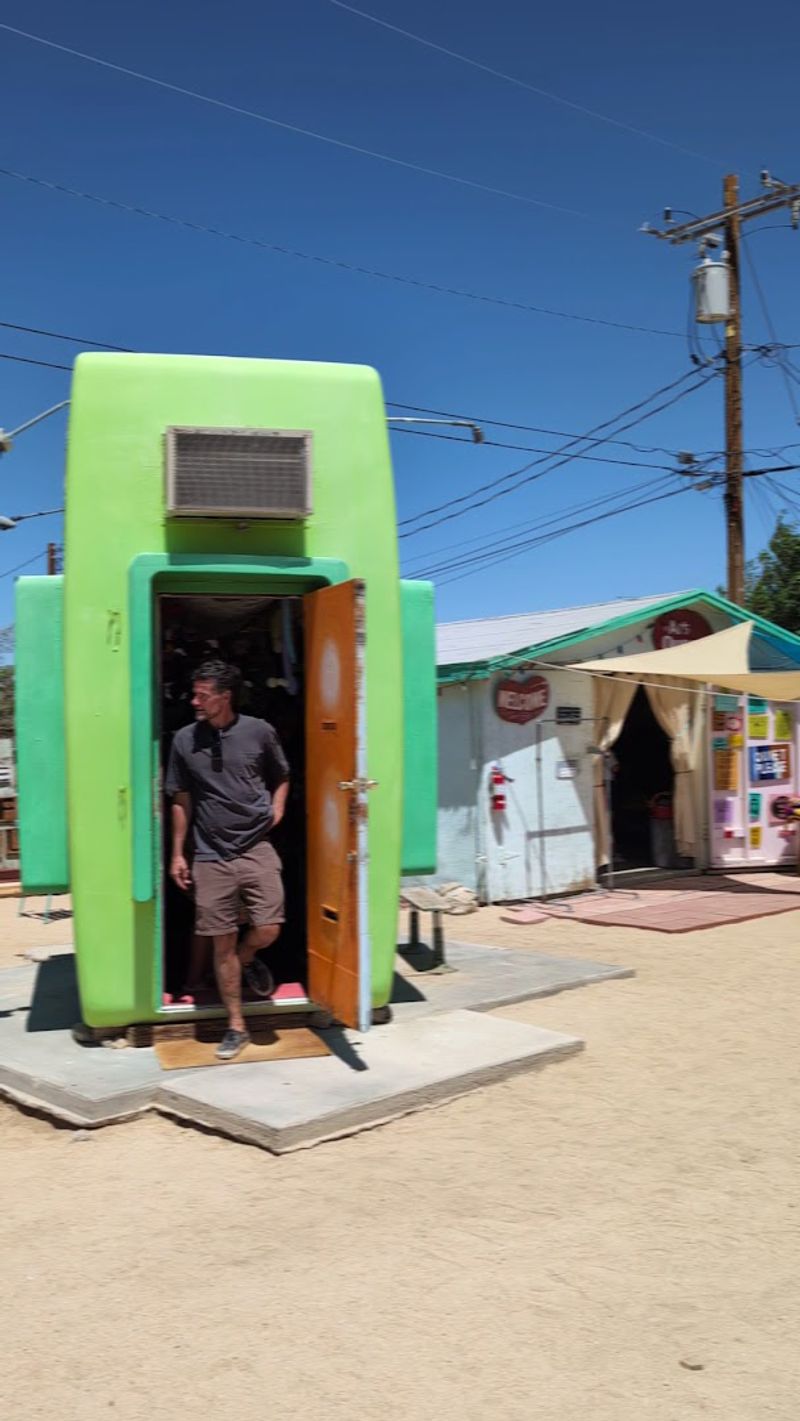
Before it became one of the most talked-about roadside attractions in California, the little green building at 61855 CA-62, Joshua Tree, CA 92252 had a completely different purpose.
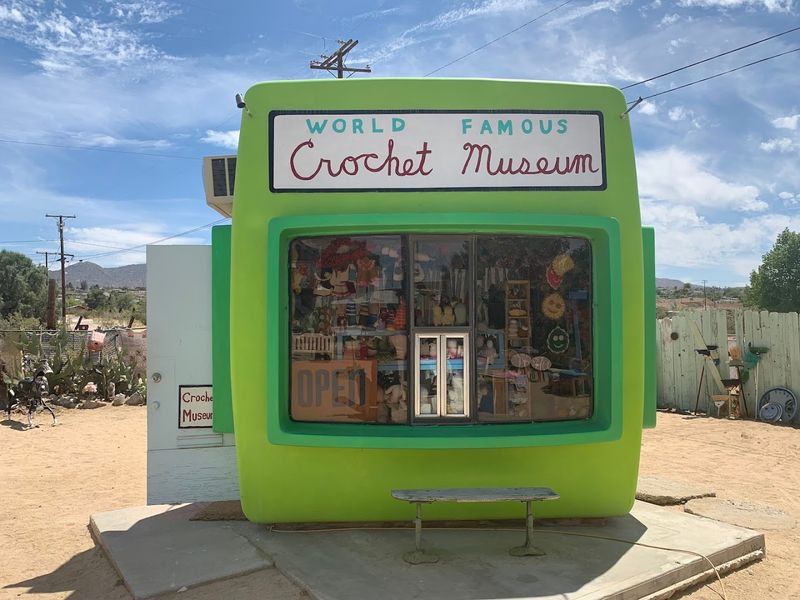
The structure is a repurposed Fotomat kiosk, one of those compact drive-through booths where people used to drop off film rolls and pick up printed photos days later.
Shari Elf transformed it into the World Famous Crochet Museum in 2006, and the building has never looked back.
The kiosk measures roughly 5 by 8 feet, which makes it one of the smallest museums anywhere in the world.
Despite its size, the space manages to hold a surprisingly dense and colorful collection of crocheted items. Pieces hang from the ceiling, line the walls, and fill every available corner.
The lime-green exterior stands out sharply against the desert landscape, making it easy to spot from the road. Visitors often do a double-take when they first notice it, unsure whether what they are seeing is real.
That sense of playful disbelief is part of what makes the experience so memorable for people passing through Joshua Tree.
2. Shari Elf Founded The Museum Without Knowing How To Crochet
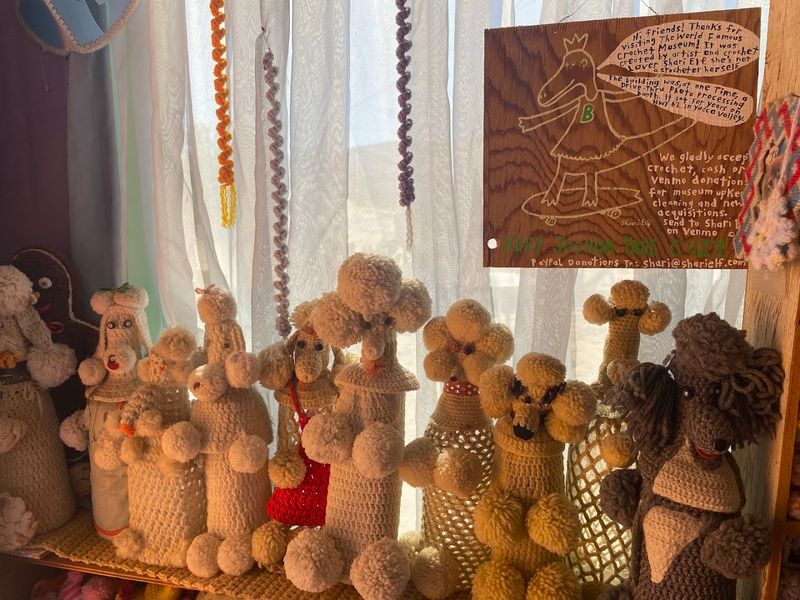
There is something wonderfully unexpected about the fact that the person behind the World Famous Crochet Museum does not actually crochet.
Artist Shari Elf started collecting crocheted items back in the 1990s, drawn to the textures, colors, and handmade quality of each piece she came across.
Her collection grew steadily over the years until it needed a proper home.
Elf officially opened the museum in 2006, giving her accumulated treasure a permanent display space inside the converted Fotomat kiosk.
Her motivation was never about mastering the craft herself but about honoring the creativity and effort that goes into every yarn creation. The museum reflects her genuine appreciation for handmade art in all its forms.
Visitors who have had the chance to meet Shari often describe her as warm, kind, and genuinely enthusiastic about the space she has built.
Her personal touch is visible throughout the museum and the adjoining Art Queen store.
The fact that a non-crocheter built a globally recognized crochet museum adds a layer of charm that makes the whole place feel even more surprising and special to anyone who stops to learn the backstory.
3. The Collection Features Animals, Dolls, And Abstract Creations
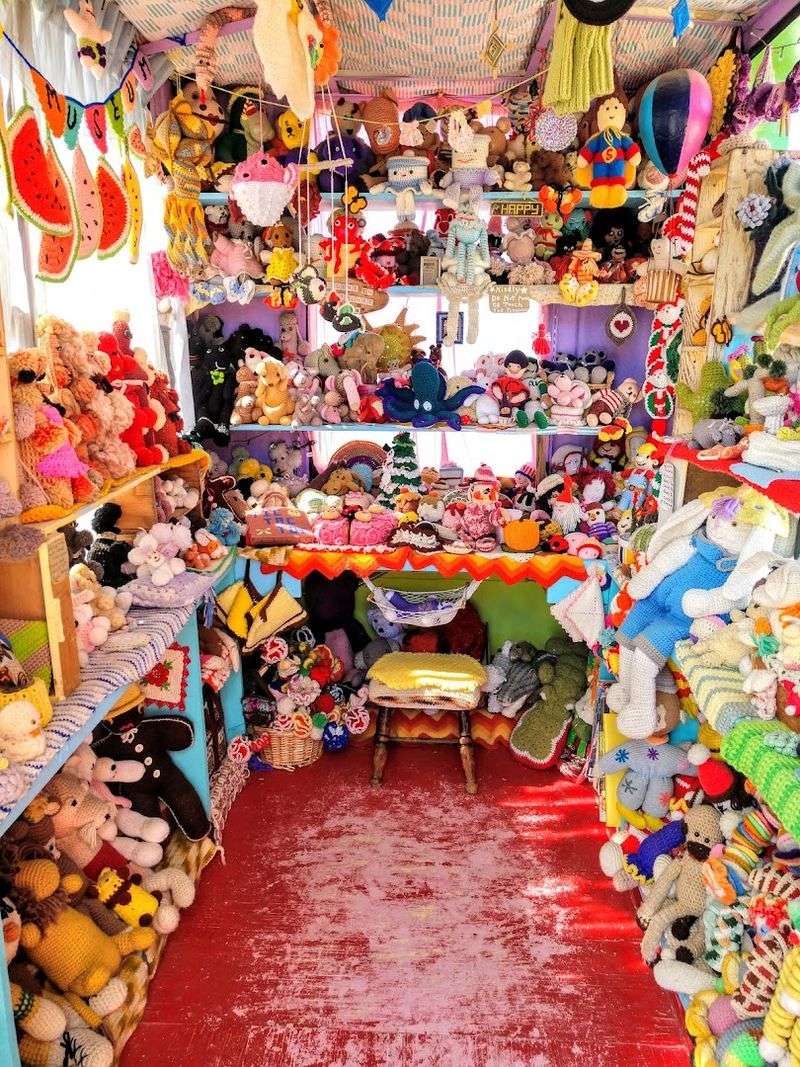
Stepping inside the World Famous Crochet Museum feels a bit like entering a yarn-filled cabinet of curiosities.
The collection includes crocheted poodles, kangaroos, abstract sculptures, food items, and handmade dolls, all packed into a space that barely fits two adults comfortably.
Every surface holds something worth examining up close. The variety of the collection is part of what keeps visitors lingering longer than expected.
Some pieces are clearly whimsical and humorous while others carry a more intricate, almost delicate quality that speaks to the skill of the person who made them.
No two items look quite alike, which gives the museum a sense of endless discovery despite its small footprint.
Pieces also hang from the ceiling, which adds a vertical dimension to the experience that surprises most first-time visitors.
Looking up and seeing a canopy of crocheted creatures overhead is one of those small moments that tends to stick with people long after they leave.
The sheer density of handmade work in such a compact space creates an atmosphere that feels both cozy and completely surreal at the same time.
4. Visitors Are Encouraged To Contribute Their Own Creations
The World Famous Crochet Museum is not just a place to look at other people’s work.
Visitors are actively encouraged to donate their own crocheted creations to the collection, turning the museum into a living, growing piece of community art.
That open-door policy has helped the collection expand organically over the years. The invitation to contribute makes the museum feel participatory rather than passive.
Someone passing through Joshua Tree with a finished crochet project could potentially leave a piece of their own work behind, knowing it will be displayed alongside items from all over the world.
That sense of shared ownership gives the space a warmth that is hard to manufacture artificially.
The result is a collection that reflects a genuinely broad range of styles, skill levels, and creative personalities.
Some donated pieces are polished and precise while others are charmingly rough around the edges, and both types fit equally well within the museum’s spirit.
The community aspect of the collection is one of the reasons the museum has maintained such a loyal following among fiber artists and craft enthusiasts who see it as more than just a roadside curiosity.
5. Admission Is Free With A Suggested Donation Of Just 25 Cents
Not many museums anywhere in the world ask for only a quarter.
The World Famous Crochet Museum operates on a free admission model with a suggested donation of just 25 cents, making it one of the most accessible cultural stops along the entire stretch of Highway 62 near Joshua Tree National Park.
That low barrier to entry has helped draw in travelers who might otherwise have driven right past. The pricing philosophy fits naturally with the museum’s overall spirit of openness and community.
Shari Elf built the space as a place for people to connect with handmade art rather than as a commercial venture, and the donation model reflects that intention clearly.
Visitors who want to support the space more substantially can also shop at the Art Queen store next door, where proceeds help keep the whole complex running.
The affordability makes the museum a genuinely easy yes for road-trippers on a budget. Stopping in costs almost nothing but tends to deliver a disproportionately memorable experience.
Few places manage to leave such a strong impression for such a small ask, and that contrast between cost and impact is part of what keeps people recommending the museum to friends and fellow travelers.
6. The Museum Operates On An Honor System And Is Open Daily
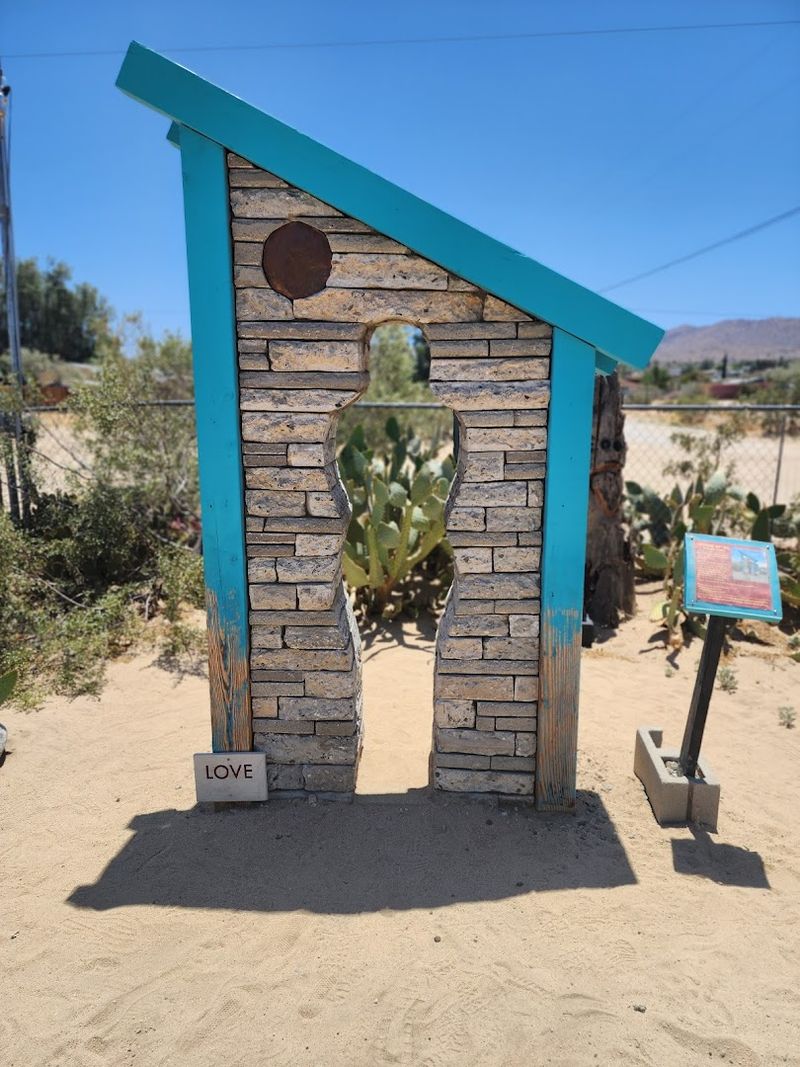
There is a refreshing level of trust built into how the World Famous Crochet Museum operates.
The museum runs on an honor system, and visitors are trusted to enter respectfully and leave a donation if they choose.
The museum is open daily from 9:30 AM to 5:30 PM, which gives travelers a reliable window to plan their visit.
The honor-based setup gives the space a relaxed, unhurried quality that suits the desert environment perfectly.
There is no ticket counter, no line management, and no formal greeting process. Visitors simply arrive, take in the collection at their own pace, and leave whenever they are ready.
That low-pressure atmosphere tends to make the experience feel more personal and genuine than a typical museum visit.
People linger when they want to, step outside to look at the surrounding art installations, and wander back in for a second look without anyone rushing them along.
For road-trippers who spend a lot of time navigating crowded attractions, the quiet and trusting nature of the Crochet Museum can feel like a genuine breath of fresh desert air during an otherwise busy travel day.
7. It Sits Inside The Art Queen Complex
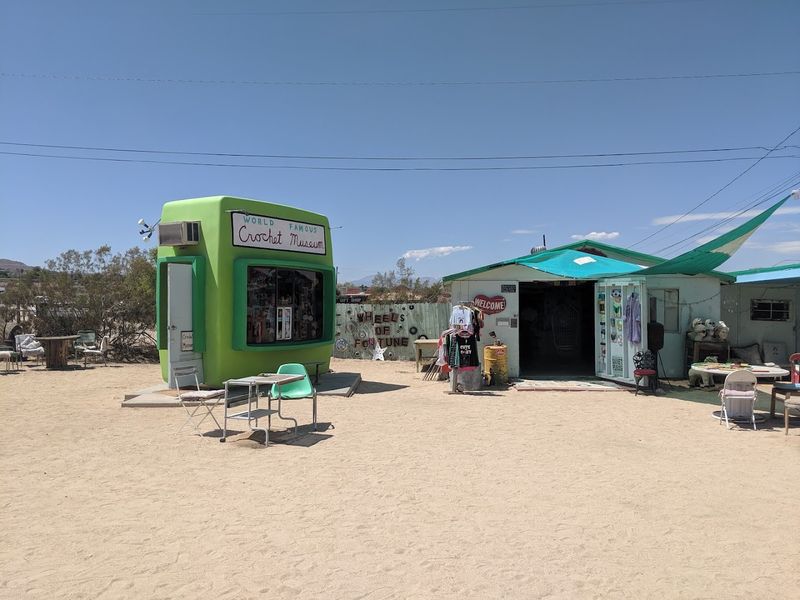
The World Famous Crochet Museum does not stand alone.
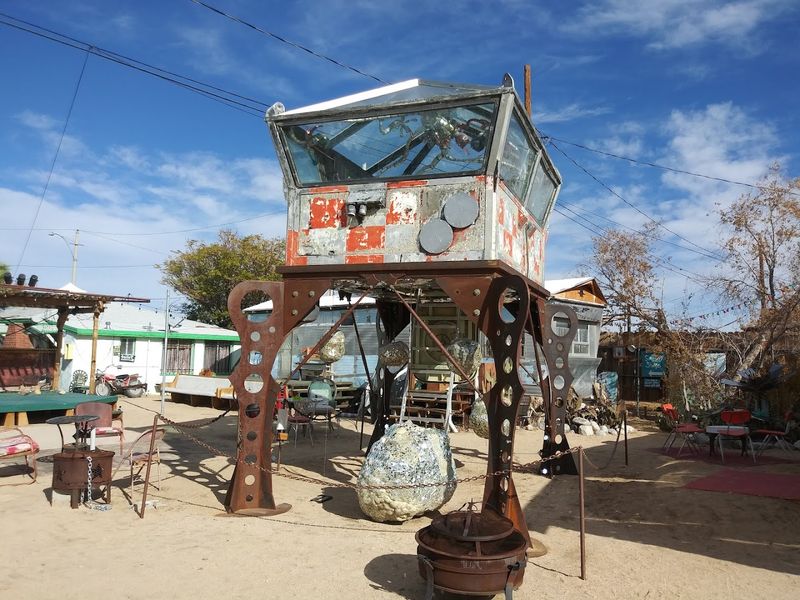
It sits within the Art Queen complex, a vibrant cluster of creative spaces that includes the Art Queen Gallery, small shops, art installations, and even a stage area tucked further back on the property.
The complex has developed into a genuine destination for people drawn to unconventional art and desert culture.
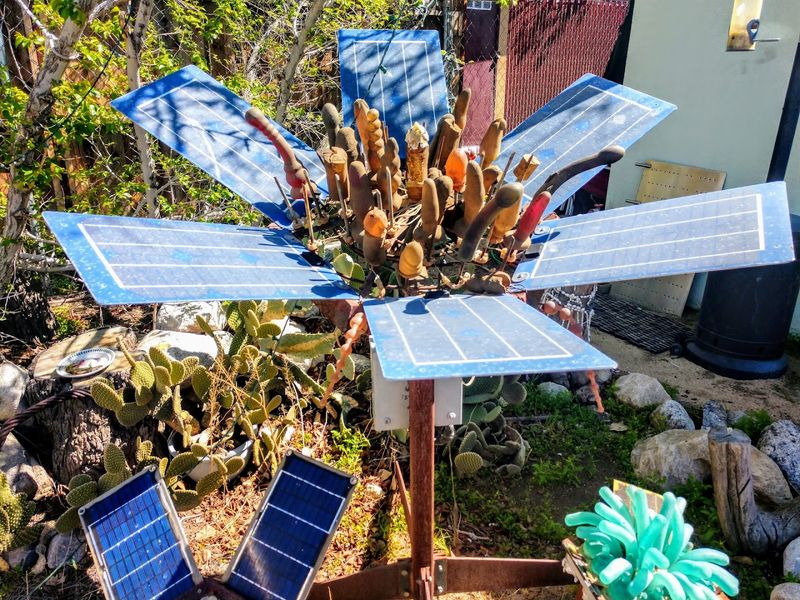
Visitors who explore beyond the museum itself often find a painted bus, outdoor sculptures, and a bookshop called Space Cowboy that carries its own loyal following among readers and browsers.
The Art Queen store next to the museum sells crochet souvenirs, stickers, magnets, clothing, and handmade items from local artists.
Clean restrooms are also available on the premises, which is a detail that road-trippers tend to appreciate more than they might expect.
The layered nature of the complex means that a quick five-minute stop can easily stretch into a half-hour or longer if curiosity takes over.
Each corner of the property tends to reveal something new, from painted signage to small sculptures half-hidden among the desert plants.
The Art Queen complex as a whole captures something genuinely rare, which is a space where creative energy has accumulated slowly and naturally over many years rather than being designed all at once.
8. The Museum Has Earned Global Recognition
Few roadside attractions built inside a 5-by-8-foot kiosk manage to attract international attention, but the World Famous Crochet Museum has done exactly that.
Its distinctive lime-green exterior has appeared in advertisements, travel publications, and media features from around the world, giving the tiny Joshua Tree landmark a profile that far exceeds its physical size.
The museum has been covered by travel writers, featured in roadside attraction guides, and shared widely across social media by visitors who stumble upon it during trips to Joshua Tree National Park.
Platforms like Roadside America have documented it as one of the more genuinely unusual stops in California, which has helped funnel a steady stream of curious travelers to the site over the years.
The global recognition has not seemed to change the character of the place in any noticeable way.
The museum still operates with the same low-key, community-driven spirit that Shari Elf established when she first opened it in 2006.
That consistency between the museum’s humble physical presence and its outsized reputation is part of what makes it so endearing to people who visit after reading about it online or hearing about it from a friend who passed through the desert.
9. The Museum Has Inspired Creative Community Around Joshua Tree
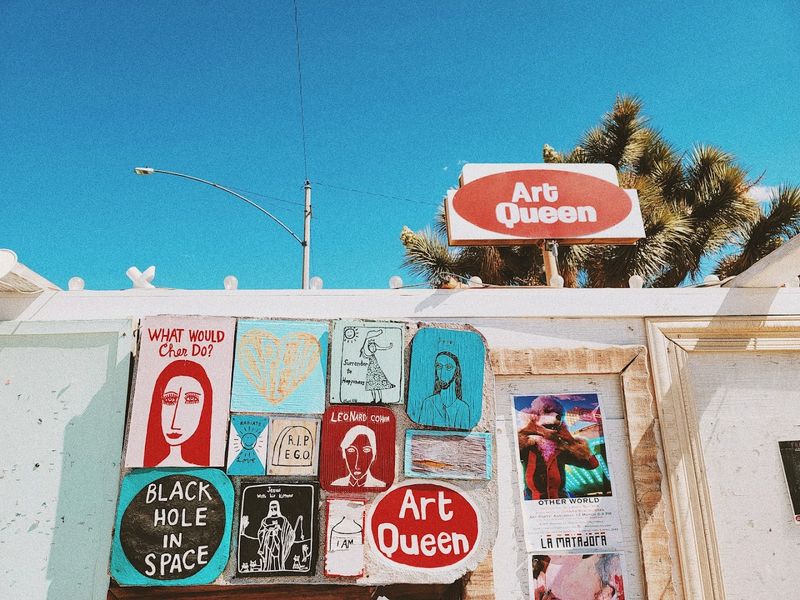
A museum that fits two people comfortably has somehow managed to spark a broader creative movement in the surrounding area.
The World Famous Crochet Museum has become a symbol of the artistic identity of Joshua Tree, encouraging other makers, artists, and collectors to set up their own unconventional spaces nearby.
The area around Highway 62 has developed a reputation as a destination for people who appreciate art that exists outside traditional gallery settings.
The museum’s influence can be felt in the way the Art Queen complex has grown over time, drawing in local vendors, fiber artists, and creative entrepreneurs who want to be part of the same spirit Shari Elf helped establish.
Crochet art installations inspired by the museum have appeared in other locations as well, reflecting how a single quirky idea in the California desert managed to resonate with a much wider audience.
For visitors who are interested in the broader creative culture of the Joshua Tree area, the museum serves as a useful starting point for exploration.
Other nearby art destinations like the Noah Purifoy Outdoor Desert Art Museum and Pioneertown offer additional layers of the same unconventional creative energy that makes the region feel genuinely distinct from other desert travel destinations in the American Southwest.
10. The Location Places It Right Across From Joshua Tree National Park
Geography has given the World Famous Crochet Museum one of the more convenient locations a roadside attraction could ask for.
The museum sits at 61855 CA-62 in Joshua Tree, directly across the street from the Joshua Tree National Park Visitor Center, which means it naturally falls in the path of thousands of hikers and park visitors every year.
Many people notice the lime-green building on their way into or out of the park and decide to stop on impulse. The proximity to the national park works in both directions.
Travelers who plan their visit around the park often tack on a stop at the museum as a low-effort bonus, while others specifically seek out the museum first and then head into the park afterward.
The Joshua Tree Saloon is also nearby, giving visitors multiple options for how to spend time in the area before or after exploring the park.
Parking near the museum is generally manageable, though weekends during peak park season can bring more foot traffic to the area.
Visiting on a weekday morning tends to offer a quieter and more relaxed experience for people who want to spend time exploring the Art Queen complex without feeling rushed by a crowd gathering outside the tiny museum entrance.