Underrated State Parks In North Carolina That Are Totally Worth The Road Trip
North Carolina’s underrated state parks are full of surprises, adventure, and natural beauty waiting to be explored. From misty wetlands to rugged mountain peaks, these hidden treasures offer experiences that go beyond the usual tourist spots.
Whether you’re seeking tranquil canoe rides through ancient cypress trees, quiet hikes beneath towering oaks, or dramatic waterfalls cascading through lush forests, there’s a park that fits every kind of adventure. Many of these parks remain off the typical travel radar, which means you can enjoy their beauty without the crowds.
Alongside stunning landscapes, they often include unique wildlife, rare plants, and historic sites that tell stories of the region’s past. Perfect for a weekend getaway or a day trip, these parks provide a chance to reconnect with nature, capture unforgettable photos, and create lasting memories.
Pack your hiking boots, camera, and curiosity, North Carolina’s hidden treasures are waiting.
1. Merchants Millpond State Park, Gatesville
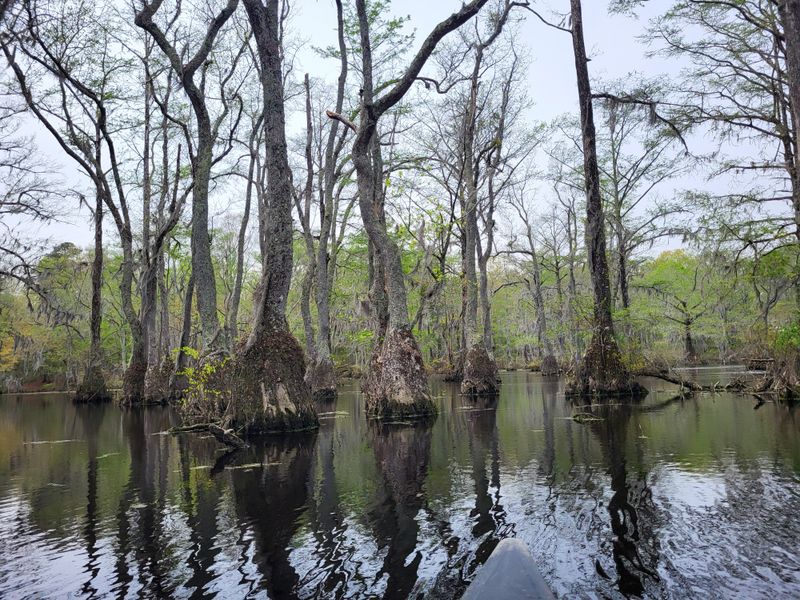
Ancient cypress trees rise from dark water like something out of a legend. Merchants Millpond State Park, at 176 Mill Pond Rd, Gatesville, protects one of the rarest ecosystems in the coastal plain, where a 760-acre millpond created in 1811 now shelters bald cypress and tupelo gum trees that create an otherworldly canopy.
Paddling through the narrow channels feels like gliding through a living museum. The water stays calm most days, reflecting the moss-draped branches overhead and creating mirror images that blur the line between sky and swamp.
Canoe and kayak rentals make it easy to explore without hauling gear from home.
Hiking trails wind through upland forests where the landscape shifts from wetland to pine-oak woodland in just a few steps. The Lassiter Trail offers a 6.5-mile loop that circles the millpond, passing through diverse habitats where wildlife sightings often happen.
Spring and fall bring migrating birds, while summer evenings fill with the sounds of frogs and insects.
Camping here means waking to mist rising off the water and the calls of wading birds starting their day. The park stays quiet even on weekends, with most visitors spreading out along the water trails where solitude comes naturally.
2. Goose Creek State Park, Washington
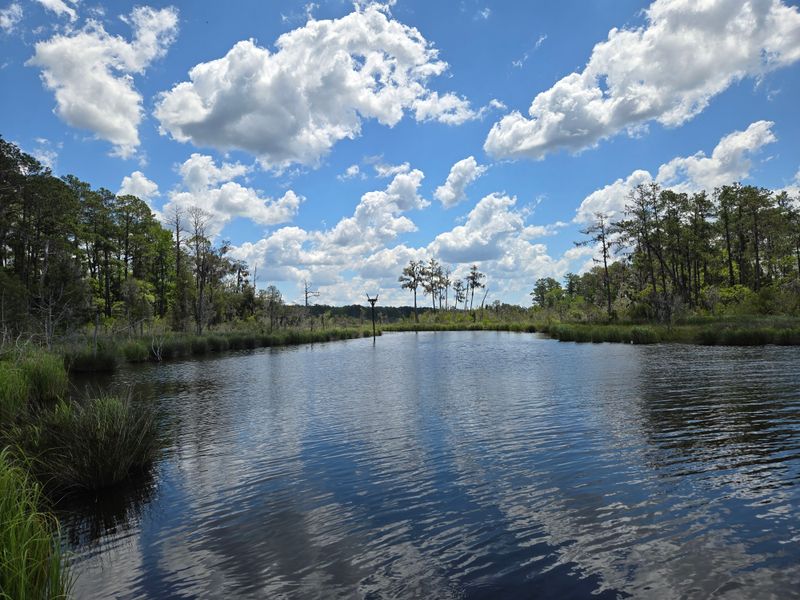
Where the Pamlico River meets Goose Creek, salt marshes stretch toward the horizon in waves of golden grass. Goose Creek State Park sits along the Inner Banks, at 2190 Camp Leach Road, offering 1,672 acres of coastal habitat that feels remote despite being close to the small town of Washington.
The landscape here shifts with the tides, creating ever-changing patterns in the marsh grass and mudflats.
Eight miles of hiking trails explore different ecosystems, from maritime forests to freshwater swamps. The Live Oak Trail passes beneath centuries-old trees whose branches spread wide enough to create natural shelters, while boardwalks cross wetland areas where herons and egrets hunt for fish.
Observation decks placed along the shoreline provide front-row seats to stunning sunsets that paint the river in shades of orange and pink.
Camping options include both drive-up sites and primitive areas for those seeking more solitude. The park stays relatively undiscovered, meaning campsites rarely fill up even during peak season.
Fishing from the shore or pier attracts anglers hoping to catch flounder, red drum, and speckled trout.
Bird watchers flock here during migration seasons when thousands of waterfowl stop to rest and feed in the protected marshes.
3. Jones Lake State Park, Elizabethtown
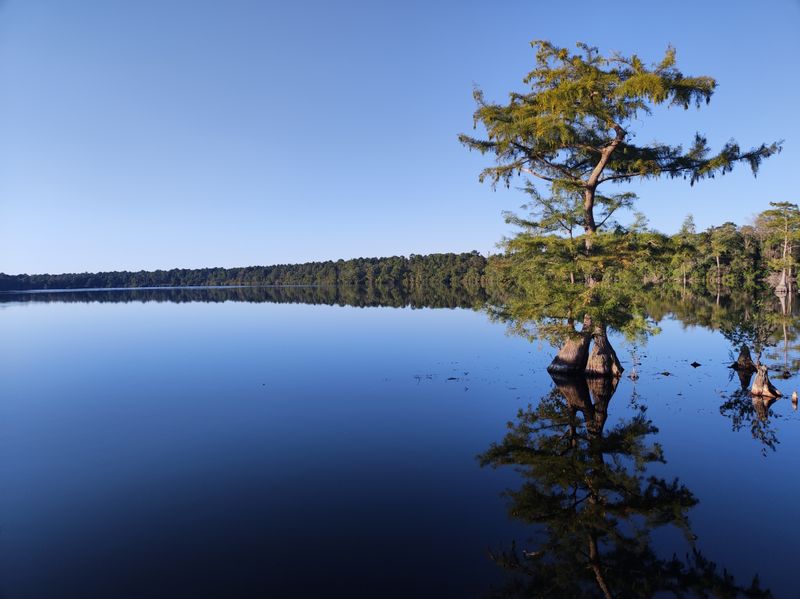
Crystal-clear water, the color of dark tea fills a nearly perfect oval basin carved by nature thousands of years ago. Jones Lake State Park, at 4117 NC-242 N, Elizabethtown, protects one of the most pristine Carolina bay lakes, a rare geological feature found only in the coastal plain.
The lake bottom consists of pure white sand that creates an unexpected beach feeling in the middle of pine forests.
Swimming here feels different from ocean beaches or mountain lakes. The water stays remarkably clear despite its amber tint, which comes from tannins released by surrounding vegetation rather than pollution or sediment.
The sandy bottom slopes gently, making it ideal for families with young children who want to wade and splash safely.
A 6.4-mile trail system circles both Jones Lake and nearby Salters Lake, passing through longleaf pine forests and pocosin wetlands. These trails stay relatively flat and easy to navigate, perfect for casual hikers who want scenery without steep climbs.
Wildflowers bloom along the path in spring, while fall brings cooler temperatures ideal for longer walks.
Picnic shelters dot the shoreline, offering shaded spots for lunch with lake views. The park maintains a peaceful atmosphere even during summer weekends when families come to escape the heat.
4. Elk Knob State Park, Todd
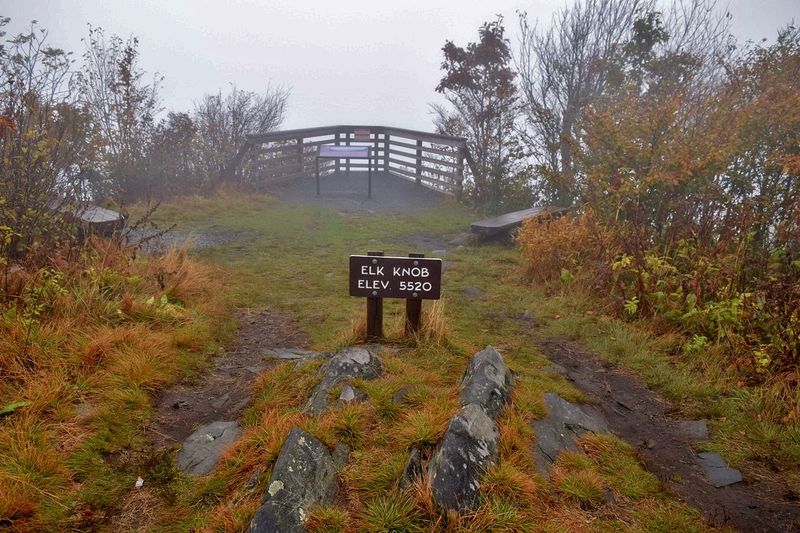
At 5,520 feet elevation, Elk Knob towers over the surrounding High Country landscape as the second-highest peak in Watauga County. Elk Knob State Park, at 5564 Meat Camp Rd, Todd, opened in 2011, making it one of the newer additions to the state park system and still relatively unknown compared to nearby attractions.
The summit rewards hikers with 360-degree views that stretch across multiple states on clear days.
The main trail to the top covers 2 miles one way with steady elevation gain that challenges legs without becoming impossibly steep. The path winds through Fraser fir and red spruce forests that resemble landscapes found much farther north, creating a cool microclimate even in summer.
Wildflowers carpet the forest floor in spring, while fall transforms the mountainsides into a patchwork of red, orange, and gold.
Winter hiking becomes an entirely different experience when ice and snow transform the summit into a frozen wonderland. The exposed peak catches wind from all directions, so layering clothing becomes essential regardless of the season.
Trail conditions vary dramatically with weather, and checking current conditions before heading out prevents unpleasant surprises.
The park has no camping facilities yet, keeping overnight crowds away and preserving the wild feeling that makes this mountain special.
5. Gorges State Park, Sapphire
Rainfall measures over 80 inches annually here, creating a temperate rainforest environment rare in the eastern United States. Gorges State Park, at 976 Grassy Ridge Rd, Sapphire, protects some of the steepest terrain in North Carolina, where rivers have carved deep chasms through ancient rock over millions of years.
The result looks more like the Pacific Northwest than the typical Southern Appalachian landscape.
Rainbow Falls drops 200 feet in multiple cascades, creating a spectacle of water and mist that justifies the challenging hike required to reach it. The trail descends steeply through dense forest where rhododendron and mountain laurel grow thick enough to block sunlight.
Moss covers every available surface, and ferns sprout from seemingly impossible cracks in the rock.
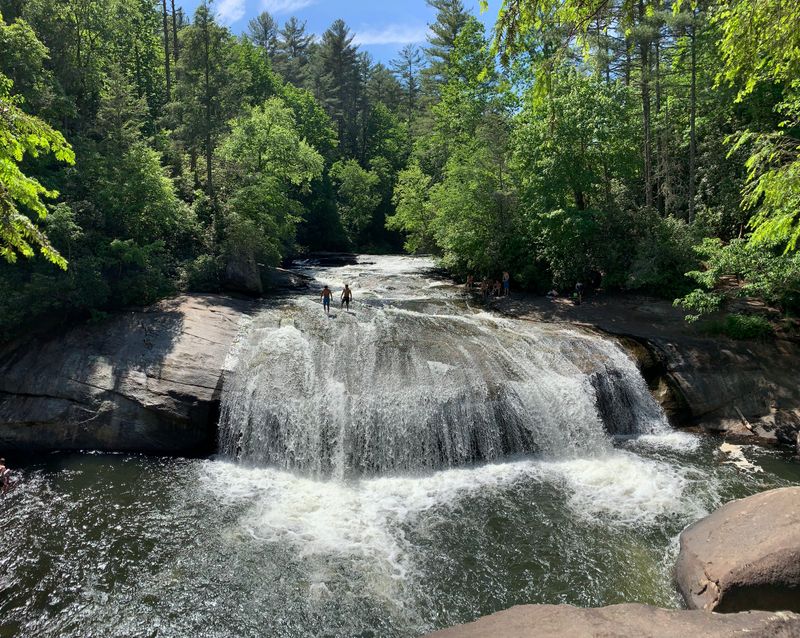
Other waterfalls scattered throughout the park offer alternatives for hikers seeking less strenuous options. Turtleback Falls features a smooth rock face where water slides down in a thin sheet, creating a natural waterslide that some brave souls attempt during low water conditions.
The park discourages this activity due to safety concerns, but the visual spectacle alone makes the hike worthwhile.
Trail difficulty ranges from moderate to strenuous, with most routes involving significant elevation changes. Proper footwear with good traction becomes essential on steep, often slippery paths.
6. Pettigrew State Park, Creswell
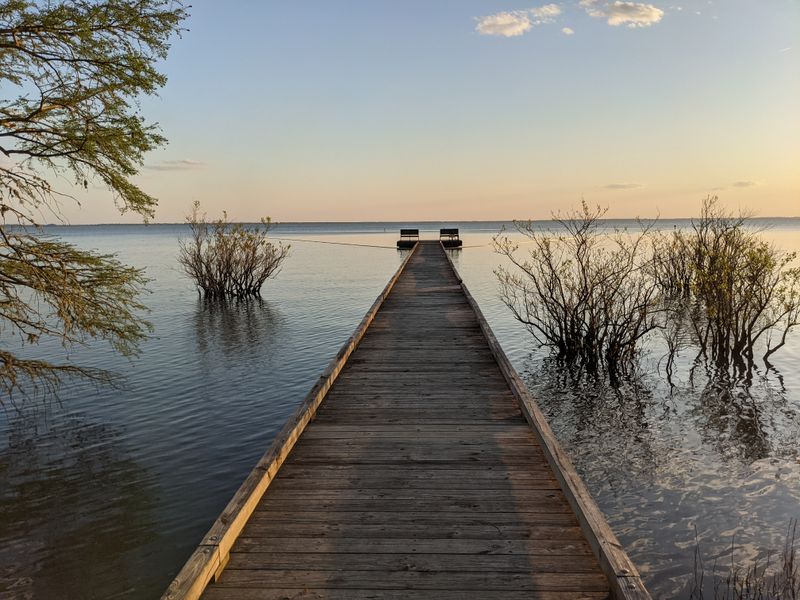
Lake Phelps stretches 16,600 acres without a single natural inlet or outlet, fed entirely by rainfall. Pettigrew State Park, at 2252 Lake Shore Rd, Creswell, protects the shoreline of one of the largest natural lakes in North Carolina, where water stays shallow enough to wade far from shore yet deep enough for boating.
Ancient dugout canoes discovered in the lake date back over 4,000 years, revealing a long human history in this landscape.
Somerset Place State Historic Site sits within the park boundaries, preserving the remains of one of the largest antebellum plantations in North Carolina. Walking the grounds provides sobering insight into the lives of enslaved people who worked this land, with restored buildings and interpretive signs telling stories often left out of history books.
The combination of natural beauty and historical significance makes this park unique among state parks.
Fishing attracts anglers targeting largemouth bass, yellow perch, and catfish in water that stays relatively warm year-round. A boat ramp provides access for those bringing their own watercraft, while the shore fishing pier accommodates those without boats.
The lake stays calm most days, ideal for kayaking or canoeing along the tree-lined shore.
Camping facilities remain basic but functional, with sites offering lake views and easy access to trails that wind through cypress swamps and pine forests.
7. Dismal Swamp State Park, South Mills
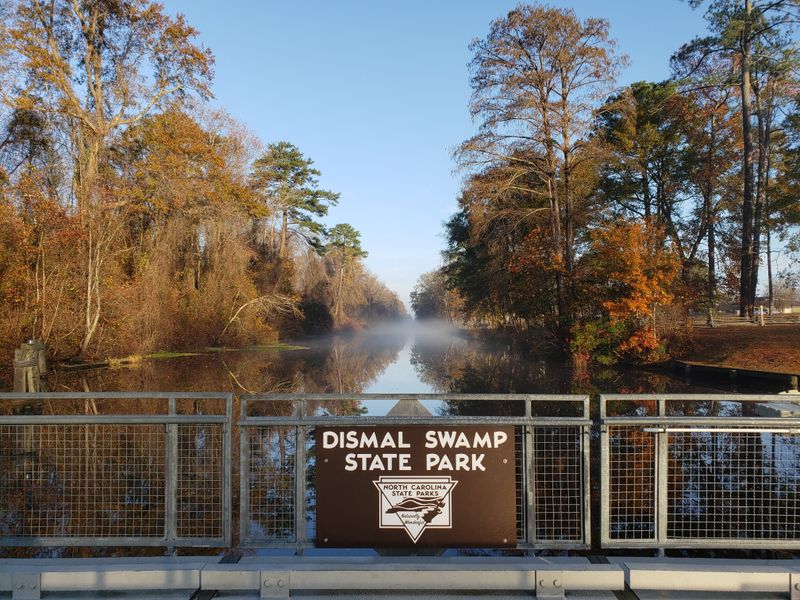
The name sounds ominous, but the Great Dismal Swamp holds beauty that sneaks up quietly. Dismal Swamp State Park, at 2294 US-17, South Mills, provides access to over one million acres of forested wetland that straddles the North Carolina-Virginia border.
This landscape served as a refuge for people escaping slavery, shelter for wildlife, and inspiration for writers, including Harriet Beecher Stowe.
Paddling trails wind through narrow ditches and canals dug centuries ago for logging operations, now reclaimed by nature and serving as peaceful waterways for exploration. The Dismal Swamp Canal connects to the Intracoastal Waterway, occasionally bringing through-boaters who stop to explore the park.
Rental canoes and kayaks make it easy to venture into the swamp without the hassle of transporting personal watercraft.
Hiking and biking trails follow old railroad beds and logging roads, creating flat routes perfect for casual exercise surrounded by towering trees. The 8.5-mile trail system stays relatively dry compared to the surrounding wetlands, though occasional flooding after heavy rains can create muddy conditions.
Wildlife sightings happen often, with black bears, bobcats, and over 200 bird species calling the swamp home.
The visitor center offers exhibits explaining the swamp ecology and human history, providing context that deepens appreciation for this misunderstood landscape.
8. Lake James State Park, Nebo
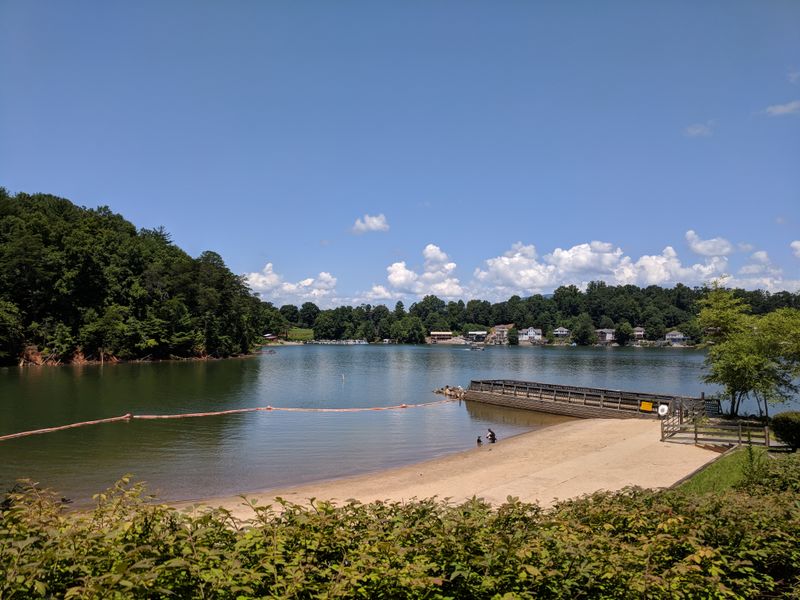
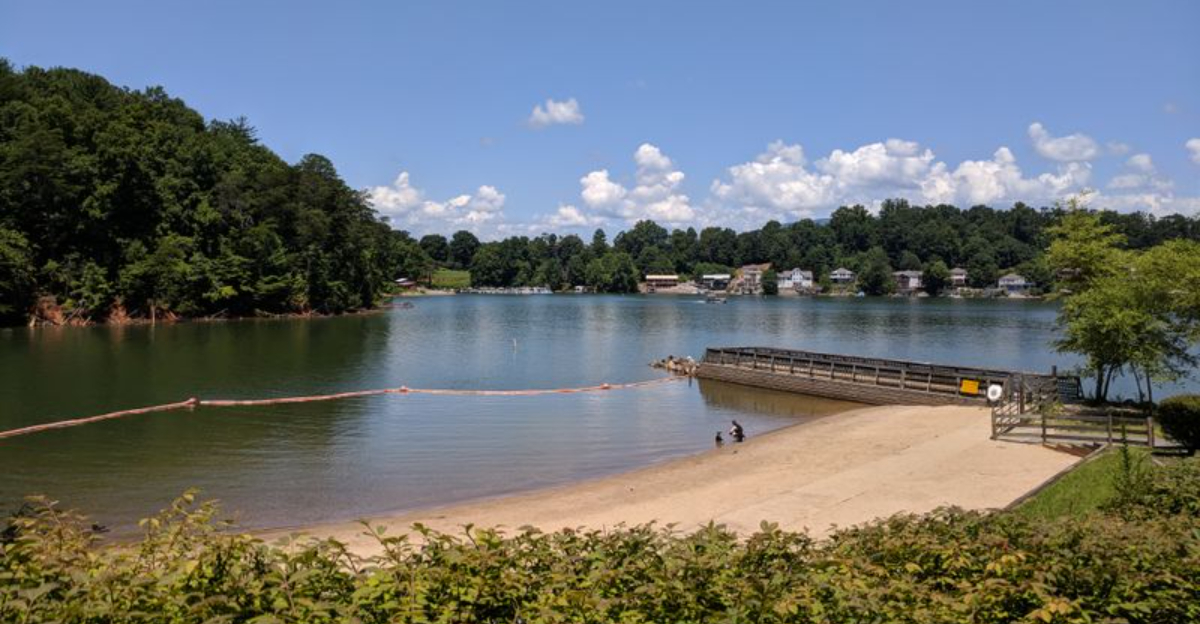
Mountains rise directly from the shoreline of Lake James, creating a dramatic backdrop that rivals more famous mountain lakes. Lake James State Park, at 2229 Lake James State Park Rd, Nebo, offers two separate access areas along this 6,812-acre reservoir, with the Paddy’s Creek Area providing the most developed facilities and the Catawba River Area offering a more rustic experience.
The lake formed when Duke Energy dammed the Catawba River in 1923, but nature has softened the edges over the decades.
Swimming beaches attract families during summer months when the water warms enough for comfortable dips. The sandy bottom slopes gently near the designated swimming area, while deeper sections farther out attract boaters and water skiers.
Kayak and paddleboard rentals make it easy to explore coves and inlets where fish hide among submerged trees.
Hiking trails climb into the surrounding mountains, offering views back over the lake that improve with elevation gain. The 1.5-mile Lake Channel Overlook Trail provides a relatively easy walk to a scenic vista, while more ambitious hikers can tackle the 2.2-mile Sandy Cliff Overlook Trail for even better panoramas.
Fall colors reflect in the calm water, creating double the visual impact.
Camping options include lakefront sites where the sound of lapping water provides a natural soundtrack for sleeping under the stars.
9. Carolina Beach State Park, Carolina Beach
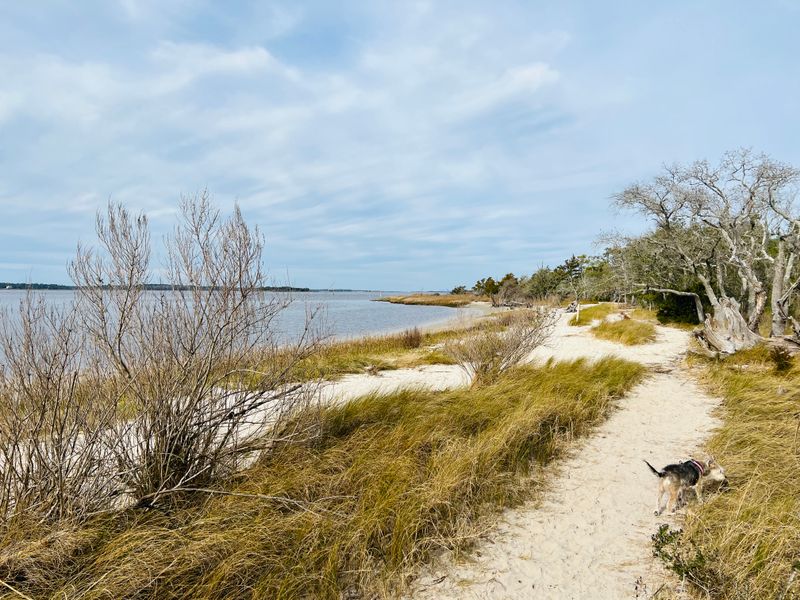
Carnivorous plants thrive in the nutrient-poor soil here, making this one of the few places on Earth where Venus flytraps grow naturally in the wild. Carolina Beach State Park, at 1010 State Park Rd, Carolina Beach, protects 761 acres of diverse coastal habitat where salt marsh, maritime forest, and pocosin wetlands create a patchwork of ecosystems within a small area.
The park sits between the Cape Fear River and the Atlantic Ocean, offering both river and ocean access within minutes.
Six miles of hiking trails explore different habitats, with the Flytrap Trail specifically designed to showcase the carnivorous plants that make this park botanically significant. Venus flytraps bloom white flowers in spring before developing their famous trap leaves, while pitcher plants and sundews add to the carnivorous plant collection.
Signs along the trail explain how these plants evolved to capture insects for nutrients lacking in the sandy soil.
A full-service marina provides boat access to the Cape Fear River and Intracoastal Waterway, popular with fishing enthusiasts targeting red drum, flounder, and speckled trout. The park also maintains a fishing pier extending into the water, offering shore-based fishing opportunities for those without boats.
Camping facilities include both drive-up sites and walk-in tent sites, with some spots offering water views that make waking up a pleasure rather than a chore.