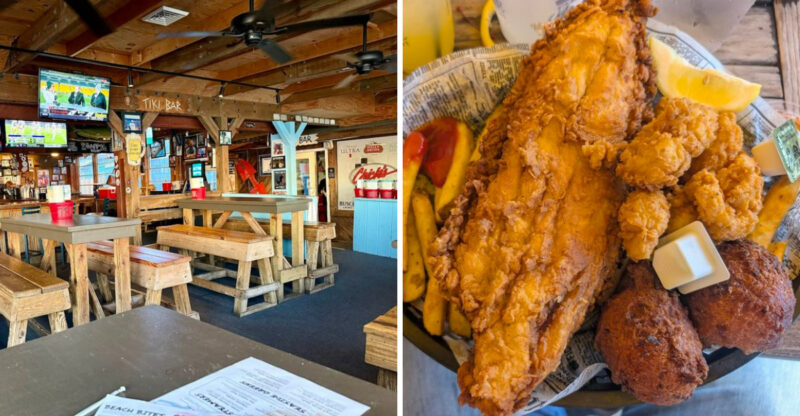
10 Virginia Campgrounds Where Your Tent Can Sit Right Beside The Water
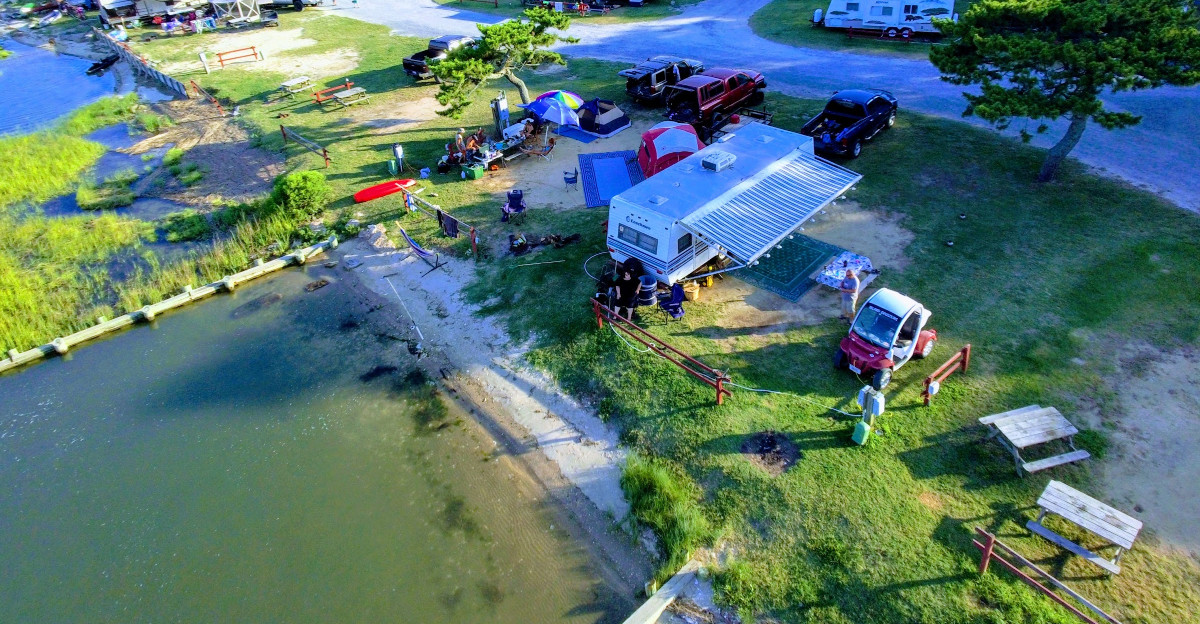
There is something wildly peaceful about opening a tent and seeing water before you see anything else.
Virginia has campgrounds where lakes, rivers, and coastal stretches become part of the morning instead of a distant day-trip stop.
The whole routine feels different when the shoreline is that close. Coffee lasts longer. Fishing starts earlier.
Even sitting around doing absolutely nothing feels like a valid plan.
Not every campsite sits directly on the edge, so the right site matters, but when everything lines up, the payoff is huge.
Water beside the tent has a way of making ordinary camping feel a little luxurious.
1. Douthat State Park, Millboro
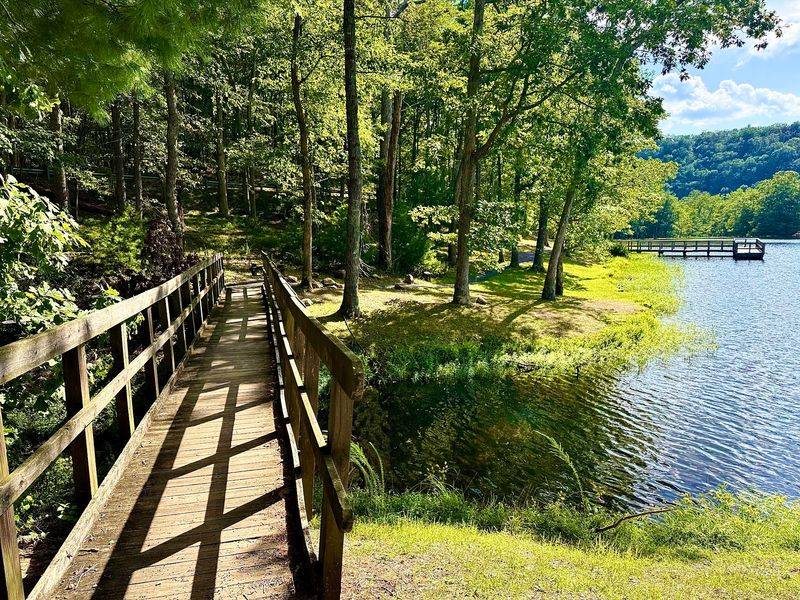
Morning plans can wait when a lake looks this peaceful.
Douthat State Park centers much of its recreation around a 50-acre mountain lake surrounded by the Allegheny landscape.
For campers who want the water directly outside, Lakeside Campground is the place to focus.
Some sites sit near or beside the shoreline, while others offer lake views from slightly farther back. Virginia State Parks specifically highlights Lakeside as one of its waterfront camping options.
Douthat Lake is stocked with rainbow, brown, and brook trout during its fee-fishing season. Largemouth bass, sunfish, black crappie, channel catfish, and chain pickerel also live in the lake, giving anglers several possibilities beyond trout.
The sandy swimming beach is open seasonally for unguarded swimming inside the designated roped area.
Boat rentals also operate seasonally, with rowboats, canoes, kayaks, paddleboats, hydrobikes, and paddleboards among the options offered during the main recreation season.
More than 40 miles of wooded trails spread through the park. Routes range from easier walks to much more demanding mountain terrain, so campers can decide how much of the day should belong to the trail and how much should remain beside the lake.
Douthat was one of Virginia’s original six state parks and was heavily developed by Civilian Conservation Corps crews beginning in the 1930s. The park entrance is at 14239 Douthat State Park Rd in Millboro.
2. Occoneechee State Park, Clarksville
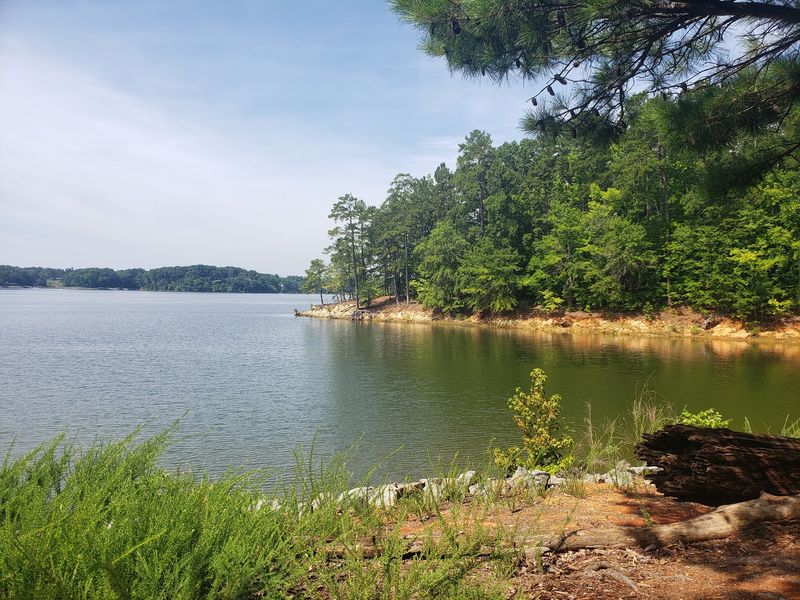
That view could keep a camper happily distracted for hours.
Occoneechee State Park spreads along Buggs Island Lake, also known as John H. Kerr Reservoir, a 48,000-acre body of water near Clarksville.
Atlatl Campground is the main target for campers chasing the water.
Select sites are officially designated as waterfront, while additional sites offer partial water views. Some include electric and water hookups, while others provide a simpler camping setup.
Fishing is one of the lake’s biggest draws. Largemouth, white, and striped bass share the reservoir with crappie, bluegill, perch, walleye, and several catfish species, including blue, flathead, and channel catfish.
Boating is normally a major part of the experience, with motorized and nonmotorized access plus rentals through a private concessionaire.
However, the current 2026 park alert says all boat ramps and the fuel dock are temporarily closed because of falling lake levels, so water access should be checked before arrival.
The park also has more than 20 miles of trails, and its visitor center interprets the history of the Occaneechi people who lived in the region.
Exhibits and current ranger programs add useful context to a landscape whose human history stretches far beyond the modern campground.
A seasonal splash park provides another warm-weather option and normally operates from May through Labor Day.
The park covers 2,698 acres at 1192 Occoneechee Park Rd in Clarksville. Choosing a specific waterfront site is the key detail if waking beside Buggs Island Lake is the main goal.
3. Bear Creek Lake State Park, Cumberland
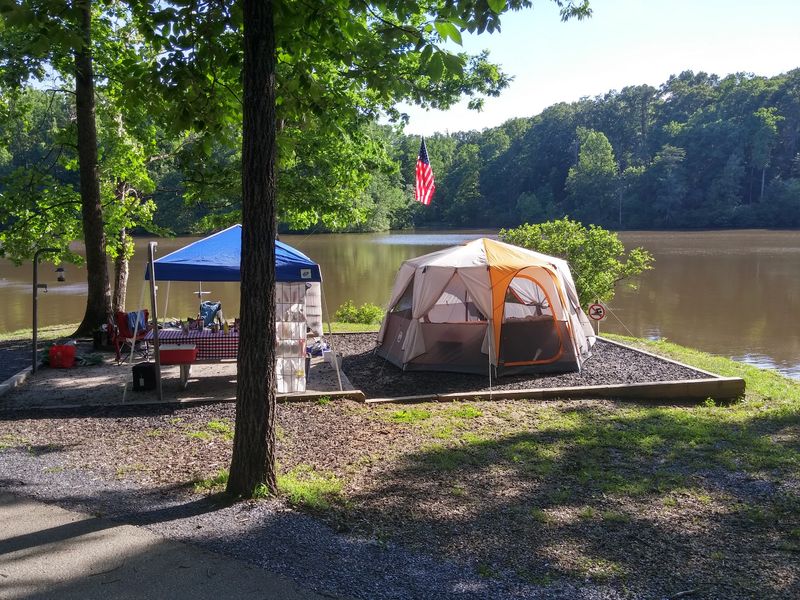
Who says a small lake cannot fill an entire weekend?
Bear Creek Lake State Park sits inside Cumberland State Forest, with much of the recreation focused on its 40-acre lake.
Acorn Loop is the only campground positioned beside the lake.
It currently contains 10 water-view tent sites, numbered 4 through 13, with 10-by-10-foot tent pads and no electric or water hookups. Other campground loops sit farther from the shoreline.
The lake supports largemouth bass, crappie, bream, and channel catfish. A universally accessible fishing pier and a launch for non-gasoline-powered boats make the water useful for both shore anglers and paddlers.
A sandy swimming beach provides seasonal access to the lake.
Park-operated boat rentals are finished for the 2026 season and are scheduled to return Memorial Day weekend in 2027, although self-service kayak rentals remain available through a separate kiosk.
Trails continue beyond the park into the adjoining 16,000-acre Cumberland State Forest. The 14-mile Cumberland Multi-use Trail is one of the longer possibilities, while shorter park routes make it easy to leave plenty of time for the campsite.
Bear Creek Lake itself was built in 1938 as a Virginia Department of Agriculture project. The park entrance is at 22 Bear Creek Lake Rd in Cumberland.
4. James River State Park, Gladstone
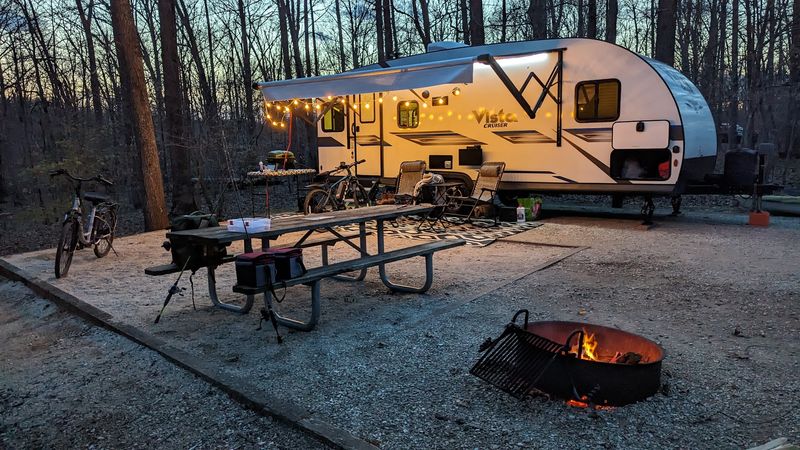
Here is a good reason to keep an evening free.
James River State Park combines three miles of river shoreline with an International Dark Sky Park designation, so the scenery can remain impressive long after daylight disappears.
Canoe Landing is the campground to reserve for direct river access.
It has 10 primitive tent sites beside the James, with water views and access to the canoe launch. The sites have no electricity, no drinking water, and no individual tent pads.
The James is well known here for smallmouth bass, while catfish, panfish, and occasional river gar also turn up. Three freshwater ponds provide additional fishing for campers who prefer quieter water away from the river current.
Paddling is another major draw, but the park is not currently operating a boat-rental livery.
Visitors bringing their own craft can use the car-top launch at Canoe Landing or the larger launch at Dixon Landing and should plan around changing river conditions.
About 22 miles of multi-use trails cross the park’s rolling forests and grasslands. Tye River Overlook is among the accessible park features, while Green Hill Pond Trail provides another gentler option near the water.
James River received International Dark Sky Park status in 2019. Staff also schedule astronomy programs throughout the year, making an evening without bright campsite lighting especially worthwhile.
The park is at 104 Green Hill Dr in Gladstone.
5. New River Trail State Park – Millrace Campground, Max Meadows
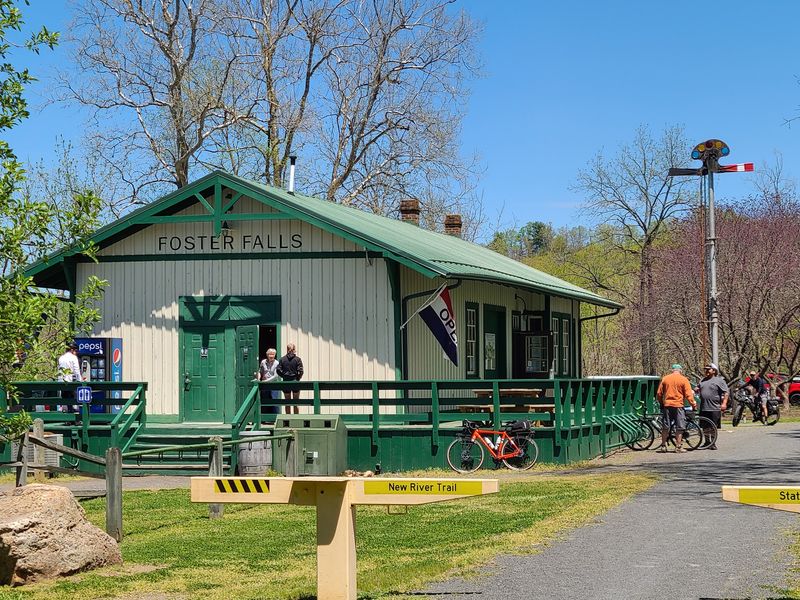
Listen closely, and the river may settle your plans for the day. Millrace Campground at New River Trail State Park places primitive tent camping just a short walk from parking and only steps from the New River.
The campground has 19 marked tent sites overlooking the river.
There is no vehicle access directly to the campsites, so gear has to be carried from the parking area, though the approach is much shorter than at the park’s more remote camping options.
Each site includes a fire ring, lantern post, and picnic table. Drinking water and a non-flush toilet are available, but there are no showers or bathhouses at Millrace. One site is designated as universally accessible.
The campground connects directly with the 57-mile New River Trail, a former railroad corridor that follows the river for 39 miles. Its gentle grade makes walking or bicycling one of the easiest ways to explore beyond camp.
Fishing can produce smallmouth bass, muskellunge, walleye, catfish, crappie, and several other freshwater species.
Seasonal canoe, kayak, and tube rentals are offered from Foster Falls, giving campers another way to use the river without bringing their own craft.
Foster Falls and the park’s main office use 116 Orphanage Dr in Max Meadows.
6. Hungry Mother State Park, Marion
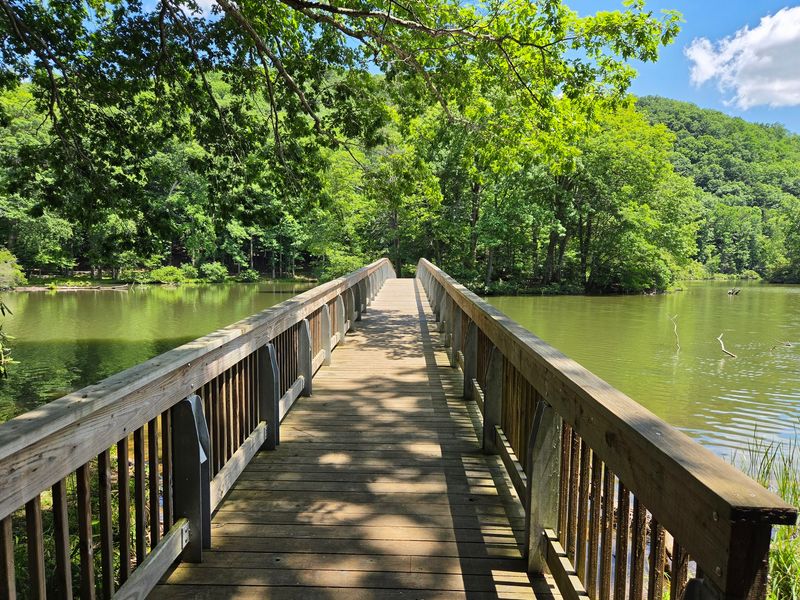
A beach day in the mountains sounds surprising, but here it makes sense.
Hungry Mother State Park surrounds a 108-acre mountain lake while also offering camping beside the smaller Hungry Mother Creek.
That distinction matters for this list. Creekside Campground, not the lake itself, provides the water-view camping experience.
Hungry Mother Creek runs through the campground, and the sites have electric and water hookups with paved camping surfaces.
The lake remains close enough to shape the rest of the stay. Its sandy beach offers designated seasonal swimming, while a universally accessible fishing pier and boat launch provide additional water access.
Boat rentals are seasonal. In late September 2026, rentals are operating on weekends through September 27, with canoes, kayaks, fishing kayaks, paddleboards, paddleboats, and hydrobikes among the usual options.
Availability can still depend on weather and staffing.
Fishing in the 108-acre lake includes largemouth and smallmouth bass, crappie, catfish, bluegill, walleye, muskellunge, and several other species. A valid Virginia fishing license is required.
More than 17 miles of trails cross the surrounding mountain landscape. Some remain gentle near developed areas, while routes toward higher ground add longer climbs and broader views.
Hungry Mother is one of Virginia’s original six state parks. The main park address is 2854 Park Blvd in Marion.
7. Caledon State Park, King George
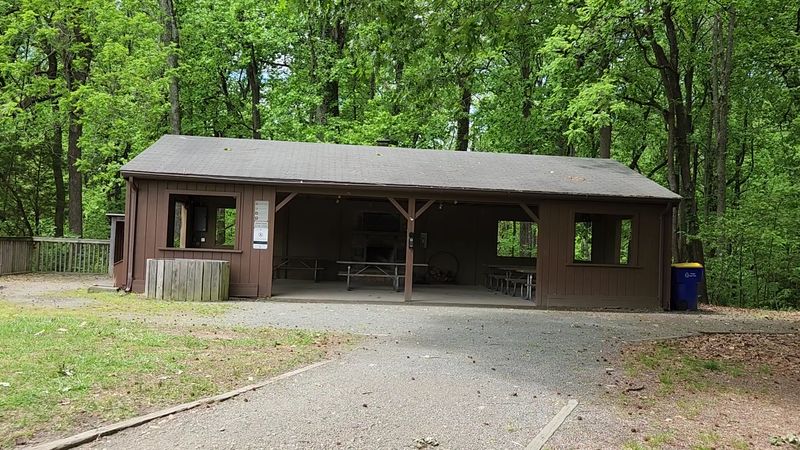
Ready to earn your river view one careful step at a time?
Caledon State Park offers six primitive campsites directly along the Potomac River, but none can be reached by car.
Campers must hike or bicycle about 3.5 miles from overnight parking or arrive by canoe, kayak, or another nonmotorized boat.
The campground is part of the Captain John Smith Chesapeake National Historic Trail.
The sites are tents-only and sit on framed, sand-filled pads. Each includes a fire ring, lantern post, and picnic table, with a maximum of six people per site.
There is no potable water at the campground, so all drinking and cooking water must be carried in. A portable toilet is available, but there are no showers or electrical hookups.
Caledon is also a National Natural Landmark known for old-growth forest and its population of American bald eagles.
River conditions should be checked carefully by anyone paddling in. The park itself has no boat launch, although canoes and kayaks may land in the Jones Pond area beside the campground.
The park entrance is at 11617 Caledon Rd in King George.
8. False Cape State Park, Virginia Beach
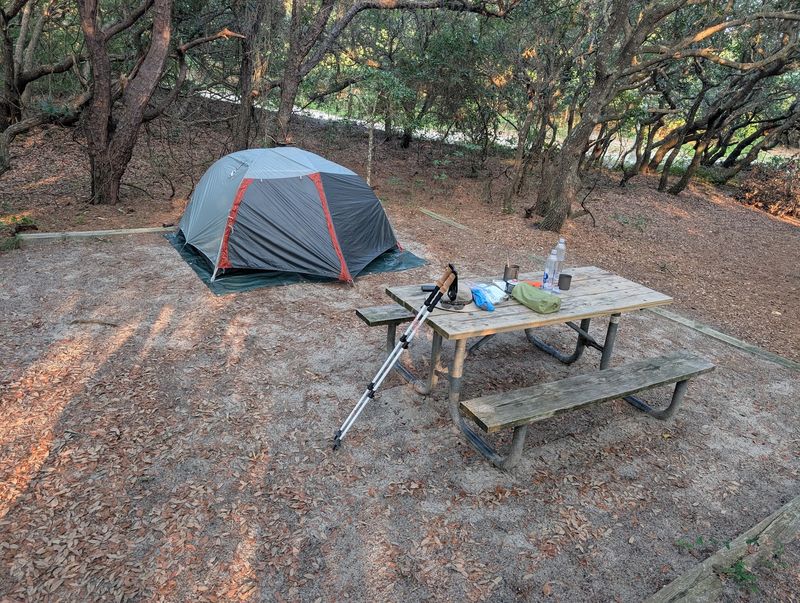
How far would you travel for a quieter beach morning?
False Cape State Park is one of Virginia’s most demanding camping trips, with primitive tent sites between Back Bay and nearly six miles of undeveloped Atlantic shoreline.
Four separate camping areas are available: Barbour Hill Bay, Barbour Hill Ocean, False Cape Landing Bay, and False Cape Landing Ocean.
Choosing an ocean-side area can put the tent remarkably close to the beach, while bay-side sites provide a different waterside setting.
There is no public vehicle access. Overnight campers park at Little Island City Park and then hike or bicycle through Back Bay National Wildlife Refuge.
The distance from parking is about 6.9 miles to the Barbour Hill sites and as much as 8.4 miles to the False Cape Landing ocean sites.
Camping is primitive and tents-only. Open fires are prohibited, so cooking requires a camp stove. Pit toilets are provided, and electricity is unavailable throughout the campgrounds.
Potable water is available in the Barbour Hill area, while False Cape Landing campers need containers to transport drinking water because the local source there is suitable for washing but not drinking.
Access also changes seasonally. Interior refuge trails close from November 1 through March 31, leaving beach or boat access as the land-based alternatives, and tides can affect travel on the sand.
The official park address is 4001 Sandpiper Rd in Virginia Beach, but overnight campers should follow the separate Little Island City Park parking instructions rather than expecting to drive to the campground.
9. Rappahannock River Campground, Richardsville
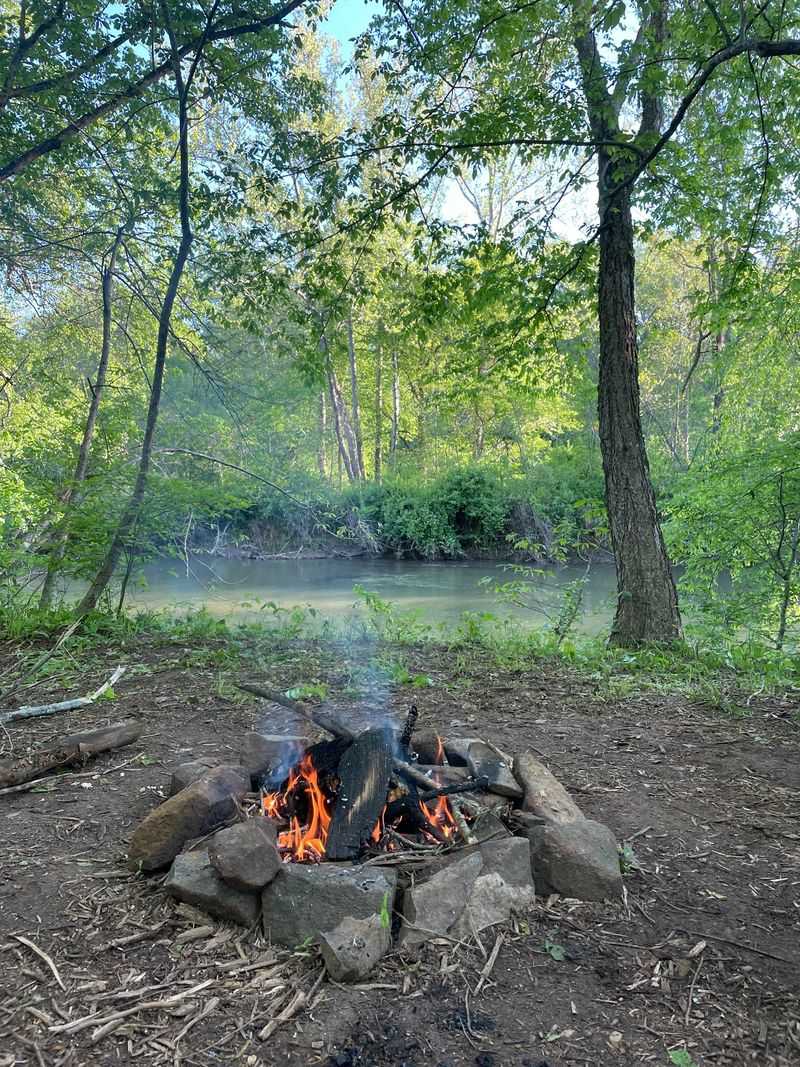
Here is an easy camping plan: unpack, sit down, and listen.
Rappahannock River Campground is a private primitive tent campground with several sites directly beside Virginia’s State Scenic Rappahannock River.
Not every site has the same relationship to the water.
Sites 37 through 52 are among those closest to the river, while sites 40, 41, and 46 through 50 are described by the campground as being right on the river.
Each campsite includes a picnic table and fire ring. There is no electricity at the tent sites, but potable water is available from nearby spigots, pit privies are provided, and hot showers are located a short distance away.
The campground has its own boat ramp and rents canoes and kayaks. Shuttle options support longer downstream trips from Kelly’s Ford or Eagle’s Nest back to camp, making a river outing easy to combine with an overnight stay.
Fishing is available both in the Rappahannock and in a pond on the property. Campers bringing their own watercraft can also use the onsite access rather than transporting boats to a separate public launch.
River conditions still deserve attention after heavy rain, and waterfront campers should keep all equipment inside their assigned site rather than moving closer to the bank.
The campground is at 33017 River Mill Rd in Richardsville.
10. Tom’s Cove Park, Chincoteague
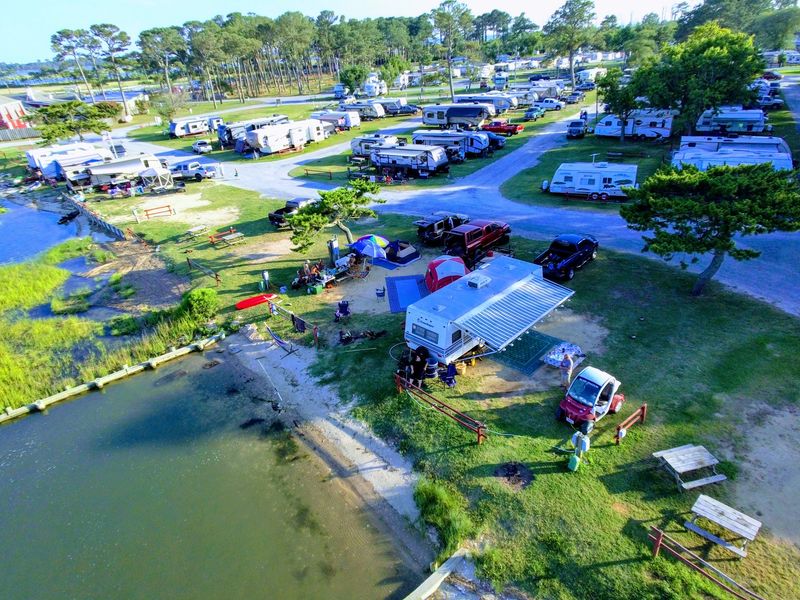
One last tent view trades mountain trees for salty air.
Tom’s Cove Park sits on Chincoteague Island with open water, fishing access, and views toward the protected landscapes around Chincoteague and Assateague.
Current booking information still accommodates tent campers, although the campground’s own 2026 website now places much stronger emphasis on RV camping.
Waterfront sites are limited, so tent campers should confirm the exact site type and placement before reserving rather than assuming every no-hookup site sits on the water.
Water access is one of the campground’s defining features. Multiple fishing piers, a marina, and a boat ramp give campers several ways to spend time along the cove without leaving the property.
Fishing and crabbing are both promoted by the campground, while nearby waterways provide additional boating opportunities. Wind and changing coastal conditions should be considered before heading onto open water in a small craft.
The campground also has a swimming pool, recreation hall, playground, and camp store, giving families alternatives when they want a break from fishing or exploring the island.
Chincoteague National Wildlife Refuge and Assateague’s protected coastal habitat are nearby, but the famous wild ponies should be treated as wildlife of the surrounding island landscape rather than animals that wander through individual campsites.
Tom’s Cove is seasonal, currently operating from March 1 through November 30. The address is 8128 Beebe Rd in Chincoteague.