9 Virginia Places That Reveal The Indigenous History That Came Long Before Jamestown
Virginia history gets much bigger once 1607 stops being the starting line.
Long before Jamestown, Native nations built communities, farmed, fished, traded, and shaped the land in ways that still matter today.
That deeper story survives across this state in tribal cultural centers, museums, reconstructed spaces, and archaeological sites.
Traditional crafts bring that history close, while artifacts made thousands of years ago stretch the timeline further back.
You start noticing how much of the Virginia story sits on top of something far older.
After a few stops, the question changes from “what happened here?” to “whose history have I been missing?”
1. Machicomoco State Park, Hayes
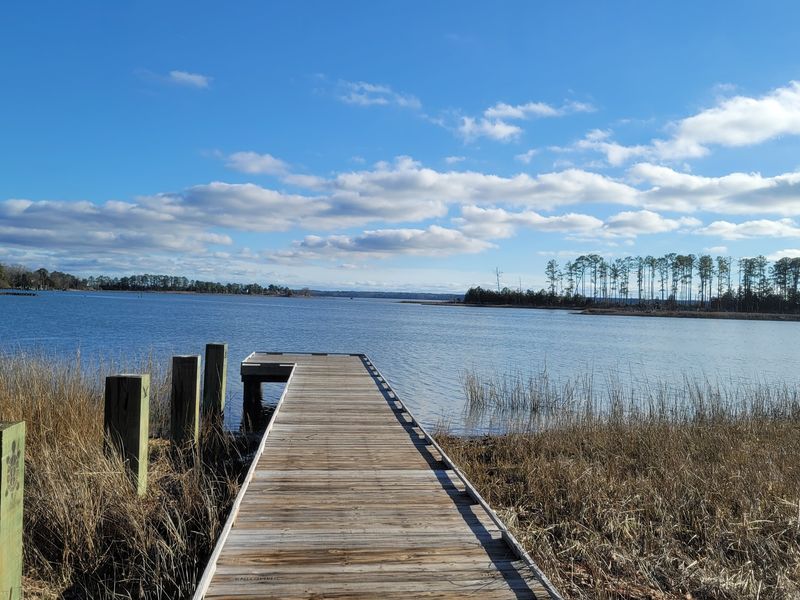
It makes you wonder, doesn’t it, who should tell a people’s story? Here the answer is simple and powerful.
The Monacan Ancestral Museum stands at the center of a living tribal community near Bear Mountain in Amherst County.
Tribal volunteers operate the museum, and the exhibits focus on milestones, material culture, and traditions presented from a Monacan perspective.
The Nation traces its presence in this region back more than 10,000 years. Its ancestral territory extended across much of the land west of the fall line, and the federally recognized tribe now has more than 3,200 citizens.
Inside, cases hold pottery fragments, pipes, beads, game pieces, tools, fishing items, and other objects connected to everyday life.
Information panels place those materials within a much longer timeline instead of treating Indigenous history as a closed chapter.
The surrounding campus matters too. A log building erected in the late 1870s served first as a church and later as a school for the community.
In 1995, the Episcopal Diocese returned 7.5 acres at Bear Mountain to the Nation, strengthening tribal control of this historic place.
Visitors can browse independently, while larger groups arrange tours ahead of time. The museum is generally open Thursday through Saturday, with a monthly tribal meeting affecting one Saturday each month.
The address is 2009 Kenmore Rd, Amherst. Western Virginia history feels much deeper after time here.
2. Monacan Ancestral Museum, Amherst
It makes you wonder, doesn’t it, who should tell a people’s story? Here the answer is simple and powerful.
The Monacan Ancestral Museum stands at the center of a living tribal community near Bear Mountain in Amherst County.
Tribal volunteers operate the museum, and the exhibits focus on milestones, material culture, and traditions presented from a Monacan perspective.
The Nation traces its presence in this region back more than 10,000 years. Its ancestral territory extended across much of the land west of the fall line, and the federally recognized tribe now has more than 3,200 citizens.
Inside, cases hold pottery fragments, pipes, beads, game pieces, tools, fishing items, and other objects connected to everyday life.
Information panels place those materials within a much longer timeline instead of treating Indigenous history as a closed chapter.
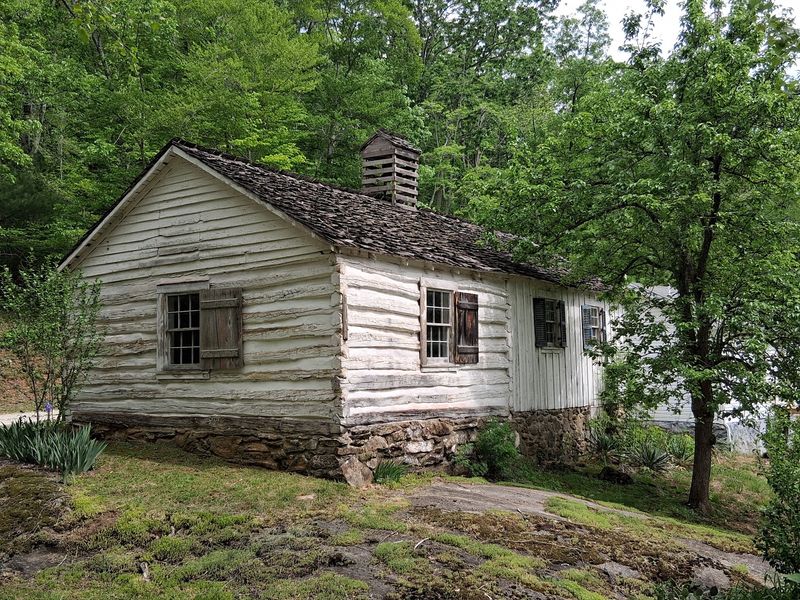
The surrounding campus matters too. A log building erected in the late 1870s served first as a church and later as a school for the community.
In 1995, the Episcopal Diocese returned 7.5 acres at Bear Mountain to the Nation, strengthening tribal control of this historic place.
Visitors can browse independently, while larger groups arrange tours ahead of time. The museum is generally open Thursday through Saturday, with a monthly tribal meeting affecting one Saturday each month.
The address is 2009 Kenmore Rd, Amherst. Western Virginia history feels much deeper after time here.
3. Patawomeck Museum And Cultural Center, Fredericksburg
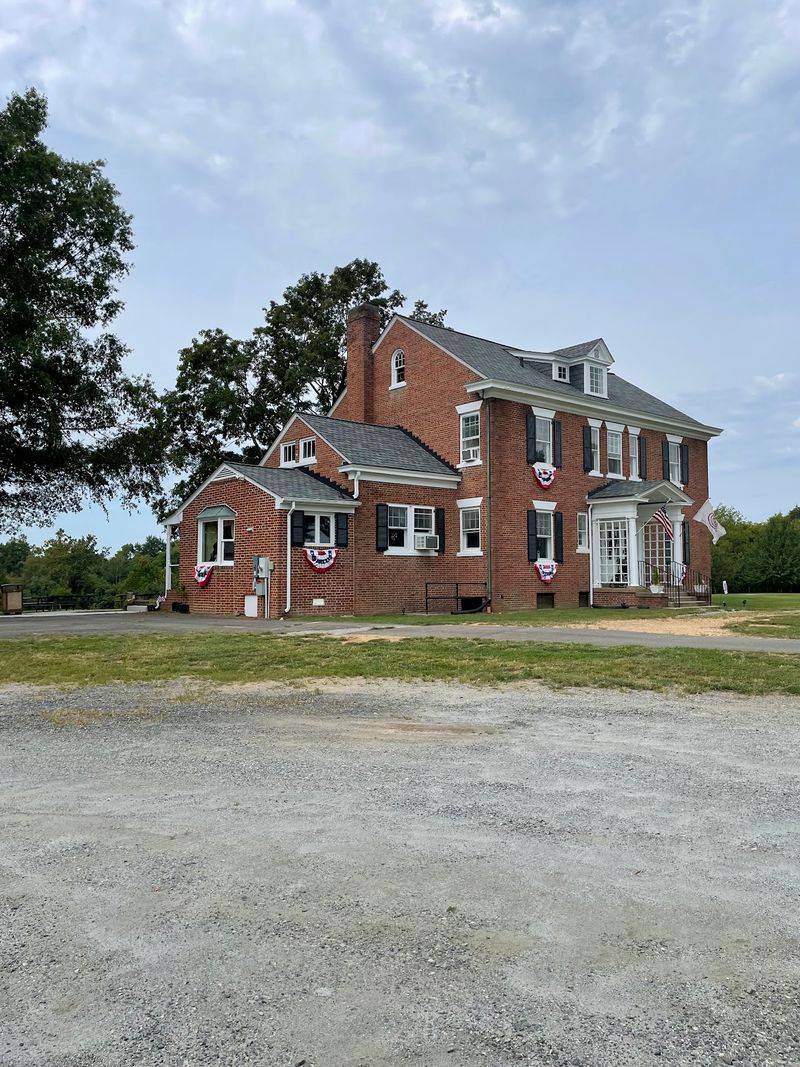
Just imagine for a second a village rebuilt exactly where its posts once stood. Archaeologists made that idea remarkably close to reality.
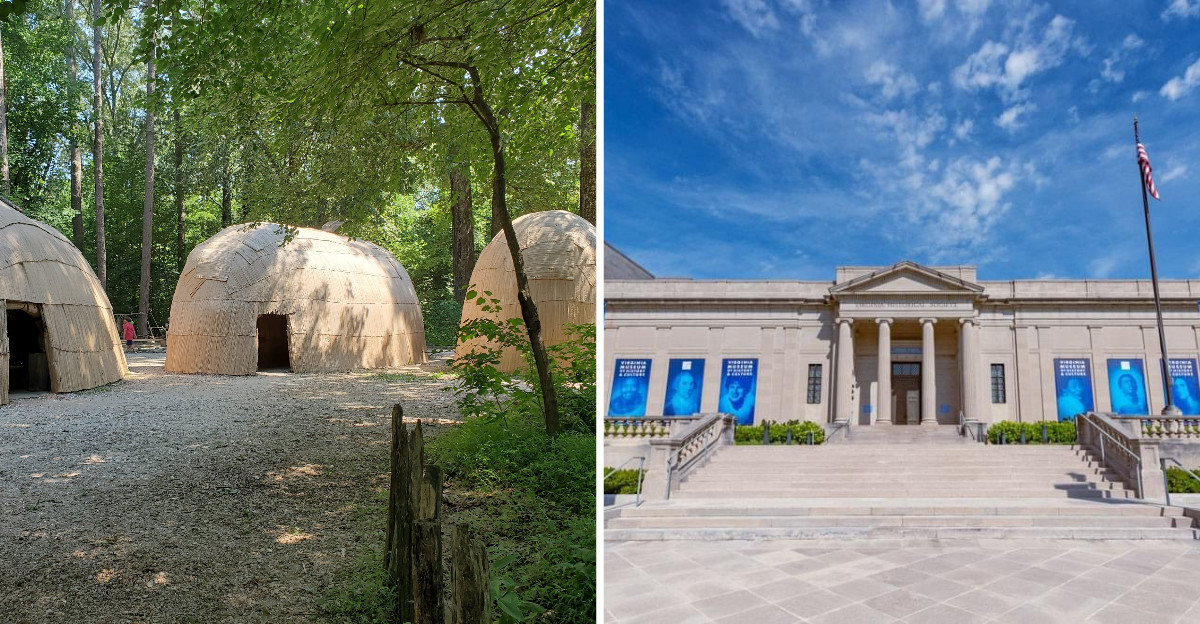
Wolf Creek Indian Village & Museum in Bastian is based on the Brown-Johnston archaeological site uncovered during highway work in 1970.
Excavation mapped structural posts and other features before the modern re-creation opened to the public in 1996.
Dating places the original settlement roughly between 1480 and 1520. Using the excavation map, the village was reconstructed pole for pole and feature for feature to show what the community may have looked like around five centuries ago.
Guided tours move through homes and activity areas while explaining Eastern Woodland family life, food preparation, pottery, basket making, stone tools, and hide processing. Self-guided visits are available for anyone who prefers a slower pace.
That distinction matters because the site does not pretend every detail is known. Archaeology supplies the footprint, while interpretation explains what evidence can reveal about the people who lived here.
An indoor museum adds artifacts and changing educational displays focused on the region’s first peoples. The combination makes it possible to compare excavated evidence with a full-scale setting outside.
The village is open Monday through Saturday, with tours generally offered during daytime hours.
Find it at 6394 N Scenic Hwy, Bastian. The reconstructed landscape gives archaeology a scale that a display case alone cannot provide.
4. Wolf Creek Indian Village & Museum, Bastian
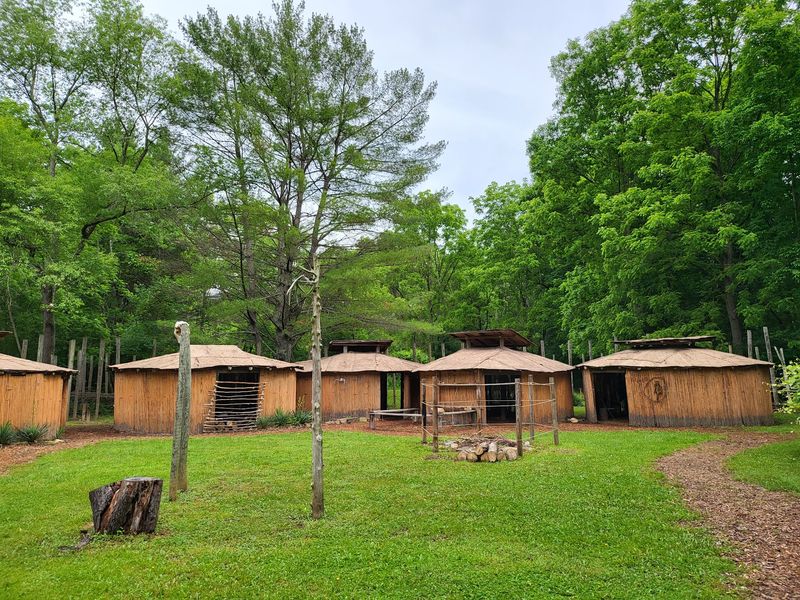
Just imagine for a second a village rebuilt exactly where its posts once stood. Archaeologists made that idea remarkably close to reality.
Wolf Creek Indian Village & Museum in Bastian is based on the Brown-Johnston archaeological site uncovered during highway work in 1970.
Excavation mapped structural posts and other features before the modern re-creation opened to the public in 1996.
Dating places the original settlement roughly between 1480 and 1520. Using the excavation map, the village was reconstructed pole for pole and feature for feature to show what the community may have looked like around five centuries ago.
Guided tours move through homes and activity areas while explaining Eastern Woodland family life, food preparation, pottery, basket making, stone tools, and hide processing. Self-guided visits are available for anyone who prefers a slower pace.
That distinction matters because the site does not pretend every detail is known. Archaeology supplies the footprint, while interpretation explains what evidence can reveal about the people who lived here.
An indoor museum adds artifacts and changing educational displays focused on the region’s first peoples. The combination makes it possible to compare excavated evidence with a full-scale setting outside.
The village is open Monday through Saturday, with tours generally offered during daytime hours.
Find it at 6394 N Scenic Hwy, Bastian. The reconstructed landscape gives archaeology a scale that a display case alone cannot provide.
5. Nottoway Indian Tribe Community House & Interpretive Center, Capron
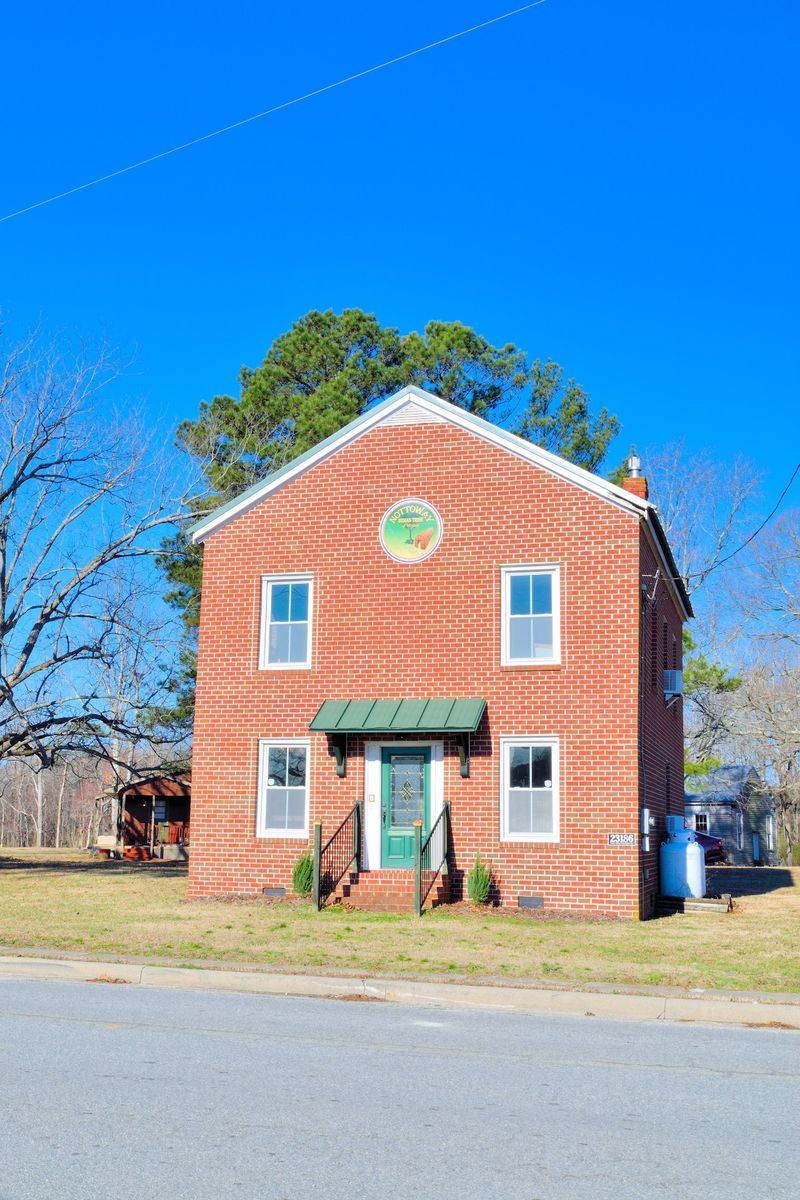
Here’s a thought: some of the best museums are built by families, not big budgets. This one proves that point nicely.
The Nottoway Indian Tribe Community House & Interpretive Center in Capron is operated and funded by Nottoway family citizens.
Opened in 2012, it serves as both a cultural gathering place and a public space for learning about a community whose history continues along the Nottoway River.
The permanent exhibition is called From Barter, To Buffer, To Be. Its three-part structure follows the tribe from early exchange networks through changing relationships with colonial government and into modern tribal identity.
Nottoway people are Iroquoian speakers with deep roots in southeastern Virginia. The tribe received state recognition in 2010, but the exhibition makes clear that recognition did not begin the community’s history.
Programming expands the story beyond display panels. Storytelling, visual arts, performing arts, beading, quilting, flute-making classes, and community discussion sessions appear on the calendar at different times.
The center is staffed by volunteers, so public access follows a limited schedule. Regular open days currently fall on the first Saturday of each month from May through December, with visits also possible by appointment.
That makes planning ahead useful for anyone driving a longer distance.
The center stands at 23186 Main St, Capron. Its strongest feature is simple: the community telling the story is the same community carrying it forward.
6. Werowocomoco Exhibit At Gloucester Visitor Center, Gloucester
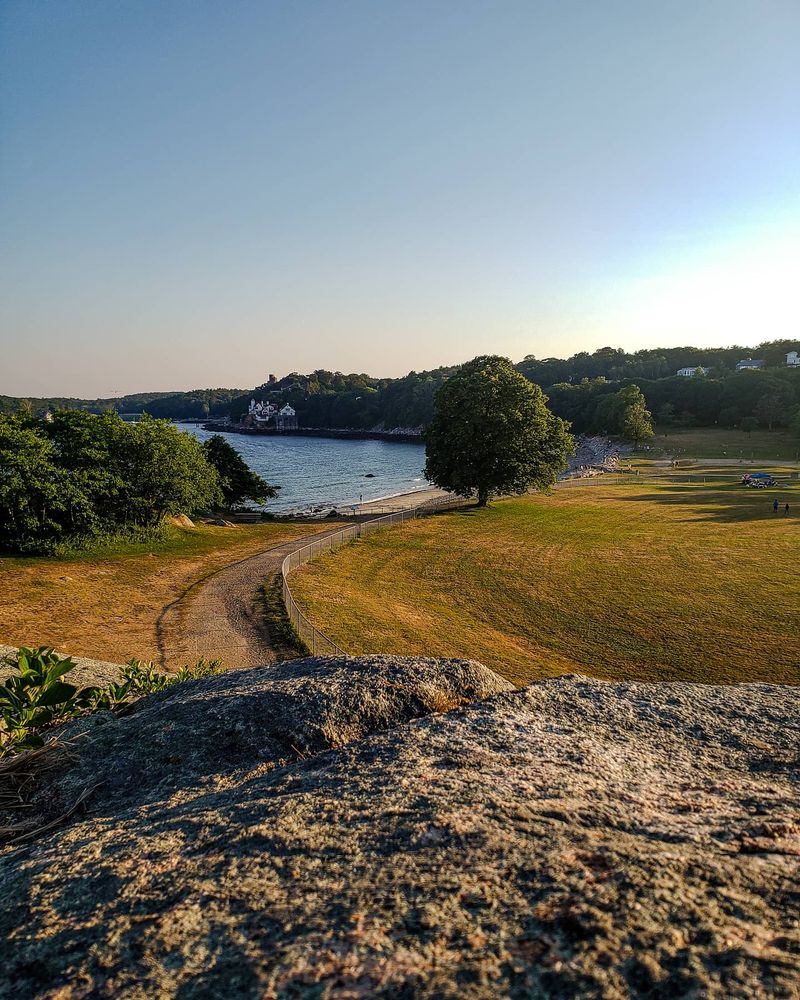
It’s a bit of a stretch, don’t you think, to picture a royal capital hidden by quiet farmland? Yet one stood right here.
Werowocomoco was a major spiritual and political center on the York River and the headquarters of the paramount chief known as Powhatan when English colonists arrived nearby in the early 1600s.
Archaeology shows that the place held significance for Indigenous communities long before that period.
The archaeological site itself is managed by the National Park Service and remains closed to general public access. The Gloucester Visitor Center provides the practical alternative, with a permanent exhibit devoted to Werowocomoco.
Inside, a short film introduces the site and explains why its location mattered. An interactive timeline connects the story with tribal history across the region, while digital displays let you rotate artifact images in three dimensions.
Maps, artwork, and landscape imagery place Werowocomoco within the wider Powhatan chiefdom.
That context matters because this was not an isolated settlement. River travel connected communities, resources, and political centers across the coastal plain.
The display is compact enough to explore without rushing, yet detailed enough to make the inaccessible archaeological site easier to understand.
The Visitor Center currently opens daily with shorter hours on Sunday and Monday.
Find it at 6504 Main St, Gloucester. Until direct access to Werowocomoco becomes available, this is the clearest public introduction to the site.
7. Virginia Museum Of Natural History, Martinsville
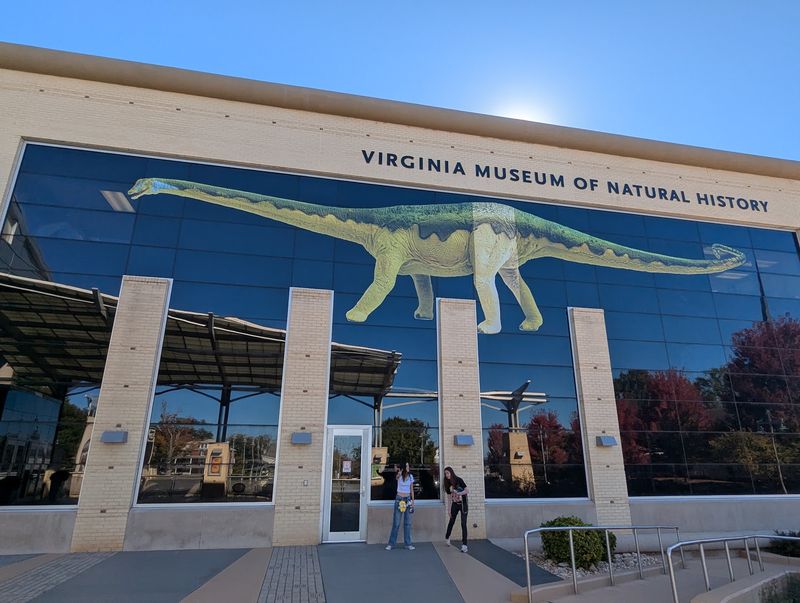
Call me crazy, but one building holding millions of scientific specimens sounds like a dream for curious kids. The archaeology collection gives that scientific mission a human timeline too.
The Virginia Museum of Natural History in Martinsville is the state’s natural history museum and a Smithsonian Affiliate.
Its research departments include archaeology alongside geology, paleontology, mammalogy, herpetology, and invertebrate science.
Archaeological collections contain Native American material from across the eastern United States, along with prehistoric evidence from Saltville.
Researchers study pottery, stone tools, food remains, settlement evidence, and environmental data to understand how communities adapted to different landscapes.
The permanent Uncovering Virginia gallery makes that work easier to follow. Six research sites are recreated through displays pairing field locations with lab-style activities, allowing visitors to examine evidence in ways similar to museum scientists.
One section focuses on a site near the Roanoke River that preserves Native occupation before and after European contact. Changes in pottery and trade materials reveal shifting connections, while some practical tools remained consistent.
The museum also keeps archaeology visible as an active science. Windows into research spaces can offer a look at work beyond the exhibition floor.
Natural history fills the rest of the building, including fossils, geology, and a massive intact stromatolite discovered in the state.
Find the museum at 21 Starling Ave, Martinsville. Human history fits naturally inside the larger environmental story.
8. Jamestown Settlement, Williamsburg
Let’s be real for a second about one famous name. A list about life before 1607 still needs this stop.
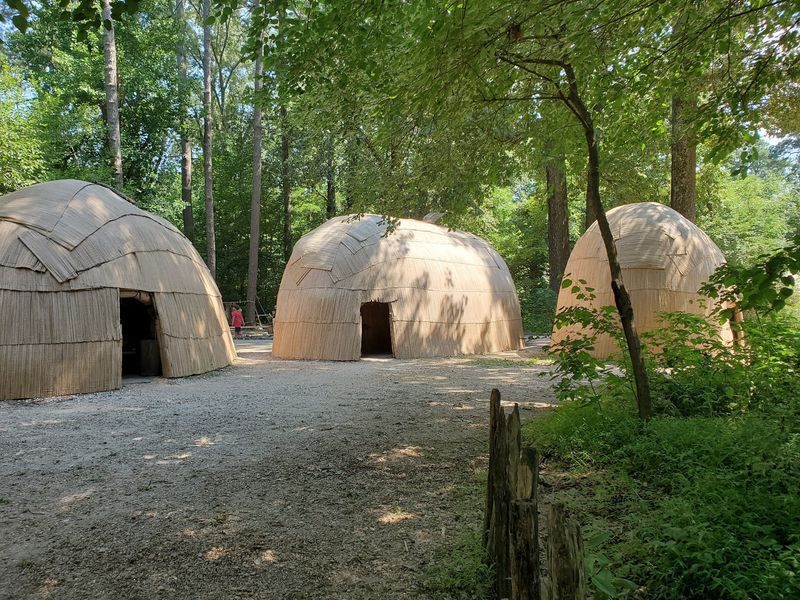
Jamestown Settlement near Williamsburg interprets the convergence of Indigenous, English, and West Central African cultures in the seventeenth century, but its outdoor Paspahegh Town pushes the Indigenous timeline much farther back.
The Paspahegh were one of more than 30 Algonquian-speaking tribal groups within the Powhatan paramount chiefdom.
Their communities occupied the James River region long before the English settlement appeared nearby.
The recreated town is based on archaeological evidence from a nearby Paspahegh site, oral traditions from recognized tribes, and seventeenth-century descriptions.
Reed-covered houses stand among food-growing areas, work spaces, and a ceremonial circle.
Those homes, called yehakins, use bent saplings for their frames and mats or bark as covering.
Inside and around them, interpreters demonstrate food preparation, pottery, weaving, canoe making, fishing methods, and other skills tied to everyday life.
This is more useful than treating Indigenous culture as a brief preface to the colonial galleries. The town shows a functioning community shaped by waterways, agriculture, family networks, and regional trade.
Indoor exhibits add artifacts and broader cultural context before or after the outdoor area. Together, the two settings make the pre-1607 story difficult to overlook.
The museum stands at 2110 Jamestown Rd, Williamsburg. Start with Paspahegh Town if the goal is understanding what was already here before Jamestown.
9. Virginia Museum Of History & Culture, Richmond
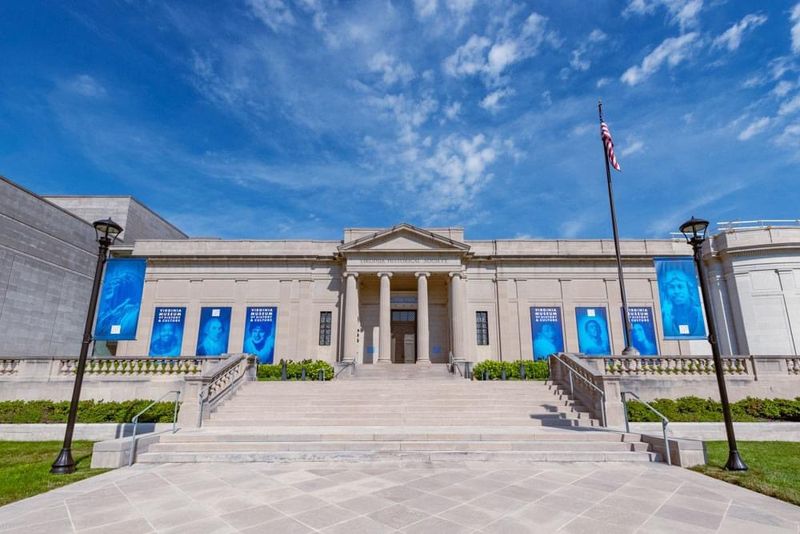
If we’re being completely transparent, the big picture belongs at the end. This museum ties the whole journey together.
The Virginia Museum of History & Culture in Richmond begins its state narrative long before English settlement.
Its signature Story of Virginia exhibition stretches across roughly 16,000 years, placing Indigenous communities at the opening of the timeline.
Early sections follow changing lifeways as communities adapted to climate, forests, rivers, agriculture, and new technologies.
Stone tools, pottery traditions, foodways, and settlement patterns show how societies became increasingly complex across generations.
By the Late Woodland period, towns and chiefdoms had become central parts of the landscape.
Werowocomoco emerged as an important center within the Powhatan world, linking the museum’s chronology with one of the state’s significant archaeological places.
The museum also examines how historic images of Indigenous people were created and reused. Some European illustrations were based on direct observation, while others mixed accurate details with invention.
A strong visit here is less about finding one dramatic object and more about connecting patterns. Agriculture, waterways, political organization, material culture, and modern tribal continuity begin to fit together.
Allow enough time for the permanent galleries rather than treating them as a quick final stop.
Find the museum at 428 N Arthur Ashe Blvd, Richmond. Virginia’s Indigenous history is not a prologue here. It is part of the main story from the first gallery onward.