Visit This Oregon Chocolate Factory And You’ll Feel Like Charlie With A Golden Ticket
Chocolate rarely needs extra help to sound tempting, but making your own bar certainly strengthens the argument.
This Oregon experience adds tastings, cacao education, production details, and a hands-on finish that makes the visit feel more interactive than a typical shop stop.
I love that the fun does not depend only on eating samples.
You can learn what changes flavor, choose toppings, and leave with something you helped create. That is a much better souvenir than another boxed treat.
The whole idea sounds playful without becoming childish, which makes it easy to picture both kids and adults getting fully invested.
The Bright Little Chocolate Lab
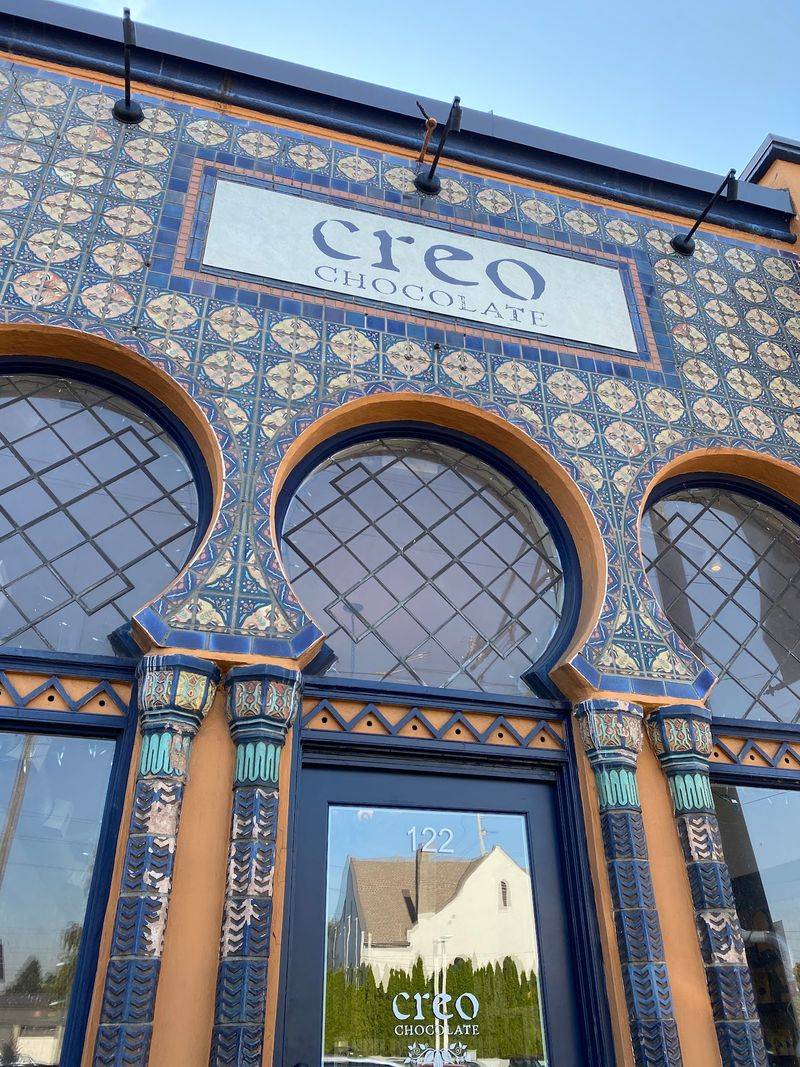
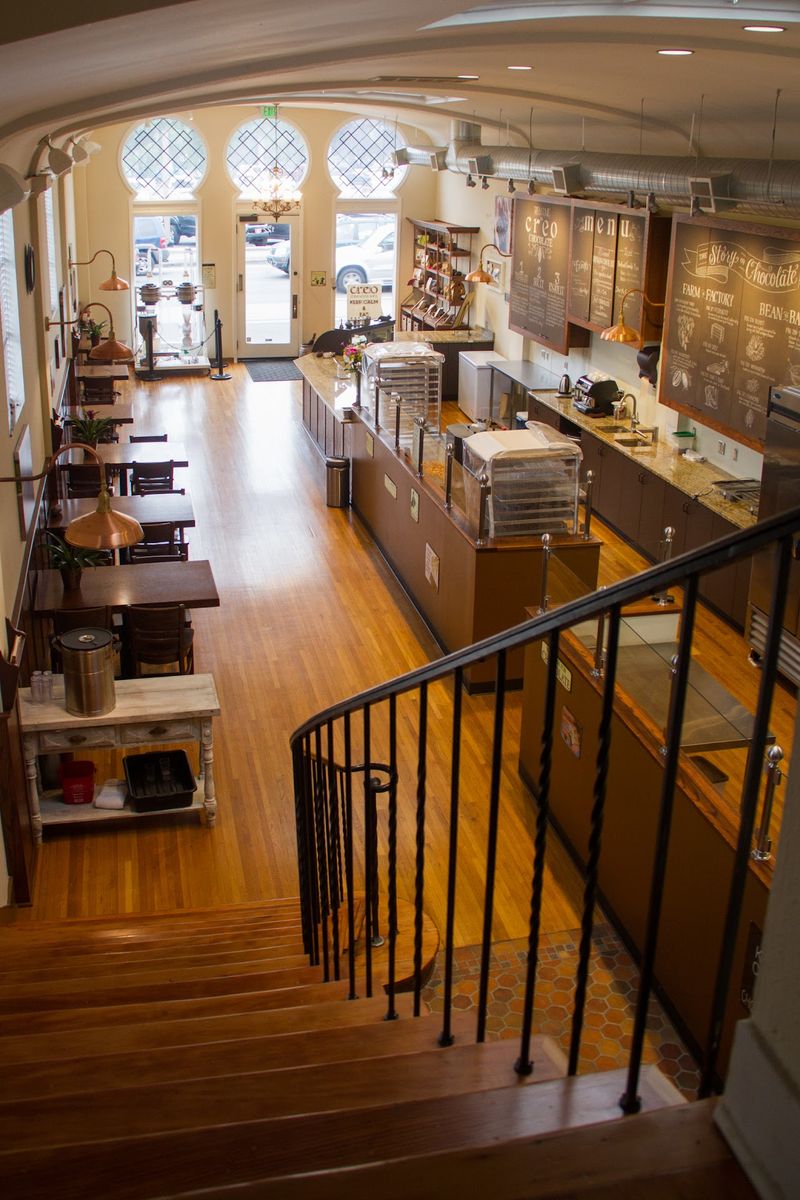
My first impression was light, so much of it pouring through those tall arched windows
The building went up in 1924 as a tile company showroom, and some of that original tilework still decorates the front.
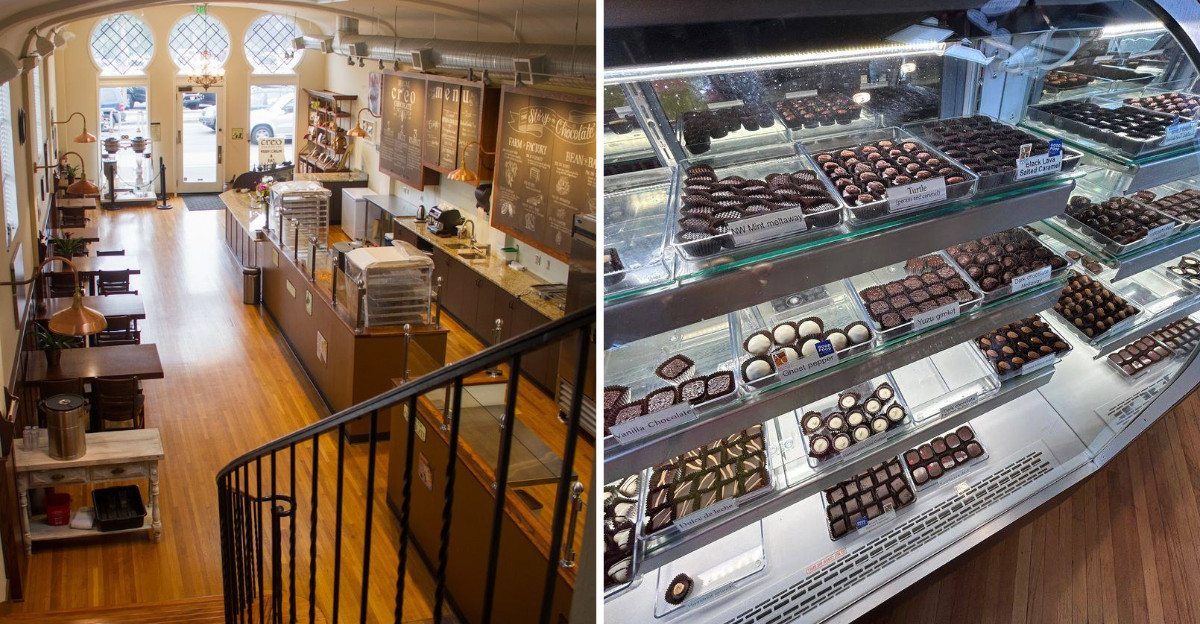
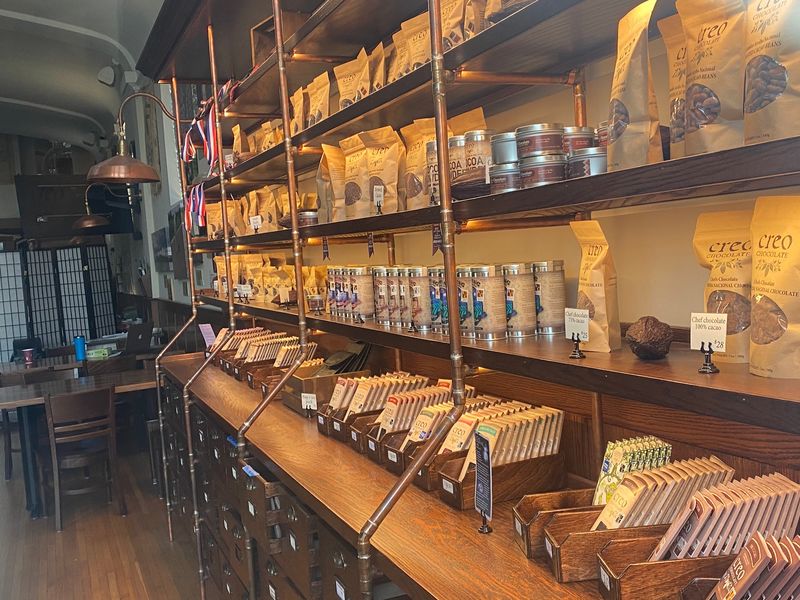
The working Chocolate Lab combines production space, the Build-a-Bar classroom, and a retail chocolate shop.
During the Build-a-Bar class, chocolate makers explain the complete bean-to-chocolate process inside the working lab.
The staff move around with an easy rhythm, chatting between tasks without any stiff formality. I noticed a small jar of dollar bills near a wall display, part of their giving tradition.
The renovated lab and tasting space opened here in September 2025, moving production into a building a few miles from Creo’s earlier shops.
Aromas hit you before anything else does, deep and toasty and impossible to ignore. The Chocolate Lab is at 100 NE Farragut in Portland, with ample parking behind the building and accessible parking near the entrance.
Raspberries Turned Into Cacao Dreams
Before cacao, there were berries. Before chocolate, the family spent 17 years growing strawberries and raspberries on a 45-acre farm in Washington.
Around 2010, the family began experimenting with cacao at home, first roasting beans in an oven and crushing them with a rolling pin. That is about as humble as a beginning gets.
Friends and relatives became unofficial taste testers, which sounds like a pretty great job to me. After several years of experimenting, the family sold its farm in 2014 and turned the chocolate hobby into a Portland business.
So the farm was sold and the family leaned fully into cocoa. Creo Chocolate opened in 2014, with a name connected to the ideas of believing in Spanish and creating in Latin.
Both meanings fit a family that bet everything on a hobby. The company’s farming background continues to influence its emphasis on direct relationships with cacao growers.
The shift from berry farming to chocolate making links the company’s agricultural background with its current bean-to-bar work.
Beans That Travel From Ecuador
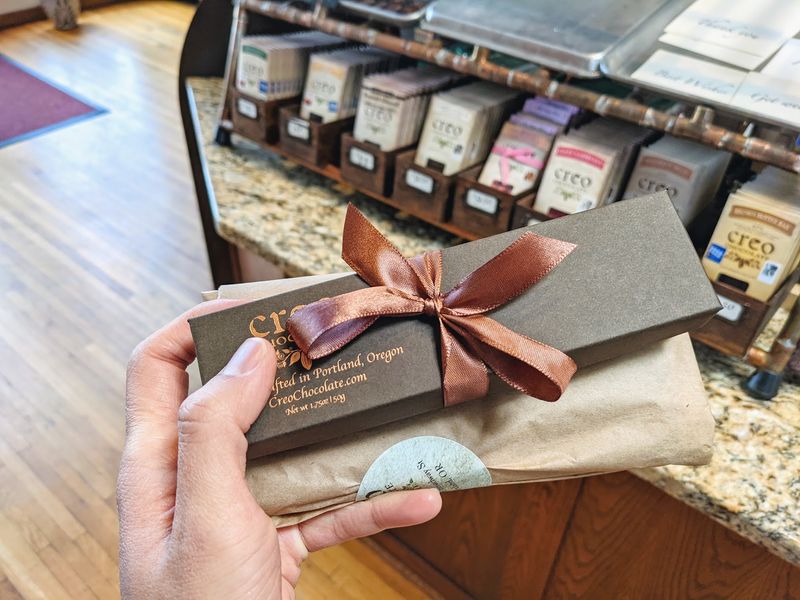
Creo uses single-origin Nacional Arriba cacao sourced directly from a family farm in Ecuador.
Single origin sourcing is not just marketing talk here. Creo buys cacao directly from its partner farm in Ecuador, maintaining a direct relationship with the grower.
Creo describes its Nacional Arriba cacao as a rare heirloom variety chosen for its distinctive flavor profile.
After the cacao arrives in Portland, Creo roasts the beans before cracking and winnowing them to separate the husks from the nibs.Cacao nibs are pieces of the roasted bean left after cracking and winnowing.
Roasting wakes up the flavor, filling the room with that unmistakable earthy perfume. Then comes cracking and winnowing, which separates the papery husk from the nibs hiding inside.
The nibs are refined for many hours, sometimes for as long as three consecutive days, until they become a smooth chocolate liquor.
Learning where food comes from usually makes it taste better, and cacao proves that rule perfectly. One farm, one family, countless delicious outcomes across Oregon.
Slow Craft Behind Every Bar
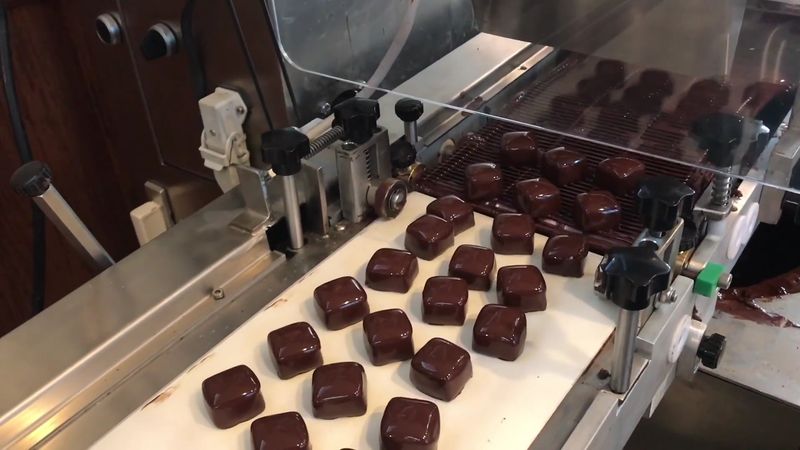
Patience is the secret ingredient nobody puts on the label.
During conching, the chocolate is continuously agitated while temperature and airflow are controlled to refine its flavor and texture.
Conching helps remove unwanted volatile compounds while refining the chocolate’s flavor and texture.
Tempering comes next, a controlled heating and cooling dance that gives finished bars their glossy shine and satisfying snap. Get the temperature wrong and the whole batch dulls.
Creo ages its chocolate for at least one month before using it for bars, truffles, and other products. Finished bars are packaged by hand in recyclable and compostable wood-fiber cellophane.
Before any of that, the beans are roasted, cracked, and winnowed to separate the husks from the nibs that become chocolate.
Everything runs in small batches, which is why a shop this size can turn out more than sixty different products without a production line.
Grinding and refining machinery remains part of the working Chocolate Lab where Creo produces its bean-to-bar chocolate. The tempered chocolate is poured into specially designed molds before packaging.
Build Your Own Bar Adventure
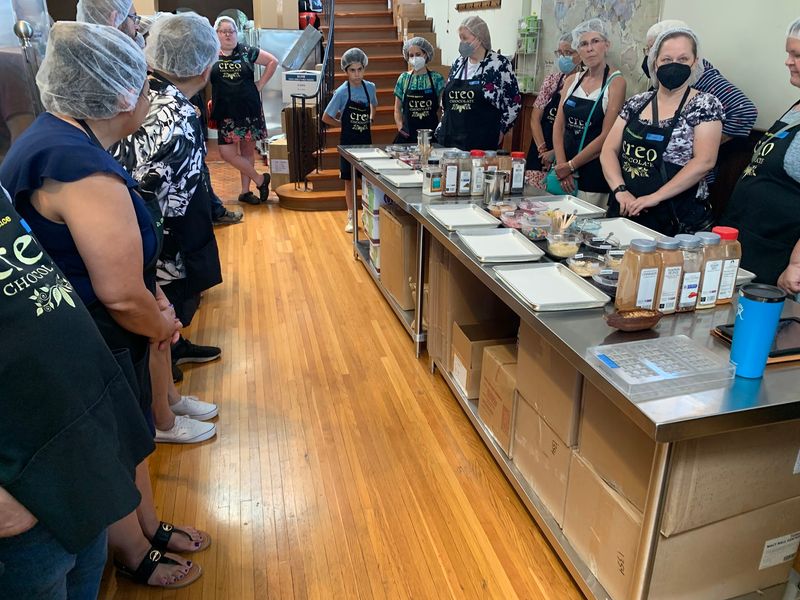
The Build-a-Bar experience lasts about 90 minutes and combines cacao education, tastings, process demonstrations, and a customized chocolate bar.
Participants taste roasted cacao beans, flowing chocolate, several finished bar flavors, and sometimes research-and-development batches.
Then you pick your base: white, milk at 46 percent, or dark at 73 percent. Choosing feels weirdly high stakes for something so delicious.
Participants choose white chocolate, 46 percent milk chocolate, or 73 percent dark chocolate as the base, then add available toppings and seasonings.
Participants seal and package their personalized bar themselves before taking it home.
The experience takes place inside a working Chocolate Lab that is accessible to wheelchair and walker users.
The session is led by the people who actually make the chocolate, so the questions get answered by someone with their hands in the process rather than a scripted guide.
Booking ahead is the safer move, since sessions run on a set schedule and the lab holds a limited number of people at a time.
There is no walking tour through production, just a seated session with full views of the space. Good news for anyone with limited mobility.
Truffles, Brittle And Bold Flavors
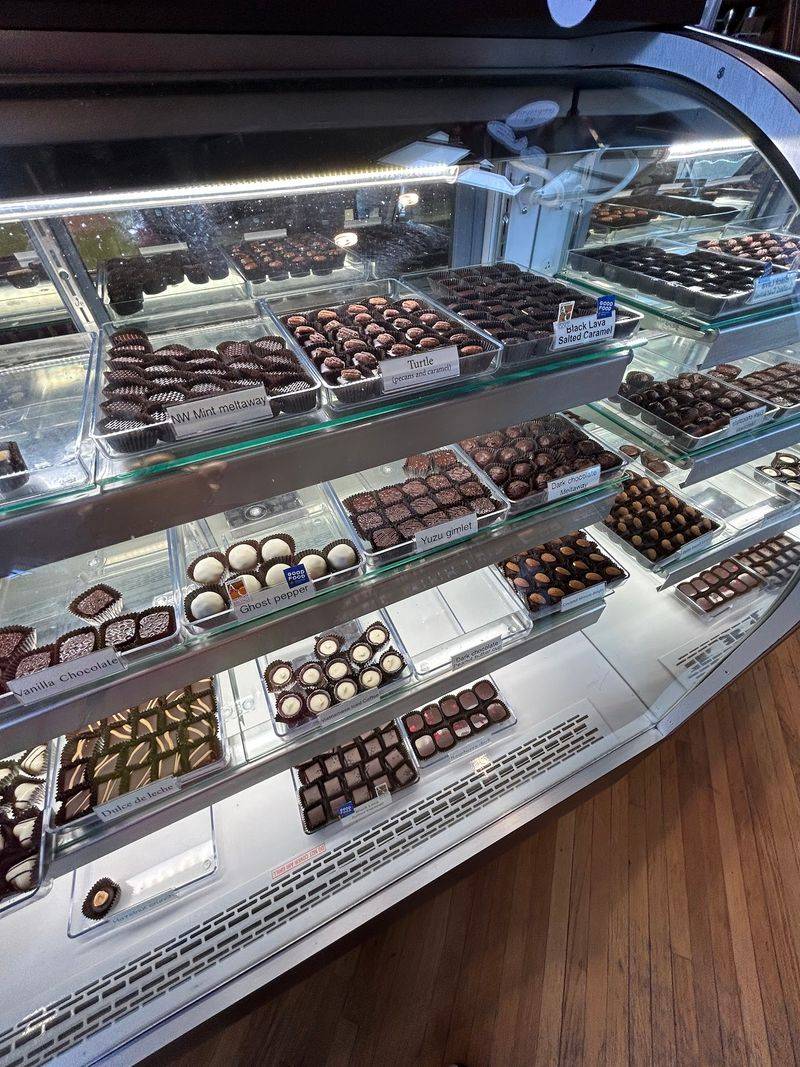
Bars are only the opening act. The shelves hold truffles, caramels, brittle, and a few things you would never think to invent.
Salted caramels arrive wrapped in 73 percent Ecuadorian dark chocolate, sometimes finished with black lava salt. Chewy, rich, slightly dramatic.
Current year-round truffle flavors include dulce de leche, Earl Grey, passion fruit, orange meltaway, Vietnamese iced coffee, and ghost pepper.
The black sesame seed brittle combines roasted sesame seeds with thin brittle and 73 percent Ecuadorian dark chocolate, and it has won a Good Food Award.
Peanut Butter Pearls, dark chocolate malt balls, Mayan Spice sipping chocolate, and other confections remain part of the current product range.
Creo also currently sells a chocolate mint lip balm made with cocoa butter, oils, chocolate, and peppermint oil.
Hazelnuts turn up in several forms here, which makes sense in a state that grows the overwhelming majority of the country’s crop.
Brewed cacao is worth asking about too, since the shop French-presses it from cacao husks into something closer to coffee than to hot chocolate.
Samples are part of the Build-a-Bar experience, and retail staff may also offer product samples in the shops.
Real Chocolate, Real Change
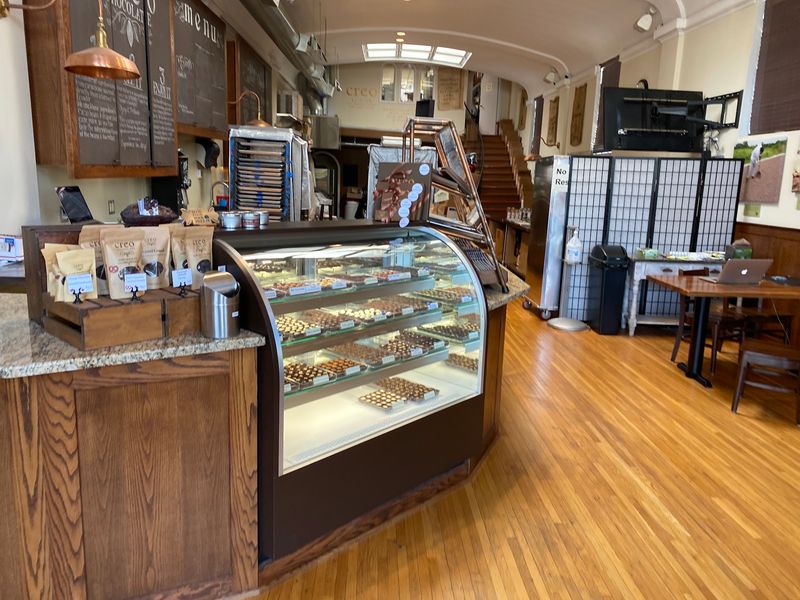
Creo continues to operate a Chocolate for Change program that supports nonprofit and community needs in Portland and beyond.
Creo currently describes its sourcing model as farm-direct, with cacao purchased directly from its partner farm in Ecuador.
The family talks about putting faces on their chocolate, a reminder that somebody planted, harvested, and fermented those pods. That framing sticks with you.
Creo’s current Chocolate for Change program supports selected nonprofit and community needs through donations and partnerships.
The Chocolate for Change wall remains part of Creo’s current community-impact program.
I liked that the generosity is not buried in a website footer somewhere. It hangs right there where anyone can see it.
The partner farm is Hacienda Victoria, a single-estate operation in Ecuador that Creo has worked with since it started in 2014, growing the Nacional Arriba variety.
The Straubs sold their own small family farm to launch the business, which is part of why the relationship with farmers reads as more than marketing language.
Creo has received more than 100 awards across its chocolate range since opening. Oregon has plenty of good intentions, and here they come with receipts.
Planning Your Sweet Portland Stop
A little planning turns a good visit into a great one.
The Chocolate Lab is currently open Wednesday and Thursday from 9 a.m. to 4 p.m., Friday and Saturday from 9 a.m. to 6 p.m., and Sunday from 9 a.m. to 4 p.m.
The Chocolate Lab is closed Monday and Tuesday, while public Build-a-Bar sessions run on scheduled dates and require tickets.
Build-a-Bar includes several chocolate samples during the roughly 90-minute experience.
The Chocolate Lab is at 100 NE Farragut and is a short walk from several bus lines and the MAX Yellow Line, with ample parking behind the building.
The experience lasts about 90 minutes, and the Chocolate Lab also includes a retail shop for take-home purchases.
Private and team-building versions are available for birthdays, family gatherings, workplace groups, and other special events.
Creo sometimes includes small design details on its packaging, but the Build-a-Bar experience itself is the main take-home feature.
The finished customized chocolate bar gives each participant something edible to take home from the class.