Walk Or Bike Across Nebraska’s Landmark Bridge For Sweeping Omaha Skyline Views
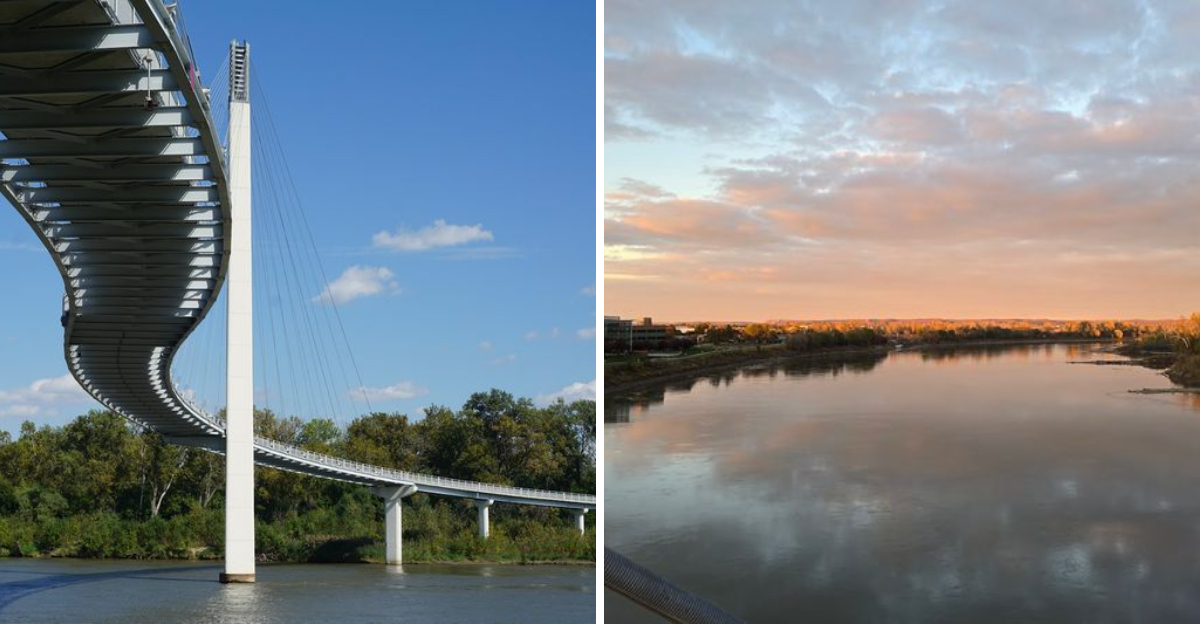
Here is a confession to start. I did not expect to get emotional on a bridge, and yet here we are.
This Nebraska crossing spans the Missouri River and gives you the best skyline view in the entire state.
You can walk it or bike it, and either way the payoff is the same. The city rises up on one side, all glass and light, while the wide river rolls underneath you.
The bridge curves gently as it goes, so the view keeps shifting with every step. Here is the fun part.
It connects two states, which means you can literally stand with one foot in Nebraska and the other in Iowa.
People love that trick. Sunset is the move, when the whole skyline glows and the water catches fire with color.
So bring a camera and comfortable shoes.
This is the kind of view that makes you stop mid-stride and just stare.
Your Starting Point
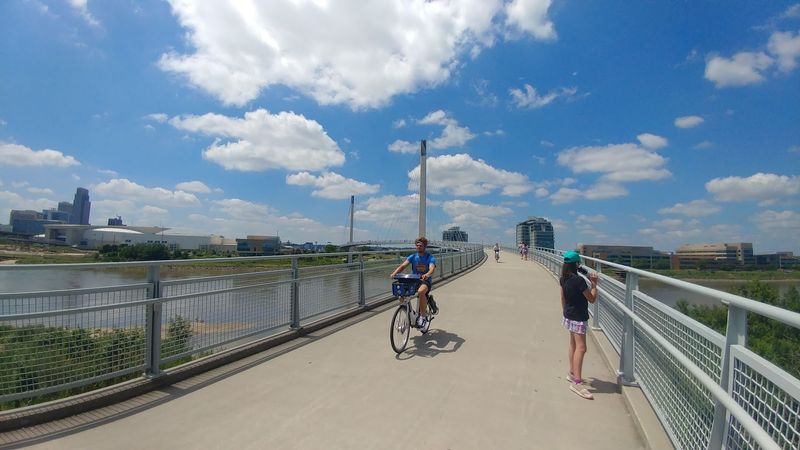
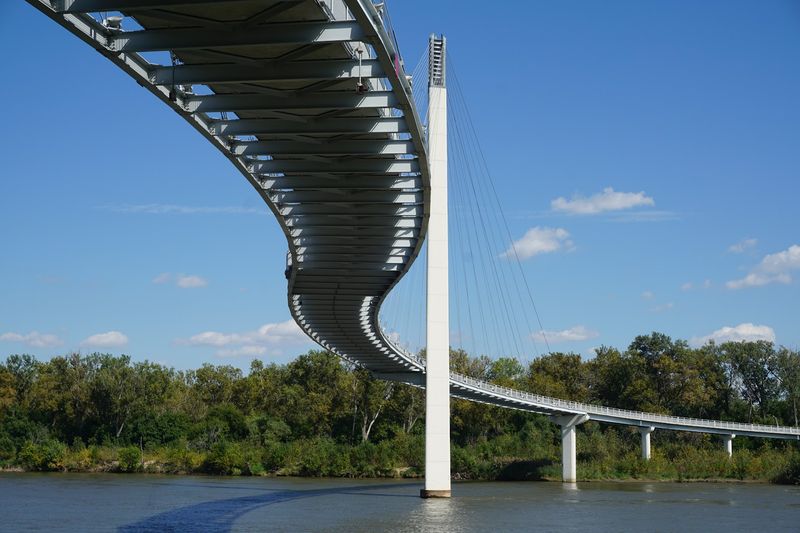
The Bob Kerrey Pedestrian Bridge is one of those places that stops you mid-step. You look up, look out, and suddenly realize you are standing on something genuinely special.
The bridge stretches 3,000 feet across the Missouri River, connecting Nebraska and Iowa in a single, elegant arc.
Opened in 2008, it became the first pedestrian bridge built to connect two states, giving walkers and cyclists a direct route between Omaha and Council Bluffs.
The twin towers rise 200 feet above the water, and the cables fan out like a harp string arrangement that catches golden light in the morning hours.
Whether you walk or bike, the experience feels completely different each time depending on the light, the season, and the crowd.
Families push strollers, cyclists zip past, and joggers find their rhythm here every single morning.
The bridge, at 705 Riverfront Dr, Omaha, Nebraska, is free to access and open year-round.
It is the kind of public space that makes a city feel proud of itself, and honestly, Omaha has every reason to be.
What The Skyline Looks Like From Out There
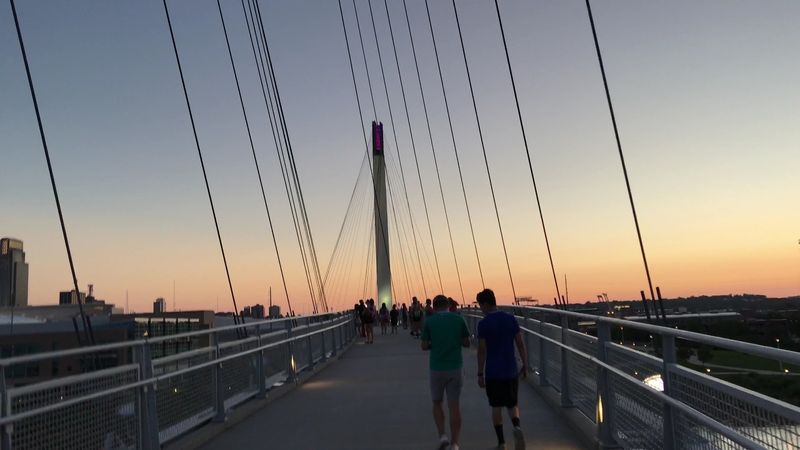
Standing at the midpoint of the bridge, the Omaha skyline lines up perfectly on the western horizon. The buildings stack and stagger in a way that photographs beautifully but feels even better in person.
You get depth, texture, and scale all at once.
The First National Tower remains one of the skyline’s defining buildings, but it is no longer the tallest.
The new 677-foot Mutual of Omaha headquarters tower now rises above downtown, adding a major new focal point to the view from the bridge.
Morning light hits the west-facing skyline from behind you, so afternoon and evening are actually the best times to see the buildings lit up and glowing. Sunset from the bridge is not something you forget quickly.
The Missouri River reflects the colors beneath you while the city burns orange and pink above the waterline. Locals know this.
Visitors discover it and immediately want to tell someone.
Bring a camera, but also just stand still for a minute and take it in without a screen between you and the view.
Tips For A Smooth Ride
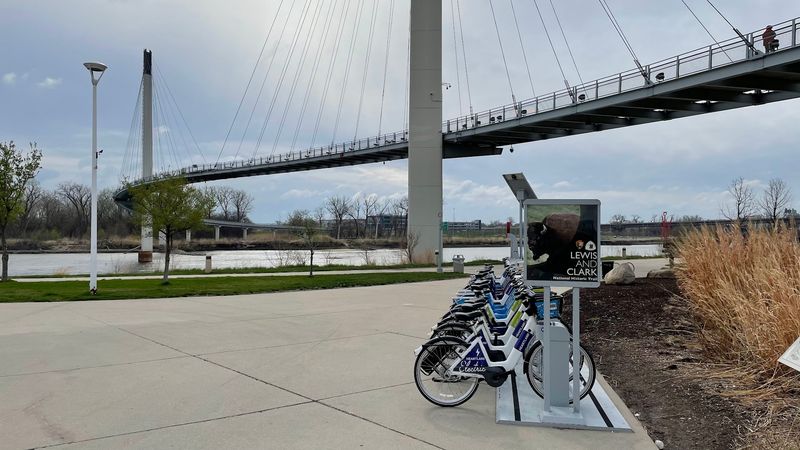
Biking the Bob Kerrey Bridge is genuinely fun, and the path is wide enough that you will not feel like you are dodging pedestrians every few seconds.
The bridge has clearly marked lanes, and most people are respectful about sharing the space. It rewards a slower pace, though, because the views are worth lingering over.
The approach from the Omaha side connects directly to the riverfront trail system, which means you can extend your ride north or south along the water without doubling back through traffic.
That trail network is well-maintained and makes for a solid half-day outing if you bring enough water and a light snack. Bike rentals are available nearby if you did not bring your own.
Wind can pick up significantly on the bridge, especially in spring and fall, so tuck in any loose gear and dress in layers if the forecast looks uncertain.
The surface is smooth and the grade is gentle, making it accessible for most fitness levels.
The whole crossing takes about ten to fifteen minutes at a casual pace, which feels just right.
What To Expect Step By Step
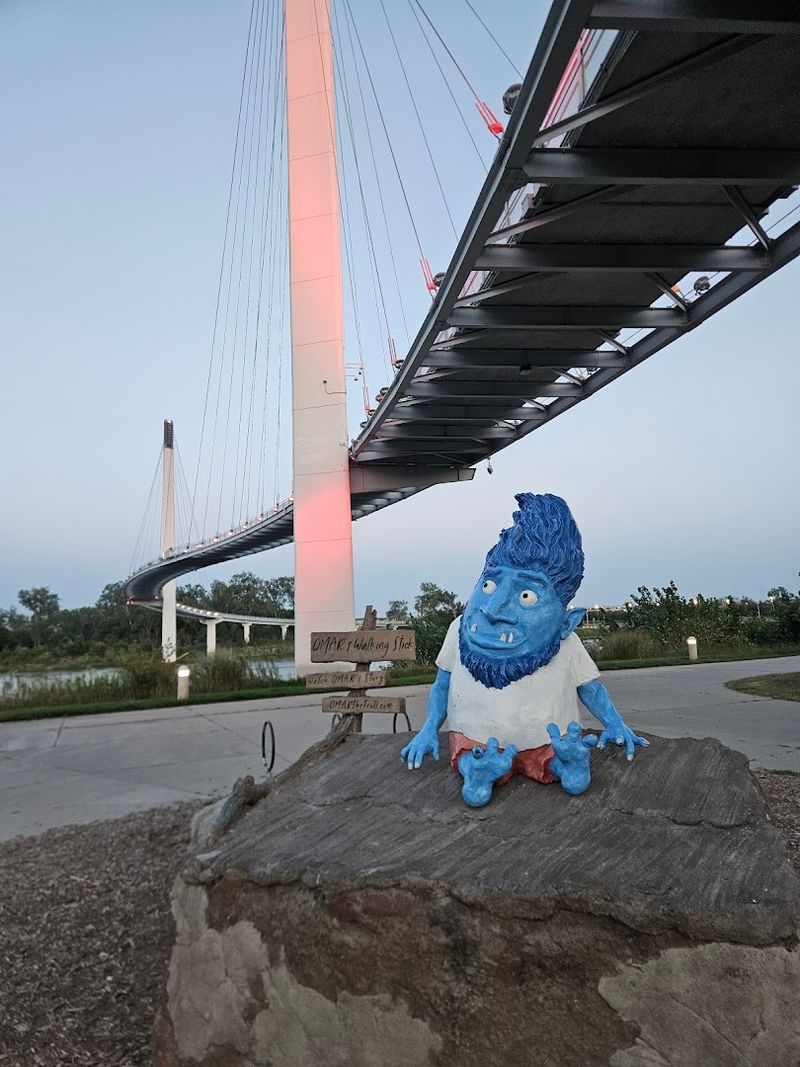
Walking the bridge takes roughly twenty minutes at a relaxed pace, and every hundred feet brings a slightly different perspective.
The cables overhead shift in your field of view as you move, creating a visual rhythm that feels almost meditative. It is a genuinely pleasant walk even if you are not particularly outdoorsy.
The deck is wide and the railings are high enough to feel secure without blocking your sightlines.
You can stop anywhere to look down at the Missouri River moving below you, and the water has a hypnotic quality that is hard to describe until you see it yourself.
On busy weekends, the bridge fills with a cheerful mix of locals and out-of-towners, all sharing the same quiet amazement.
One tip worth knowing: walk to the Iowa side and then turn around for the return trip. The Omaha skyline view on the way back is arguably better than anything you see heading east.
You get the full city panorama framed by the cable towers, and it hits differently when you are not expecting it. Wear comfortable shoes because the surface, while smooth, is firm underfoot the whole way across.
The Missouri River Below
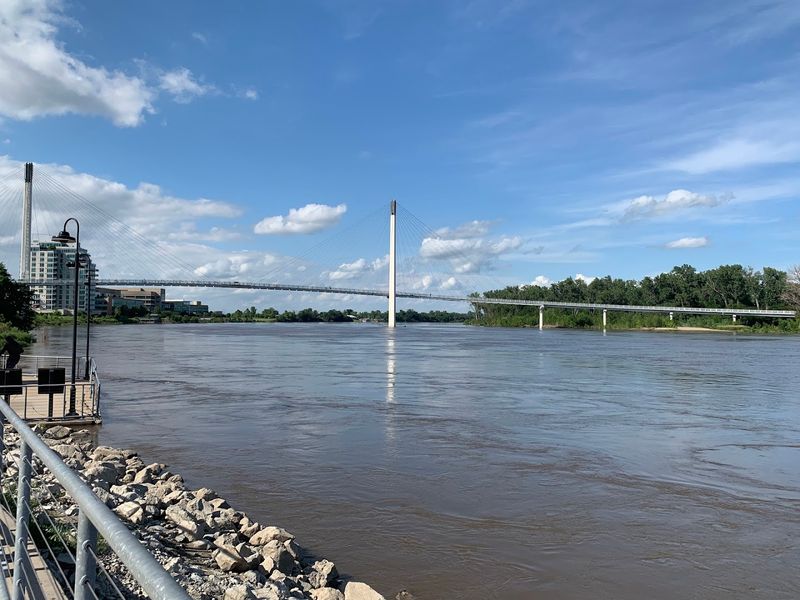
Most people focus on the skyline and forget to look down, which is a mistake. The Missouri River is one of the longest rivers in North America, stretching over 2,300 miles from Montana to Missouri.
Standing on the bridge, you are directly above a waterway that shaped the entire history of the Great Plains.
The river runs fast and wide here, and its color shifts with the seasons, from murky brown after spring rains to a clearer, more reflective surface in late summer.
Barge traffic still moves through occasionally, and spotting one from the bridge gives you a real sense of the river’s working history.
Lewis and Clark traveled this exact stretch of water in 1804, which is the kind of fact that makes the view feel weightier.
Fishermen line the banks below on weekend mornings, and birds work the shallows in ways that are surprisingly entertaining to watch from above. The river is not just scenery here.
It is a living, moving thing that puts the bridge and the city into a larger context. Spending a few minutes watching the current is one of those small pleasures that costs nothing and lingers long after you leave.
Best Times To Visit For Light, Crowds, And Comfort
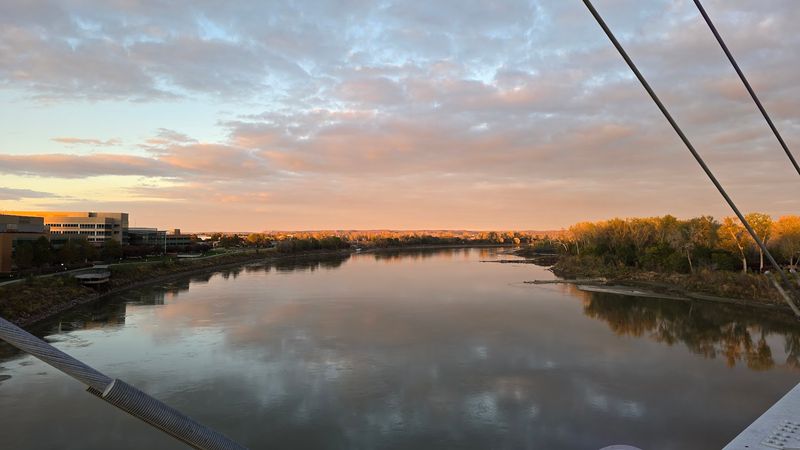
Timing your visit makes a real difference here. Early mornings on weekdays are the quietest, and the light is soft and diffused in a way that makes the whole bridge feel calm and almost private.
You share the space with joggers and the occasional cyclist, and there is zero pressure to move quickly.
Late afternoons in summer and early fall are peak skyline hours. The sun drops behind the Omaha buildings and creates long shadows across the water while the sky turns colors that feel almost theatrical.
This is when photographers show up with proper gear, and honestly, even a phone camera produces something worth keeping from this angle.
Midday summer visits can feel hot because the bridge is exposed and offers little shade. Bring water, sunscreen, and sun protection if you plan to linger.
Spring visits offer something different: the river runs high and fast after snowmelt, and the energy of the water is noticeable even from above.
Winter crossings are possible on clear days and the cold keeps the crowds thin, which has its own quiet appeal. Each season genuinely offers something the others do not.
Exploring The Omaha Riverfront Before Or After Your Crossing
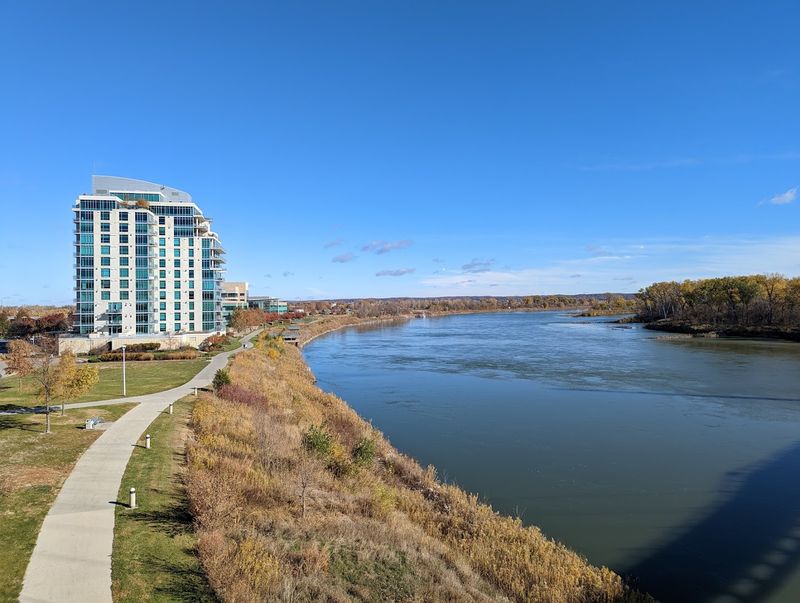
The riverfront surrounding the bridge is worth more than a quick glance before you start walking.
The area around it has been developed into a genuine public amenity with paved paths, green space, and river overlooks that extend both north and south from the bridge entrance.
It rewards slow exploration.
The Lewis and Clark Landing sits just south of the bridge approach and offers a clean, open plaza with interpretive signage about the expedition that passed through this region more than two centuries ago.
It is a good spot to orient yourself before crossing, and the plaza benches are ideal for a post-bridge rest with a snack in hand.
North of the riverfront, the newer Baby Bob connector provides a more direct pedestrian and bicycle link toward North Downtown, CHI Health Center Omaha, and Charles Schwab Field Omaha.
The addition has made it easier to combine a bridge crossing with the convention center and ballpark district without returning to busy streets.
Restaurants and coffee spots are within easy reach if you want to refuel after your walk or ride. The whole riverfront area has a planned but comfortable feel, like a city that took its waterfront seriously and followed through.
Combining the bridge crossing with an hour of riverfront wandering makes for a satisfying half-day without needing a car at all.
Why This Bridge Deserves A Spot On Your Nebraska List
Nebraska does not always top the list when people plan a road trip, but the Bob Kerrey Pedestrian Bridge is the kind of attraction that changes the conversation.
It is free, accessible, genuinely beautiful, and delivers a skyline view that most people do not expect from this part of the country. That surprise is a big part of what makes it memorable.
The bridge also holds a unique distinction: you can stand in two states at once at the midpoint marker on the deck, with one foot in Nebraska and one in Iowa.
It is a small thing, but people love it, and the photo opportunities are obvious and fun. Kids especially get a kick out of the state-line moment.
For anyone passing through Omaha, skipping the bridge would be a genuine miss. It takes less than an hour to walk round-trip, costs nothing, and gives you a perspective on the city that no rooftop bar or observation deck can match.
The combination of engineering, natural scenery, and urban backdrop is rare and worth the stop.
Pack light, show up with comfortable shoes, and give yourself permission to slow down long enough to actually enjoy where you are standing.