Washington Has A Secluded Lake Beach With Waters So Blue, They Rival The Caribbean
I refused to believe the photos at first. Water that blue belongs somewhere tropical, not surrounded by pine trees and mountain peaks.
Curiosity won eventually, so I hiked in expecting a filtered image and a disappointing reality. I was wrong within seconds of reaching the shore.
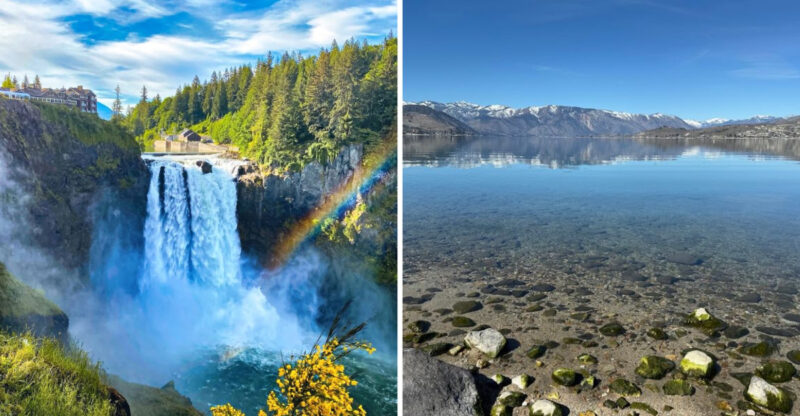
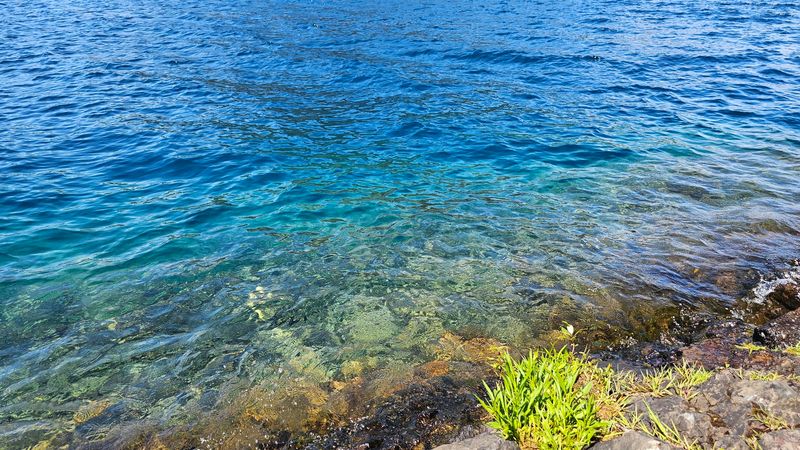
The water sat there glowing, an impossible turquoise that seemed to shift with every angle of light. Smooth pebbles lined the shallow edge, clear enough to count them from several feet above.
Snow capped peaks framed the whole scene, close enough to feel like a painted backdrop. Almost nobody else was there, just a few quiet visitors soaking in the same disbelief I felt.
Washington keeps this kind of color hidden behind a hike most people never attempt. I sat on the shore for an hour, still questioning what I was looking at.
Washington earned a permanent spot on my list after this one single visit.
The Blue That Doesn’t Look Real
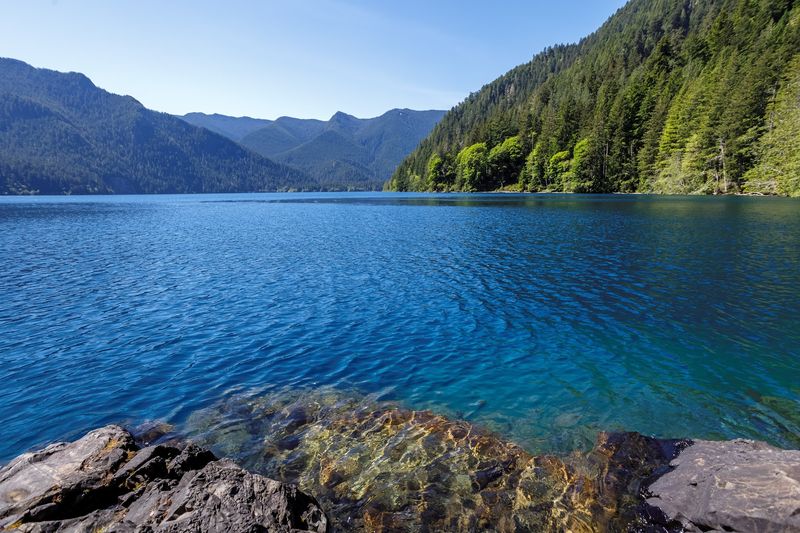
Blue water in Washington usually means reflected sky. Here the color comes from chemistry, not luck.
The lake holds unusually low nitrogen levels, which keeps algae and phytoplankton from growing. Scientists call it ultra-oligotrophic, meaning there are very few nutrients in the water.
Because almost nothing clouds the water, sunlight sinks deep before bouncing back. Blue wavelengths return to your eyes, and the whole surface turns sapphire.
The lake’s unusually clear water allows blue and turquoise tones to appear especially vivid near the shoreline. Farther out, the shade darkens into something closer to ink.
On clear days, underwater visibility can reach about 60 feet in some areas. I stood on a pebble bank and counted stones far below my feet.
Weather changes the show completely. Overcast mornings bring a soft green-blue, while afternoon sun cranks the saturation up.
Photos rarely capture it correctly, which is why so many visitors give up and just stare. It genuinely looks borrowed from a warmer part of the world.
If you want the full effect, come on a windless day. Ripples scatter the light and dull the color.
You will find it inside Olympic National Park at Lake Crescent.
A Landslide Built This Place
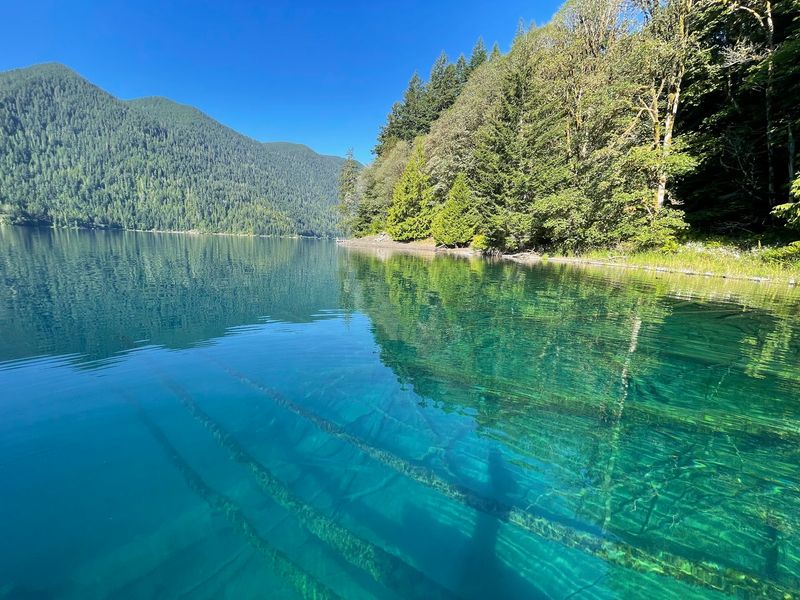
Most lakes have quiet origin stories. This one starts with a mountain falling apart.
Glaciers carved the basin during the last Ice Age, leaving a deep trough between steep ridges. Then, approximately 7,000 years ago, a massive landslide changed the landscape.
That slide split the water body from its smaller neighbor, Lake Sutherland. It also cut the connection to the Elwha River.
The shoreline rose about 80 feet after the blockage. Trees that once stood on dry ground ended up underwater, and parts of that submerged forest still stand today.
Klallam tribal legends tell the story differently. In those accounts, Mount Storm King caused the separation, hurling rock into the valley below.
I like that both versions point to the same peak. Standing at the water’s edge, the mountain looks entirely capable of it.
Knowing the history changes how the view feels. That perfect blue surface sits on top of drowned trees and ancient rubble.
Geology fans will appreciate the setting more than a plaque ever explains. The evidence is right there in the shape of the ridges.
Bring binoculars for the slopes. The scale is easier to read from a distance.
Second Deepest In The State
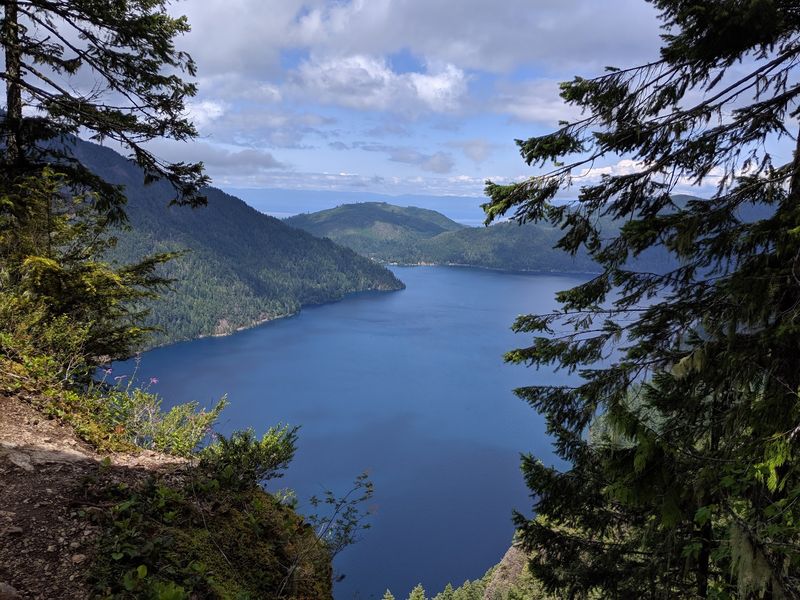
The shallow edges lie to you. A few steps out, the bottom disappears entirely.
Official records list a maximum depth of 624 feet, making it the second deepest lake in Washington State. Only Lake Chelan goes deeper.
A bathymetric survey done between 2013 and 2014 measured the deepest recorded spot at 596 feet. Either number is staggering for a lake this narrow.
Depth explains the temperature. Water hovers around the mid-40s Fahrenheit, roughly 44 degrees, even in July and August.
I waded in on a warm afternoon and lasted about ninety seconds. The cold is honest and immediate.
Swimmers still love it, but the smart approach is short dips with long sunbathing breaks. Shallow coves warm slightly and feel friendlier.
Kids do better at gradual-entry beaches where the drop-off stays gentle. Watch footing on the smooth stones, which get slick.
Cold water also keeps the clarity intact, so the chill is part of the deal. You cannot have one without the other.
Pack a towel bigger than you think you need. Drying off in mountain air takes longer than at the coast.
East Beach For Easy Days
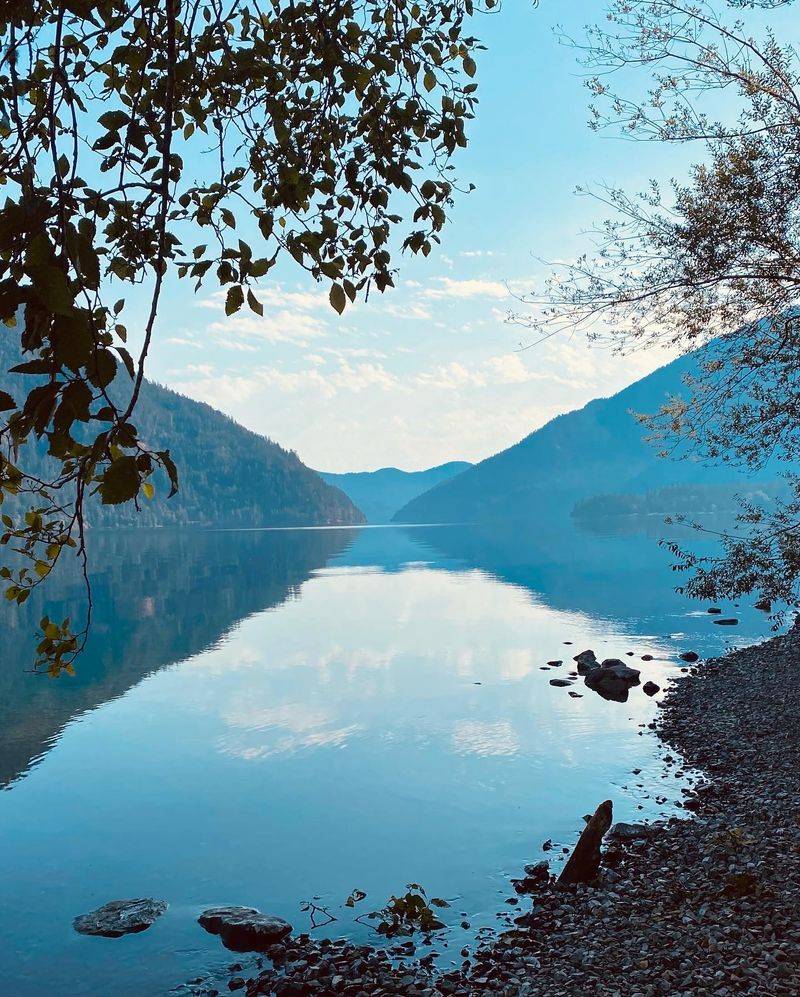
Families quickly figure out which beach works best. East Beach earns that title without much competition.
The entry stays shallow for a good stretch, which makes wading less alarming for small kids. The sky opens up here too, so the sun actually reaches the water.
Beaches around this lake are pebble, not sand. Expect smooth gray and white stones instead of soft footing.
Water shoes solve most complaints. Flip-flops slide around on wet rock, and bare feet get tender fast.
Because the tree cover thins out, this side warms up earlier in the day. Morning light makes the shallows look almost tropical.
Parking fills during summer weekends, so arriving before eleven helps. A weekday visit feels noticeably calmer.
Bring a low chair rather than a blanket. Pebbles are comfortable once you settle, but a chair saves your back.
Picnics work well here, and the open shoreline gives everyone room to spread out. Pack out whatever you carry in.
Sunset light hits the far ridges beautifully from this vantage point. Stick around a little longer than planned.
Devil’s Punchbowl And Its Turquoise Cove
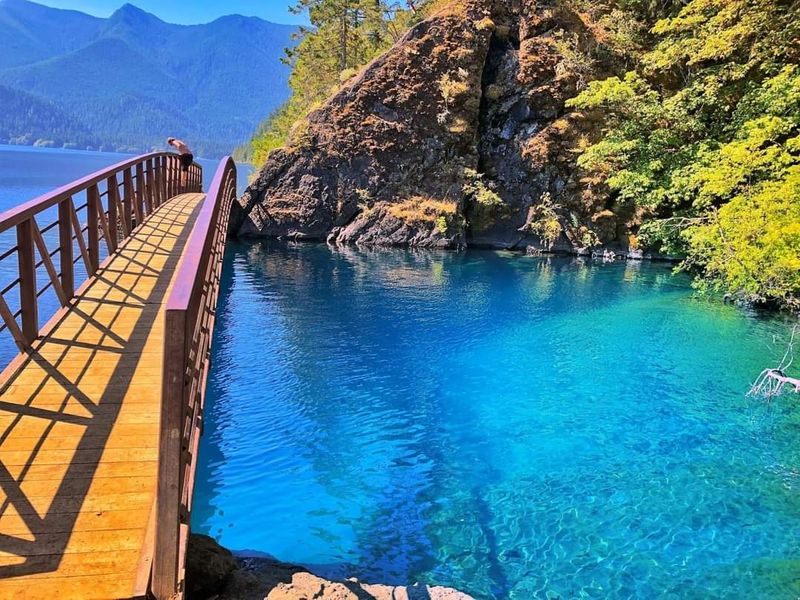
Some spots deserve their reputation. Devil’s Punchbowl is one of them.
Reaching it means a short walk along the Spruce Railroad Trail, which follows an old railway grade. The path stays mostly flat, so beginners handle it comfortably.
Expect roughly 20 to 30 minutes each way at a relaxed pace. Trail runners and cyclists share the route, so stay aware.
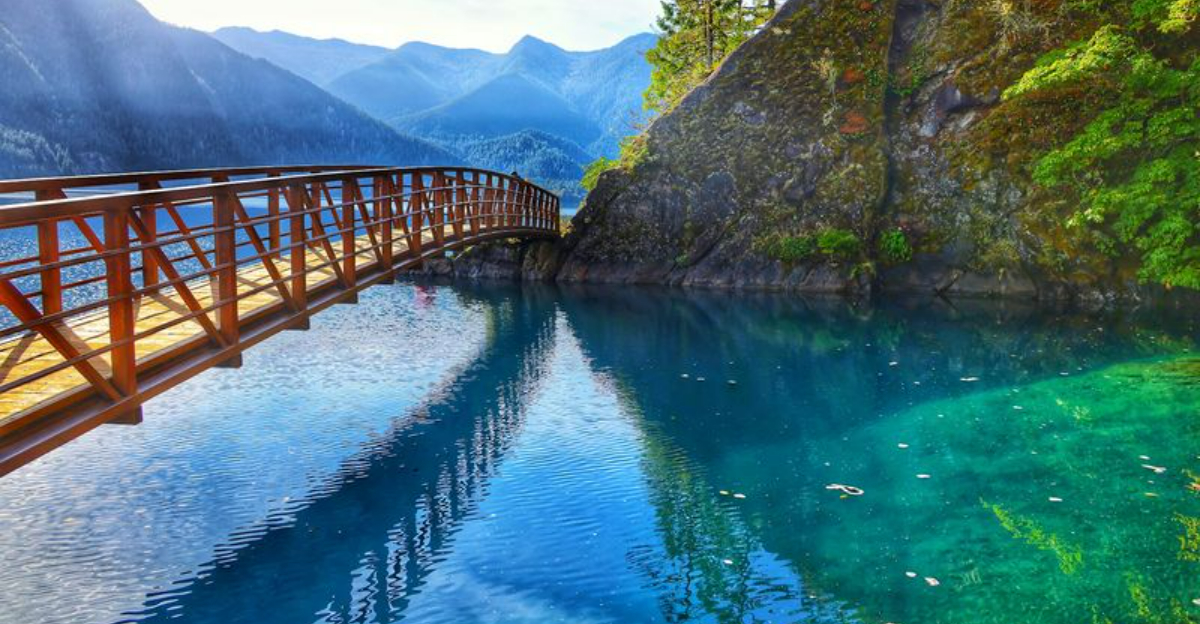
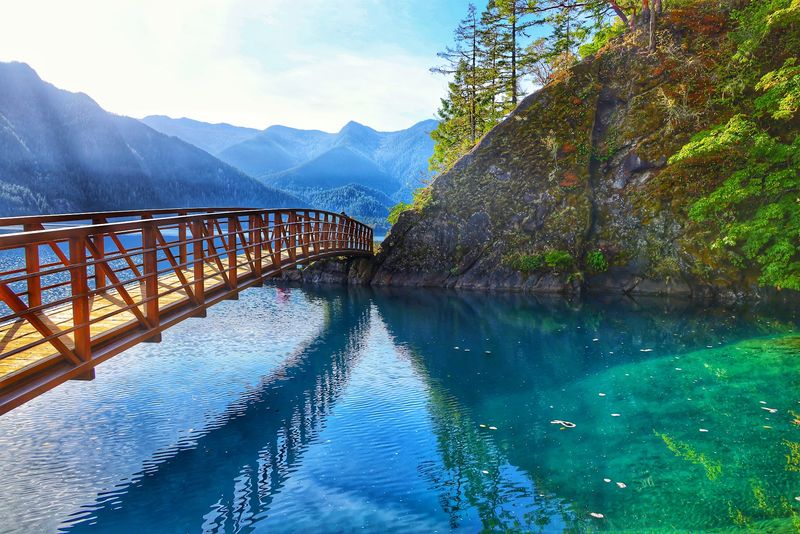
The cove itself is deep and dramatic, with rock walls dropping straight into vivid turquoise water. A small bridge crosses the narrow inlet.
Color intensity here beats almost anywhere else on the shoreline. Even cloudy days produce impressive blues.
Cell service gets spotty on this side, so download maps before leaving town. I learned that lesson the hard way once.
Wear real walking shoes. The old grade is firm but uneven in places, with a tunnel section along the way.
Layers matter more than you would guess, since air near the water runs cooler. A light jacket earns its space in the pack.
Go early for quiet and better light. Midday brings the biggest crowds to the bridge.
Paddling On Glass
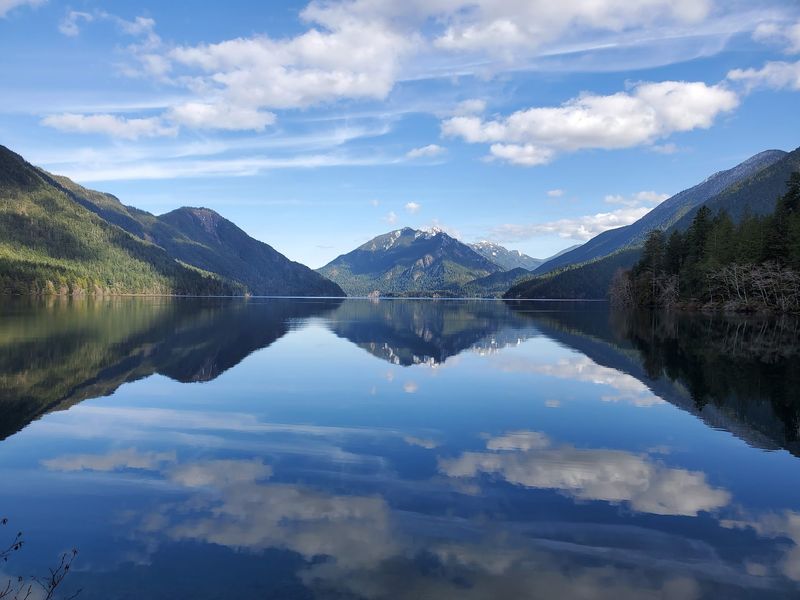
On still mornings the surface turns to glass. Paddling across it feels like gliding over a giant window.
Kayaking, canoeing, and stand-up paddleboarding are all popular here. Rentals are available at Lake Crescent Lodge, Log Cabin Resort, and the Fairholme General Store.
Since the shoreline is largely undeveloped, a boat unlocks coves you cannot reach on foot. Some of the best private spots are water-access only.
Clarity is the real reward. Looking down while paddling reveals boulders and pale gravel far below.
Wind usually picks up in the afternoon, so early starts are smarter. Calm water is also safer for beginners.
Given the cold temperatures, a life jacket is non-negotiable. Dress for immersion, not just for the sunshine.
Bald eagles patrol the shoreline, and deer wander down to drink. Keeping a respectful distance is part of visiting responsibly.
Photographers love the reflections of the ridgelines. Golden hour doubles the mountains on the water.
Stay closer to shore if the breeze builds. Open stretches get choppier than expected on a lake this size.
Trails That Fit Every Mood
Not every visitor wants a hard climb. The trail network here covers both ends of that spectrum.
Barnes Creek Trail leads to Marymere Falls, an easy walk through mossy old-growth forest. The route passes under the highway, which kids find oddly thrilling.
The Spruce Railroad Trail offers flat mileage with constant water views. It suits strollers, casual walkers, and cyclists alike.
Pyramid Mountain Trail adds real elevation and quieter surroundings. Views open up as you gain height.
Mount Storm King is the serious option, with a steep ascent and rope sections near the top. The payoff is a bird’s-eye look at that blue water below.
Ropes mean this one is not for everyone. Skip it in wet conditions or with young children.
The Moments in Time trail is short and accessible, good for visitors wanting scenery without effort. It circles gently near the shoreline.
Deer sightings are common along the lower paths. Eagles show up overhead more often than you would expect.
Start early if you want parking. Small lots fill quickly during peak season.
A Sunken Forest Below The Surface
Divers come here for something strange. Standing trees, still upright, sixty feet down.
The submerged forest near Barnes Point dates back to that ancient landslide. Cold, clear water has preserved it remarkably well.
Visibility makes the site unusual among freshwater dives. On good days you can see much farther than typical lake conditions allow.
Deeper features attract technical divers, including the Sledgehammer wall. Two old car wrecks sit at roughly 165 and 190 feet.
Those depths demand serious training and proper equipment. Casual snorkelers should stay near the shallows.
Even from the surface, the water reveals a lot. Peering off a dock, I could trace the bottom sloping away.
Fishing happens here too, under strict rules. Catch-and-release regulations protect the fish populations.
Two trout subspecies live only in this lake, the Beardslee rainbow and the Crescenti cutthroat. Both evolved after the landslide isolated the water.
Check current regulations before casting a line. Rules change, and this ecosystem is unusually fragile.
Planning A Visit That Actually Works
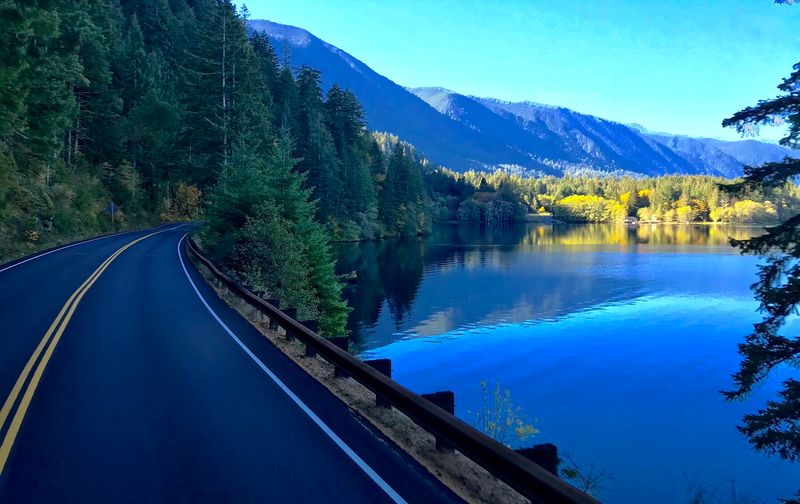
Good trips here come down to timing. The scenery handles the rest.
Look for the lake at Washington 98363, about 17 miles west of Port Angeles along U.S. Route 101.
The drive from Port Angeles takes well under an hour.
Highway 101 winds along the shoreline with plenty of pullouts. Take those corners slowly and let faster traffic pass.
Fall visits bring fewer crowds and deep blue water against evergreen and gold. Late winter can be surprisingly clear and nearly empty.
Lodging options include Lake Crescent Lodge, Log Cabin Resort, and Fairholme campground. RVs are accommodated, and restrooms are available.
La Poel offers a shaded, secluded picnic area that sees fewer visitors. It is my pick for a quiet lunch.
Pack food, since dining options are limited. A cooler saves time and money.
Layers help because air near the water runs cooler than inland. Comfortable shoes make everything easier.
Download maps ahead of time. Cell service drops out in several stretches around the shoreline.