Why This Nebraska Village Calls Itself The Czech Capital Of The Entire United States
The plan was simple: find something sweet on a quiet drive through southeast Nebraska and keep moving. Then a small downtown painted with Czech designs made the car slow down almost by itself.
One kolache led to a museum door, and that museum door led to three floors of stories about families who crossed an ocean to farm the prairie. By the end of the afternoon, a tiny Nebraska town had explained why it wears one of the boldest titles in the country.
A Prairie Town With a Presidential Title
Picture a village of just under 2,000 people in Saline County, surrounded by farm fields, holding a title signed off by a president. That is Wilber, and on July 10, 1987, President Ronald Reagan declared it the Czech Capital of the United States.
The claim is not a slogan cooked up for a road sign. It grew from more than a century of Czech families keeping their language, music, food, and customs alive in the middle of Nebraska.
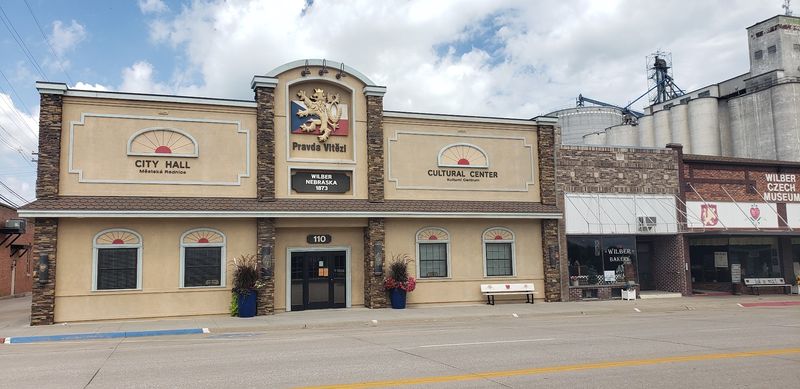
The downtown carries Czech-themed touches on its storefronts, so the heritage shows up before you even park.
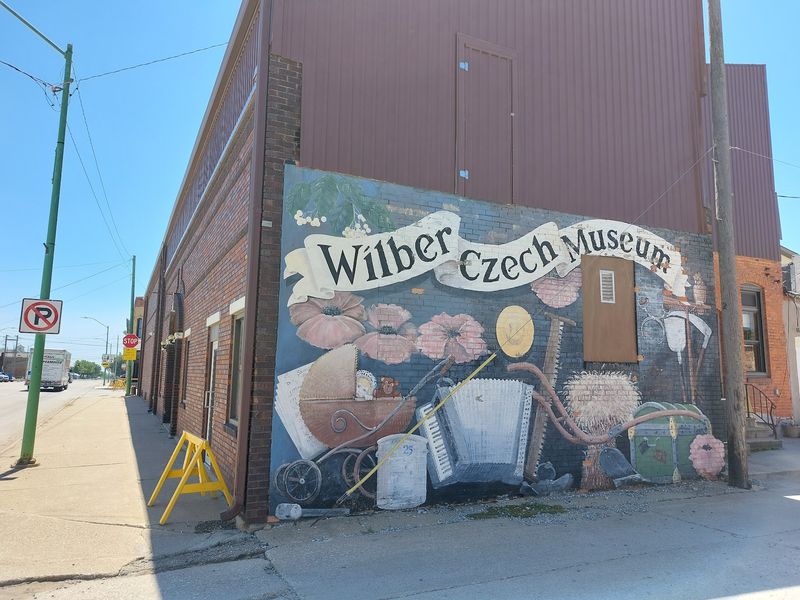
At the center of that story sits the Wilber Czech Museum at 102 West 3rd Street. The building holds the objects, photographs, and records that back up the town’s big title with physical proof.
For anyone who grew up in the Lincoln area, Wilber is an easy name to recognize and an easy drive to make. The village sits southwest of the capital city, close enough for a lazy afternoon outing.
What waits there is a surprisingly deep look at one of the state’s many pioneer cultures, told by people whose grandparents lived it.
From Bohemia and Moravia to Saline County
Land and freedom. Those two words explain most of why Czech families left Bohemia and Moravia, regions of today’s Czech Republic, for the open ground of Nebraska in the late 1800s.
Wilber was founded in 1873, and the Homestead Acts made the prairie a powerful draw for farmers who wanted soil of their own. Word traveled back across the Atlantic, and relatives followed relatives.
By the turn of the twentieth century, an estimated 90 percent of Wilber’s residents were Czech immigrants or their descendants.
Would you guess that Nebraska once led the whole nation in this category? By 1910, the state claimed more first- and second-generation Czechs per capita than any other state.
Wilber was one of the places where that population concentrated most heavily.
The early settlers brought embroidery patterns, recipes, songs, and church traditions, then adapted them to life on the plains. Some called the area New Bohemia.
That blend of Old World habits and prairie grit is exactly what the museum set out to preserve, and it explains why so many of the pieces inside feel handmade and personal rather than grand or formal.
Three Floors Inside the Wilber Czech Museum
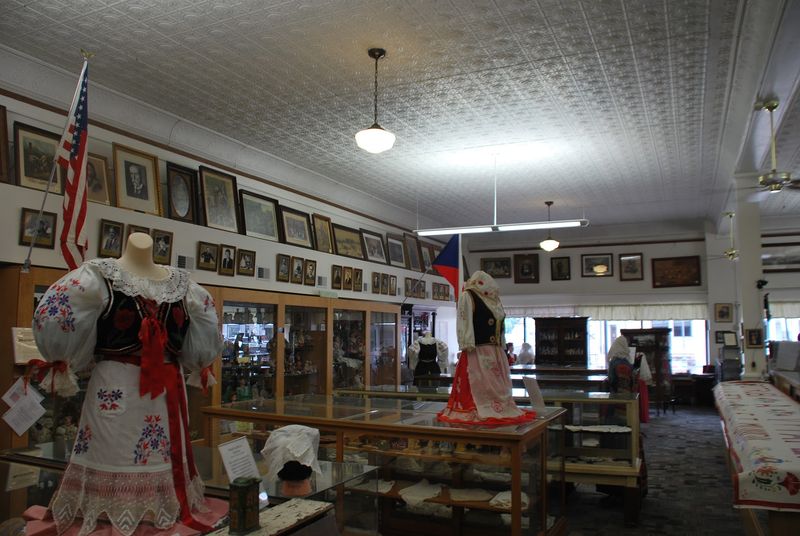
From the sidewalk, the museum looks modest. Inside, the collection stretches across three levels, and the amount packed into each floor comes as a real surprise.
The mission is straightforward: house and exhibit artifacts connected to the Czech pioneer settlers of Nebraska. Alongside immigration history, the displays also cover the story of Wilber itself, from its early businesses to everyday household life.
One of the cleverest features is a series of recreated historic room settings. A dentist’s office shows the tools of an early practice, while a meat market setting recalls the shops that fed a growing farm town.
Walking between them feels a bit like opening doors into different decades.
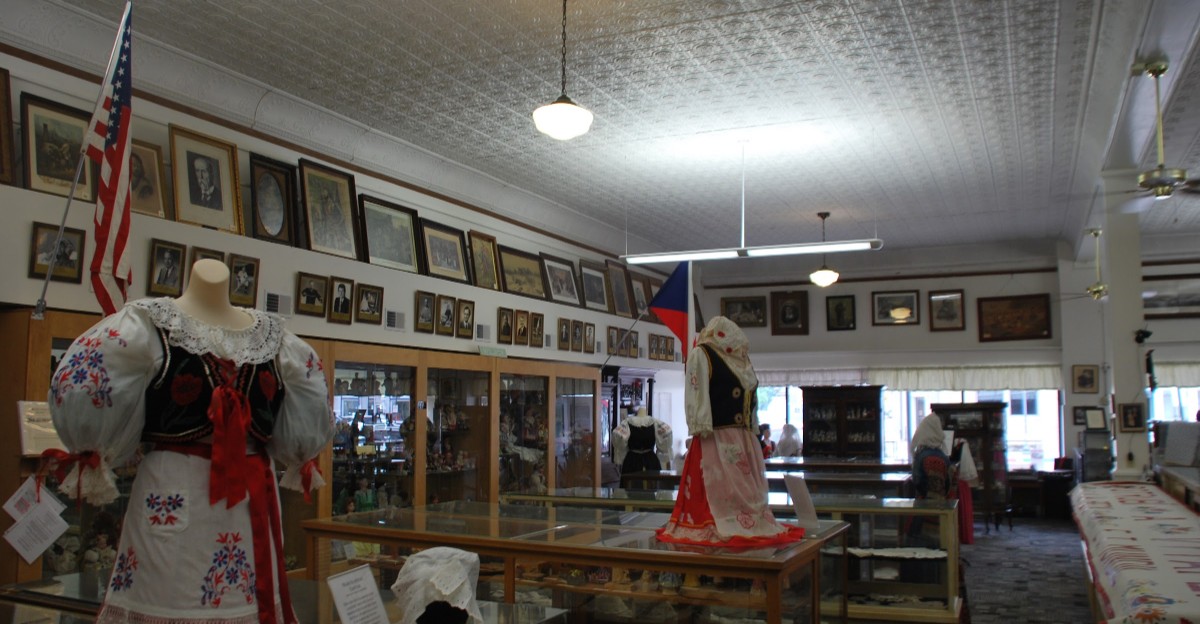
Textiles, photographs, antiques, and ordinary items from prairie homes fill the remaining space. Nothing here is behind velvet ropes in a hushed marble hall.
The scale is small-town and hands-on, and the objects came largely from the families who used them.
Plan on taking your time. With three floors of material and a short open window, it helps to arrive early in the session and work through the building from top to bottom without rushing past the smaller cases.
Embroidered Dresses and Old World Textiles
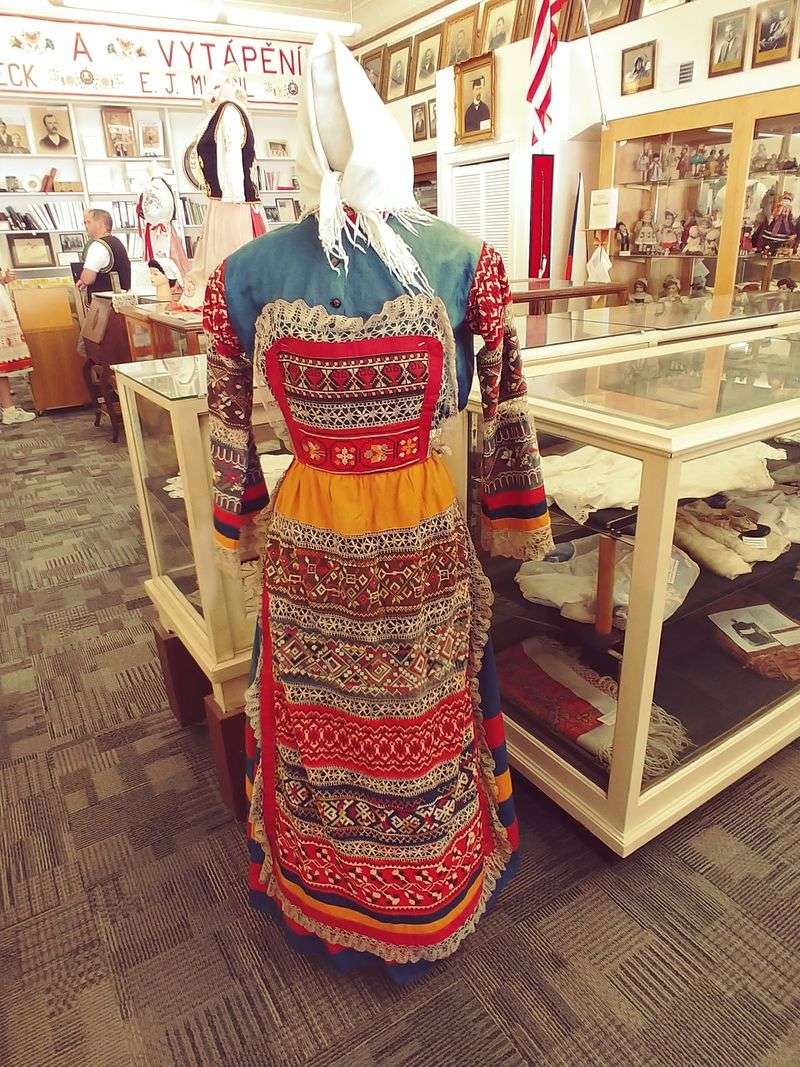
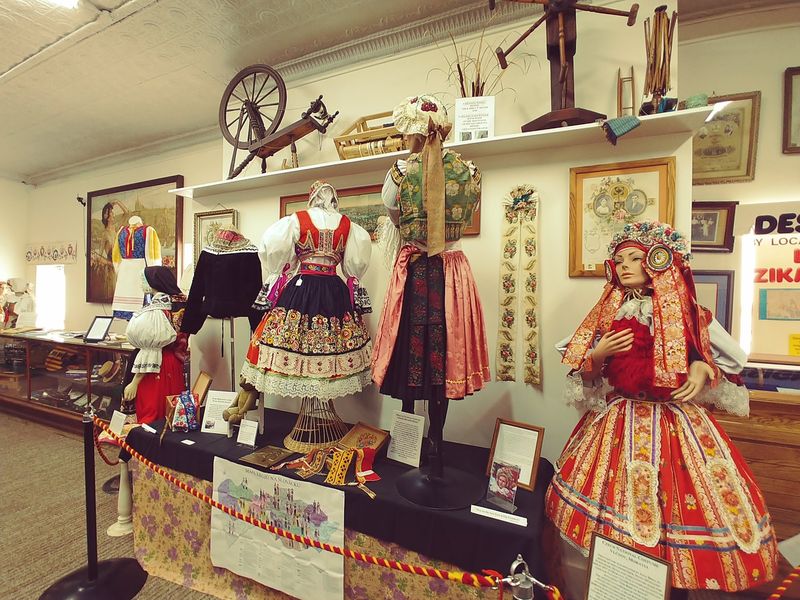
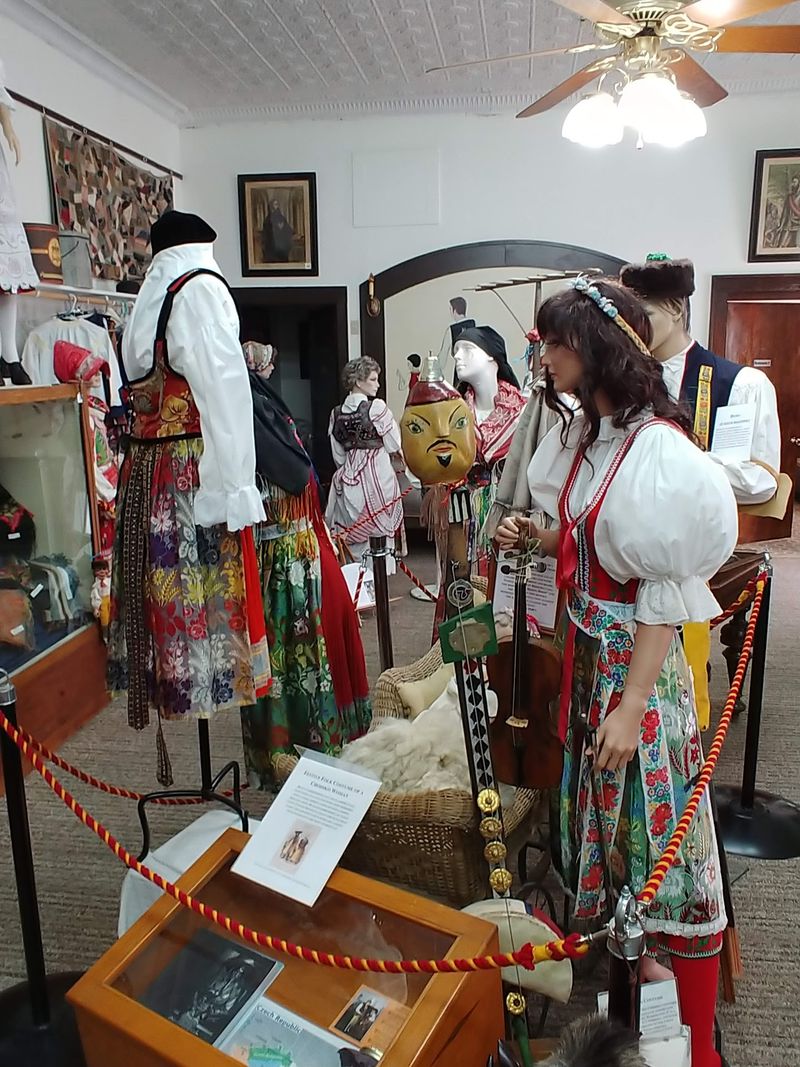
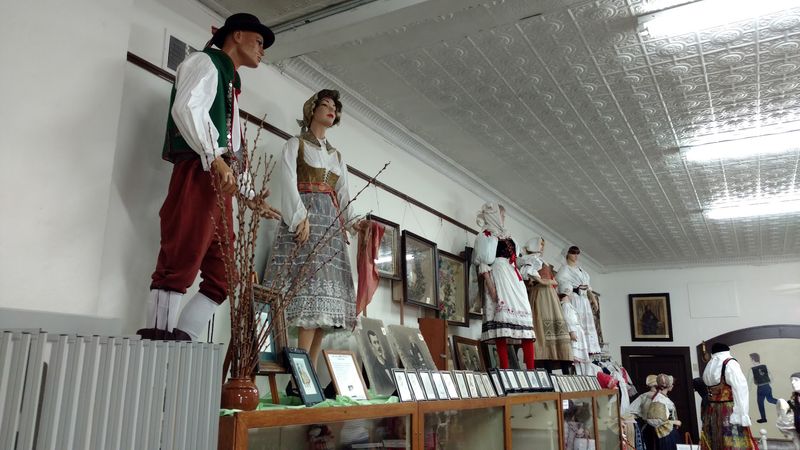
Bright red, deep blue, and gold thread stitched into dense floral patterns catch the eye first. The museum’s collection of traditional Czech and Bohemian dress is one of its strongest draws.
These garments, known as kroje, varied by village and region back in the old country. Aprons, vests, blouses, and headpieces carried details that could hint at where a family came from.
Seeing several side by side makes the differences easier to spot, from the lace edging to the shape of the sleeves.
Embroidery pieces appear throughout the displays too. Many were handmade by women who brought their skills to Nebraska and passed them down to daughters and granddaughters.
Some of that stitching took countless evenings by lamplight to finish.
If you have ever watched the Czech Days parade, the connection clicks right away. The same styles still march down Wilber’s streets every August, worn by dancers, royalty, and families proud of their roots.
For sewing fans and history buffs alike, this room can easily eat up a good portion of the visit. Bring your phone camera, because the color and detail are hard to remember accurately later.
Tracing Family Roots Through Genealogy Records
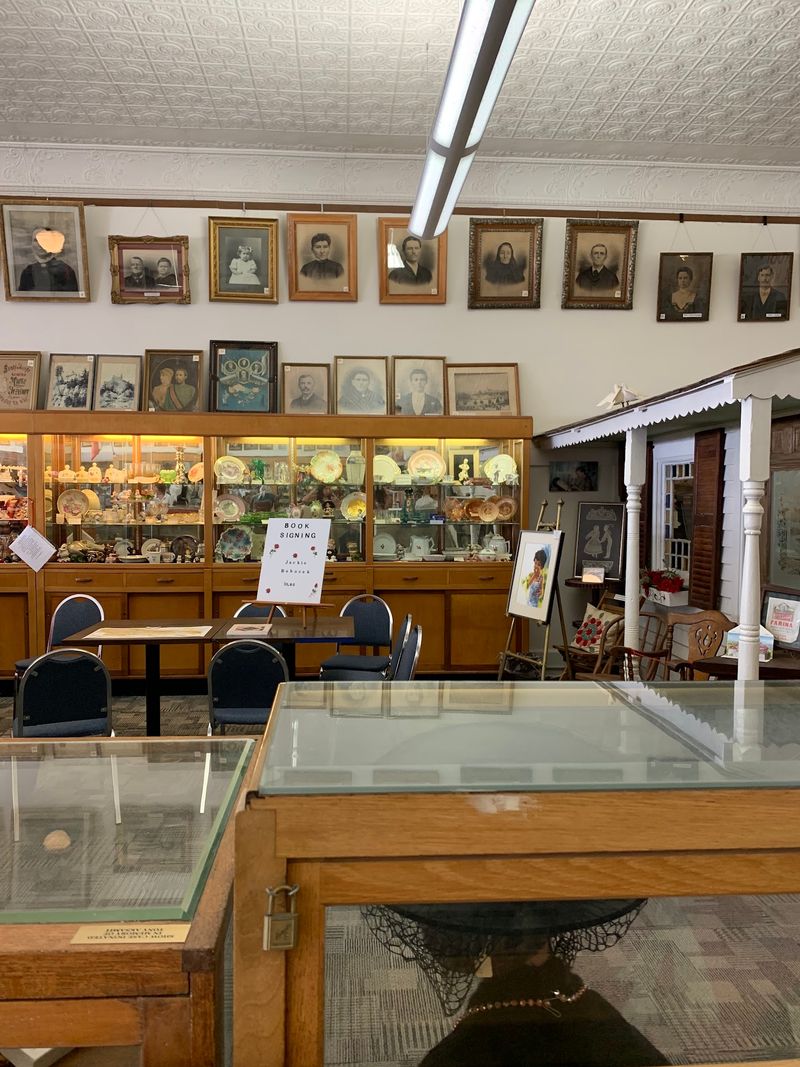
Plenty of Nebraskans carry last names like Novak, Svoboda, or Kral without knowing much about the villages behind them. The museum offers a practical way to start filling in those blanks.
Genealogy resources are a big part of what the building holds. Records, photographs, and local history materials can help connect a family name to Saline County and, sometimes, all the way back to Bohemia or Moravia.
Here is a thought that sticks with you: an heirloom donated decades ago by a distant relative might be sitting in a case on one of these floors. Because so many pieces came from area families, the chance of finding a link to your own story is higher than at a large city museum.
Doing a little homework first makes the visit more productive. Jot down names, rough dates, and hometowns from old letters or family Bibles before you go.
Even without Czech ancestry, the records paint a detailed portrait of how immigrant families built a community from scratch. Church life, farm work, weddings, and small businesses all show up in the paper trail, and the result reads like a family album for an entire town.
The Quirky Corners Most People Miss
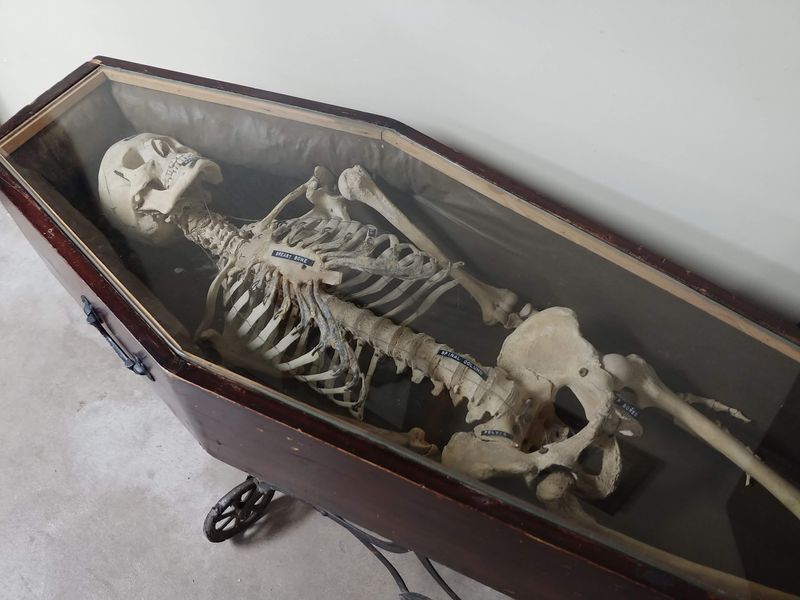
Not every exhibit is about lace and recipes. Tucked among the room settings is a genuine human skeleton, donated by one of Wilber’s early doctors.
That detail tends to surprise people, and it fits the practical, slightly unexpected character of the collection. Medical practice in a prairie town looked very different a century ago, and the skeleton was likely a teaching tool rather than a curiosity.
Elsewhere, the everyday items tell their own quiet stories. Kitchen tools, farm objects, framed pictures, and household odds and ends show how people cooked, cleaned, worked, and relaxed.
A few pieces will likely look familiar to anyone who spent time in a grandparent’s farmhouse basement.
Kids especially latch onto these oddities. A dentist’s chair from long ago or a butcher shop display sparks more questions than a paragraph on a sign ever could.
Give yourself permission to wander without a plan. Some of the best moments come from opening your eyes to a small shelf in a corner, where a hand-carved object or an old photograph suddenly makes a century-old life feel close and ordinary.
Guides Who Know the Town by Heart
A good tour changes everything, and the people who open this museum make a big difference. Volunteers such as John and Doris have walked guests through the collection with warmth and plenty of detail.
Many of the guides have deep personal ties to Wilber. That means the stories come with names, family connections, and background that no printed card could hold.
Ask about a dress or a photograph, and there may be a full account of who wore it or who stood in the frame.
Tours sometimes extend beyond the museum walls. Doris has shown groups the museum along with the historic Hotel Wilber and the town’s newer community center, which turns a short stop into a broader look at the village.
Conversation flows easily here. The atmosphere is relaxed and chatty rather than formal, and questions are welcome.
A cookbook for sale at the front adds a nice souvenir option, especially for anyone hoping to try Czech baking at home. Recipes for dumplings, sauerkraut dishes, and kolaches make a far more useful keepsake than a refrigerator magnet, and they carry the flavor of the trip home.
Historic Landmarks Around Downtown Wilber
Step outside the museum and the history keeps going. Several Wilber buildings appear on the National Register of Historic Places, all within easy reach for a short walk or drive.
The 1895 Hotel Wilber stands as one of the town’s best-known structures. Nearby, the 1928 Saline County Courthouse anchors the civic side of town, while the 1882 W.H.
Mann mansion shows off the ambitions of an earlier era.
Then there is the 1930 Sokol Pavilion. Sokol groups promoted physical fitness, gymnastics, and community spirit among Czech Americans, and the pavilion reflects how central those gatherings were to social life.
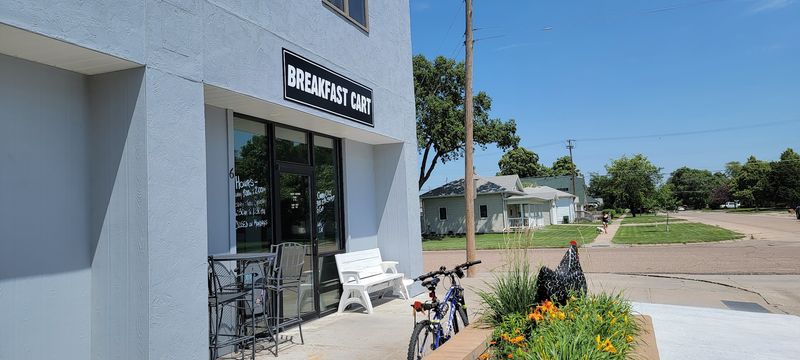
Downtown storefronts add a lighter layer. Czech-themed designs and decorations brighten the main streets, making the area pleasant to stroll even when the museum is closed.
A photo stop near the Fox Hole is a common part of a Wilber visit.
Pair the museum with a slow loop through these landmarks and a stop for pastries. That combination fills a comfortable afternoon and gives a clear sense of how one small community kept its identity intact for well over a hundred years.
Czech Days and Planning Your Visit
Timing matters in Wilber. The museum keeps short hours, generally opening for a two-hour window on select afternoons, with Wednesday and Saturday being the usual days.
Schedules for small volunteer-run spots can shift, so it pays to confirm before making the drive. The museum sits at 102 West 3rd Street in the heart of town, and parking in a village this size is rarely a headache.
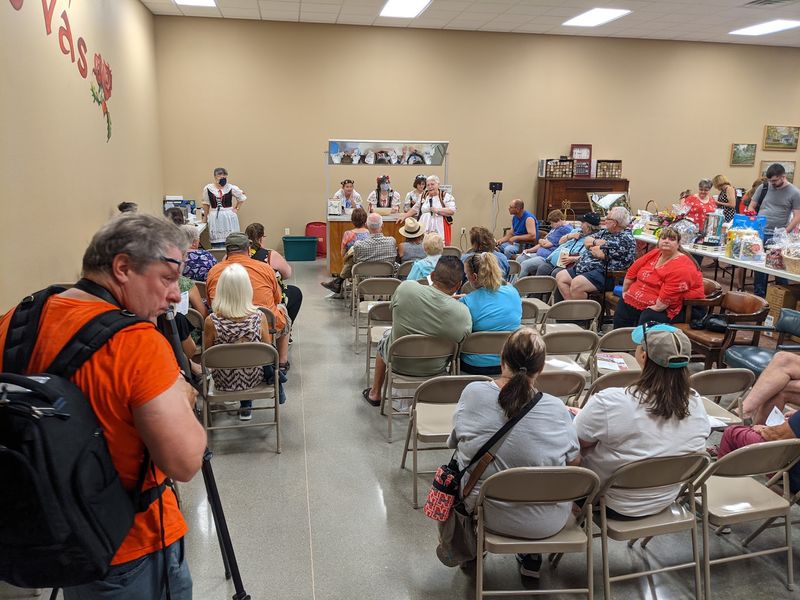
Now imagine the same streets packed with polka music and the smell of fresh kolaches. That is Czech Days, held on the first full weekend of August since the festival began in 1962.
The celebration draws tens of thousands of people for parades, traditional dancing, and the Miss Czech-Slovak USA Queen Pageant, added in 1986.
Visiting during the festival brings energy and crowds. A quieter weekday afternoon, on the other hand, allows more time with the guides and the displays.
Either way, plan a meal or bakery stop in town. Wilber is compact, the drive from Lincoln is manageable, and the whole outing makes an affordable day trip for families, retirees, and anyone curious about Nebraska’s roots.
Why the Title Fits
Big titles are easy to claim and hard to earn. Wilber earned its own through generations of families who kept speaking, singing, stitching, and baking the traditions they carried from Bohemia and Moravia.
The museum turns that long effort into something you can see and touch. Embroidered dresses, recreated rooms, genealogy records, and even a doctor’s old skeleton make the story concrete rather than abstract.
Who will get the most out of a stop? History fans, people chasing family roots, sewing and textile lovers, and Nebraskans who want to understand one of the state’s founding cultures more fully.
Kids who enjoy odd discoveries will find plenty to point at too.
The experience is small in scale and big in heart. Expect friendly conversation, a slower pace, and the kind of detail that only comes from a community telling its own story.
Pair it with a walk past the historic buildings and a sweet treat, and Wilber delivers a full, satisfying afternoon. Leaving town, the title on the welcome sign no longer reads like a boast.
It reads like a fact backed by three floors of proof.