10 Wisconsin Boardwalks And Shoreline Trails With Gorgeous Water Views Along The Way
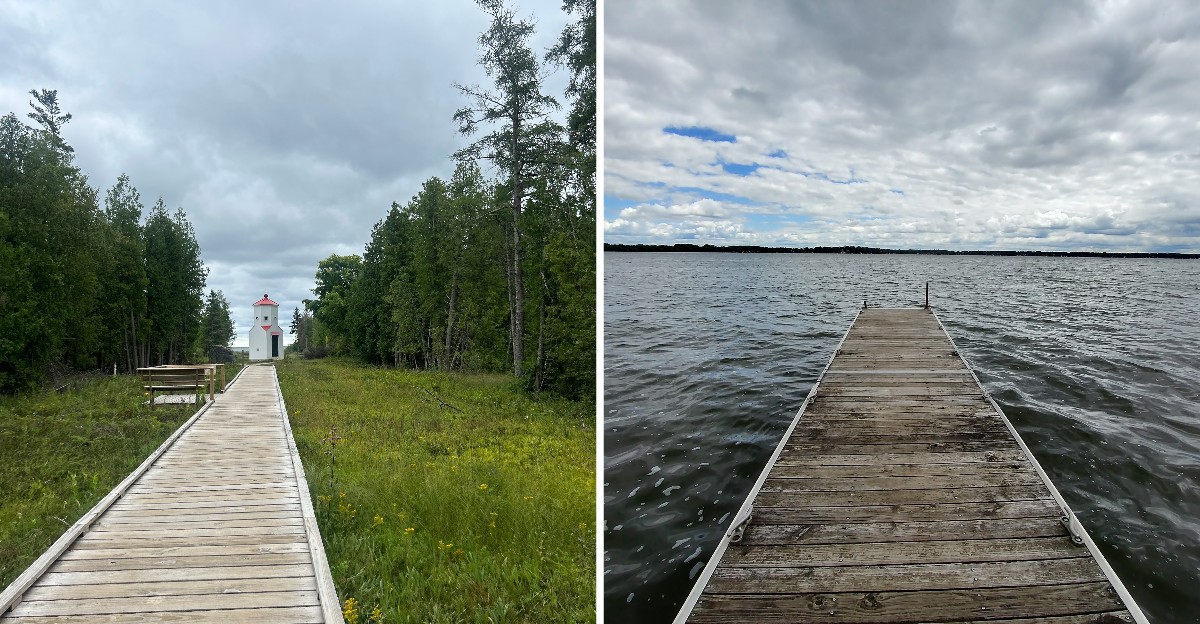
Where is the beach? That question becomes part of the fun on Wisconsin boardwalk trails that make you work for the reveal.
First come dunes, wetlands, grasses, and long stretches of wooden path. Then the breeze changes.
The horizon opens. Suddenly, water fills the view and the whole walk clicks into place. It feels far more satisfying than stepping straight from a parking lot onto sand.
The approach gives the destination a little drama.
By the time your shoes finally hit the beach, you have already had half an adventure. That slow reveal is exactly what makes these walks so easy to remember.
1. Dunes Cordwalk At Kohler-Andrae State Park, Sheboygan
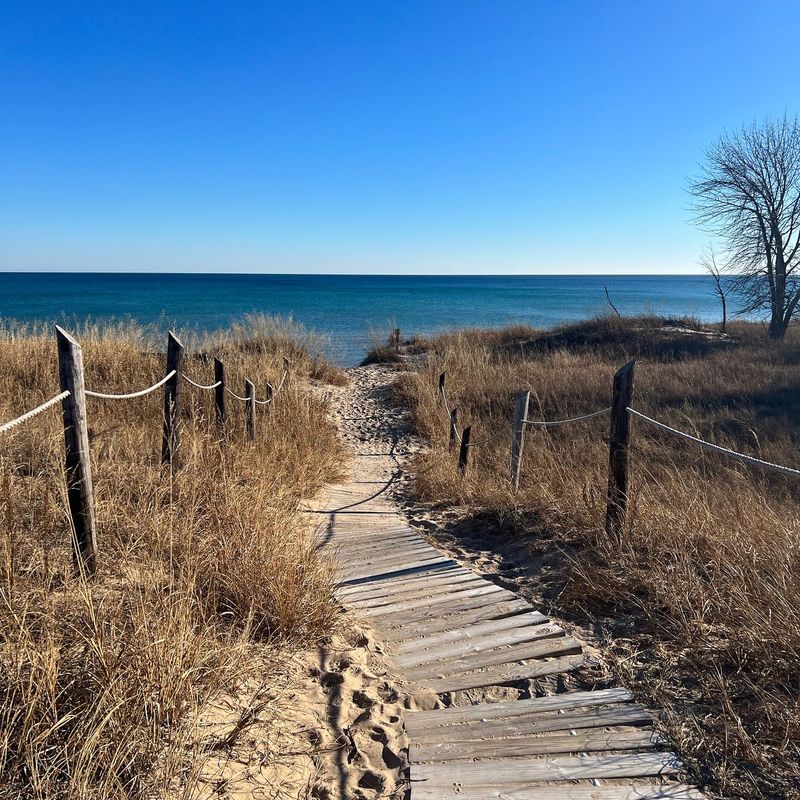
Wait, are those wooden planks resting right on the sand? The path ahead makes a beach walk unusually interesting.
The Dunes Cordwalk at Kohler-Andrae State Park runs for about two miles parallel to Lake Michigan. Its northern section covers roughly half a mile, while the southern portion extends another 1.5 miles through active and stabilized dunes.
Staying on the cordwalk matters here. Kohler Park Dunes State Natural Area protects fragile dune vegetation, interdunal wetlands, and several threatened plant species that can be damaged by repeated foot traffic.
The route shifts between exposed dunes, wetland pockets, and stretches of white pine forest. Several overlooks provide places to pause without leaving the protected trail.
Lake Michigan stays close throughout the walk, and more than a mile of beach lies within the natural area. The Sanderling Nature Center also provides direct access to both the cordwalk and shoreline.
Swimming is allowed along the park’s Lake Michigan beach, but Wisconsin state park beaches do not have lifeguards. Current wave, current, and water-quality conditions should be checked before entering the lake.
The Sanderling Nature Center adds wildlife exhibits, interactive displays, and a rooftop observation deck overlooking Lake Michigan. It is open daily from May through September, with reduced off-season dates.
The park entrance is at 1020 Beach Park Ln. A vehicle admission sticker is required for entry.
2. North Beach Boardwalk Paths, Racine
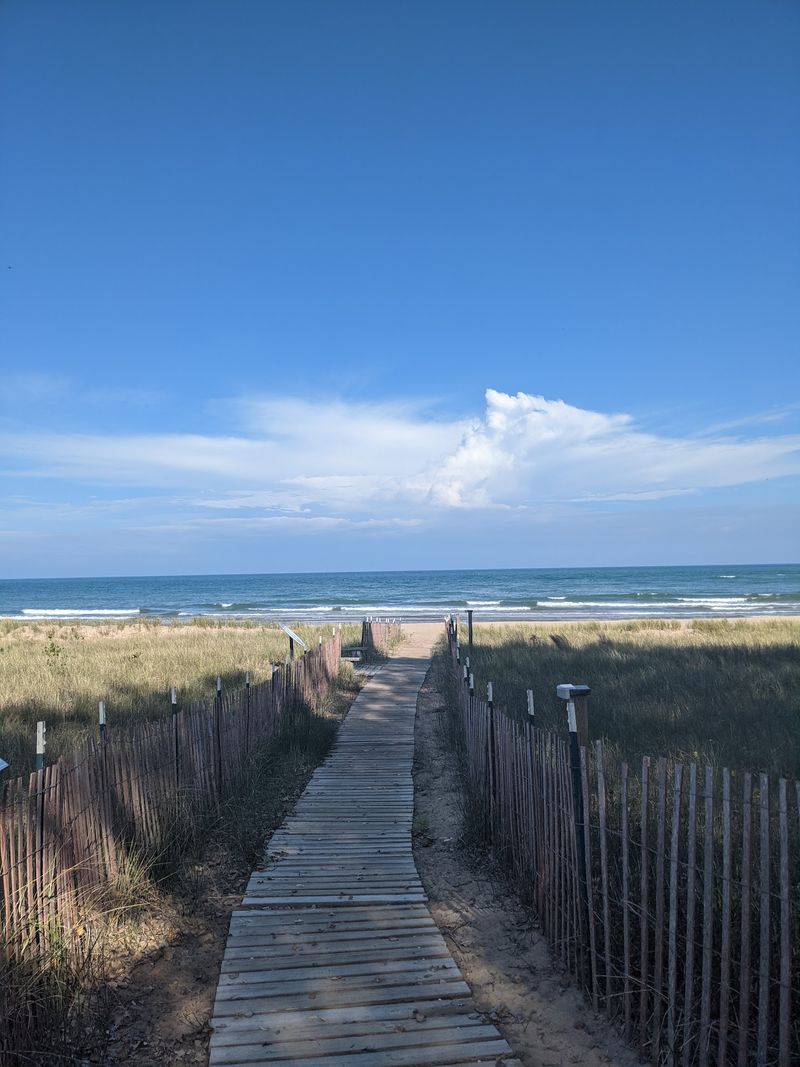
Hold on, a city beach can have dune habitat too? Here, a short walk adds nature lessons before sandcastle time.
North Beach in Racine combines restored dune habitat with one of the city’s broadest Lake Michigan beaches.
Boardwalk paths help visitors move toward the waterfront without cutting directly across sensitive planted areas.
Keeping to designated paths protects the dune and swale vegetation that helps control erosion and supports habitat along the busy urban shoreline.
The beach offers swimming, volleyball, biking, walking, picnicking, and a playground. North Beach remains open year-round from 6 a.m. to 10 p.m.
Accessibility is a particularly strong feature here. A Mobi-Mat provides a firm route across the sand for wheelchairs, walkers, and strollers, and the city also offers accessible beach equipment.
Lifeguards are seasonal rather than year-round. The current city schedule places them on duty from 10 a.m. to 6 p.m. during the swimming season, which generally runs from early June through late August.
Outside that period, the shoreline still works well for walking, biking, and photography. Anyone entering Lake Michigan should check current beach conditions first.
The Lake Michigan Pathway passes the beach and gives cyclists and walkers another way to extend the outing beyond the sand. Find North Beach at 100 Kewaunee St. Admission and parking are currently free.
3. Neshotah Beachwalk, Two Rivers
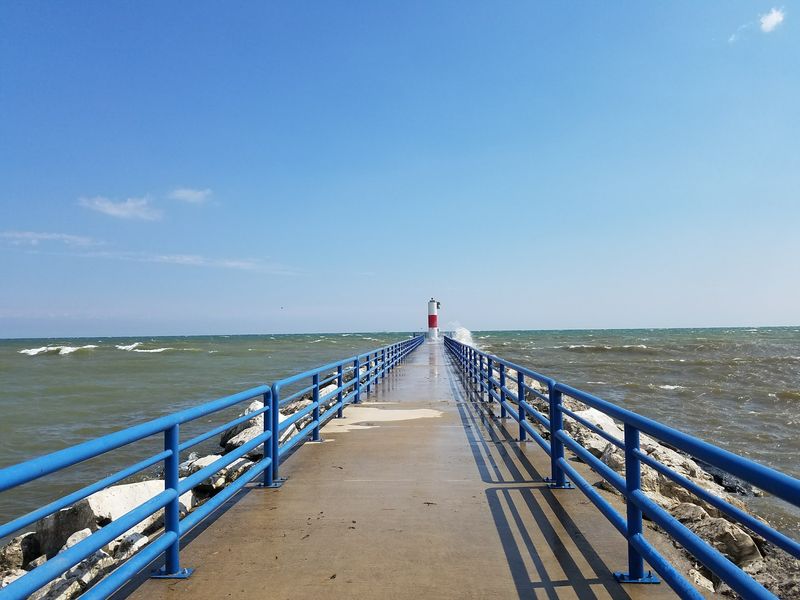
Could a simple stroll turn into a whole afternoon outdoors? Bring a picnic, and the answer might be yes.
Neshotah Park and Beach in Two Rivers combines a long Lake Michigan swimming beach with a concrete Beachwalk, recreation areas, and connections to the city’s larger trail system.
A shoreline walk makes an easy beginning before choosing a spot on the sand. The park also has volleyball courts, basketball courts, playgrounds, horseshoe pits, and multiple picnic shelters.
Picnic areas include tables and grills, while the Beach House provides restrooms, changing facilities, and seasonal concessions. The concession stand normally operates from Memorial Day through Labor Day when weather allows.
The Rawley Point Trail begins nearby and extends for six miles toward Point Beach State Forest.
Swimming at Neshotah is currently at your own risk. The city directs visitors to its SwimSmart alert system and Wisconsin beach-health information for current hazards and water-quality notices.
The park stays open daily from 6 a.m. to 11 p.m., so the shoreline remains accessible well beyond the main summer swimming season.
Pet rules change seasonally. From May through September, leashed dogs are permitted on Neshotah Beach only between 6 and 10 a.m.; broader restrictions apply later in the day.
The main entrance is on Zlatnik Dr. The beach itself remains the star, but the surrounding recreation options make it much more than a quick walk to the water.
4. Crescent Beach Boardwalk, Algoma
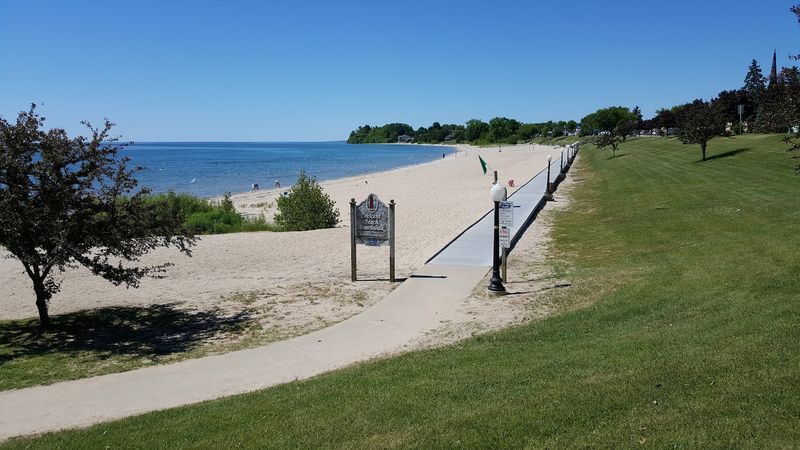
That red lighthouse deserves a second look, but keep walking. A sandy shore waits beside the path.
Crescent Beach Boardwalk follows Lake Michigan for roughly half a mile through the heart of Algoma. The accessible walkway connects the visitor-center area with the marina while running beside the city’s sandy public beach.
Unlike trails that hide the water until the end, this one keeps Lake Michigan in view for much of the walk. Benches along the route make it easy to stop without leaving the boardwalk.
The red Algoma Pierhead Lighthouse remains visible from much of Crescent Beach and provides one of the most recognizable views along the shoreline.
The adjoining beach is used for swimming, kayaking, volleyball, and ordinary shoreline wandering during the warmer months.
The boardwalk was constructed largely through volunteer labor and uses recycled plastic lumber. Work began in the 1990s, turning it into one of Algoma’s best-known waterfront features.
Staying on the walkway through the natural sections helps protect habitat used by birds and butterflies while still keeping visitors close to the water.
A changing station is located toward the northern end of the beach, while grassy bluff areas provide benches and picnic tables above the sand.
The boardwalk begins along Lake St, with the Algoma Visitor Center at 1226 Lake St providing a convenient southern reference point. The entire walk stays close to downtown shops and restaurants.
5. Big Bay Boardwalk Trail, La Pointe
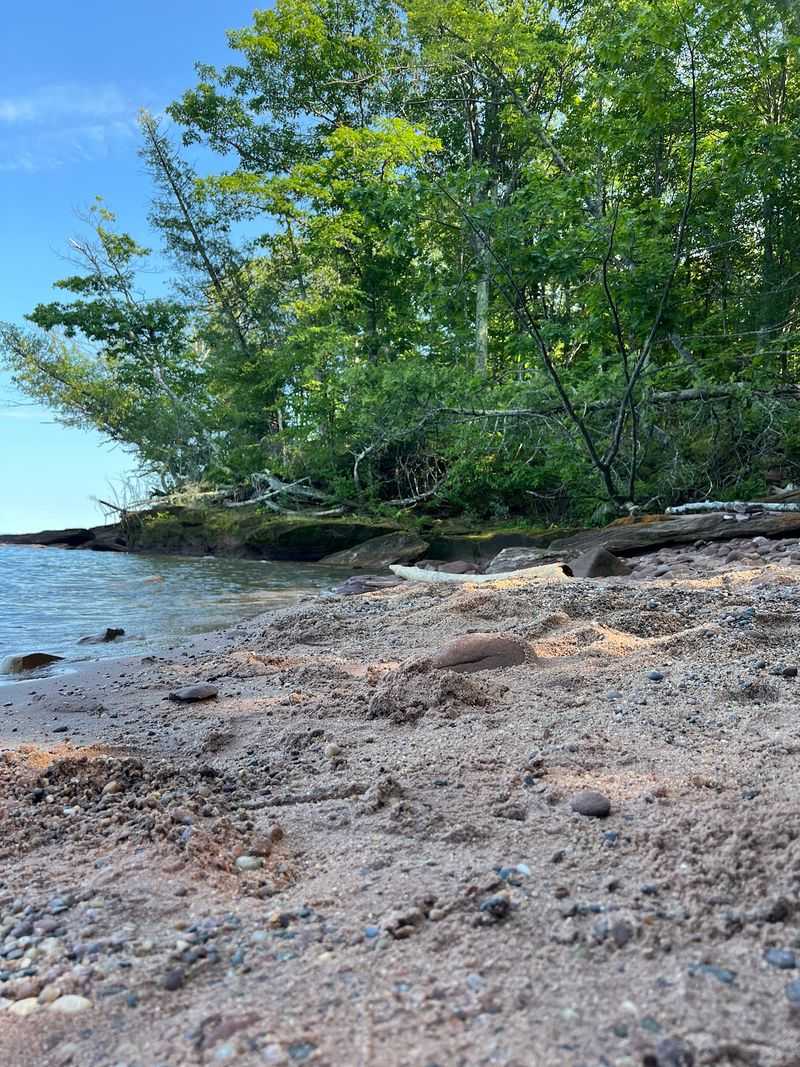
Ready for a beach day with a little island adventure? The boardwalk makes the first part especially easy.
Big Bay State Park’s Boardwalk Trail stretches for 1.5 miles across the Big Bay Sand Spit on Madeline Island.
The boardwalk is wide enough to provide an easier route through terrain that would otherwise involve sand, forest floor, and wet areas. Pets are not permitted on this particular trail.
Beyond the boardwalk, Big Bay State Park protects a 1.5-mile Lake Superior beach and more than seven miles of hiking trails across its 2,350 acres.
Kayaks and canoes can be carried to the beach, and paddlers use the bay, lagoon, and nearby shoreline when conditions allow. The park itself does not have a boat launch.
Picnic tables, grills, drinking water, and restrooms are normally available in the day-use area, making it easy to turn the boardwalk into a longer outing.
As of September 2026, one important limitation affects visits: the campground and beach parking lot are closed for construction through approximately June 30, 2027.
The park remains open, with limited parking at the park office and Point Picnic Area.
Reaching the park also requires a trip to Madeline Island. Regular ferry service connects Bayfield with La Pointe during the open-water season.
The park entrance is at 2402 Hagen Rd. Checking both the construction notice and ferry schedule before leaving the mainland is especially important during the current project.
6. Old Baldy Boardwalk At Whitefish Dunes State Park, Sturgeon Bay
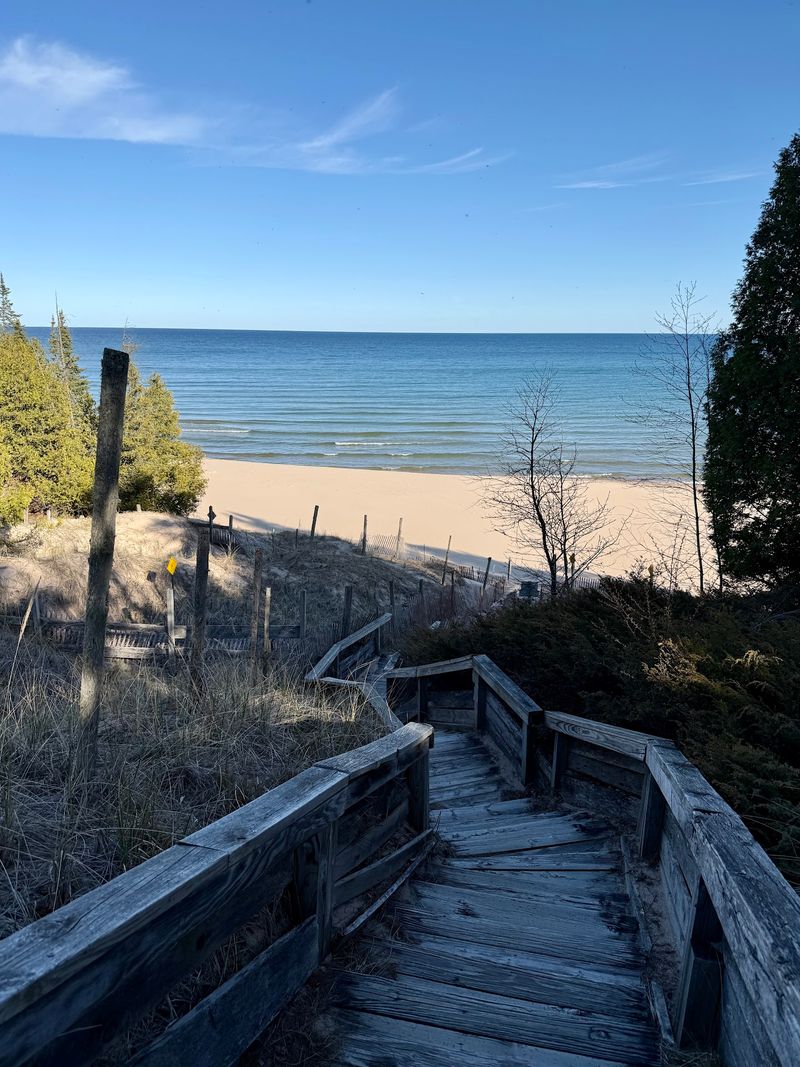
Big dunes change the way you look at a beach. Here, the sand has a story beyond summer swimming.
Whitefish Dunes State Park protects one of Door County’s most significant dune landscapes along Lake Michigan. Boardwalk sections, marked trails, and designated stairways keep visitors away from the most fragile areas.
Staying on those routes is important. Wisconsin DNR specifically asks visitors not to climb freely on the dunes because rare plants and animals depend on the protected habitat.
The Red Trail leads toward Old Baldy, the tallest dune in the park at 93 feet above lake level. A boardwalk and stairs reach an observation platform with views toward Lake Michigan and Clark Lake.
The park’s swimming beach is separate from the Old Baldy overlook. Lake Michigan swimming is permitted, but there are no lifeguards and dangerous currents can develop during periods of high waves.
Current shoreline access has also changed because of erosion. The first beach access is open but now uses a rugged gravel route, while the second and third access points use stairs. A beach wheelchair remains available.
The Nature Center explains the park’s dune ecology, geology, shipwreck history, and archaeology. From mid-May through September, it is normally open daily from 10 a.m. to 4 p.m.
The entrance is at 3275 Clark Lake Rd. A Wisconsin vehicle admission sticker is required.
7. Lion’s Den Gorge Boardwalk, Grafton
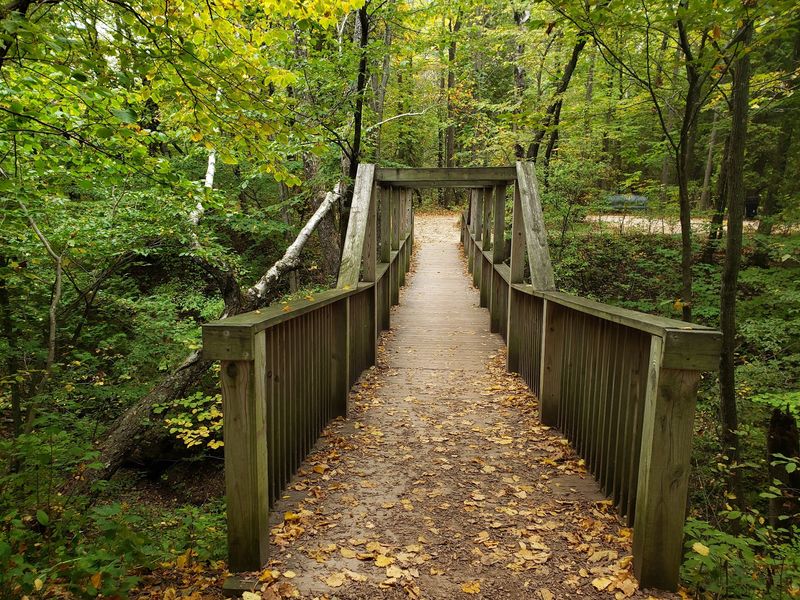
First comes the boardwalk, then comes a serious set of stairs. Save some energy for the climb back.
Lion’s Den Gorge Nature Preserve protects 73 acres along one of the remaining undeveloped stretches of Lake Michigan bluff in Ozaukee County.
Boardwalks cross wetland habitat, while other trails lead toward the gorge and shoreline.
The boardwalk itself does not simply terminate on a sandy beach. Reaching Lake Michigan requires following the preserve’s trail system and descending a substantial staircase from the bluff.
The shoreline below is narrow and predominantly rocky rather than a broad swimming beach. Shoes with reliable grip are useful for both the stairs and uneven lakefront.
The preserve contains more than half a mile of bluffs rising roughly 90 to 100 feet above Lake Michigan. Staying behind barriers and on marked trails is important along those steep edges.
Wetlands, woodland, grassland, and the deep gorge create very different habitats over a relatively compact area.
Birding is especially productive during migration. Ozaukee County notes that more than 20 warbler species can occur within a short walk of the parking area during peak spring movement.
One accessibility limitation matters: there is no ADA-compliant route down to the Lake Michigan shoreline. Accessible restrooms are available at the newer pavilion.
Lion’s Den is open year-round from 6 a.m. to 9 p.m. The entrance is at 511 High Bluff Dr.
8. Hidden Brook Boardwalk At The Ridges Sanctuary, Baileys Harbor
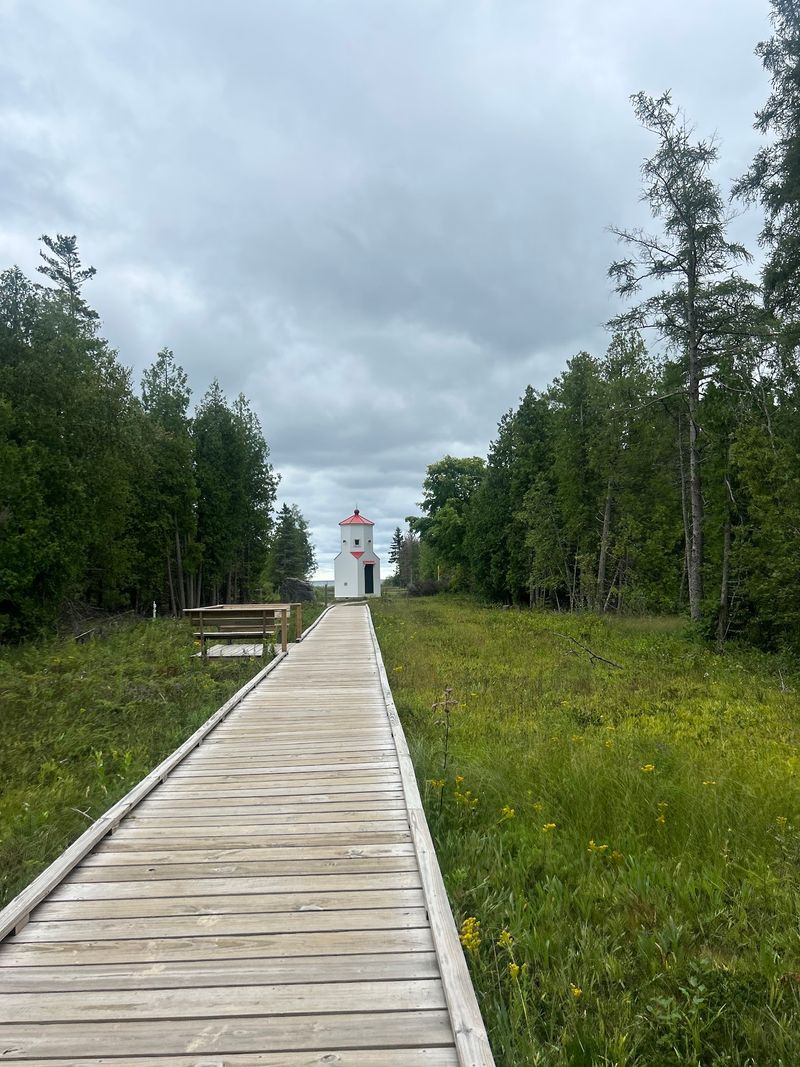
What if the beach is only part of the surprise? Slow down, because small things matter here.
Hidden Brook Boardwalk at The Ridges Sanctuary crosses one of Door County’s rare ridge-and-swale landscapes rather than functioning as a direct beach trail.
The accessible boardwalk begins at the Cook-Albert Fuller Nature Center and extends nearly one-third of a mile through boreal forest.
White spruce, balsam fir, wetlands, and rare plant habitat surround the path. Interpretive signs explain the ecosystem and conservation work involving orchids, dwarf lake iris, and the endangered Hine’s emerald dragonfly.
The boardwalk is eight feet wide and designed for wheelchairs, walkers, and strollers. Toe rails run along its length, with full railings added where the structure crosses water or rises above the ground.
Hidden Brook now connects with the Range Light Boardwalk, creating more than half a mile of accessible boardwalk leading toward the historic Baileys Harbor Range Lights.
Those range lights were built in 1869 and remain one of the sanctuary’s major cultural landmarks. The boardwalk connection makes them much easier to reach without disturbing the surrounding wetlands.
Find the Nature Center at 8166 State Hwy 57. A trail fee generally applies, although The Ridges also offered designated Free Fridays during summer 2026.
9. Fern And Europe Bay Trail At Newport State Park, Ellison Bay
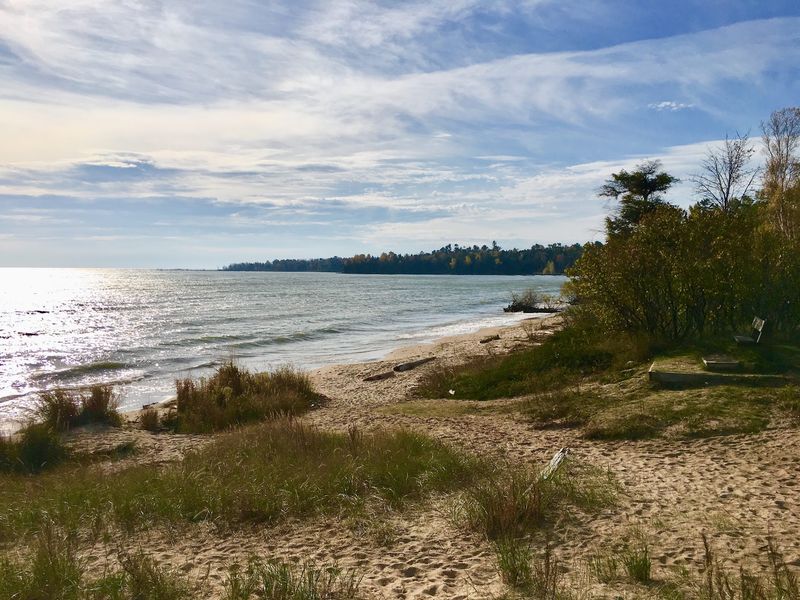
Silence does most of the talking on this outing. Even the beach asks you to slow down.
The Fern/Europe Bay Trail at Newport State Park is a 1.2-mile accessible loop through woodland and a wetland fern grotto. Its broad, flat route combines crushed limestone with sections of boardwalk.
Benches and interpretive signs appear along the loop, and the trail was designed with mobility, hearing, and visual accessibility in mind.
This shorter loop should not be confused with the much longer Europe Bay Trail. The accessible Fern/Europe Bay route does not itself end at Lake Michigan.
For a shoreline outing, the seven-mile Europe Bay Trail continues toward the park’s northern end, where rocky outcrops, sandy stretches, and broad views of Lake Michigan and the islands around Death’s Door appear.
Newport protects more than 2,300 acres and 11 miles of Lake Michigan shoreline. Its extensive trail network ranges from wide accessible routes to narrower paths with rocks and exposed roots.
A sandy swimming area is also located near parking lot 3. There are no lifeguards, so swimming requires the same Great Lakes caution used elsewhere along the Door County shore.
The entrance is at 475 County Hwy NP. Choosing between the accessible fern loop and the longer shoreline route before leaving the trailhead makes the outing much easier to plan.
10. Wetland Boardwalk Trail At Lake Kegonsa State Park, Stoughton
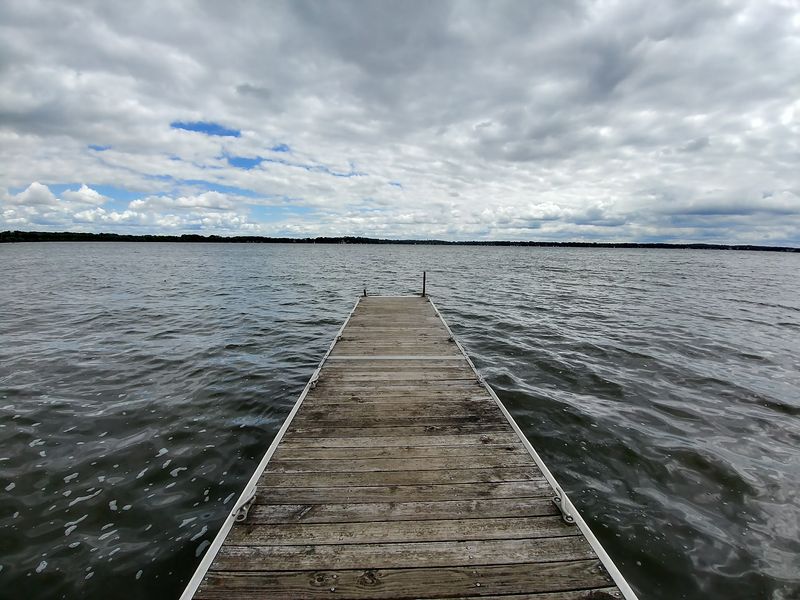
A tiny boardwalk can start a surprisingly full lake day. Watch the wetland first, then head for the beach.
The Wetland Boardwalk Trail at Lake Kegonsa State Park is only about one-tenth of a mile long. It ends at a wildlife-viewing platform rather than at the swimming beach.
Geese, ducks, and other waterfowl use the wetland around the platform, making this short route particularly useful for visitors who prefer wildlife watching to a longer hike.
The boardwalk sits near the beach area, but anyone heading directly for the sand should follow the park map instead of expecting the wooden trail to deliver them there.
Lake Kegonsa has a designated swimming beach with a bathhouse nearby. No lifeguards are on duty, and summer visitors should pay attention to closure notices and possible blue-green algae blooms.
Another option is the paved half-mile Lakeshore Trail, which follows the water between the swimming beach and boat landing. That route creates a more direct shoreline walk after the wetland stop.
Fishing, boating, kayaking, canoeing, sailing, and paddleboarding are available on the 3,200-acre lake. The park also offers an adaptive tandem kayak through its rental program.
Enter at 2405 Door Creek Rd. The boardwalk may be brief, but pairing it with the beach and Lakeshore Trail turns it into a much fuller day beside the water.