Wisconsin’s Huge Outdoor Go-Kart Track Makes Every Lap Feel Like Race Day
A quiet parking lot off a back road usually means one thing, nothing much to see. I expected a few slow loops, maybe a rusty track built for kids.
Instead I found real racing karts, timing systems that clocked every second, and a paved course with actual history behind it. Engines roared the moment I stepped out of my car.
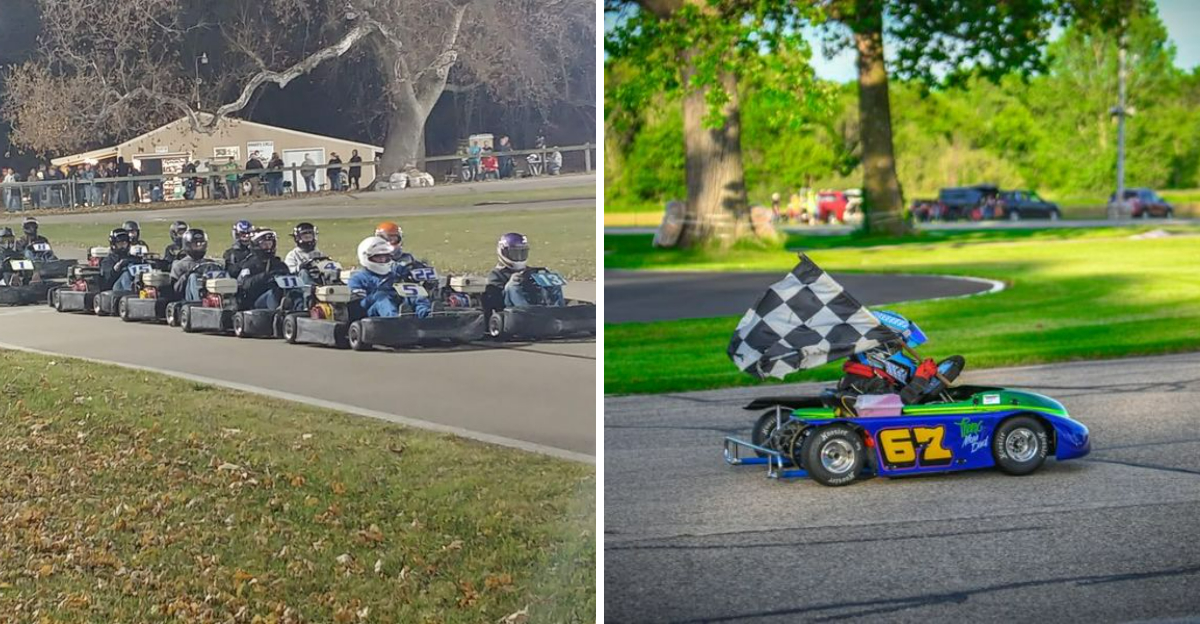
Drivers in full gear lined up like they were prepping for an actual championship, not just a Tuesday afternoon. My first lap left my hands shaking on the wheel and my heart pounding harder than expected.
This track has quietly built a reputation among racing fans across the state. Wisconsin summers bring plenty of outdoor fun, but nothing else here delivers quite this much adrenaline.
Wisconsin locals already know the drill, but newcomers are always caught off guard. If you love discovering something bigger than it first appears, keep reading.
A Half-Mile Ribbon Of Asphalt With Real Teeth
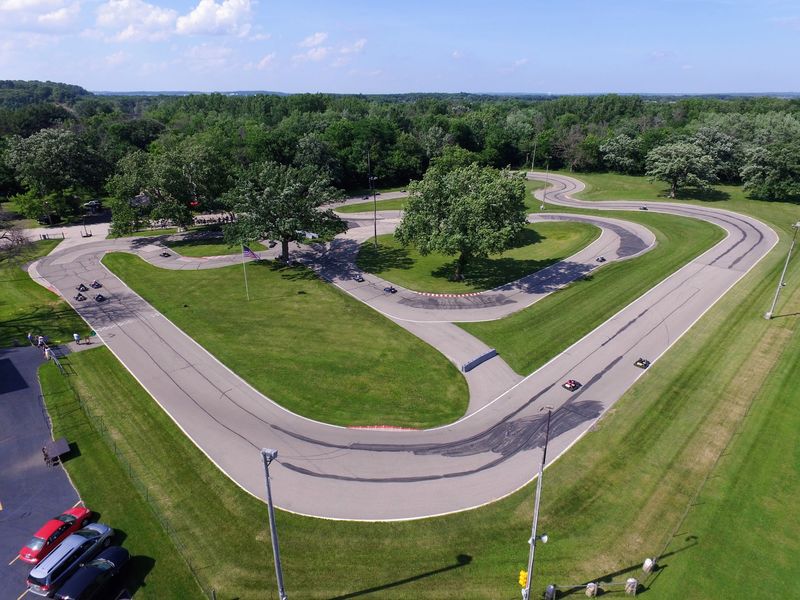
Most go-kart tracks feel like a driveway with cones. Here you get a half-mile paved asphalt sprint course with ten genuine turns.
The main straightaway stretches 365 feet, which sounds modest until you are actually flat out on it. Speed builds fast, and the braking zone arrives sooner than your brain expects.
Those ten corners are not decoration either. The layout is designed to test car control under cornering loads reaching about 1.5 Gs.
I noticed my neck complaining after the second heat, and that surprised me. Karting looks easy from the fence, but your body keeps score.
The pavement itself has been rebuilt over the decades rather than left to crumble. Work in 2011 and 2012 changed grade, layout, and surface across the property.
Because the course is a sprint layout, races stay short and intense. Typical events run somewhere between 6 and 15 laps.
That format rewards focus more than endurance. You get maybe two chances to nail a corner before the checkered flag waves.
Spectators can follow nearly the whole circuit from one spot, which makes watching genuinely fun. Friends heckling from the fence is part of the experience.
The setting adds something too, with farm fields and river trees framing the asphalt. The address for planning purposes is N2236 Mt Hope Rd in Wisconsin, an easy country drive.
Racing History That Started Back In 1959
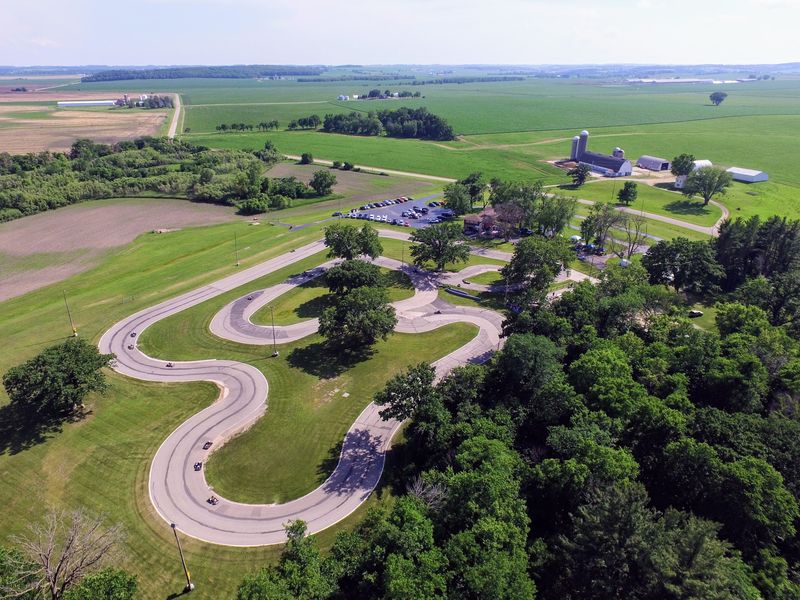
Very few tracks in the country can claim continuous operation since 1959. That is older than most family cars, most highways nearby, and most of the drivers racing today.
The layout was graded in 1959, then paved the following spring. Racing has continued there ever since without a long shutdown.
The name comes from geography rather than marketing. The Sugar River borders the property along the north and east sides.
Standing near the fence, that detail suddenly makes sense. You hear water and birds between engine bursts.
The founder built karts on site for years under the Blackhawk name. Designing, welding, and racing all happened at the same address.
National-level events landed here more than once. The 1965 IKF Nationals came to the property, followed by WKA Nationals in 1972 and 1981.
Big changes came in 1972 with a full rework of the course. Another major update arrived four decades later.
What I appreciate most is that the history is not hidden behind glass. It lives in the pavement, the layout, and the pit area.
You are driving a course that hosted championship karting before most modern tracks existed. That thought hits you somewhere around turn four.
For anyone who loves motorsports roots, the timeline alone justifies the drive. Longevity like that is genuinely rare.
The Track Where Danica Patrick Got Her Start
Ten-year-olds usually collect trading cards. In 1992, one ten-year-old started her racing career on this asphalt instead.
Danica Patrick began karting here before her IndyCar and NASCAR years. That fact turns a fun afternoon into something closer to a pilgrimage.
Knowing it changes how the corners feel. You start wondering which line she used through the tight sections.
Kids in the pits seem to sense the connection too. Ambition looks different when a real success story started at the same start line.
The competition classes here still welcome young drivers. Kid Kart racing begins at ages five through seven.
From there, drivers move up through various Senior LO206 classes. There is even an all-out class for the truly fearless.
That ladder structure matters. A child can start small and grow into serious racing without switching tracks.
Parents I saw were relaxed, not stressed. The pit atmosphere felt more like a youth baseball field than a high-pressure arena.
Season-long point series racing gives owner-drivers something to chase all year. Standings, rivalries, and bragging rights included.
Not every track can point to a driver who reached the sport’s biggest stages. Here the connection is documented and real.
It gives every lap a little extra weight. You are sharing pavement with the beginning of a famous career.
Rent-To-Race Karts That Actually Hit 50 MPH
Fifty miles per hour sounds tame in a car. Six inches off the pavement, it feels like a rocket sled.
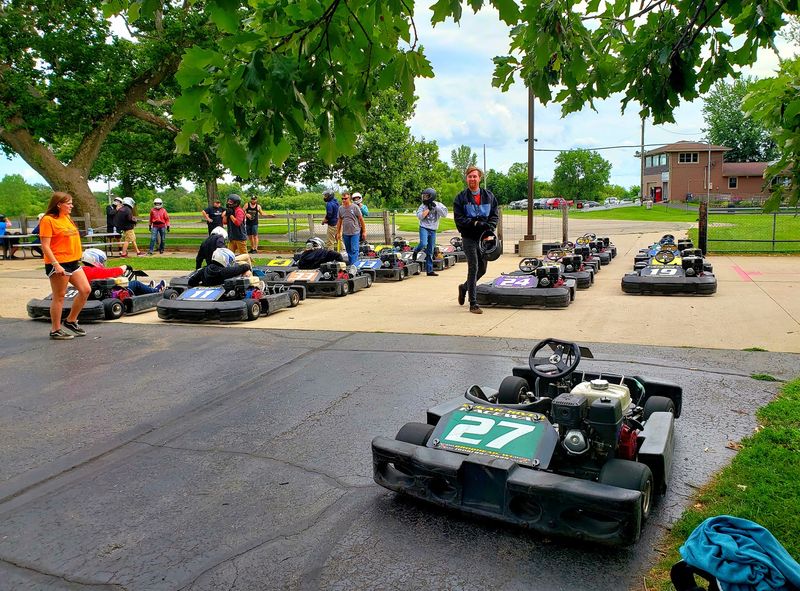
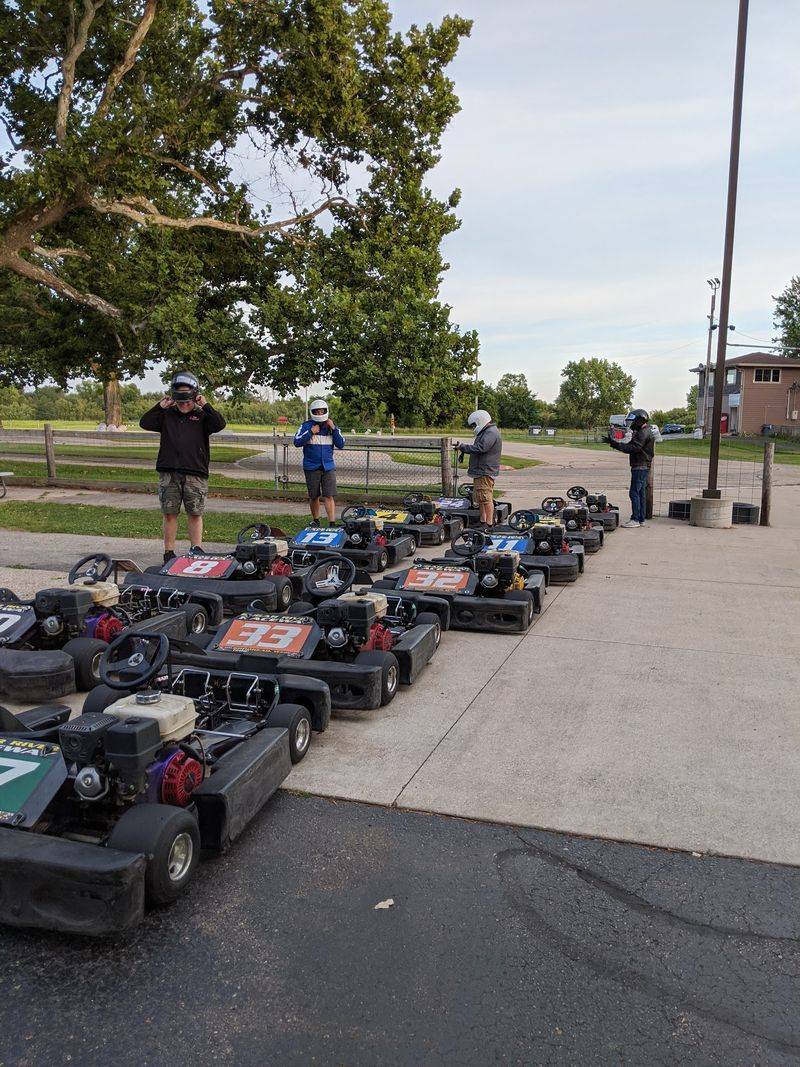
The rent-to-race karts here reach that speed on the straightaway. They are powered by 9 HP Honda engines for adult drivers.
Cornering generates roughly 1 to 1.5 Gs of side load. Your arms and shoulders will notice before your ego does.
Adult rental drivers must be at least 18 years old. Younger drivers need to be a minimum of 56 inches tall.
Those minor karts run 6.5 HP and top out around 8 MPH. Plenty of thrill without the intimidation factor.
Fit is handled better than I expected. XXL park bench seats accommodate drivers up to 6’10” and over 300 pounds.
Smaller drivers get seat inserts and pedal extensions. Those adjustments work down to roughly five feet tall.
Pricing is straightforward, with a 30-lap race program running $70. Drivers are responsible for up to $100 in damages per kart per incident.
That policy encourages clean driving, which honestly improves the racing. Nobody wins by bulldozing a rival into the grass.
Practice hot laps come in 10, 20, or 30-minute blocks at $20, $40, and $60. Wednesdays through Fridays are the usual windows.
These are not amusement park karts, and the difference is immediate.
Turn Key Thursday Turns Regular People Into Racers
Thursday nights usually mean leftovers and television. Around here, Thursday means a starting grid.
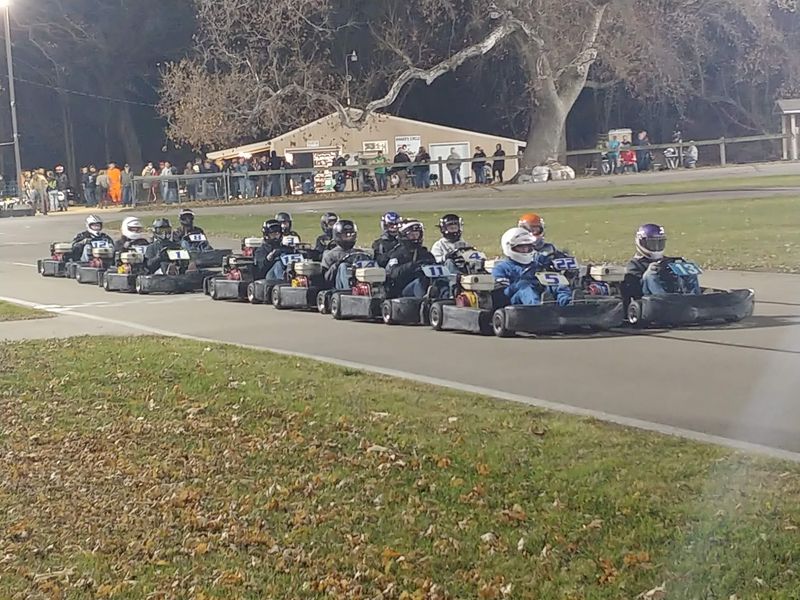
Turn Key Thursday is an open-to-the-public race night using identically prepared karts. Practice and qualifying typically begin at 7 PM.
Identical equipment is the key detail. Nobody buys speed, so the fastest driver actually wins.
Show up alone and you will still get racing. The grid fills with whoever signed the waiver that evening.
That mix of strangers creates surprisingly good competition. Office workers, farmers, and experienced racers all end up on the same track.
The format runs multiple heats rather than one lonely session. You get a chance to learn, then a chance to apply it.
Drivers are usually rotated between karts during a program. Adapting to a slightly different machine becomes part of the challenge.
Real-time transponder data feeds lap times to a main computer. Friends watching can track your laps while you drive.
Seeing your own times drop is weirdly addictive. Two-tenths of a second suddenly matters more than dinner.
The season runs April through November, so Thursdays stack up nicely. Cooler evenings make the racing more comfortable too.
If you have ever wanted a weekly hobby with a checkered flag, this is a very affordable entry point.
Group Events Built For Eight To Sixty Drivers
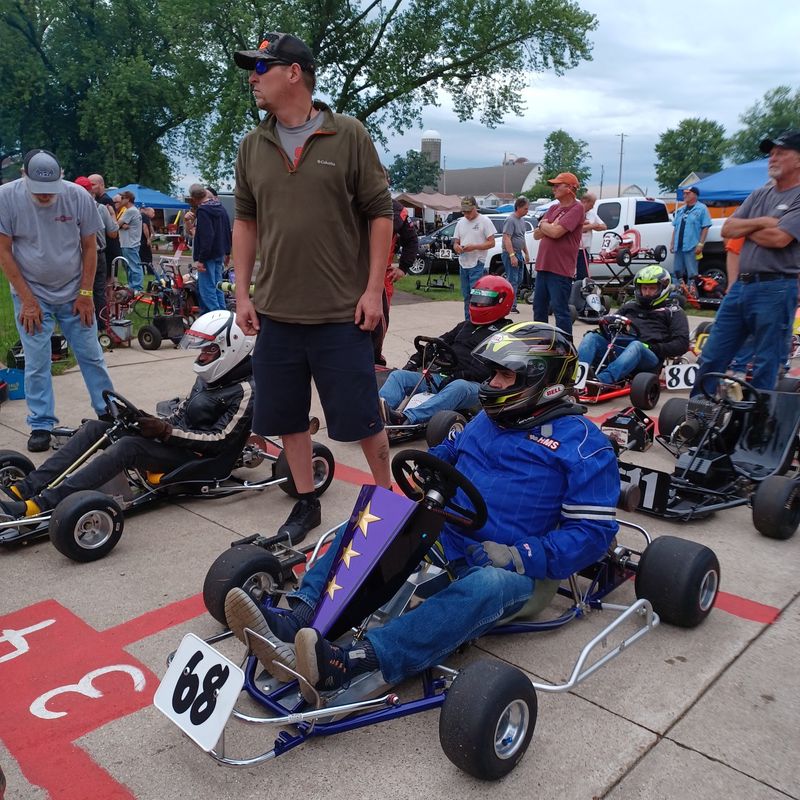
Trust falls are terrible team building. Sixty people racing karts, however, sorts out personalities fast.
Private group bookings are available every day of the week during the operating season. Company outings, bachelor parties, and family gatherings all fit.
The sprint race format handles groups from 8 to 60 drivers. Staff help pick the format that suits your crowd.
Filling the track with your own people changes the vibe completely. Rivalries feel personal in the best way.
Programs typically involve several heats rather than one quick spin. A group of ten might spend a few hours racing.
Medals and scoring add stakes without turning things serious. Somebody always claims the timing system was wrong.
Because the karts get rotated, excuses evaporate quickly. Everyone drives the same variety of equipment.
Long sleeves and pants are a smart call for group days. Lace-up shoes and socks are required for all drivers.
Practice time before racing helps beginners find their nerve. Nobody gets thrown straight into a full-speed heat.
For anyone organizing a milestone celebration, this beats another crowded restaurant table. Shared adrenaline makes better stories than shared appetizers.
Advance reservations are a good idea for larger groups and special events.
Safety Gear, Waivers, And Sensible Rules
Nobody dreams about paperwork. But signing the waiver here is your first clue these karts are serious equipment.
All drivers complete a release waiver before hitting the track. It sets the tone honestly rather than pretending this is a carnival ride.
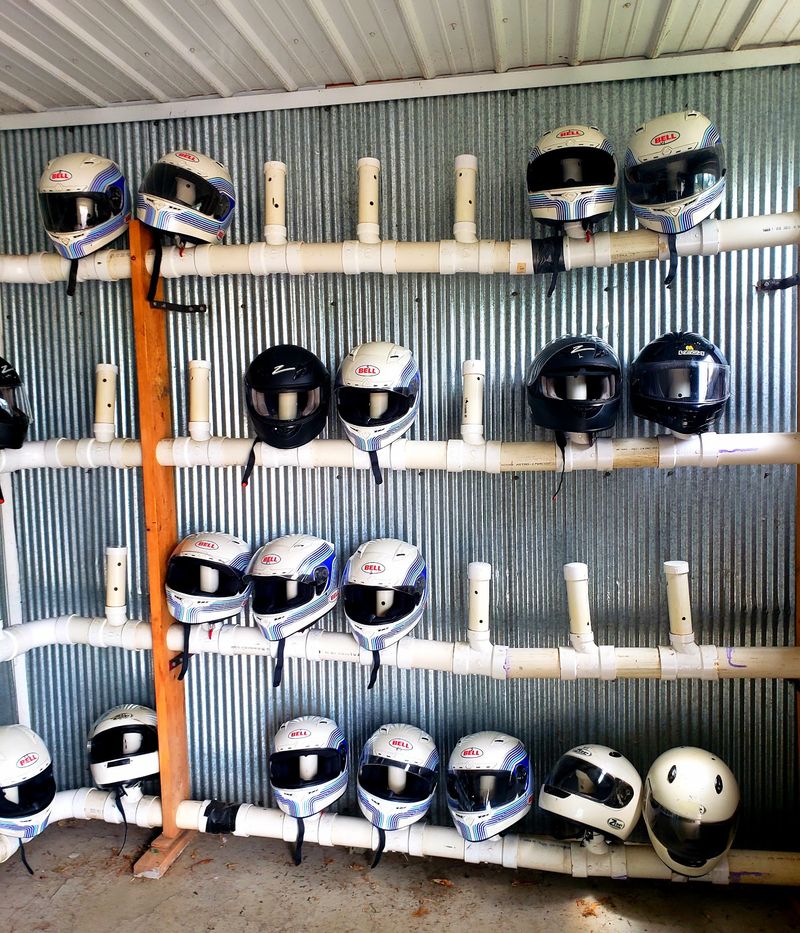
Loaner gear covers the essentials. A helmet, balaclava or helmet sock, and driving gloves are provided.
Racers are asked to bring their own coat for engine heat protection. A jacket you do not love is the smart choice.
Bringing your own helmet is welcome with one condition. It must be full-face with a Snell 2015 minimum rating.
Footwear rules are simple and enforced. Lace-up shoes and socks, no sandals or slip-ons.
Driver meetings and orientation happen before racing begins. Instructions cover flags, passing, and staying on the pavement.
Staying on the asphalt genuinely matters. Karts are built for pavement, and grass or dirt does not cooperate.
Drivers receive safety instructions and orientation before heading onto the track. Knowing that is present made me relax noticeably.
Instruction comes with tips rather than lectures. Learning the fast line felt like coaching, not scolding.
Respect the rules and the whole day flows smoothly. Reckless driving is the only thing that ruins a session.
Prepared drivers simply have more fun.
Vintage Karts And The Brodhead Historics Weekend
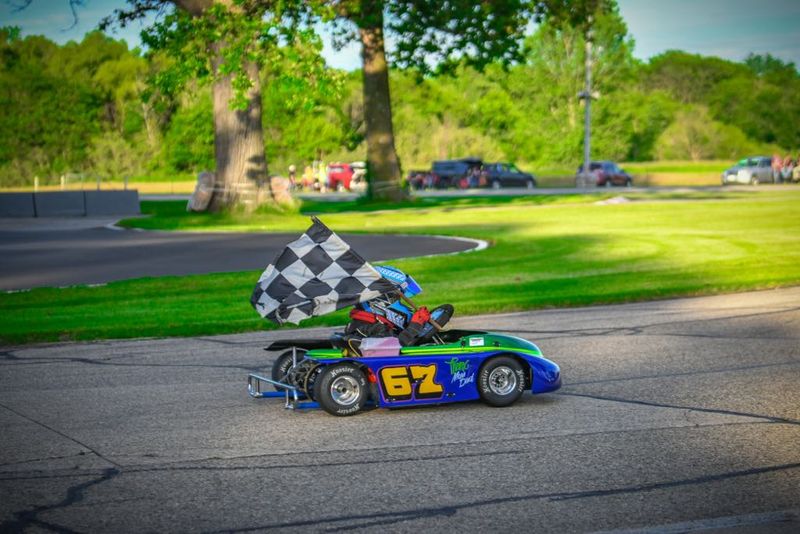
Some machines belong in museums. Every summer, dozens of them show up here and go racing instead.
The track serves as a legendary hub for the Vintage Karting Association. Multi-day Historics events happen each summer.
Karts built between 1958 and 1985 take to the pavement. Pre-1990s machines race rather than sit behind ropes.
A static kart show runs alongside the racing. Polished chrome and old-school paint schemes draw serious camera attention.
Hearing vintage engines echo across the property is a treat. The sound is rougher and louder than modern karts.
Social gatherings fill the weekend between sessions. Owners swap stories, parts, and restoration advice freely.
Food shows up too during the Historics. A K and J Chicago Eatery food truck has served the event.
The large patio holds picnic tables and seats groups up to 100. Guests may bring their own food, use BBQ grills, or arrange catering.
Spectators are welcome, which makes this an easy family outing. You do not need a helmet to enjoy the show.
Old karts, fresh asphalt, and grilling smoke make an unbeatable summer combination.
Mark your calendar and bring a folding chair.